Providing Out-of-Band Connectivity to Mission-Critical IT Resources

Home » Archives for September 2015

Nodegrid 3.0 Generally Available

Nodegrid 3.0 Generally Available


FREMONT, CA, September 29, 2015 — ZPE Systems today announced general availability of Nodegrid version 3.0, the core software platform that runs Nodegrid Out-Of-Band and In-Band infrastructure management products including Nodegrid Serial Console, Nodegrid [CI] and Nodegrid Manager

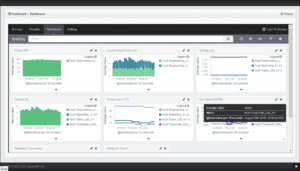
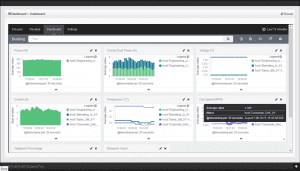
Nodegrid 3.0 is based on the latest 64-bit Linux OS and delivers key features requested by ZPE Systems’ global customers in the OOB IT Infrastructure Management market. Features like Zero-Touch Provisioning for easy and simple configuration; Environmental and Power Monitoring with NodeStash data collection, correlation, natural language search and dashboard; Vendor-Neutral Power Management for VMs, IPMI and PDUs; Embedded Docker Apps Integration; and Browser-in-a-Container for secure HTML5 navigation to IT infrastructure devices without deprecated NPAPI/Java code viewers. In addition, Nodegrid supports more devices than ever.

The vendor-neutral Nodegrid platform expands vendor support for seamless IT device and converged infrastructure management to include: HP/Dell/IBM/Nutanix/EMC Converged Infrastructures, VMware, KVM, Cisco UCS, Redfish, Intel IPMI, Dell iDRAC, HP iLO, IBM IMM, Oracle ILOM, OpenStack, AWS, Azure, NetApp, EMC, Avocent/Emerson, Raritan/Legrand, ServerTech and APC/Schneider, with more names coming every month. Nodegrid monitors and displays relevant data center fitness indicators for all of these platforms.

Nodegrid NodeStash continuously measures critical data points of all managed devices in your multi-vendor IT Infrastructure. Nodegrid monitors your devices via IPMI, SNMP, SSH and various other protocols to provide vital information regarding power draw, temperature and other critical data center environment variables, that can be displayed in one centralized view.

Nodegrid 3.0 continues providing robust management features such as:

  • Secure In-Band and Out-Of-Band Access and Control of numerous vendors’ IT device types including: Virtual Machine, Server, IPMI Service Processor, Networking, Storage, Serial Console and Power
  • Industry-first security measures: system configuration security checksum, bare metal booting, selectable 1024 bit encrypted cryptographic protocols
  • Premise, Hybrid and Cloud device management
  • Docker apps integration and 64-bit Linux shell for powerful scripting
  • Vendor-neutral power management: Cyclades/Avocent, Raritan/Legrand, ServerTech, Emerso­n, APC/Sheneider
  • Supports Serial consoles from: Cyclades/Avocent, Raritan, OpenGear, Lantronix
  • Supports KVM Switches from: Avocent, Raritan

Availability

All ZPE Systems products are available now and shipping globally with Nodegrid 3.0.

About ZPE Systems, Inc.

ZPE Systems is the data center industry’s first provider of Software Defined Infrastructure to manage physical and virtual IT devices. The company’s Nodegrid platform simplifies access and control of compute, network, storage and power infrastructures. Nodegrid Manager provides vendor-neutral OOB management of IT devices. Nodegrid Serial Console enables OOB access & control of serial devices. Nodegrid [CI] protects converged infrastructure. Nodegrid Flex and Nodegrid Bold control devices at the edge of the network. Nodegrid USB provides a high-density USB type C mobility development cycle environment. Nodegrid Service Processor secures IPMI management ports and IoT devices.

ZPE provides smart, consolidated IT management solutions that reduce downtime and CAPEX/OPEX. The company is headquartered in Fremont, California with resellers in Japan, UK, Germany, Netherlands, Brazil and India. ZPE Systems, the ZPE logo and Nodegrid are registered trademarks or trademarks of ZPE Systems. Other company and product names may be trademarks of their respective owners.


Press Contact

ZPE Systems, Inc.

Alvin Chan, Marketing Manager

510-298-3022

alvin.chan@zpesystems.com

It’s Time For a New Set of Tires

flat-tire-ktoine-flickr-1024×683

When your car needs new tires, or some other repair, (AND YOU KNOW IT) do you wait until you get a flat on the freeway, or break down and need a tow? Or do you (PROACTIVELY) take it to the shop for new tires or repairs before something happens that ends up costing you big bucks? And when you do take it to the shop, do you ask the repairman to use the oldest tires or parts they can find to make the repairs? I hope not.

Typically, waiting for tires, or components in your data center infrastructure to fail is not a best practice or good idea. Why? Because it ends up costing you more in both time and money to fix the problem or failure.

When physical components in your IT Infrastructure need to be upgraded or replaced, do you wait until they completely fail, or do you proactively upgrade or replace them? I’m guessing the latter. I’m also guessing this might not (for some reason) really apply to your Out-Of-Band (OOB) management practices. If it does, why haven’t I heard from you yet?

Aging Infrastructure


That said, when was the last time you actually looked at how old and in need of major repair or replacement your Out-Of-Band-Infrastructure (OOBI) really is? I’m willing to bet it’s been quite some time, if at all. You may not even know how bad it really is because of many other initiatives and distractions to focus on. If it’s not broke, don’t try and fix it, right? Or like very bald tires on your car, you keep hoping they won’t fail until you have time to replace them.

flickr-23279704@N00-3868462055-300×300

Either way, I get it. But I also know your OOBI is in need of a major overhaul, even if you don’t. Why? Because the OOB management solutions in use today are based on old methods and technologies. Bottom line, they need to be replaced sooner than later. Repairs are not an option. Why? Because trying to repair an OOBI with the same old out of date technologies, is like looking at a flat tire and saying, it’s only flat on the bottom. Existing OOB management solutions were designed and delivered based on old ideas, hardware, and technologies. Yes, that new in box console switch you just purchased is like an old set of tires. How reliable is that. Would you drive your new car with old low performance tires, or would you rather put newly made high performance all-season, all terrain tires with a very smooth ride (for roughly the same price) on your new car?

Dubious Guarantees


While you ponder that question, here are a few other things to consider about your OOB solution. Don’t be misled by claims, statements, or promises from big name vendors that haven’t done anything to improve their OOB management solutions. They don’t, and can’t scale to meet the OOB management requirements that exist today. Their OOB solutions haven’t been upgraded, re-architected, refreshed, re-designed or re-built to handle the demands of today’s data center infrastructures and environments. They’re limited in function and contain old, slow, and perhaps obsolete components. 

flickr-mnemophobe-685×1024

There have been numerous patches and failed attempts to modernize them over the years. But regardless of the updates and patches (rarely being provided), the products themselves haven’t been changed, updated, modified or new features added to meet the demands of the new technologies we now have in the data center. They don’t, and can’t scale across the enterprise. They haven’t been re-architected to provide a vendor neutral experience. They weren’t designed to be vendor agnostic. They aren’t extensible to easily support new and emerging technologies such as Open Stack, or Docker. They don’t scale or meet the demands of a converged infrastructure (CI) or hyper-scale globally distributed data centers. The ability to access and control both physical and virtual environments is not easily available or is limited in scope. In other words, unless the existing OOB management vendors build a completely new solution (at least 18 months to deliver) from the ground up to meet the requirements and demands associated with OOB management of TODAYS and TOMORROWS IT Infrastructures, they’re selling you old tires, and you’re buying them as if it weren’t a problem.

Balding Buzzwords


Also, don’t let them try and fool you by using fancy buzz words, or into believing features like failover to cellular is a save all. If you live in places prone to natural interference from earthquakes, tornados, hurricanes, flooding or other naturally occurring phenomena, you’ll be lucky if cell service still works in the aftermath. And if you believe the only real reason you need an OOB solution is to keep the network up and running, or to provide some type of network resilience through another hardware appliance you need to care and feed, I’ve got four old tires for sale. While network resilience is important, it’s only part of the equation and solution, especially when SDN or NFV come into play. Does your current or planned OOB solution support these environments? Can they scale and provide vital access and control of converged infrastructures (CI) or a highly distributed hyper-scale environment? Do they easily provide access and control of (ALL) in rack devices across a distributed branch office scenario? I seriously doubt it.


flickr-dennis-300×225


The Solution

There is however an answer. A solution that’s raised the bar in OOB management. It was designed from the ground up by OOB industry veterans who realized the OOB world was in need of a major overhaul. It’s vendor agnostic and provides a vendor neutral experience. It was developed and designed using the latest tools, techniques, software, and available hardware. It’s easily extensible to meet the demands of today’s, and tomorrow’s OOB management requirements in any size data center.

It provides aggregation of both the physical and virtual layers, as well as monitoring and data collection of vital indicators that can be extended to other higher level reporting or DCIM solutions.


It provides OOB access and control of network devices, compute, storage, virtual machines, power, UPS’s, SDN, NFV, and much more, for roughly the same price as the old and limited OOB solutions on the market today. And if that isn’t enough to peek your interest, ask your current or planned OOB provider if they support their competitions OOB solution and see what they say. If they say anything but no, run away as fast as you can. Better yet, come see ZPE Systems’ NodeGrid family of unmatched OOB management solutions based on the newest and latest technologies available. This is what customers told us they wanted from an OOB management solution, so that’s why we developed it.

One Last Thought

Can your existing OOB solution, or any other OOB solution you know of, provide a bridge for, or support of, another vendors OOB solution? NodeGrid does. This simply helps ease the transition from, and briefly extend the investment in your existing OOB solution, all while making an intelligently and brilliantly planned transition to NodeGrid for roughly the same price as the other WAY LESS capable OOB solutions.

See for yourself by contacting us today. Learning is free. Getting a flat isn’t.