ZPE Systems Recently Released the World’s First 64-bit x86 CPU Based Serial Console Server with Faster Processing Speeds and More RAM and Storage Than All Legacy Vendors’ Consoles. Hip sysadmins and Data Center Operators Know Why. Here’s the Skinny on Why we Chose to use Multi-core 64-bit Intel CPUs in our Beefed Up Serial Console Server.
Performance
Servers with dual-core x86-64 CPUs can handle more simultaneous operations, users and I/O faster, even with the same Gigabit Ethernet connections, as older, less robust console servers. Faster CPU cycles can handle more simultaneous connections and other user defined workloads in addition to console routing and monitoring tasks. Faster = lower MTTR, greater productivity, new vistas of additional productivity, higher ROI.
Common platform for users, developers, OS and application availability
Given that the NodeGrid Serial Console runs on the x86-64 platform, IT managers and users can expect the same management and maintenance experience they have with their existing x86 based servers.
Common development environment: x86 SDKs, SDEs and Yocto
Developers benefit from a wide variety of readily downloadable x86 software development kits and environments. We chose Yocto for our NodeGrid Serial Console SDK so customers always have the latest updates, packages, and DIY customization capabilities at their fingertips.
The latest, greatest software – Docker and more
Likewise on the x86 platform, users can take advantage of newer technologies such as Docker. In our case, we provide a Docker container optimizable server right out of the box. Run nearly any Docker app on NodeGrid Serial Console to immediately extend server functionality.
Security patches available sooner
Using the open industry standard Intel CPU you don’t need to wait for 3rd party kernel patches from other chip makers such as ARM, Freescale, Motorola, etc. In some cases, it might even be possible to apply patches before official firmware updates are available.
Peripherals
The standard x86 platform makes it easy to add peripherals to further extend NodeGrid Serial Console capabilities. Using one USB 3.0 port and two USB 2.0 ports, it’s easy to add cellular dial-up, Wi-Fi and Bluetooth or additional external storage, just to name a few. Simply add the associated drivers.
Greater storage
Having 36 Gigabytes of storage allows users to run hundreds of apps and store lots of data and audit logs if needed. Local storage capacity can be increased via extra USB storage devices.
Cost savings
Using an open industry standard Intel CPU allows us to pass along cost savings to our customers while significantly improving user response and processing capabilities.
The whole is greater than the sum of its parts
NodeGrid Serial Console comes preloaded with all the standard features you’d expect, and several industry firsts. On their own, these are all great reasons to buy our new NodeGrid Serial Console to refresh your data center’s IT management infrastructure. Together, they’re a no brainer.
This is the second of a multi-part series of posts about our new NodeGrid Serial Console product. Why we built it, how we decided on which features to include and why, and more, which we’ll cover in future installments.
Part 2: Why Build a 96 Port NodeGrid Serial Console?
Previously we began a blog series unveiling our reasons for building a bigger, brand new serial console server. In this post we discuss the significance of including 96 ports in a next generation console server.
A high port density serial console server meets several objectives. The first objective is simplified in-band and out-of-band (OOB) management. A second is flexible management. The third is financial, labor and environmental cost savings – both direct (CapEx) and indirect (OpEx, work hours, rack space, and potential energy savings). Our new console server helps data centers better manage their environments by meeting the demands of growth and change occurring in the data center space.
NodeGrid Serial Console helps simplify infrastructure management. Data centers are continually increasing density and targeting lower PUE, and need robust tools to manage growing IT device farms. Multi-core servers are being miniaturized and shoved into 1U rack trays, whether six servers or more. At this point, a 48 port console server no longer meets the objectives of the largest console server consumers. Hence, IT managers realize immediate benefits being able to manage more devices per individual console server with a higher port count unit.
Doing console management in 1U for twice the number of devices also implies using only one IP address instead of two, further conserving network resources and reducing mental clutter. With one console server instead of two, there is only one box to configure – therefore, less time spent on configuration and fewer devices to buy and manage in your data center if you typically host hundreds of console servers.
NodeGrid Serial Console meets flexible management objectives by allowing for greater flexibility in rack configuration / design in general, due to its higher port density. By using one console server instead of two, data center managers can reclaim 1U for other uses. Increasingly, data centers and colos use “pods” of readymade server rack clusters for incremental and faster build outs. Also, the 96-port console server opens up a new use case of back-to-back rack configurations – enabling further modularity and scaling ability.
Challenges/Costs vs Advantages
A higher port count console server requires a faster CPU and more memory to maintain high performance per port. This leads us to a financial challenge: how to keep costs low for our customers in light of NodeGrid Serial Console’s high end CPU and memory capabilities.
The reason our brand new serial console with the latest technologies is price-competitive with yesterday’s console servers still being sold on the market by competitors is that we’re using mass market industry standard chips and boards. NodeGrid Serial Console uses Intel’s 64-bit x86 chips instead of niche market chips, so we rolled the mass market scale pricing advantage into our new offerings.
We also offset the higher cost of our newer, beefier dual-core Intel CPU by spreading the cost out among twice as many serial ports for a lower CPU-cost-per-port. And remember, you only need one 96-port serial console now instead of two 48-port consoles – more cost savings.
Additional costs are gained by using open, modular hardware standards and an identical form factor across all NodeGrid Serial Console units. Even our lower port count boxes (16, 32, 48 port editions) benefit from the latest technologies at a lower cost. Data center managers can now benefit from our higher port count serial consoles with the latest hardware at an extremely competitive price. Everyone wins.
So there you have it. For our next installment we’ll disclose why we chose to build a serial console server with a fast dual-core Intel CPU instead of the usual ARM or PowerPC based system – and what this means. In addition, we’ll cover the rationale for shipping our server with a huge flash hard drive.
This is the first part of a serialized exploration of our new NodeGrid Serial Console™ product. Why we built it, how we decided on which features to include and why, and more, which we’ll cover over the coming weeks.
The overall answer is to help data centers better manage their environments and take advantage of the latest technologies, replace hardware that was built over a decade ago, and help customers meet the demands of growth and change occurring in the data center.
Since delivering NodeGrid Manager, our Software Defined Infrastructure management solution for access and control of both physical and virtual multi-vendor data center hardware, it wasn’t a huge leap for us to develop to an embedded Linux appliance. We identified a market need for a new console server built with current technologies based on customer requests, interviews, RFPs, and the increasing density of racks and virtualization.
With our unique background as the A-Team of console management, we believe there are further contributions we can make in the area of IT infrastructure management. At our first startup over a decade ago we led a wave of innovation within the console server industry, winning many awards along the way. Now we’re bringing a new wave of innovation to the console world, modernizing and changing the industry again. ZPE Systems is an agile company with deep experience in console server design, manufacturing, deployment, and responding quickly to customer requests.
So there you have it. We’ll be back next week with our next installment – why we chose to build a serial console server with 96 ports instead of the usual 4, 8, 16, 32 and 48 ports.
Read more on the NodeGrid Serial Console and give us a call if you have questions we haven’t answered already.
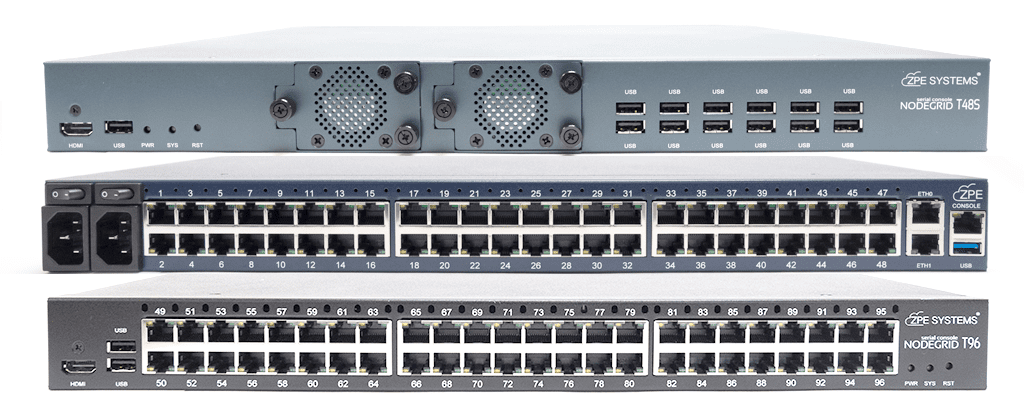
SAN JOSE, CA, March 10, 2015 – ZPE Systems® today unveiled NodeGrid Serial Console™. This new generation of serial console switch is the highest density device in the industry and helps data centers improve productivity, multi-user access and reduce their infrastructure costs with the latest technologies. Open modular hardware design, fast CPU speed and more memory combined with the latest 64-bit Linux OS enable lightning response times. A modern Yocto/Ubuntu software development kit and support for Docker Containers simplify additional feature expansion. Designed by industry veterans, patent-pending NodeGrid Serial Console is available in eight 1U configurations—96, 48, 32 and 16 port models with dual or single power supply.
NodeGrid Serial Console enables fast, simultaneous in- and out-of-band access and control of network, storage, power and server devices – including Open Compute Hardware Management – to maximize enterprise computing uptime.
“With over 100 years of combined experience in the console server business, our team has the experience and knowledge to deliver world class products. NodeGrid Serial Console was designed to complement our industry defining NodeGrid Manager platform,” said CEO and co-founder Arnaldo Zimmermann. “Key customers asked us to build a fast, high capacity, easily customized console server and that’s just what we did.”
NodeGrid Serial Console is the only offering in the market today with a 96 port density for serial console. As rack densities increase, NodeGrid Serial Console is an excellent choice for providing flexibility in designing and configuring the rack.
“The ability to do Serial Console on an Intel Platform with Docker support is a tremendous benefit for customers adopting virtualization. Compiling Intel based tool sets on an open platform with the SSD sizing to run VMs, now allows Data Center Operators to extend the use cases of the serial to a variety of use cases,” said Olav Philips, Sr. DevOps Engineer at Liquid Robotics Inc.
Brief NodeGrid Serial Console Features
Secure in-band and out-of-band access to serial devices via web, CLI and direct Linux shell
96, 48, 32 or 16 serial port models with dual/single AC power supply
Dual core 1.75 GHz Intel Atom CPU; 4GB RAM 36GB SSD storage for data logging and custom code Dual Gigabit Ethernet ports, 1 HDMI port, 1 console port, 2 USB 2.0 ports
64-bit Linux Kernel 3.14 with Yocto/Ubuntu SDK for Software Innovation
Docker optimized for quick, flexible script and application integration
HTML5 remote console access for mobile, tablet, desktop – no more Java dependencies
Vendor-neutral power management: Cyclades/Avocent, Raritan, ServerTech, Emerson, APC
Additional Resources
www.zpesystems.com
www.twitter.com/zpesystems
www.linkedin.com/company/zpe-systems
About ZPE Systems, Inc.
ZPE Systems is the data center industry’s first provider of Software Defined Infrastructure to manage physical and virtual IT devices. The company’s NodeGrid platform simplifies access and control of compute, network, storage and power infrastructures. NodeGrid Manager provides vendor-neutral OOB management of IT devices. NodeGrid Serial Console enables OOB access & control of serial devices. NodeGrid [CI] protects converged infrastructure. NodeGrid Flex and NodeGrid Bold control devices at the edge of the network. NodeGrid USB provides a high-density USB type C mobility development cycle environment. NodeGrid Service Processor secures IPMI management ports and IoT devices.
ZPE provides smart, consolidated IT management solutions that reduce downtime and CAPEX/OPEX. The company is headquartered in Fremont, California with resellers in Japan, UK, Germany, Netherlands, Brazil and India. ZPE Systems, the ZPE logo and NodeGrid are registered trademarks or trademarks of ZPE Systems. Other company and product names may be trademarks of their respective owners.
Press Contact
ZPE Systems, Inc. Alvin Chan, Marketing Manager 510-298-3022 alvin.chan@zpesystems.com
SAN JOSE, CA, March 10, 2015 – ZPE Systems® today unveiled NodeGrid Serial Console™. This new generation of serial console switch is the highest density device in the industry and helps data centers improve productivity, multi-user access and reduce their infrastructure costs with the latest technologies. Open modular hardware design, fast CPU speed and more memory combined with the latest 64-bit Linux OS enable lightning response times. A modern Yocto/Ubuntu software development kit and support for Docker Containers simplify additional feature expansion. Designed by industry veterans, patent-pending NodeGrid Serial Console is available in eight 1U configurations—96, 48, 32 and 16 port models with dual or single power supply.
NodeGrid Serial Console enables fast, simultaneous in- and out-of-band access and control of network, storage, power and server devices – including Open Compute Hardware Management – to maximize enterprise computing uptime.
“With over 100 years of combined experience in the console server business, our team has the experience and knowledge to deliver world class products. NodeGrid Serial Console was designed to complement our industry defining NodeGrid Manager platform,” said CEO and co-founder Arnaldo Zimmermann. “Key customers asked us to build a fast, high capacity, easily customized console server and that’s just what we did.”
NodeGrid Serial Console is the only offering in the market today with a 96 port density for serial console. As rack densities increase, NodeGrid Serial Console is an excellent choice for providing flexibility in designing and configuring the rack.
“The ability to do Serial Console on an Intel Platform with Docker support is a tremendous benefit for customers adopting virtualization. Compiling Intel based tool sets on an open platform with the SSD sizing to run VMs, now allows Data Center Operators to extend the use cases of the serial to a variety of use cases,” said Olav Philips, Sr. DevOps Engineer at Liquid Robotics Inc.
Brief NodeGrid Serial Console Features
Secure in-band and out-of-band access to serial devices via web, CLI and direct Linux shell
96, 48, 32 or 16 serial port models with dual/single AC power supply
Dual core 1.75 GHz Intel Atom CPU; 4GB RAM 36GB SSD storage for data logging and custom code Dual Gigabit Ethernet ports, 1 HDMI port, 1 console port, 2 USB 2.0 ports
64-bit Linux Kernel 3.14 with Yocto/Ubuntu SDK for Software Innovation
Docker optimized for quick, flexible script and application integration
HTML5 remote console access for mobile, tablet, desktop – no more Java dependencies
Vendor-neutral power management: Cyclades/Avocent, Raritan, ServerTech, Emerson, APC
Additional Resources
www.zpesystems.com
www.twitter.com/zpesystems
www.linkedin.com/company/zpe-systems
About ZPE Systems, Inc.
ZPE Systems is the data center industry’s first provider of Software Defined Infrastructure to manage physical and virtual IT devices. The company’s NodeGrid platform simplifies access and control of compute, network, storage and power infrastructures. NodeGrid Manager provides vendor-neutral OOB management of IT devices. NodeGrid Serial Console enables OOB access & control of serial devices. NodeGrid [CI] protects converged infrastructure. NodeGrid Flex and NodeGrid Bold control devices at the edge of the network. NodeGrid USB provides a high-density USB type C mobility development cycle environment. NodeGrid Service Processor secures IPMI management ports and IoT devices.
ZPE provides smart, consolidated IT management solutions that reduce downtime and CAPEX/OPEX. The company is headquartered in Fremont, California with resellers in Japan, UK, Germany, Netherlands, Brazil and India. ZPE Systems, the ZPE logo and NodeGrid are registered trademarks or trademarks of ZPE Systems. Other company and product names may be trademarks of their respective owners.
Press Contact
ZPE Systems, Inc. Alvin Chan, Marketing Manager 510-298-3022 alvin.chan@zpesystems.com
Back in the early and mid-2000’s the race was on to implement an out-of-band infrastructure (OOBI) to provide access and control to all your IT assets in the data center via a separate management network. Isolating device management to a separate management network was, and still is a great practice. Having the ability to remotely connect to a device in the data center via an isolated network, allows users to perform various tasks such as Reboot, Power off, Power on, run a specific script, provision, test, etc. of specific devices, without impacting the production network processing. Another benefit (among many) is being able to connect to a failed production network device and bring it back in service via remote access and management. Reduces recovery time. Minutes can mean millions when it comes to a production IT outage. The faster you can respond, the less it costs.
Currently, and some 10 years ago, implementing an OOBI required various hardware appliances to be installed in your network to provide access to the device. Serial Console Servers, KVM/IP Switches, Intelligent and Controllable Rack PDU’s, etc… which you need to purchase and install in your data center. 1000’s of dollars were, and still are being spent on the purchase and implementation of these appliances. Why? Because that’s how you do it. Buy more management appliances and add them to your existing infrastructure as you grow. In an attempt to keep up with new technologies like Service Processors (IPMI, ILO, Drac, CIMC, etc) and the explosion of Virtualization, the manufactures have addressed this by creating another appliance for you to buy, add to your rack and network, just to facilitate the access and control to the Service processors and Virtual Machines. These solutions also require periodic updates or upgrades to the vendor specific management software, which was developed (for what was available at the time) over 10 years ago, and based on the use of appliances (sell you more hardware). Not what’s available now.
Today, Virtualization and Service processors are aggressively being adopted in data centers. This greatly reduces the need for expensive, rack cluttering, and heat generating KVM/IP Switches, and perhaps, in some cases, reduced the need for expensive rack PDU’s. Quite a cost savings. But still not enough. Most all OOBI management solutions require additional hardware appliances in order to consolidate and provide access to the Service Processor or Virtual Machine infrastructure. Again, this method of implementing an OOBI came about 10 years ago and required hardware components (KVM/IP, Serial Console, Intelligent Rack PDU’s, Service Processor, and virtual Machine consolidators) in order for it work. And let’s not forget the vendor specific management tools that are useless without the presence of vendor specific appliances and don’t integrate with equivalent competitor products. For example, Console Servers from different vendors. As a result, you, the users are locked in to a specific vendor technology and method of OOBI management. To frame this differently, suppose your company purchases a company which standardized on an OOBI from vendor A. You’re standardized on vendor B. How do you handle this? Maintain both solutions until you can replace one with the other. Buy more hardware from your preferred OOBI manufacturer to replace the hardware from the other manufacturer. Either way, it’s costly and locking you into a specific vendor OOBI technology and method.
So, what can you do? Continue to expand your OOBI infrastructure from a specific vendor with outdated methods and solutions, OR, you could implement a vendor neutral OOBI software-only management solution that provides the same, if not better, secure access and control to devices from both Vendor A and B without having to add additional hardware appliances. Now you can have OOB connectivity and management of your Physical and Virtual infrastructures as it grows, and expands via whatever vendor/s products you decide to use. In fact, you could use a combination of Vendor A, B, C, and D’s OOB appliances to rebuild a best of breed OOBI. Let Freedom Ring. No more OOBI vendor lock-in.
From the team that gave us the Linux Break Safe Console Server, Managed Rack PDU’s, and put IPMI in Service processors, comes the world’s first Software-Only, Vendor Neutral Access and Control solution for the management of both Physical and Virtual (VMware and Kernel Virtualization) IT device Infrastructures, regardless of manufacturer. “NodeGrid Manager” is the first software-only solution for Access and Control that doesn’t require any additional hardware components to provide access and control to your existing OOBI, regardless of manufacturer. NodeGrid Manager’s agnostic approach to device management allows you to take advantage of your existing hardware OOBI without regard for manufacturer, or the addition of expensive KVM/IP, or service processor and virtual machine consolidator hardware appliances. As a byproduct, NodeGrid Manager frees you from vendor lock-in. NodeGrid provides the same user experience regardless of device and manufacturer via a common UI and standardized feature and command stack across the entire infrastructure. User experience is the same for Server, Storage, Network, Power, and Virtual Machine (VMware and Kernel Virtualization) infrastructure regardless of manufacturer.
If it hasn’t already happened, there will come a time when your existing OOBI starts letting you down. When that happens, turn to ZPE Systems NodeGrid Manager for relief. NodeGrid Manager Delivers a true vendor-neutral experience in OOBI management. Oh, and did we mention you don’t have to add expensive vendor specific proprietary appliances to manage your physical and virtual IT infrastructure.
Free your OOBI now from vendor lock-in. Stay ahead of technology changes and growth with NodeGrid Manager. The world’s first, Software-Only, Vendor-Neutral Access and Control Solution for both Physical and Virtual IT Infrastructures, that simply and easily works, and scales to meet your needs.
ZPE Systems delivers innovative solutions to simplify infrastructure managment at the datacenter, branch, and edge.
Learn how our Zero Pain Ecosystem can solve your biggest network orchestration pain points.
 Back in the early and mid-2000’s the race was on to implement an out-of-band infrastructure (OOBI) to provide access and control to all your IT assets in the data center via a separate management network. Isolating device management to a separate management network was, and still is a great practice. Having the ability to remotely connect to a device in the data center via an isolated network, allows users to perform various tasks such as Reboot, Power off, Power on, run a specific script, provision, test, etc. of specific devices, without impacting the production network processing. Another benefit (among many) is being able to connect to a failed production network device and bring it back in service via remote access and management. Reduces recovery time. Minutes can mean millions when it comes to a production IT outage. The faster you can respond, the less it costs.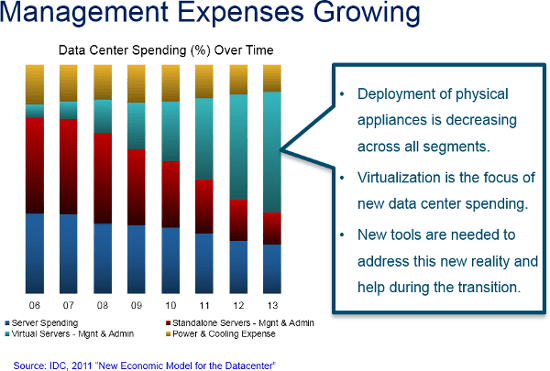
 Server, Storage, Network, Power, and Virtual Machine (VMware and Kernel Virtualization) infrastructure regardless of manufacturer.