Providing Out-of-Band Connectivity to Mission-Critical IT Resources

Home » Data Center Management

Why VPNs and Jump Hosts Fail MSPs at Scale, And How To Fix It

Thumbnail – Why VPNs and Jump Hosts Fail MSPs at Scale

MSPs and Managed Network Service providers depend on remote access every day. Engineers connect to firewalls, routers, switches, hypervisors, and servers across dozens or even hundreds of customer environments. It’s a core function of operations, and without it, MSPs just wouldn’t exist.

The foundation of the remote access model is familiar for many providers: VPN tunnels combined with jump hosts or bastion servers. These tools allow engineers to log into a centralized environment and reach infrastructure across customer networks. This model works reasonably well when there are few customers. But as MSPs add sites, scale their customer base, and deploy more infrastructure, this traditional model becomes unmanageable.

Let’s find out why by looking at how VPN and jump host architectures actually work during real-world failure scenarios.


The MSP Remote Access Model

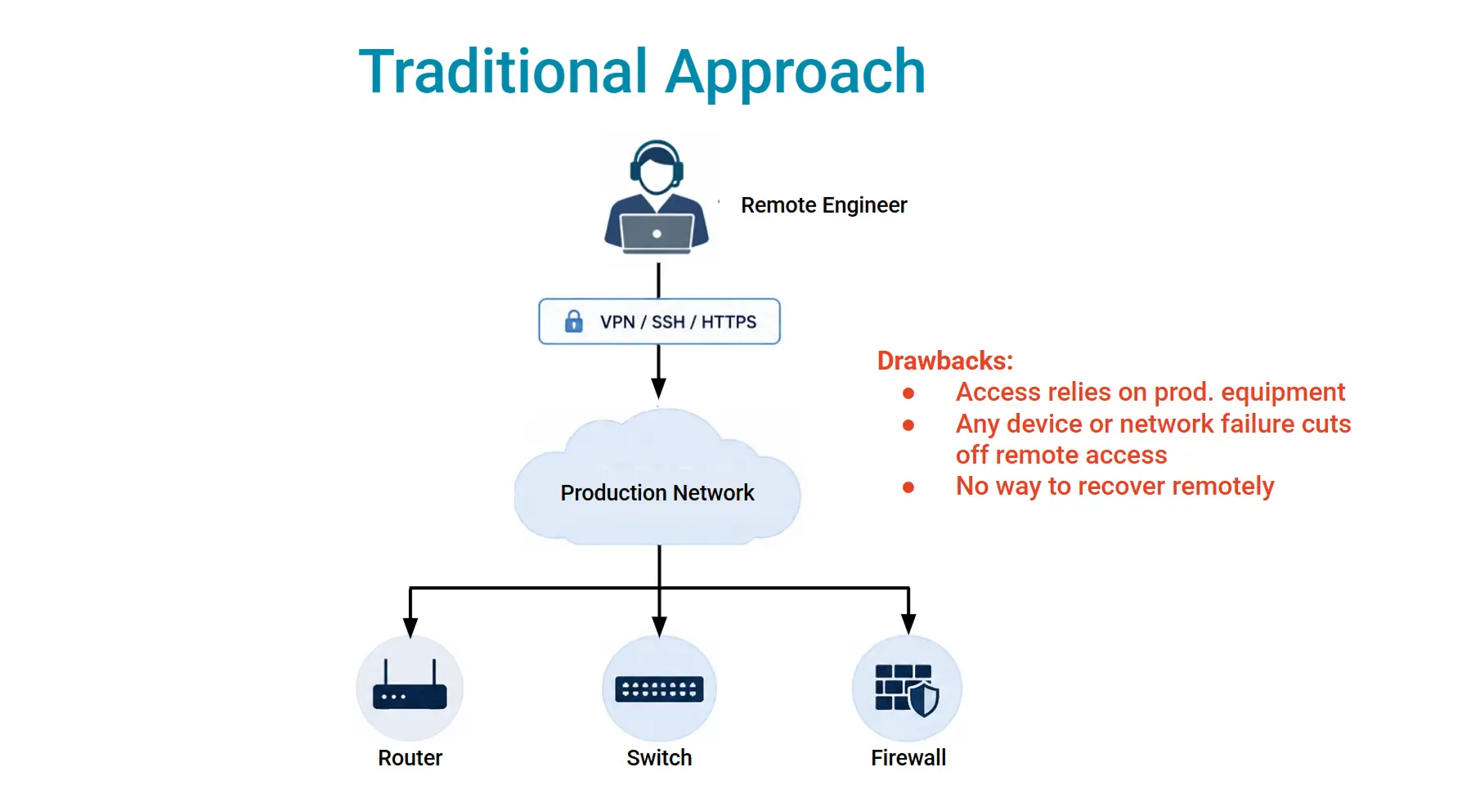
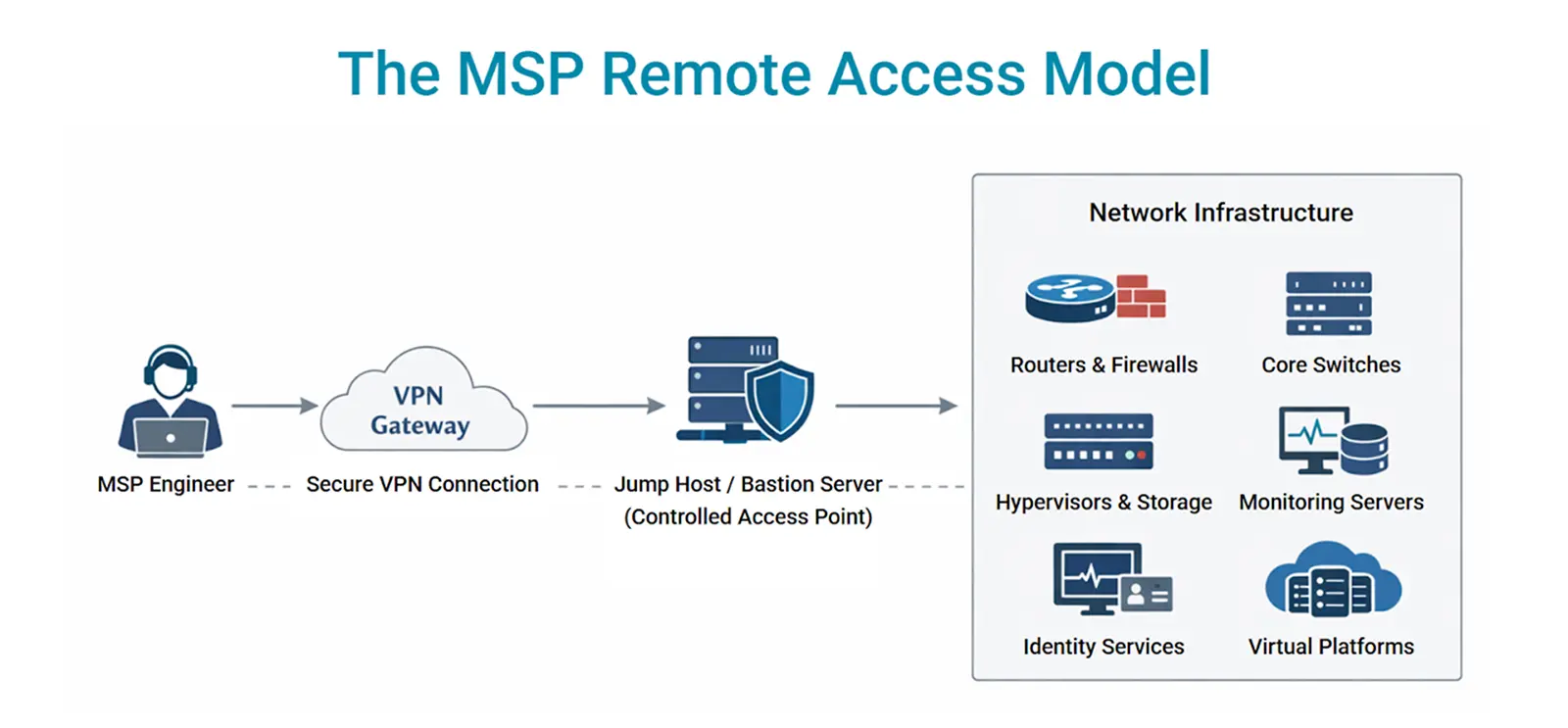
Most MSP/MNS environments rely on a layered remote access architecture. Engineers connect through a VPN gateway hosted either by the MSP or the customer environment. Once authenticated, they reach an internal jump host or bastion server that acts as a controlled entry point to the network infrastructure.

From the jump host/bastion server, they access infrastructure including:

  • Edge routers and firewalls
  • Core switches
  • Hypervisors and storage systems
  • Monitoring servers
  • Identity services
  • Virtual infrastructure platforms (like VMware, Microsoft Hyper-V, etc.)
msp-remote-access-model

Image: MSP remote access relies on the very infrastructure it manages.

This architecture has some benefits. It centralizes access control for the specific customer environment, somewhat simplifies credential management, and allows security teams to enforce authentication policies before engineers reach sensitive systems.

But remote access relies on the assumption that all of this production infrastructure remains operational.

What happens when it fails?


When In-Band Management Breaks: Common Failure Scenarios

VPNs and jump hosts operate entirely in-band, meaning they rely on the same network infrastructure they are meant to manage.

We covered this dependency at length in our last MSP article. Essentially, in-band management is cut off during failures, turning small issues into big outages that eat into MSP margins. And there’s a whole range of failures that can occur. Here are just a few of the common scenarios that lead to long outages and truck rolls:

Routing failures can entirely remove the path between engineers and the environment. A BGP misconfiguration, OSPF failure, or even a bad firmware update can drop VPN sessions instantly. The device causing the issue may still be running, but without access, engineers can’t fix it.

Firewall policy errors often block management traffic. A single misapplied rule or automated update can cut off access to internal systems. The firewall is online but unreachable, making a simple rule change impossible without on-site help.

WAN or ISP outages eliminate remote connectivity altogether. Even if the internal network is still functioning, engineers outside the environment have no way in. What should be a quick fix becomes a truck roll.

Authentication failures can lock engineers out of jump hosts, even when systems are otherwise healthy. If identity services like Active Directory or LDAP are unavailable, login attempts fail and troubleshooting stops.

Core service failures, such as DNS or certificate validation issues, can also break access indirectly. Devices may still be reachable, but the tools used to connect to them stop working.

We’ll break these scenarios down further in a separate article, but the pattern is clear: Even when infrastructure is still running, engineers lose the ability to reach it when it matters most.


Why the Problem Gets Worse as MSPs Scale

Let’s set aside the fragility of this in-band remote access model and talk strictly about scale. When you’re managing dozens of customer environments, each introduces more VPN gateways, firewalls/policies, routing domains, identity integrations, etc.

That simple remote access model turns into a highly distributed patchwork of VPN tunnels, jump hosts, bastion servers, and authentication systems spanning multiple networks. It doesn’t take a large leap of the imagination to see why this doesn’t scale.

Access is Fragmented

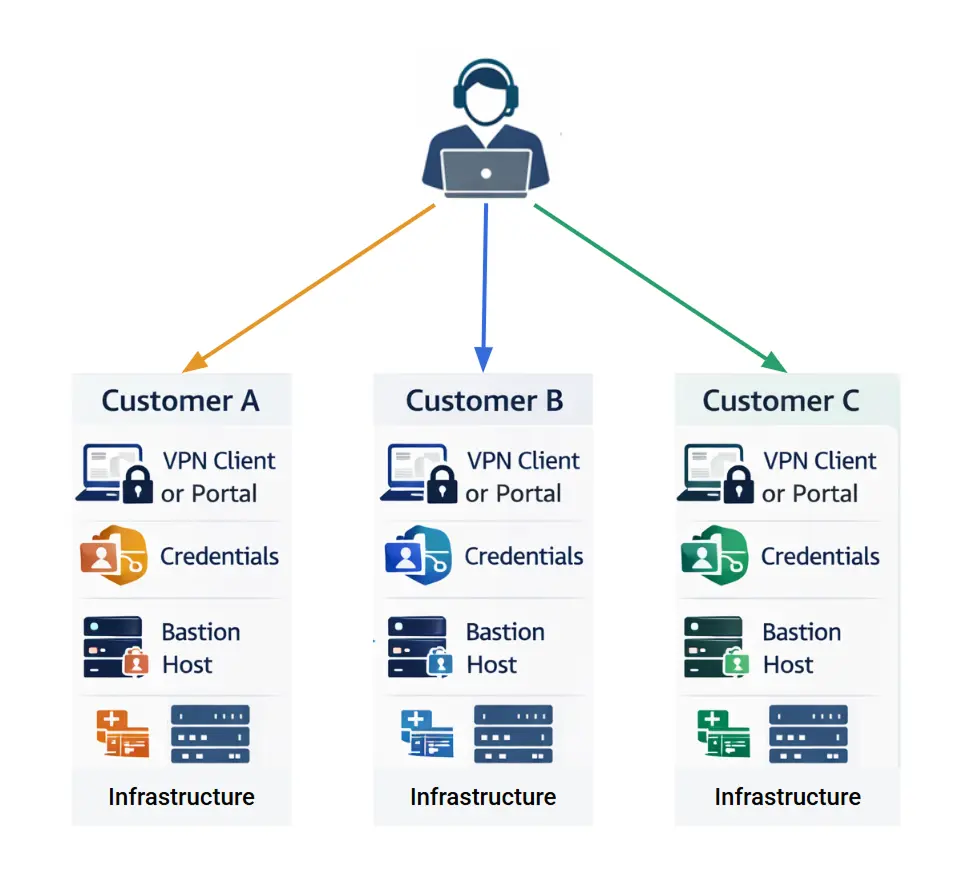
Engineers rarely connect to a single management environment (unless of course they’re using ZPE Cloud). Instead, they maintain separate access paths for each customer, which looks like this:

  • Different VPN clients or portals
  • Separate credential sets
  • Unique bastion hosts
  • Different network segmentation models
fragmented-access

Image: MSPs need to juggle multiple access paths, credentials, and infrastructure for different customers.

Troubleshooting a single outage may require navigating several access layers before even reaching the affected device. This slows response time and increases the likelihood of access failures during incidents.

Ops Overhead Grows

As environments get bigger, so does the job of maintaining access infrastructure. MSP teams need to set up and maintain VPN gateways, manage identity federation between organizations, monitor jump host infrastructure, rotate/secure access credentials, and fix connectivity issues.

It’s easy for engineers to spend as much time maintaining the access system as they do managing the infrastructure itself.

Recovery Delays Multiply Across Sites

One incident is manageable. But imagine there’s a regional ISP outage or widespread software bug that takes down a dozen customer sites. Engineers are forced to:

  • Queue troubleshooting tasks across environments
  • Dispatch all their technicians to remote locations
  • Coordinate access with third-party facilities
  • Work around broken VPN connectivity
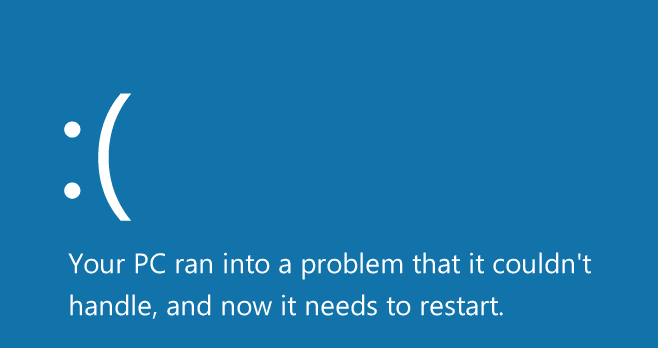
Blue Screen of Death

Image: Software bugs, like the one that caused 2024’s CrowdStrike outage, can render mission-critical PCs useless until remedied by on-site intervention.

As the number of managed sites grows, these recovery delays compound and the limitations of traditional remote access become clear.

Operational Costs Rise Quietly

When managing so many sites and incidents per year, the financial impact adds up. That practical remote access solution becomes a hefty cost of doing business, especially when incidents require additional troubleshooting hours, escalations to senior engineers, on-site recovery/travel expenses, and SLA penalties/credits.

Engineering Turns Into Firefighting

One of the biggest impacts on business is when engineers can no longer focus on optimizing the network, automating jobs, or rolling out security enhancements, and instead have to focus on putting out ops fires. When strategic improvements take a back seat to remote access failures and reactive outage recovery, teams become less productive.


How To Fix It: Separate Management From Production

Solving the challenge doesn’t involve deploying more remote access or monitoring tools. Many MSPs are taking a step back and addressing the underlying architecture. They’re finding that out-of-band management using the proper Isolated Management Infrastructure (IMI) is the only path forward (pun intended).

Maintain Access When the Network Fails

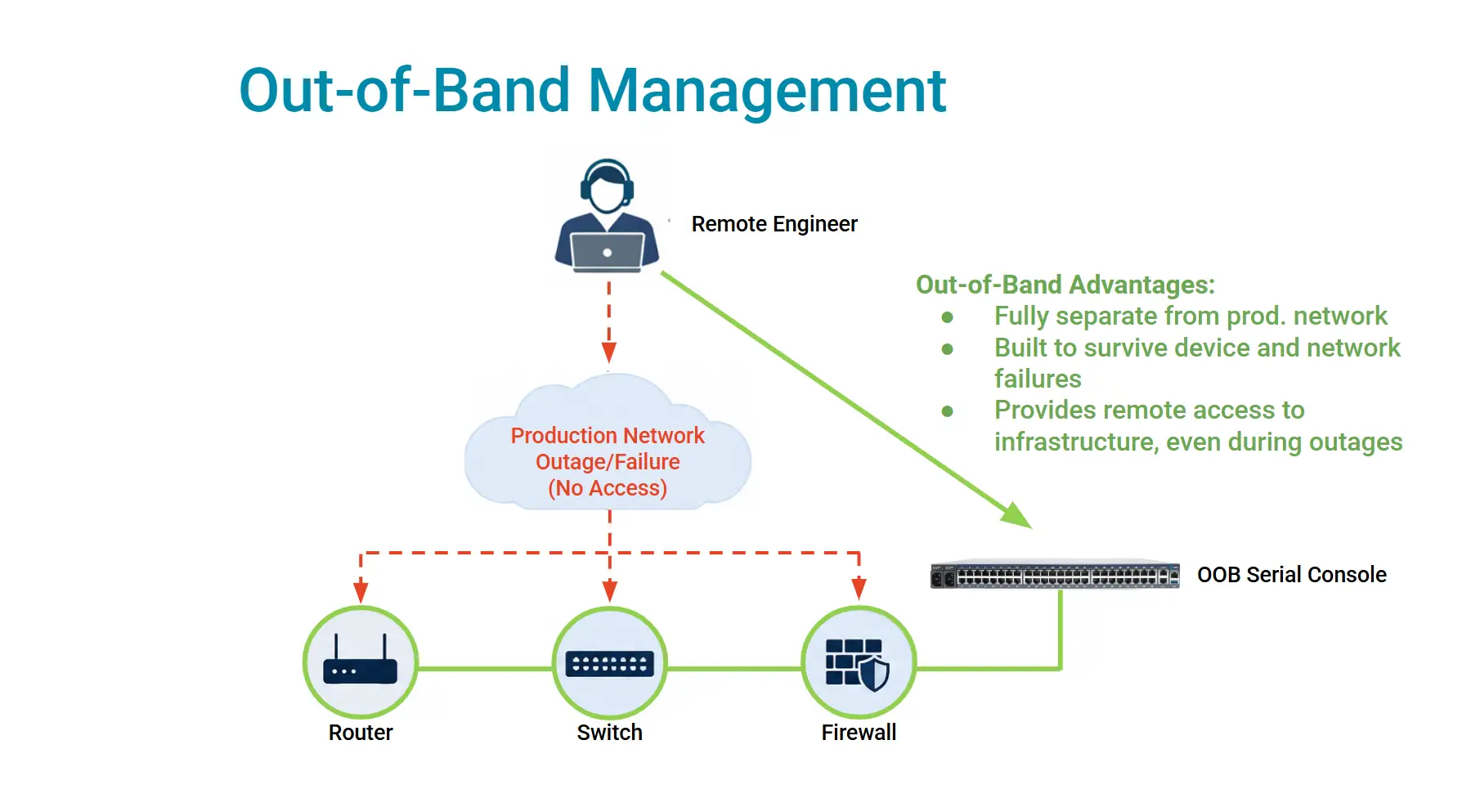
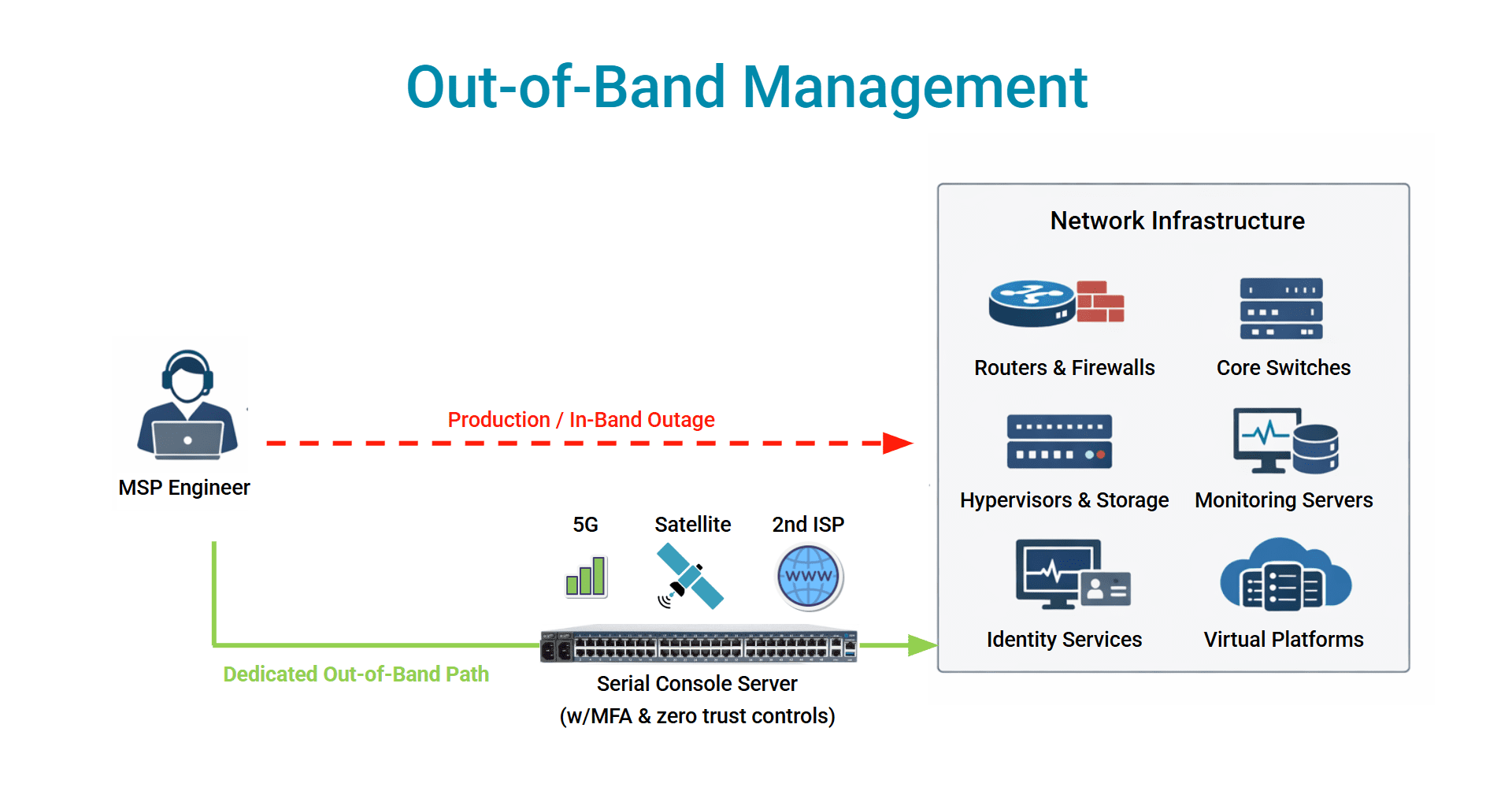
Out-of-band architectures introduce a separate management path that operates independently of the production network. Instead of relying solely on VPN connectivity through the customer infrastructure, engineers can reach devices through a dedicated management plane designed specifically for recovery and operational control. This includes:

  • Direct console access to network and other devices
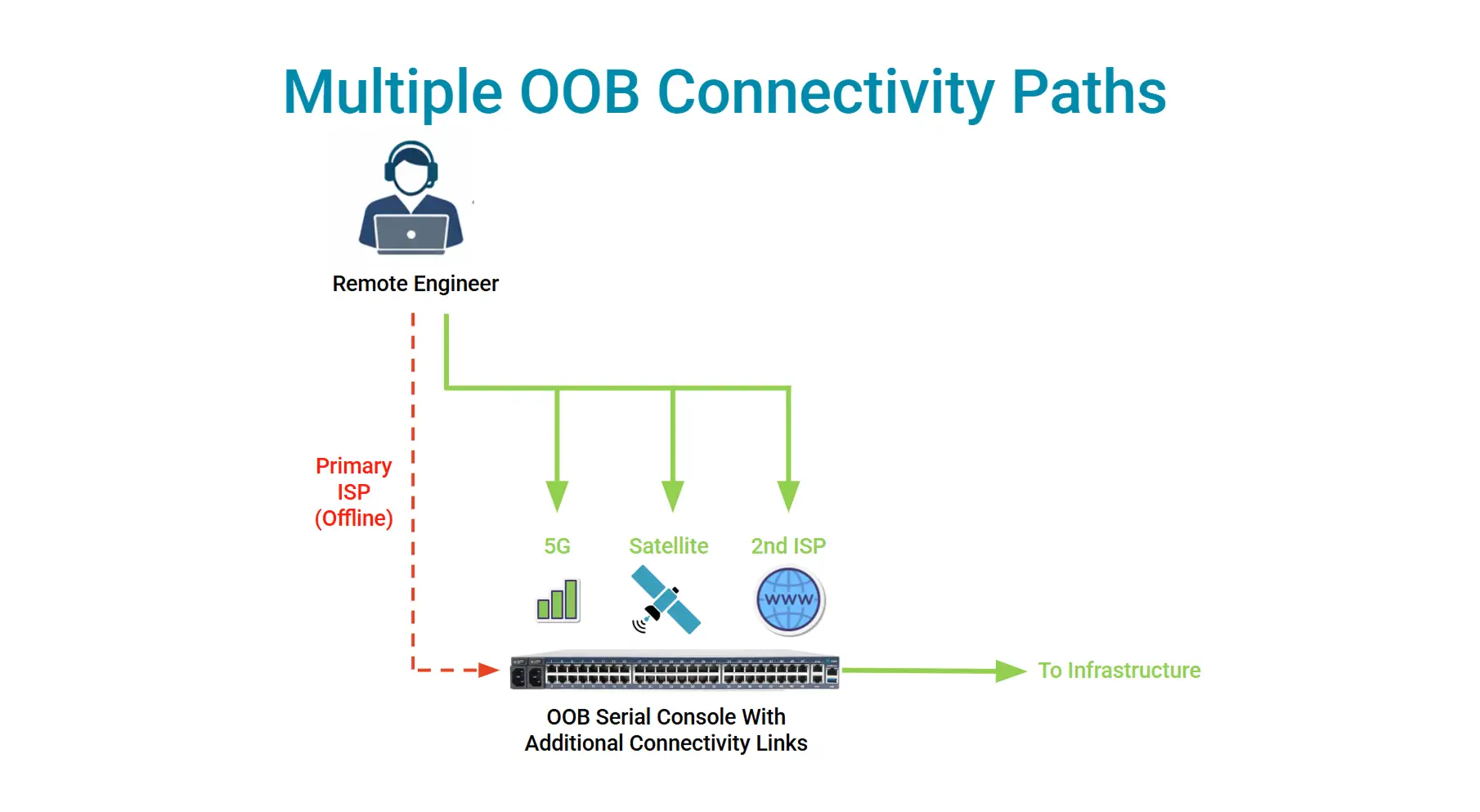
  • Independent connectivity using secondary and tertiary WAN links
  • Centralized management gateways that remain reachable during major outages

This management plane is reachable via 5G/cellular, satellite (like Starlink), secondary ISP, and other links. Modern serial console servers, like the Nodegrid Serial Console Plus, also include enterprise-grade security features like multi-factor authentication and zero trust controls, and isolation to keep the management plane completely hidden from threats. MSPs remain in control whether they’re battling a widespread outage or active cyberattack.

Out of band management for MSPs and remote recovery

Image: Out-of-band management allows MSPs to securely connect to infrastructure, even when the production network fails.

If routing breaks, engineers can still reach the router console.

If firewall policies block access, engineers can log in through the out-of-band path and correct the rule.

If the WAN circuit fails entirely, cellular/satellite connectivity still provides a path into the environment.

The key difference is that management access no longer depends on the health of the production network. Management access becomes completely independent and always reachable.

Simplify Operations Across Many Environments

Out-of-band helps address the operational complexity that scales with traditional in-band management. Engineers no longer need to juggle separate VPNs, credentials, jump hosts, etc. for each customer. They get one management infrastructure that centralizes access and standardizes connectivity across sites. MSP teams get to:

  • Maintain consistent access workflows across customers
  • Enforce centralized authentication and authorization policies
  • Audit administrative activity across all managed environments
  • Reduce the number of tools required to access infrastructure
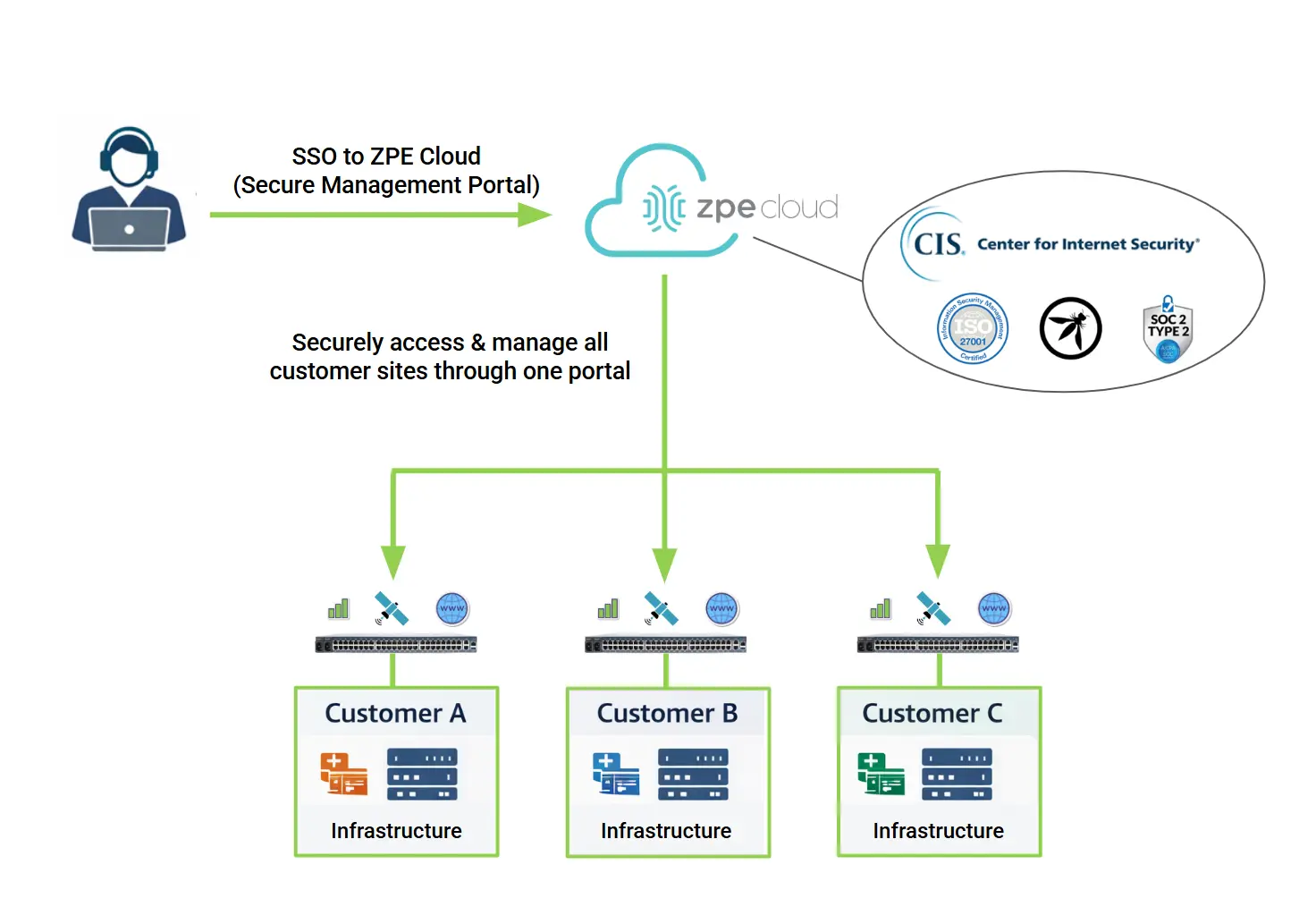
Centralized Management of MSP Customer Environments

Image: Out-of-band helps MSPs streamline day-to-day operations by eliminating the need to juggle multiple VPNs, credentials, jump hosts, and other access layers for each customer.

For MSPs that use the secure management portal ZPE Cloud, they can log in once and simply click to switch between customer environments (here’s a cool video showing how easy it is). This simplifies day-to-day operations and outage recovery, and helps teams become more productive.

Combine Resilient Access and Centralized Control

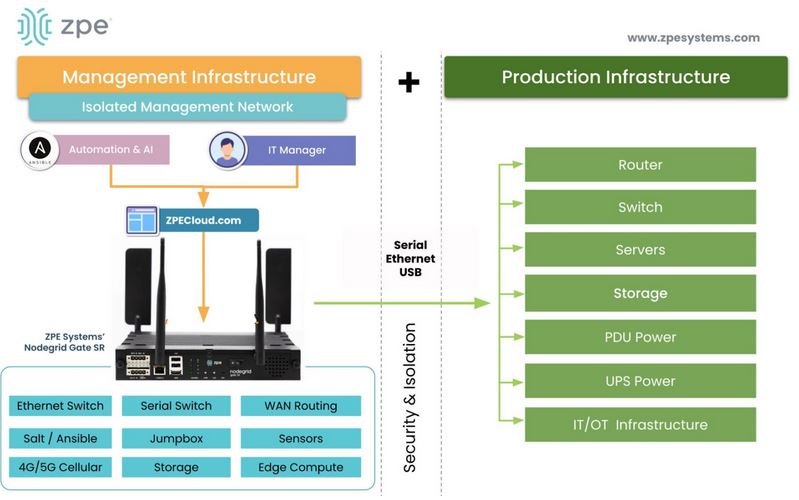
Modern platforms combine out-of-band connectivity with centralized orchestration to provide both operational resilience and secure access management. Solutions like ZPE’s Nodegrid are designed to act as a dedicated management gateway for distributed infrastructure. Within this single platform, MSPs can:

  • Maintain always-available console access to networking, computing, and their full stack of devices
  • Connect to remote sites through independent cellular or secondary links
  • Enforce role-based access controls and identity integration
  • Record and audit administrative sessions with detailed logging
  • Manage thousands of devices across geographically distributed environments
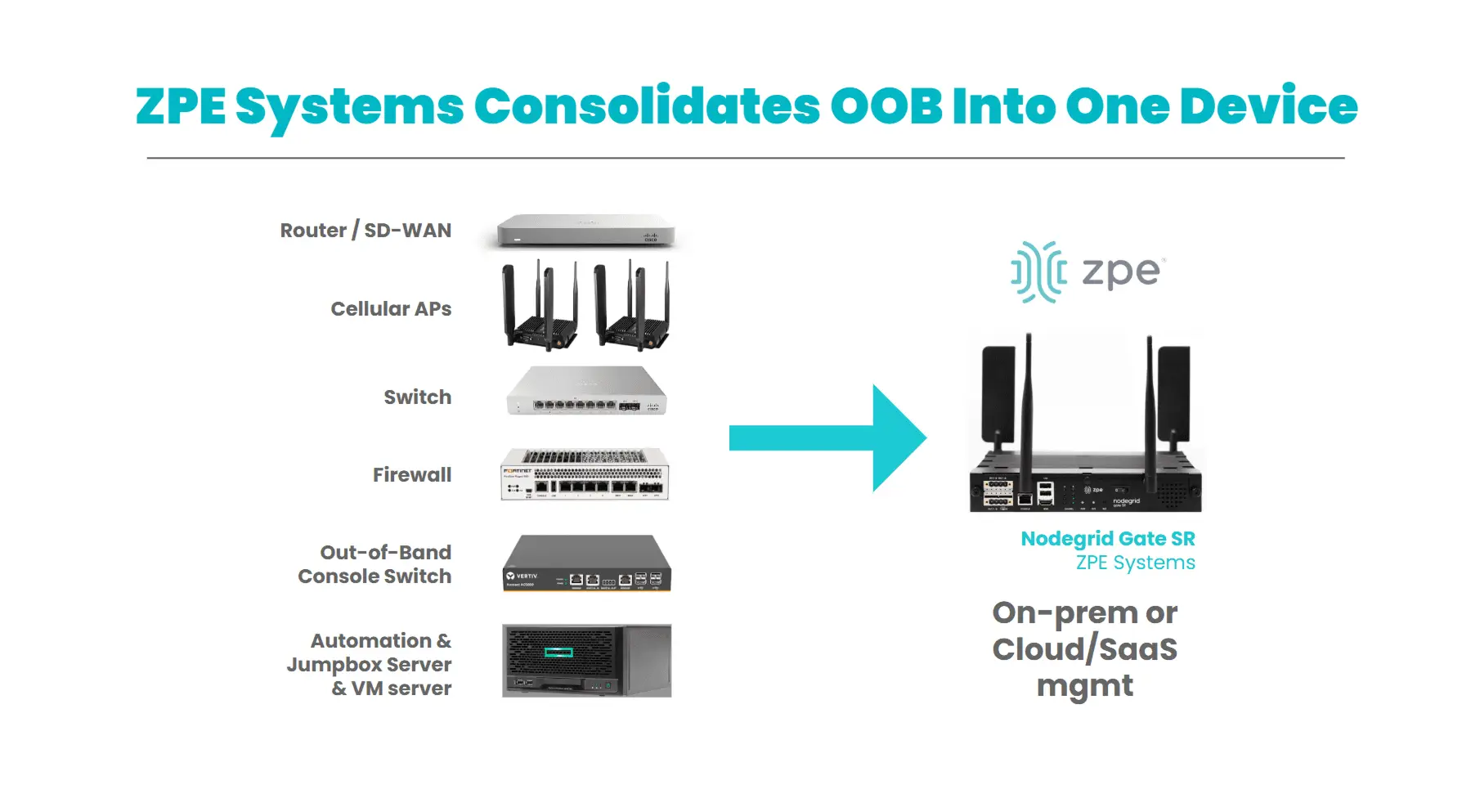
A diagram showing how to use ZPE to follow Gartner’s best practices for an isolated management infrastructure.

Image: ZPE’s Nodegrid devices combine 9+ functions into one and create an isolated management infrastructure ideal for secure, reliable access to production assets.

This architecture effectively creates an isolated management plane that remains available even when the production network is experiencing failures.

Make Recovery Predictable Instead of Reactive

For MSPs, the real advantage of this model is operational. When engineers know they will always be able to reach infrastructure during an outage, recovery becomes faster and more consistent. Troubleshooting can begin immediately, configuration errors can be corrected remotely, and incidents that used to require on-site intervention can be resolved from the operations center.

At scale, these improvements translate directly into measurable outcomes:

  • Faster mean time to resolution
  • Fewer truck rolls
  • Lower operational overhead
  • Improved SLA performance

In other words, the architecture changes how teams handle operations and how efficiently MSPs grow their business.


Understanding the Financial Impact

For many providers, the operational costs of traditional remote access models remain hidden until they analyze how often incidents require on-site intervention or extended troubleshooting.

To help MSP teams quantify this impact, we created a simple worksheet that estimates the true cost of downtime across managed environments.

It walks through common inputs such as incident volume, technician time, truck roll costs, and SLA penalties to calculate the annual financial impact of outage recovery.

From there, it shows how resilient management infrastructure can significantly reduce those costs. Download it now to analyze your costs and see your potential ROI by adopting out-of-band.

Why Most MSPs Still Struggle With Network Outages (Even With Great Tools)

Thumbnail – Why Most MSPs still struggle with network outages

Managed service providers have never had more technology at their disposal. Real-time alerts stream in from monitoring platforms. Engineers can troubleshoot off-site using remote access tools. Automation handles patching, configuration updates, and routine maintenance. On paper, today’s MSP toolkit is powerful and mature.

But when serious network outages happen, many providers still struggle to get back to normal. Restoring services can require hours of coordination, travel, and escalation. It’s this disconnect that raises an important question:

If the tools are better than ever, why is it so hard to recover from downtime?


There’s A Hidden Dependency Inside Traditional Remote Management

Some of the tools MSPs have at their fingertips are VPN tunnels, remote desktop sessions, and internally hosted jump environments. These are effective for routine maintenance. But this traditional remote management approach hides a major dependency: it all relies on the production network.

This is called in-band management, and it’s the biggest obstacle MSPs face when trying to get back online. In-band management is where admin access depends on the very infrastructure it grants access to. It works great when everything is working. But if a core router fails, firewall policies break, a WAN link drops, or an upstream provider experiences disruption, access disappears entirely.

ZPE Systems – In-band management cuts remote admin access during outages

Image: With in-band management, remote admin access is cut off when there is a production network outage.

At the basic level, this is a problem with the underlying management architecture (or lack thereof). Here are common obstacles that stem from in-band management and make MSPs struggle with network downtime.


Minor Issues Easily Turn Into Long Interruptions

Monitoring and alerting platforms excel at detecting problems. They can identify packet loss, device failures, link instability, and performance degradation within seconds. Engineers are immediately in the loop when something goes wrong.

The problem is these systems don’t provide the ability to act. If routing fails or firewall rules change unexpectedly, engineers lose the remote path needed to investigate. If an ISP circuit drops, VPN access vanishes with it. If DNS or authentication services become unavailable, login attempts stall.

Alerts keep coming in, dashboards light up, and customer complaints keep the phones ringing. But without direct device-level access, there’s no way to remotely reach the underlying infrastructure. What would have been a few minutes of troubleshooting turns into a prolonged service event requiring on-site support.


Physical Access Turns Into A Waiting Game

When remote access fails, on-site intervention becomes the only option, but this can also stand in the way.

Technicians often need to:

  • Drive several hours to the colocation or branch facility
  • Wait for security approval or badge verification
  • Schedule access windows during limited hours
  • Coordinate with third-party support
  • Navigate strict escort requirements
  • Deal with weather delays, travel logistics, or facility staffing shortages

Once they arrive, they also might have to wait longer for cage access, compliance checks, or coordination with other on-site personnel. Meanwhile, customer services remain degraded or offline.

No amount of monitoring can compensate for losing the path to the devices themselves.


Scale Turns Occasional Friction into Business Risk

These delays might feel like a small inconvenience. An engineer goes on site, fixes the problem, and moves on. It seems manageable.

But as MSPs scale, the friction compounds as each outage consumes:

  • High-value engineering hours
  • Travel budgets
  • SLA margin buffers
  • Customer satisfaction and positive reviews

As incident volume grows, recovery delays begin to affect staffing efficiency and profitability. Travel time expands. Skilled engineers spend more hours away from high-value work. Response windows widen, and maintaining consistent service-level performance becomes more difficult. The “manageable” approach becomes a structural drag on growth.

Traditional in-band management does not scale cleanly. It scales cost, complexity, and operational risk.


Why Better Tools Alone Won’t Solve the Problem

It’s tempting to think that you can solve the problem with more monitoring, automation, remote software, or other investments. But if you can’t reach the infrastructure when it matters most, no amount of tooling will save you.

The core issue is this: How do you get dependable, guaranteed access during failures? In even simpler words, how do you recover without rolling a truck?

Outages cut off MSPs from their tools

Image: When MSPs rely on in-band management, they can be easily cut off from remote admin access to customer sites.


Rethinking What “Prepared for Outages” Really Means

Resilient management access doesn’t mean what it did 20 years ago, when it was enough to plug in a console server and modem to be able to fix 90% of incidents. This outdated approach relies at least partly on production infrastructure, and even though out-of-band devices are used, they’re not set up on a proper out-of-band network. MSPs using this management model (and many still do) are only kind of prepared for outages…but not really.

True resilience requires physical and logical separation between management access and production traffic. Instead of relying solely on in-band connectivity, forward-looking MSPs are deploying dedicated out-of-band and isolated management infrastructure (IMI). This approach creates a separate, resilient access path that remains available even when the primary network fails. In other words, MSPs stay in control no matter what disruptions occur.

OOB gives MSPs dedicated remote access to their tools

Image: With dedicated out-of-band and isolated management infrastructure, MSPs can remotely access any managed device even during complete production network outages.

This architecture enables engineers to:

  • Maintain console-level access during WAN outages or cyberattacks
  • Remotely access power and BIOS controls for hard reboots
  • Reach network devices even if routing is misconfigured
  • Begin immediate troubleshooting and recovery without going on site
ZPE Systems – Out-of-band management and IMI guarantee remote admin access

Image: ZPE Systems’ Nodegrid allows MSPs to easily deploy out-of-band and IMI across branch, colocation, and data center sites.

Out-of-band and IMI help MSPs pivot from a reactive recovery posture to a proactive, engineered-resilience approach. But one major hurdle remains: How do you build this architecture?

Solutions like ZPE Systems’ Nodegrid are built specifically for setting up a proper out-of-band network and IMI. Nodegrid devices combine all the functions necessary, like routing, switching, cellular/satellite, and others, with an on-prem or cloud management model. In fact, Nodegrid can be used to set up an out-of-band network in less than an hour.

Beyond remote access, Nodegrid integrates identity enforcement, granular authorization, session logging and auditing, and dozens of enterprise-grade security features directly into its architecture. That means MSPs improve operational recovery and security posture simultaneously.

With out-of-band and IMI, MSPs can be confident that they’re prepared for any type of outage.


Calculate the Real Cost of Your Recovery Model

How much are outages actually costing you in truck rolls, labor, and SLA penalties? Get our free download to calculate your current costs and how much you could save by switching to Nodegrid. It only takes a few minutes. Download the guided walkthrough now!

ZPE Systems named Fastest Growing Vendor by Stock in the Channel

Fremont, Calif. — November 27, 2025 — ZPE Systems is proud to be named the Fastest Growing Vendor: Technology and Storage by Stock in the Channel, a leading platform for IT channel procurement and vendor analytics. 

This award highlights ZPE Systems’ rapid growth and strong momentum as organizations modernize their network infrastructure and management solutions. ZPE’s ongoing expansion across enterprise, service provider, and hyperscale environments reflects the increasing demand for ZPE’s vendor-agnostic out-of-band management platform, which simplifies operations and strengthens resilience. 

With ZPE Systems now part of Legrand, a global leader in electrical and digital infrastructure solutions, customers have a one-stop shop for end-to-end infrastructure, from power and racks to connectivity, out-of-band management, and cloud orchestration. This integration ensures customers benefit from world-class support, unified procurement, and a stronger portfolio designed to meet the demands of modern, distributed, and AI-driven networks. 

“We’re honored to bring home the award for Fastest Growing Vendor in Technology and Storage,” said Mark Thomas, Channel Manager EMEA & APAC. “This award shows the trust our partners and customers place in ZPE Systems as they navigate increasingly complex environments and the very demanding requirements of AI architectures. Now as part of Legrand, we’re even better positioned to deliver comprehensive infrastructure solutions and exceptional value. 

ZPE Systems – Mark Thomas

ZPE Systems continues to deepen relationships across the channel, empowering partners with the Nodegrid platform for infrastructure management. Nodegrid provides customers with the industry’s most secure and complete remote out-of-band access, delivered through a combination of multi-function Nodegrid Serial Consoles, Nodegrid Services Routers, and ZPE Cloud SaaS for global infrastructure management. Nodegrid has become the go-to platform for enterprises seeking to reduce risk, accelerate deployments, and increase visibility across the entire network management lifecycle. 

ZPE Systems extends its gratitude to Stock in the Channel for this recognition, and most importantly, to our partners, customers, and Channel Team for helping to achieve this milestone. We look forward to continuing our mission to deliver innovative management solutions that support the world’s most critical networks. 

Want to become a partner? Visit our Partner Portal to sign up! 

Explore our full product lineup and product selector tool below. 

ISPs: What Happens When You Can’t Reach the Console?

Imagine the scenario from our last article: It’s 2am, a core router just went down, and customers in three regions have your phone ringing off the hook. You try SSH. No response. You ping through the management VLAN. Again, nothing.

What about the console port? This is your last lifeline to see what’s happening under the hood. But when you can’t reach it remotely, recovery slows to a crawl. What should have been a quick fix is now turning into hours of downtime, unhappy customers, and potential SLA penalties.

Things can really spiral out of control for ISPs who depend on their production networks for management. Let’s look at the biggest technical hurdles and business impacts that crop up, and the approach ISPs are taking to make sure they’re always in control.


The Problems When Console Access Is Gone

1. Recovery Turns Into a Road Trip

Technical hurdle: No console access means your only option is to dispatch engineers to the site, plug in manually, and perform recovery by hand.

Business impact: Each truck roll burns thousands of dollars, drags engineers away from other projects, and extends downtime. Customers lose trust and SLA penalties are suddenly on the table.

2. Small Outages Turn Into Big Problems

Technical hurdle: A single misconfigured update or failed device can have a snowball effect when you don’t have console visibility. You can’t isolate the fault quickly, and the blast radius grows.

Business impact: What could have been a quick local fix becomes a regional outage that puts business networks and enterprise accounts at risk.

3. Security and Compliance Take a Back Seat

Technical hurdle: In an emergency, teams know that they have to fix the problem fast. This means they’re likely to cut corners exposing management ports to the internet or using outdated console servers that have weak security.

Business impact: These shortcuts open the door to ransomware and compliance failures that could cost much more than the immediate outage.

ZPE Systems – ISP – When management relies on production

Diagram: When management access depends on the production network, teams can’t recover from outages without going on-site to manually restore services.

The Technical Fix: Out-of-Band & IMI

It’s common to route management traffic through production networks. But this creates a “shared fate” problem: when production goes down, management goes with it.

ZPE Systems created the best practices that are used today and now recommended by CISA, the NSA, and the FBI. Here are the two critical components that fix the “shared fate” problem:


  • Out-of-Band: Provides alternate connectivity (5G, satellite, secondary fiber) so you always have a way to connect to your devices, even if they’re thousands of miles away.
  • Isolated Management Infrastructure: Physically and logically separates management from production, enforcing zero trust controls to keep attackers out, limit lateral movement, and accelerate ransomware recovery.
ZPE Systems – ISP – Out-of-band aids in fast recovery

Diagram: Out-of-band provides a fully isolated management infrastructure with dedicated 5G, satellite, and other links that ensure remote access even when production networks go offline.

OOB and IMI ensure management access is always on, always secure, and always independent. Instead of rolling a truck and waiting hours for services to be restored, you can use your dedicated out-of-band path to instantly access sites from your browser. Nodegrid gives you complete, low-level remote control of devices as if you’re physically connected, so you can recover in minutes. This is critical for ISPs.


Why ZPE Systems’ Nodegrid Is Ideal for ISPs

Nodegrid is built specifically to give ISPs resilient, secure, and scalable management by combining all the functions of OOB and IMI into one device. This pairs with ZPE Cloud or on-prem Nodegrid Manager to give ISPs full remote access, visibility, and control of their distributed sites.

ZPE Systems – ISP – Nodegrid consolidates OOB into one device

Image: ZPE Systems’ Nodegrid devices consolidate more than six management functions into one device, and pair with ZPE Cloud or Nodegrid Manager for holistic remote control of ISP fleets.

Whether you’re a Tier 1 operating backbone POPs, or a Tier 3 keeping local last-mile hubs online, Nodegrid gives you benefits including:

  • Always-on console access via 5G/LTE, Starlink, or secondary fiber.
  • Zero trust enforcement with RBAC, MFA, and continuous verification.
  • FIPS 140-3 certified encryption for airtight security.
  • Centralized policy control with ZPE Cloud or on-prem Nodegrid Manager.
  • Device consolidation: console server, LTE modem, Ethernet switch, and security gateway in one appliance.

More ISPs are realizing these benefits and switching to Nodegrid using an approach that doesn’t require them to disrupt services. Take the Internet Association of Australia, for example. They were able to perform a nationwide rollout of Nodegrid at 35 POPs while maintaining 100% uptime, removing 70 devices from the management stack, and saving $17,500/month in costs. Read the IAA case study for full details, including diagrams and photos.


Here’s How To Deploy Nodegrid With Zero Downtime

There’s a lot at stake when you can’t reach the console during a failure or outage. But Nodegrid helps you quickly resolve those 2AM wakeup calls with secure remote access to all your systems.

To help you, we put together this Zero-Downtime Migration Checklist. Download this guide to see every step — from assessing infrastructure needs, to designing the right solution and validating after migration — and how you can deploy the most resilient ISP network management solution.

After The Firewall Fails: How Gen 3 Out-of-Band Cuts the Ransomware Killchain

How Gen 3 Out-of-Band Cuts the Ransomware Killchain

It’s always frustrating for me to hear about another breach that goes deep. Not because attacks happen (they will), but because so many of them spiral out of control for the same reason: no access, no visibility, no plan that uses the best tools available

Leadership feels reassured when they spend top dollar on prevention. But they overlook the most important part of resilience: mitigation. You can’t build a resilient network with defense alone. You need a plan for when that defense fails. There’s no shortage of high-profile reminders of this

Imagine a submarine breach. Cold water rushes in. The crew is trained, alert, and ready to respond. But when they open the repair locker, all they find is duct tape, a flashlight, and hope. That’s what most IT teams face in a cyberattack.

Without the right tools in place, even the best trained teams can be rendered powerless by a breach. Gen 3 Out-of-Band changes that. It’s your pressure control, isolation chamber, and emergency patch kit that works when everything else doesn’t

Let’s look at a reality-based scenario of how these attacks play out…and how the results can be completely different.

The Breach And The Catastrophe That Follows

The attack begins quietly in the early morning hours. It’s 4:19AM when a sleeper process hidden in the network core activates. Within seconds, systems begin to go offline. At first, it looks like a glitch. But it’s not. It’s ransomware – coordinated, efficient, and already moving laterally.

Dashboards light up, but the core infrastructure is already compromised. Your monitoring tools freeze. VPNs fail. DNS is offline. Something’s wrong, but you can’t see how bad it is. And worse, you can’t do anything about it.

A dark and ominous underwater scene featuring a large submarine submerged in deep ocean waters. The

Your best engineer tries to log in from home. But, SSH hangs. Remote desktop times out. Someone asks if there’s a different way in. Maybe out-of-band access that is not dependent on VLAN1? There’s a moment of hope. An old console server buried in a rack…

But it was decommissioned years ago. Management called it redundant.

Locked Out And Looking In

Internal chats fill with speculation as the situation deteriorates by the minute. Even the cloud console is inaccessible. Your team is blind. No one knows how wide the blast radius is. You can’t tell which systems are down, which are salvageable, or where the attack might spread to next. Backup jobs that were configured on the same network are silent too.

In a last ditch effort, someone volunteers to drive to the datacenter. But, all that’s waiting for them is a locked building that they can’t get into. The badge reader is on the same compromised system. No remote access. No local access. Just a locked door and a blinking red light.

By 8:00 AM, retail locations are trying to open. Customers are walking through the doors and the IT team can only watch the damage unfold. Sure, trucks are rolling, but the systems are down and social media is lighting up. And while the team knows exactly what’s happening, there’s nothing they can do to stop it.

What Goes Wrong With In-Band Management

The problem isn’t that no one had a plan. It’s that they had no access. Without a resilient, independent management plane, even the best playbook can’t be executed.

  • You can’t isolate systems.
  • You can’t confirm where the threat is.
  • You can’t cycle power, restore backups, or even assess the blast radius.
  • You can’t prove you did anything right, because you can’t do anything at all!

When everything depends on a single, fragile production path, any failure becomes total. You’re not just locked out of tools – you’re locked out of the fight.

In-Band management risks admin access

Image: In-band management is risky because admin access shares the same link as the production network. Any production failure cuts admin access.

The Breach And Fast Recovery With Gen 3 Out-of-Band

Now imagine the same breach, at the same hour. The ransomware behaves the same way. Core systems go down. DNS disappears. Monitoring dies. But this time, the team has something different: ZPE’s Gen 3 Out-of-Band infrastructure.

As the attack unfolds, IT first responders are already inside, connected securely through ZPE’s Nodegrid. It doesn’t matter if DNS is down or the VPN won’t connect. You don’t need the production network at all. Unlike that old console server, this connection is entirely separate, isolated by design, and hardened for moments like this.

Instead of floundering in the dark, the team sees exactly what’s happening. They access routers, switches, and servers directly from wherever they are without relying on the compromised environment. One by one, they identify which systems are clean, which are compromised, and which need to be taken offline.

IMI via Gen 3 out-of-band

Image: Gen 3 out-of-band is fully isolated, giving you admin access to isolate, cleanse, and restore systems. This is the only way to cut the ransomware killchain and recover from an attack.

There’s no guesswork, only action. Segments of the network go dark, but intentionally this time. Teams shut down infected zones by port, node, or site. They use ZPE’s devices to restore clean systems from verified backups, remotely power cycle PDUs, and automatically push restore scripts locally. There’s no need for physical access. No one drives to the datacenter. There’s no scramble for access credentials or badge overrides.

The breach is being contained before customers begin to arrive. Core systems are stable. Edge environments are clean. Business resumes without disruption. No social backlash. No ticket surge. No headlines. The fire never reaches the storefront.

How Gen 3 Out-of-Band Makes The Difference

Gen 3 Out-of-Band gives you something most teams don’t have during a crisis: control. Not the illusion of control, but real, operational access no matter what happens to your primary infrastructure.

  • You don’t depend on your main network.
  • You don’t wait for remote hands.
  • You don’t lose time chasing access.
  • You take action quickly, securely, and from anywhere.
ZPE is the drop-in Gen 3 out-of-band solution

Image: ZPE’s Gen 3 out-of-band management solution drops into your environment and hosts all the tools and services for cutting the ransomware killchain.

Because when your network goes dark, Gen 3 out-of-band stays lit. That’s the difference between responding to a crisis and becoming one.

See How to Build Your Recovery Environment

3Building an Isolated Recovery Environment

See how to set up a Secure Isolated Recovery Environment (SIRE) that helps you fight through attacks and hide management access from hackers. Our article walks you through how to build survivable data backups and the designated infrastructure you need to stay secure.

Out-of-Band Management Vendor Comparison

Out-of-Band Management Vendor Comparison

Having a resilient data center network is a top priority for the modern enterprise. Network failures can lead to costly downtime, security vulnerabilities, and operational disruptions. To mitigate these risks, companies invest in out-of-band management, cellular failover, next-generation firewalls (NGFWs), and automation. But, it can be hard to know what’s just a feature and what makes a truly resilient infrastructure solution. To help navigate this, we put together this out-of-band management vendor comparison that breaks down how Opengear, Perle, and Lantronix compare to ZPE Systems.

Out-of-Band Management

Out-of-band (OOB) management is critical for maintaining network access during outages or cyber incidents. OOB typically gives admins access via dedicated serial ports, and it’s mainly used during emergencies when devices or services fail and need to be restored. However, because of digital transformation initiatives like hybrid-cloud, Infrastructure-as-Code, and AI adoption, OOB’s requirements have evolved past simple remote troubleshooting. It must seamlessly integrate into diverse, multi-vendor environments, provide flexible automation, and be able to scale without adding management complexity.

Feature
Vendor Support
Automation
Central Management
Best Fit
ZPE Systems
Multi-vendor, modular
API-first, REST/GraphQL, dynamic
ZPE Cloud, Nodegrid Manager
Enterprise networks with or without multi-vendor requirements
Opengear
Broad, but hardware-centric
Template-driven
Lighthouse
Enterprise networks, secure access
Perle
Cisco-focused
Minimal
PerleVIEW
Simple serial access in Cisco-heavy networks
Lantronix
Multi-vendor
Rules-based engine
ConsoleFlow
SMBs or labs needing basic remote access

Takeaway: ZPE Systems’ open architecture and ability to scale in diverse environments give it the edge, as it’s better suited to meet OOB’s modern requirements.

Isolated Management Infrastructure

Resilience requires a dedicated, autonomous layer for management. Isolated Management Infrastructure (IMI) is that layer. Unlike traditional OOB, IMI provides a physically and logically separated control plane that remains operational even when the production network is compromised. It’s essential for running services like monitoring, DNS, or firewalls independently from the primary network. Very few vendors offer true IMI support as part of their core platform.

Feature
Isolation Architecture
Service Hosting
Security Controls
Best Fit
ZPE Systems
Native, air-gapped IMI
Hosts NGFWs, DNS, monitoring tools
Zero-trust: ACLs, MFA, logging
Zero-trust, isolated control environments
Opengear
Shared infrastructure
Requires external appliances
Standard access controls
Hybrid legacy/OOB networks
Perle
Not designed for isolation
External tools only
Standard VPN/SSH
Traditional IT needing remote access
Lantronix
Not designed for isolation
External tools only
Basic security model
SMBs without IMI requirements

Takeaway: Most vendors still treat management like traditional OOB, where it’s a tool for recovery and not proactive resilience. ZPE Systems is purpose-built for IMI, allowing businesses to maintain critical operations during outages or attacks.

Cellular Failover

Through outages, it’s no longer enough to just have a backup link. Cellular failover must ensure secure, intelligent, and seamless continuity. Many vendors provide cellular hardware, but few integrate the security, automation, and multi-carrier intelligence needed for real resilience.

Feature
Carrier & Network Support
Security & Routing
Failover Intelligence
Best Fit
ZPE Systems
5G, dual SIM, multi-carrier on most models
Built-in firewall, VPN, smart routing
Policy-based, API-driven
Secure, automated enterprise continuity
Opengear
5G, dual SIM (CM8100 model only)
Firewall rules, basic routing
Scriptable with limited logic
Backup WAN for branches
Perle
5G on select models
VPN/IPsec support
Basic primary/backup switch
Industrial/edge connectivity focus
Lantronix
5G on LM models
ACLs, event-based failover
Rules engine with logic
Retail and edge with simple failover

Takeaway: While other vendors provide failover as a backup connection with limited intelligence, ZPE Systems stands out by combining carrier agility, security, and orchestration in one platform designed for business continuity.

Firewall Support

Organizations require more than just basic OOB access; they need platforms that can host advanced security services like Next-Generation Firewalls (NGFWs), DNS, and monitoring tools. Here’s how ZPE Systems compares to other OOB vendors in this regard:

Feature
NGFW Hosting Capability
Virtualization Support
Extensibility
Best Fit
ZPE Systems
Hosts Palo Alto, Juniper, etc.
VMs & containers for security apps
Hosts DNS, monitoring, ZTNA, SD-WAN
Consolidated edge security platform
Opengear
Not supported
Containers
External tools required
Secure remote access nodes
Perle
Not supported
None
External tools required
Basic OOB without NGFWs
Lantronix
Not supported
None
External tools required
Lightweight remote deployments

Takeaway: While Opengear, Perle, and Lantronix provide OOB management solutions with some integrated firewall features, ZPE Systems stands out by offering a platform capable of hosting full-fledged NGFWs and other security services. This extensibility allows organizations to consolidate their infrastructure, reduce hardware sprawl, and enhance security within an isolated management environment.

Automation

Automation used to be a “nice to have” capability. Now, it’s critical for reducing human error, accelerating incident response, and enabling self-healing networks.

Feature
Automation Model
Third-Party Integration
Scalability
Best Fit
ZPE Systems
API-driven, rule-based automation
Terraform, Ansible, ServiceNow
Enterprise-wide via Nodegrid Manager, ZPE Cloud
Large teams automating infra-wide
Opengear
Template/config-based
REST API, SNMP
Scales with Lighthouse
IT admins with site-level automation
Perle
Limited scripting
SNMP, CLI
Central via PerleVIEW
Static, low-touch environments
Lantronix
Rules engine with triggers
RESTful APIs
ConsoleFlow supports moderate scaling
Rules-based automation for edge sites

Takeaway: Most vendors focus on limited scripting or rules-based logic meant for small and simple deployments, not for scalable operations. ZPE Systems offers enterprise-wide automation that integrates with modern DevOps tools, enabling intelligent, self-healing infrastructure. For teams aiming to automate across distributed environments or achieve lights-out operations, ZPE Systems is the ideal solution.

Final Recommendation

OOB tools from Opengear, Perle, and Lantronix provide point solutions that help you react to network issues. On the other hand, ZPE Systems helps you achieve proactive resilience through isolation, service hosting, and automation. For organizations looking to stay one step ahead of outages, cyberattacks, and downtime, ZPE Systems offers a secure and scalable fabric.

Click the button to set up a demo and explore ZPE Systems’ single-box Nodegrid solution.