10 Things to Consider when Choosing a Branch Networking Solution
Branch networking is evolving. From the core to the edge, you need to consider so many factors, such as scalability, costs of deployment & maintenance, the speed of installation, and much more. What affects all these the most are the devices and tools you use, which are likely obsolete, sitting in silos, and unable to handle the smart infrastructure of the modern network.
Advanced solutions are now available, and you can apply them to your legacy systems as well as new data flows. From cloud & edge computing, to machine learning & AI, you can take advantage of new capabilities, simplify management, and turn your network into a powerful asset
As you consider branch networking solutions, here are 10 things to keep in mind:
1. How Easy is it to Deploy?
Think about the entire deployment. Can your smart hands see the job through, and keep devices up to date? Can you download automation scripts from the cloud for quick, consistent scaling? Do you have zero-touch provisioning via WAN (IPv4 and IPv6) on your side?
If not, imagine how satisfying it would be to plug in your devices, and then everything just works. That’s the type of solution to look for.
2. Does it Keep Everything Secure?
Branch devices could let intruders through the back door, leaving your data center vulnerable. What do you do if this happens and an unauthorized user wreaks havoc on your data center? Do you have a built-in firewall, and can you enforce continuous security via cloud-based configuration backup and restore? Are authentication and security features strong enough to make sure only the right users have access from authorized locations?
Don’t settle for weak security that’ll leave you scrambling after an attack. Consider only a branch solution that delivers total peace of mind.
3. Can you get Secure Access from Anywhere?
You typically need high-level management software to gain access to your infrastructure. With that in mind, do you have a comprehensive out-of-band solution and branch devices that you can orchestrate remotely? Does your solution give you a 360-degree view of your entire infrastructure, without the need to set up a VPN or gain access via your data center?
On-site support is costly and time-consuming. That means you need a solution that provides robust remote capabilities for easy, secure access from anywhere — using just your browser.
4. Does it Prevent Issues & Keep Business Running?
Reducing maintenance needs and expenses is critical to having a modern network deliver value to your business. Does your solution pinpoint issues before they happen? Does it offer data logging and automation capabilities to help you ensure uptime? Can it alert you to configuration changes and possible security risks, and give you the tools to keep up with your needs?
No matter what solution you’re looking for, business continuity should be your top priority.
5. Does it Protect your Data?
Protecting your data means more than setting up a firewall and a few security measures. You need complete protection to safeguard your network (and your business). Do your branch devices support the latest in data and hardware security, with TPM for storing certificates? Do you have encrypted storage, multi-side certificates, and TLS 1.3 encryption? How about protection for boot and BIOS passwords, and even a kill switch?
Your data should always be safe, and your branch solution is a major component in securing all information that goes through your network.
6. Does it Cut Costs & Consolidate?
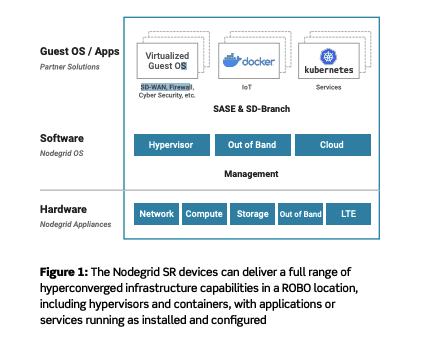
No matter how many branch locations you have, you need to reduce costs and maximize available space. Does your solution offer multi-function branch devices that are power- and cost-efficient? Does it give you switching and routing capabilities, support for virtualized functions, and on-premise vCPE, firewall, VPN, compute, and storage capabilities? Does it provide you with a 24×7 virtual presence thanks to reliable cellular failover?
The most efficient branch solutions consolidate functions into a single device, letting you take advantage of reduced operational expenses and a smaller network stack.
7. Can you See its Performance?
You can’t optimize your network without knowing where to start. Does your solution collect critical data points and allow you to inspect data logs? Does it build an audit trail of actions, and visualize KPIs with an intuitive, easy-to-use dashboard?
You need to know how your network performs, and your solution should give you critical insights and tools to keep your infrastructure healthy.
8. Can you Scale Quickly & Easily?
For a modern network, your branch solution should be easy to replicate across many locations. Is it simple to deploy and provision? Will it grow as your business grows? Can you foresee the need to replace any devices, or will your solution help you scale even in the long run?
Whether you’re in IT, manufacturing, or retail, your branch solution needs to keep up with business no matter how far and wide you go.
9. Is it Truly Saving you Money?
When it comes to CAPEX and OPEX, you need to think long-term savings. Instead of getting excited over low initial costs, which usually come with additional expenses for training, maintenance, and more, think about how much it will cost over time. Will it need to be replaced often? Does it require anything else to run smoothly, and will it need frequent maintenance? Are there hidden fees or necessary add-ons to consider?
To maximize your savings, expect to pay more upfront for a true “set it and forget it” solution. In the long run, you’ll pay much less thanks to automation and other robust capabilities that minimize downtime and expenses.
10. Does it Work with Many Vendors?
Your network has devices from many vendors, which means your branch solution should work well with all of them. If it doesn’t, you’ll deal with ballooning time and cost expenses that will exhaust your staff and your business.
Look for a solution that streamlines the experience and gives you control with intuitive software. You’ll find an open-platform solution gives you seamless integration that helps you manage your entire infrastructure.
Bottom Line
If you’re in the market for a branch solution, get Nodegrid’s family of business-friendly hardware and software. Not only will you benefit from robust, consolidated devices, you’ll discover effortless network management that puts you in control no matter where you are.
Need More Information?
If you would like more information on how the Nodegrid family of Open Infrastructure Management Solutions address all the needs of Branch networks, contact a ZPE solution specialist by giving us a call -or- sending us an email. We look forward to hearing from you.