
For many ISPs, the most expensive part of an outage shows up on the road.
A router locks up at a remote POP, a fiber aggregation switch stops responding, or a misconfigured update takes a site offline. When the network goes down and impacts customers, the only way to recover is to send a technician to the site.
Truck rolls like these feel routine, but once you bring scale into the picture, they’re one of the biggest costs an ISP operator can incur.
Why Do ISPs Still Rely On Truck Rolls?
Many ISP networks still rely on physical intervention when something goes wrong, and it’s for one simple reason: when you lose access to the device, you lose control of the network.
Common scenarios include:
- A router or switch becomes unreachable over IP
- A software upgrade fails and the device doesn’t come back
- A configuration change locks out remote access
- Power cycles are needed, but there’s no remote power control
When the production network is down and there’s no independent way to reach the device, operations teams have no choice. Someone has to drive to the site.
The Technical Gaps That Force Truck Rolls
It’s not a lack of ops protocol or discipline that forces truck rolls. Instead, it’s a lack of proper management architecture that leaves several large technical gaps.
No Independent Access Path

Image: Traditional ISP management access is cut off when the main network goes down, forcing technicians to go on site.
Most ISP devices are managed over the same network they help provide. Because there’s no independent access path (like dedicated out-of-band management), when the network fails, so does access to the device itself. Recovery is only possible by restoring the very network that’s broken, and since the underlying infrastructure can’t be accessed remotely, someone has to physically connect to the devices that are causing issues.
Watch our quick presentation from Cisco Live 2025 for a closer look.
Limited or Missing Serial Console Access
Many failure states can only be resolved via the console:
- Bootloader recovery
- Rollback after a failed OS upgrade
- Network lockouts caused by ACL or routing errors
Again, traditional approaches leave serial access dependent on the production network. When the network goes down, the only way to access the console is by physically connecting.
Here’s how one of ZPE’s IT & System Administrators addressed this exact scenario, but used out-of-band to recover remotely instead of going on site.
No Remote Power Control
When devices freeze or become unresponsive, a power cycle typically fixes the problem. But without power management best practices (and proper outlet mapping), a simple device reboot becomes a site visit.
Fragmented Tools
Console servers, power devices, and access controls are typically spread across different systems. That fragmentation slows recovery and increases human error, especially during high-stakes events like outages.
Why Truck Rolls Hurt Business More Than You Think
Direct Costs Add Up Fast
Between labor, fuel, scheduling, and overtime, it’s common for a single dispatch to cost thousands of dollars. What happens when this is multiplied across dozens or hundreds of remote sites? This approach becomes unmanageable and unscalable.
Operational Scalability Breaks Down
Growing networks means having more sites. This means:
- More logistics
- More staffing pressure
- More risk during outages (especially after hours)
Eventually, growth becomes constrained by the ability to physically respond to failures.
Longer MTTR Puts SLAs at Risk
Every minute spent waiting for a technician is another minute of customer impact. Longer mean time to repair (MTTR) increases the risk of:
- SLA penalties
- Customer churn
- Escalations with enterprise and wholesale clients
Technician Burnout
Skilled operational roles are already in short supply. But technicians quickly become burnt out when they’re constantly juggling high-stakes outages, 2 a.m. wakeup calls, and hours-long road trips (sometimes just to reset a device). This contributes to higher turnover and makes truck rolls even less sustainable.
What If Truck Rolls Weren’t the Default?
Imagine this scenario:
A core router stops responding at a remote site. Instead of opening a dispatch ticket:
- The NOC connects to the device over an independent OOB network
- Engineers access the serial console remotely
- The device is power cycled if needed
- Configuration is fixed and services are restored, without anyone leaving their chair
No driving. No waiting. No hours-long downtime.

This isn’t theoretical. It’s what happens when recovery is built into the architecture.
The Role of Out-of-Band and Isolated Management Infrastructure
Out-of-band management creates a dedicated, independent path to reach critical infrastructure, even when the production network is unavailable.
An Isolated Management Infrastructure (IMI) takes this even further by:
- Creating a management plane that’s physically and logically separate from production infrastructure
- Enforcing strong access controls
- Providing consistent recovery workflows across sites
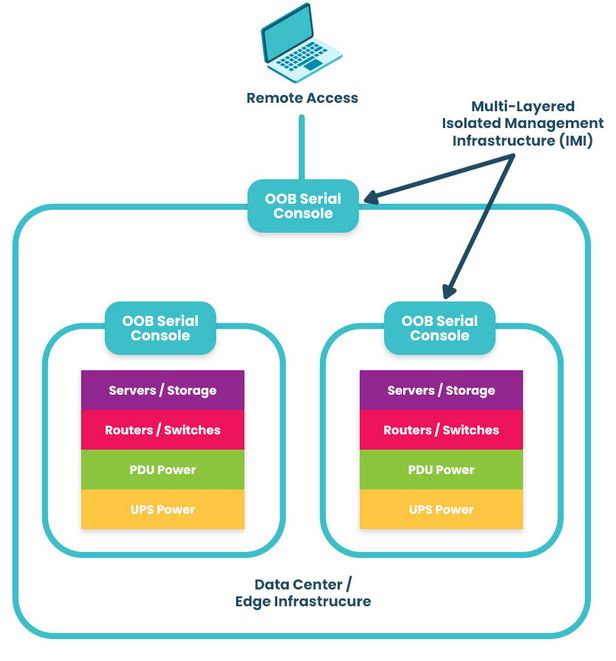
Together, they transform outage response from reactive (i.e., truck rolls) to controlled. If the alarm bells start ringing, technicians can respond instantly from wherever they are.
Key capabilities include:
- Remote serial console access
- Remote power control
- Independent connectivity via cellular or satellite
- Centralized access and auditing
How Nodegrid Helps ISPs Eliminate Truck Rolls
ZPE Systems’ Nodegrid is designed specifically for environments where uptime, scale, and remote recovery matter.
Independent Connectivity
Nodegrid supports a variety of OOB links, with multiple 5G, LTE, and satellite connections available. This gives technicians management access even when there are widespread network outages. Dedicated out-of-band paths can even be set up quickly using Starlink.
Unified Console and Power Access
Nodegrid provides secure remote access to serial consoles and power controls from a single platform, so recovery doesn’t require multiple tools or manual workarounds. Check out the Raritan SX II Migration Video to see what it looks like.
Centralized Control at Scale
Engineers can manage thousands of distributed sites from a single interface, applying consistent policies and workflows across the network. Watch our ZPE Cloud demo to see how simple it is to monitor, troubleshoot, and push updates across global devices.
Faster Recovery, Fewer Dispatches
By enabling remote troubleshooting, remediation, and reboot capabilities, Nodegrid dramatically reduces the need for physical site visits.
See How Much You Can Save With This ROI Worksheet
This free worksheet shows three simple ways to calculate the cost of truck rolls, downtime, and recovery, and how much you can save by using ZPE Systems’ Nodegrid. Download now and you’ll also get access to the Zero-Downtime Migration Checklist — a practical guide to help you deploy the industry’s most resilient network management solution without disrupting services.
