Providing Out-of-Band Connectivity to Mission-Critical IT Resources

How to Prepare for Cellular Failover
How to Prepare for Cellular Failover
It’s 3AM and you’ve just been woken up by the sound of your phone ringing. As you struggle to shake off the drowsiness, you start to feel that all too familiar wave of stress wash over you. A critical system at one of your remote branch locations is down. There’s also no network connectivity so your team is unable to remote in and troubleshoot the issue. To top that off, this site has no on-site team and the closest engineer is two hours away. 

We’ve all been there at one time or another, but with today’s modern technology do we really need to keep putting ourselves and our teams in this position? With the variety of out of band (OOB) management solutions available, local support for every remote office or branch location is a thing of the past. Engineers can connect to most equipment from anywhere around the world to diagnose and correct issues. This allows for true 24/7 access and support which drastically reduces costs and downtime. With the proper OOB solution, most issues can be corrected in minutes rather than hours. However, this can all be for naught if the local connection goes down and there’s no way to connect.


Not All OOB Solutions Are Created Equal 

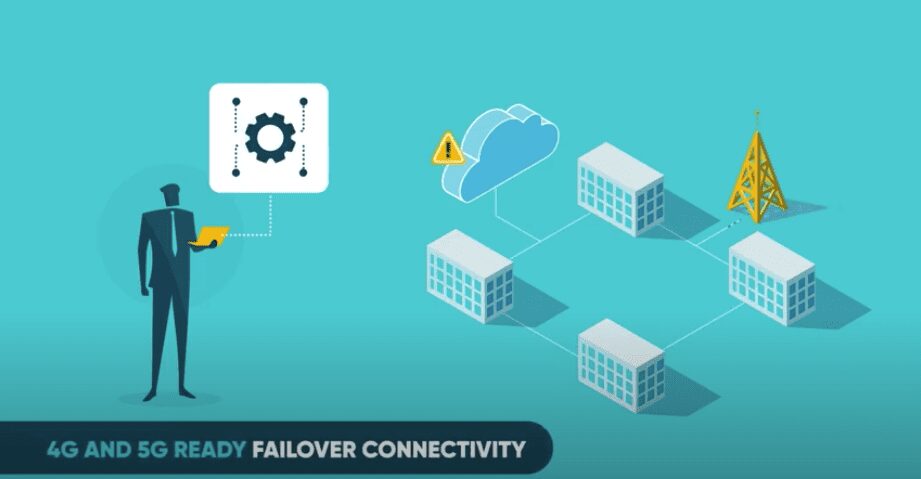
When choosing the best solution for your business, you want to make sure that every scenario is accounted for. Cellular failover built into your OOB solution can eliminate the possibility of full lockout due to a network outage or configuration error. When properly deployed, a cellular connection leverages the power of local providers to allow for an always-up pathway to every device on your network. Systems administrators and engineers can use this backup connection to access your devices from anywhere regardless of the status of the local network, thus saving your business time and money.

ZPE Systems’ Nodegrid Family of Open Infrastructure Management™ Solutions address the critical needs of networking, in-band and out-of-band IT infrastructure. With flexible network interface options including dual cellular fail-over with dual SIM, a modern and secure Nodegrid OS, OOB management, cloud orchestration and add-on virtualized applications for SASE and SD-BRANCH, Nodegrid has it all. 

With ZPE Cloud™, you no longer need to get bogged down by provisioning or on-site support. Configure, deploy, & manage all your appliances from our secure cloud platform.

Thanks to dual cellular failover that supports all major carriers, you get strong backup when your network goes down. 4G/LTE connectivity means more reliability and uptime for your network and less stress for you and your team. 


Leveraging Cellular Connectivity for New Deployments

Take your deployment to the next level by leveraging Nodegrid’s built-in 4G/LTE cellular connectivity and Zero Touch Provisioning (ZTP). Deploy from anywhere via ZPE Cloud, even without having local connectivity configured. With Nodegrid, you can eliminate worry and reduce security concerns by shipping bare-metal devices that do not contain any sensitive data. Once your devices arrive, are racked and connected, simply use ZPE Cloud to download and run all of your automated scripts. Provisioning is automatic, consistent, and error free which save you time and money. 

Vendor Neutral

Nodegrid is also vendor neutral which allows you to add management capabilities to all your devices without the need to learn vendor-specific tools. All commands are normalized and available on one console.

Ready to Learn More?

Take a deeper dive into celluar failover with this free ebook: Your Complete Guide to Cellular Failover.

For more information on ZPE’s full product line, please visit our products page.Have a specific question or want to experience a live demonstration for yourself? Reach out to us via our Contact page. We’re here for you!

The Definitive Guide to Zero Touch Provisioning

It’s no wonder why zero touch provisioning (ZTP) is becoming more highly sought after. Whether business is expanding, going global, or simply in need of more nimble networking, ZTP sets the standard in effortless scaling. Compared to traditional provisioning methods, it delivers major benefits and helps you free up your IT resources.

 Scaling without zero touch provisioning is tedious at best, and can slow your business to a crawl (or to a grinding halt) at worst. There’s so much that goes into typical provisioning approaches, like coordinating staff commutes and device shipments, not to mention hours, days, or weeks spent at the command line interface (CLI). And no matter how thoroughly you audit and test each configuration file, going without ZTP leaves you open to human error — not just at each location, but at each network appliance as well.

ZTP eBook cover_Page_1
  • Secure your data — No more shipping pre-configured devices
  • Cut your workload — No more manual CLI configurations
  • Boost uptime — No more downtime due to human error

With zero touch provisioning, you eliminate so many of these drawbacks thanks to automation and scripting. That means that you no longer need to tie up IT staff with time-consuming configuration tasks and manual CLI input. On top of this, using an all-in-one hardware solution like ZPE Systems’ Nodegrid helps you further reduce CAPEX and OPEX costs. You can ship a single consolidated appliance to each location (instead of sending a cumbersome stack), and once it arrives, all you need to do is plug it in. Your network builds itself while your IT teams stay committed to critical business function. Find out how Zero Touch Provisioning can help your organization.

Download the ebook

Benchmark Nodegrid Services Router

network computing

In these challenging times support staff demand secure remote access to critical infrastructure devices, as it accelerates troubleshooting and negates the need for on-site visits. There are plenty of appliances that offer these services but we’ve yet to see any that can match the sheer versatility of those from ZPE Systems.

Not content with offering high-level OOB (out-of-band) access to core devices, the modular Nodegrid Services Router (NSR) on review can be customized to provide a wealth of on-site network services. This 1U rack appliance presents five multi-service card slots that accept an impressive range of plug-in expansion modules.

Along with 16-port serial USB and RJ-45 OOB access modules, you have 8-port 10GbE SFP+ and 16-port SFP Gigabit switches, 16-port copper Gigabit and 8-port PoE+ switches, storage and compute modules plus a combined M.2/cellular/WiFi/SATA version. With this much choice, the NSR can be easily equipped to run a host of network services including switching and routing, SD-WANs, SDNs, firewalls, 4G/LTE failover and even application virtualisation.

A major issue with fixed-port OOB appliances is they have to be replaced as the number of managed devices exceeds their capabilities. The NSR overcomes these issues as you increase its port count with extra modules as demand dictates and group multiple appliances in clusters. Even better, the NSR is vendor agnostic so you can use it to access legacy OOB solutions allowing businesses to phase them out gradually.

The NSR has plenty of power on tap as it’s equipped with a 2.2GHz 8-core Intel Atom C3758 CPU partnered by 8GB of DDR4 memory. Its 32GB mSATA SSD can be easily upgraded or you can add the storage module that supports standard SFF hard disks and SSDs.

Deployment is a breeze as we connected one of the NSR’s Gigabit management ports to the lab network, powered it up and pointed a browser at it. Zero-touch deployment for distributed sites is also available as you declare the NSR to the ZPE Cloud portal and send it to the site, where it connects to the portal for enrolment and remote management.

The local web console is very intuitive, and we started by running a discovery of the lab network and creating managed device entries for our various infrastructure systems. Each port on the OOB modules can be configured with the desired serial settings and we also added network devices such as our Dell server iDRAC9 IP addresses, which were then directly accessible from the console’s access page.

Switch module ports are enabled as required and used to connect devices such as IPMI controllers, UPS management ports and PDUs and as they function as standard switches, any other device you want. Add a Docker license and you can create lightweight containers on the NSR and run just about any app that’s available on the Docker Hub.

Access security is tight as the NSR supports authentication servers such as Active Directory and RADIUS along with 2FA and SSO. User access can be fine-tuned by placing them in groups that are assigned specific devices with read/write and power control permissions plus authorised PDU power outlets.

The NSR offers integral intrusion prevention which blocks hosts with multiple authentication failures and enforces system BIOS password protection to stop unauthorised changes being made. Businesses worried about compliance can rest easy as the extensive auditing services include keystroke logging for all remote sessions.

The Nodegrid Services Router seamlessly delivers joined up infrastructure management and network services. It’s easy to use with extremely tight remote access security, and its smart modular design allows businesses to cut costs and complexity by using it to replace multiple point solutions.

Originally posted in Network Magazine


Keep Your Network Outage-Proof

etcio Keep your network outage-proof

You can’t control the weather, a pandemic, or natural disasters. But you can control network uptime with remote out-of-band management from ZPE Systems.

Time and money hinge on your network. So what happens when you lose connectivity at a site halfway across the globe? Traditional out-of-band management (OOB) is slow and expensive, forcing you to put staff on-site while downtime swallows up your resources. ZPE Systems’ Nodegrid does away with these time-consuming headaches to bring you a business-friendly solution, i.e., remote OOB.

Get Remote Control, No Overhaul Needed

Nodegrid is vendor neutral, so you can take total control of your existing infrastructure. Simply deploy your Nodegrid appliance, connect your devices, and get remote OOB throughout your network — no overhaul needed.

Restore Uptime Fast Yesterday

Network outages can cost $100,000+ per hour. Though you can’t predict when or how they’ll happen, you can equip your organization to recover fast. Remote OOB with Nodegrid lets you troubleshoot issues and restore connectivity even to your most faraway locations. The intuitive interface with normalized controls streamlines your user experience. There’s no more admin fatigue from switching between vendor-specific software. You can also implement automation to monitor network health, pinpoint issues, and fix problems before they happen.

Failure? Not an Option

For even more protection against outages, Nodegrid features cellular failover that supports all major carriers. These dual-SIM modules attached to the powerful Nodegrid Services Router (NSR), act as insurance policies for your WAN coverage. When your main line goes down, you’ve got two wireless backups that are automatic and seamless.

Put Power at Your Fingertips

A clean and easy-to-use interface is the tip of the iceberg when using Nodegrid. Our all-in-one devices feature x86 64-bit architecture, multi-core Intel processors, and a Linux-based OS. It’s a perfect combination that gives you the flexibility to deploy Docker containers and virtualized network functions directly on Nodegrid appliances. Get full remote control of everything, starting from SD-WAN, to firewall, cybersecurity, and even power cycling. Screen- and session-sharing features let you put your experts on the job no matter how distributed your IT teams are.

It’s rough out there. But no matter how long it takes to get back to normal, ZPE Systems is here to bring normal back to your network. Contact us to see how you can have business continuity and keep it, too.

Originally posted in ETCIO Review 

Webinar: Deploying Smart Edges to Support Modern Applications

Webinar - Depoloying Smart Edges to Support Modern Applications

About the Webinar:

The advent of AR/VR, autonomous cars, smart everything, IoT, and other 5G applications requires processing of data at the edge of the network to shave off response times, manage core bandwidth, and improve security. This drives the requirement for having high performance low-cost compute at edge locations along with intelligent discovery and routing to connect end-user devices to these locations.

In this webinar we will discuss how Session Smart™ routers running on Nodegrid can enable the Smart Edge. We will share real world deployment experiences on how KAEMI is providing managed services utilizing Tunnel-free SD-WANs on the ZPE Systems platform to connect to public clouds as well as to build the Smart Edge close to users.


About the Speakers:

Rene Neumann is the Solutions Engineering Manager at ZPE Systems. He has helped some of the largest companies in the world such as Amazon, Apple, Societe-Generale, and Exxon-Mobil rebuild customer satisfaction with better networking. His IT & data center expertise spans 22 years. Using ZPE’s powerful platform of consolidated devices and intuitive software, Rene continues to improve network architecture for companies across the globe.

Sven Launspach is the founder and managing director of KAEMI GmbH, an integrated IT/OT infrastructure and managed service provider based in Berlin, Germany. One of KAEMI’s guiding principles is: “We take care of connectivity, so that the customer can concentrate entirely on its core business.” His expertise includes managed services, SD-WAN, multi-cloud applications, and NFV/SDN. As a Consultant previously, he has led digitization projects for Lufthansa, which saved millions of euros in operating costs. He is particularly in demand for sharing his thoughts in conferences and IT events. He is also managing director of Consultpool GmbH & Co. KG who offer high skill consulting especially for DAX companies.

Dr. Ritesh Mukherjee leads Routing strategy at 128 Technology. His expertise includes routing and switching, Data center, Cloud, SDN/NFV, and IoT. Prior to 128 Technology, Ritesh was Director, Network Solutions at Huawei leading the technical solutions team and Manager, Product Management at Cisco leading the software operating systems group. Ritesh holds a PhD in Computer Science from Concordia University, Montreal.

Register Now