Providing Out-of-Band Connectivity to Mission-Critical IT Resources

3 Data Center Management Challenges—and How to Solve Them for Good

shutterstock_574000213

Data center infrastructure adds an extra layer of complexity to enterprise networks since you need to remotely manage hardware at scale. The network perimeter needs to extend across a geographical distance—which could be several miles or several continents—while maintaining your enterprise infrastructure’s visibility, security, performance, and availability. Accomplishing these goals is often a challenge for engineers.

However, every challenge is an opportunity to learn and improve. Here are the top three data center management challenges, and the proper solutions to avoid or overcome them for good, while optimizing your network infrastructure.

Top 3 data center management challenges and their solutions 

The challenge: Infrastructure monitoring and visibility

One of the most significant pain points for network engineers managing data center infrastructure is the difficulty of gaining complete, real-time monitoring and visibility of remote systems.

Different vendors may offer varying degrees of remote monitoring for their devices, but managing a patchwork of monitoring tools is time-consuming and can leave gaps in coverage. Even a minor issue with critical data center infrastructure can balloon into an enterprise-wide catastrophe if it’s left unnoticed for too long. For example, a database server generating redundant or unnecessary logs seems like no big deal at first. However, if those logs accumulate so much that the hard drive fills up and database operations fail, it could impact your enterprise applications, financial systems, and more. Because of this, it is essential to make sure nothing falls between the cracks.

The solution: Data center infrastructure management solutions

As the name suggests, a data center infrastructure management (DCIM) solution provides a centralized platform for managing data center infrastructure. DCIM is essentially a bird’s-eye view of physical and digital assets to track network traffic loads, hardware and VM performance, power usage, and environmental conditions in the data center in real-time. 

Additionally, DCIM consolidates all the data center devices under one management UI, allowing you to monitor and administer all systems in the same place efficiently. DCIM provides complete visibility of your data center infrastructure while simplifying and streamlining data center management for IT teams. To fully reap the benefits of DCIM, you should look for a solution that can seamlessly integrate both digital and physical assets, to have full visibility on your cloud-based and hardware-based infrastructure. 

The challenge: Data center network security

Just because the critical infrastructure is hosted in a secure data center doesn’t mean it is entirely safe from cyberattacks. Another common data center management challenge involves maintaining enterprise security policies and controls across one or more colocation sites. This can be especially difficult if you utilize managed services and provide access to data center employees or third-party vendors. 

According to a recent study, 74% of organizations who reported a breach say it resulted from giving third parties too much privileged access. You need a way to verify the identity and trustworthiness of any account trying to access data center resources, as well as apply enterprise security policies consistently across all your remote infrastructure.

The solution: Zero trust security with identity and access management (IAM)

The zero trust security methodology forces enterprises to rethink their approach to trust and authentication in their IT environment. Instead of operating under the assumption that all authorized users are trustworthy, zero trust assumes that every user, device, and application is unsafe until proven otherwise. Zero trust security uses identity and access management (IAM) solutions to verify identities, apply enterprise security policies, and restrict access to only the systems that are necessary for the task at hand. 

Zero trust security provides the framework to establish better data center network security through tighter security controls and precise security policies. An IAM solution is one of the key security controls that allow you to dynamically assess the identity and trustworthiness of data center staff, third-party vendors, and any other users or systems that access your data center resources. In that way, zero trust with IAM helps keep data center infrastructure secure.

The challenge: Performance and availability

Your ultimate data center management goal is to maintain the data center infrastructure’s high performance and availability so your organization can run as efficiently as possible. That can be incredibly challenging when managing geographically diverse data centers without local staff or managed services at every location. If a critical switch goes down at a data center 3,000 miles away, you need to get it back up and running fast—which means you don’t have time to fly an engineer to the other side of the country to get eyes on the problem.

The solution: Out-of-band management

Out-of-band (OOB) management separates the production network from the management plane, enabling you to remotely troubleshoot, monitor, and administer your data center infrastructure without needing a LAN or ISP connection. For example, using a separate network via 4G LTE cellular connection, you can reach routers, switches, and servers even without an IP address. Use OOB management to perform higher-level remote access and control tasks on multiple devices from one pane of glass. That means you can reboot devices, perform health checks, and troubleshoot connection problems remotely from anywhere in the world at any time. That’s how out-of-band management improves data center performance and availability.

Solving data center management challenges with the right solutions

Three of the biggest data center management challenges involve monitoring and securing your infrastructure while ensuring high performance and maximum availability. To overcome these challenges, you should invest in tools that provide data center infrastructure management (DCIM), zero trust security and identity and access management (IAM), and out-of-band (OOB) network management solutions like ZPE Systems’ Nodegrid.

Nodegrid is a vendor-neutral platform of hardware and software solutions to overcome your data center management challenges. Nodegrid’s serial consoles and management interface monitor and administer all your critical data center infrastructure and physical assets behind one pane of glass. Nodegrid also provides out-of-band management solutions to troubleshoot your network from anywhere in the world, even during an outage. Plus, you can use Nodegrid’s Zero Trust Security Framework to integrate zero trust principles and IAM providers with your data center management solutions.

To learn more about how ZPE Nodegrid can help you overcome the top data center management challenges, contact us today!

Learn more about how ZPE Nodegrid can help you overcome the top data center management challenges.

Contact us today!

Contact Us

Data Center Modernization Strategy: How to Streamline Your Legacy Environment

shutterstock_2030685674

The rapid development of data center infrastructure management (DCIM) tools leaves most software quickly becoming outdated. Consequently, it is replaced by the next trend on the market, after a short time. The use of such software following its “expiration” creates what is known as “legacy programs.”

Legacy programs are ones that a company implemented years ago and still use, despite being outdated or abandoned by the original makers. This means updates in security or integration options are limited or non-existent. As a result, they present several data center management challenges for network architects intent on staying reliable and reducing the need for human intervention.  

This blog will explain the importance of having a data center modernization strategy and provide a list of key considerations and actionable steps enterprises need to take to modernize their legacy systems. In addition, it will offer a couple of suggestions on where to start the modernization process. 

Challenges of a data center modernization strategy presented by legacy systems

Legacy systems create a critical challenge for companies looking to implement an efficient data center modernization strategy. Data centers often hang on to these programs due to staff familiarity. Still, the “convenience” they provide to employees masks a difficult-to-manage backend with the potential disaster for the network engineers using them; this is also why enterprises should prioritize modernizing their strategy. The obstacles presented by legacy systems include: 

  • Integration: Legacy systems are dated enough that they don’t work well with newer software.  
  • Security: Older software may not work well with modern security systems, leaving the data kept on them especially vulnerable to cyberattacks. 
  • Data storage: Pre-cloud software stores data in a company data silo, making it challenging to transfer legacy data when needed compared with newer software. 
  • Maintenance: Legacy systems may not have repair options available, forcing companies using them to go to expensive 3rd party maintenance vendors.

These setbacks are endemic to legacy systems found in data centers. We should, consequently, consider how enterprises can modernize them. Before we get into possible solutions for legacy systems, here are some additional considerations regarding use cases and maintenance in data center management.

Key considerations of legacy systems

Despite the pitfalls associated with legacy systems, many data centers still utilize them for various reasons. Maybe their strategy has worked just fine so far; perhaps their problems are minor, at most. In this way, it might be helpful to modernize the data center strategy as less a complete replacement and more as a comprehensive reformation.

Data centers hoping to hang on to their legacy systems might do so because:

  • Ease of use: The center’s network engineers are familiar with it, contributing to daily operations running smoothly (if it’s not broken, don’t fix it). 
  • Specific features: Perhaps this system offers something not available on newer systems that helps make running the center more efficient. 
  • Cost/benefit analysis: The center knows it needs to update, but the high cost of doing so constantly places it on the backburner.
  • Integration breakages: Updating one legacy system may create new issues and breakages with other legacy systems a data center might be using, leaving the company reluctant to modernize

All points are worth considering—for the many features legacy systems might lack, there are many reasons why a data center might want to hang on to one. For more information, we recommend further reading on legacy system considerations. Let’s move on and discuss what steps are most effective for a data center modernization strategy.

Data center modernization strategy

data center modernization strategySo far, we have discussed what a legacy system is, established the most significant data center management challenges, and presented some points against legacy modernization. While this information is essential for network engineers to understand, it only answers questions of “why” enterprises should modernize their strategy; yet to be answered is the question of “how.”

Listed below are two paths to modernizing data centers and some insights on what works best between them. 

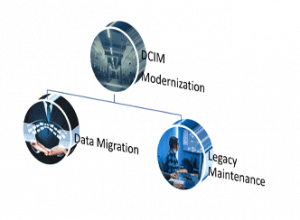
Legacy maintenance

By their nature, legacy systems do not automatically integrate with newer software. However, this does not mean they’re unreachable. It is possible to purchase special equipment designed to integrate with legacy systems, such as ZPE’s Nodegrid Serial Console R-Series, and render them controllable from any web browser.

An option that allows network engineers to control and manage legacy systems this way offers advantages over traditional data migration paths:

  • Less expensive: Purchasing a single piece of hardware will cost less than upgrading all data center software. 
  • Faster: Following a brief setup, returning to a legacy system will take less time than a complete data migration method.
  • More user-friendly: Network engineers will be able to continue using programs they are familiar with instead of struggling to learn new tools.

It is also essential to understand that choosing an option like the R-series does not exclude data migration (discussed below) as a long-term solution. Both can be used in tandem, allowing for a seamless transition between systems, ensuring that staff can continue working without problems. This process, particularly when applied gradually over time, offers a smooth transition into a more streamlined data center. 

Data migration

The best long-term answer to these data center management challenges is migrating existing data from the legacy system onto a new program better suited to the ever-changing workplace. Data migration can be a difficult task, but it generally consists of a couple of steps:

  • Extracting existing data from the legacy system
  • Transitioning data to match new formats
  • Refining data to address quality issues
  • Verifying data to make sure the move goes as planned
  • Uploading data into a new system

The challenges with this approach involve high costs, significant time investment, and the risk of something going wrong with the migration path and endangering the data being migrated. Although data migration will likely play some part in a long-term modernization campaign, it does not necessarily need to be the centerpiece.

Streamlining your legacy environment with the right solutions 

Legacy systems do not have to be your worst nightmare. While modernization can be difficult and time-consuming, the current market offers multiple options to make it easier.

To summarize, the reason why data centers need an efficient modernization strategy is primarily for legacy systems. Mainly because these outdated programs are not adequately secured, do not integrate well, and often require third-party maintenance.

Legacy Maintenance or Data Migration are your best options for dealing with the data center management challenges presented by legacy systems. Suppose you are looking for more information on ZPE Systems’ data center management tools. In that case, the Nodegrid Serial Console R-Series helps to control your legacy system using only a browser. 

Want to learn more about data center modernization strategy?

Get in contact with us for more information, and start your journey today!

Contact Us

ZPE Systems hosts Palo Alto Networks’ Prisma SD-WAN for edge flexibility

ZPE Systems Palo Alto Networks 525 x 300

Fremont, CA, September 21, 2021 – ZPE Systems, an innovator of network and critical IT infrastructure management at the data center and edge, today announced its ability to host Palo Alto Networks’ Prisma SD-WAN solution. Until now, organizations migrating to cloud-based edge networking were required to deploy disparate hardware and software solutions for security, SD-WAN, out-of-band, and cellular failover. These complicated deployment and management, leaving organizations with edge networks that lacked resilience and forced them to compromise due to vendor lock-in.

ZPE Systems’ Nodegrid edge routers directly host Prisma SD-WAN, helping customers overcome the distributed networking challenges of traditional WAN architectures. This consolidates the networking stack to simplify deploying, scaling, and managing the cloud-delivered branch. Prisma SD-WAN gives organizations peace of mind with secure traffic routing, while Nodegrid serves as a reliable foundation with built-in out-of-band and 5G/4G LTE. Customers gain transparency across their networking and security solutions, along with the tools they need to maintain uptime and respond quickly to issues.

    In addition, the Nodegrid platform eliminates vendor lock-in by serving as a micro-cloud at the edge. Customers no longer need to compromise with fixed function devices, and can instead run software of their choice, such as Prisma SD-WAN, directly on Nodegrid. This long-term sustainability frees customers from infrastructure and connectivity problems, allowing for flexible customization to address evolving needs.

      “We know how frustrating it can be to juggle traditional edge solutions,” says Arnaldo Zimmermann, Co-founder and CEO of ZPE Systems. “Deploying sites, diagnosing issues, and restoring services at the edge are such a hassle. This integration puts everything into a single box. Security, automation, failover — it’s all there and can be managed under one UI.”

      To explore this solution and its real-world implementations, download the brief.

      For information about ZPE Systems’ Edge Transformation Partner Program or to apply, visit partners.zpesystems.com.

      About ZPE Systems, Inc.

      ZPE Systems frees enterprises from today’s networking challenges.

      Nodegrid’s Intel-based serial consoles & modular services routers deliver power to datacenter & branch applications, while the Linux-based Nodegrid OS replaces vendor lock-in with limitless flexibility. With ZPE Cloud for fast & secure provisioning, this platform streamlines networking using virtualization, prevents downtime using automation, and offers convenience via remote management capabilities.

      Intel-based serial consoles & modular services routers deliver unparalleled power to datacenter & branch applications, while the Linux-based Nodegrid OS replaces vendor lock-in with limitless flexibility. With ZPE Cloud for fast & secure provisioning, it’s the only networking platform to streamline the stack using virtualization, prevent downtime using automation, and offer convenience using in-depth remote management capabilities.

      ZPE collaborates with best-in-class technology partners, to add value by integrating with SD-WAN, firewall, IoT, and other solutions. The world’s top companies trust ZPE Systems to provide advanced out-of-band management, Secure Access Service Edge (SASE) platforms, and SD-Branch networking.

      Top companies trust ZPE Systems to provide advanced out-of-band management, Secure Access Service Edge (SASE) platforms, and SD-Branch networking.

      ZPE Systems is based in Fremont, California with offices worldwide. Visit ZPE Systems website at
      www.zpesystems.com.

      SASE & Zero Trust: How They Come Together to Improve Network Security

      shutterstock_1908952546

      How do secure access service edge (SASE) and zero trust work together to improve network security? Simply put, SASE works by deploying security via the cloud, and zero trust deploys security in the least privileged access method.

      Networking trends have heavily shifted in favor of SASE following the shift to remote work. Gartner predicts that 60% of businesses will adopt or begin to adopt a SASE-oriented model for their company by 2025. Let’s discover more about how SASE and zero trust work together to benefit large enterprise networks.

      SASE and zero trust defined

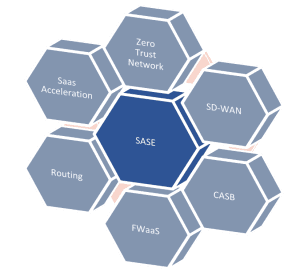
      The rise of SASE has made it one of the most talked-about terms in the world of networking, but defining it in simple terms has proved challenging for some. Palo Alto Networks defines SASE as a convergence of several protocols into a cloud-based interface, including wide area networking (WAN), cloud access security broker (CASB), firewall as a service (FWaaS), data loss protection (DLP), and zero trust. 

      SASE uses edge computing to solve the inherent bandwidth issues caused by the in-and-out traffic of proxy connections to SaaS programs via the company data center. SASE allows companies to apply their security measures to these programs, preventing possible security leaks and mitigating them when they do happen.

      SASE’s emphasis on applied proxy security is due to zero trust architecture, which has recently gained popularity. Traditional models have used a “castle & moat” approach, installing firewall protection around a business’s network perimeter. These models assume, however, that devices within the network are inherently trustworthy. Zero trust architecture never changes these protocols to make such an assumption, demanding that the user or device provide credentials regardless of circumstance. Learn more about the SASE model’s key use cases and benefits and the zero trust security benefits for large companies. 

      How SASE and zero trust work together

      The new focus on proxy connections is what truly defines both SASE and zero trust. Whereas the company data center used to act as the nerve cluster of business operations, that role has now been fundamentally decentralized and relegated to many smaller data paths coming from remote locations. 

      SASE: Zero Trust, SD-WAN, CASB, FWaaS, Routing, and SaaS Acceleration.This decentralization means an increased reliance on programs found in the cloud, as it offers the most convenient access for employees working from home. This is the ultimate goal of SASE; the use of edge computing to redirect traffic from the data center to the cloud, easing the traffic flow.

      2020 saw a rise in cybercrime due to an increased dependency on unprotected (or poorly protected) cloud and remote access programs during the pandemic—the FBI reported a 75% increase in daily cybercrimes by June. This exposed a dire need for protocols that offer security rules. Zero trust architecture provided precisely this opportunity, using SASE’s emphasis on edge computing to issue company protections from proxy locations onto cloud-based services.

      However, zero trust security doesn’t just provide multiple checkpoints for potential users in a network; it also restricts user access once checkpoints have been cleared. Think of your enterprise network like a concert—the ticket gets you into the venue, but if you want to access the VIP or backstage areas, you need to clear additional checkpoints with an ID badge or backstage pass. With zero trust security, users and devices only gain access to the specific resources they’ve authenticated to—they’ll need to prove their identity and verify their privileges if they want to move to any other area of your network.

      These security protocols are critical to successful SASE implementation, as it allows companies to implement their security protocols for SaaS programs and mitigate potential leaks when they do happen. Together, they provide the best of both worlds, allowing for a decentralized network model that still provides the security needed for such a model to exist. It is precisely this balance between access and safety that makes SASE and zero trust what you need to shield your business as you continue to accommodate remote work and distributed users.

      Why does my company need both SASE and zero trust?

      A SASE network implementation lacking zero trust principles is left drastically exposed to potential cyberattacks. For example, the lack of internal protection ensures that a more extensive information leak could happen.

      Consider what would happen if you implemented SASE without zero trust, and a hacker used a compromised account to connect to one of your cloud applications. In addition to stealing the data available in that cloud app, they could potentially jump to other edge resources using the same username and password, or even find an access point to your primary enterprise network. The more lateral movement that account has on your network, the more sensitive data they could exfiltrate. Additionally, the absence of intensive logs ensures that these leaks will consume a great deal of time and energy as network managers attempt to locate and neutralize threats when they arise.

      On the other hand, while it’s never a bad idea to put extra measures in place to secure your data, the purpose of zero trust is to handle edge computing access to cloud-based SaaS applications. Zero trust is a welcome addition to your existing security stack and removes the necessity of having a centralized model.

      Talking about SASE and zero trust individually makes the two of them sound as though they are mutually exclusive; they aren’t. Zero trust security is one of many programs integral to the successful implementation of SASE. This listing of the key SASE components gives more context regarding how these systems work together.  

      Implementing SASE and zero trust protocols

      The advantages these two protocols offer companies stem from the way they are used together. When combined, SASE and zero trust allow companies to recenter their business models around a proxy structure. This new model gives employees the flexibility of working from home while ensuring that sensitive information remains safeguarded against ransomware and cyber attacks. Palo Alto Networks cites that the advantages of combining SASE & zero trust are: 

      • Stronger network security
      • Streamlined network management
      • Reduced costs of deploying security at scale
      • A single, holistic view of the whole network

      The final benefit listed above is worth further consideration. Instead of viewing your company’s systems as individual pieces, conversion to the SASE model allows you to view your company’s network through a single lens. This helps to streamline your business model even further, making you that much more competitive in the workplace of tomorrow.

      We encourage you to read Gartner’s roadmap for SASE convergence for more information. 

      Ready to begin your conversion to SASE?

      Our products page boasts several options to get you started. Contact us for further questions and get started today! 

      Contact Us

      DigiCert: improving critical network infrastructure for 50% less work

      DigiCert Inc logo

      Critical network infrastructure drives business. Like a system of roadways, it determines how efficiently communications move to and from your organization. This affects everything such as the speed of customer banking transactions, to the reliable access IT support teams have to maintaining enterprise resources.

      The problem is, complexity can easily bog down your critical network infrastructure. When this happens, user experiences can lag at ATMs and checkout lines, and IT teams can be cut off from providing off-site support. When you’re a company such as DigiCert, who serves nearly 90% of Fortune 500 companies, slowdowns and failures simply aren’t an option.

      In this post, we’ll discuss some of the challenges of critical network infrastructure, and show you why DigiCert chose Nodegrid to streamline operations.

      Critical network infrastructure challenges

      One of the overarching challenges to critical network infrastructure is the volume of complexity. When you have several data center locations and many branch sites distributed globally, even a little bit of complexity can scale out of control. So what contributes to this? Having so many devices and solutions.

      For DigiCert, every location required a large stack of essential devices. These included servers, switches, routers, out-of-band hardware, and cellular failover boxes. Managing these proved slow, as each came from a different vendor and had its own management protocols and interface. When support tickets came in, backlogs mounted as teams struggled with Mean Time To Innocence (MTTI) and root cause analyses. Licensing, updating, and maintaining their most important systems was a major time sink at the data center and branch. In short, DigiCert’s critical network infrastructure was demanding too much time and too many resources to be sustainable.

      This inflated infrastructure also brought more points of failure, which were difficult to pinpoint and resolve. DigiCert lacked a centralized management solution, so they had to devote more effort to troubleshooting whether the current issue lied within a bad server configuration, an overheating device, or a faulty router.

      The company also lacked peace of mind regarding remote out-of-band management access. Occasionally, support teams would be unable to troubleshoot and resolve problems remotely. This typically resulted in on-site visits to the data center, where the only solution would be to gain direct console port access to specific devices. This only added to their IT burden and grew the complexity of their operations.

      How Nodegrid radically improved DigiCert’s critical network infrastructure

      Eliminating critical network infrastructure complexity can seem like a daunting bridge to cross. Consolidating your physical infrastructure can be an enormous task all by itself, much less implementing centralized management and reliable out-of-band.

      But for DigiCert, ZPE Systems’ Nodegrid and ZPE Cloud made it simple to achieve all this — while helping the company maintain an impenetrable security posture. They were able to deploy multiple services on a single Nodegrid device, which reduced their hardware footprint by a 4-to-1 ratio. They hosted their Palo Alto security solutions directly on the Nodegrid appliance, and set up 4G/LTE for connection redundancy. In total, they achieved a redundant configuration by using two Nodegrid devices at each location, instead of the 6-8 that they previously required.

      To learn more about this implementation, download the full case study. You’ll explore the all-in-one Nodegrid solution that exceeded DigiCert’s requirements, slashed their workload 50%, and helped them achieve near 100% network uptime.