Providing Out-of-Band Connectivity to Mission-Critical IT Resources

Home » Archives for ZPE Systems » Page 14

4 Critical Things to Know About Zero Trust Security
Zero trust security is not a new concept, however it has gained popularity in recent years. As companies become increasingly distributed, they must offer network access that’s flexible, without putting sensitive data at risk. This is where zero trust security comes in.

In this post, we’ll cover 4 critical things you should know about zero trust security, such as what it is, why companies use it, how it works, and more.

What is Zero Trust Security?

Zero trust security can be boiled down to a simple concept: always verify every user and device trying to access the network.

Traditional networking safeguards are based on the castle-and-moat architecture. This means that all users and devices within the network are deemed trustworthy and can access the resources they need. Those outside of the network (or moat) must be verified and trusted before gaining access to the network. One of the glaring problems with this approach is that it doesn’t consider the possibility of attacks coming from a trusted user/device within the network. This means that an attacker simply needs to hack into the network, and then there are few (if any) obstacles remaining in their way.

Zero trust reimagines security with the concept that organizations should not automatically trust anyone/anything trying to connect to their network. Instead, they should verify everyone and everything that tries to connect, including users/devices outside and inside of its perimeter. In other words, trust no one.

Where Did Zero Trust Security Come From?

The zero trust concept was first prototyped in the early 2000s. In 2010, John Kindervag coined the term ‘zero trust’ for the concept, and its adoption by Google a few years later increased the industry’s interest in the zero trust model.

This new security architecture came from the realization that the traditional castle-and-moat configuration was becoming increasingly vulnerable. Years ago, a typical organization’s data and sensitive information were kept in a central location. This made the network and its resources easy to protect, and also easy for IT staff to monitor for threats and address attacks.

Now, organizations are adopting technologies that offer greater networking capabilities for distributed access. These technologies include public and private clouds, third-party services, virtualized SD-WAN & firewall solutions, and more. Securing an entire network means putting in place multiple safeguards. The traditional architecture is now being replaced by the more robust yet nimble security setup of zero trust.

Why Are Companies Using Zero Trust Security?

One of the canonical goals of networking is to allow information to flow between computers, people, and organizations. Yet with information becoming more and more decentralized and relayed through various channels, risk is on the rise. And because traditional security architectures simply can’t provide omnipresent protection for data and communications, zero trust security is being adopted by organizations across the globe.

A major benefit of zero trust is that it provides hardened security, regardless of how distributed the network is. Whether a company serves a single contained network, or hundreds of branch locations distributed around the world, zero trust security offers peace of mind for every interaction. This means more thorough protection from outside and inside threats, because verification is needed — always.

This complements Secure Access Service Edge and SD-Perimeter implementations (more on those below), which companies use to offer more flexible networking and define least-privilege access rights. Used in conjunction with these configurations, zero trust security also eliminates the need for companies to backhaul traffic through their main security controls. This translates to fewer slowdowns and more availability, so companies can meet their business goals without their networks holding them back.

Real-world examples include scaling, working from home, and even securing data at HQ.

  • Setting up new locations comes with its own set of security risks. However, companies using a zero trust model can get granular control of who & what can access their network. This can help eliminate attacks from stolen equipment, devices, and credentials.
  • When setting up a Secure Access Service Edge (SASE) implementation, whether for faraway locations or remote & on-the-go workers, zero trust keeps networks & resources secure. It requires user identities and devices to be verified, eliminating many methods of attack.
  • When defining access rights using an SD-Perimeter approach, zero trust enables companies to make sure that access to resources is given only to appropriate personnel. This ensures data stays secure from malicious intent by actors outside or inside of the organization.
  • How Does Zero Trust Security Work?

    Zero trust security assumes that threats can come from anywhere, including from inside the organization. The big takeaway, however, is that zero trust is not a single new tool or technology. Instead, it uses a combination of existing tech and methodologies such as micro-segmentation, multi-factor authentication, and least-privilege access.

    A zero trust model works by segmenting parts of the network into small sections, each with their own security controls. In order to gain access to a segment, a user must verify their identity using multi-factor authentication (MFA). Once a user is verified, least-privilege access means they can use only the resources they need to perform their job. This is essentially a perimeter around what the user is allowed to access.

    Here’s a basic example: One segment contains SD-WAN and firewall controls. If Ryan is an admin responsible for SD-WAN management, and Priya is an admin responsible for firewall management, the company must define these perimeters respectively. Then, Ryan can be verified and granted access only to the SD-WAN tools, while Priya can be verified and granted access only to the firewall tools. If either user tries to gain access outside of their perimeter, they will be denied by their company’s zero trust security measures.

    Though it’s not a quick fix or turnkey solution, zero trust is transforming the ways organizations secure their networks. What’s more, the market is expanding with new solutions that offer increased granular control over access, using technologies like IP tracking, geo-fencing, and others. And using an open platform like Nodegrid, the possibilities are endless for organizations wishing to evolve their security and block threats from across the globe.

    Check out ZPE Systems’ full list of security partners that can help you achieve a zero trust model.
    Provision Offline with Bluetooth Pairing for Nodegrid

    Deployment day is here and it’s time to get your new remote branch up and running. Months of planning and preparation have gone into this project to ensure that everything goes smoothly. All of the vendors have been scheduled and the latest dry run went off without a hitch, so everyone is feeling confident. The phase two team is standing by and ready to move in as soon as the network is up and running. With such strict deadlines, any setbacks will cause a ripple effect that could severely impact the project deadline and cause a loss of revenue.

    The Pressure is On

    As the deployment is progressing, the tech from your Internet Service Provider ( ISP) seems to be having difficulties bringing up the internet connection. After further troubleshooting, they let you know that there is a problem with the equipment and they won’t be able to complete their portion until the next business day. Without network connectivity the deployment will need to be postponed, thus setting everything back and causing a huge problem for all of the other teams. With so much on the line this simply is not an option, but what can you do without an active internet connection?

    Be the Hero

    Planning for the unexpected is crucial for any pre-deployment planning and testing. With so many parties involved and multiple vendors on call, even minor issues can lead to large amounts of wasted time and money. Luckily, you did your homework and chose the solution with a backup plan, so you’re ready to handle anything this deployment can throw at you.

    Introducing Bluetooth Pairing for Nodegrid

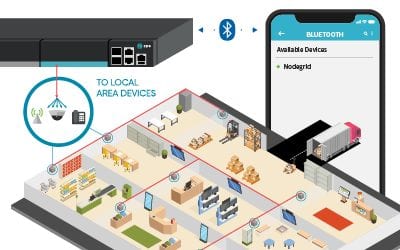
    ZPE System’s Nodegrid comes ready to go right out of the box with no pre-configuration required on the unit itself. Simply unbox the unit and power it on; you don’t even need to connect it to your local network to get started. No local internet connection? No problem!


    • Connecting Nodegrid via Bluetooth® to a cell phone is simple: The new Nodegrid device is powered on (no screen or keyboard required)
    • On a cell phone, Nodegrid will show up as an available device within Bluetooth® settings
    Bluetooth Tethering 600 x 450
    After just a few taps, Nodegrid goes live and automatically connects to the ZPE Cloud. There, all of your saved configurations are ready and waiting to be downloaded to your new device. Once configured, your device is now secure and ready to unlock the full potential of the Nodegrid Platform. Just plug Nodegrid into your network and allow it to serve as a temporary gateway for your other connected devices. Within minutes, your internet connection is established and you’re back on track to finish on time, as expected.

    Instant Reset

    With Nodegrid, resetting and restarting the process is just a click away. Simply press the factory reset button and start with a clean slate, anytime, at any location. Less worry, more convenience.

    As Easy as it Gets

    With ZPE Systems Nodegrid, provisioning has never been easier and more reliable. From Zero Touch Provisioning (ZTP), to automation via deployment scripts and more, your new remote branch is ready in no time with minimal on-site resources required. Combined with ZPE Cloud, provisioning is fast, secure, and consistent across your entire network. Once up and running, Nodegrid’s 360° network visibility allows your team to monitor and maintain all of your connected devices from one easy to use, vendor neutral platform.

    Ready to take your network to the next level?

    For more information on ZPE’s full product line, please visit our products page.

    Have a specific question or want to experience a live demonstration for yourself?
    Reach out to us via our Contact page. We’re here for you!

    Get Your Guide to Business Continuity with Out-of-Band Management

    When business continuity is on your mind, out-of-band management should be, too. That’s because your network serves as the backbone of your enterprise. Whether you’re in retail, manufacturing, oil & gas, or another industry, you need to make sure information and services reach your appropriate user base. This could mean supporting critical point-of-sale systems on your showroom floor, or ensuring sensor data transmission from platforms drilling into the seafloor.

    That’s why out-of-band is so critical to business continuity. This management network allows you to gain remote control of your physical and virtual assets, so that you can remediate issues, make configuration changes, update firmware, and more — even if you’re across the globe.

    To help you understand more about this crucial technology, we’re giving you our free Gorilla Guide to Better Business Continuity.

    But first, let’s recap what out-of-band management is

    There are two approaches you can take to manage your network: in-band and out-of-band.

    In-band management is when you access network assets via your main connection. With an in-band approach, you use https, SSH, or other protocols to gain access through your production network. This means that should a disruption occur, you’re left without any ability to manage your devices.

    Out-of-band management is when you set up an isolated management path that’s separate from other networks. This gives you the ability to gain access to your systems, even if your main connection suffers an outage.

    Businesses around the world use out-of-band for data center and branch networking continuity. Here’s a brief explainer video showing its advantages:  

    What are the benefits of out-of-band management?

    Out-of-band management brings many benefits to your enterprise, all of which improve your ability to maintain business continuity. 

    • 3 reasons why you need it — From improving response times and restoring uptime, to gaining more control of your infrastructure, discover 3 reasons why out-of-band is so critical to business continuity.
    • How automation makes you more efficient — See how automation streamlines network operations and processes, so you can stay focused on business and less on routine tasks.
    • Best practices for out-of-band networks — Get expert advice for setting up your out-of-band network, and designing a solution that’s secure & accessible.
    • How the cloud improves out-of-band — Learn about how cloud-based provisioning can help you set up devices and networks easily, and deliver your out-of-band configuration at the push of a button.

    Let us show you how you can put your best network staff on the job, no matter where they’re located.

    6 IT Solutions to Implement Right Now for More Effective Remote Work

    ZPE Systems Blog Photo- Header

    Many companies have found it difficult to adjust to remote work. In the face of drastic changes brought on by pandemics, natural disasters, and other challenges, untethering your workforce from the office can be a big ask. Your success relies on one crucial component: your network.

    Keeping your enterprise connected – both internally and to customers – is the only way to maintain business continuity and customer satisfaction. Unfortunately, traditional networking solutions were built for the office. Not only does this slow down your transition to working remotely, but also makes everyday operations anything but efficient.

    The good news is, our experts have pinpointed six IT solutions that will make your company more effective at remote work, using a network that accommodates distributed business better than ever.

    ZPE Systems Blog Photo- Body Image

    1. Give Network Staff Convenient Access With Advanced Out-of-Band

    Out-of-band (OOB) management is not a new technology. But taking advantage of this tool has traditionally proven cumbersome and inefficient.

    It’s not uncommon for businesses to treat their OOB network as an afterthought, something they might use once in a while when an update or fix is needed. Phone lines, modems, and dedicated OOB devices make management a chore, even for tasks like resetting passwords, rebooting devices, and other routine work.

    Remote access via DSL or dial-up is too slow, which takes time, puts your security at risk, and forces you to juggle delicate admin protocols. Putting staff on site is another option, but also eats up time and binds specialized IT personnel to specific locations.

    Fortunately, you can take advantage of advanced out-of-band, which lets you perform network management tasks from anywhere.

    An advanced out-of-band solution gives you a secure management path that’s completely separate from all other networks. Not only do you stay protected from unwanted traffic and attacks, but you can also get blazing fast access to your management network via broadband connection.

    This means that for issues large and small, you can slash response times and put your best people on the job – even if they’re across the globe. And if your main connection suffers an outage, you can remote-in to your out-of-band network via cellular failover backup.

    Advanced out-of-band makes network management convenient and efficient.

    2. Protect Business From Costly Downtime Thanks to Cellular Failover

    If one of your critical locations suddenly goes offline, your business could lose up to thousands of dollars per hour. Restoring your main connection can take hours or days, while your employee and customer interactions come to a standstill. Business stops, and your reputation plummets alongside customer satisfaction.

    However, cellular failover is a simple solution that can prevent all of this, so you can leave downtime in the past. When your main connection drops, your failover-equipped network automatically switches to 3G, 4G, or even 5G cellular to give employees and customers a seamless experience.

    Capable cellular solutions give you freedom of choice, allowing you to determine which wireless carriers you use, as well as letting you take advantage of multiple backups. It’s like an insurance policy for your connectivity, with most cellular providers sporting over 99% reliability.

    When you need to deploy a new location, cellular failover can even help you bring critical systems online – before your main connection is established. It’s a wireless solution that lets you scale on demand and helps you increase your business’ agility.

    3. Keep Staff Connected Using Secure Access Service Edge

    Accommodating remote work usually involves a slow, stringent process. You need to purchase and configure laptops and other equipment, create users and groups, and adjust other hardware- and network-specific settings. All of this just to allow staff to work away from the office.

    ZPE Systems - SASE Image

    On top of this, all traffic likely gets routed through your main enterprise firewall. This degrades performance and speed for every user, and can bring business operations to a grinding halt.

    But Secure Access Service Edge, or SASE, is a transformative technology that does away with the traditional hassles of setting up for remote work, and instead puts networking and security into the cloud. This allows safe connectivity to be delivered close to users no matter where they are. And because SASE uses an identity-driven model, your employees don’t have to rely on special hardware. They can access your network using their smartphone, tablet, desktop, or other device.

    SASE gives your employees flexible network access, and also frees your main enterprise connection for more business-critical traffic. You can deploy your SASE solution and get a network that keeps your staff connected.

    4. Fully Optimize Using a Vendor-Neutral System

    Typical networking solutions cause vendor lock-in. This is when you’re limited to choosing specific hardware and software products that are compatible only with each other. Vendor lock-in forces you to make sacrifices during implementation, so you end up with a solution that doesn’t entirely satisfy your requirements.

    But with a vendor-neutral management platform, you can boost efficiency even on your existing network.

    A vendor-neutral system means you don’t have to worry about over-buying or under-serving, and can instead connect the physical and virtual assets of your choice. You can optimize your network with SD-WAN, firewall, routing, and other solutions that perfectly suit your needs.

    Some providers even offer a unified management tool that consolidates control of your network solutions, regardless of which vendors they’re from. Your IT staff no longer need to jump from one unique UI to another, because everything can be controlled under a simple management umbrella. You can update firmware, change traffic priorities, monitor devices, and more from one clean interface.

    With a vendor-neutral system in place, you can turn your network into a powerful asset that supports your global enterprise.

    5. Streamline with virtualization

    You’re probably used to having dedicated, single-purpose devices for your network functions. Even if these deliver all the capabilities you need, you’ll inevitably find it difficult to scale and manage due to large stacks of hardware & software solutions.

    But you can significantly reduce your physical stack and your management efforts by using virtualization.

    With the right devices, you can consolidate and virtualize your network functions to streamline every part of infrastructure management.

    And the more guest operating systems you can run, the better. With virtualization, you can host custom or third-party applications, so instead of deploying separate appliances for SD-WAN, routing, failover, and firewall functions, you can use fewer devices capable of handling it all. This means smaller stacks, tighter solution integrations, and easier management of network functions.

    6. Use Automation to Take Work off Your Hands

    You spend a lot of time and money just to keep your network running. Routine tasks and configuration management are some of your biggest challenges, simply because they pull critical resources away from more urgent business needs. Moreover, you’re left vulnerable to human error that can cause interruptions and downtime.

     This is where automation comes into play, which helps by doing some (or all) of the work for you.

    For everything from routine fixes, to provisioning, to configuration updates and rollbacks, automation helps you achieve autonomous networking. Use your favorite tools like Ansible, Chef, and Python to create workflows that carry out themselves, and set up zero touch provisioning for push-button deployments. Automation is the only solution that helps you replicate and scale with consistency, so you can avoid costly errors while keeping specialized staff focused on the core of your business.

    Take advantage of automation capabilities for more efficient and productive enterprise networking.

    Remote work can be difficult to accommodate, especially when your business is distributed across the globe. But you can help your entire organization operate more effectively through networking.

    At ZPE Systems, we’re leading the remote-work initiative with comprehensive offerings for all six of these IT solutions. From advanced out-of-band, to virtualized, vendor-neutral infrastructure and management, our hardware & software help your business work better from anywhere.

    To take advantage of these solutions, get in touch today!

    Secure Access Service Edge For an Oil & Gas Provider

    Secure Access Service Edge is a new concept that’s transforming the edge network. SASE delivers more flexible and secure network access, so your business can adapt to drastic changes and accommodate a distributed workforce.

    Want to see it in action? Here’s a 90-second explainer video to help you visualize business with SASE.

    In a nutshell, SASE delivers a ton of benefits:

    • SASE combines networking and security in a cloud environment. This means you don’t have to backhaul traffic through your main enterprise firewall, which causes slowdowns and degraded performance. Instead, you can deliver safe network access directly to users, which makes it easy to connect from anywhere. At the same time, this lets your main network breathe so business can continue without interruptions or lagging network speeds.
    • SASE is identity-driven. This means network connectivity is tied to users instead of to specific devices or access points. So when changes force you to accommodate remote work or distributed staff, your IT teams don’t have to be burdened configuring countless laptops, smartphones, tablets, etc. Your workers can simply pick up and go, and connect to your network even using their own devices or public access points.
    • SASE converges network functions for secure and easy management. Accommodating a more agile edge network used to require adding purpose-built solutions to your stack. This made a nightmare out of deploying and scaling, and management became more complex because each solution came with its own UI, architecture, requirements, etc. With SASE, you can virtualize all your essential functions. This helps reduce your stack to make scaling simple, and centralizes functions so IT staff can manage your network in one place.

    Why is SASE better with Nodegrid?

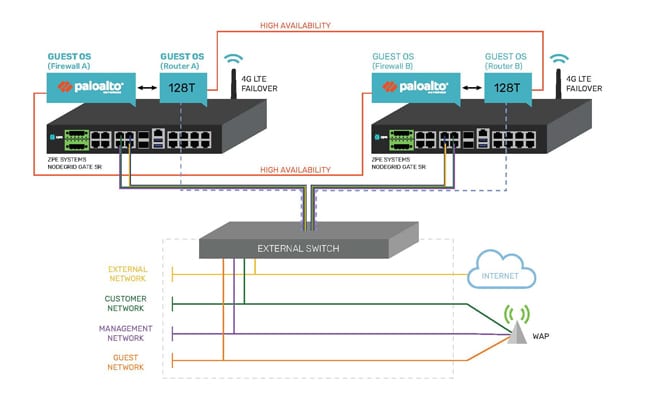
    Nodegrid provides a SASE platform that’s unlike other solutions on the market. This owes to all-in-one devices and the 64-bit, Linux-based Nodegrid OS. With more speed and compute power, Nodegrid offers even more flexibility through virtualization, capable of running multiple guest operating systems (guest OS) and directly hosting your choice of applications.

    Nodegrid also supports automation and zero touch provisioning. In order to deploy new locations, just install your Nodegrid devices, and then provisioning can be executed automatically. This significantly increases security, since you can ship 100% unconfigured devices and then provision only when they’re under your control. This also saves on deployment resources, because you don’t have to send specialized IT staff to each site for time-consuming, manual setup tasks.

    How does Nodegrid deliver SASE in the real world?

    A global oil & gas provider needed to streamline their edge networking solutions.

    Their hardware stack consisted of many devices that were difficult to deploy and manage. This was a major hurdle for the company, considering their remote sites were very limited by physical space constraints. Additionally, support costs continued to rise and IT staff were dispatched to fix even minor issues.

    The company needed a streamlined solution that was more space- and energy-efficient, and that could also maintain a high availability environment. Nodegrid was the only platform that could meet all their needs.

    Want to learn how the company cut their stack in half, maintained a secure & highly-available environment, and saved on support?