Providing Out-of-Band Connectivity to Mission-Critical IT Resources

Living Spaces Furniture: Scaling to 50 sites with only 3 network staff

Collapsing the stack and centralizing management helps Living Spaces accelerate scaling across the U.S.

Blake Johnson – Living Spaces Furniture Network Architect

“We’ve quadrupled business, but Nodegrid is actually shrinking our workload, especially as we implement new automation. It’s a gamechanger for network folks. Period.” — Blake Johnson, Network Architect, Living Spaces Furniture

Living Spaces is a prominent furniture retailer in the United States. Their store locations include large showrooms, where customers can view furnishings for indoor and outdoor spaces, and plenty of warehouse space for storing on-hand inventory. These locations must serve customers with responsive shopping experiences, which depend on the network infrastructure.

Increasing demand helped Living Spaces grow out of its home state of California, into states including Arizona, Colorado, Oklahoma, Texas, and others. Their out-of-band infrastructure was crucial to spinning up new locations and maintaining operations. But they faced a significant problem: this infrastructure was incredibly complex and costly, requiring many dedicated cellular and out-of-band devices at each location. See why their three-person network team needed a solution that could:

  • Reduce costs and eliminate the need for $300,000 per year in SIM contracts
  • Reduce workloads and risks, by centralizing management and minimizing entry points
  • Accelerate deployments by allowing automation

99.999% Uptime for a Top-10 Engineering School

Providing low-level remote access and automation saves hundreds of hours per month for the university’s small IT team

One of the largest universities in the United States fosters academics and research for nearly 40,000 students, staff, and researchers. The university sits among the top 10 schools for engineering, and heavily integrates technology into all disciplines, including engineering, computer sciences, and agricultural studies.

The university received a grant to expand, update, and connect their network of campuses, while enhancing infrastructure and mobility, resiliency, and campus amenities.  But having more than 200 on-campus buildings presents a challenge. The campus is home to academic facilities as well as a hospital, airport, 60,000-seat sports stadium, and dozens of leased spaces for local businesses. This makes the university equivalent to a small city, and its network infrastructure is what keeps it all connected.

Their small IT team was responsible for maintaining more than 10,000 management devices, most of which were long past EOL and frequently failing. They needed a refresh, but with a solution that could also reduce the hundreds of hours they spent every month on travel and on-site work. To maximize their day-to-day efficiency, they required a solution that could overcome these operational gaps:

  • Reducing the 100-150 hours of monthly travel times, by giving engineers the ability to fully access their stack remotely
  • Reducing the 80-120 hours of monthly on-site work required to maintain the 99.999% SLA, by automating manual jobs such as patching and firmware upgrades
  • Expanding their management headroom and use-case adaptability, by migrating to IPv6 and reducing the existing 6RU device stack

Download the full case study to see how ZPE’s Nodegrid hardware and software solved these problems.

EngineeringSchoolCover

Download the full case study

Problems and Gaps

The university is one of the largest in the United States. It sits among the nation’s top 50 schools for research expenditures, and heavily integrates technology into all disciplines, including engineering. Its main campus is home to more than 200 buildings that sit on over 2,500 acres of land. The campus is essentially a small city, and the university’s network infrastructure keeps it all connected.

This network infrastructure, however, was well beyond EOL and in disrepair. But rather than simply upgrade to newer devices, the university’s small IT team wanted to improve the overall quality of life well into the future. This meant addressing three gaps:

  • Inefficient management at scale — Each engineer spent an average of ten hours per month on travel alone, just to traverse the campus’ wide footprint and get to each MDF/IDF closet.
  • Too much focus on ops — The aging infrastructure was on the brink of collapse and required each engineer to spend eight hours per month in on-site work, just to keep devices running.
  • Too many devices — The infrastructure includes roughly 10,000 devices to manage, which was exhausting IP on their limited IPv4 network and too rigid to fit in tight spaces, like their remote farm closets and research labs.

Solution

The university deployed the full lineup of Nodegrid devices, including the Nodegrid Serial Console, Nodegrid Services Routers, and Nodegrid Manager. These allowed them to overcome all three gaps using remote management, automation, and consolidated functionality, to save engineers hundreds of hours every month. Download the full case study to see the complete solution and benefits.

Need Help Replacing End-of-Life Gear?

Check out our complete products and services package to make your EOL transition seamless. Choose from a variety of Synopsys-validated devices, get a generous trade-in discount, and let our engineers install and configure into your environment. Click below to explore this offer and more customer case studies.

Vapor IO: Re-architecting the Internet

ZPE Systems – Vapor IO thumbnail

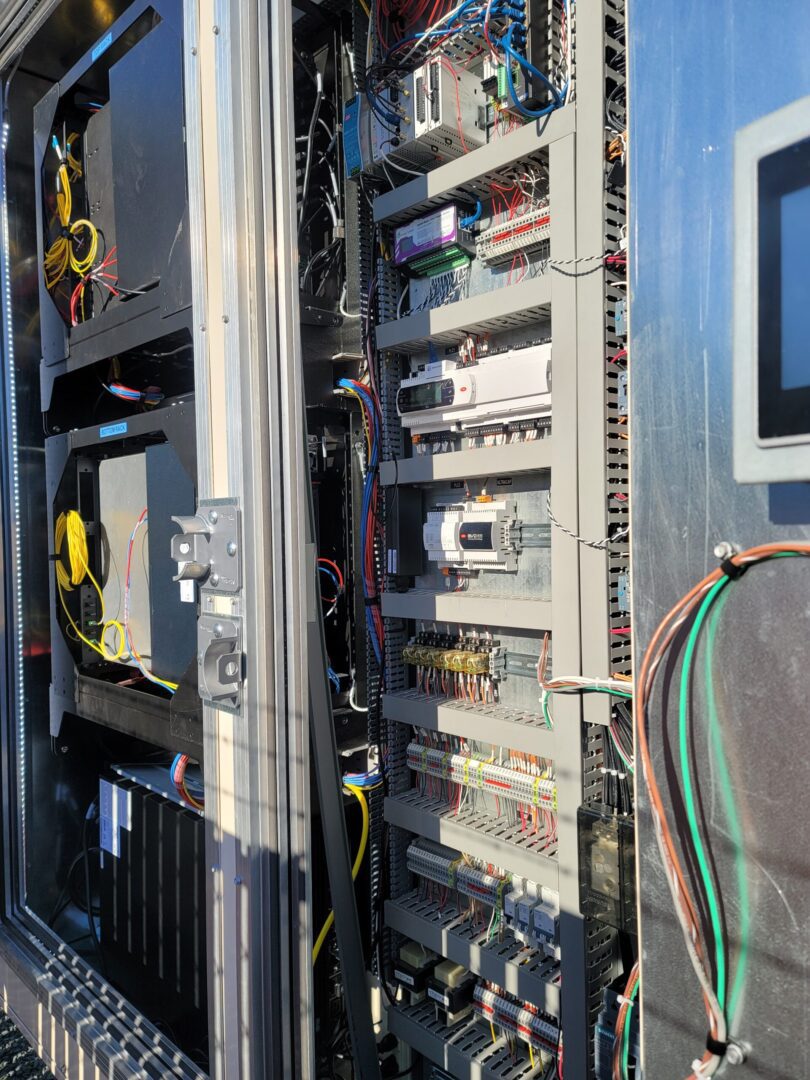
Automating edge deployments & lights-out management for Vapor® IO

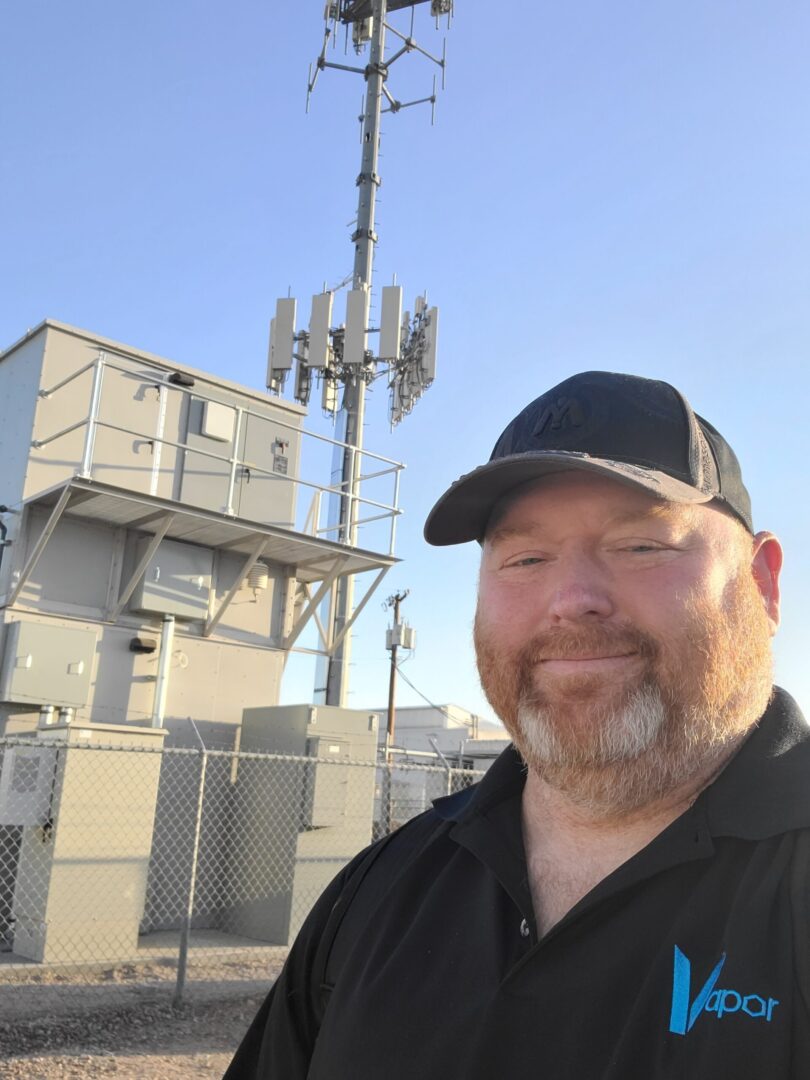
Vapor IO provides autonomous network and data center infrastructure at the network edge. Their goal is to re-architect the traditional Internet into a distributed, ubiquitous, edge-to-edge web that serves end users with SLA-backed routing, up to twelve-nines reliability, 100-microsecond latency, and terabits-per-second bandwidth.

With 36 (and counting) major U.S. markets, and their recent expansion into Barcelona, Spain, Vapor IO needs to run operations as lean as possible. However, as they continued to scale, the complexity of their own management infrastructure stood in the way of achieving this goal.

See why they required eight hours of setup time at each site, and discover which Nodegrid technologies helped significantly streamline not only new installations, but operations and overhead as well. Download the case study for full details.

Problems and Gaps

Vapor IO’s ultimate goal for operations is to deploy lights-out data centers all over the world and minimize the number of staff required to maintain these sites. Crucial to this goal is having the ability to collect billions of data points at each location, which allows teams to monitor and control physical and virtual devices. But their existing management infrastructure was complex and outdated, and consisted of:

  • Cellular modem with third-party
  • Subscription out-of-band router
  • Out-of-band switch
  • Out-of-band serial console
  • Out-of-band laptop/compute node
20221216_113845

One of the company’s core values is to further business goals by making constructive changes and avoiding unnecessary complexity. This management infrastructure only added complexity and would require additional staff to maintain it. To solve this, Vapor IO would have to be proactive in closing several significant gaps:

  • Each edge data center required at least five separate management devices that were not integrated together. Deployments required a skilled technician to be on site for an entire workday. This time sink would multiply in direct correlation to the total number of new sites to deploy.
  • The ability to lease rackspace directly translates to revenue. But each site required Vapor IO to use at least 5RU for its own devices. As demand increased, this dead space would translate to millions in lost revenue, on top of additional power and cooling costs.
  • Having disparate solutions not only increased the total points of failure, but also meant more devices to manage. This increased the likelihood of failures/outages that would require truck rolls, and also increased the ongoing operational workload required to keep many management devices running.
  • A multi-vendor environment meant added overhead and rigidity that complicated procurement, project planning, and development of new designs. This made it difficult to adapt to different use cases and customer requirements.

Solution

Vapor IO deployed the modular Nodegrid Net SR. This appliance provided the capabilities they needed to automate deployments and support lights-out management. The LTE module allows staff to remotely connect to sites and bring resources online, while the SFP module allows each site to connect to their nationwide fiber backbone.

Frank Basso

“Nodegrid keeps our costs down and extends everyone’s capabilities. The automation lets our support teams do specialized jobs, so our engineers can devote more time to delivering customer value.” — Frank Basso, EVP of Operations, Vapor IO

ZPE Cloud – Silver Peak and Palo Alto Networks Edge Deployment

Want to know how to set up a Silver Peak appliance and Palo Alto Networks firewall? In our latest video, Director of Solution Engineering Rene Neumann walks you through how to easily create an edge platform using the Nodegrid Gate SR and ZPE Cloud.

This hardware and cloud platform gives you:

SD-WAN capabilities, allowing you to simultaneously connect to Ethernet, fiber, and cellular
Enterprise-class firewall, allowing you to secure all traffic into and out of your edge site

These Silver Peak and Palo Alto templates are available to all customers, and make it easy to deploy and configure virtual machines necessary for edge sites.

Get a hands-on demo

Want to see how easy this is to deploy in your environment? Click the button below to set up a one-on-one demo with Rene himself.

Making Deployment and Management Easy for a Large Retailer

Simplified retail edge & critical remote access

Making deployment and management easy for a large retailer

A major retail company requires networking that can keep up with demand. However, having large distribution centers and enormous showrooms can push the limits of their connectivity. Internal operations rely heavily on data for logistics and inventory purposes, while customer-facing interactions need strong networking for product availability and order processing transactions. To accommodate rapid business growth, the retailer sought a branch networking solution that they could scale quickly and manage easily.

The Challenge

With traditional edge solutions deployed, the company became accustomed to high support & maintenance costs. However as business began to increase significantly, expansion became critical — but their existing system could not keep up.

The Solution

The company discovered that only Nodegrid could deliver the capabilities they needed for rapid growth. They chose a powerful combination of Nodegrid Services Router (SR) devices: the Net SR (NSR), Gate SR (GSR), and Link SR (LSR).

The Results

The combined Nodegrid solution streamlined the company’s edge networks along with their management efforts.
Instead of requiring a separate switch in the MDF and a dedicated cellular device in each IDF, the retailer needed only the NSR in the MDF. This all-in-one device eliminated the network switch and centralized these critical functions while extending capabilities to each IDF. Connecting the LSR or GSR at the department level also reduced their stack by eliminating the need for purpose-built cellular appliances throughout each store.

HEAnet: providing network uptime for education


HEAnet logo

If there’s one sector that relies on network uptime more than ever before, it’s the education sector. For both in-person and virtual learning, students and staff connect to crucial resources around the world to share information. The infrastructure that enables this connectivity is critical, and in the country of Ireland, this infrastructure is deployed and maintained by HEAnet.

As the national education and research network, HEAnet is a provider who must adhere to stringent service levels in order to keep entire education communities online. But they recently faced a few major challenges as their out-of-band (OOB) management solution neared its end-of-life (EOL) date. This system was crucial to maintaining network uptime, as it gave engineers remote access to their 50+ nationwide locations. They needed to quickly roll out a new solution, but they were faced with a second challenge — limited staff.

It seemed HEAnet was stuck between a rock and a hard place. They would surely need to outsource the job, and that’s when they turned to Rahi, the world-renowned MSP who introduced them to ZPE Systems’ Nodegrid.

The rest is history, and for a deep dive into that lesson, download the full HEAnet case study below.

But before you do, here’s a quick refresher on critical infrastructure and why network uptime can be difficult to maintain.

Critical infrastructure and network uptime

Critical infrastructure is made up of the systems that connect sites to each other and to the rest of the world. The data center is an obvious example of where critical infrastructure is deployed. Points-of-presence (POPs) and colocations are other somewhat obvious examples. All of these house components, such as servers, switches, and routers, which are essential to handling data and traffic that organizations rely on.

Here are more examples of where critical infrastructure is commonly found:

  • Warehouses: servers, routers, and Wi-Fi access points help humans and their automated counterparts track inventories, fulfill orders, and communicate with vendors.
  • Manufacturing plants: operationalized technology like sensors and IoT devices collect data from gauges, robots, and machining equipment to ensure accurate measurements, maintain quality control, and streamline fabrication processes.
  • Cellular base stations: compute, storage, and failover devices process signals, store data, and provide backup connectivity for critical cell site components.

Organizations must maintain high levels of network uptime for their critical infrastructure, since it supports the lifeblood of everything they do. But this can be a challenge because these components are not always located within convenient reach of skilled engineers.

Why can network uptime be so challenging to maintain?

Maintaining network uptime can be challenging even for fully-staffed locations. This difficulty is amplified — quite dramatically — when organizations have to recover and maintain sites that are located far off the beaten path.

Imagine this: you’re responsible for monitoring and troubleshooting critical infrastructure for a network of college campuses in your region. One of your most remote sites, which serves more than one thousand students and faculty on any given day, experiences sudden disruptions and eventually goes offline. It’ll take close to four hours for you to put skilled staff on site to recover the network, which puts you at risk of breaching your SLA. You and your team are stressed out and scrambling, while students and teachers have no option but to cancel some or all of their activities.

Now imagine that you have a tool that allows you to respond instantly and restore the network before anyone even notices. That’s the kind of power you can achieve with a deep, robust out-of-band management solution, which is one of the tools HEAnet deployed to keep disruptions from reaching users.

There’s more that can go wrong, however. Your sites could suffer an ISP outage, leaving locations in the dark if they don’t employ any wireless backup connections. Or if your customer has a multi-vendor MSP solution that you’re part of, the other vendor’s components may be to blame, and you need a tool that can help you quickly diagnose the root cause.

Download the HEAnet case study

To see more challenges you might face when maintaining network uptime, download the HEAnet case study. You’ll also discover how Nodegrid gave them seamless backup connectivity and allowed a single Rahi engineer to deploy two sites in a single day. Get the case study now.