Providing Out-of-Band Connectivity to Mission-Critical IT Resources

Home » Simplify Branch Infrastructure

When Console Access Becomes the Soft Underbelly of the ISP Network

Thumbnail – When console access becomes the soft underbelly of the ISP network – ZPE Systems

ISP security strategies often put a lot of armor around the production network. Firewalls, DDoS mitigation, traffic inspection, and redundancy are all designed to protect customer traffic and keep packets flowing.

But some of the most damaging outages and breaches don’t start in the production network. They start somewhere that’s much less visible and much more vulnerable, a place where one strike can easily get to all the vitals.

They start at the console.

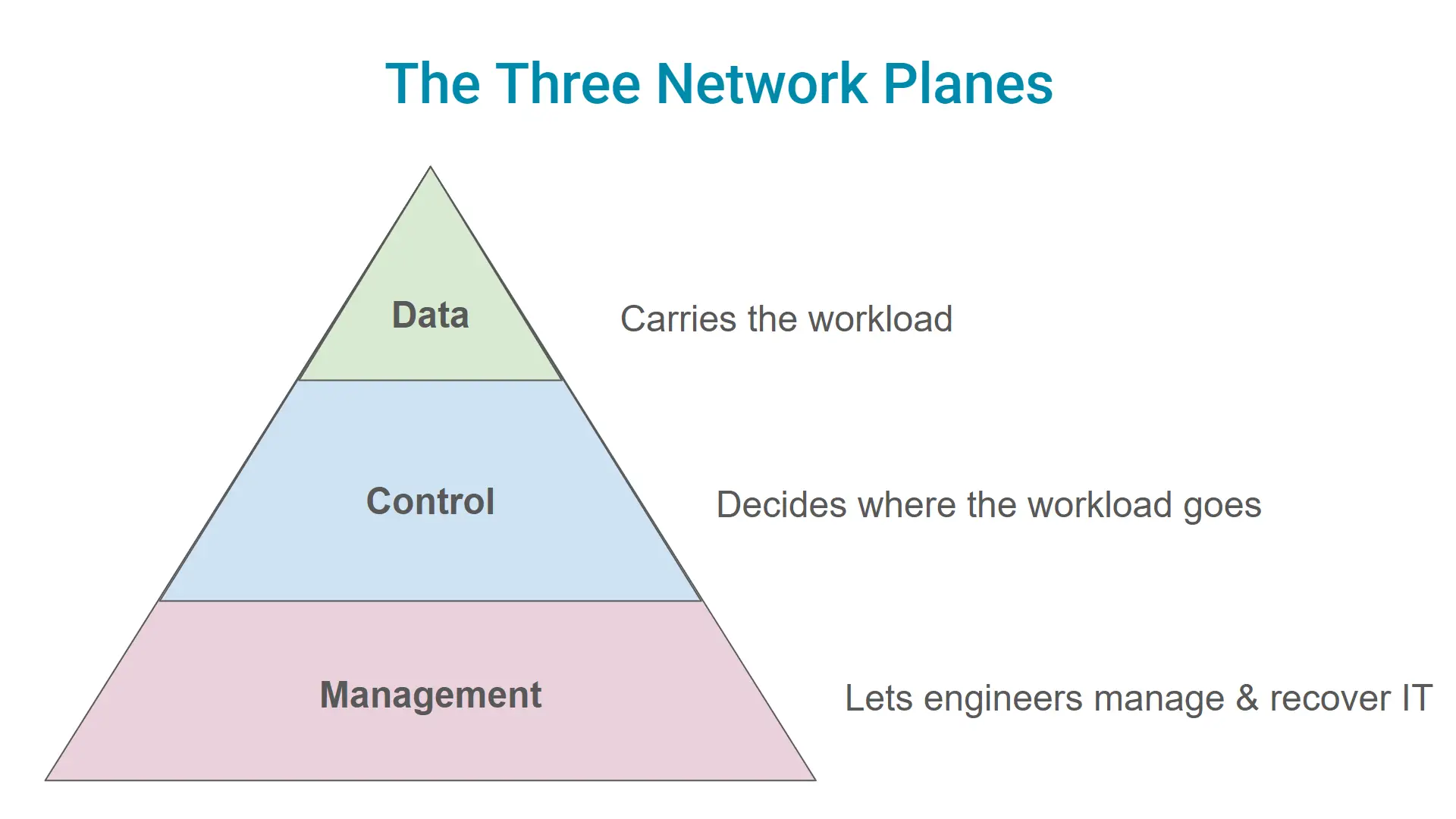
The management plane is a foundational part of the security puzzle. It’s where engineers access routers, switches, and other critical networking gear. This plane also grants broad access and has much less security built around it. In other words, the management plane is usually the most powerful yet least protected part of the network.

ZPE Systems – The Pyramid of Planes

Image: The Pyramid of Planes (Source: Cisco Press)

Why The Management Plane Is a High-Value Target

The management plane is where real control lives. Console access allows engineers to restore devices, change configurations, disable interfaces, and recover systems when things go wrong. It is literally what controls the entire network.

Yet for ISPs and many others, securing management access is treated as a secondary concern. Management traffic often rides on the same paths as production traffic. Access is granted broadly, credentials are reused, and visibility into what actually happens during a console session is minimal. This is especially true for POPs and last-mile sites where physical security and staffing are limited.

To an attacker, it’s minimal effort for maximum impact. They don’t need to exploit routing protocols or overwhelm links. With console access, they can simply reconfigure, disable, or erase devices.

Three Big Problems with Traditional Network Management

In-Band Management Creates A Huge Attack Surface

In-band management is where admin access shares the same network paths as customer traffic. An obvious problem with this is that when the production network fails (from a fiber cut, routing instability, or other incident), teams can’t access the devices they need to recover.

ZPE Systems – In-Band Management Leads to Slow Recovery or a Truck Roll

But from a security standpoint, there’s a bigger problem: the attack surface is much larger with in-band management. If an attacker breaches the production network, they’ve got a direct path to the management plane. It’s highly likely that they’ll move laterally from customer-facing systems to control interfaces. When an attacker controls an ISP’s network, they control the business, too.

Shared Access Gives Attackers Broad Control

In many environments, console access isn’t given the proper zero-trust treatment it deserves. Instead, it’s about convenience. Engineers, NOC staff, and third-party vendors will often share access paths, credentials, and devices without segmentation.

This is how small mistakes turn into major security events. A lack of segmentation means that all it takes is one set of credentials to be misplaced or stolen, and an attacker gains broad control. They can move laterally across devices, regional sites, and backbone routers faster than defenders can respond.

Poor Visibility Leaves Soft Spots…Soft

Breaches always come with the same question: What happened?

This is impossible to answer in traditional environments because it’s difficult to find the evidence. Legacy solutions lack detailed logs and audit trails, so there’s no way to get a clear picture of the attack. Security teams can’t reconstruct what happened, and compliance teams can’t find or produce any evidence. It’s like being blindfolded during an attack, but also unable to remove the blindfold after the fact.

When it’s impossible to figure out where the attack came from or how it transpired, it’s impossible to defend against the next one.

What If The Management Plane Was Designed Like A Security System?

Modern ISP environments require a security posture that treats the management plane for what it is: a critical system. It needs to:

  • Minimize the attack surface
  • Limit the blast radius of attacks
  • Offer full visibility in case of attack

Many ISPs are adopting an approach that gives them all of these capabilities. This involves setting up a management architecture that is completely dedicated to, well, management. Here’s what it looks like.

Gen 3 Out-of-Band Management for ISPs

Traditional out-of-band management was often little more than a backup modem bolted onto a console server. It solved one problem – getting in during an outage – but left many other problems untouched, especially around security, scale, and governance.

Gen 3 out-of-band management is fundamentally different.

Instead of acting as an emergency access tool, Gen 3 OOB is designed as a permanent, security-first management plane. It is physically and logically isolated from the production network, ensuring that management access doesn’t die when production goes offline. Even if the production network is actively under attack, the management plane remains reachable.

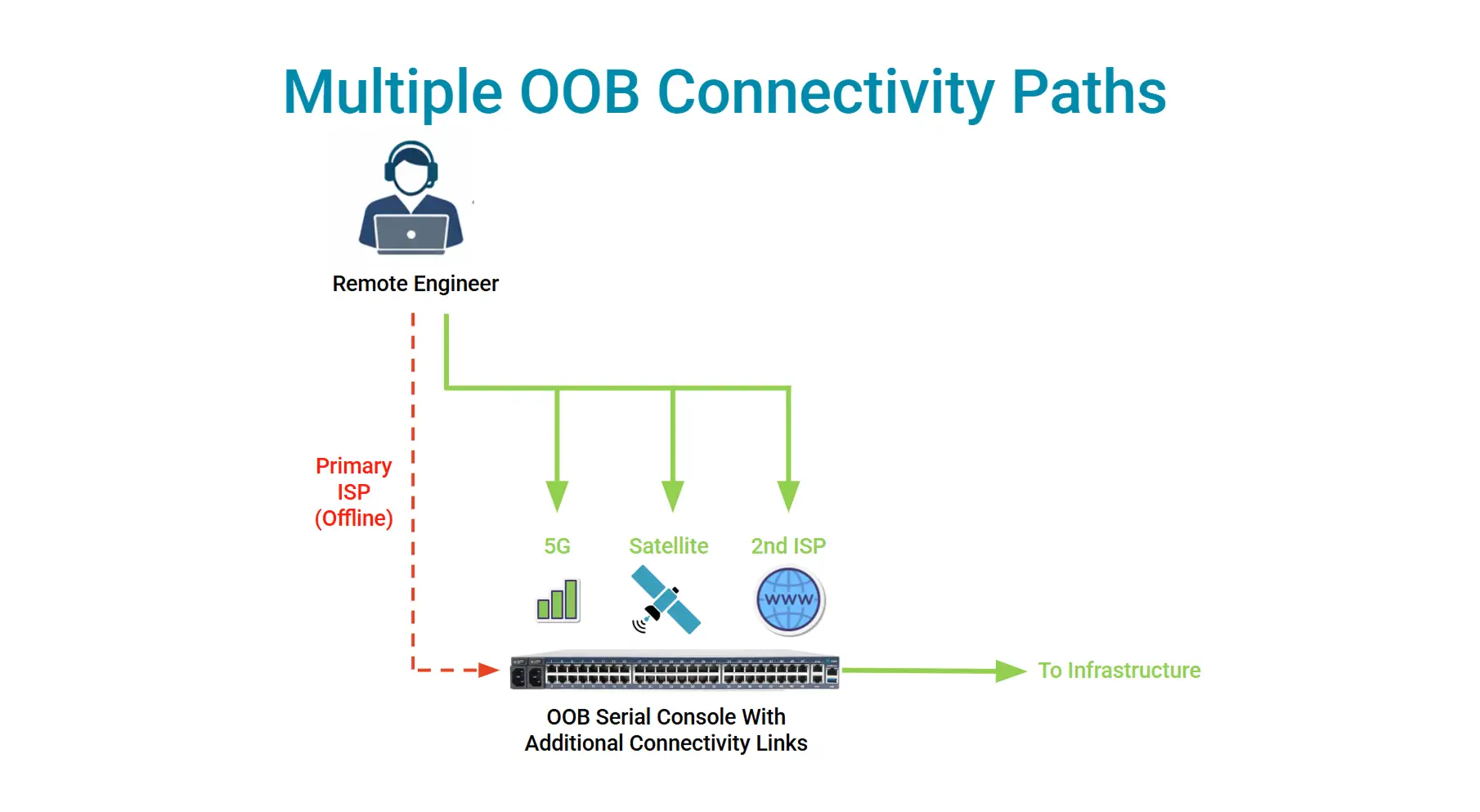
This architecture dramatically reduces the attack surface. Management traffic no longer traverses production links, and attackers who compromise customer-facing systems don’t automatically gain a path to administrative access. Independent connectivity, such as LTE, 5G, or satellite, ensures that access persists during fiber cuts, routing failures, or control-plane incidents.

The most important part is, Gen 3 OOB is built to operate at ISP scale. It supports centralized policy enforcement, secure remote access across thousands of sites, and consistent controls from backbone POPs down to last-mile cabinets. Management access becomes predictable, resilient, and defensible, giving teams real operational control that’s critical during emergencies.

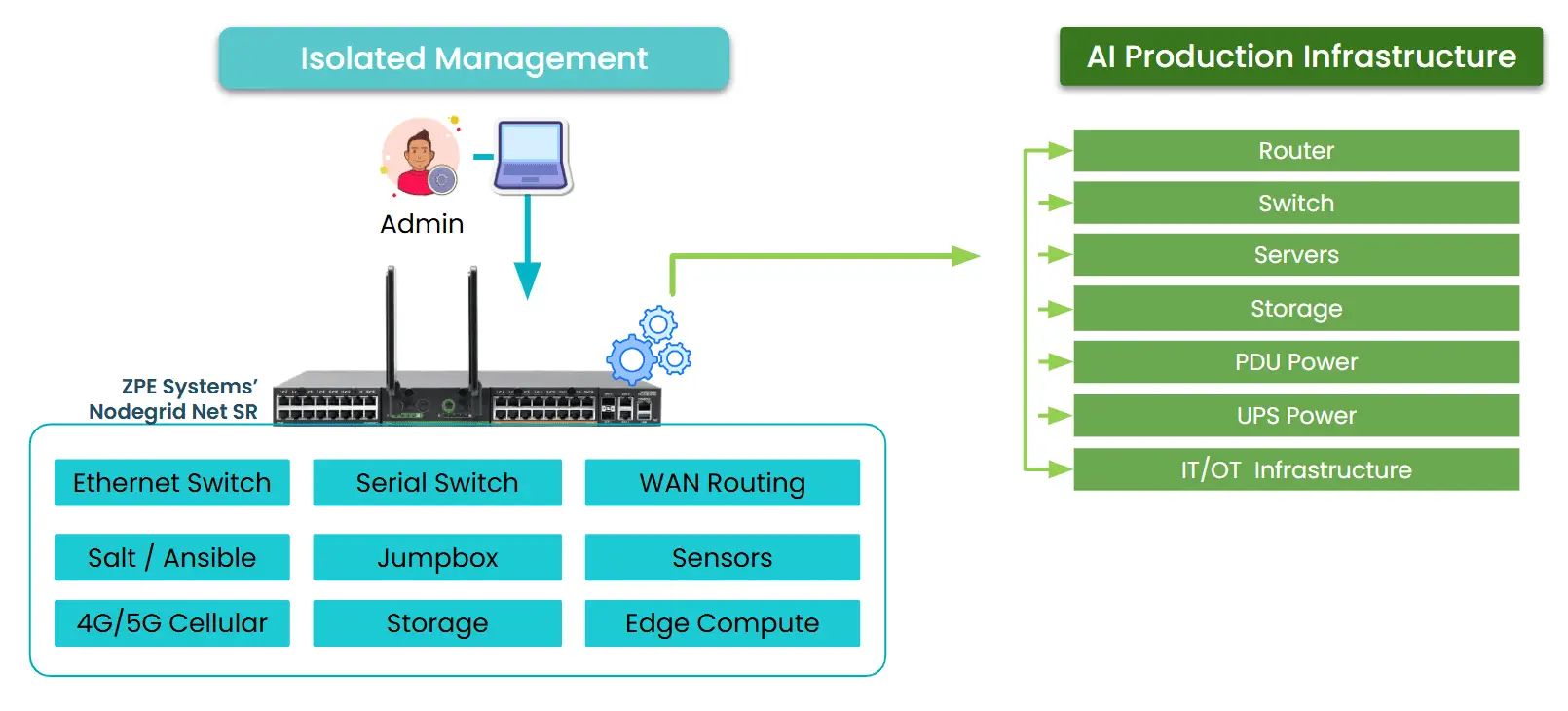
Isolated Management Infrastructure

Out-of-band access alone isn’t enough if it’s not governed properly. This is where Isolated Management Infrastructure (IMI) comes in.

IMI extends the principles of Gen 3 OOB by applying zero trust security controls directly to the management plane. Every user, device, and session must continuously prove its identity and authorization. Instead of the typical castle-and-moat, “all or nothing” approach, management access is precise.

Engineers are granted access only to the devices and ports they need. Vendors receive temporary, segmented access that automatically expires. Sessions are logged, recorded, and tied to individual identities, creating a complete audit trail for security and compliance teams.

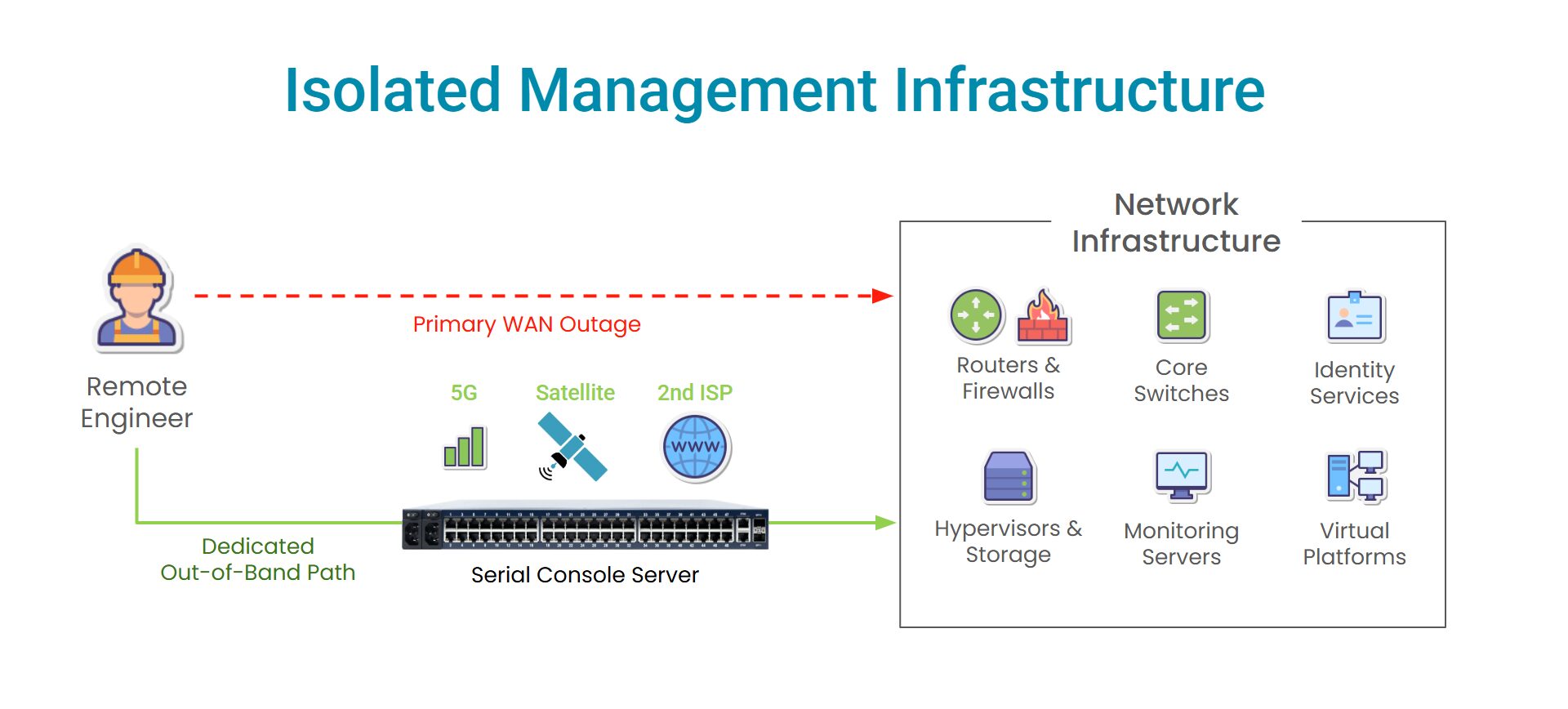
ZPE Systems – Isolated Management Infrastructure

A big part of IMI is that it assumes that breaches will happen somewhere in the environment, and is designed to limit the blast radius when they do. If credentials are compromised, attackers cannot move laterally across sites or escalate privileges unchecked. Visibility ensures that suspicious activity is detected fast and investigated with confidence.

For ISPs, IMI brings the management plane in line with modern security expectations. It aligns with regulatory requirements, supports forensic investigations, and enables teams to operate securely without slowing down recovery or day-to-day operations.

Together, Gen 3 OOB and IMI create a management architecture that is resilient by design and secure by default.

See Why Nodegrid Is the Choice For ISP Network Management

Discover what goes into securing modern ISP networks with Nodegrid. Our guide, The Security Architecture That Makes Nodegrid Ideal for ISPs, breaks down what makes Nodegrid secure by design. Take a look at everything from multiple, dedicated OOB links that guarantee management access, to zero-trust enforcement, centralized policy control, and third-party vendor isolation.

ZPE Systems – Nodegrid Ideal for ISP’s

Download the guide now to get the complete security picture.

The Hidden Cost of Truck Rolls in ISP Networks (And How to Stop Them)

ZPE Systems – Hidden cost of truck rolls in ISP networks

For many ISPs, the most expensive part of an outage shows up on the road.

A router locks up at a remote POP, a fiber aggregation switch stops responding, or a misconfigured update takes a site offline. When the network goes down and impacts customers, the only way to recover is to send a technician to the site.

Truck rolls like these feel routine, but once you bring scale into the picture, they’re one of the biggest costs an ISP operator can incur.


Why Do ISPs Still Rely On Truck Rolls?

Many ISP networks still rely on physical intervention when something goes wrong, and it’s for one simple reason: when you lose access to the device, you lose control of the network.

Common scenarios include:

  • A router or switch becomes unreachable over IP
  • A software upgrade fails and the device doesn’t come back
  • A configuration change locks out remote access
  • Power cycles are needed, but there’s no remote power control

When the production network is down and there’s no independent way to reach the device, operations teams have no choice. Someone has to drive to the site.


The Technical Gaps That Force Truck Rolls

It’s not a lack of ops protocol or discipline that forces truck rolls. Instead, it’s a lack of proper management architecture that leaves several large technical gaps.


No Independent Access Path

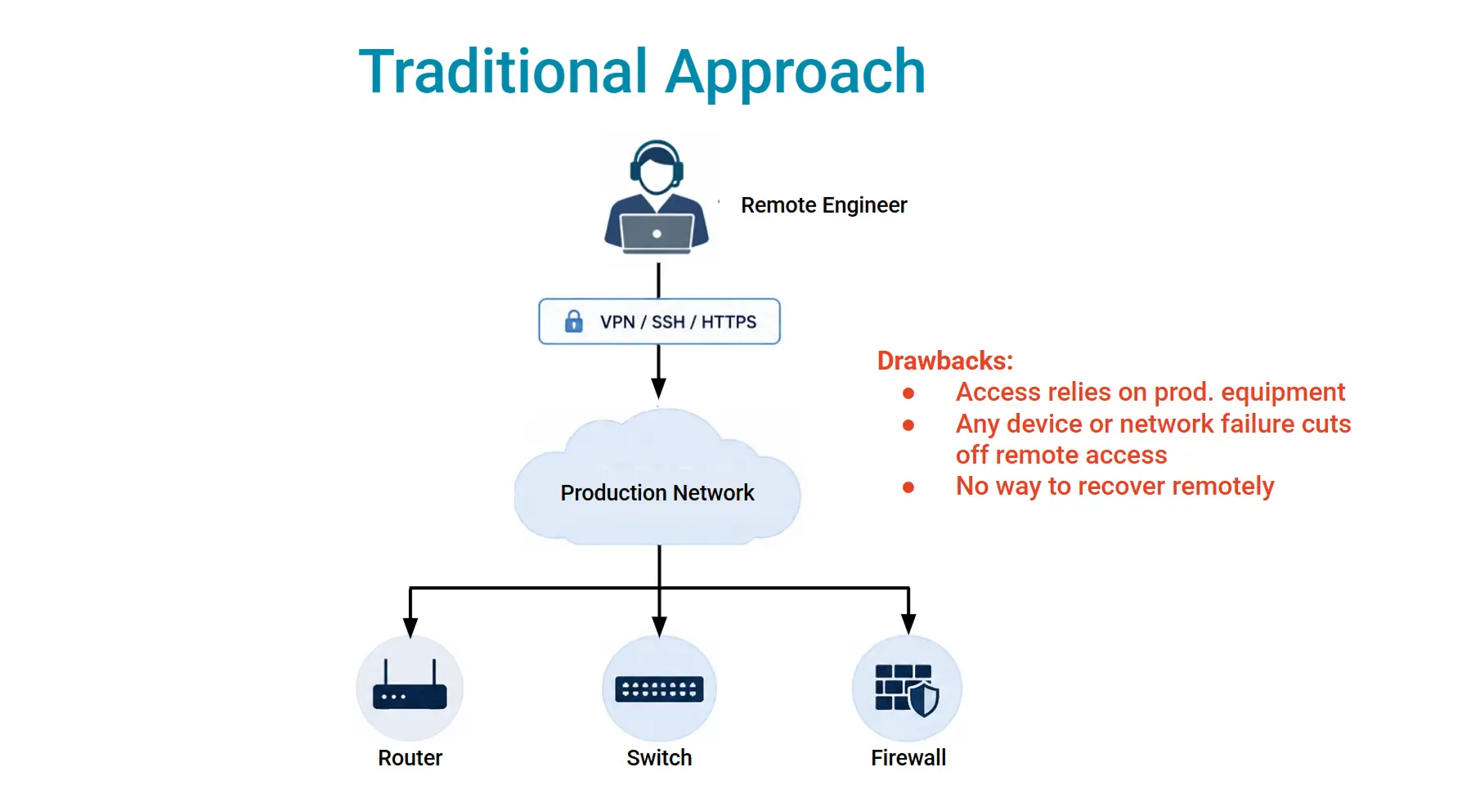
ISP Challenges when management relies on production

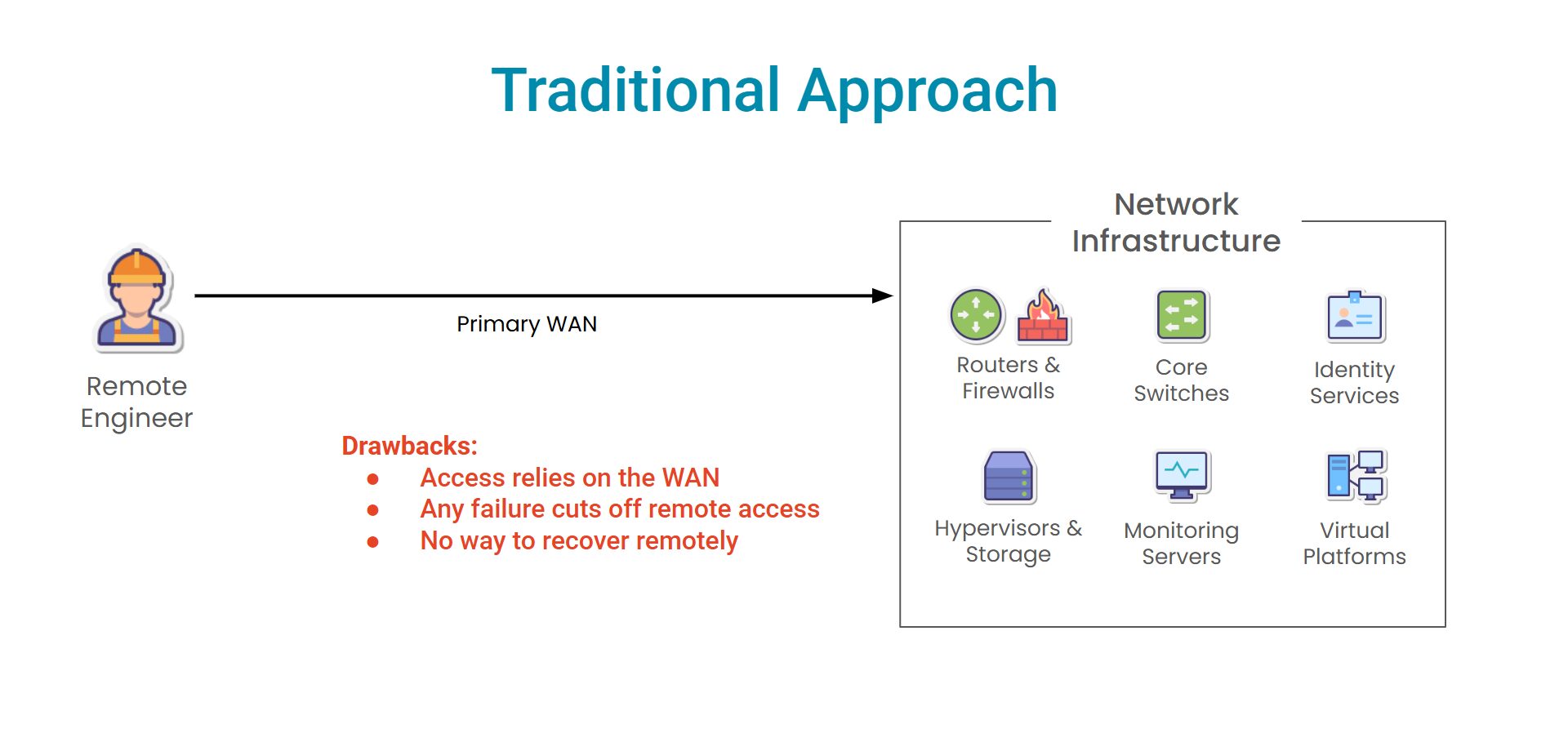
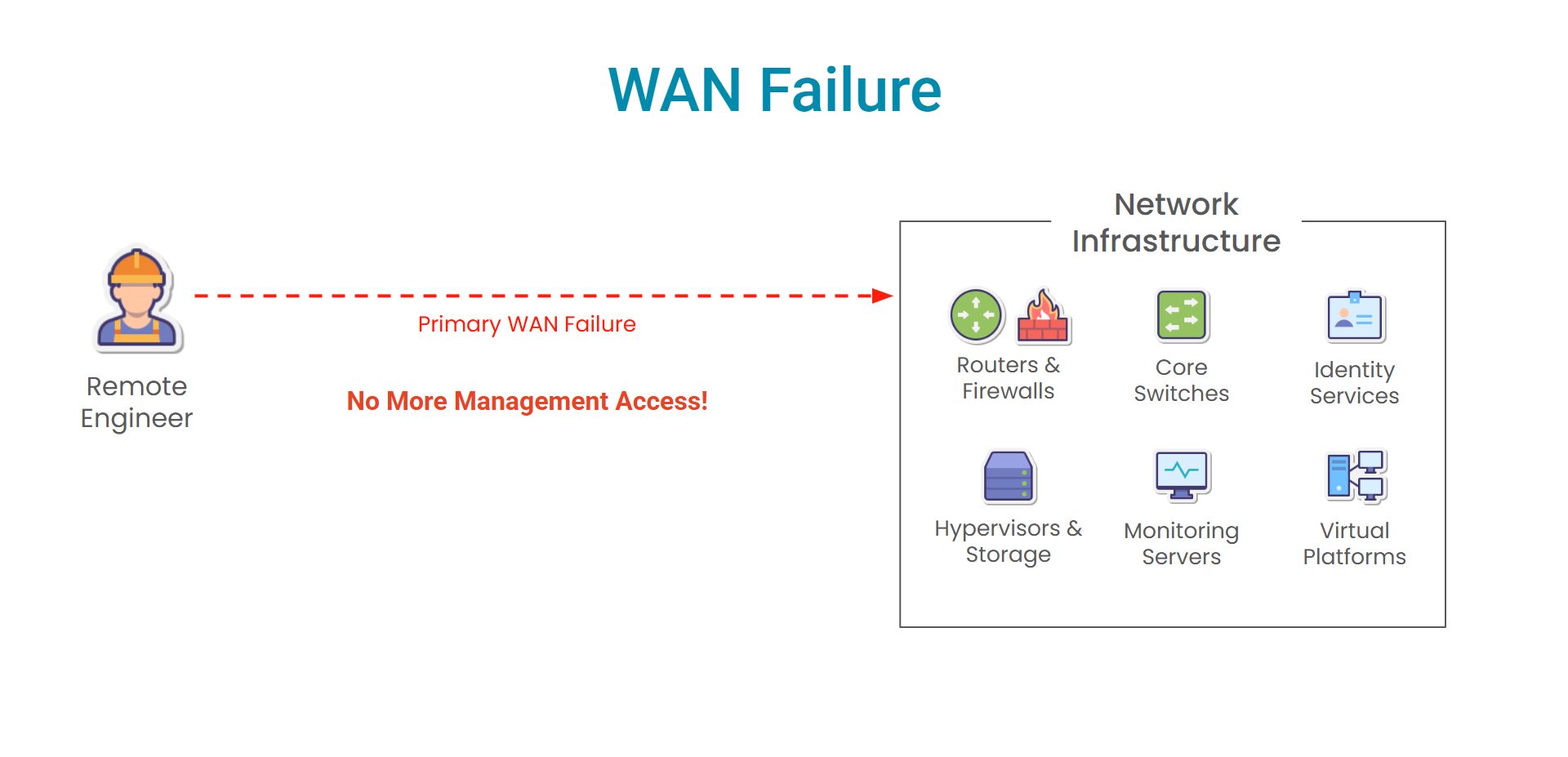
Image: Traditional ISP management access is cut off when the main network goes down, forcing technicians to go on site.

Most ISP devices are managed over the same network they help provide. Because there’s no independent access path (like dedicated out-of-band management), when the network fails, so does access to the device itself. Recovery is only possible by restoring the very network that’s broken, and since the underlying infrastructure can’t be accessed remotely, someone has to physically connect to the devices that are causing issues.

Watch our quick presentation from Cisco Live 2025 for a closer look.

Limited or Missing Serial Console Access

Many failure states can only be resolved via the console:

  • Bootloader recovery
  • Rollback after a failed OS upgrade
  • Network lockouts caused by ACL or routing errors

Again, traditional approaches leave serial access dependent on the production network. When the network goes down, the only way to access the console is by physically connecting.

Here’s how one of ZPE’s IT & System Administrators addressed this exact scenario, but used out-of-band to recover remotely instead of going on site.


No Remote Power Control

When devices freeze or become unresponsive, a power cycle typically fixes the problem. But without power management best practices (and proper outlet mapping), a simple device reboot becomes a site visit.


Fragmented Tools

Console servers, power devices, and access controls are typically spread across different systems. That fragmentation slows recovery and increases human error, especially during high-stakes events like outages.


Why Truck Rolls Hurt Business More Than You Think

Direct Costs Add Up Fast

Between labor, fuel, scheduling, and overtime, it’s common for a single dispatch to cost thousands of dollars. What happens when this is multiplied across dozens or hundreds of remote sites? This approach becomes unmanageable and unscalable.


Operational Scalability Breaks Down

Growing networks means having more sites. This means:

  • More logistics
  • More staffing pressure
  • More risk during outages (especially after hours)

Eventually, growth becomes constrained by the ability to physically respond to failures.


Longer MTTR Puts SLAs at Risk

Every minute spent waiting for a technician is another minute of customer impact. Longer mean time to repair (MTTR) increases the risk of:

  • SLA penalties
  • Customer churn
  • Escalations with enterprise and wholesale clients


Technician Burnout

Skilled operational roles are already in short supply. But technicians quickly become burnt out when they’re constantly juggling high-stakes outages, 2 a.m. wakeup calls, and hours-long road trips (sometimes just to reset a device). This contributes to higher turnover and makes truck rolls even less sustainable.


What If Truck Rolls Weren’t the Default?

Imagine this scenario:

A core router stops responding at a remote site. Instead of opening a dispatch ticket:

  • The NOC connects to the device over an independent OOB network
  • Engineers access the serial console remotely
  • The device is power cycled if needed
  • Configuration is fixed and services are restored, without anyone leaving their chair

No driving. No waiting. No hours-long downtime.

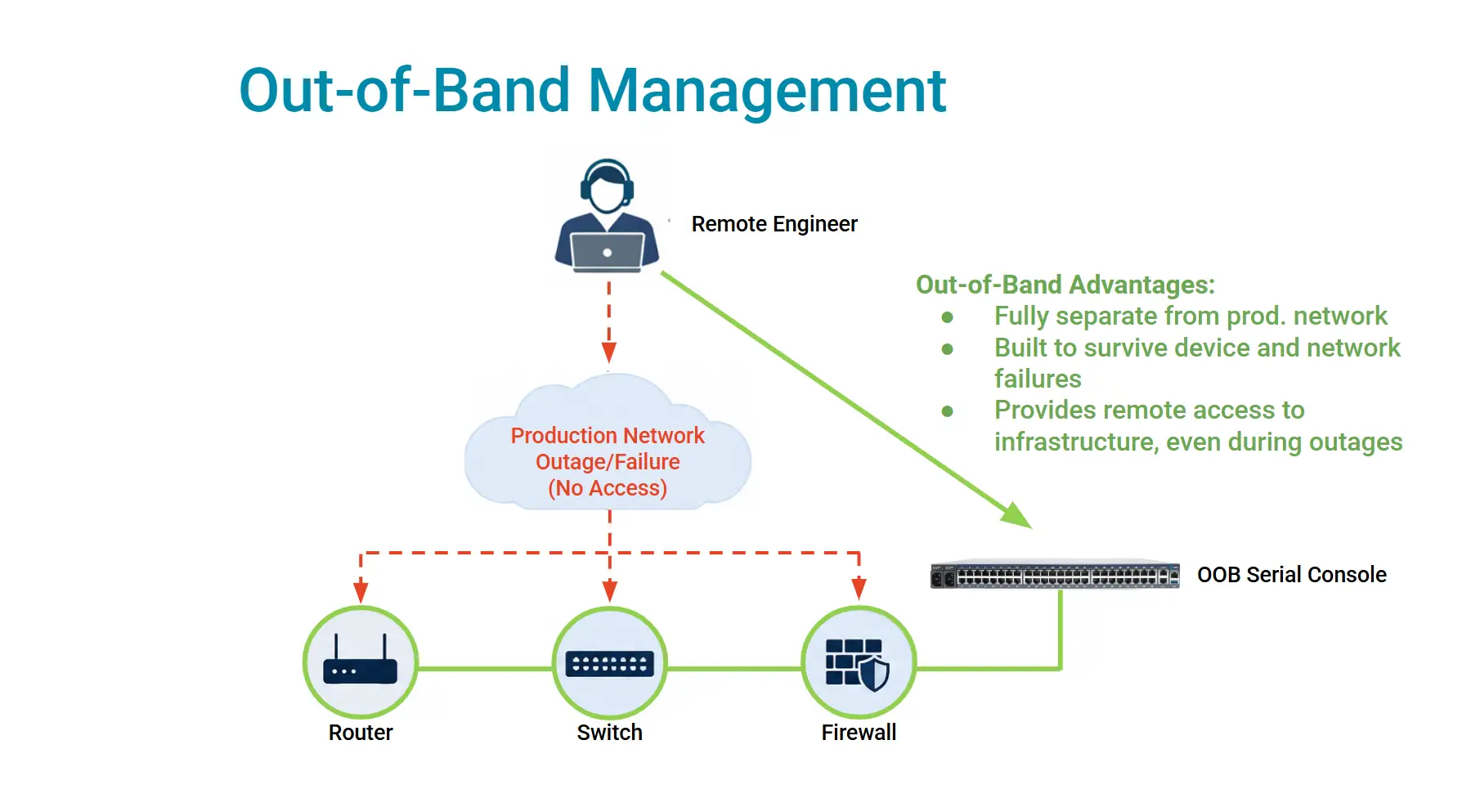
ISPs use out-of-band management to ensure fast recovery, even when the production network is offline

This isn’t theoretical. It’s what happens when recovery is built into the architecture.


The Role of Out-of-Band and Isolated Management Infrastructure

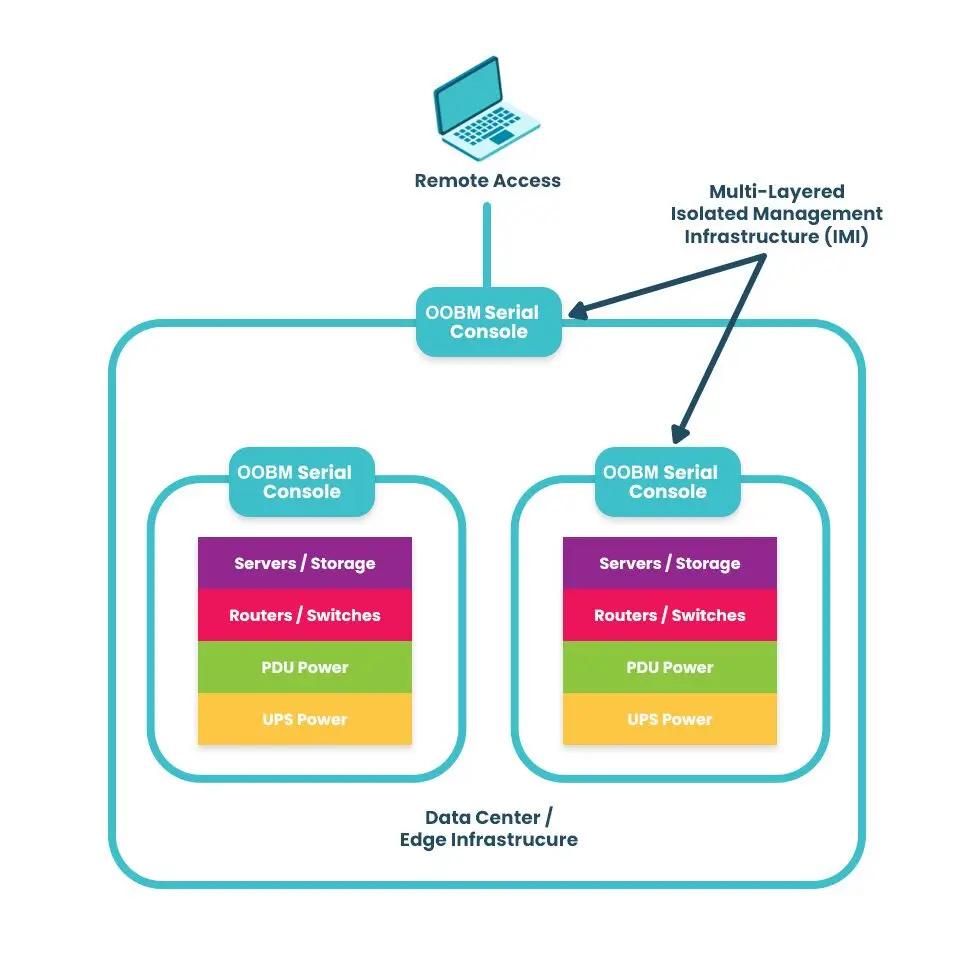
Out-of-band management creates a dedicated, independent path to reach critical infrastructure, even when the production network is unavailable.

An Isolated Management Infrastructure (IMI) takes this even further by:

  • Creating a management plane that’s physically and logically separate from production infrastructure
  • Enforcing strong access controls
  • Providing consistent recovery workflows across sites

ZPE Systems - A diagram showing a multi-layered, out-of-band, isolated management infrastructure

Together, they transform outage response from reactive (i.e., truck rolls) to controlled. If the alarm bells start ringing, technicians can respond instantly from wherever they are.

Key capabilities include:

  • Remote serial console access
  • Remote power control
  • Independent connectivity via cellular or satellite
  • Centralized access and auditing


How Nodegrid Helps ISPs Eliminate Truck Rolls

ZPE Systems’ Nodegrid is designed specifically for environments where uptime, scale, and remote recovery matter.


Independent Connectivity

Nodegrid supports a variety of OOB links, with multiple 5G, LTE, and satellite connections available. This gives technicians management access even when there are widespread network outages. Dedicated out-of-band paths can even be set up quickly using Starlink.


Unified Console and Power Access

Nodegrid provides secure remote access to serial consoles and power controls from a single platform, so recovery doesn’t require multiple tools or manual workarounds. Check out the Raritan SX II Migration Video to see what it looks like.


Centralized Control at Scale

Engineers can manage thousands of distributed sites from a single interface, applying consistent policies and workflows across the network. Watch our ZPE Cloud demo to see how simple it is to monitor, troubleshoot, and push updates across global devices.


Faster Recovery, Fewer Dispatches

By enabling remote troubleshooting, remediation, and reboot capabilities, Nodegrid dramatically reduces the need for physical site visits.


Gain a Strategic Advantage By Eliminating ISP Truck Rolls

Eliminating ISP truck rolls is about building a network that can recover fast. This means designing a dedicated management path that’s always reachable, so outages become shorter, the network becomes more resilient, and business gains a strategic advantage.

Learn how ISPs eliminate downtime using Nodegrid. Download the free pdf and you’ll also get access to the step-by-step checklist that helps you migrate without downtime.

ZPE Systems named Fastest Growing Vendor by Stock in the Channel

Fremont, Calif. — November 27, 2025 — ZPE Systems is proud to be named the Fastest Growing Vendor: Technology and Storage by Stock in the Channel, a leading platform for IT channel procurement and vendor analytics. 

This award highlights ZPE Systems’ rapid growth and strong momentum as organizations modernize their network infrastructure and management solutions. ZPE’s ongoing expansion across enterprise, service provider, and hyperscale environments reflects the increasing demand for ZPE’s vendor-agnostic out-of-band management platform, which simplifies operations and strengthens resilience. 

With ZPE Systems now part of Legrand, a global leader in electrical and digital infrastructure solutions, customers have a one-stop shop for end-to-end infrastructure, from power and racks to connectivity, out-of-band management, and cloud orchestration. This integration ensures customers benefit from world-class support, unified procurement, and a stronger portfolio designed to meet the demands of modern, distributed, and AI-driven networks. 

“We’re honored to bring home the award for Fastest Growing Vendor in Technology and Storage,” said Mark Thomas, Channel Manager EMEA & APAC. “This award shows the trust our partners and customers place in ZPE Systems as they navigate increasingly complex environments and the very demanding requirements of AI architectures. Now as part of Legrand, we’re even better positioned to deliver comprehensive infrastructure solutions and exceptional value. 

ZPE Systems – Mark Thomas

ZPE Systems continues to deepen relationships across the channel, empowering partners with the Nodegrid platform for infrastructure management. Nodegrid provides customers with the industry’s most secure and complete remote out-of-band access, delivered through a combination of multi-function Nodegrid Serial Consoles, Nodegrid Services Routers, and ZPE Cloud SaaS for global infrastructure management. Nodegrid has become the go-to platform for enterprises seeking to reduce risk, accelerate deployments, and increase visibility across the entire network management lifecycle. 

ZPE Systems extends its gratitude to Stock in the Channel for this recognition, and most importantly, to our partners, customers, and Channel Team for helping to achieve this milestone. We look forward to continuing our mission to deliver innovative management solutions that support the world’s most critical networks. 

Want to become a partner? Visit our Partner Portal to sign up! 

Explore our full product lineup and product selector tool below. 

Mercado Livre & ZPE: Ensuring Uptime for Latin America’s E-Commerce Backbone

ZPE Systems – Mercado Livre case study
Mercado Livre, Latin America’s largest e-commerce and fintech platform, powers over 148 million users with online shopping, payments, and logistics services. With more than 200 sites across the region, uptime is critical; a single minute of downtime can delay shipments, stall payments, and impact customer trust.

The challenge? Only 25% of sites have dedicated IT staff, making outages costly and time-consuming to resolve. Internet or data center link failures can bring down core applications, while misconfigurations on key devices can take up to a full day to fix. Mercado Livre needed a way to simplify management at scale, ensure business continuity, and avoid expensive on-site interventions.

By adopting ZPE Systems’ Nodegrid platform, Mercado Livre gained LTE-based out-of-band connectivity, secure failover to data centers, and centralized cloud management. The result is stronger resilience, faster recovery, and fewer truck rolls — or in other words, turning uptime into a competitive advantage for Latin America’s digital economy.

Key outcomes:

  • Business Continuity: Shipments and payments keep flowing during outages
  • Fast Recovery: Remote fixes prevent 24+ hour downtime
  • Efficiency: Faster deployments and fewer on-site visits

“Everyone on-site was amazed. The built-in LTE automatically took over and distribution carried on like normal. The ZPE solution paid for itself with just this one outage.”  –  Evandro Soares Correia, Jr. – IT Admin, Mercado Livre

DOWNLOAD THE CASE STUDY IN:

ISPs: What Happens When You Can’t Reach the Console?

Imagine the scenario from our last article: It’s 2am, a core router just went down, and customers in three regions have your phone ringing off the hook. You try SSH. No response. You ping through the management VLAN. Again, nothing.

What about the console port? This is your last lifeline to see what’s happening under the hood. But when you can’t reach it remotely, recovery slows to a crawl. What should have been a quick fix is now turning into hours of downtime, unhappy customers, and potential SLA penalties.

Things can really spiral out of control for ISPs who depend on their production networks for management. Let’s look at the biggest technical hurdles and business impacts that crop up, and the approach ISPs are taking to make sure they’re always in control.


The Problems When Console Access Is Gone


1. Recovery Turns Into a Road Trip

Technical hurdle: No console access means your only option is to dispatch engineers to the site, plug in manually, and perform recovery by hand.

Business impact: Each truck roll burns thousands of dollars, drags engineers away from other projects, and extends downtime. Customers lose trust and SLA penalties are suddenly on the table.

2. Small Outages Turn Into Big Problems

Technical hurdle: A single misconfigured update or failed device can have a snowball effect when you don’t have console visibility. You can’t isolate the fault quickly, and the blast radius grows.

Business impact: What could have been a quick local fix becomes a regional outage that puts business networks and enterprise accounts at risk.

3. Security and Compliance Take a Back Seat

Technical hurdle: In an emergency, teams know that they have to fix the problem fast. This means they’re likely to cut corners exposing management ports to the internet or using outdated console servers that have weak security.

Business impact: These shortcuts open the door to ransomware and compliance failures that could cost much more than the immediate outage.

ZPE Systems – ISP – When management relies on production

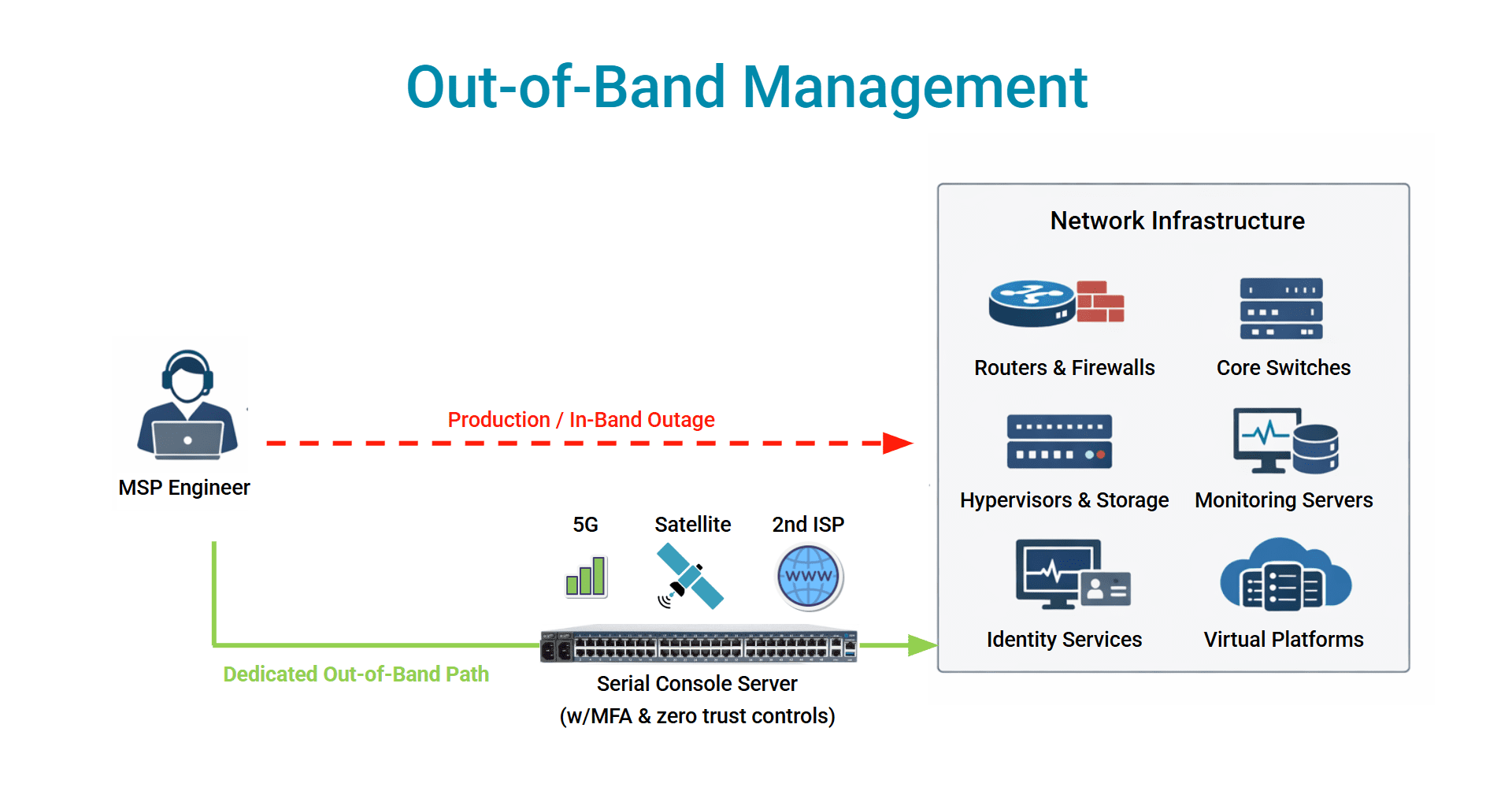
Diagram: When management access depends on the production network, teams can’t recover from outages without going on-site to manually restore services.

The Technical Fix: Out-of-Band & IMI


It’s common to route management traffic through production networks. But this creates a “shared fate” problem: when production goes down, management goes with it.

ZPE Systems created the best practices that are used today and now recommended by CISA, the NSA, and the FBI. Here are the two critical components that fix the “shared fate” problem:


  • Out-of-Band: Provides alternate connectivity (5G, satellite, secondary fiber) so you always have a way to connect to your devices, even if they’re thousands of miles away.
  • Isolated Management Infrastructure: Physically and logically separates management from production, enforcing zero trust controls to keep attackers out, limit lateral movement, and accelerate ransomware recovery.
ZPE Systems – ISP – Out-of-band aids in fast recovery

Diagram: Out-of-band provides a fully isolated management infrastructure with dedicated 5G, satellite, and other links that ensure remote access even when production networks go offline.

OOB and IMI ensure management access is always on, always secure, and always independent. Instead of rolling a truck and waiting hours for services to be restored, you can use your dedicated out-of-band path to instantly access sites from your browser. Nodegrid gives you complete, low-level remote control of devices as if you’re physically connected, so you can recover in minutes. This is critical for ISPs.


Why ZPE Systems’ Nodegrid Is Ideal for ISPs


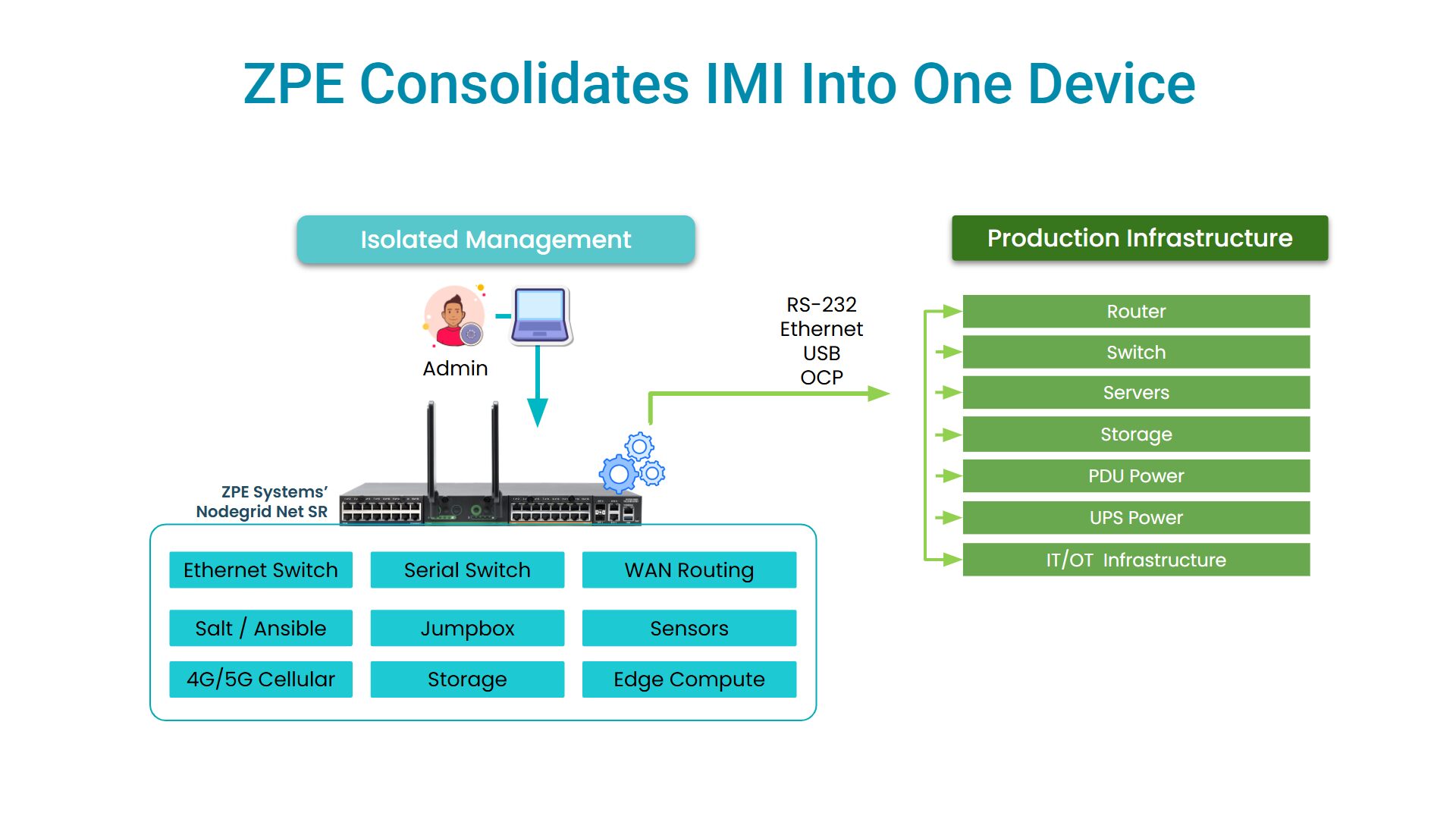
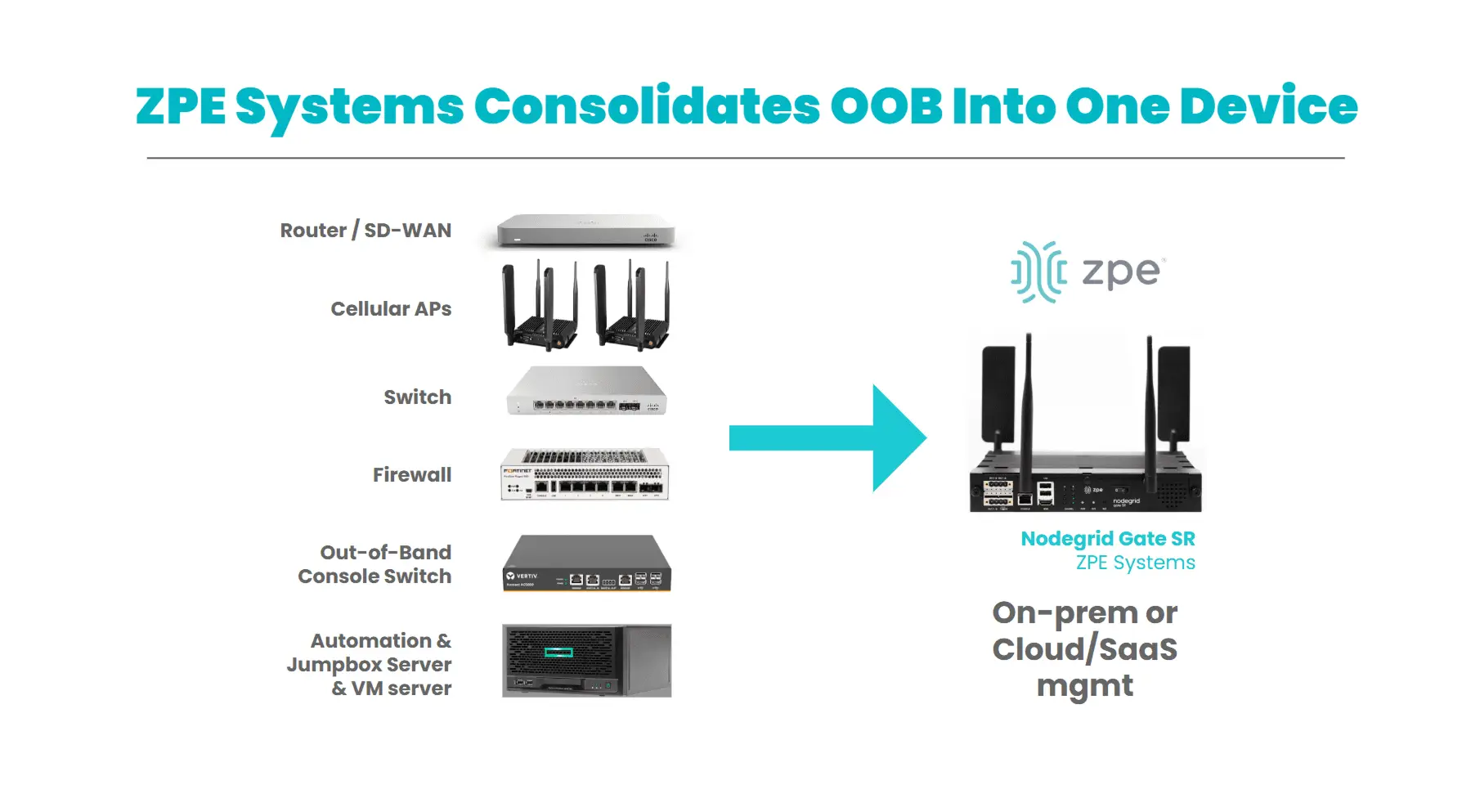
Nodegrid is built specifically to give ISPs resilient, secure, and scalable management by combining all the functions of OOB and IMI into one device. This pairs with ZPE Cloud or on-prem Nodegrid Manager to give ISPs full remote access, visibility, and control of their distributed sites.

ZPE Systems – ISP – Nodegrid consolidates OOB into one device

Image: ZPE Systems’ Nodegrid devices consolidate more than six management functions into one device, and pair with ZPE Cloud or Nodegrid Manager for holistic remote control of ISP fleets.

Whether you’re a Tier 1 operating backbone POPs, or a Tier 3 keeping local last-mile hubs online, Nodegrid gives you benefits including:

  • Always-on console access via 5G/LTE, Starlink, or secondary fiber.
  • Zero trust enforcement with RBAC, MFA, and continuous verification.
  • FIPS 140-3 certified encryption for airtight security.
  • Centralized policy control with ZPE Cloud or on-prem Nodegrid Manager.
  • Device consolidation: console server, LTE modem, Ethernet switch, and security gateway in one appliance.

More ISPs are realizing these benefits and switching to Nodegrid using an approach that doesn’t require them to disrupt services. Take the Internet Association of Australia, for example. They were able to perform a nationwide rollout of Nodegrid at 35 POPs while maintaining 100% uptime, removing 70 devices from the management stack, and saving $17,500/month in costs. Read the IAA case study for full details, including diagrams and photos.


Here’s How To Deploy Nodegrid With Zero Downtime


There’s a lot at stake when you can’t reach the console during a failure or outage. But Nodegrid helps you quickly resolve those 2AM wakeup calls with secure remote access to all your systems.

To help you, we put together this Zero-Downtime Migration Checklist. Download this guide to see every step — from assessing infrastructure needs, to designing the right solution and validating after migration — and how you can deploy the most resilient ISP network management solution.

Gruve: Delivering Mission-Critical AI Services with ZPE’s Out-of-Band Management Platform

Gruve is a global AI services company, serving customers in Data Sciences, Cybersecurity, Customer Experience, and many other verticals. Their approach is simple: focus on the customer’s business, financial, and technical objectives, and tailor a solution that delivers measurable outcomes. To achieve this, Gruve has invested heavily in GPU clusters, high-speed cluster networks, and flash storage platforms.

The challenge for Gruve is operating this infrastructure. GPU disruptions or failures can have a cascading effect on training workloads and even jeopardize compliance. Resolving these issues with traditional solutions can take hours and require on-site human intervention. With strict SLAs in place, even minutes of downtime can have a significant impact on business.

Gruve required a solution that could help them react instantly as well as monitor their infrastructure in real time to perform proactive maintenance and management. Read the full case study below for full details on how Nodegrid and ZPE Cloud helped them:

  • Resolve connectivity and hardware issues in minutes without going on-site
  • Ensure ISO 27001 and SOC 2 compliance without service disruptions
  • Allow IT staff to focus on revenue-generating initiatives instead of maintenance visits

“We rely on ZPE Systems’ Nodegrid to help us leverage the value of our AI Cluster investments. The Nodegrid platform gives us full visibility and adaptability as we build new AI solutions for customers and partners.”  –  Matt Robinson, CTO, Gruve

Gruve Case Study – Mission-Critical AI Services