Providing Out-of-Band Connectivity to Mission-Critical IT Resources

Home » Increase Productivity

Why Most MSPs Still Struggle With Network Outages (Even With Great Tools)

Thumbnail – Why Most MSPs still struggle with network outages

Managed service providers have never had more technology at their disposal. Real-time alerts stream in from monitoring platforms. Engineers can troubleshoot off-site using remote access tools. Automation handles patching, configuration updates, and routine maintenance. On paper, today’s MSP toolkit is powerful and mature.

But when serious network outages happen, many providers still struggle to get back to normal. Restoring services can require hours of coordination, travel, and escalation. It’s this disconnect that raises an important question:

If the tools are better than ever, why is it so hard to recover from downtime?


There’s A Hidden Dependency Inside Traditional Remote Management

Some of the tools MSPs have at their fingertips are VPN tunnels, remote desktop sessions, and internally hosted jump environments. These are effective for routine maintenance. But this traditional remote management approach hides a major dependency: it all relies on the production network.

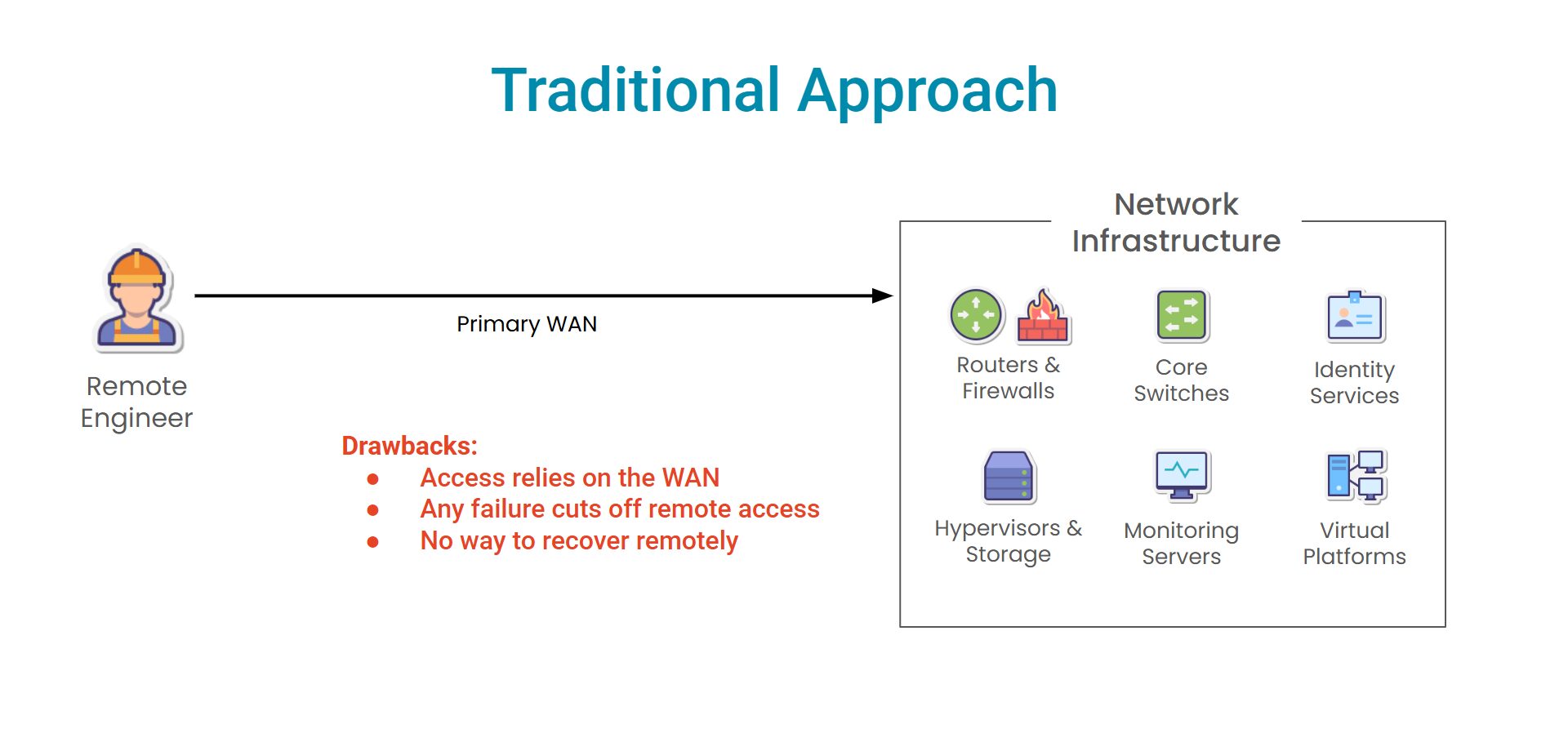
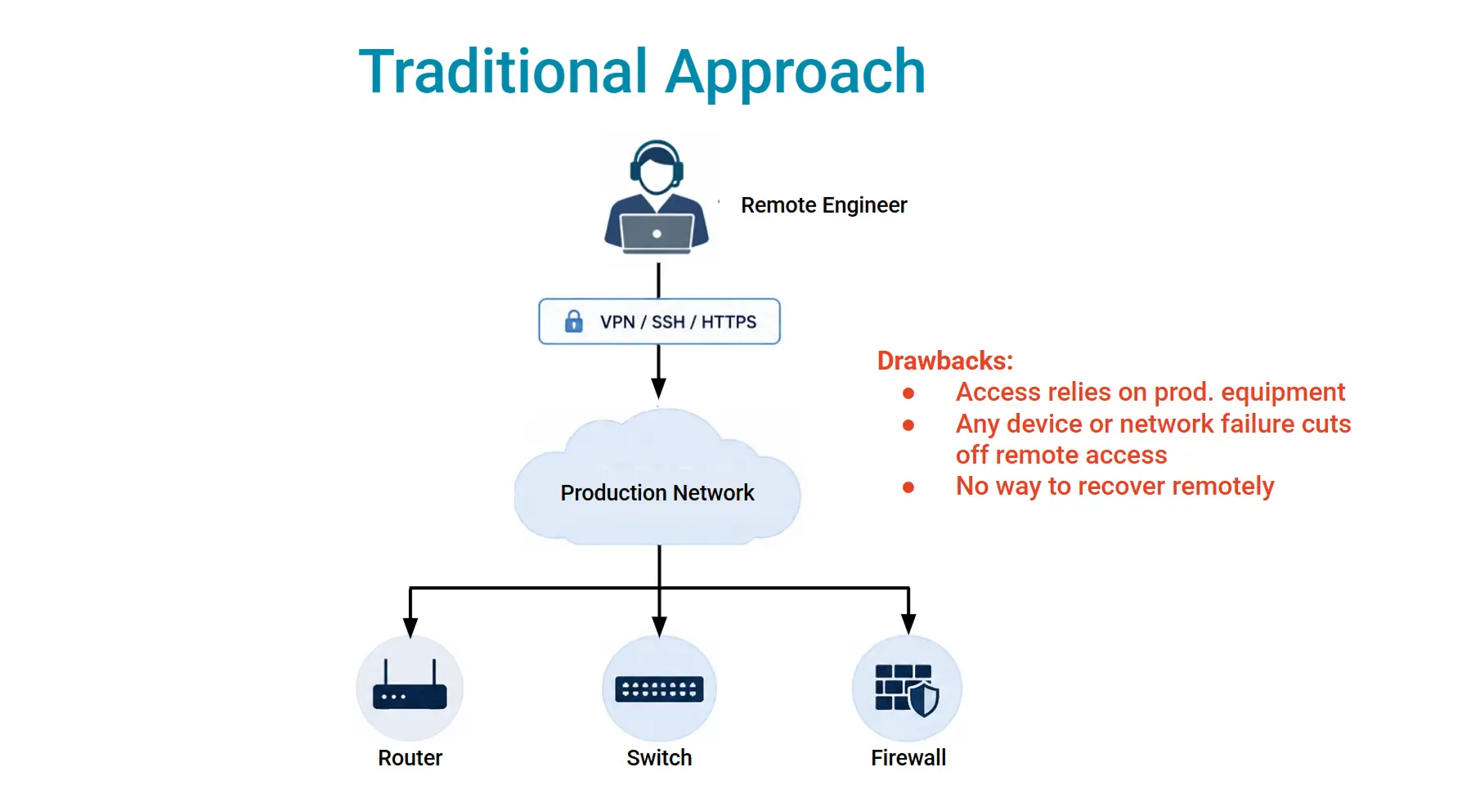
This is called in-band management, and it’s the biggest obstacle MSPs face when trying to get back online. In-band management is where admin access depends on the very infrastructure it grants access to. It works great when everything is working. But if a core router fails, firewall policies break, a WAN link drops, or an upstream provider experiences disruption, access disappears entirely.

ZPE Systems – In-band management cuts remote admin access during outages

Image: With in-band management, remote admin access is cut off when there is a production network outage.

At the basic level, this is a problem with the underlying management architecture (or lack thereof). Here are common obstacles that stem from in-band management and make MSPs struggle with network downtime.


Minor Issues Easily Turn Into Long Interruptions

Monitoring and alerting platforms excel at detecting problems. They can identify packet loss, device failures, link instability, and performance degradation within seconds. Engineers are immediately in the loop when something goes wrong.

The problem is these systems don’t provide the ability to act. If routing fails or firewall rules change unexpectedly, engineers lose the remote path needed to investigate. If an ISP circuit drops, VPN access vanishes with it. If DNS or authentication services become unavailable, login attempts stall.

Alerts keep coming in, dashboards light up, and customer complaints keep the phones ringing. But without direct device-level access, there’s no way to remotely reach the underlying infrastructure. What would have been a few minutes of troubleshooting turns into a prolonged service event requiring on-site support.


Physical Access Turns Into A Waiting Game

When remote access fails, on-site intervention becomes the only option, but this can also stand in the way.

Technicians often need to:

  • Drive several hours to the colocation or branch facility
  • Wait for security approval or badge verification
  • Schedule access windows during limited hours
  • Coordinate with third-party support
  • Navigate strict escort requirements
  • Deal with weather delays, travel logistics, or facility staffing shortages

Once they arrive, they also might have to wait longer for cage access, compliance checks, or coordination with other on-site personnel. Meanwhile, customer services remain degraded or offline.

No amount of monitoring can compensate for losing the path to the devices themselves.


Scale Turns Occasional Friction into Business Risk

These delays might feel like a small inconvenience. An engineer goes on site, fixes the problem, and moves on. It seems manageable.

But as MSPs scale, the friction compounds as each outage consumes:

  • High-value engineering hours
  • Travel budgets
  • SLA margin buffers
  • Customer satisfaction and positive reviews

As incident volume grows, recovery delays begin to affect staffing efficiency and profitability. Travel time expands. Skilled engineers spend more hours away from high-value work. Response windows widen, and maintaining consistent service-level performance becomes more difficult. The “manageable” approach becomes a structural drag on growth.

Traditional in-band management does not scale cleanly. It scales cost, complexity, and operational risk.


Why Better Tools Alone Won’t Solve the Problem

It’s tempting to think that you can solve the problem with more monitoring, automation, remote software, or other investments. But if you can’t reach the infrastructure when it matters most, no amount of tooling will save you.

The core issue is this: How do you get dependable, guaranteed access during failures? In even simpler words, how do you recover without rolling a truck?

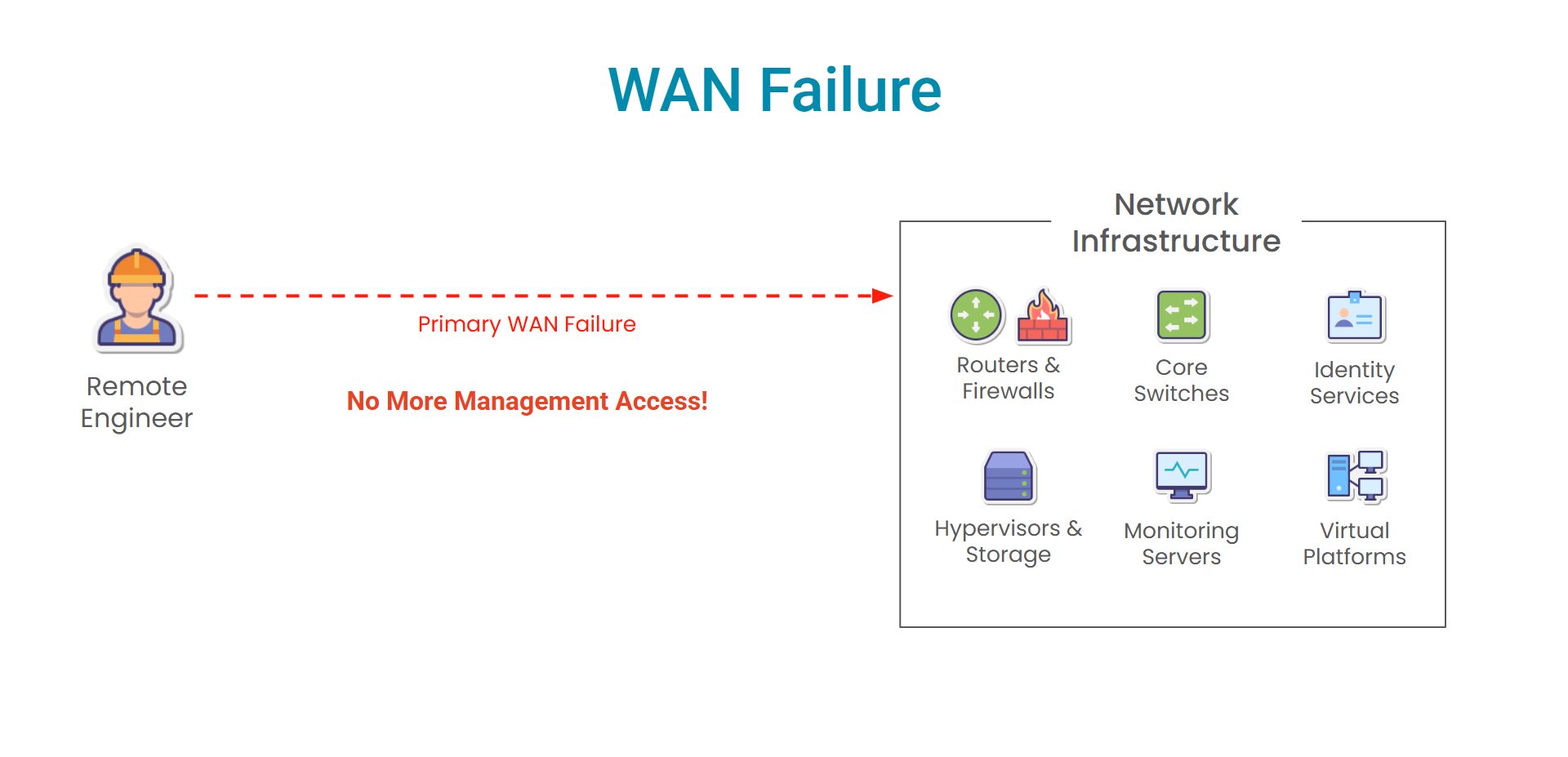
Outages cut off MSPs from their tools

Image: When MSPs rely on in-band management, they can be easily cut off from remote admin access to customer sites.


Rethinking What “Prepared for Outages” Really Means

Resilient management access doesn’t mean what it did 20 years ago, when it was enough to plug in a console server and modem to be able to fix 90% of incidents. This outdated approach relies at least partly on production infrastructure, and even though out-of-band devices are used, they’re not set up on a proper out-of-band network. MSPs using this management model (and many still do) are only kind of prepared for outages…but not really.

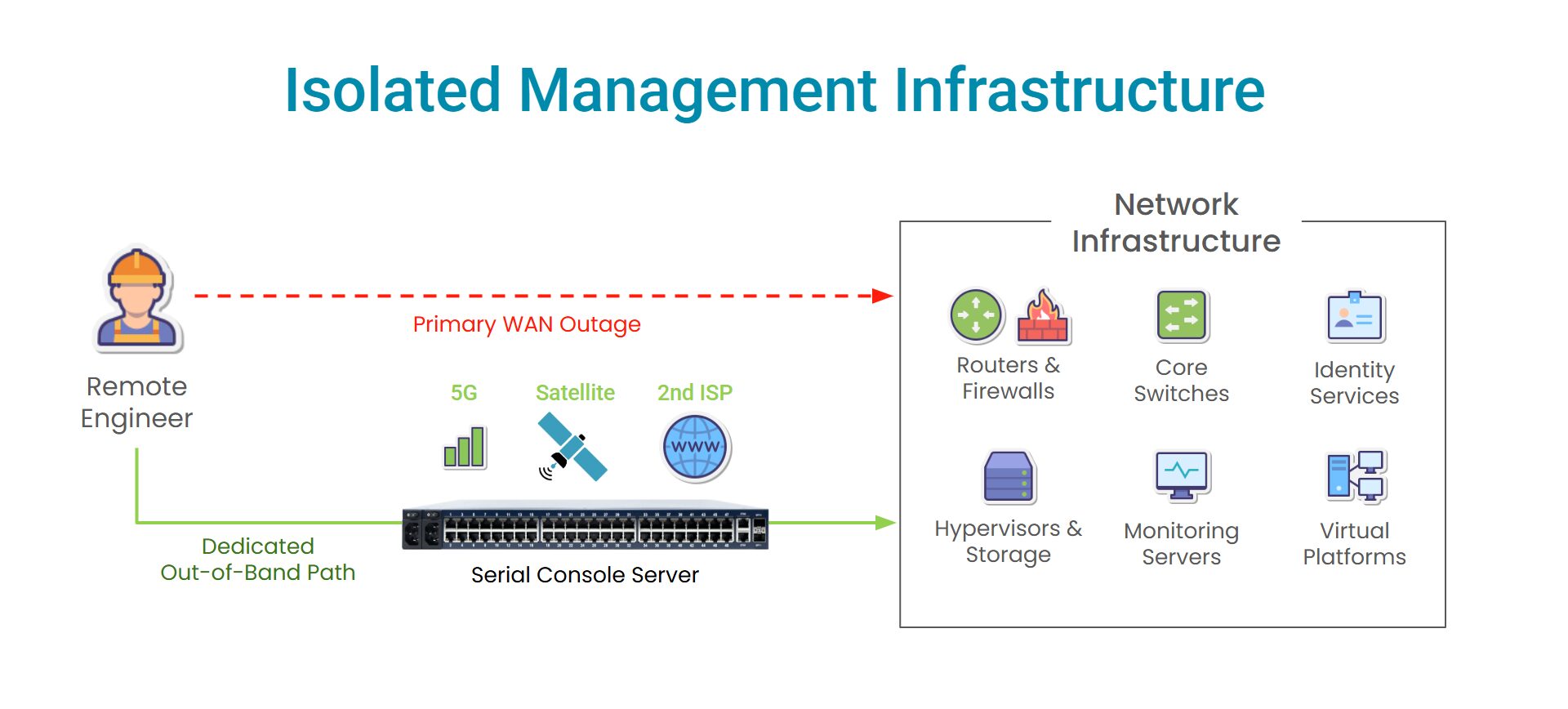
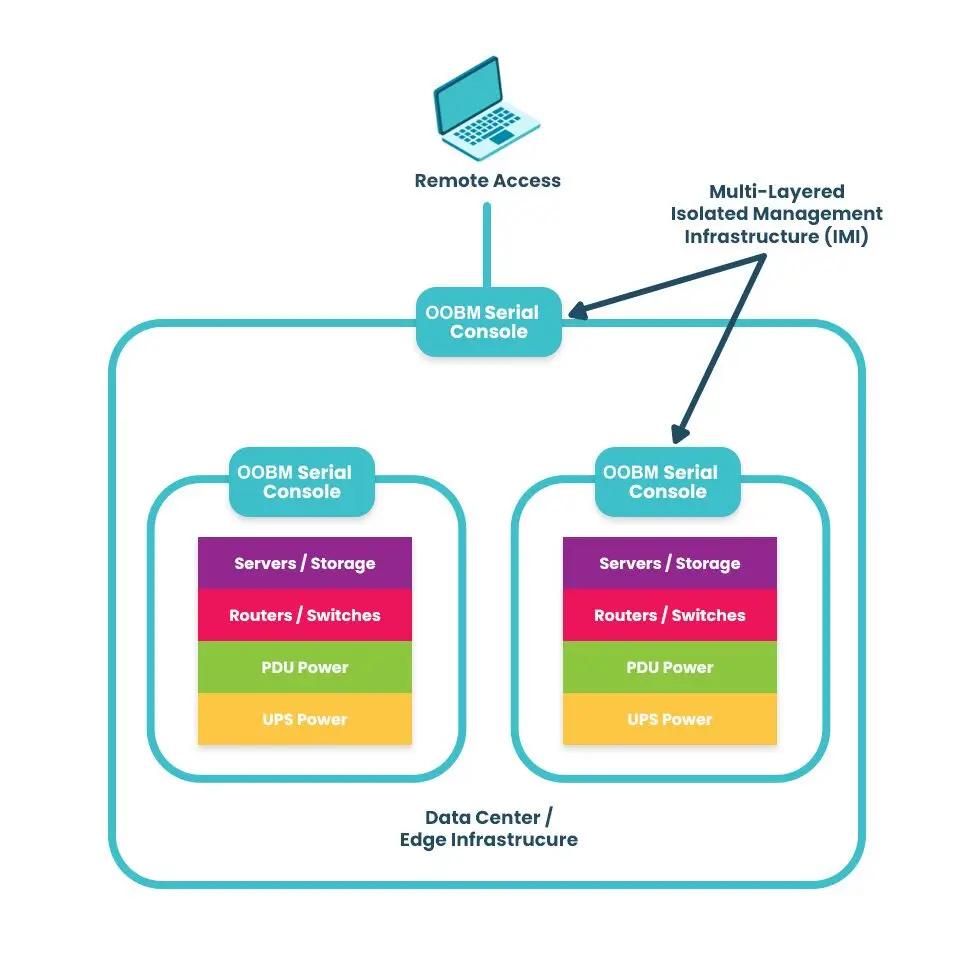
True resilience requires physical and logical separation between management access and production traffic. Instead of relying solely on in-band connectivity, forward-looking MSPs are deploying dedicated out-of-band and isolated management infrastructure (IMI). This approach creates a separate, resilient access path that remains available even when the primary network fails. In other words, MSPs stay in control no matter what disruptions occur.

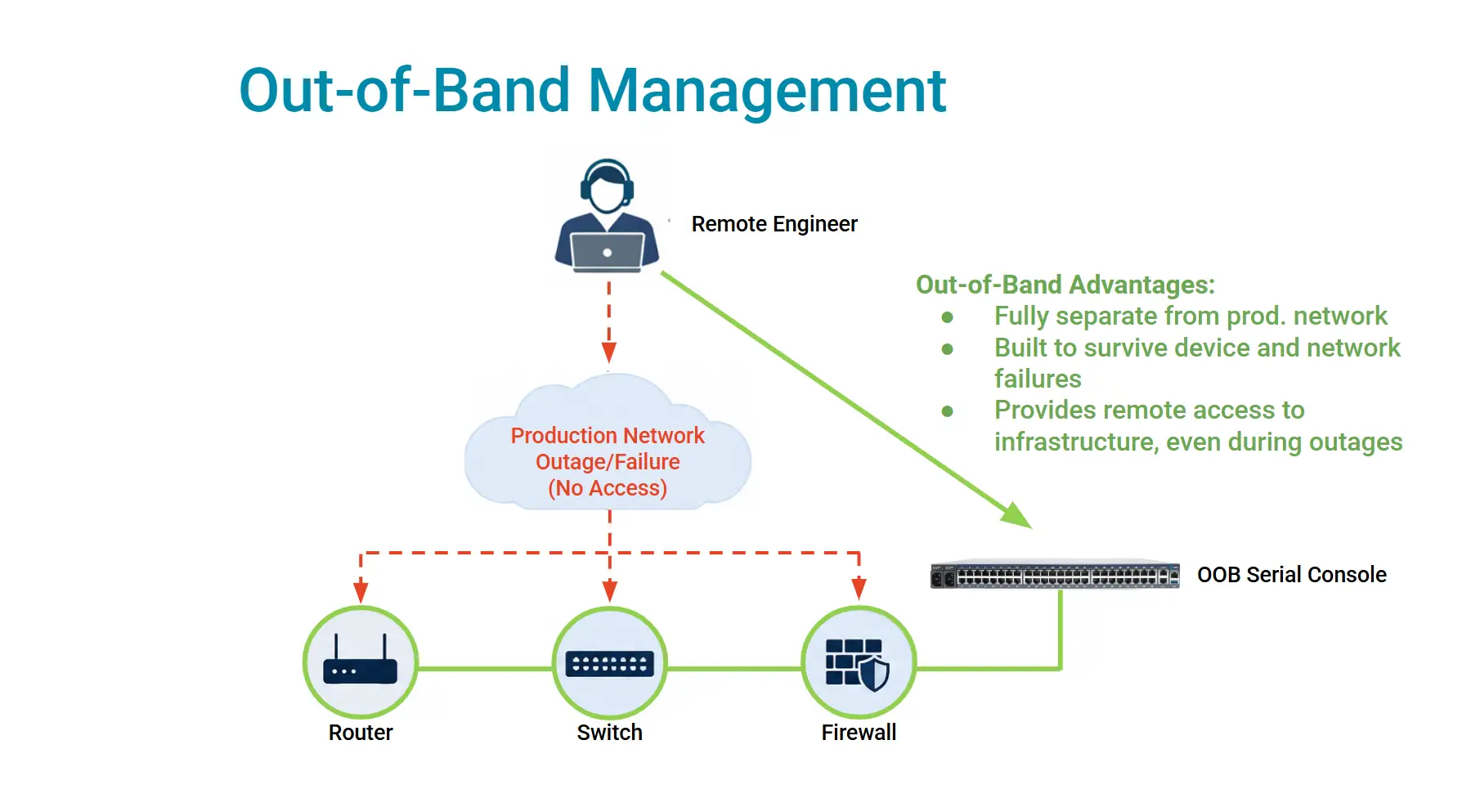
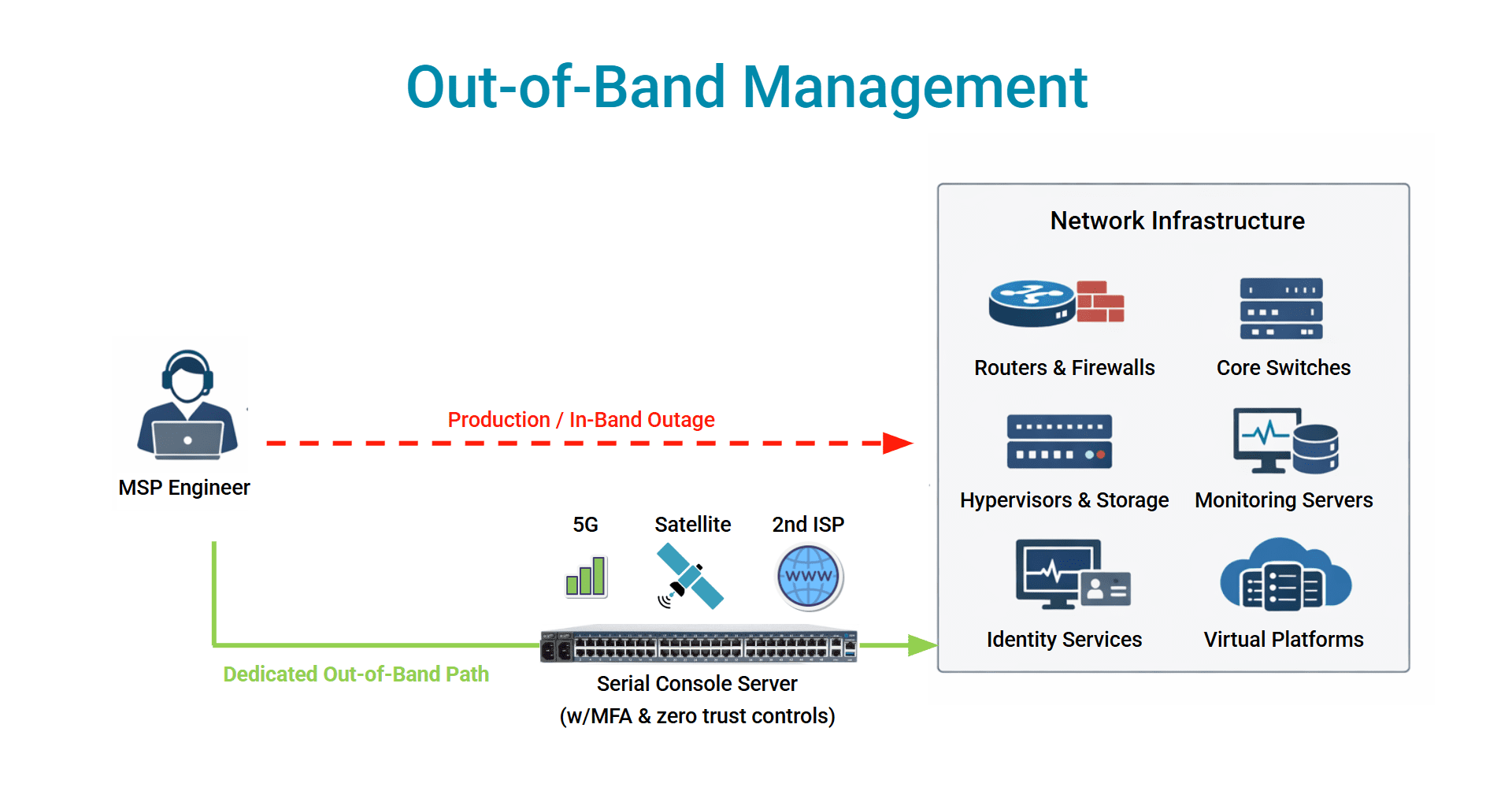
OOB gives MSPs dedicated remote access to their tools

Image: With dedicated out-of-band and isolated management infrastructure, MSPs can remotely access any managed device even during complete production network outages.

This architecture enables engineers to:

  • Maintain console-level access during WAN outages or cyberattacks
  • Remotely access power and BIOS controls for hard reboots
  • Reach network devices even if routing is misconfigured
  • Begin immediate troubleshooting and recovery without going on site
ZPE Systems – Out-of-band management and IMI guarantee remote admin access

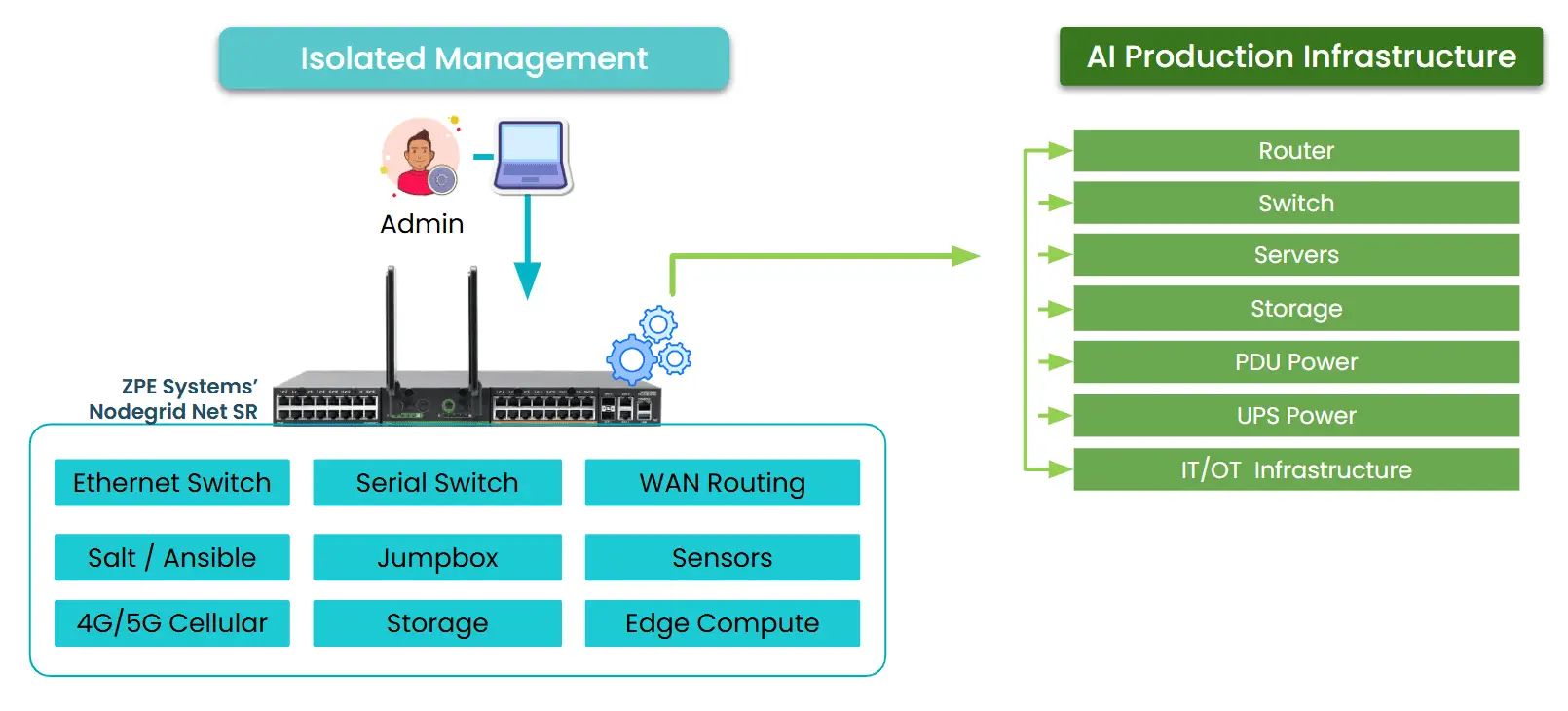
Image: ZPE Systems’ Nodegrid allows MSPs to easily deploy out-of-band and IMI across branch, colocation, and data center sites.

Out-of-band and IMI help MSPs pivot from a reactive recovery posture to a proactive, engineered-resilience approach. But one major hurdle remains: How do you build this architecture?

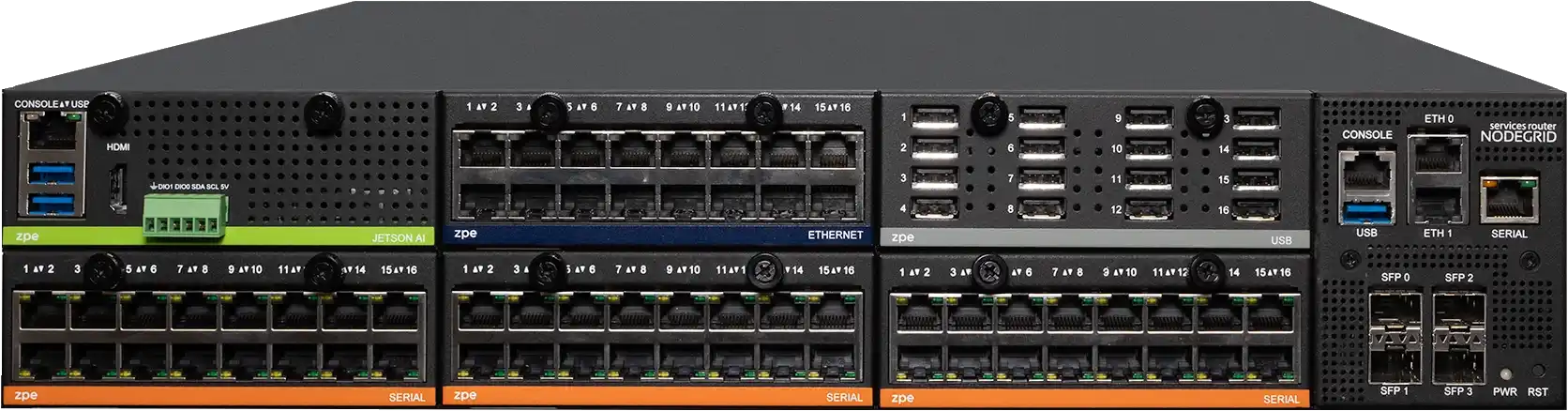
Solutions like ZPE Systems’ Nodegrid are built specifically for setting up a proper out-of-band network and IMI. Nodegrid devices combine all the functions necessary, like routing, switching, cellular/satellite, and others, with an on-prem or cloud management model. In fact, Nodegrid can be used to set up an out-of-band network in less than an hour.

Beyond remote access, Nodegrid integrates identity enforcement, granular authorization, session logging and auditing, and dozens of enterprise-grade security features directly into its architecture. That means MSPs improve operational recovery and security posture simultaneously.

With out-of-band and IMI, MSPs can be confident that they’re prepared for any type of outage.


Calculate the Real Cost of Your Recovery Model

How much are outages actually costing you in truck rolls, labor, and SLA penalties? Get our free download to calculate your current costs and how much you could save by switching to Nodegrid. It only takes a few minutes. Download the guided walkthrough now!

Mercado Libre y ZPE: Garantizando el Uptime del Mayor E-commerce de América Latina

ZPE Systems – Mercado Libre – Garantizando el Uptime del Mayor E-commerce de América Latina

Mercado Libre, la plataforma de comercio electrónico y fintech más grande de América Latina, da soporte a más de 148 millones de usuarios con servicios de compras en línea, pagos y logística. Con más de 200 unidades operativas en toda la región, el uptime es crítico; un solo minuto de downtime puede retrasar envíos, paralizar pagos y afectar la confianza del cliente.

¿El desafío? Solo el 25 % de las unidades cuenta con personal de TI dedicado, lo que hace que las caídas del sistema sean costosas y lentas de resolver. Las fallas de Internet o de los enlaces del centro de datos pueden derribar aplicaciones principales, mientras que los errores de configuración en dispositivos clave pueden tardar hasta un día entero en solucionarse. Mercado Libre necesitaba una forma de simplificar la gestión a escala, garantizar la continuidad del negocio y evitar costosas intervenciones presenciales.

Al adoptar la plataforma Nodegrid de ZPE Systems, Mercado Libre obtuvo conectividad out-of-band basada en LTE, failover seguro hacia los centros de datos y gestión centralizada en la nube. El resultado es una mayor resiliencia, una recuperación más rápida y menos desplazamientos técnicos a campo — o, en otras palabras, convertir el uptime en una ventaja competitiva para la economía digital de América Latina.

Resultados clave:

  • Continuidad del negocio: Los envíos y pagos siguen fluyendo durante las caídas de red
  • Recuperación rápida: Las correcciones remotas evitan más de 24 horas de downtime
  • Eficiencia: Implementaciones más rápidas y menos visitas presenciales

“Todos en la unidad quedaron impresionados. El LTE integrado asumió la conexión automáticamente y la distribución continuó con normalidad. La solución de ZPE se pagó por sí sola con solo esta caída de red.”  –  Evandro Soares Correia, Jr. – Administrador de TI, Mercado Libre

DESCARGAR EL CASO DE ESTUDIO EN:

Mercado Livre e ZPE: Garantindo o Uptime do Maior E-commerce da América Latina

ZPE Systems – Garantindo o Uptime do Maior E-commerce da América Latina

O Mercado Livre, a maior plataforma de e-commerce e fintech da América Latina, atende a mais de 148 milhões de usuários com serviços de compras online, pagamentos e logística. Com mais de 200 unidades operacionais em toda a região, a alta disponibilidade (uptime) é crítica; um único minuto de inatividade (downtime) pode atrasar envios, paralisar pagamentos e impactar a confiança do cliente.

O desafio? Apenas 25% dessas unidades possuem equipe de TI dedicada, o que torna as quedas de rede custosas e demoradas para serem resolvidas. Falhas de internet ou nos links do data center podem derrubar aplicações essenciais, enquanto erros de configuração em equipamentos críticos podem levar até um dia inteiro para serem corrigidos. O Mercado Livre precisava de uma maneira de simplificar a gestão em escala, garantir a continuidade dos negócios e evitar intervenções presenciais caras.

Ao adotar a plataforma Nodegrid da ZPE Systems, o Mercado Livre obteve conectividade out-of-band via LTE, failover seguro para data centers e gerenciamento centralizado em nuvem. O resultado é uma resiliência muito maior, recuperação acelerada e menos deslocamentos técnicos a campo — ou, em outras palavras, a transformação do uptime em uma vantagem competitiva para a economia digital da América Latina.

Principais resultados:

  • Continuidade de Negócios: Envios e pagamentos continuam fluindo durante as quedas de rede.
  • Recuperação Rápida: Correções remotas evitam mais de 24 horas de inatividade.
  • Eficiência: Implantações mais rápidas e menos visitas presenciais.

“Todos na unidade ficaram impressionados. O LTE integrado assumiu a conexão automaticamente e a distribuição continuou normalmente. A solução da ZPE se pagou com apenas essa única queda de rede.”  –  Evandro Soares Correia, Jr. – Administrador de TI, Mercado Livre

FAÇA O DOWNLOAD DO ESTUDO DE CASO EM:

ZPE Systems named Fastest Growing Vendor by Stock in the Channel

Fremont, Calif. — November 27, 2025 — ZPE Systems is proud to be named the Fastest Growing Vendor: Technology and Storage by Stock in the Channel, a leading platform for IT channel procurement and vendor analytics. 

This award highlights ZPE Systems’ rapid growth and strong momentum as organizations modernize their network infrastructure and management solutions. ZPE’s ongoing expansion across enterprise, service provider, and hyperscale environments reflects the increasing demand for ZPE’s vendor-agnostic out-of-band management platform, which simplifies operations and strengthens resilience. 

With ZPE Systems now part of Legrand, a global leader in electrical and digital infrastructure solutions, customers have a one-stop shop for end-to-end infrastructure, from power and racks to connectivity, out-of-band management, and cloud orchestration. This integration ensures customers benefit from world-class support, unified procurement, and a stronger portfolio designed to meet the demands of modern, distributed, and AI-driven networks. 

“We’re honored to bring home the award for Fastest Growing Vendor in Technology and Storage,” said Mark Thomas, Channel Manager EMEA & APAC. “This award shows the trust our partners and customers place in ZPE Systems as they navigate increasingly complex environments and the very demanding requirements of AI architectures. Now as part of Legrand, we’re even better positioned to deliver comprehensive infrastructure solutions and exceptional value. 

ZPE Systems – Mark Thomas

ZPE Systems continues to deepen relationships across the channel, empowering partners with the Nodegrid platform for infrastructure management. Nodegrid provides customers with the industry’s most secure and complete remote out-of-band access, delivered through a combination of multi-function Nodegrid Serial Consoles, Nodegrid Services Routers, and ZPE Cloud SaaS for global infrastructure management. Nodegrid has become the go-to platform for enterprises seeking to reduce risk, accelerate deployments, and increase visibility across the entire network management lifecycle. 

ZPE Systems extends its gratitude to Stock in the Channel for this recognition, and most importantly, to our partners, customers, and Channel Team for helping to achieve this milestone. We look forward to continuing our mission to deliver innovative management solutions that support the world’s most critical networks. 

Want to become a partner? Visit our Partner Portal to sign up! 

Explore our full product lineup and product selector tool below. 

Mercado Libre & ZPE: Ensuring Uptime for Latin America’s E-Commerce Backbone

Zpe Systems – Mercado Libre – Ensuring Uptime for Latin America’s E-Commerce Backbone

Mercado Libre, Latin America’s largest e-commerce and fintech platform, powers over 148 million users with online shopping, payments, and logistics services. With more than 200 sites across the region, uptime is critical; a single minute of downtime can delay shipments, stall payments, and impact customer trust.

The challenge? Only 25% of sites have dedicated IT staff, making outages costly and time-consuming to resolve. Internet or data center link failures can bring down core applications, while misconfigurations on key devices can take up to a full day to fix. Mercado Libre needed a way to simplify management at scale, ensure business continuity, and avoid expensive on-site interventions.

By adopting ZPE Systems’ Nodegrid platform, Mercado Libre gained LTE-based out-of-band connectivity, secure failover to data centers, and centralized cloud management. The result is stronger resilience, faster recovery, and fewer truck rolls — or in other words, turning uptime into a competitive advantage for Latin America’s digital economy.

Key outcomes:

  • Business Continuity: Shipments and payments keep flowing during outages
  • Fast Recovery: Remote fixes prevent 24+ hour downtime
  • Efficiency: Faster deployments and fewer on-site visits

“Everyone on-site was amazed. The built-in LTE automatically took over and distribution carried on like normal. The ZPE solution paid for itself with just this one outage.”  –  Evandro Soares Correia, Jr. – IT Admin, Mercado Libre

DOWNLOAD THE CASE STUDY IN:

ISPs: What Happens When You Can’t Reach the Console?

Imagine the scenario from our last article: It’s 2am, a core router just went down, and customers in three regions have your phone ringing off the hook. You try SSH. No response. You ping through the management VLAN. Again, nothing.

What about the console port? This is your last lifeline to see what’s happening under the hood. But when you can’t reach it remotely, recovery slows to a crawl. What should have been a quick fix is now turning into hours of downtime, unhappy customers, and potential SLA penalties.

Things can really spiral out of control for ISPs who depend on their production networks for management. Let’s look at the biggest technical hurdles and business impacts that crop up, and the approach ISPs are taking to make sure they’re always in control.


The Problems When Console Access Is Gone

1. Recovery Turns Into a Road Trip

Technical hurdle: No console access means your only option is to dispatch engineers to the site, plug in manually, and perform recovery by hand.

Business impact: Each truck roll burns thousands of dollars, drags engineers away from other projects, and extends downtime. Customers lose trust and SLA penalties are suddenly on the table.

2. Small Outages Turn Into Big Problems

Technical hurdle: A single misconfigured update or failed device can have a snowball effect when you don’t have console visibility. You can’t isolate the fault quickly, and the blast radius grows.

Business impact: What could have been a quick local fix becomes a regional outage that puts business networks and enterprise accounts at risk.

3. Security and Compliance Take a Back Seat

Technical hurdle: In an emergency, teams know that they have to fix the problem fast. This means they’re likely to cut corners exposing management ports to the internet or using outdated console servers that have weak security.

Business impact: These shortcuts open the door to ransomware and compliance failures that could cost much more than the immediate outage.

ZPE Systems – ISP – When management relies on production

Diagram: When management access depends on the production network, teams can’t recover from outages without going on-site to manually restore services.

The Technical Fix: Out-of-Band & IMI

It’s common to route management traffic through production networks. But this creates a “shared fate” problem: when production goes down, management goes with it.

ZPE Systems created the best practices that are used today and now recommended by CISA, the NSA, and the FBI. Here are the two critical components that fix the “shared fate” problem:


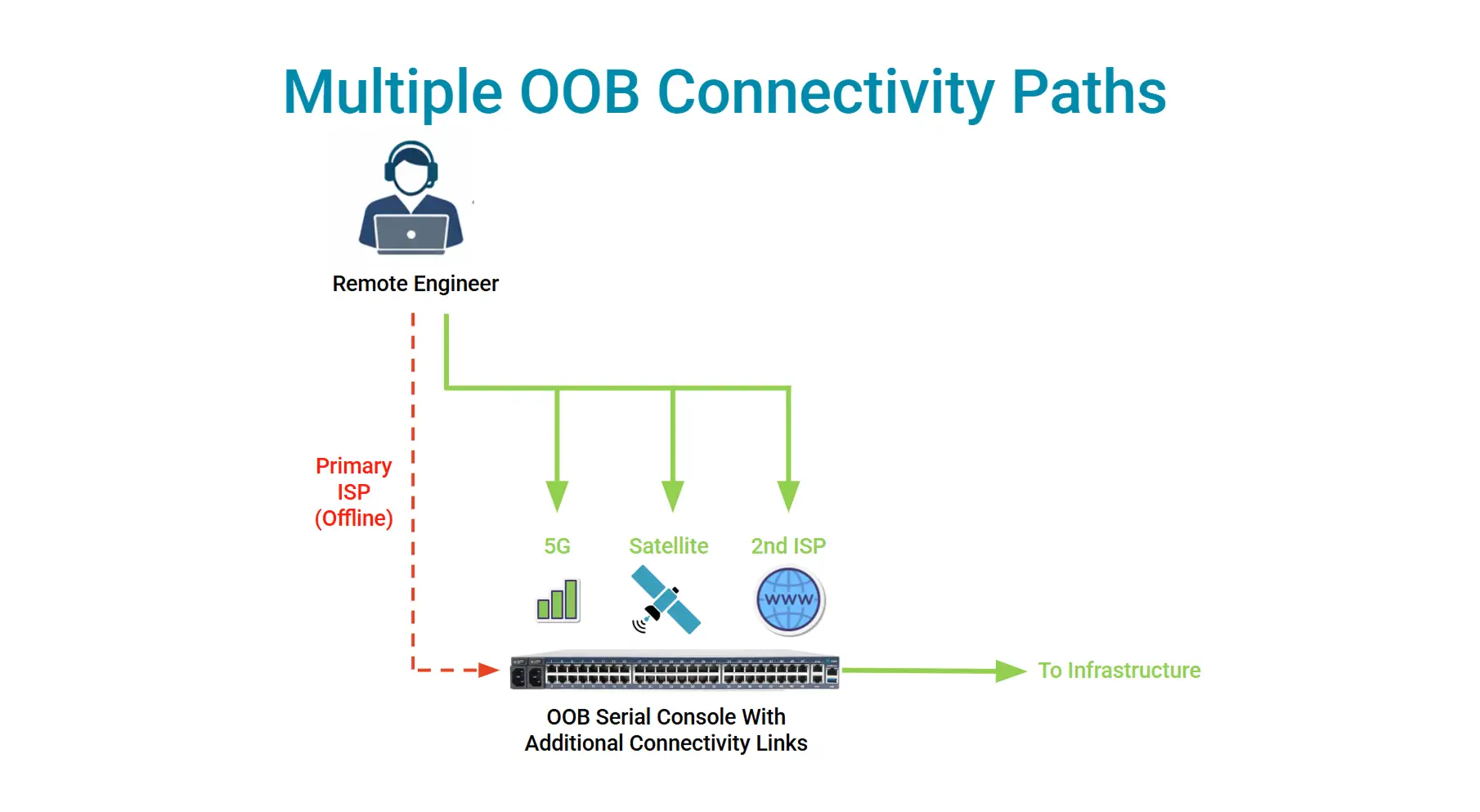
  • Out-of-Band: Provides alternate connectivity (5G, satellite, secondary fiber) so you always have a way to connect to your devices, even if they’re thousands of miles away.
  • Isolated Management Infrastructure: Physically and logically separates management from production, enforcing zero trust controls to keep attackers out, limit lateral movement, and accelerate ransomware recovery.
ZPE Systems – ISP – Out-of-band aids in fast recovery

Diagram: Out-of-band provides a fully isolated management infrastructure with dedicated 5G, satellite, and other links that ensure remote access even when production networks go offline.

OOB and IMI ensure management access is always on, always secure, and always independent. Instead of rolling a truck and waiting hours for services to be restored, you can use your dedicated out-of-band path to instantly access sites from your browser. Nodegrid gives you complete, low-level remote control of devices as if you’re physically connected, so you can recover in minutes. This is critical for ISPs.


Why ZPE Systems’ Nodegrid Is Ideal for ISPs

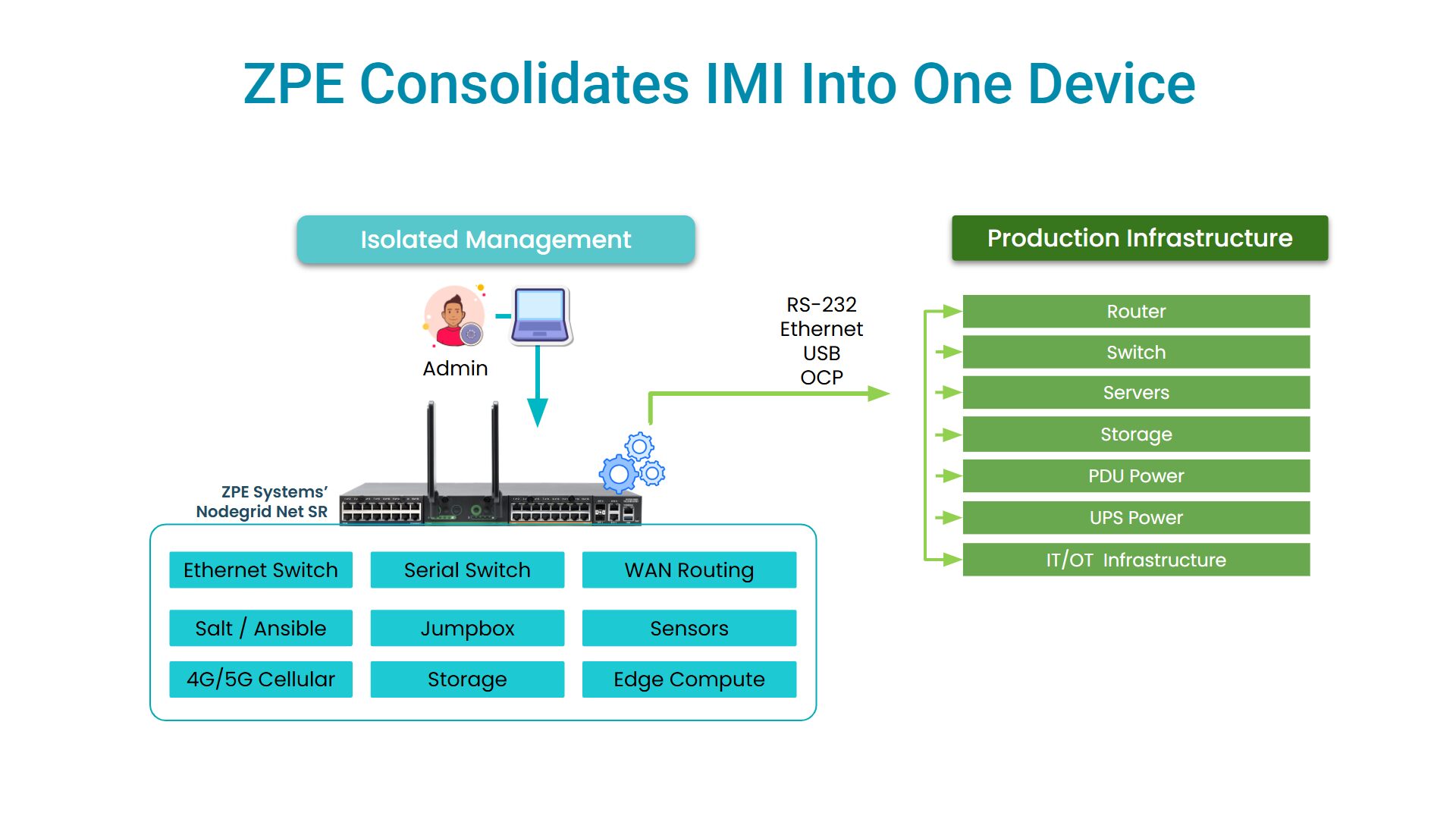
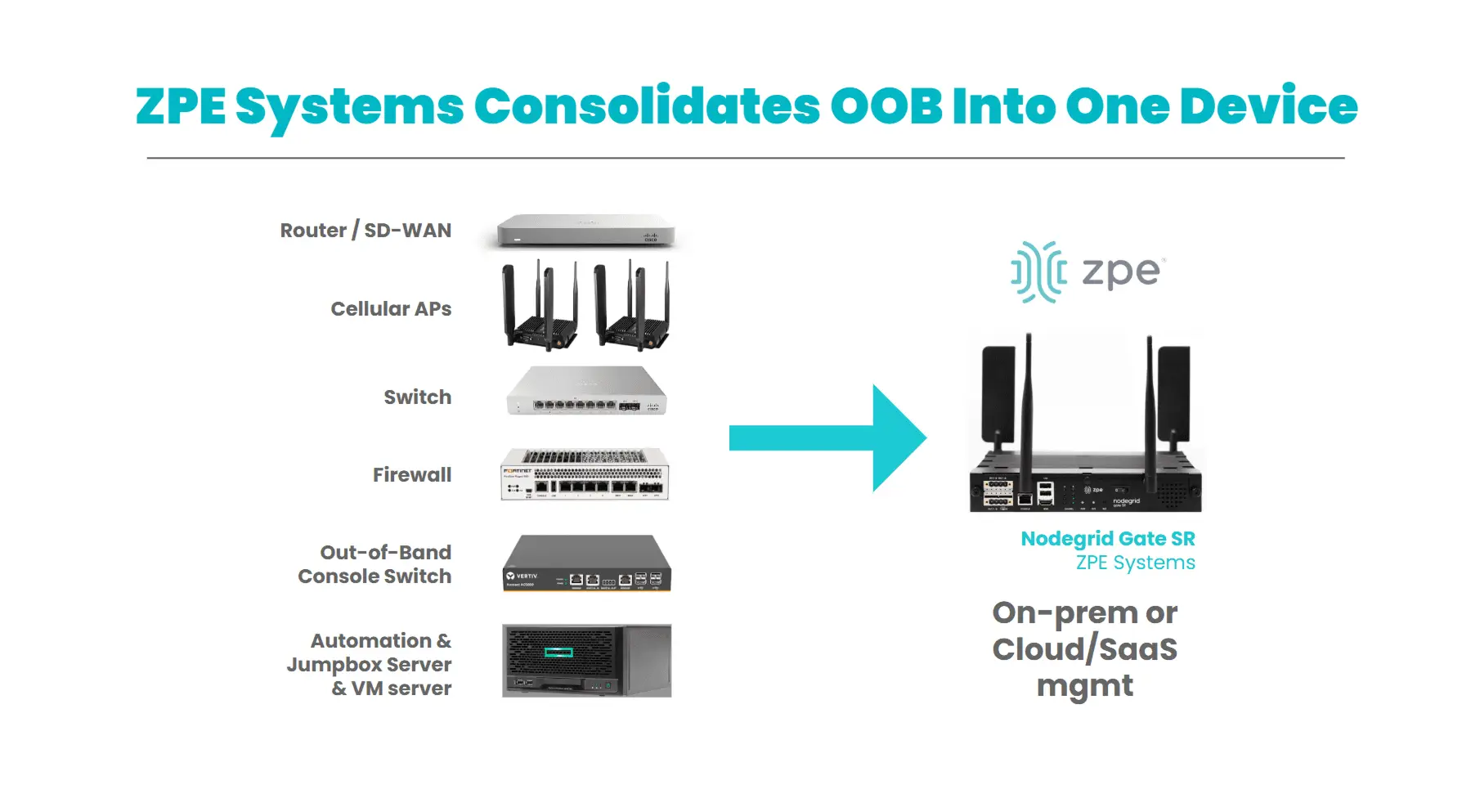
Nodegrid is built specifically to give ISPs resilient, secure, and scalable management by combining all the functions of OOB and IMI into one device. This pairs with ZPE Cloud or on-prem Nodegrid Manager to give ISPs full remote access, visibility, and control of their distributed sites.

ZPE Systems – ISP – Nodegrid consolidates OOB into one device

Image: ZPE Systems’ Nodegrid devices consolidate more than six management functions into one device, and pair with ZPE Cloud or Nodegrid Manager for holistic remote control of ISP fleets.

Whether you’re a Tier 1 operating backbone POPs, or a Tier 3 keeping local last-mile hubs online, Nodegrid gives you benefits including:

  • Always-on console access via 5G/LTE, Starlink, or secondary fiber.
  • Zero trust enforcement with RBAC, MFA, and continuous verification.
  • FIPS 140-3 certified encryption for airtight security.
  • Centralized policy control with ZPE Cloud or on-prem Nodegrid Manager.
  • Device consolidation: console server, LTE modem, Ethernet switch, and security gateway in one appliance.

More ISPs are realizing these benefits and switching to Nodegrid using an approach that doesn’t require them to disrupt services. Take the Internet Association of Australia, for example. They were able to perform a nationwide rollout of Nodegrid at 35 POPs while maintaining 100% uptime, removing 70 devices from the management stack, and saving $17,500/month in costs. Read the IAA case study for full details, including diagrams and photos.


Here’s How To Deploy Nodegrid With Zero Downtime

There’s a lot at stake when you can’t reach the console during a failure or outage. But Nodegrid helps you quickly resolve those 2AM wakeup calls with secure remote access to all your systems.

To help you, we put together this Zero-Downtime Migration Checklist. Download this guide to see every step — from assessing infrastructure needs, to designing the right solution and validating after migration — and how you can deploy the most resilient ISP network management solution.