Providing Out-of-Band Connectivity to Mission-Critical IT Resources

Orchestrating Hybrid Network Environments: Challenges, Solutions, and Best Practices
shutterstock_699701578(1)

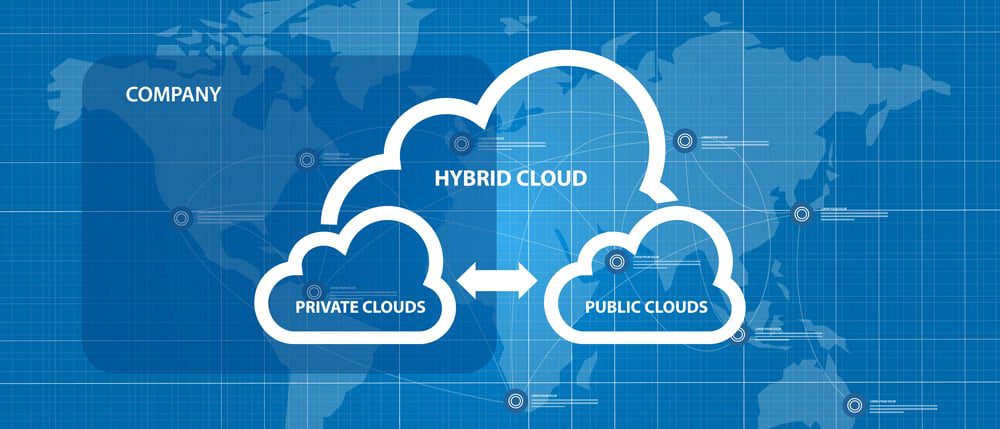
A hybrid network environment combines infrastructure from a public cloud with a private cloud and/or on-premises deployment. Your compute, storage, and service resources are distributed across multiple locations and platforms and connected via WAN (wide area network).

A hybrid network deployment aims to create a single, unified environment of workloads and resources that you can easily move around as needed for failover or performance optimization. However, accomplishing this goal in such a complex network architecture while avoiding vendor lock-in and maintaining consistent security is very challenging.

This blog discusses the challenge of orchestrating hybrid network environments as well as the solutions to help you overcome these difficulties.

The challenge of orchestrating hybrid network environments

To efficiently manage and utilize a hybrid network environment, you’ll need to overcome three major hurdles, including:

Vendor lock-in

A hybrid network environment generally includes devices, platforms, and services from multiple vendors in multiple locations. Often, these solutions are designed to work in closed ecosystems, meaning they don’t integrate well with other vendors’ platforms. This makes it challenging to connect cloud and on-premises resources and create a unified hybrid environment. It also creates difficulties with implementing third-party automation and centralized orchestration.

Complexity

Hybrid network environments are more complex than legacy networks because critical infrastructure is distributed both physically and logically. This requires comprehensive monitoring and reporting of devices, traffic, and user activity in locations to which you have minimal access. It also requires more sophisticated networking to ensure end-users have seamless access to applications and resources. Without automation and centralized orchestration, monitoring and controlling network routing, infrastructure, and security across a hybrid environment is challenging.

Security

To keep your entire hybrid network environment secure, you need to apply enterprise security policies consistently across your on-premises, data center, and cloud infrastructure. This consistency is difficult to achieve in the cloud because legacy security controls aren’t always compatible with cloud infrastructure. Often, that means you need to implement separate policies and solutions for your on-premises and cloud resources. However, without a way to centrally manage your hybrid security architecture, this increases the likelihood of mistakes and configuration drift between cloud and legacy policies. It also adds complexity to hybrid network orchestration and takes you further away from your goal of creating a unified environment.

Often, organizations try to implement a separate set of security policies and controls for their cloud infrastructure. However, this increases the likelihood of mistakes and configuration drift between cloud and legacy policies. It also adds complexity to hybrid network orchestration and takes you further away from your goal of creating a unified environment.

Each of these challenges stems from a hybrid network environment consisting of multiple solutions from multiple vendors in multiple locations. The solution, then, is to reduce complexity by implementing a single, centralized orchestration platform that gives you visibility and control over your entire hybrid environment.

How to orchestrate hybrid network environments with a single platform

To ensure that your hybrid network orchestration platform will address these key challenges, you should look for the following characteristics:

Vendor neutral or vendor agnostic

Your hybrid network orchestration platform needs to be able to dig its hooks into every device, application, and vendor solution in your environment. That means it needs to be vendor neutral or vendor agnostic. This will give you centralized visibility into and control over your entire hybrid network. Vendor neutral orchestration also facilitates third-party automation, which helps reduce the risk of human error and creates a more streamlined NetDevOps environment.

Centralized, cloud-based control

This vendor neutral orchestration platform should roll up all your critical network management, monitoring, and automation functionality so your engineers can oversee your entire environment from behind one pane of glass. This centralized control panel should live in the cloud, so you can access your monitoring and orchestration from anywhere in the world without a VPN. A cloud-based orchestration platform ensures your engineers have access to view and troubleshoot your network even if an ISP or hosting provider suffers from an outage.

Integrated security

Securing your hybrid network might require upgrading pieces of your existing security architecture—such as identity and access management (IAM)—with solutions extending across both on-premises and cloud infrastructures. Other aspects of security (like firewalling) will likely require different solutions for on-premises and cloud, primarily because of the limitations of legacy systems when it comes to protecting cloud resources.

In addition, using cloud-based security solutions—such as Security Service Edge (SSE)—allows you to intelligently route remote, cloud-destined traffic from your branch and edge locations. This removes the need to backhaul traffic through your on-premises firewall, reducing network bottlenecks and optimizing performance.

Of course, to efficiently manage so many security solutions, you need centralized orchestration with vendor neutral security integrations with your IAM, SSE, on-premises firewall, and other security controls. This allows you to apply consistent security policies across your hybrid environment, which is critical for security best practices like zero trust. It also ensures that you can see a complete overview of your hybrid network security from one place, reducing the risk of an issue or alert falling between the cracks.

Using a single, vendor-neutral orchestration platform simplifies hybrid network management by providing a unified control panel to oversee your entire environment. A vendor neutral solution also enables third-party integrations with automation and security solutions to further reduce the complexity of hybrid network orchestration. The right hybrid network orchestration platform will allow you to create a unified environment that’s fast, reliable, and secure.

For example, the Nodegrid network management solution from ZPE Systems delivers orchestration control over hybrid network environments with complete vendor freedom. Nodegrid hardware runs on the open, Linux-based Nodegrid OS, allowing it to “say yes” to every vendor solution and platform in your hybrid architecture. ZPE Cloud provides a centralized, cloud-based platform so you can monitor and orchestrate your hybrid infrastructure from anywhere in the world.

The Nodegrid platform supports integrations with third-party automation solutions like Chef, Ansible, and RESTful so you can reduce manual interventions and increase efficiency. Plus, Nodegrid works seamlessly with leading IAM, zero trust, SSE, and other security providers, giving you a single pane of glass from which to orchestrate every piece of your hybrid network environment.

Learn more about orchestrating hybrid network environments

★    Benefits of SD-WAN for Hybrid Cloud Infrastructure
★    Why Choose Nodegrid as Your Data Center Orchestration Tool
★    Simplifying Network Edge Orchestration With a Single Platform

Orchestrating hybrid network environments is easier with Nodegrid.

Contact ZPE Systems to view a free demo.

Contact Us

Hyperautomation vs Automation: How Are They Different?

Automation,Concept,With,Downtown,Skyline,Buildings,In,The,Night

Automation can help you streamline network management in your enterprise by reducing human error, speeding up processes, and facilitating NetDevOps. Hyperautomation takes things a step further by attempting to remove all human intervention from IT and business workflows.

This blog will define hyperautomation and automation, compare both concepts, and discuss the challenges and best practices for implementation.

Hyperautomation vs Automation: How are they different?

What is automation?

Automation is the removal of manual intervention and workloads within IT departments. You can use automation for development, QA testing, systems administration, and security, but we’re focusing on network automation in this blog.

The goal of network automation is to solve specific challenges. For example, configuring and deploying new network devices is a tedious, time-consuming process. A configuration mistake could cause downtime or even a security breach, so reducing human error is critical to preventing these issues. Plus, there are logistical challenges involved in deploying new devices to remote data centers, branch offices, and edge locations: do you pre-stage the device and risk someone intercepting it in transit and gaining access to your enterprise network? Or do you spend the time and money to fly engineers out to remote sites to configure and install the equipment in person? One way automation solves this problem is through what’s known as zero touch provisioning (ZTP), which allows devices to automatically download and install their configurations over the network without human intervention.

ZTP solves one particular problem for you—new device configurations—and that’s all. It isn’t concerned with any other workloads or processes. You can integrate ZTP with other automated tools and systems, or you could use it by itself, and in either case, it’s still considered automation.

Learn more about automation:

→   Automating Your Network Operations Does Not Have to Be Difficult

→   The Importance of NetDevOps Automation for Modern Networks

→   Network Automation Best Practices to Implement in 2022

What is hyperautomation?

Hyperautomation, on the other hand, seeks to automate all (or most) IT and business processes. That means automation is essentially a subset of hyperautomation – you need as much automation as possible if you want to achieve true hyperautomation.

Hyperautomation requires automating every workflow and process involved in achieving a certain outcome, including simple tasks like rebooting devices and complex workflows like updating servers. That also means every part of a workflow sequence of events needs to be automated—both the success path and the failure path—otherwise, you won’t achieve full hyperautomation.

Let’s consider the above example of a new network device that needs to be deployed to a remote site. If everything goes according to plan, the device—let’s say a wireless access point—automatically configures itself via ZTP, and no human intervention is required. However, if something goes wrong and the configuration can’t execute successfully, the ZTP process stops, and a human engineer must jump in to troubleshoot the problem.

Hyperautomation requires that you anticipate and programmatically account for any potential failures in an automated workflow. What happens if the TFTP server is offline or unavailable? What if there’s no existing configuration file for the specific model of AP you’re deploying? There should always be a next step available for your automated workflow, even if the previous step has failed. The hyperautomation failure path may eventually lead to a human being (ideally with automatic alerts and notifications), but only after exhausting all automated troubleshooting and error correction possibilities.

Hyperautomation can only be achieved through the use of an automation orchestration platform. These platforms give you a big-picture overview of your hyperautomation efforts so you can store, deploy, and manage all your automated workflows in one place. Orchestration also involves automating your automation—another essential component of hyperautomation—which means your platform automatically runs, monitors, and troubleshoots your automated processes. This is accomplished through technology like AI (artificial intelligence), SDN (software-defined networking), and ZTP mentioned above.

Learn more about network orchestration:

→   Simplifying Network Edge Orchestration With a Single Platform

→   Orchestrating Hybrid Network Environments: Challenges, Solutions, and Best Practices

→   Why Choose Nodegrid as Your Data Center Orchestration Tool

Hyperautomation challenges

Automation and hyperautomation are a little easier to achieve in development and systems administration, but unfortunately, network automation has been slow to catch up.

The biggest network hyperautomation challenge is automating legacy systems designed without automation in mind. If these legacy systems are left out of your automation efforts, it’s impossible to achieve hyperautomation. You could replace all your legacy devices with newer systems that support automation out of the box, but that’s an expensive and time-consuming endeavor that could delay or even prevent your hyperautomation efforts from getting off the ground. A better solution is to find an orchestration platform that can interact with both legacy and modern systems.

One challenge to network hyperautomation is vendor lock-in. Modern enterprise networks are often composed of several solutions from different vendors. That makes it challenging to find automation solutions compatible with every single piece of your infrastructure—like storage, security, etc. For hyperautomation, you need your orchestration platform to dig its hooks into every device, workflow, and process in your network infrastructure, which means it needs to be truly vendor neutral.

Another difficulty is maintaining the hardware that makes up your network infrastructure so that your hyperautomation can work efficiently. This is especially challenging for highly distributed enterprise networks with critical infrastructure in many remote locations. To ensure successful hyperautomation in such an architecture, you need a robust environmental monitoring system that can detect issues in remote data centers and branches. The data collected by this monitoring system should provide feedback to the orchestration platform so problems like high humidity or physical tampering can be automatically acted upon and remediated before they hamper other automated workflows.

Though network hyperautomation is challenging, there is a solution that can help you overcome all these hurdles.

How Nodegrid supports network hyperautomation

The Nodegrid solution from ZPE Systems is a network orchestration platform that delivers true hyperautomation capabilities without limitations. Nodegrid runs on the open architecture Nodegrid OS, which means it’s compatible with any Linux-based system on your network. Nodegrid also supports integrations with third-party automation and orchestration tools, so you can create a fully customized hyperautomation environment.

Plus, Nodegrid can communicate with legacy devices on your network, for example, through a console connection, as well as modern networking solutions. That’s how ZPE Systems can deliver a hyperautomation platform that can be used consistently across your entire infrastructure to orchestrate and deploy automation on any and all target systems.

Want to learn more about hyperautomation vs automation?

Check out ZPE Systems’ network automation blog, or contact us today at 1-844-4ZPE-SYS.

Contact Us

How to Choose Secure Out-of-Band Management

shutterstock_1638957298

Out-of-band access gives you an alternative path to manage your critical remote infrastructure at data centers, branch offices, and other distributed locations. However, that management link creates an additional point of entry for malicious actors to breach and even control your network.

That’s why secure out-of-band management solutions must include features like onboard firewalls and zero trust security to keep your network protected while still giving you remote management access. Let’s take a look at the many secure out-of-band management features and why they’re crucial to the security of your enterprise network.

What is out-of-band management?

Out-of-band (OOB) management separates your production network from your management plane, giving you a dedicated remote connection to your infrastructure even during an outage. The OOB network is completely independent of your primary network and is specifically  dedicated to infrastructure management. That means you can administer your critical remote infrastructure without affecting production network performance. You can also remotely troubleshoot and recover from outages, preventing expensive and time-consuming truck rolls.

OOB management typically uses serial console servers at data centers and remote offices to create an alternative path to critical network infrastructure. For example, using a DSL modem or 4G cellular connection to provide uninterrupted access. Secure out-of-band management solutions offer additional functionality like zero touch provisioning and onboard firewalls to ensure malicious actors cannot use your OOB access.

How to choose secure out-of-band management

Since an out-of-band management solution provides access to an entire network plane that’s dedicated to managing your critical infrastructure, you must keep this power out of the wrong hands. Here are five secure out-of-band management features to help you defend your network.

1. Third-party security integrations

The most secure OOB platforms are vendor-neutral and support integrations with third-party security solutions. That means you can extend the security functionality of your OOB device to take advantage of technology like next-generation firewalls (NGFW) or security service edge (SSE). A vendor-neutral out-of-band solution lets you keep up to date with security best practices and innovations without needing to replace your OOB hardware. It also conveniently creates a fully integrated platform to manage all your branch network security solutions.

A truly secure out-of-band management solution will address security threats from all angles, including provisioning, patching, intrusion detection, and advanced authentication. In addition, a secure OOB platform should support vendor-neutral integrations with third-party security solutions so you can extend your defensive capabilities.

2. Secure zero touch provisioning

One of the challenges of deploying and managing remote infrastructure is configuring and installing new network devices. Unless you have IT staff at each location to install your bare-metal devices, you’re usually left with two options:

  • Pay for your engineers to travel on-site to deploy the new systems. This option is expensive and time-consuming since it can take full day’s of work or weeks.
  • Pre-stage your devices at the home base and then ship them preconfigured. This option is a huge security risk. If a pre-configured OOB serial console is intercepted in transit, an attacker could potentially use it to access your management network.

Zero touch provisioning (ZTP) solves these problems by automatically deploying new device configurations over the WAN. You can ship a bare-metal OOB appliance to your remote site, have a local employee plug it into the power and network, and then the ZTP device will download its configuration from a remote server (such as a TFTP server). However, not all zero touch provisioning solutions are equally secure. Theoretically, a hacker could still intercept your factory-default appliance, use ZTP to download its configuration, and breach your enterprise network.

A secure ZTP solution uses features like encrypted hardware boot sequences to prevent unauthorized users from being able to fully boot up and configure a stolen OOB device. Additional security features like cloud-based provisioning with 2FA (two-factor authentication) also ensure that your network will be protected even if your OOB serial console falls into the wrong hands.

3. Up-to-date OS and fast patches

One of the most straightforward security features in an OOB solution is a frequently patched and up-to-date OS (operating system) kernel. This is important because hackers often look for OS vulnerabilities to exploit. If such a vulnerability is discovered in your OOB device, an attacker could potentially use it to gain administrative control over your entire network.

You should always look for a secure out-of-band management solution with an up-to-date OS kernel and frequent patch releases. Even better, you could get a managed OOB solution that’s updated by the vendor as soon as they become aware of a security vulnerability, so you don’t need to spend the time or manpower to frequently monitor and patch your OOB device’s OS.

4. Onboard firewall features

A secure out-of-band management solution should also have some onboard firewall functionality to further protect your network. An onboard firewall should protect both the OOB network and the primary network by scanning traffic on both connections.

On the OOB connection, the firewall acts as an additional layer of security that prevents malicious actors from gaining access to your management network. An onboard firewall allows you to consolidate your tech stack by reducing the number of separate devices at each remote site from your main network connection.

5. Zero trust security

Zero trust is a network security paradigm that addresses the challenges of protecting distributed enterprise networks from modern, sophisticated cyberattacks. Zero trust security is based on the principle of “never trust, always verify.” Meaning, all network entities—users, devices, applications, etc.—must be verified every time they connect, even if they’re on your internal network. This limits how much damage a compromised device or account can do to your network.

In addition, zero trust security focuses on shrinking your defensive perimeter into a series of smaller micro-perimeters around the critical data, systems, and resources you’re protecting. This enables you to implement highly specific security policies and controls to address the individual vulnerabilities and risks of each network asset.

A secure out-of-band management solution should support zero trust security principles by allowing you to implement advanced authentication methods like SSO (single sign-on) and 2FA. It should allow you to monitor and control devices across network micro-segments. And, assuming your secure OOB solution includes an onboard firewall, you should be able to apply granular security policies and firewall rules to each of your micro-segments to create micro-perimeters even at your network edge.

How Gen 3 out-of-band management delivers secure, reliable remote access

The Nodegrid secure OOB solution from ZPE Systems combines innovative security features with end-to-end automation support to deliver Gen 3 secure out-of-band management.

Nodegrid uses secure, cloud-based zero touch provisioning so you can safely ship factory-default appliances around the world and deploy them in moments. Nodegrid ZTP uses features like:

  • Secure boot, custom security profiles, and port authentication
  • Password protected BIOS/Grub and signed software
  • Geofence perimeter crossing detection and security prevention
  • Solid state disks (SSDs) with self-encrypted hardware controllers

Nodegrid OOB runs on a modern, 64-bit OS based on the latest Linux Kernel, with all security patches quickly applied. The embedded firewall supports IPSec, Fail2Ban, IP filtering, and advanced authentication via RADIUS, TACAS+, and Kerberos. In addition, Nodegrid is protected by the Zero Trust Security Framework Foundation and works with leading SAML providers like Duo, Okta, and Ping.

Nodegrid’s open architecture makes it easy to integrate your third-party security providers, including NGFWs and SSE platforms. That means you can create a completely customized branch network security solution that’s fully integrated with your out-of-band management. Nodegrid also supports third-party automation and orchestration through tools like Chef, Ansible, and RESTful. All of this can be managed from anywhere in the world, behind one pane of glass, through the ZPE Cloud platform.


Learn more about secure out-of-band management

  Out-of-Band Network Management: Fundamental Principles & Use Cases

  Why Out-of-Band Remote Access is Critical for Branch Networking

The Nodegrid secure out-of-band management solution rolls up OOB, security, and end-to-end automation into one consolidated box.

To learn more about Gen 3 out-of-band management with Nodegrid, contact ZPE Systems or call 1-844-4ZPE-SYS.

Contact Us

Network Automation Best Practices to Implement in 2022

shutterstock_1901387977

As enterprise networks grow more complex and distributed, the need for network automation is rising. Automation can help you manage your network more efficiently, but only if you use it correctly. This article discusses the three best network automation practices as you begin or continue your automation journey.

Network automation best practices to implement in 2022

Network automation uses software abstraction to turn configuration and management workflows into repeatable scripts at a basic level. This is known as software-defined networking, or SDN. For 2022, network automation best practices are focused on simplifying SDN through low code technology and vendor-neutral orchestration, as well as creating more holistic automation strategies with the NetDevOps methodology. Let’s take a deeper look at why these automation practices are so essential for the present and future of your organization.

Low code network automation

The network automation skills gap is one of the biggest hurdles organizations face when adopting automation tools and practices. A recent survey found that only 3% of enterprise networking teams have the automation knowledge required to support their business’s network automation strategies. Part of the problem is that a software-based approach to networking involves writing and managing code, which many network engineers can lack experience in. That’s why the concept of low code network automation is beginning to gain traction in the industry.

Low code isn’t new—it’s been used for web and software development for years—but it’s only now starting to catch on in the networking world. Years ago, you had to know HTML, CSS, and other programming languages to build a website. Now, various tools let you drag and drop (Wix or SquareSpace, for example) instead of having to type lines of code. Low code technology gives engineers a GUI (graphical user interface) with which they can create and manipulate SDN code. Low code network automation abstracts away most of the underlying programming, so engineers can use visual models, drag-and-drop elements, and WYSIWYG (what-you-see-is-what-you-get) interfaces instead of writing and editing code. At the same time, team members with SDN and programming experience can still access the underlying code as needed to create fully customized and automated network architectures.

Low code platforms handle various network automation tasks such as configuration deployments and changes, traffic management, issue detection and remediation, monitoring, and analytics. Notable pioneers of low code network automation technology include Gluware and Anuta ATOM.

Low code technology is a network automation best practice because it can bridge the skills gap in your network engineering team, allowing you to implement network automation faster without needing to retrain team members (or hire new ones).

Vendor-neutral network automation orchestration

Most enterprise network architectures include hardware, software, and automation solutions from multiple vendors. This creates a challenge for network administrators, who need to learn how to configure, deploy, and manage each of these components. A multi-vendor enterprise network can grow very complex, which increases the chances of human error during configurations and changes. Misconfigured infrastructure is a leading cause of security breaches, so this isn’t a challenge you can afford to ignore.

Network automation helps reduce human error by standardizing network configurations, but automating a multi-vendor architecture also presents its own challenges. You still need a way to manage and orchestrate all your automation scripts, APIs, playbooks, and tools. If engineers still need to learn and individually manage a variety of new scripting languages, automation tools, and vendor-specific processes, you’re still at a high risk of human error.

That’s why centralized, vendor-neutral orchestration is crucial for effective network automation in a multi-vendor enterprise environment. There are now modern orchestration platforms that are vendor-neutral, so you can store and manage your diverse set of automation tools behind one pane of glass. It should also be able to hook into every component of your network, no matter where it’s physically located or which vendor it belongs to. That way, you can ensure there are no gaps in your automation and orchestration coverage—which means fewer manual processes, and fewer opportunities for human error.

Vendor-neutral orchestration is a network automation best practice because it allows engineers to control a complex, automated enterprise network infrastructure more effectively and accurately. Plus, many tech giants are focusing more on adopting these best practices due to recent outages (like the Facebook outage).

NetDevOps automation

For most enterprises, the IT department is more than just the networking team—often, there will also be a development team and an operations team. The development team writes, modifies, tests, and supports software code. The operations team configures, administers, and supports the servers (virtual or physical) and cloud platforms that host your enterprise resources, as well as the laptops and other devices people use to connect to those resources. None of these teams can work in a vacuum because their workflows overlap and often depend on each other. Similarly, the technology and processes they’re responsible for relying upon each other as well—for example, applications are developed and hosted on servers (whether physically in a data center or abstracted in the cloud), and the network needs to connect users to those servers so they can access the applications.

Automation makes networking, development, and operations processes more efficient. While it’s certainly possible to implement and manage automation separately for each of these, you’ll see even greater benefits from combining the three. Removing the barriers between these teams allows you to plan new initiatives, like automation with a more complete and holistic view of your business’s IT architecture. It also facilitates better collaboration between networking, development, and operations teams to work more efficiently and with a greater understanding of the business’s ultimate goals. This practice is known as NetDevOps.

The NetDevOps methodology recommends automating and integrating processes from across all your IT teams by:

  1. Using SDN, IaC (infrastructure code), and other abstraction methods to manage your device and networking configurations as software code.
  2. Storing all networking, development, and operations code in a shared, centralized code repository with version control (like GitHub).
  3. Using a systematic approach to automation by identifying and prioritizing processes that will further your business goals.
  4. Eliminating informational siloes and encouraging frequent communication and collaboration between teams.

NetDevOps is a network automation best practice because it creates a more holistic automation strategy and a more streamlined IT department that understands and supports your business goals.

Streamline your network automation journey with Nodegrid

Every enterprise’s network automation journey will look a little different, but these best practices should help you overcome some of the common hurdles along the way. Low code network automation platforms help bridge the skills gap so you can take advantage of automation faster. Vendor-neutral orchestration gives your engineers an easier and more efficient way to manage your network automation solutions. Finally, the NetDevOps methodology facilitates a more comprehensive network automation strategy as well as a more collaborative and efficient IT department.

ZPE Systems can help you follow network automation best practices with Nodegrid vendor-neutral orchestration platform. With support for third-party automation and orchestration tools including low code technology, as well as an open architecture that can hook into all your different vendor solutions, Nodegrid is the ultimate NetDevOps automation platform.

Network automation resources

Learn more about network automation best practices with Nodegrid.

Contact us online or call 1-844-4ZPE-SYS.

Contact Us

Branch-in-a-Box: Why All-in-One Devices Are the Future of Networking

shutterstock_588813473(1)

A branch network consists of many moving pieces that need to be remotely deployed, managed, and supported. That typically means separate devices for all the key functions like routing, switching, security, etc. However, as data and applications grow more distributed—especially due to the popularity of edge computing—it becomes harder for IT teams to keep up with the growing number of vendors and solutions at the branch. Branch-in-a-box seeks to solve that problem by delivering all your branch networking functions in an all-in-one device.

What is branch-in-a-box?

Branch-in-a-box consolidates an entire branch networking technology stack into one piece of hardware. A branch-in-a-box solution might include gateway routing, voice and data switching, firewall, Wi-Fi, and other crucial functionalities. Instead of learning, installing, managing, and troubleshooting five different boxes at each branch location, you only have to worry about one core device.

Next-generation branch-in-a-box solutions typically rely on the following branch networking technologies:

  • SD-WAN: Software-defined wide area networking, or SD-WAN, abstracts WAN management from the underlying MPLS, broadband, fiber, and cellular connection hardware. You can create intelligent routing policies to distribute and route WAN traffic for optimal network performance, with SD-WAN. SD-WAN intelligent routing also facilitates cloud-based edge security technologies like SSE (security service edge) and SASE (secure access service edge).
  • SD-Branch: The limitation of SD-WAN is that its capabilities generally end at the branch gateway. SD-Branch extends your software-defined networking functionality into the individual LANs so you can automatically manage and optimize traffic within the branch.
  • Compute: Some branch-in-a-box solutions also come with compute capabilities or modules. Meanign you can run guest operating systems—like VMs (virtual machines) and containers—without needing to install additional server hardware.
  • Out-of-Band: Out-of-band (OOB) separates your branch network’s management plane from the data plane so you can remotely manage and troubleshoot your branch infrastructure from a dedicated connection. With OOB, you get one unified control panel from which to remotely monitor and administer all your branch networking devices. OOB also provides an alternative path to your branch network, often over a cellular connection, so you don’t need to rely on the primary WAN link. You can troubleshoot and recover from outages remotely, reducing costly truck rolls.

SD-WAN optimizes traffic to and from the branch, ensuring optimal performance and productivity in all your remote locations. SD-Branch extends your reach into the individual branch LANs to give you more control over network routing and performance. Compute capabilities let you run VMs and containers without deploying additional servers. Finally, OOB ensures you always have access to your branch infrastructure, even during a WAN outage. A branch-in-a-box solution harnesses those technologies to give you control over a consolidated networking stack including routing, switching, firewall, and Wi-Fi capabilities.

Where did the concept of branch-in-a-box come from?

Let’s say the typical branch network relies on five boxes—a gateway router, a voice switch, a data switch, a wireless access point (AP), and a firewall. Five devices may not seem like a lot; and using a separate box for each branch networking job means you can, theoretically, choose the best-of-breed solution for each. If you only have one or two branch locations and a large, well-trained IT staff, then supporting multiple branch networking devices probably won’t be a problem.

But what happens when your business grows, and you need to scale up to 10 branches? And then 100 branches? And then 1,000? Suddenly, five best-of-breed devices turns into 5,000 individual boxes you need to purchase, configure, maintain, and troubleshoot.

Branch-in-a-box solves this problem by rolling-up all your crucial branch networking devices into one consolidated solution. This helps you save money on equipment, both in terms of the up-front costs and the recurring costs of licensing, software, and support. Device consolidation can also decrease the power consumption at your branches, saving you energy costs and reducing your carbon footprint. Deploying a branch-in-a-box is often faster and easier since you only need to ship and install one box instead of five.

Plus, an all-in-one branch networking solution reduces the overall complexity of your enterprise network by decreasing the number of devices and platforms that your engineers need to learn, manage, and support. That means your IT operations team can work more efficiently, spending less time on individual maintenance tasks and more time optimizing your branch networking. It also reduces the risk of configuration mistakes and other human errors that could potentially bring down your branches.

The challenge of branch-in-a-box

Of course, when you replace many different boxes with one solution, you run the risk of vendor lock-in. Suppose your branch-in-a-box solution runs in a closed ecosystem. In that case, it’s critical for that one box to truly cover every branch networking capability you need, because you won’t be able to extend its capabilities with third-party tools and devices. Plus, you’ll be forced to follow that vendor’s feature and support roadmap, which may diverge from your organization’s future goals and requirements.

To avoid these issues, it’s crucial to select a vendor-neutral branch-in-a-box that runs on an open platform, like Nodegrid.

Innovative and vendor-neutral branch networking

Nodegrid is a family of open-architecture, vendor-neutral networking solutions for branch, edge, and datacenter. All Nodegrid Services Routers consolidate multiple features and functionalities into one box so you can streamline your network infrastructure and reduce the complexity of your branches. For example, the Hive SR is a next-generation branch-in-a-box that can host many essential functions on one compact device, including:

Gateway routing

SD-WAN with AutoVPN

Wi-FI Access Point

5G/4G/LTE

Secure out-of-band access

Firewall

Nodegrid also simplifies branch network management by providing a centralized, vendor-neutral platform from which to monitor, control, and troubleshoot your global network. ZPE Cloud gives your team access to all Nodegrid-connected devices from anywhere in the world through a secure, cloud-based web portal. Or you can use the on-premises Nodegrid Manager to gain complete control over every aspect of your branch network.

Plus, Nodegrid devices like the Hive SR run on the Linux-based Nodegrid OS. This open architecture supports easy integrations with third-party solutions. That means you can extend the device’s capabilities to include automation, orchestration, SSE, and other functions, allowing Nodegrid to scale with your organization.

Nodegrid delivers branch-in-a-box solutions through all-in-one hardware, consolidated management, and a completely open and extensible platform that scales on-demand.

Contact ZPE Systems today to view a free demo of Nodegrid branch-in-a-box in action.

Contact Us