Providing Out-of-Band Connectivity to Mission-Critical IT Resources

Cloud Repatriation: Why Companies Are Moving Back to On-Prem
Cloud Repatriation

The Shift from Cloud to On-Premises

Cloud computing has been the go-to solution for businesses seeking scalability, flexibility, and cost savings. But according to a 2024 IDC survey, 80% of IT decision-makers expect to repatriate some workloads from the cloud within the next 12 months. As businesses mature in their digital journeys, they’re realizing that the cloud isn’t always the most effective – or economical – solution for every application.

This trend, known as cloud repatriation, is gaining momentum.

Key Takeaways From This Article:

  • Cloud repatriation is a strategic move toward cost control, improved performance, and enhanced compliance.
  • Performance-sensitive and highly regulated workloads benefit most from on-prem or edge deployments.
  • Hybrid and multi-cloud strategies offer flexibility without sacrificing control.
  • ZPE Systems enables enterprises to build and manage cloud-like infrastructure outside the public cloud.

What is Cloud Repatriation?

Cloud repatriation refers to the process of moving data, applications, or workloads from public cloud services back to on-premises infrastructure or private data centers. Whether driven by cost, performance, or compliance concerns, cloud repatriation helps organizations regain control over their IT environments.

Why Are Companies Moving Back to On-Prem?

Here are the top six reasons why companies are moving away from the cloud and toward a strategy more suited for optimizing business operations.

1. Managing Unpredictable Cloud Costs

While cloud computing offers pay-as-you-go pricing, many businesses find that costs can spiral out of control. Factors such as unpredictable data transfer fees, underutilized resources, and long-term storage expenses contribute to higher-than-expected bills.

Key Cost Factors Leading to Cloud Repatriation:

  • High data egress and transfer fees
  • Underutilized cloud resources
  • Long-term costs that outweigh on-prem investments

By bringing workloads back in-house or pushed out to the edge, organizations can better control IT spending and optimize resource allocation.

2. Enhancing Security and Compliance

Security and compliance remain critical concerns for businesses, particularly in highly regulated industries such as finance, healthcare, and government.

Why cloud repatriation boosts security:

  • Data sovereignty and jurisdictional control
  • Minimized risk of third-party breaches
  • Greater control over configurations and policy enforcement

Repatriating sensitive workloads enables better compliance with laws like GDPR, CCPA, and other industry-specific regulations.

3. Boosting Performance and Reducing Latency

Some workloads – especially AI, real-time analytics, and IoT – require ultra-low latency and consistent performance that cloud environments can’t always deliver.

Performance benefits of repatriation:

  • Reduced latency for edge computing
  • Greater control over bandwidth and hardware
  • Predictable and optimized infrastructure performance

Moving compute closer to where data is created ensures faster decision-making and better user experiences.

4. Avoiding Vendor Lock-In

Public cloud platforms often use proprietary tools and APIs that make it difficult (and expensive) to migrate.

Repatriation helps businesses:

  • Escape restrictive vendor ecosystems
  • Avoid escalating costs due to over-dependence
  • Embrace open standards and multi-vendor flexibility

Bringing workloads back on-premises or adopting a multi-cloud or hybrid strategy allows businesses to diversify their IT infrastructure, reducing dependency on any one provider.

5. Meeting Data Sovereignty Requirements

Many organizations operate across multiple geographies, making data sovereignty a major consideration. Laws governing data storage and privacy can vary by region, leading to compliance risks for companies storing data in public cloud environments.

Cloud repatriation addresses this by:

  • Storing data in-region for legal compliance
  • Reducing exposure to cross-border data risks
  • Strengthening data governance practices

Repatriating workloads enables businesses to align with local regulations and maintain compliance more effectively.

6. Embracing a Hybrid or Multi-Cloud Strategy

Rather than choosing between cloud or on-prem, forward-thinking companies are designing hybrid and multi-cloud architectures that combine the best of both worlds.

Benefits of a Hybrid or Multi-Cloud Strategy:

  • Leverages the best of both public and private cloud environments
  • Optimizes workload placement based on cost, performance, and compliance
  • Enhances disaster recovery and business continuity

By strategically repatriating specific workloads while maintaining cloud-based services where they make sense, businesses achieve greater resilience and efficiency.

The Challenge: Retaining Cloud-Like Flexibility On-Prem

Many IT teams hesitate to repatriate due to fears of losing cloud-like convenience. Cloud platforms offer centralized management, on-demand scaling, and rapid provisioning that traditional infrastructure lacks – until now.

That’s where ZPE Systems comes in.

ZPE Systems Accelerates Cloud Repatriation

For over a decade, ZPE Systems has been behind the scenes, helping build the very cloud infrastructures enterprises rely on. Now, ZPE empowers businesses to reclaim that control with:

  • The Nodegrid Services Router platform: Bringing cloud-like orchestration and automation to on-prem and edge environments
  • ZPE Cloud: A unified management layer that simplifies remote operations, provisioning, and scaling

With ZPE, enterprises can repatriate cloud workloads while maintaining the agility and visibility they’ve come to expect from public cloud environments.
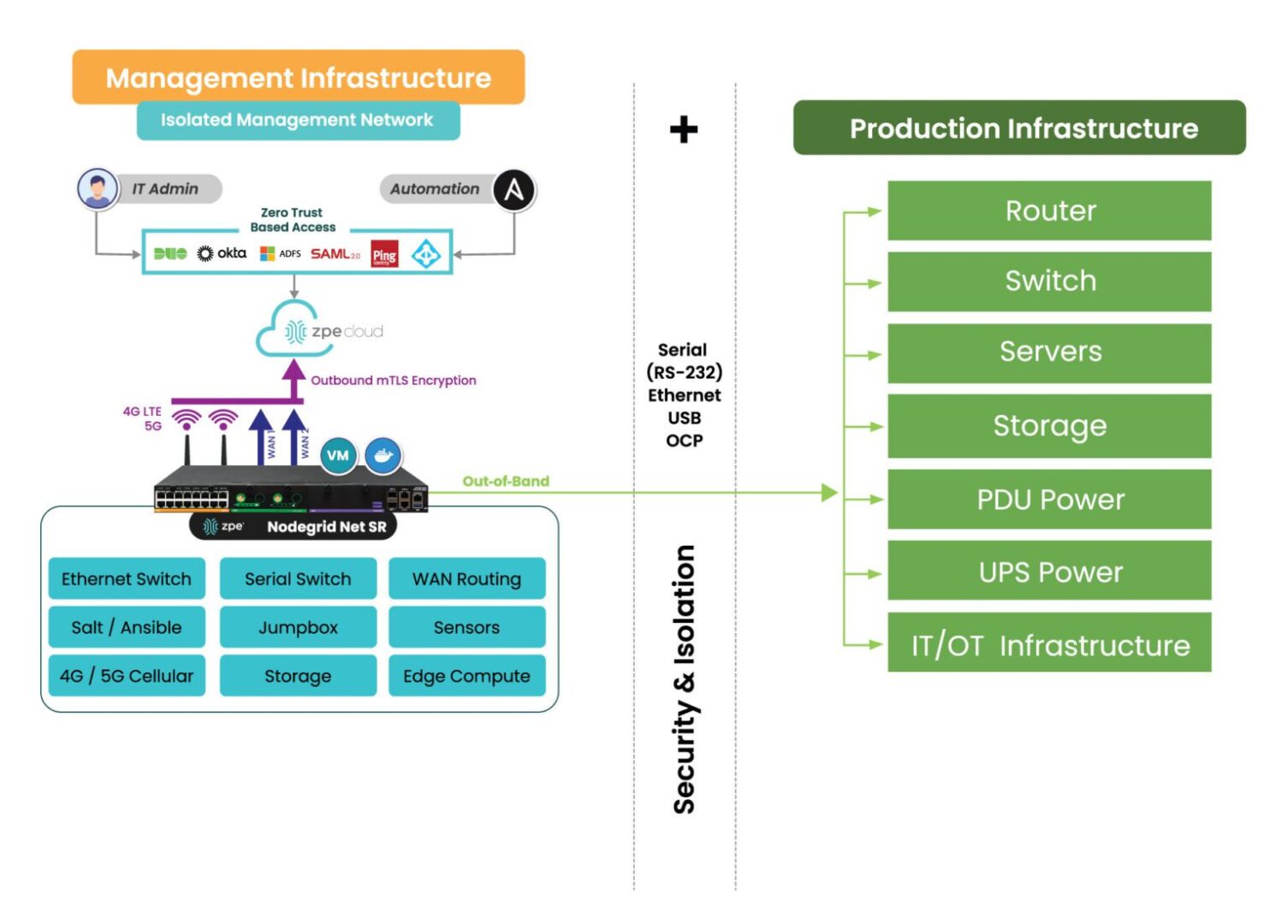
How the Nodegrid Net SR isolates and protects the management network.

The Nodegrid platform combines powerful hardware with intelligent, centralized orchestration, serving as the backbone of hybrid infrastructures. Nodegrid devices are designed to handle a wide variety of functions, from secure out-of-band management and automation to networking, workload hosting, and even AI computer vision. ZPE Cloud serves as the cloud-based management and orchestration platform, which gives organizations full visibility and control over their repatriated environments..

  • Multi-functional infrastructure: Nodegrid devices consolidate networking, security, and workload hosting into a single, powerful platform capable of adapting to diverse enterprise needs.
  • Automation-ready: Supports custom scripts, APIs, and orchestration tools to automate provisioning, failover, and maintenance across remote sites.
  • Cloud-based management: ZPE Cloud provides centralized visibility and control, allowing teams to manage and orchestrate edge and on-prem systems with the ease of a public cloud.

Ready to Explore Cloud Repatriation?

Discover how your organization can take back control of its IT environment without sacrificing agility. Schedule a demo with ZPE Systems today and see how easy it is to build a modern, flexible, and secure on-prem or edge infrastructure.

Why Out-of-Band Management Is Critical to AI Infrastructure

Out-of-Band Management for AI

Artificial intelligence is transforming every corner of industry. Machine learning algorithms are optimizing global logistics, while generative AI tools like ChatGPT are reshaping everyday work and communications. Organizations are rapidly adopting AI, with the global AI market expected to reach $826 billion by 2030, according to Statista. While this growth is reshaping operations and outcomes for organizations in every industry, it brings significant challenges for managing the infrastructure that supports AI workloads.

The Rapid Growth of AI Adoption

AI is no longer a technology that lives only in science fiction. It’s real, and it has quickly become crucial to business strategy and the overall direction of many industries. Gartner reports that 70% of enterprise executives are actively exploring generative AI for their organizations, and McKinsey highlights that 72% of companies have already adopted AI in at least one business function.

It’s easy to understand why organizations are rapidly adopting AI. Here are a few examples of how AI is transforming industries:

  • Healthcare: AI-driven diagnostic tools have improved disease detection rates by up to 30x, while drug discovery timelines are being slashed from years to months.
  • Retail: E-commerce platforms use AI to power personalized recommendations, leading to a revenue increase of 5-25%.
  • Manufacturing: AI in predictive maintenance can help increase productivity by 25%, lower maintenance costs by 25%, and reduce machine downtime by 70%.

AI is a powerful tool that can bring profound outcomes wherever it’s used. But it requires a sophisticated infrastructure of power distribution, cooling systems, computing, GPUs, servers, and networking gear, and the challenge lies in managing this infrastructure.

Infrastructure Challenges Unique to AI

AI environments are complex, with workloads that are both resource-intensive and latency-sensitive. This means organizations face several challenges that are unique to AI:


  1. Skyrocketing Energy Demands: AI racks consume between 40kW and 200kW of power, which is 10x more than traditional IT equipment. Energy efficiency in the AI data center is a top priority, especially as data centers account for 1% of global electricity consumption.
  2. Cost of Downtime: AI systems are especially vulnerable to interruptions, which can cause a ripple effect and lead to high costs. A single server failure can disrupt entire model training processes, costing enterprises $9,000 per minute in downtime, as estimated by Uptime Institute.
  3. Cybersecurity Risks: AI processes sensitive data, making AI data centers prime targets for attack. Sophos reports that in 2024, 59% of organizations suffered a ransomware attack, and the average cost to recover (excluding ransom payment) was $2.73 million.
  4. Operational Complexity: AI environments rely on a diverse set of hardware and software systems. Monitoring and managing these components effectively requires real-time visibility into thermal conditions, humidity, particulates, and other environmental and device-related factors.

The Role of Out-of-Band Management in AI

Out-of-band (OOB) management is a must-have for organizations scaling their AI capabilities. Unlike traditional in-band systems that rely on the production network, OOB operates independently to give teams uninterrupted access and control. They can remotely perform monitoring and maintenance tasks to AI infrastructure, troubleshooting, and complete system recovery even if the production network goes offline.


How OOB Management Solves Key Challenges:

  • Minimized Downtime: With OOB, IT teams can drastically reduce downtime by troubleshooting issues remotely rather than dispatching teams on-site.
  • Energy Efficiency: Real-time monitoring and optimization of power distribution enable organizations to eliminate zombie servers and other inefficiencies.
  • Enhanced Security: OOB systems isolate management traffic from production networks per CISA’s best practice recommendations, which reduces the attack surface and mitigates cybersecurity risks.
  • Operational Efficiency: Remote monitoring via OOB offers a complete view of environmental conditions and device health, so teams can operate proactively and prevent issues before failures happen.

Use Cases: Out-of-Band Management for AI

There’s no shortage of use cases for AI, but organizations often overlook implementing out-of-band in their environment. Aside from using OOB in AI data centers, here are some real-world use cases of out-of-band management for AI.

1. Autonomous Vehicle R&D

Developers of self-driving technology find it difficult to manage their high-density AI clusters, especially because outages delay testing and development. By implementing OOB management, these developers can reduce recovery times from hours to minutes and shorten development timelines.

2. Financial Services Firms

Banks deploy AI to detect and combat fraud, but these power-hungry systems often lead to inefficient energy usage in the data center. With OOB management, they can gain transparency into GPU and CPU utilization. Not only can they eliminate energy waste, but they can optimize resources to improve model processing speeds.

3. University AI Labs

Universities run AI research on supercomputers, but this strains the underlying infrastructure with high temperatures that can cause failures. OOB management can provide real-time visibility into air temperature, device fan speed, and cooling systems to prevent infrastructure failures.

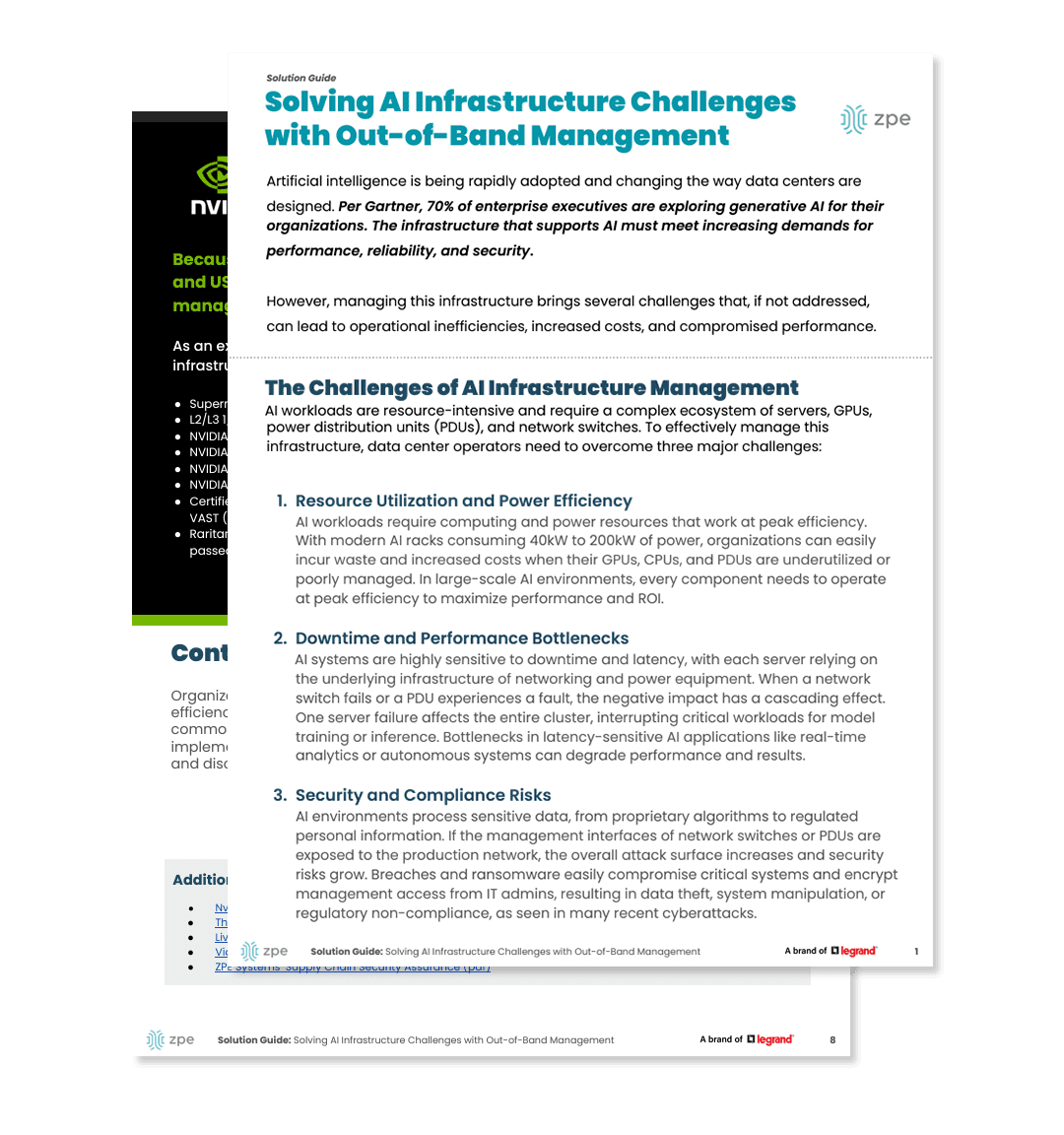
Download Our Guide, Solving AI Infrastructure Challenges with Out-of-Band Management

Out-of-band management is the key to having reliable, high-performing AI infrastructure. But what does it look like? What devices does it work with? How do you implement it?

Download our whitepaper Solving AI Infrastructure Challenges with Out-of-Band Management for answers. You’ll also get Nvidia’s SuperPOD reference design along with a list of devices that integrate with out-of-band. Click the button for your instant download.

What is FIPS 140-3, and Why Does it Matter?

A lock representing cybersecurity, with the title What is FIPS 140-3 and why does it matter?

Handling sensitive information is a responsibility shared by so many organizations. Ensuring the security of data, whether in transit or at rest, is not only critical for maintaining the trust of end users and customers, but is often a regulatory requirement. One of the most reliable ways to secure data within network infrastructure is by implementing FIPS 140-3-certified cryptographic solutions. This certification, which was developed by the National Institute of Standards and Technology (NIST), serves as a benchmark for robust encryption practices, enabling organizations to meet high security standards and ensure regulatory compliance.

Let’s explore what it means to have FIPS 140-3 certification, why it matters, and its key applications in network infrastructure.

What is FIPS 140-3 Certification?

The Federal Information Processing Standard (FIPS) 140-3 certification is a stringent, government-endorsed security standard that sets guidelines for cryptographic modules used to protect sensitive data. It includes requirements for securing cryptographic functions within hardware, software, and firmware. The certification process rigorously tests cryptographic solutions for security and reliability, ensuring that they meet specific criteria in data encryption, access control, and physical security.

There are four levels of FIPS 140-3 certification, each adding layers of protection to help secure information in various environments:

  • Level 1: Ensures basic encryption standards.
  • Level 2: Adds tamper-evident protection and role-based authentication.
  • Level 3: Provides advanced tamper-resistance and strong user authentication.
  • Level 4: Offers the highest level of security, including physical defenses against tampering.

FIPS 140-3 certification ensures that an organization’s network infrastructure meets high standards for cryptographic security. This is important for protecting sensitive information against cyber threats as well as fulfilling regulatory requirements.

Why FIPS 140-3 Certification Matters

1. Meeting Regulatory Compliance Requirements

FIPS 140-3 certification is often required by regulatory bodies, especially in sectors like government/defense, healthcare, and finance, where sensitive data must be protected by law. Here are a few industry-specific regulations that FIPS 140-3-certified modules help with:

  • Defense: DFARS, NIST SP 800-171
  • Healthcare: HIPAA
  • Finance: PCI-DSS
  • Energy: NERC CIP
  • Education: FERPA

Compliance with FIPS 140-3 also makes it easier for organizations to meet audit requirements, reducing the risk of fines or penalties for security lapses.

2. Strengthening Customer Trust

End users and customers expect that their data is handled with care and protected against breaches. By using FIPS 140-3-certified solutions, organizations can demonstrate their commitment to securing customer data with recognized, government-endorsed security standards. FIPS certification is a valuable trust signal, showing customers that their information is being managed with the highest level of protection available.

3. Protecting Against Emerging Cyber Threats

Relying on uncertified or outdated cryptographic solutions increases the risk of data breaches. FIPS 140-3-certified solutions are tested to withstand advanced attacks and tampering, which is an important safeguard against threats that continue to evolve in complexity. Certified modules help prevent unauthorized access to sensitive data, whether through intercepted communications, phishing, or other cyber threats.

FIPS 140-3 certification gives assurance, especially for organizations that handle high volumes of data, that they have adequate encryption to protect against sophisticated attacks.

4. Ensuring Business Continuity and Operational Resilience

According to IBM’s Cost of a Data Breach Report 2024, data breaches now cost $4.88 million (global average), with healthcare being the most costly at $9.8 million per breach. The financial impact is staggering, but the ongoing operational disruption and recovery efforts determine whether an organization can fully bounce back from a breach. With FIPS 140-3 certification, there’s an added layer of resilience to an organization’s infrastructure, which reduces the likelihood of breaches and ensures a secure base for maintaining continuity (such as through an Isolated Recovery Environment). By implementing FIPS-certified encryption, businesses can minimize downtime, maintain access to encrypted systems, and recover more smoothly from potential incidents.

5. Gaining a Competitive Advantage in Security-Conscious Markets

Organizations that follow rigorous data security standards are more likely to gain the trust of clients, stakeholders, and customers, especially in industries where security is non-negotiable. Organizations that adopt FIPS 140-3-certified infrastructure can differentiate themselves as having a reputation for security, which can be a competitive advantage that attracts customers and partners who value data protection.

Key Applications of FIPS 140-3 in Network Infrastructure

For organizations managing large amounts of customer data, FIPS 140-3-certified solutions can be applied to several critical areas within network infrastructure:

  • Network Firewalls and VPNs: FIPS-certified encryption ensures that data moving across networks remains private, protecting it from interception by unauthorized users.
  • Access Control Systems: Identity-based access controls with FIPS-certified modules add another layer of security to protect against unauthorized access to sensitive data.
  • Out-of-Band Management: Using FIPS 140-3-certified encryption in OOB management ensures the same stringent security level for OOB traffic as for in-band network traffic.
  • Data Storage and Backup: FIPS-certified encryption secures data at rest, protecting stored customer information from unauthorized access or tampering.
  • Cloud and Hybrid Environments: For companies using cloud or hybrid environments, FIPS-certified encryption helps protect data across multiple infrastructure layers, ensuring consistent security whether data resides on-premises or in the cloud.

Discuss FIPS 140-3 With Our Network Infrastructure Experts

FIPS 140-3 certification gives organizations the ability to reassure customers, meet compliance requirements, and protect critical data across every layer of the network. Get in touch with our network infrastructure experts to discuss FIPS 140-3, isolated management infrastructure, and other resilience best practices.

Explore FIPS 140-3 for Out-of-Band Management

Read about 7 benefits of implementing FIPS 140-3 across your out-of-band management infrastructure. This article discusses the benefits it brings to remotely accessing devices, protecting against physical attacks, and securing edge infrastructure.

7 Security Benefits of Implementing FIPS 140-3 for Out-of-Band Management

ZPE Systems -FIPS 140-3

Out-of-band (OOB) management is essential for maintaining control over critical network infrastructure, especially during outages or cyberattacks. This separate management network enables administrators to remotely access, troubleshoot, and recover production equipment. However, managing network devices outside the main data path also brings unique security challenges, as these channels often carry sensitive control data and system access credentials.

Implementing FIPS 140-3-certified encryption within OOB systems can help organizations secure this vital access path to ensure that management data can’t be intercepted or manipulated by unauthorized actors. Here’s how FIPS 140-3 certification can enhance the security, reliability, and compliance of your out-of-band management.

What is FIPS 140-3 Certification?

FIPS (Federal Information Processing Standard) 140-3 is a high-level security standard developed by the National Institute of Standards and Technology (NIST). It specifies rigorous requirements for cryptographic modules used to protect sensitive data. FIPS 140-3 certification covers everything from data encryption to user authentication and physical security. For out-of-band management, FIPS 140-3 certification ensures that cryptographic components in hardware, software, and firmware meet stringent data security standards.

By implementing FIPS-certified solutions, organizations can ensure their OOB management is resilient against modern cyber threats, protecting both the control channels and the sensitive data they carry. Here are seven security benefits of implementing FIPS 140-3 for out-of-band management.

7 Security Benefits of Implementing FIPS 140-3 for Out-of-Band Management

1. Secure Encryption of Management Traffic

OOB management often involves remote access to routers, switches, servers and other critical devices. FIPS 140-3 certification guarantees that all cryptographic modules used in these systems have been rigorously tested to secure data in transit. Encrypting management traffic is crucial to prevent interception or manipulation by unauthorized users, particularly for tasks such as command execution, configuration updates, and device monitoring.

With FIPS-certified encryption, companies can protect OOB traffic between management devices and network components, so that only authorized administrators have access to sensitive system commands and device settings.

2. Enhanced Authentication and Access Control

OOB management solutions typically support different user roles, each with its own access privileges. FIPS 140-3-certified modules, like ZPE Systems’ Nodegrid, feature multi-factor authentication (MFA) to control who can initiate OOB management sessions. Certified solutions also include secure key management practices that prevent unauthorized access, ensuring that only verified users can control and modify network devices.

These protections mean FIPS-certified solutions help mitigate the risk of unauthorized users accessing high-value assets. This is especially important during ransomware recovery efforts, when teams need to launch a secure, Isolated Recovery Environment to combat an active attack in a compromised environment.

3. Protection Against Tampering and Physical Attacks

Many organizations deploy IT infrastructure in locations where physical device security is lacking. For example, remote colocations, unmonitored drilling sites, or rural health clinics can easily expose network infrastructure to device tampering. FIPS 140-3 certification mandates tamper-evident and tamper-resistant features to protect the cryptographic modules used in OOB systems. OOB solutions like ZPE Systems’ Nodegrid provide robust protection against tampering, with features including:

  • UEFI secure boot: Prevents the execution of unauthorized software during the boot process.
  • TPM 2.0: Ensures secure key generation and storage, so only authorized software can run.
  • Secure erase: Allows for deletion of all data from storage, so no data can be recovered from devices that have been tampered with.

These features prevent unauthorized individuals from physically accessing OOB equipment to intercept or modify management traffic. In remote and edge locations, FIPS-certified cryptographic modules provide robust protection against physical attacks, making it harder for adversaries to compromise OOB management pathways.

4. Compliant and Secure Logging of Access Activities

Because OOB management systems provide access to critical equipment, organizations need transparency into OOB users and their management activities. This means logging and auditing are essential to maintaining security and compliance. FIPS 140-3-certified modules support secure logging of all management activities, creating a clear audit trail of access attempts and security events. These logs are stored securely to prevent unauthorized users from altering or erasing them, providing valuable insights for security monitoring and incident response.

Secure logging is not only critical for monitoring access but also necessary for meeting regulatory compliance. FIPS 140-3 ensures that OOB management systems can satisfy audit requirements, making compliance easier and protecting organizations from potential regulatory penalties.

5. Meeting Regulatory Requirements in Sensitive Environments

Many industries handle sensitive data, especially government, healthcare, and finance. For organizations in these industries, it’s often mandatory to use FIPS-certified cryptographic solutions. FIPS 140-3 certification helps OOB management systems align with federal security regulations and standards like HIPAA and PCI-DSS. By deploying FIPS-certified encryption, organizations can comply with these standards, streamline audits, reduce the risk of regulatory penalties, and reinforce trust with customers.

6. Consistent Security Across Main and OOB Networks

It’s easy for organizations to focus mostly on securing the main network, while overlooking the security protections that they employ on their out-of-band network. FIPS-certified solutions help establish consistent security standards across both paths. This is especially important in protecting against lateral attacks, where hackers infiltrate one network and are then able to jump to the other. In cases where attackers gain access to one segment of the network, matching security protocols across the main and OOB networks prevents them from moving laterally into sensitive management channels.

Using FIPS 140-3-certified encryption across both networks also strengthens the organization’s ability to monitor, manage, and control devices, even when the primary network is under threat.

7. Securing Remote and Edge Devices

For organizations with remote infrastructure, such as telecom and retail, OOB management is critical for managing network devices in distant locations. However, these environments often lack the physical security of centralized data centers, making them vulnerable to tampering. FIPS-certified solutions ensure that all communication with remote OOB devices is encrypted, which protects management data from unauthorized access.

FIPS 140-3 certification also supports the resilience of IoT and edge devices, which often require OOB management for secure monitoring, patching, and configuration.

Implement the Most Secure Out-of-Band Management with ZPE Systems

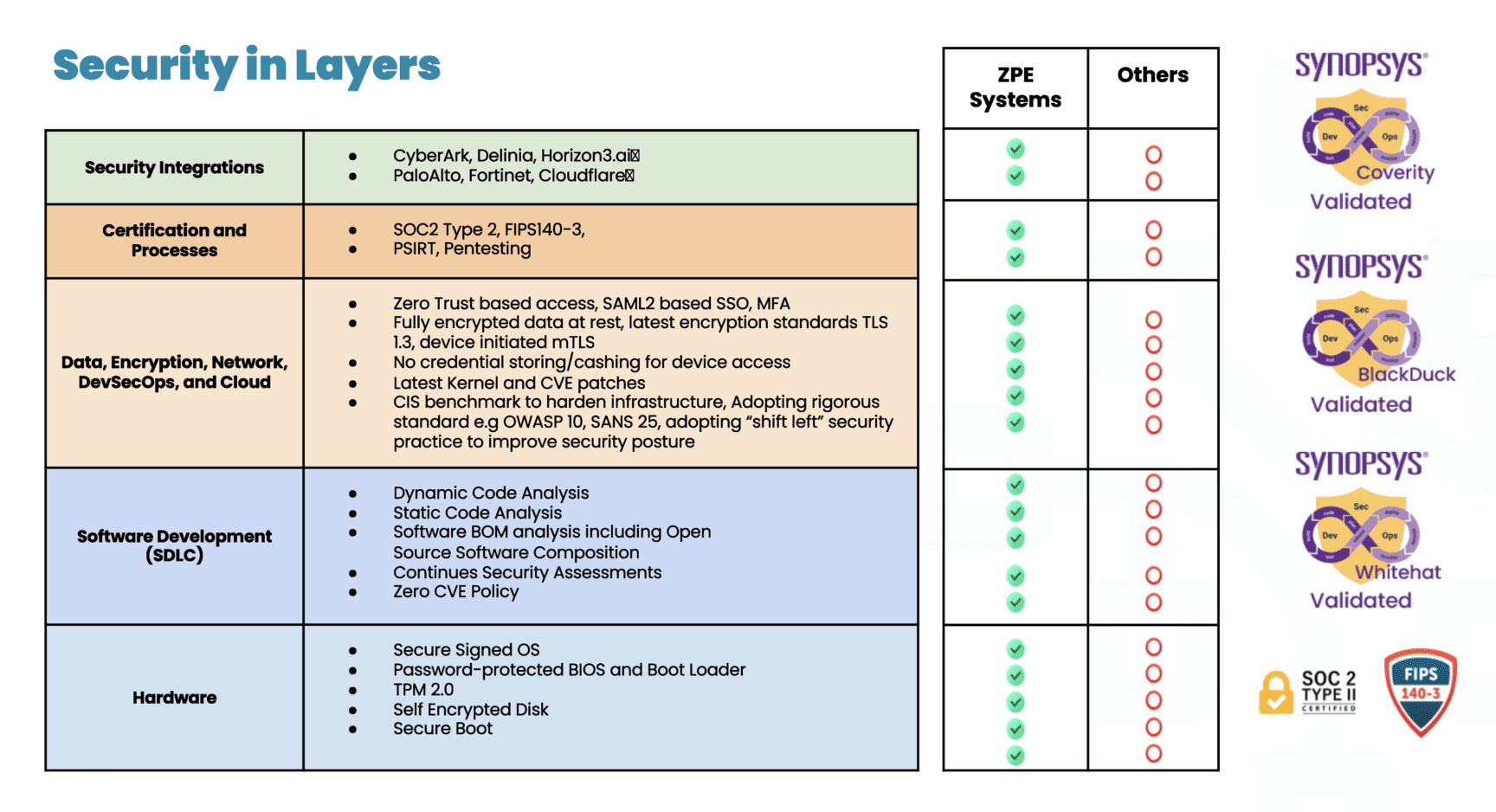
Security in Layers

ZPE Systems’ Nodegrid is the industry’s most secure out-of-band management solution. Not only do we carry FIPS 140-3, SOC 2 Type 2, and ISO27001 certifications, but we also feature a Synopsys-validated codebase and dozens of security features across the hardware, software, and cloud layers. These are all part of a multi-layered, secure-by-design approach that ensures the strongest physical and cyber safeguards.

Download our pdf to explore more of our security assurance.

See FIPS-Certified Out-of-Band in Action

Our engineers are ready to walk you through our industry-leading out-of-band management. Use the button below to set up a 15-minute demo and explore FIPS 140-3 security features first-hand.

Edge Computing Platforms: Insights from Gartner’s 2024 Market Guide

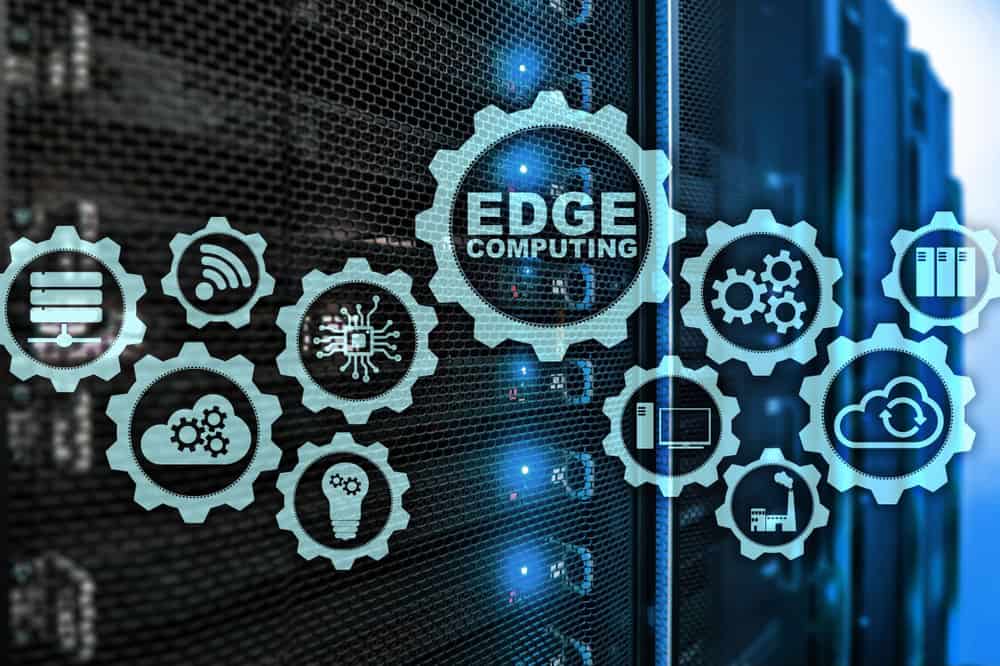
Interlocking cogwheels containing icons of various edge computing examples are displayed in front of racks of servers

Edge computing allows organizations to process data close to where it’s generated, such as in retail stores, industrial sites, and smart cities, with the goal of improving operational efficiency and reducing latency. However, edge computing requires a platform that can support the necessary software, management, and networking infrastructure. Let’s explore the 2024 Gartner Market Guide for Edge Computing, which highlights the drivers of edge computing and offers guidance for organizations considering edge strategies.

What is an Edge Computing Platform (ECP)?

Edge computing moves data processing close to where it’s generated. For bank branches, manufacturing plants, hospitals, and others, edge computing delivers benefits like reduced latency, faster response times, and lower bandwidth costs. An Edge Computing Platform (ECP) provides the foundation of infrastructure, management, and cloud integration that enable edge computing. The goal of having an ECP is to allow many edge locations to be efficiently operated and scaled with minimal, if any, human touch or physical infrastructure changes.

Before we describe ECPs in detail, it’s important to first understand why edge computing is becoming increasingly critical to IT and what challenges arise as a result.

What’s Driving Edge Computing, and What Are the Challenges?

Here are the five drivers of edge computing described in Gartner’s report, along with the challenges that arise from each:

1. Edge Diversity

Every industry has its unique edge computing requirements. For example, manufacturing often needs low-latency processing to ensure real-time control over production, while retail might focus on real-time data insights to deliver hyper-personalized customer experiences.

Challenge: Edge computing solutions are usually deployed to address an immediate need, without taking into account the potential for future changes. This makes it difficult to adapt to diverse and evolving use cases.

2. Ongoing Digital Transformation

Gartner predicts that by 2029, 30% of enterprises will rely on edge computing. Digital transformation is catalyzing its adoption, while use cases will continue to evolve based on emerging technologies and business strategies.

Challenge: This rapid transformation means environments will continue to become more complex as edge computing evolves. This complexity makes it difficult to integrate, manage, and secure the various solutions required for edge computing.

3. Data Growth

The amount of data generated at the edge is increasing exponentially due to digitalization. Initially, this data was often underutilized (referred to as the “dark edge”), but businesses are now shifting towards a more connected and intelligent edge, where data is processed and acted upon in real time.

Challenge: Enormous volumes of data make it difficult to efficiently manage data flows and support real-time processing without overwhelming the network or infrastructure.

4. Business-Led Requirements

Automation, predictive maintenance, and hyper-personalized experiences are key business drivers pushing the adoption of edge solutions across industries.

Challenge: Meeting business requirements poses challenges in terms of ensuring scalability, interoperability, and adaptability.

5. Technology Focus

Emerging technologies such as AI/ML are increasingly deployed at the edge for low-latency processing, which is particularly useful in manufacturing, defense, and other sectors that require real-time analytics and autonomous systems.

Challenge: AI and ML make it difficult for organizations to determine how to strike a balance between computing power and infrastructure costs, without sacrificing security.

What Features Do Edge Computing Platforms Need to Have?

To address these challenges, here’s a brief look at three core features that ECPs need to have according to Gartner’s Market Guide:

  1. Edge Software Infrastructure: Support for edge-native workloads and infrastructure, including containers and VMs. The platform must be secure by design.
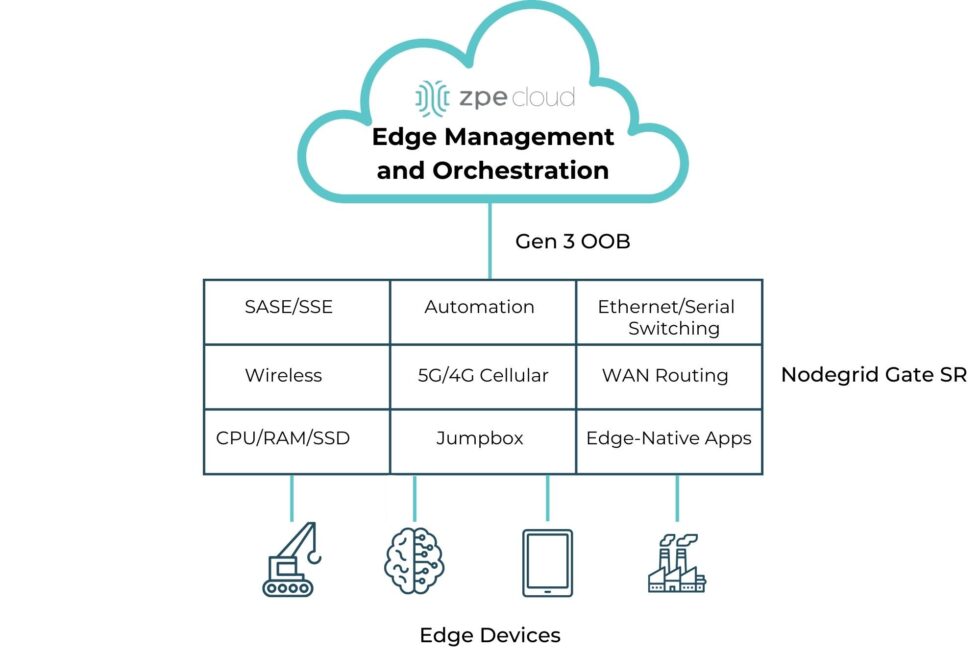
  2. Edge Management and Orchestration: Centralized management for the full software stack, including orchestration for app onboarding, fleet deployments, data storage, and regular updates/rollbacks.
  3. Cloud Integration and Networking: Seamless connection between edge and cloud to ensure smooth data flow and scalability, with support for upstream and downstream networking.

A simple diagram showing the computing and networking capabilities that can be delivered via Edge Management and Orchestration.

Image: A simple diagram showing the computing and networking capabilities that can be delivered via Edge Management and Orchestration.

  1.  

How ZPE Systems’ Nodegrid Platform Addresses Edge Computing Challenges

ZPE Systems’ Nodegrid is a Secure Service Delivery Platform that meets these needs. Nodegrid covers all three feature categories outlined in Gartner’s report, allowing organizations to host and manage edge computing via one platform. Not only is Nodegrid the industry’s most secure management infrastructure, but it also features a vendor-neutral OS, hypervisor, and multi-core Intel CPU to support necessary containers, VMs, and workloads at the edge. Nodegrid follows isolated management best practices that enable end-to-end orchestration and safe updates/rollbacks of global device fleets. Nodegrid integrates with all major cloud providers, and also features a variety of uplink types, including 5G, Starlink, and fiber, to address use cases ranging from setting up out-of-band access, to architecting Passive Optical Networking.

Here’s how Nodegrid addresses the five edge computing challenges:

1. Edge Diversity: Adapting to Industry-Specific Needs

Nodegrid is built to handle diverse requirements, with a flexible architecture that supports containerized applications and virtual machines. This architecture enables organizations to tailor the platform to their edge computing needs, whether for handling automated workflows in a factory or data-driven customer experiences in retail.

2. Ongoing Digital Transformation: Supporting Continuous Growth

Nodegrid supports ongoing digital transformation by providing zero-touch orchestration and management, allowing for remote deployment and centralized control of edge devices. This enables teams to perform initial setup of all infrastructure and services required for their edge computing use cases. Nodegrid’s remote access and automation provide a secure platform for keeping infrastructure up-to-date and optimized without the need for on-site staff. This helps organizations move much of their focus away from operations (“keeping the lights on”), and instead gives them the agility to scale their edge infrastructure to meet their business goals.

3. Data Growth: Enabling Real-Time Data Processing

Nodegrid addresses the challenge of exponential data growth by providing local processing capabilities, enabling edge devices to analyze and act on data without relying on the cloud. This not only reduces latency but also enhances decision-making in time-sensitive environments. For instance, Nodegrid can handle the high volumes of data generated by sensors and machines in a manufacturing plant, providing instant feedback for closed-loop automation and improving operational efficiency.

4. Business-Led Requirements: Tailored Solutions for Industry Demands

Nodegrid’s hardware and software are designed to be adaptable, allowing businesses to scale across different industries and use cases. In manufacturing, Nodegrid supports automated workflows and predictive maintenance, ensuring equipment operates efficiently. In retail, it powers hyperpersonalization, enabling businesses to offer tailored customer experiences through edge-driven insights. The vendor-neutral Nodegrid OS integrates with existing and new infrastructure, and the Net SR is a modular appliance that allows for hot-swapping of serial, Ethernet, computing, storage, and other capabilities. Organizations using Nodegrid can adapt to evolving use cases without having to do any heavy lifting of their infrastructure.

5. Technology Focus: Supporting Advanced AI/ML Applications

Emerging technologies such as AI/ML require robust edge platforms that can handle complex workloads with low-latency processing. Nodegrid excels in environments where real-time analytics and autonomous systems are crucial, offering high-performance infrastructure designed to support these advanced use cases. Whether processing data for AI-driven decision-making in defense or enabling real-time analytics in industrial environments, Nodegrid provides the computing power and scalability needed for AI/ML models to operate efficiently at the edge.

Read Gartner’s Market Guide for Edge Computing Platforms

As businesses continue to deploy edge computing solutions to manage increasing data, reduce latency, and drive innovation, selecting the right platform becomes critical. The 2024 Gartner Market Guide for Edge Computing Platforms provides valuable insights into the trends and challenges of edge deployments, emphasizing the need for scalability, zero-touch management, and support for evolving workloads.

Click below to download the report.

Get a Demo of Nodegrid’s Secure Service Delivery

Our engineers are ready to walk you through the software infrastructure, edge management and orchestration, and cloud integration capabilities of Nodegrid. Use the form to set up a call and get a hands-on demo of this Secure Service Delivery Platform.

PDU Remote Management

PDU Remote Management

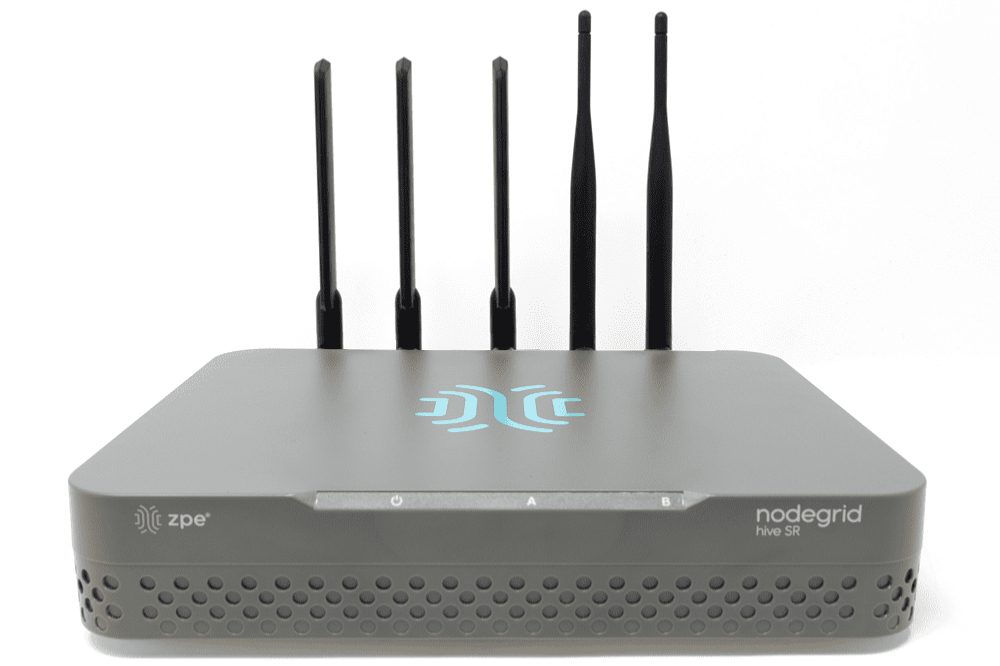
The Hive SR PDU remote management solution from ZPE Systems.

PDUs (power distribution units) and busways are critical network infrastructure devices that control and optimize how power flows to equipment like servers, routers, firewalls, and switches. They’re difficult to manage remotely, so configuring and updating new devices or fixing problems typically requires tedious, on-site work. This difficulty is magnified in complex, distributed networks with hundreds of individual power devices that must be managed one at a time. What’s needed is a PDU remote management solution that unifies control over distributed devices. It should also streamline infrastructure management with an open architecture that supports third-party power software and automation.

The problem: PDU management is cumbersome for large, distributed networks

PDUs and busways are deployed across remote and distributed locations beyond the central data center, including edge computing sites, automated manufacturing plants, and colocations. They typically aren’t network-connected and do not come with up-to-date firmware at deployment time, requiring on-site technicians for maintenance. Upgrading and managing thousands of PDUs and busways requires hundreds of work hours from on-site IT teams who must manually connect to each unit.

The current solution: PDU remote management with jump boxes or serial consoles

Since most PDUs and busways can’t connect to the network, the only way to remotely manage them is to physically connect them via serial (a.k.a., RS-232) cable to a device that can be remotely accessed, such as an Intel NUC jump box or a serial console.

Unfortunately, jump boxes usually aren’t set up to manage more than one serial connection at a time, so they only solve the remote access problem without providing any centralized management of multiple PDUs or multiple sites. Jump boxes are often deployed without antivirus or other security software installed and with insecure, unpatched operating systems containing potential vulnerabilities, leaving branch networks exposed.

On the other hand, serial consoles can manage multiple serial devices at once and provide remote access, but they often don’t integrate with PDU/busway software and only support a few chosen vendors, which limits their control capabilities and may prevent remote firmware updates. They’re also usually single-purpose devices that take up valuable rack space in remote sites with limited real estate and don’t interoperate with third-party software for automation, monitoring, and security.

The Hive SR + ZPE Cloud: A next-gen PDU remote management solution

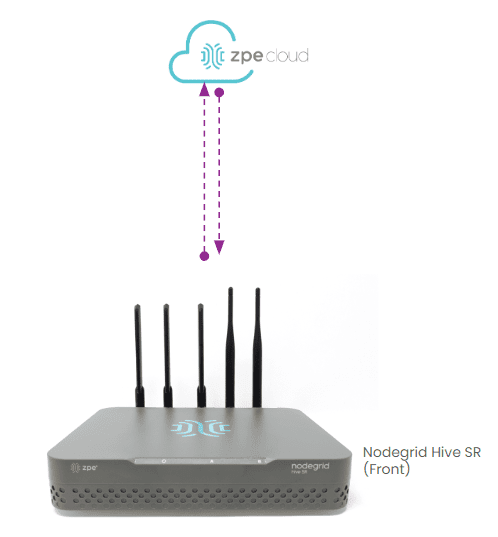
The ZPE Cloud and Nodegrid Hive SR solutions for PDU remote management.
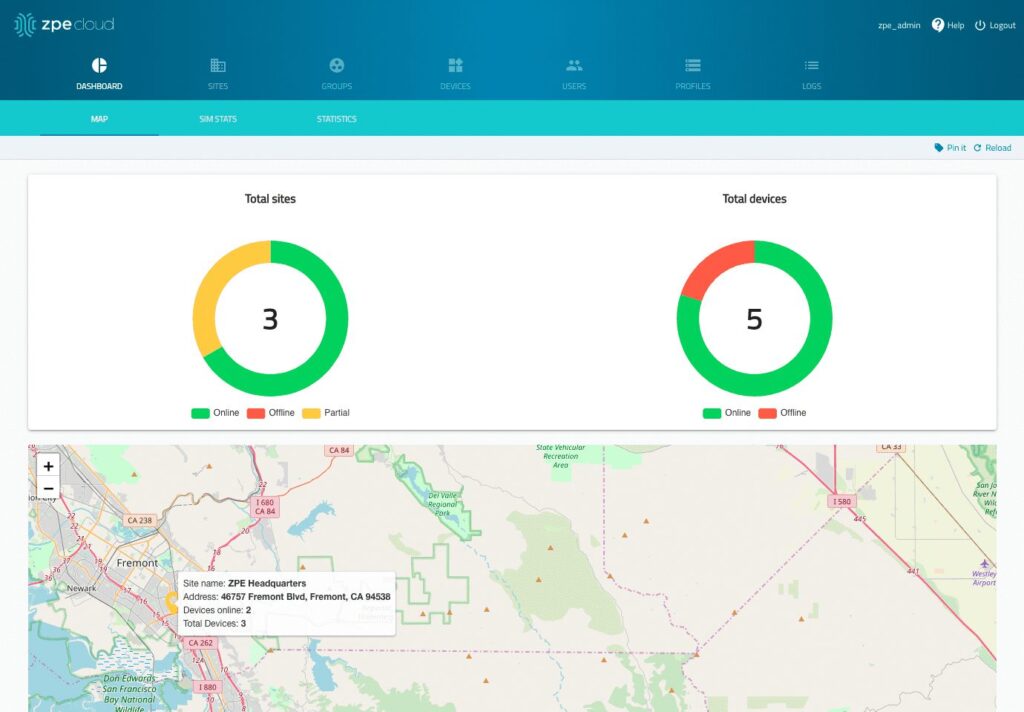
The Hive SR is an integrated branch services router from the Nodegrid family of vendor-neutral infrastructure management solutions offered by ZPE Systems. The Hive automatically discovers power devices and provides secure remote access, eliminating the need to manage PDUs and busways on-site. The ZPE Cloud management platform gives IT teams centralized control over power devices and other infrastructure at all distributed locations so they can update or roll-back firmware, configure and power-cycle equipment, and see monitoring alerts.

The ZPE Cloud PDU remote management solution from ZPE Systems.

In addition to integrated branch networking capabilities like gateway routing, switching, firewall, Wi-Fi access point, 5G/4G cellular WAN failover, and centralized infrastructure control, the Hive SR and ZPE Cloud also deliver vendor-neutral out-of-band (OOB) management. ZPE’s Gen 3 OOB solution creates an isolated management network that doesn’t rely on production resources and, as such, remains remotely accessible during major outages, ransomware infections, and other adverse events. This gives IT teams a lifeline to perform remote recovery actions, including rolling-back PDU firmware updates, power-cycling hung devices, and rebuilding infected systems, without the time and expense of an on-site visit.

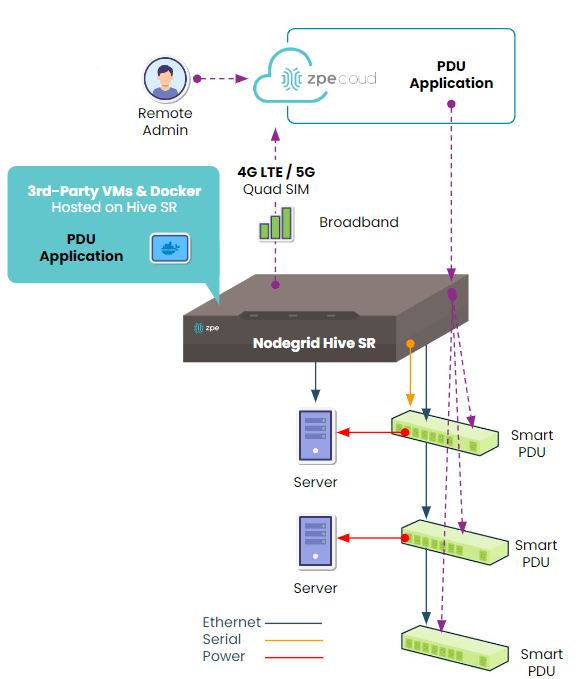
A diagram showing how the Nodegrid Hive SR can be deployed for PDU remote management.

The Hive and ZPE Cloud have open architectures that can host or integrate other vendors’ software for PDU/busway management, NetOps automation, zero-trust and SASE security, and more. Administrators get a single, unified, cloud-based platform to orchestrate both automated and manual workflows for PDUs, busways, and any other Nodegrid-connected infrastructure at all distributed business sites. Plus, all ZPE solutions are frequently patched and protected by industry-leading security features to defend your critical branch infrastructure.


Download our Automated PDU Provisioning and Configuration solution guide to learn more about vendor-neutral PDU remote management with Nodegrid devices like the Hive SR.
Download

Download our Centralized IT Infrastructure Management and Orchestration solution guide to learn how ZPE Cloud can improve your operational efficiency and resilience.
Download