Providing Out-of-Band Connectivity to Mission-Critical IT Resources

Network Automation Tools To Offset the Tech Talent Shortage

network automation tools
As enterprise networks grow more complex, there’s a rising need for highly-specialized engineers to implement and maintain these complicated architectures. However, due to the Covid-19 pandemic, a global recession, and other world events beyond an organization’s control, it can be very difficult to recruit and retain these specialists. In fact, many companies are currently relying on smaller IT teams than usual to manage their vital network infrastructure. According to Gartner research, the tech talent shortage is one of the biggest barriers to the adoption of emerging technology like network automation.

However, network automation tools can actually help understaffed organizations ensure the continued availability and performance of enterprise networks by streamlining workflows and reducing manual intervention. In this blog, we’ll discuss how four different types of network automation tools can be used to solve major problems caused by the tech talent shortage.

Problem Solution
You lack the staff required to efficiently deploy, monitor, and manage network configurations. Automated network configuration management solutions like SolarWinds Network Configuration Manager (NCM) and Micro Focus Network Automation Software.
You need to extend DevOps automation to networking without purchasing additional solutions or hiring network automation experts. DevOps configuration management solutions that can be used for server and network automation like RedHat Ansible and Puppet.
You want to improve network reliability and performance while reducing management complexity. Software-defined networking (SDN) and software-defined wide area networking (SD-WAN) solutions like Palo Alto Prisma and Cisco Meraki.
You lack full-coverage network security, so you’re unsure where your vulnerabilities are or how efficiently you can respond to incidents. Network security automation solutions like Palo Alto’s Next-Generation Firewall (NGFW) and Datadog AIOps security and monitoring.


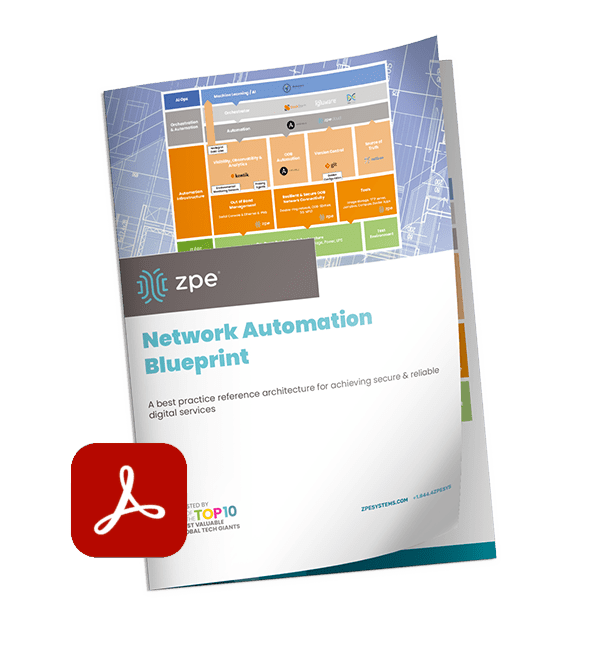
To learn more about using automation technology to ensure network resilience, click here to download the Network Automation Blueprint from ZPE Systems.


Network automation tools to offset the tech talent shortage

The following categories of network automation tools are designed to simplify network management workflows to ensure optimal performance and 24/7 availability.

Automated network configuration management

Network configuration management refers to the ongoing process of creating, deploying, and maintaining configurations for network devices and logic. Some of the tasks involved in network configuration management include device discovery, provisioning, and software and firmware updates. In addition, network configurations are monitored to ensure they don’t drift away from documented standards (configuration shift), and if needed, unauthorized changes are rolled back. This reduces the risk that an undocumented configuration tweak will introduce an unnoticed security vulnerability (such as the recent Fortinet authentication bypass exploit) and ensures consistent quality across the entire network architecture.

However, manual network configuration management is complicated and time-consuming, especially when so many network operations teams are overworked and understaffed. An automated network configuration management solution handles many of these tasks without the need for human intervention. Admins can create network configuration policies and playbooks which are used to automatically deploy new devices and update network dependencies, saving time and reducing human error. In addition, automated configuration management uses these policies to continuously monitor for and correct configuration drift. In the case of the Fortinet CVE, for example, automatic configuration management could have helped teams instantly roll back to the last known good config to close the vulnerability.

Examples of network automation tools for network configuration management include SolarWinds Network Configuration Manager and Micro Focus Network Automation.

DevOps IaC configuration management

Many organizations have adopted the DevOps methodology, which seeks to dissolve the barriers between the software development and IT operations teams to improve efficiency. On the Ops side, this often involves a practice called IaC, or Infrastructure as Code. IaC uses software code and machine-readable definition files to automatically provision servers and manage configurations. IaC enables Ops teams to spin up resources at the velocity required for fast-paced DevOps software projects. It also means that infrastructure configuration code can be stored, managed, and deployed from the same platform as software code, facilitating easy collaboration between developers and sysadmins.

With the recession forcing many IT teams to downsize, organizations are looking for ways to extend the efficiency provided by DevOps automation tools to the networking side of the house without purchasing additional solutions. Plus, many network admins lack the expertise required to operate network automation solutions, and the tech talent shortage makes recruiting such specialized engineers difficult. Luckily, some IaC configuration management tools like RedHat Ansible and Puppet can also be used for network configurations, which helps teams automate without any special programming skills.

That also means admins can deploy, monitor, and manage configurations for network devices and systems across the entire architecture from a single platform, saving money and reducing operational complexity. This convergence of DevOps and network management is known as NetDevOps or NetOps, and it’s empowering organizations to improve efficiency even during the recession and talent shortage.

Software-defined networking and SD-WAN

Enterprise networks are typically highly distributed and very complex. An organization could have 500 branch offices around the world, each of which uses slightly different networking hardware and software solutions. Each of these vendor solutions might have its own management platform for admins to configure, manage, and continuously monitor. Things grow more challenging when an organization uses a hybrid cloud infrastructure, which requires WAN (wide area networking) orchestration across multiple public and private clouds. This complexity makes it challenging for overworked network administrators to maintain optimal performance and 24/7 availability.

Software-defined networking (SDN) and software-defined wide area networking (SD-WAN) help to reduce the complexity of enterprise networks by abstracting network configurations and workflows as software code that’s decoupled from the underlying hardware. Codifying network configurations makes it easier to use technology like automated configuration management, which reduces the burden on overworked admins and reduces human error. SDN and SD-WAN also facilitate the use of centralized network orchestration platforms, which give admins a single pane of glass from which to control the entire network architecture.

This holistic coverage makes it possible for small teams to efficiently monitor and manage large, complex networks, reducing the risk of fatigue, human error, or negligence affecting performance. Plus, SDN and SD-WAN solutions employ automation to continuously monitor and adjust routing configurations as needed to ensure optimal performance. That means these solutions are often able to detect and remediate issues with latency and site availability much faster than a human admin could, ensuring optimal performance and reliability.

Examples of SDN and SD-WAN solutions include Cisco Meraki SDN and Palo Alto Prisma SD-WAN.

Network security automation

With the quantity, sophistication, and cost of cybersecurity attacks rising every year, network security is more important than ever. According to the Sophos State of Ransomware 2022 survey, 66% of organizations were hit by ransomware, a massive increase from 2020 in which only 37% of organizations were attacked.

However, the tech talent shortage and ongoing recession have left many organizations with gaps that increase both the risk that a breach will occur and the time it will take to recover. For example, IBM estimated in 2021 that unpatched vulnerabilities accounted for at least one-third of all data breaches. However, staying on top of patch management for large, diverse, and distributed network infrastructures is difficult when teams are overworked and understaffed.

Plus, when networking and security teams are spread so thin, it can take them much longer to detect a breach that has already occurred, even if the hacker is actively exfiltrating data or changing system configurations. Remediation is also slowed down by the need to manually investigate logs, isolate affected systems, and implement fixes.

Network security automation can help bridge these gaps by reducing the need for human analysts to perform the more tedious and repetitive – but highly vital – tasks involved in ongoing cybersecurity management. Automated security solutions use technology like AIOps and machine learning to manage software and firmware updates, analyze network traffic for threats, and even perform remediation steps like quarantining infected systems and blocking compromised accounts.

Popular examples of network security automation tools include Palo Alto Network’s Next Generation Firewall (NGFW) and Datadog AIOps Security and Monitoring.

Using a vendor-neutral platform to deploy network automation tools

The goal of automation is to make it easier for network admins to maintain and optimize the enterprise network. However, if admins need to learn, configure, deploy, and manage a bunch of additional automation solutions, you could end up increasing the complexity of their jobs rather than reducing it.

The Nodegrid platform can help by directly hosting all of the network automation tools listed above, reducing the need for additional hardware to manage. Deploying Nodegrid boxes in all your data centers and remote sites gives you the ability to extend automation to every corner of your network and manage it all from behind a single pane of glass. Hosting your network automation on a vendor-neutral platform like Nodegrid gives your team an easy way to orchestrate automated workflows across your entire enterprise architecture.

Network automation tools help to bridge the gaps caused by the tech talent shortage, ensuring the reliability and resilience of enterprise networks. To get step-by-step instructions for how to implement the network automation solutions mentioned above, click here to download the Network Automation Blueprint from ZPE Systems.

Ready to learn more?

To learn more about deploying network automation tools with Nodegrid, contact ZPE Systems today.

Contact Us

Network Engineers: 5 Must-Have Tools During a Slow Economy

Network Engineers: 5 Must-Have Tools During a Slow Economy

Network engineers need powerful tools to keep digital services online and customers happy. This is especially true during economic downturn, when organizations must freeze hiring and put more strain on existing staff. Revenue relies on network availability, and with experts predicting a recession this winter, significant operational challenges are inevitable for most organizations.

The burden of overcoming these challenges falls on network engineers. Success means maintaining reliable services and reaping any professional benefits (salary increases, promotions, etc.). Failure, on the other hand, means the very realistic possibility of major business losses and job cuts, including yours.

In order to make sure you don’t fall into the latter scenario, here are five must-have tools and techniques to help network engineers overcome these challenges.

Tool 1. OOBI-LAN™

Out-of-band (OOB) management is an essential part of a network engineer’s toolkit. At the conceptual level, out-of-band is meant to provide management access to production equipment, even if the production equipment is offline.

One major problem is that many organizations invest a lot of time and money into their production infrastructure, but not into any dedicated OOB infrastructure. In other words, they deploy OOB solutions that rely in part on their production equipment, such as OOB VLANs connected to in-band switches. All it takes is a mistake, misconfiguration, or attack to bring down the production and management networks, leaving network engineers to rebuild the entire system from scratch while their services remain offline to customers. This is simply not acceptable in a slow economy, where the business’ resources and revenue are already too thin.

From the pandemic lockdowns, organizations have learned that they need a way to more quickly recover their network locations. According to the Uptime Institute’s 2022 Outage Analysis, outages lasting longer than 24 hours increased to nearly 30% in 2021. This has led many to build dedicated OOB infrastructure for the LAN (OOBI-LAN). They deploy a serial console locally to establish connectivity to the management ports of their sensitive equipment. Network engineers must use this serial console to access their production infrastructure. This serial console minimizes the attack surface since it’s the only device connected to the Internet, and allows network engineers to restore services even if production equipment is down.

Tool 2. OOBI-WAN™

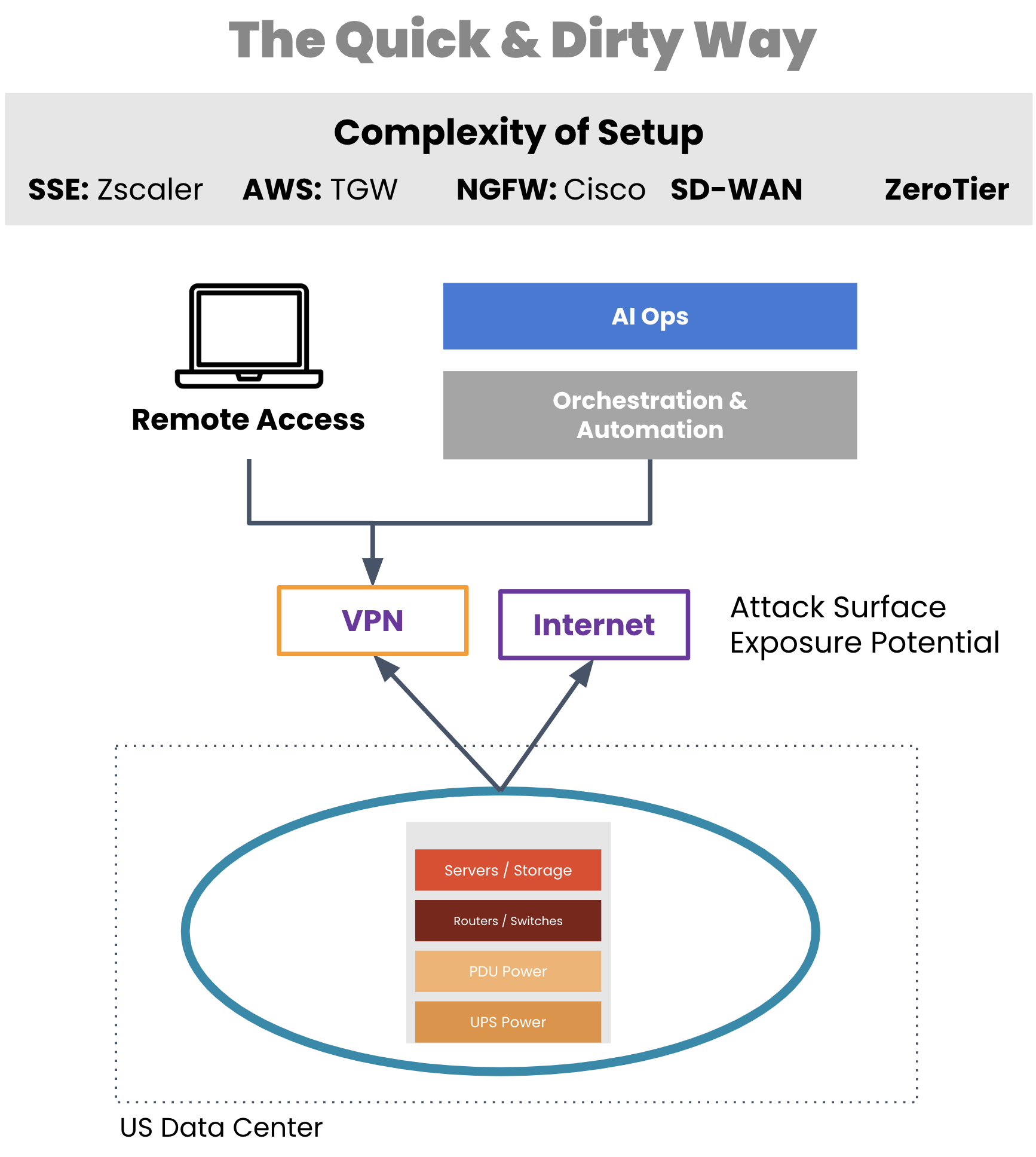
A critical tool for network engineers is out-of-band that enables remote WAN management. But typically, organizations employ a WAN management strategy that also relies on their production infrastructure, such as for creating VPN tunnels for management traffic. If a VPN tunnel becomes broken or the production gear fails, network engineers are suddenly left without remote access to their equipment.

Aside from a lack of availability, traditional OOB access comes with real security risks. Exposing LTE modems to the Internet, leveraging untrusted third-party VPN services, using OOB hardware that’s old and unpatched, and worse — exposing the management port of devices to public Internet. All of these are attack surfaces, any of which can give access to your infrastructure and be used as the pivot point to get to the rest of the infrastructure.

traditional WAN management approach

Image: Management access depends on production equipment to establish VPN tunnels. 

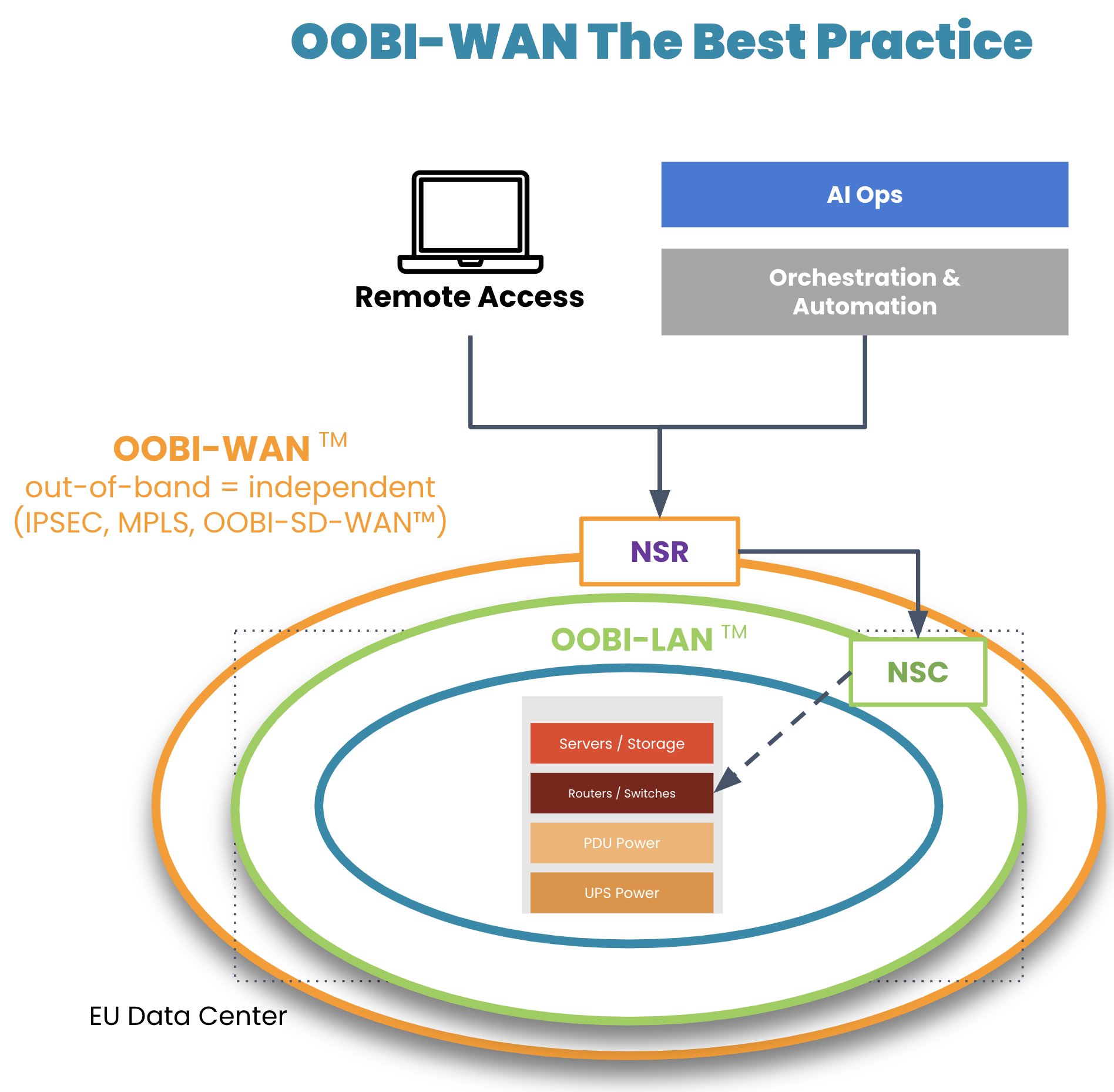
On top of their OOBI-LAN, organizations have built dedicated OOB infrastructure for the WAN (OOBI-WAN – there’s a Star Wars reference somewhere in there) for added resilience against these scenarios.

OOBI-WAN is the WAN best practice

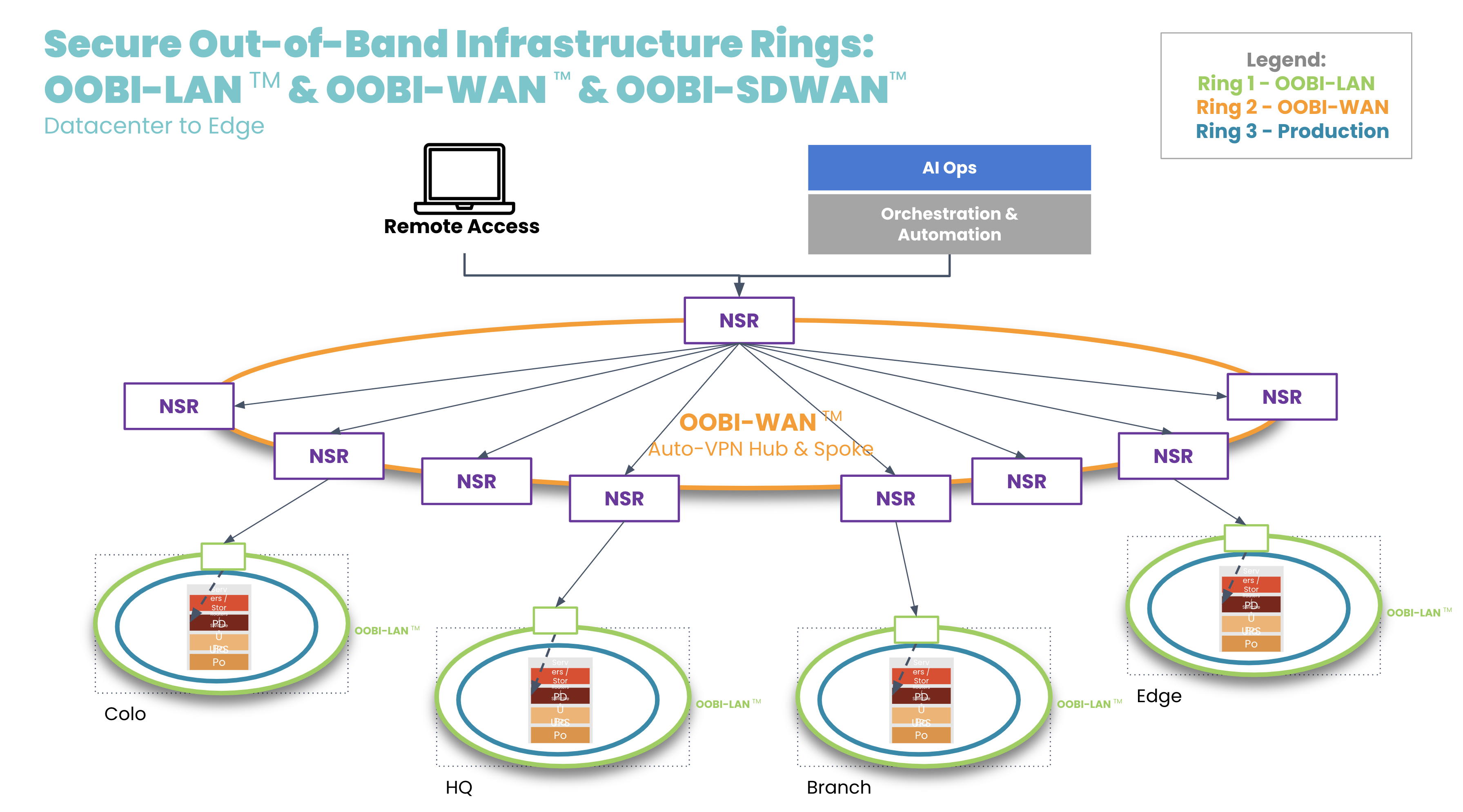
Image: OOBI-WAN and OOBI-LAN create a fully separate out-of-band infrastructure that can be used to completely rebuild production infrastructure. 

OOBI-WAN uses MPLS, IPsec, or SD-WAN links to create an overlay network dedicated specifically to management traffic. This gives network engineers private access to their infrastructure for management and troubleshooting, essentially creating a completely separate OOB network that does not rely on any part of the production network. OOBI-WAN lets network engineers use their WAN connection to remotely access their OOBI-LAN and fully rebuild their distributed networks, regardless of the state of their production infrastructure.  

A key part of OOBI-WAN is the inherent security that is built at all layers. To build secure OOBI-WAN, the best practice is to use OOBI-SDWAN™ which automates the building of VPN tunnels between all the nodes that need to be managed. OOBI-SDWAN provides the expected auto-VPN feature which means VPN encryption keys remain secure, as they don’t need to be copied/pasted/typed into multiple third-party devices. OOBI-SDWAN also ensures that an SLA is provided on the OOBI network along with observability dashboards of connectivity and the access state of the network. The combination of OOBI-SDWAN with a zero trust security framework is the best way to gain reliability in a way that reduces your risk.

OOBI-WAN hub and spoke

Tool 3. Fully independent automation infrastructure

Another tool that network engineers are becoming familiar with is automation. Network automation codifies repetitive tasks to reduce workloads for configuration management, compliance, and troubleshooting. During a slow economy, being able to scale an IT team’s efforts is especially valuable to business operations and end customers.

There is one major concern, however: having automation that runs loose and begins destroying the network, much like a bull in a China shop. Network engineers typically must learn new automation tools and programming languages, which requires trial and error. And because there is a lack of a best practice reference architecture, teams don’t know any better than to automate directly on the production network. This causes anxiety, as one mistake could bring down the network, cause catastrophic losses, and leave network engineers without an efficient way to recover.

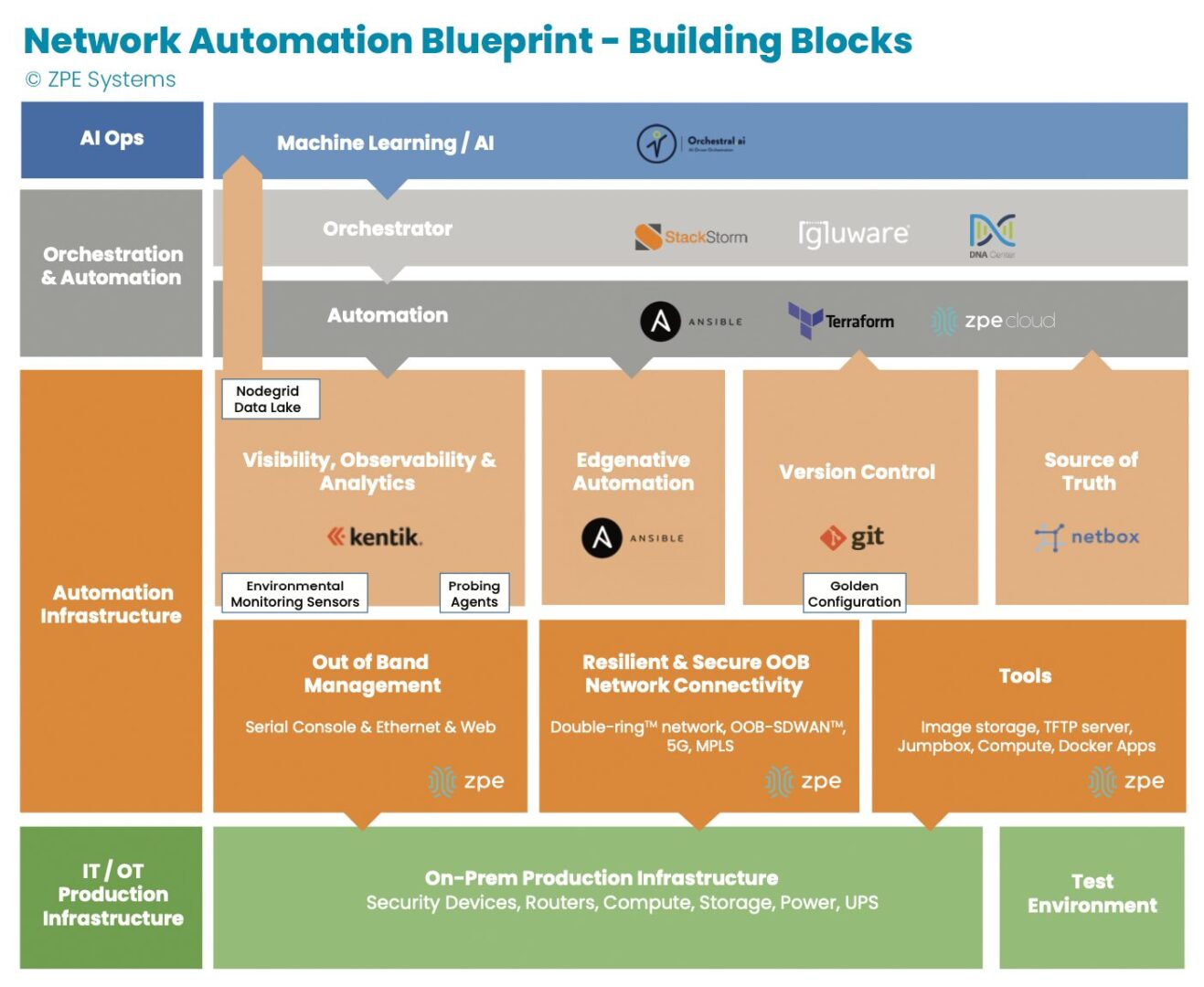
Image: The orange section describes dedicated automation infrastructure used for safely implementing automation.

In recent years, teams have been deploying automation on dedicated infrastructure like their OOB network. This automation infrastructure sits between the production infrastructure and the orchestration infrastructure, and serves as a safe way to build an automation pipeline. Open, Linux-based appliances like the Nodegrid Net SR combine a variety of functions and can host automation tools, like those for observability and analytics, version control, and source of truth. This independent automation infrastructure allows network engineers to ensure the integrity of configuration changes, software updates, and remediation protocols in an out-of-band manner, rather than testing directly on the production network. They can scale their capabilities, and in case of errors, roll back to a golden configuration that keeps services online.

Tool 4. Remote access to local jump box

Network engineers have another tool at their disposal: the jump box (a.k.a. jump server, jump host). A jump box hosts tools for maintaining operations, and these include file servers, image storage, configuration management tools, and troubleshooting commands. The jump box is a valuable asset for normal operations and for restoring services, such as when a device fails and needs its image rebuilt.

The issue with jump boxes is that they are typically a separate device that requires power, cooling, rack space, and maintenance. Some jump boxes also require on-site technicians to physically connect to the equipment needing repair.

Many organizations have adapted by upgrading their OOB infrastructure with appliances that can run full virtual machines (VMs). These can run all the tools mentioned above as well as with Docker containers, while consolidating power consumption, cooling resources, and rack space. The OOB appliance can double as a jump box. Combined with OOBI-LAN and OOBI-WAN, network engineers get remote access to re-image a device, diagnose DNS/routing issues, and perform any other necessary tasks. Key point is that discrete jump boxes – Like the Intel NUC — to be converted to virtual jump boxes running on a secure OOB platform like the Nodegrid Service routers.

Tool 5. Smart hands

A final way that network engineers get help through a slow economy is by outsourcing to so-called ‘smart hands.’ Employing smart hands means involving a third-party expert who can take on some of the IT workload. It’s a viable strategy, especially for teams feeling crushed by corporate belt tightening and the resulting mountain of tasks.

Companies who take this approach must be aware that the skills of smart hands varies greatly, as does the cost. This means it’s essential to strike a balance between which tasks to outsource, and which tasks to keep in house. For example, many organizations use smart hands for simple jobs such as replacing hardware and installing equipment at new sites. For more specialized jobs that require deeper knowledge of the environment, such as fixing a misconfigured IP address or route, teams use in-house personnel. This balance helps organizations get the support they need to keep operations running.

Get a cheat sheet to implement these tools fast

Some companies thrive during economic downturn, because they’ve intelligently placed these tools within their network architecture. Over the past decade, we’ve worked with these companies — including the largest tech giants — to describe in painstaking detail how they set up their infrastructure. We just released all 40+ pages of this validated reference architecture, complete with implementation diagrams and examples.

It’s called the network automation blueprint and it combines all of these tools. Network engineers can confidently answer questions like:

  • How do we meet SLAs with a smaller workforce?
  • How can we keep sites operating without physical access to equipment?
  • How can we perform weekly updates/patching without breaking things?

The blueprint is your cheat sheet to implementing a more resilient network, and fast. Click the button below to download your copy now.

Upgrade Network Infrastructure With Minimal Business Interruption

upgrade network infrastructure

Outdated network infrastructure poses a significant risk to the security and continuity of business operations. According to NTT’s “2020 Global Network Insights Report,” obsolete devices contain nearly twice as many security vulnerabilities as currently supported solutions. Outdated network hardware is also more likely to fail, and the ability to recover from a failure is severely hampered by a lack of vendor support. However, network upgrades can be highly disruptive, so many organizations delay network upgrades to avoid business interruption. They don’t realize that their outdated devices are like ticking time bombs that could bring down their network at any moment. In this post, we’ll provide advice that helps answer the question: How do I upgrade network infrastructure without disrupting business operations?

Why and when to upgrade network infrastructure

Obsolete network infrastructure no longer receives updates and security patches from the vendor. That means any vulnerabilities that exist on the device will remain open, giving cybercriminals time to find and exploit them. In addition, older network solutions often lack the advanced security features like SSO and MFA, which are required for Zero Trust.

Even supported legacy devices suffer from limitations that can prevent a business from achieving its technological goals. For instance, legacy devices may not support automation, making it difficult to achieve NetDevOps transformation. Plus, as enterprise networks grow more distributed, there’s a need for solutions that support SD-WAN and SD-Branch technology.

Sometimes the solutions themselves aren’t terribly outdated, it’s just that business requirements have changed in such a way that the existing infrastructure can’t support. For example, an organization may migrate some applications and systems to the cloud, so they need networking solutions that support hybrid environments. In addition, the mix of old and new devices and cloud and on-premises resources increases management complexity and prevents teams from effectively leveraging network orchestration.

Obsolete devices, outdated security, limited automation support, and changing business requirements are all important reasons to upgrade network infrastructure. However, these upgrades must be approached with a thoughtful strategy to reduce the impact on the performance and availability of business resources.

How to upgrade network infrastructure with minimal business interruption

Vendor agnostic platforms are the key to smooth network infrastructure upgrades. Vendor agnostic (a.k.a. vendor neutral) network management platforms support integrations with all or most viable and established network solutions, including legacy devices.

Vendor-neutral management devices, such as the Nodegrid Serial Console, support both legacy and modern Cisco pinouts. That means Nodegrid provides a single, unified platform from which to manage all the outdated devices you already have as well as any new solutions you add to your infrastructure. This reduces management complexity for network administrators, giving them more time to focus on optimizing performance and planning future network upgrades.

Additionally, a vendor-neutral network orchestration platform can use that management device to extend modern automation and orchestration to legacy hardware. A truly vendor-agnostic platform, such as Nodegrid Manager (for on-premises and private cloud deployments) or ZPE Cloud (for public cloud and hybrid deployments) can run third-party automation playbooks and custom Python scripts. This gives network administrators the unprecedented ability to implement a fully-automated NetOps environment even while still rolling out infrastructure upgrades.

The final piece of the puzzle is vendor-neutral Zero Touch Provisioning (ZTP). ZTP gives you the ability to deploy new devices efficiently and securely in remote data centers, branch offices, and edge compute sites. ZTP devices are provisioned automatically over the network, reducing the need for onsite deployments or pre-staging. A vendor-neutral ZTP solution like Nodegrid can extend ZTP to other vendors’ devices so you can quickly deploy upgraded infrastructure.

Nodegrid delivers vendor-neutral management, orchestration, and ZTP so you can upgrade network infrastructure with minimal business interruption.

Need Help Upgrading Your Network Infrastructure?

Contact ZPE Systems to learn how to upgrade your network infrastructure with Nodegrid.

Contact Us

How To Keep Colocation Data Center Pricing in Check

Rows of data center racks in a colocation facility take up a lot of space, which contributes to colocation data center pricing.

With inflation and supply chain issues causing hardware prices to surge, and a winter recession looming on the horizon, every organization is looking for ways to cut technology costs. Though colocation hosting is often much less expensive than building and maintaining an on-premises data center, factors like physical space usage, power and bandwidth consumption, and remote support can cause your monthly colo bill to spiral out of control. This blog examines some of the most common reasons for colocation data center pricing increases and offers advice on how to keep these costs in check.

Colocation data center pricing considerations

First, here are four common factors that could cause your colocation data center pricing to increase.

1. Physical space

One of the major elements determining colocation pricing is the amount of physical space being rented. Some facilities charge by the rack unit and others by square footage (i.e., how much floor space is taken up by your racks). Costs for colocation space are typically calculated based on your portion of the facility’s operating expenses, which include things like physical security, building maintenance, and energy for cooling.

2. Power consumption

Power usage also heavily affects colocation data center pricing. While some facilities offer flat-rate power pricing, it’s more common to see pricing based on kilowatt usage. The price of data center power usage depends on many factors, such as electricity costs in the region, how energy-efficient the facility is, and how much energy it takes to cool your equipment.

3. Bandwidth consumption

Bandwidth is another usage-based expense that affects data center pricing. Organizations usually purchase bandwidth from the ISP, not directly from the facility, although some data centers do offer colo packages that also include internet access and bandwidth. That means that bandwidth pricing varies significantly from organization to organization.

4. Remote hands

Though colocation data centers handle many aspects of building and facility maintenance, customers are typically responsible for deploying and maintaining their own equipment. Most organizations do so via remote DCIM (data center infrastructure management) solutions, so they do not need to maintain a physical presence in the colocation facility. However, sometimes hardware failures or other issues make remote troubleshooting impossible, so they need to use on-site managed services, sometimes referred to as “remote hands.” Some colocation facilities include an allotted time for remote hands services in their pricing, but more often this is an added fee that’s paid for as needed.

There are many other factors contributing to the cost of colocation data center hosting—such as the location of the facility, the cost of your hardware, and the uptime promised by the provider. However, these four factors are relatively easy for you to change and control without needing to completely overhaul your infrastructure or move to a different facility.

Four ways to keep colocation data center pricing in check

Now, let’s discuss how to decrease your physical footprint, lower your power and bandwidth consumption, and minimize your reliance on managed support services.

Consolidated devices

Replacing bulky, outdated, single-purpose hardware with consolidated, high-density devices is a great way to reduce your colocation data center footprint without sacrificing functionality or performance. For example, the Nodegrid Serial Console Plus (NSCP) provides out-of-band management, routing, and switching for up to 96 devices in a single, 1U rackmount appliance. The NSCP helps reduce the number of serial consoles, KVM switches, or jump boxes in your colocation data center, allowing you to save money or use the extra space for new equipment.

Another option is the Nodegrid Net Services Router (NSR), a modular appliance that can replace up to six other devices in your rack. The NSR provides routing and switching with network failover and out-of-band management, with expansion modules for Docker & Kubernetes container hosting, Guest OS & VNF hosting, and more. The NSR is an ideal solution for small colocation deployments because it can reduce the number of computing and storage devices in your rack. For example, the NSR can reduce your footprint from 4U to 1U, allowing you to cut costs and reduce the complexity of your remote infrastructure.

Remote DCIM power management

As mentioned above, most organizations use remote DCIM solutions to manage colocation infrastructure. Power management is an important aspect of remote DCIM for keeping colocation data center costs in check. Remote DCIM power management allows you to visualize power consumption, both at the individual device level and at a big-picture level. If you can see where you’re using power inefficiently, you can correct the problem (for instance, by replacing a faulty UPS or simply redistributing the load) before costs spiral out of control.

For power cost savings, you should use remote management DCIM that supports automation, such as Nodegrid Manager. This vendor-neutral platform allows seamless integrations with third-party or self-developed automation tools and scripts. That means you can use Nodegrid to automatically monitor for and correct inefficient power load distribution to ensure consistent usage and prevent overage fees. Plus, Nodegrid supports end-to-end automation for all your network and infrastructure management workflows, helping to reduce the overall manual workload for your administrators.

Software-defined networking

Traditionally, administrators set and monitor bandwidth usage by accessing the CLI (command line interface) or GUI (graphical user interface) on individual, hardware-based network devices like switches and routers. For complex and distributed network architectures using many switches in many locations (including remote colocation facilities), manual bandwidth control is so time-consuming and inefficient that organizations end up with a “set it and forget it” approach. That means bandwidth usage is free to fluctuate as much as it wants within certain thresholds, and organizations just eat the overage costs.

Software-defined networking, or SDN, decouples network routing and management workflows from the underlying hardware. This allows organizations to centrally control and automate their entire network architecture, which includes bandwidth management for remote colocation infrastructure. Centralized SDN management gives administrators a single interface from which to control all the networking devices and workflows, so they don’t need to jump from device to device to monitor and manage bandwidth usage.

The application of SDN technology to WAN management is known as SD-WAN, and when that extends into the remote LAN it’s known as SD-Branch. SDN, SD-WAN, and SD-Branch technology use intelligent routing to ensure efficient bandwidth usage and network load balancing. That means you can keep your colocation data center bandwidth costs in check while significantly reducing the amount of work involved for your network administrators.

Out-of-band management

Out-of-band management, or OOBM, separates your management network from your production network, allowing you to remotely manage, troubleshoot, and orchestrate your colocation data center infrastructure on a dedicated connection. This has numerous benefits, including:

  • Resource-intensive network orchestration workflows won’t affect the bandwidth or performance of the production network.
  • Administrators can still access remote infrastructure even if the primary ISP link goes down.
  • Administrators gain the ability to remotely troubleshoot even when a hardware failure or configuration mistake causes a production network outage.

OOBM can help reduce your reliance on colocation data center managed services because your administrators have an alternative path to critical infrastructure even during an outage. A Gen 3 OOB solution like Nodegrid can further reduce your colocation data center pricing in several ways:

  1. OOB management is built into all Nodegrid devices, so you don’t need to purchase any additional hardware (or rent additional rack space) to enable out-of-band management.
  2. Nodegrid OOB integrates with the vendor-agnostic Nodegrid Manager platform, which means you’ll have reliable 24/7 remote access to monitor and orchestrate power load distribution to ensure cost-efficiency.
  3. Nodegrid OOB devices can directly host your software-defined networking, SD-WAN, and SD-Branch solutions so you don’t need to purchase additional hardware. You can also integrate SDN, SD-WAN, and SD-Branch software with the Nodegrid Manager platform for unified control.

The Nodegrid solution from ZPE Systems can help you keep colocation data center pricing in check through consolidated devices, remote DCIM orchestration, software-defined networking support, and Gen 3 out-of-band management.

Want to find out more about reducing colocation data center pricing with Nodegrid?

Contact ZPE Systems today!

3 Gaps That Will Leave IT Teams Scrambling This Winter

Winter is Looming – Wolf Howling

Today’s IT teams must maintain a growing infrastructure of on-prem and cloud solutions. These range from physical routers, out-of-band devices, and firewalls, to Zero Trust Security solutions, micro-segmentation tools, and network automation integrations. Despite an abundance of physical and virtual solutions meant to help keep digital services online, many organizations face an overwhelming number of tasks just to sustain everyday operations. 

With the rising risk of recession, organizations will be forced to cut back on resources including staff, training, and tools. This will only worsen the existing challenges teams face in their efforts to maintain their distributed infrastructure. 

In this blog, we’ll explore three gaps that will leave IT teams scrambling this winter, and show you several practical approaches to cope during recession. 

Gap 1: Lack of staff

IT teams have been historically understaffed, and most people can remember at least one significant tech worker hiring campaign from the past decade. Today’s CIOs may in fact be facing the biggest talent gap since 2008. For example, in the cybersecurity sector alone, the 2021 (ISC)2 Cybersecurity Workforce Study reported that despite adding 700,000 cybersecurity professionals to the workforce in 2021, there’s still a gap of more than 2.7 million workers globally, 377,000 of which are needed in the United States. 

Trained staff are a must for managing an organization’s distributed sites, especially as team silos disappear and workers are required to have a breadth of skills. Business leaders increasingly need people who are proficient in networking and programming, so they can maintain normal operations while progressing their digital transformation initiatives such as hyperautomation. It’s a challenge that often comes down to hiring new talent or increasing the skills of existing employees, and both of these approaches require plenty of time and money. 

This issue will only worsen with the coming recession as companies begin to tighten their belts and slash budgets. Major brands have already shed thousands of workers this year, leaving IT teams to make due with existing staff numbers or even reduced headcounts. In the simplest terms, the coming recession will leave companies much less willing or able to invest in staff. 

Gap 2: Lack of tools to reduce workloads

Today’s infrastructure incorporates solutions from many different vendors, but the problem is these often come with their own unique tools that are meant to serve only a specific function. Managing SD-WAN, SASE, ZTNA, orchestration, and out-of-band solutions means jumping between disparate tools, many of which lack integration with one another. This complexity leaves operational teams stuck in a reactionary break/fix posture trying to climb mountains of never-ending support tickets. 

To address this challenge, many Big Tech companies empower their IT teams through digital transformation initiatives, such as using automation to achieve a proactive approach. But this requires additional investments in upskilling staff and acquiring adequate automation infrastructure/tools. For many organizations, a lack of money and resources makes this difficult during normal economic conditions, and will only become exacerbated with the coming recession. IT teams will continue scrambling with their inflated workloads.

Gap 3: Lack of trust in automation

Automation can greatly reduce the risk of human error (and subsequent outages) by handling simple workloads, such as device provisioning and firmware updates. However, companies that do have the resources to implement automation also recognize its limitations. Automation solutions that aren’t optimized leave IT teams with mundane tasks like managing, scheduling, and restarting bots. But to even reach this level of automation requires training staff who typically don’t have a background in programming or development. 

These teams will be unfamiliar with NetOps/DevOps concepts. In order to develop essential automation practices, these employees will need to learn through trial and error. This is a problem because most organizations lack the proper automation infrastructure and tools that allow their IT teams to recover from mistakes. Operational teams in charge of keeping infrastructure running often fear automation for this exact reason — if they make one error, there’s the potential that it will bring down the network, lead to unhappy customers, and cost them their job. 


BlueprintPDF

Close these gaps with the Network Automation Blueprint

You can close these gaps for good using out-of-band, jump boxes, and tools you already have. After years of working directly with tech giants, we’ve created a best practice reference architecture any company can use to automate their network. This Network Automation Blueprint has been proven by global enterprises to increase capabilities and reduce workloads through trustworthy automation.

How SASE Technology Defends Your Network Edge

SASE technology can offer you defense for your network edge

Secure Access Service Edge, or SASE, is a cloud-based service that combines software-defined wide area networking (SD-WAN) with critical network security technologies like CASB, ZTNA, SWG, and FWaaS. SASE technology connects remote, branch office, and edge computing resources directly to web and cloud services, reducing the load on the main firewall while extending enterprise security policies and controls to protect this traffic. In this article, we’ll dive into the specific technology that SASE uses to defend your network edge.

How SASE technology defends your network edge

SASE protects network edge traffic by rolling up an entire network security technology stack into a single, cloud-delivered service. The key security components of a SASE solution include CASB, ZTNA, SWG, and FWaaS.

CASB

A cloud access security broker, or CASB, is a software service that sits between your main enterprise network and your cloud-based infrastructure. A CASB allows you to extend your enterprise security policies to the traffic flowing between your WAN and the cloud so you can ensure consistent protection. A CASB is actually a collection of multiple security technologies, such as:

  • User and Entity Behavior Analytics (UEBA) – Monitors the behavior of users and devices on the network to detect suspicious activity and enforce security policies.
  • Cloud application discovery – Identifies all cloud applications and services in use by the organization and analyzes relative risk levels.
  • Data Loss Prevention (DLP) – Applies data governance policies to prevent the exfiltration of sensitive and proprietary information.
  • Adaptive access control – Uses session context (e.g., originating location, time, behavior) to determine whether to grant access.
  • Malware detection – Scans traffic between the enterprise and the cloud to detect and block viruses and other malware.

ZTNA

Zero trust network access, or ZTNA, connects remote users and devices to enterprise network resources, similar to a VPN. Unlike a VPN, however, ZTNA creates a direct connection to the specific resources requested by the user, rather than granting full access to the network. This prevents remote users from seeing or interacting with any network resources outside of the specific service they’ve explicitly authenticated to.

ZTNA follows the zero trust motto of “never trust, always verify.” It uses technologies like context and role-based identity verification and two-factor authentication (2FA) to prevent unauthorized access. And, since users need to re-authenticate to every enterprise resource, ZTNA is able to prevent malicious actors from discovering valuable systems and data or moving laterally on the enterprise network.

SWG

A secure web gateway, or SWG, is a service that sits between your enterprise network and the public internet. All web-destined traffic passes through the SWG, where enterprise web filtering and application control policies are applied. Traditionally, an SWG is a hardware device that sits in the data center, which means all remote, branch, and edge traffic needs to be backhauled through a single appliance. As part of a SASE solution, an SWG sits in the cloud instead, so remote traffic doesn’t need to pass through the data center. This improves overall network performance, reduces or eliminates bottlenecks, and ensures consistent application of acceptable use policies and application security controls.

FWaaS

Firewall-as-a-Service, or FWaaS, delivers next-generation firewall technology as a cloud-based service. That means remote and cloud-destined traffic can bypass the firewall in your data center, reducing bottlenecks and performance issues. At the same time, FWaaS provides the same level of security and protection as an NGFW, including features like URL filtering, intrusion detection and prevention, and deep packet inspection (DPI). FWaaS gives SASE solutions the ability to protect remote, edge, and cloud-destined traffic with the same policies and controls as the main enterprise network to ensure consistent security and optimal performance.

SASE technology uses CASB, ZTNA, SWG, and FWaaS to defend your network edge. However, you still need a way to direct remote, branch office, and edge traffic to your SASE security stack. That’s where SD-WAN technology comes in.

Accessing SASE technology with SD-WAN

While it’s possible to use standard WAN architectures to connect to SASE technology, the most reliable and efficient way to access SASE is with SD-WAN. SD-WAN uses software abstraction to create a virtual overlay management network on top of your WAN hardware. This virtual management network enables the use of automation and orchestration to manage the remote network traffic.

In a SASE deployment, SD-WAN uses intelligent routing to separate all remote traffic that’s destined for the cloud. Instead of backhauling this traffic through the enterprise firewall, SD-WAN routes it through the SASE technology stack, significantly reducing the load on your data center infrastructure. This improves network and application performance for your entire enterprise without sacrificing security.

SD-WAN solutions may sit on top of traditional WAN infrastructure, or they may replace that hardware entirely, using SD-WAN routers provided by the vendor. However, rather than investing in specialized vendor hardware, an even better approach is to use vendor-neutral network management devices that can host or integrate with every piece of your SASE and SD-WAN technology stack.

For example, the Nodegrid line of vendor-neutral serial consoles and network edge routers are the perfect on-ramp for your SASE solution. Nodegrid can directly host or integrate with third-party SD-WAN solutions like Palo Alto Networks’ Prisma SD-WAN, or you can use ZPE Cloud’s SD-WAN app. Nodegrid also supports seamless integrations with your choice of SASE provider, giving you a unified, centralized SD-WAN and SASE orchestration platform.

SASE learning center:

★   Understanding Key SASE Components & Benefits
★   SASE Implementation: A Step-by-Step Guide for Businesses
★   The SASE Model: Key Use Cases & Benefits

Want to find out more about accessing SASE technology with Nodegrid SD-WAN?

Contact ZPE Systems today!