Providing Out-of-Band Connectivity to Mission-Critical IT Resources

Home » Serial Consoles » Page 4

Terminal Server Alternative for Simple Break/Fix Use Cases


 

The Nodegrid Serial Console Core Edition terminal server alternative.

A terminal server is a device that provides consolidated remote management access to routers, switches, and other network infrastructure in data centers. There are numerous reasons to consider replacing an existing terminal server solution. Many of these devices are old and unpatched, leaving them vulnerable to exploits. Older solutions may not integrate well with newer hardware and software or lack the ability to unify management for all deployed terminal servers across a distributed enterprise network, creating a lot of management complexity and potential human error.

On the other hand, some newer terminal server solutions (also known as serial consoles or console servers) include advanced features or beefed-up hardware that increase both costs and complexity. It’s important to find the right balance between security, functionality, and ease-of-use for your particular use case. This guide compares five terminal server alternatives that are optimized for simple break/fix deployments, giving teams reliable remote management access without unnecessary complications.

Key takeaways


Pros

Cons

ZPE Nodegrid NSCP-Core Edition

  • Up to 48 managed serial ports in a 1U appliance
  • Extends OOB management and ZTP to legacy and mixed-vendor infrastructure
  • Analog modem and 5G/4G LTE options available
  • Robust on-board security features like BIOS protection and TPM
  • Integrates with third-party software
  • Supports a wide range of USB environmental monitoring sensors
  • Supports automation only via ZPE Cloud

Opengear CM8100

  • 2U model can manage up to 96 devices 
  • Extensible operating system
  • Automatic port discovery
  • No cellular, Wi-Fi, or analog modem
  • Doesn’t support 2FA or SAML 2.0 security
  • Most automation requires Lighthouse Enterprise software upgrade

WTI DSM Series

  • Can manage up to 50 devices
  • Optional analog modem or 4G cellular
  • Integrates with select third-party vendors
  • OS is not extensible
  • Lacks an embedded firewall
  • No environmental sensor ports

Vertiv Avocent ACS8000

  • Includes 8 managed USB ports for 56 total serial connections
  • 4G LTE WAN, OOB, and failover support
  • Environmental sensor port
  • Doesn’t support any third-party integrations 
  • Lacks advanced authentication features
  • No embedded firewall or VPN

Perle IOLAN SDSC

  • Simple, easy-to-manage solution
  • Includes an analog modem for OOB
  • Robust security features
  • OOB is only available over an analog connection
  • Doesn’t integrate with any third-party software
  • Barebones internal hardware can’t support modern software

Comparing terminal server alternatives for break/fix use cases

Read our in-depth reviews of the best terminal server alternatives below, or click here to compare tech specs.

ZPE Nodegrid NSCP-Core Edition

The Nodegrid Serial Console Core Edition (NSCP-CE) from ZPE Systems provides out-of-band (OOB) serial console management for up to 48 devices. It’s vendor-neutral, which means it can extend OOB control and zero-touch provisioning (ZTP) to legacy and mixed-vendor infrastructure. It has dual SFP+ and dual Ethernet ports as well as 5G/4G LTE, Wi-Fi, and analog modem options for both network failover and OOB management.

Nodegrid’s management software is available either on-premises or in the cloud so you can choose the best option for your use case. ZPE frequently patches the NSCP-CE’s software, firmware, and modern, Linux-based operating system to prevent known exploits. Plus, the device itself comes backed with security features like BIOS protection, UEFI Secure Boot, self-encrypted disk (SED), Trusted Platform Module (TPM) 2.0, and multi-site VPN using IPSec, WireGuard, and OpenSSL protocols.

The NSCP-CE’s vendor-neutral architecture integrates with third-party 2FA and SAML 2.0 authentication providers as well as other software for security, automation, and troubleshooting. It also supports a wide range of USB environmental monitoring sensors to help remote teams control conditions in the data center.

Pros:

  • Up to 48 managed serial ports in a 1U appliance
  • Extends OOB management and ZTP to legacy and mixed-vendor infrastructure
  • Analog modem and 5G/4G LTE options available
  • Robust on-board security features like BIOS protection and TPM
  • Integrates with third-party software
  • Supports a wide range of USB environmental monitoring sensors

Cons:

  •  Supports automation only via ZPE Cloud

Opengear CM8100

The Opengear CM8100 console server provides remote terminal server management for up to 48 devices in a 1U form-factor, or up to 96 devices in a 2U form-factor. It comes with dual ETH ports or dual switchable ETH/SFP ports for in-band, out-of-band, and failover, without any alternative network interfaces like cellular or analog modem. It supports some automation, such as ZTP and Python scripts, but only with an upgraded version of the Opengear Lighthouse management software.

The CM8100 includes some advanced security features like IPsec & OpenVPN, SSL tunnels, and Secure Shell (SSHv2) as well as a stateful firewall with IP filtering and port forwarding. While its embedded Linux operating system is programmable and extensible with third-party integrations, it does not support 2FA, SAML 2.0, or multi-site IPsec VPN.

Pros:

  • 2U model can manage up to 96 devices
  • Extensible operating system
  • Automatic port discovery

Cons:

  • No cellular, Wi-Fi, or analog modem
  • Doesn’t support 2FA or SAML 2.0 security
  • Most automation requires Lighthouse Enterprise software upgrade

WTI DSM Series

The WTI DSM series provides out-of-band terminal server management for up to 50 devices. It comes with options for single or dual Ethernet interfaces as well as an optional analog modem or cellular interface. The WTI centralized management software integrates with some third-party software like PRTG and Splunk, and it provides ZTP and RESTful API support for automation. However, only a small handful of providers are supported, and the device’s OS is not extensible.

DSM console servers come with robust security features including advanced authentication, port-specific password protection, and invalid access lockout and alarm. It also integrates with Duo, RSA, Okta, and Azure for 2FA. It lacks an embedded firewall, however, as well as an environmental sensor port.

Pros:

  • Can manage up to 50 devices
  • Optional analog modem or 4G cellular
  • Integrates with select third-party vendors

Cons:

  • OS is not extensible
  • Lacks an embedded firewall
  • No environmental sensor ports

Vertiv Avocent ACS8000

The Vertiv Avocent ACS800 can manage up to 48 devices over RS-232 serial and up to 8 devices over USB for a total of 56 managed ports. In addition to dual Ethernet and dual SFP ports, you can add 4G LTE connectivity for WAN, OOB, and failover. The on-premises DSView management software provides ZTP as well as event logging and notifications, but it doesn’t support any third-party integrations.

The ACS8000 doesn’t support 2FA, SAML 2.0, or advanced authentication features, though it does support FIPS 410-2 cryptography. It also lacks an embedded firewall and VPN functionality. It does, however, have an environmental sensor port.

Pros:

  • Includes 8 managed USB ports for 56 total serial connections
  • 4G LTE WAN, OOB, and failover support
  • Environmental sensor port

Cons:

  • Doesn’t support any third-party integrations
  • Lacks advanced authentication features
  • No embedded firewall or VPN

Perle IOLAN SDSC

The Perle IOLAN SDSC is a simple break/fix terminal server that can manage up to 32 devices. It has dual Ethernet ports for WAN and failover, but OOB is only available via the included analog modem, so it’ll be a much slower experience for remote administrators. Perle’s management software provides ZTP but does not offer any automation capabilities or integrate with any third-party solutions. Additionally, the SDSC’s barebones CPU, RAM, and storage hardware may make the software itself slow and frustrating to use, even over the in-band Ethernet connection.

The IOLAN SDSC comes with an embedded firewall and advanced security features like 2FA, IPsec VPN/OpenVPN, and remote RADIUS, TACACS+, and LDAP authentication.

Pros:

  • Simple, easy-to-manage solution
  • Includes an analog modem for OOB
  • Robust security features

Cons:

  • OOB is only available over an analog connection
  • Doesn’t integrate with any third-party software
  • Barebones internal hardware can’t support modern software

Tech Specs: Terminal server alternatives for break/fix use cases


Nodegrid NSCP-CE

Opengear CM8100

WTI OOB Rescue

Vertiv Avocent ACS8000

Perle IOLAN SDSC

Serial Ports

16 / 32 / 48x RS-232

16 / 32 / 48 / 96x RS-232

8 / 24 / 40x RS-232 

8 / 16 / 32 / 48x RS-232

8 / 16 / 32x RS-232

Network Interfaces

2x SFP & 2x ETH

1x Analog modem (optional)

2x 5G/4G LTE (optional)

2x ETH

1x ETH

or

2x ETH

1x Analog modem (optional)

1x 4G Cellular (optional)

2x SFP & 2x ETH

2x ETH

Additional Interfaces

1x RS-232 console

2x USB 3.0 Type A

1x RS-232 console

2x USB 3.0

1x RS-232 console

1x USB Mini Set-up Port

1x RS-232 console

8x USB 2.0 Type A

CPU

Intel x86_64 Dual-Core

ARM Cortex-A9 1.6 GHz Dual-Core

ARM Cortex-A9 Dual-Core

MPC8349E 400 MHz

Storage

16GB Flash (upgrades available)

32GB eMMC Flash

16GB eMMC Flash

16MB Flash

RAM

4GB DDR4 (upgrades available)

2GB DDR4

1GB DDR3L

64MB

Environmental Monitoring

Any USB sensors

4 digital-in ports

Wi-Fi

Optional

No

No

No

No

Cellular

Optional

No

Optional

Optional

No

Power

Dual AC

or

Dual DC

Dual AC

or

Dual DC

Single AC

or

Single DC

Single or Dual AC

or

Single or Dual DC

Single AC

Form Factor

1U Rack Mounted

1U Rack Mounted (up to 48 ports)

2U Rack Mounted (96 ports)

1U Rack Mounted

1U Rack Mounted

1U Rack Mounted

Experience the convenience of a vendor-neutral management platform

The Nodegrid Serial Console Core Edition is a vendor-neutral terminal server alternative that strikes the perfect balance between simplicity, functionality, and security. With flexible OOB and networking options, extensible cloud-based software, and industry-leading security features, Nodegrid can streamline and protect any environment.

Schedule a demo to see the Nodegrid terminal server alternative in action.
Serial Console PDU Management Guide

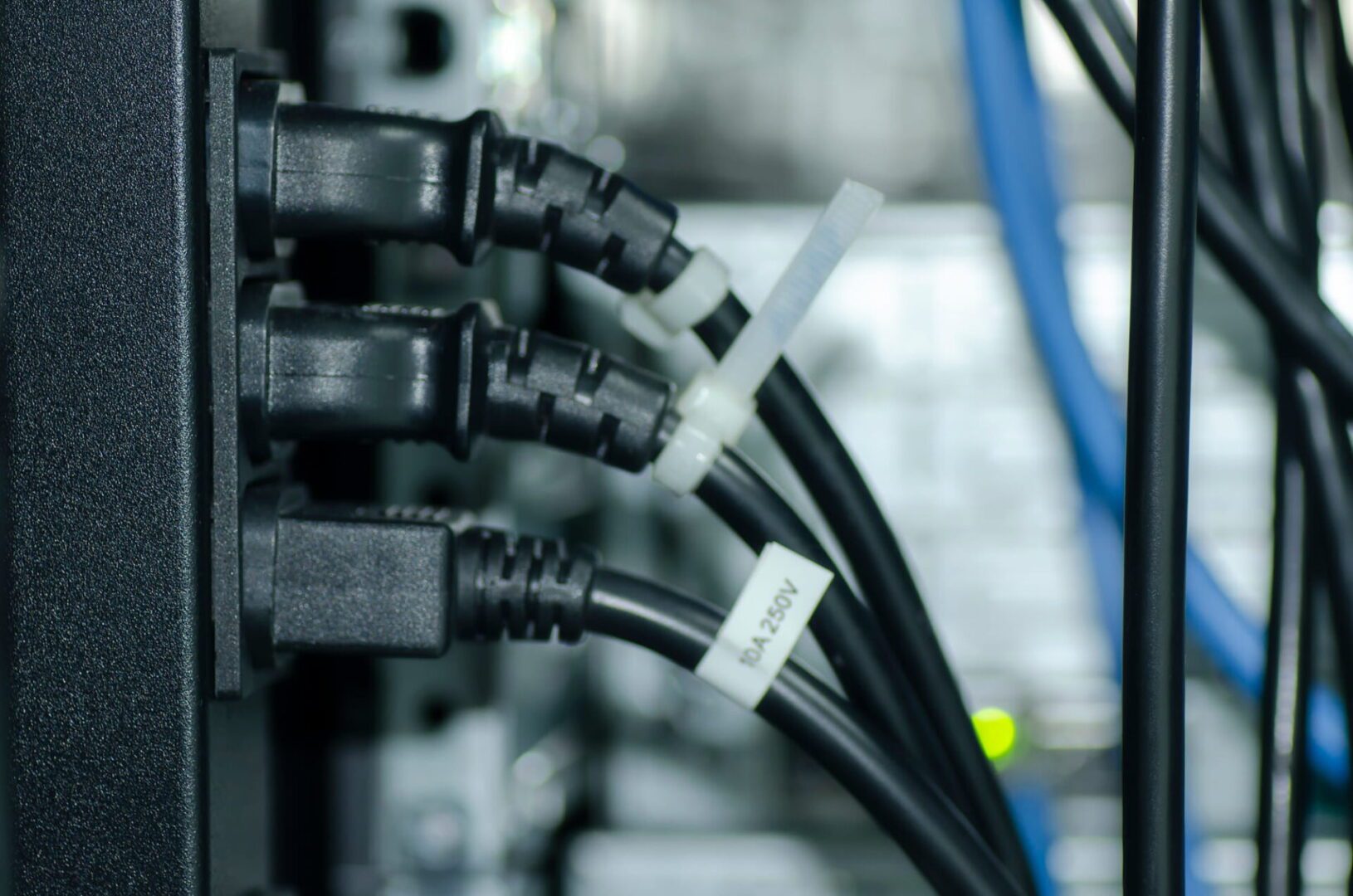
A close-up photo of power cables in a data center rack.

PDUs (power distribution units) control and optimize how power flows to infrastructure devices like servers, routers, firewalls, and switches. PDUs are difficult to manage remotely, for a couple of reasons. First, many aren’t network-connected, so configuring and updating new devices or fixing problems typically requires tedious, on-site work. Those that do have network connectivity tend to lack automation capabilities and integrations with other tools, so they have to be manually and individually managed.  In modern enterprise environments with complex, distributed networks, managing hundreds of individual power devices one at a time is extremely challenging.

A serial console solves this problem by physically connecting to multiple PDUs and using a dedicated network interface to enable remote PDU management. A next-gen solution like Nodegrid also provides a centralized management platform that teams can use to remotely administer all of the PDUs and other infrastructure devices deployed across the entire distributed network. Plus, Nodegrid has an open architecture that supports third-party power software and automation to streamline infrastructure management and boost operational efficiency.

This guide to serial console PDU management explains everything you need to know to get started with remote power control and automated provisioning using the Nodegrid platform.

Deploying Nodegrid for remote PDU management

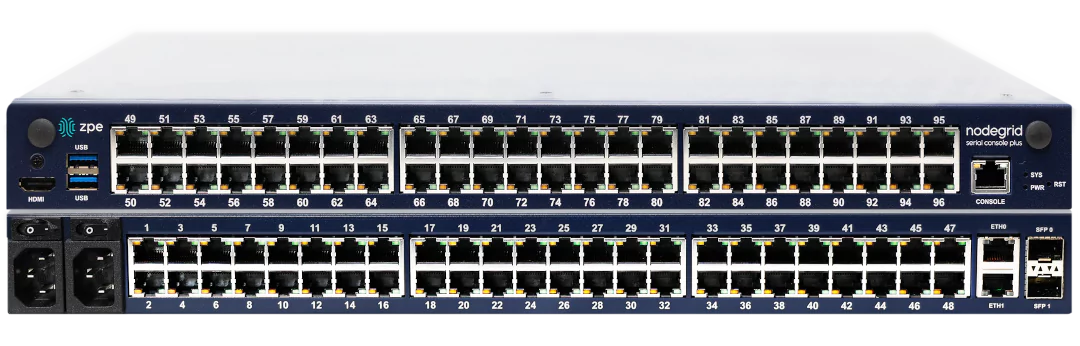
Stacked views of the front and back of the Nodegrid Serial Console Plus.

The Nodegrid family from ZPE Systems includes a range of serial consoles and branch routers that are designed for different use cases. They all provide out-of-band management, network failover, and serial console capabilities, but the number and type of interfaces and managed port configurations vary. Critically, all Nodegrid devices can automatically discover power devices from any vendor and provide secure remote access, eliminating the need to manage PDUs on-site.

Nodegrid also has an open architecture that can host or integrate other vendors’ software for PDU management, NetOps automation, SASE security, and more. It gives administrators a single, unified platform to orchestrate both automated and manual workflows for PDUs and other Nodegrid-connected infrastructure at all distributed business sites.


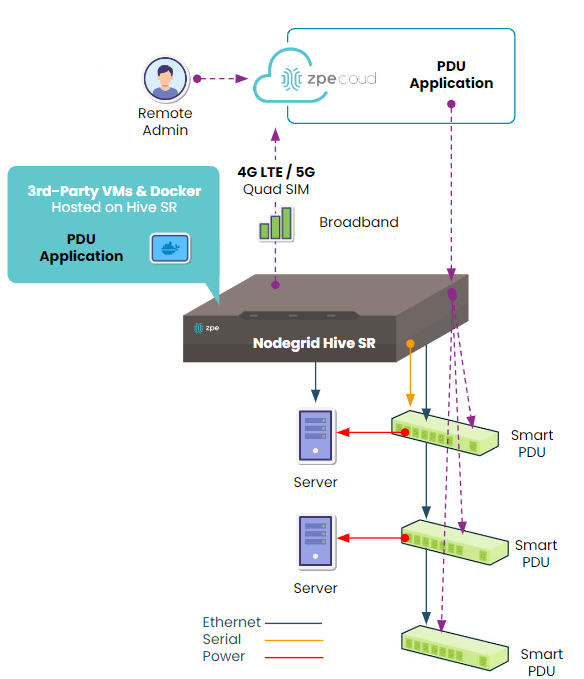
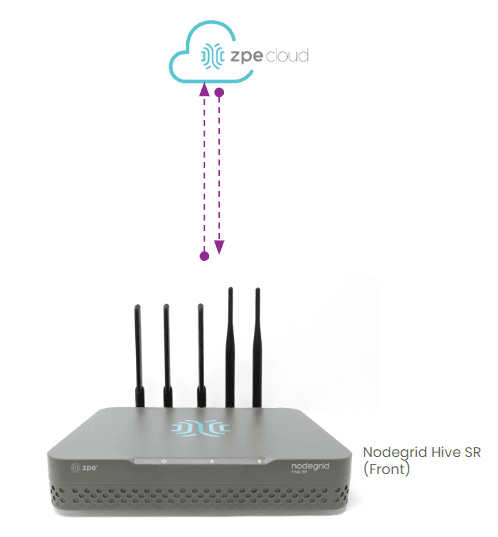
How to deploy the Nodegrid Hive SR for serial console PDU management.

How to deploy the Nodegrid Hive SR for serial console PDU management.

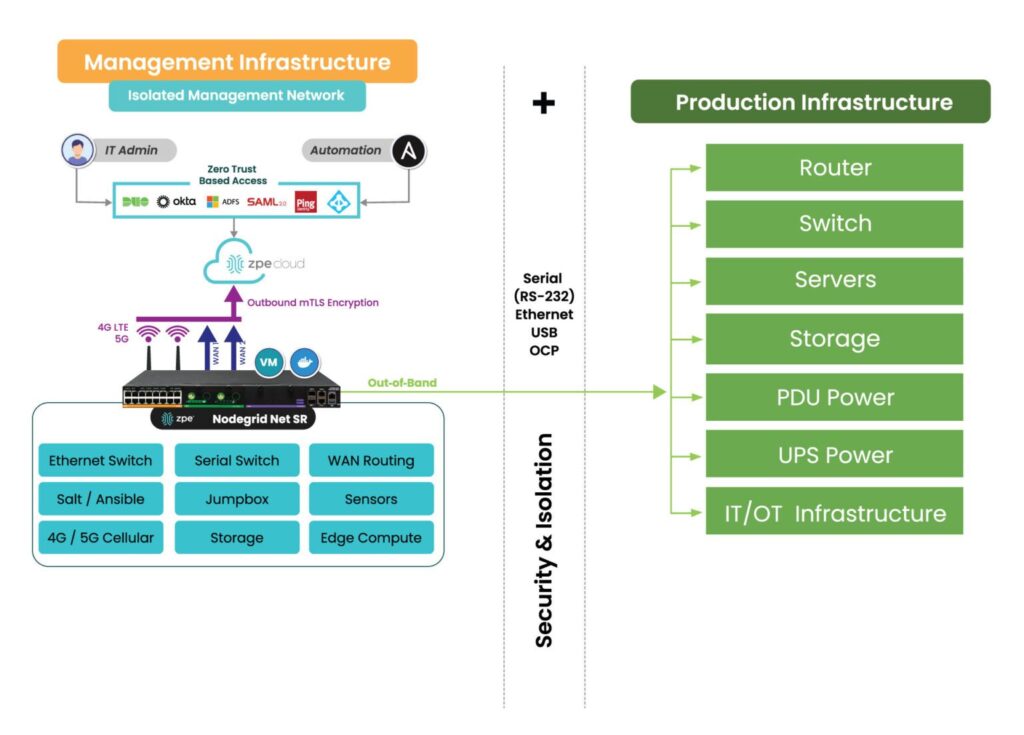
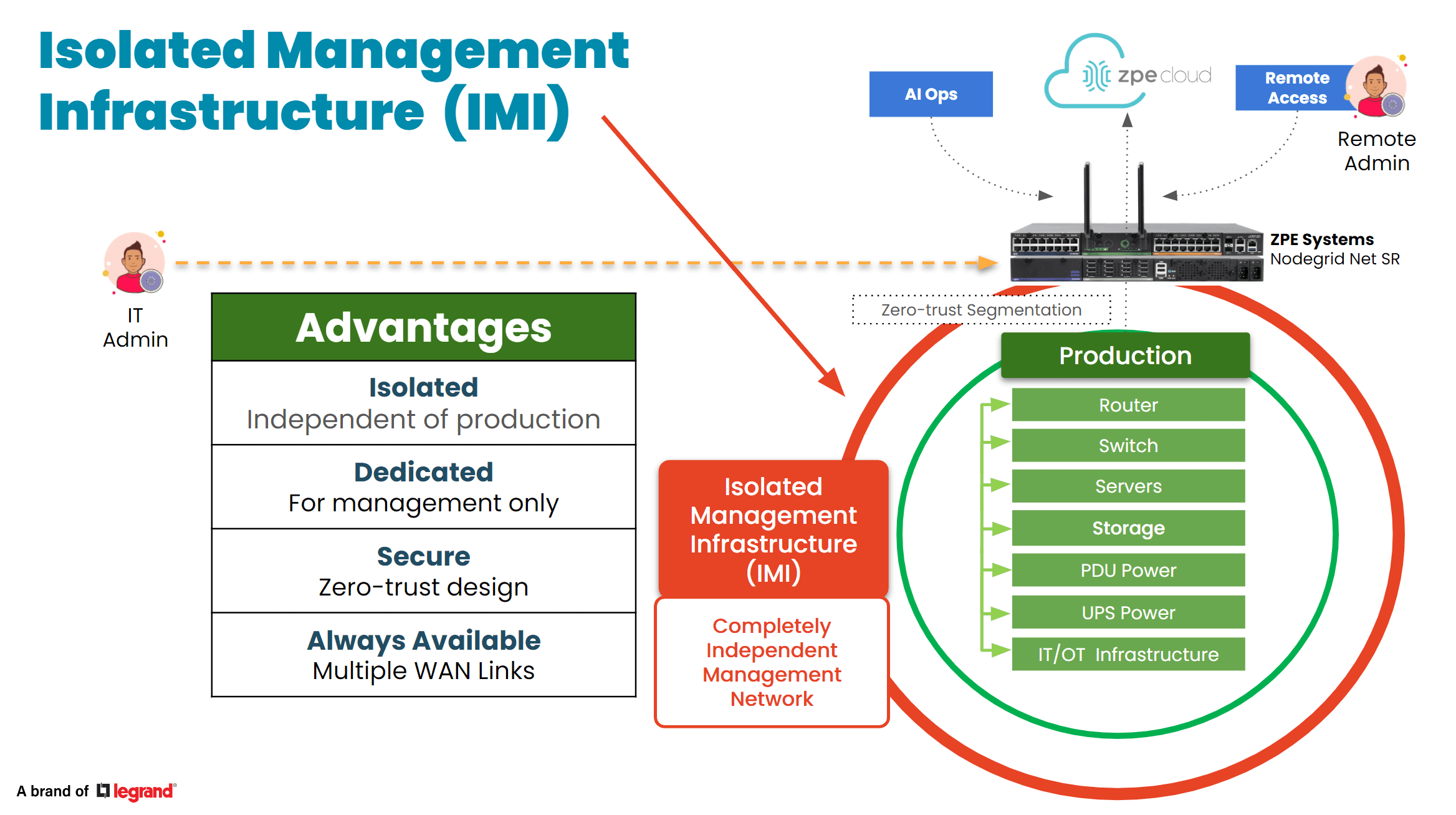
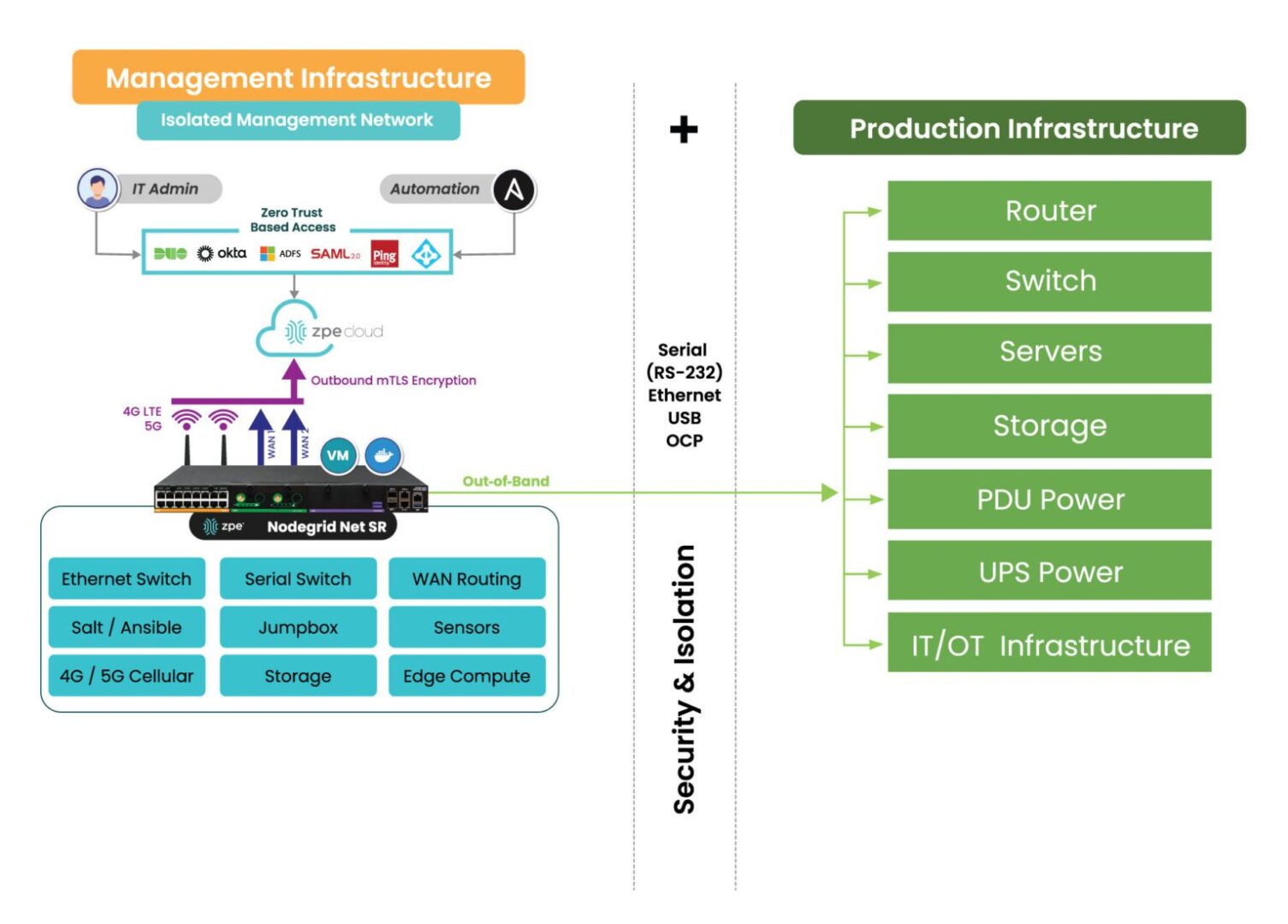
Nodegrid’s out-of-band (OOB) management solution creates an isolated management network that doesn’t rely on production resources and, as such, remains remotely accessible during major outages, ransomware infections, and other adverse events. This gives IT teams a lifeline to remotely roll back PDU firmware updates, power-cycle hung devices, and rebuild infected systems without the time and expense of on-site visits.

How the Nodegrid Net SR isolates and protects the management network.

How the Nodegrid Net SR isolates and protects the management network.

Accessing and managing PDUs with Nodegrid

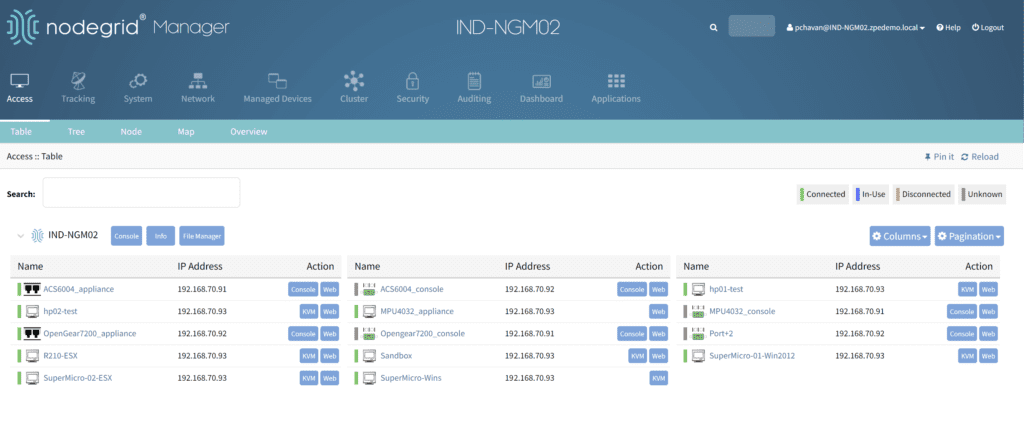
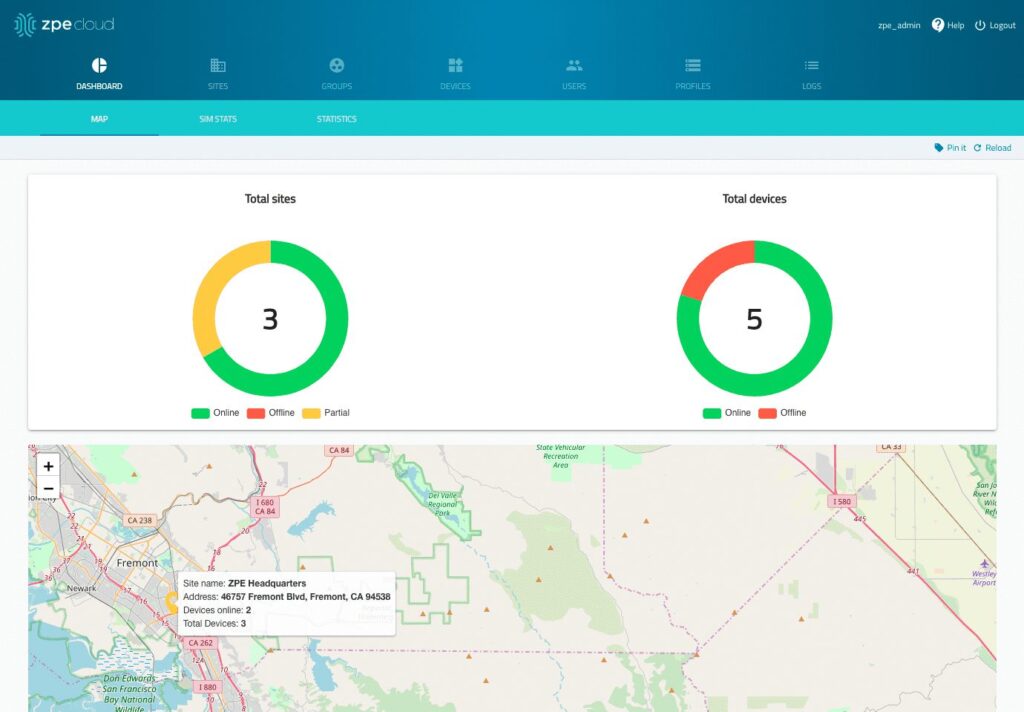
Nodegrid serial consoles and services routers are accessible via the on-premises Nodegrid Manager software or the SaaS ZPE Cloud platform. When connected to the physical console ports on PDUs and other devices, it can provide serial console access and live status messages (such as connected, in-use, and disconnected).

A view of all the equipment connected to a Nodegrid device.

To access and manage a PDU from Nodegrid Manager or ZPE Cloud:

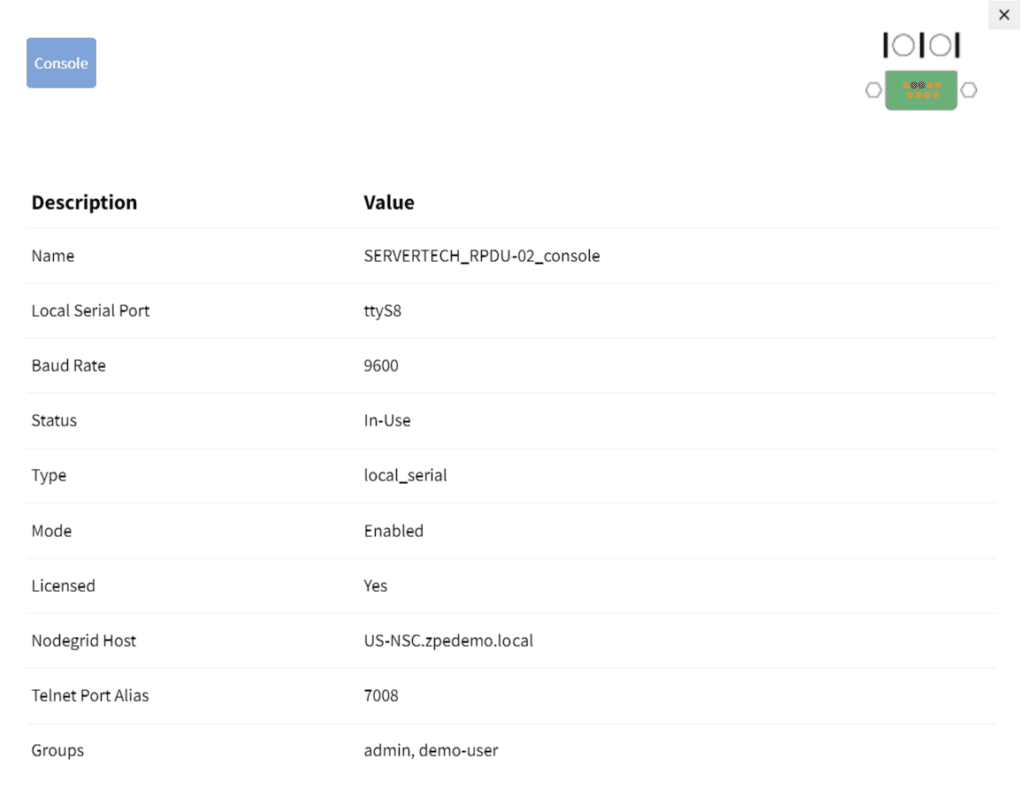
1. Click on the PDU’s name from the access dashboard. The PDU device view screen will appear, as seen below.

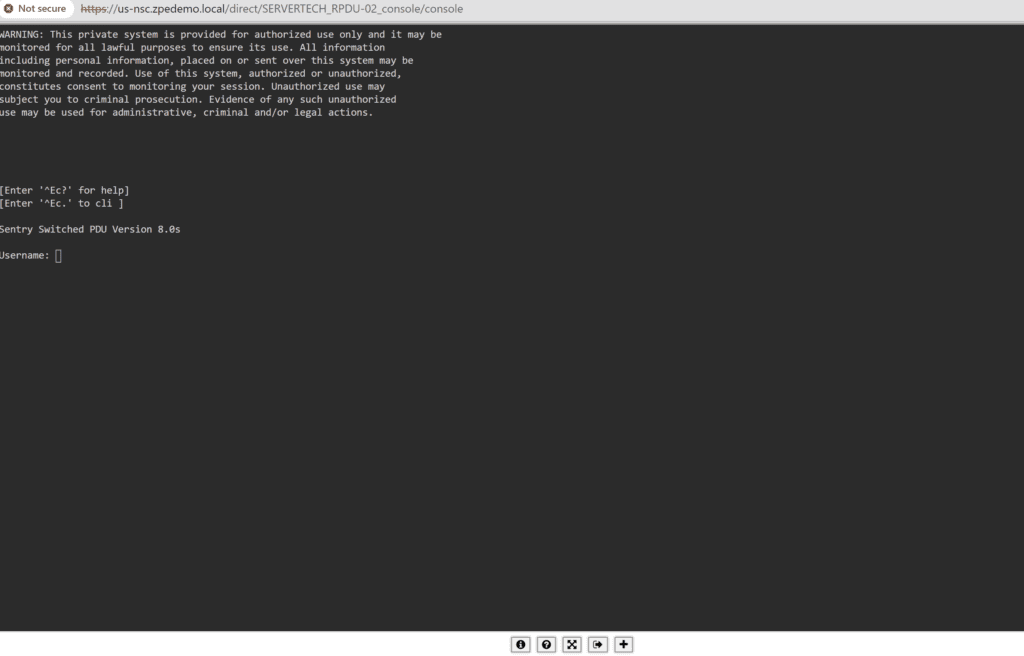
2. Click on the Console tab. A terminal session will open, providing remote console access to the PDU as if you were directly connected.

The PDU console session.

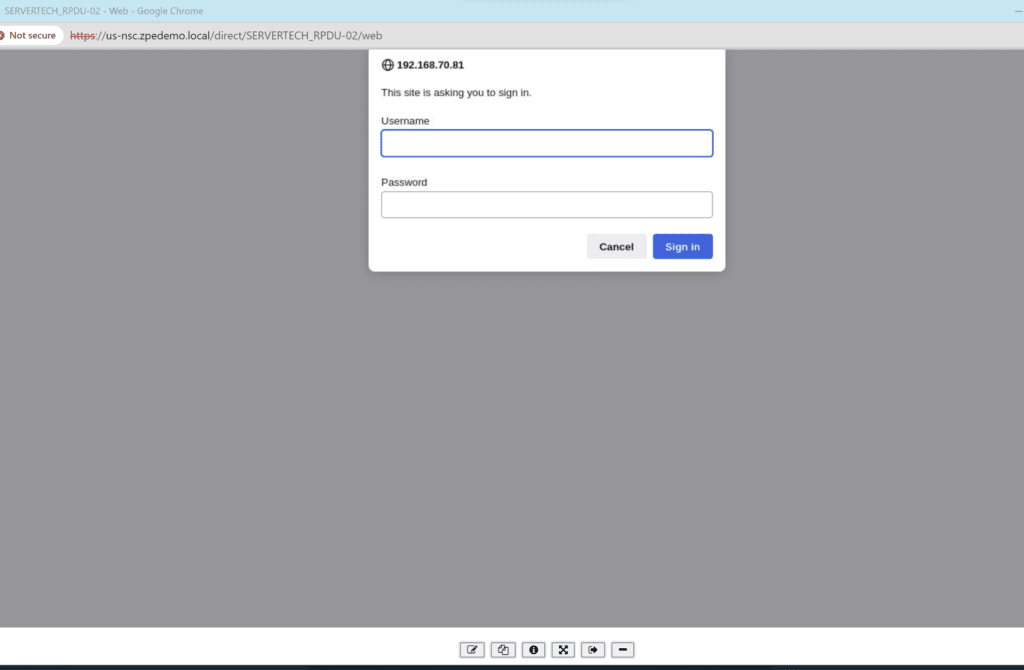
3. If your PDU is network-enabled, adding it to the Hive SR via IP address provides access to the Web UI from Nodegrid, adding a WEB tab as seen below.


4. Clicking the WEB tab will open the PDU’s web UI.

An example of a PDU web UI that will open upon clicking the WEB tab.

An example of a PDU web UI that will open upon clicking the WEB tab.

Remotely controlling power for individual outlets

Nodegrid can integrate your PDU so that each managed serial port on the Hive is mapped to a specific outlet. Doing so allows users to power individual outlets off and on from Nodegrid Manager or ZPE Cloud. It also enables a continuous console session to the managed device with BIOS-level control during the reboot cycle.

To map a PDU outlet to a managed serial port from Nodegrid Manager or ZPE Cloud:

1. Click Managed Devices from the top menu bar, and then select the Devices tab.

The Managed Devices :: Devices menu.

2. Click the Commands tab, click ADD, and then select Outlet.

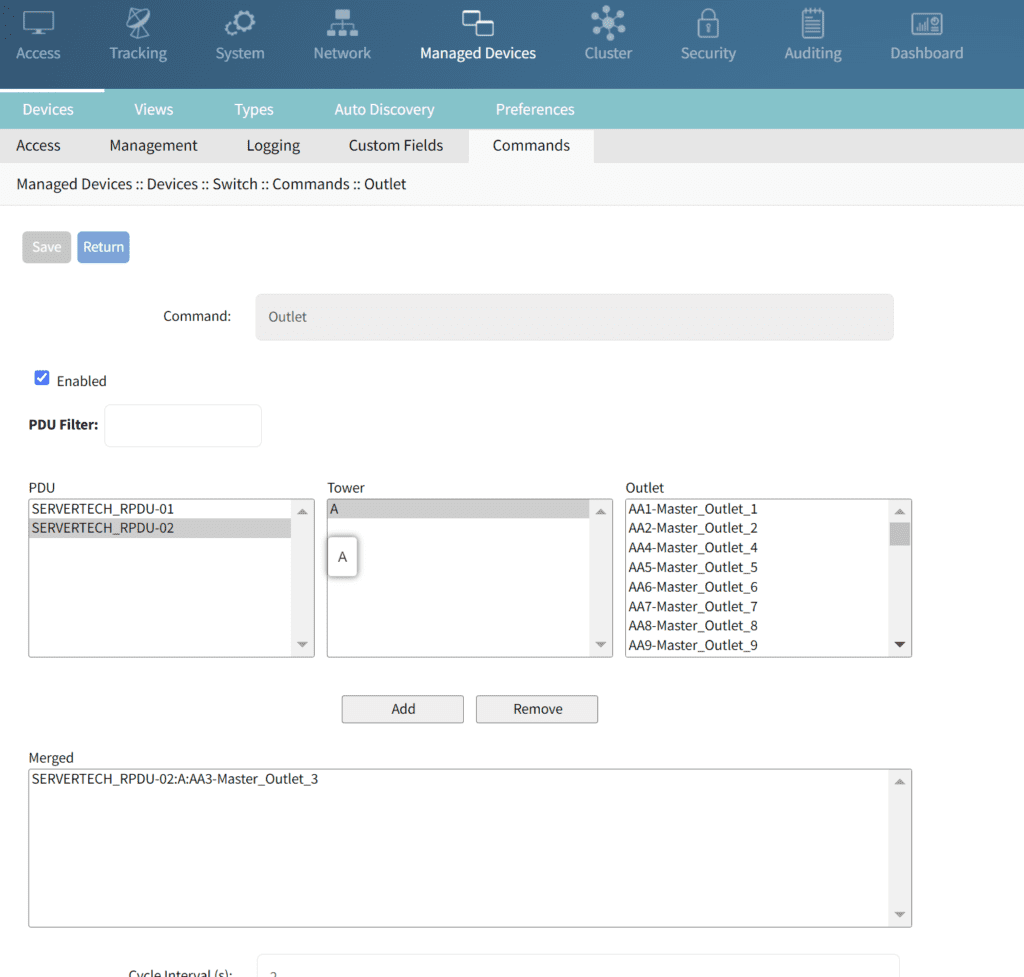
3. Select the applicable PDU, tower, and outlet to map to the specified managed serial port and then click Add. A confirmation message will appear in the window below.

Mapping the selected serial port to Outlet 3 on PDU 2.

Mapping the selected serial port to Outlet 3 on PDU 2.

To control power for a specific serial port/managed device:

1. Click Access from the top menu bar, and then click the name of the relevant port/device

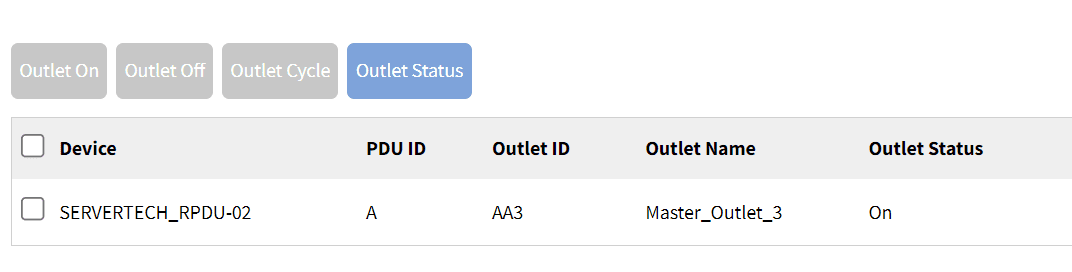
2. If the PDU has been integrated with that port, the Outlet Status display appears as shown below.

The Outlet Status for the Cisco switch configured on this port and outlet.

The Outlet Status for the Cisco switch configured on this port and outlet.

3. Depending on the outlet’s present status, certain options will be available:

  1. Clicking the Outlet On tab will enable an outlet that is powered off.
  2. Clicking the Outlet Off tab will disable an outlet that is powered off.
  3. Clicking Outlet Cycle will power-cycle the outlet, turning it off and then back on again.

Implementing automated PDU provisioning and updates

Nodegrid uses zero-touch provisioning (ZTP) to automatically configure managed devices on boot-up. If your PDU is network-connected and DHCP-enabled, like some ServerTech and Raritan PDUs, Nodegrid’s ZTP can automate configurations and firmware updates.

To implement zero-touch provisioning for PDUs:

  1. Create configuration files tailored to your specific PDU models. These files typically include:
    1. fwupdate.cfg – required for firmware upgrades
    2. config.txt – contains specific device configurations
    3. devices.csv – manages bulk configurations
  2. Upload configuration and firmware files to the Nodegrid Datastore directory, which acts as a root directory for the integrated TFTP/HTTPS server.
  3. Configure Nodegrid’s DHCP server to point to the fwupdate.cfg file on the TFTP/HTTPS server.
  4. Upon their next DHCP renewal, the PDUs will contact Nodegrid’s DHCP server, which will direct them to the fwupdate.cfg file on the TFTP/HTTPS server. The PDUs will fetch these files and perform the necessary configurations or firmware updates. Other configuration options can also be triggered based on vendor-class-identifier settings in the DHCP options.

Nodegrid ZTP includes a magic cookie, a unique identifier stored on the PDU that prevents the repeated execution of the same configuration tasks. If a mismatch between the stored cookie and the new configuration cookie is detected, the device knows to pull fresh configurations, ensuring that updates are only applied when needed.

Want to learn more?

The Nodegrid solution combines serial console PDU management with consolidated network and infrastructure management capabilities for a unified experience and improved efficiency. Download our solutions guide or contact our sales team to learn more about adding a Nodegrid solution to your management infrastructure.

End of Row vs Top of Rack Deployments

End of Row vs Top of Rack Deployments

The terms end-of-row and top-of-rack refer to two different approaches to data center architecture design. Both approaches have advantages and disadvantages that make them suited to different use cases or teams, with neither being the clear “winner” overall. This blog compares end-of-row vs. top-of-rack deployments based on crucial factors like cost, management complexity, scalability, and resilience to help organizations choose the right approach for their environment.


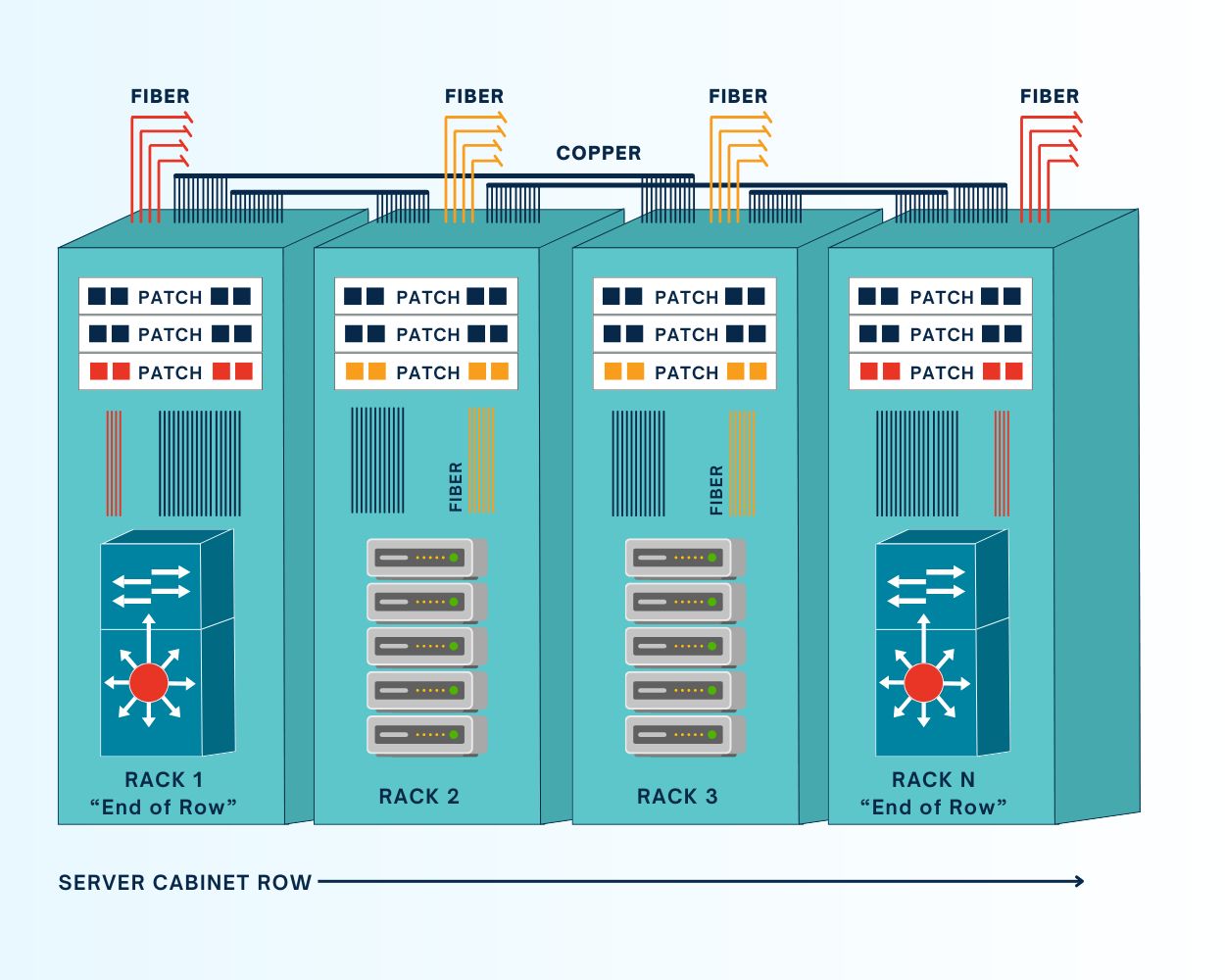
What is an end-of-row (EoR) deployment?

ZPE Graphic Request IR Nov 4
In data center deployments consisting of multiple rows of racks or cabinets, it’s common for teams to consolidate all the networking for each row in one physical location, rather than deploying switches in every single rack. All patch cables for the devices in a particular row are run to the dedicated networking cabinet, which is typically (but not always) at the end of the row. An end-of-row (or EoR) architecture requires fewer switches than a ToR deployment, which helps reduce costs and management complexity while enabling easier scaling.

One of the main drawbacks of this architecture is that the EoR switch is a single point of failure for the entire row. If that switch fails due to a botched update, ransomware attack, or other adverse event, the whole row loses network access. Running cables from each cabinet to the EoR can also get messy very quickly, especially at scale. In the long run, it’s also a less flexible architecture that forces teams to consider an entire row of infrastructure every time they want to change or upgrade networking components.


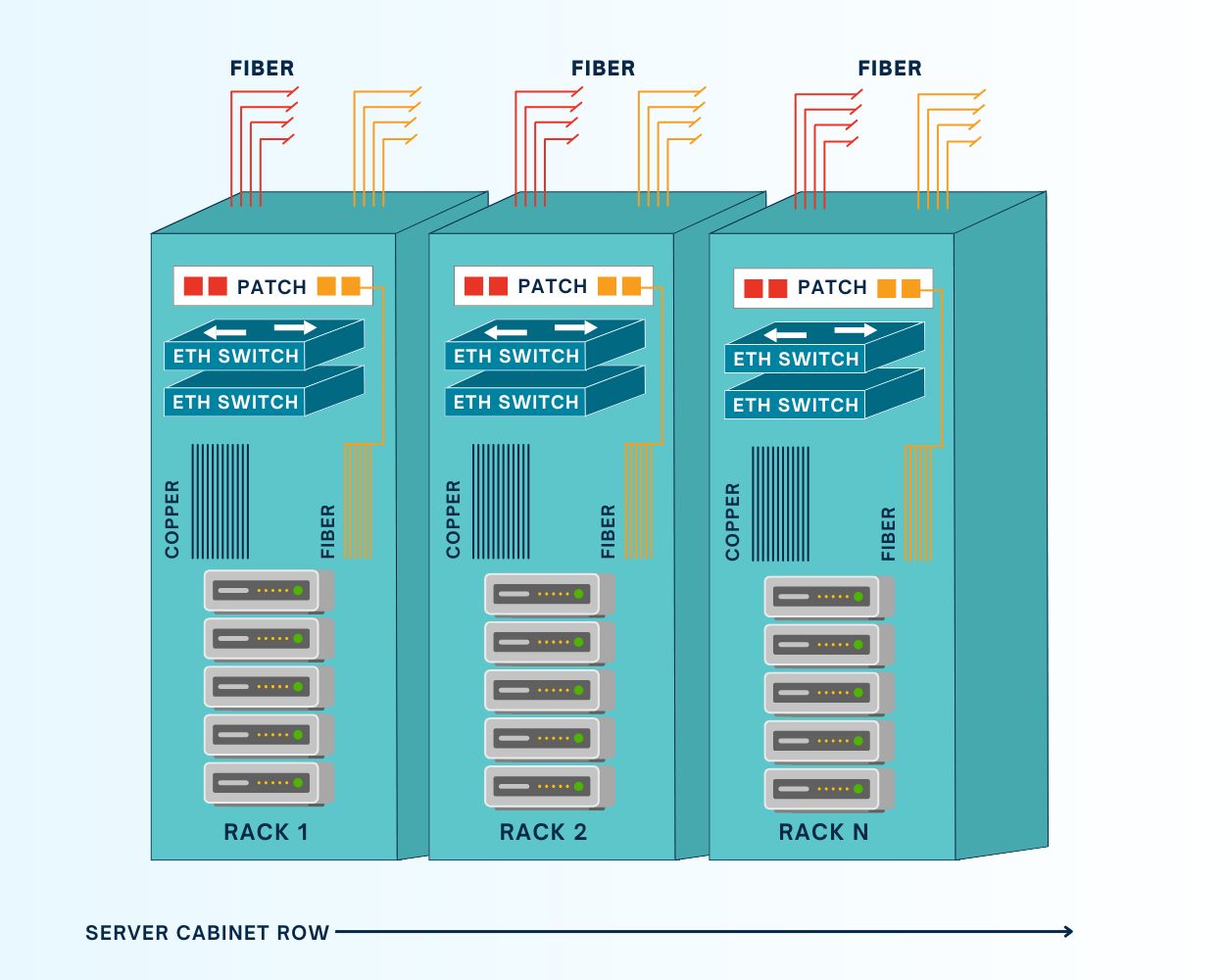
What is a top-of-rack (ToR) deployment?

ZPE Graphic Request IR Nov 4 (1)
In a top-of-rack data center architecture, DC teams install one or more switches in every rack of their deployment; despite the name, the switch doesn’t need to actually be at the very top of the rack. A ToR deployment keeps copper/Ethernet patch cables inside the rack, which helps with cable management. It also eliminates the single-point-of-failure that an EoR switch represents – if one ToR switch goes down for some reason, only the devices within that rack are affected, vs. the entire row. Another major benefit of EoR deployments is that each rack becomes a modular unit that DC teams can modify, upgrade, or scale without necessarily affecting other racks in the row.

On the other hand, a ToR deployment requires more switches than an EoR deployment, which can increase costs and complexity. More switches equate to more power draw, and they add an extra network hop to local traffic that could possibly affect throughput. Each switch must also be monitored, secured, and regularly patched, potentially creating more work for infrastructure teams. As a result, ToR deployments are also more challenging to scale, as each new rack added to the data center requires an additional ToR switch.

Comparing end-of-row vs top-of-rack deployments: Which should you choose?


End-of-Row Top-of-Rack
Number of switches One or more per row One or more per rack
Cable management Requires patch cables running along the entire row Keeps patch cables within the rack or cabinet
Cost Fewer switches and lower power draw keeps costs down More switches and higher power draw gets more expensive
Complexity Fewer switches to secure, manage, and troubleshoot More devices to manage
Ease of scaling Can deploy an entire new row with only one networking cabinet Each new rack requires one or more switches
Flexibility Inflexible; networking changes affect entire row Each rack is a modular unit that can be changed without affecting others
Resilience EoR switch is a single point of failure for the entire row One rack’s switch can go down without affecting any other racks


Both EoR and ToR architectures have advantages and disadvantages, with neither being the clear-cut winner for every possible use case.

End-of-row deployments are more cost-effective and easier to manage and scale, so they’re often favored by smaller, leaner IT teams or, on the opposite end of the spectrum, very large (or hyperscale) data centers. For example, a large cloud provider might prefer EoR to cut down on the number of switches to purchase, deploy, and manage at their hubs.

Top-of-rack deployments are modular, flexible, and resilient, which makes them a great choice for DevOps teams that need the ability to add or change components at any time without affecting the entire architecture. For example, managed service providers might prefer ToR so they can easily customize or update one customer’s rack without worrying about how the changes will impact others.

How Nodegrid improves resilience for EoR and ToR deployments

Nodegrid serial console switches can be deployed top-of-rack or end-of-row to improve the resilience of either architecture. Nodegrid switches connect to the serial port on data center devices to provide out-of-band (OOB) management, allowing teams to remotely manage and troubleshoot DC equipment even when the primary network is down. They isolate the management interfaces for data center infrastructure, making them inaccessible to malware or malicious actors on the production network. Plus, Nodegrid also provides network failover to keep business-critical services running during adverse events.

Nodegrid serial consoles have an open architecture that can integrate and host other vendors’ software and virtualized network functions. That means a single Nodegrid box could theoretically replace an entire rack of networking hardware, streamlining EoR deployments and making ToR architectures more feasible for lean, budget-strapped IT teams. Plus, Nodegrid switches and all connected devices can be remotely managed from a single, on-premises or cloud-based software platform, significantly reducing management complexity for either deployment.

Reach out to ZPE Systems for more help comparing end-of-row vs. top-of-rack deployments or to see a demo of the Nodegrid platform in action.

PDU Remote Management

PDU Remote Management

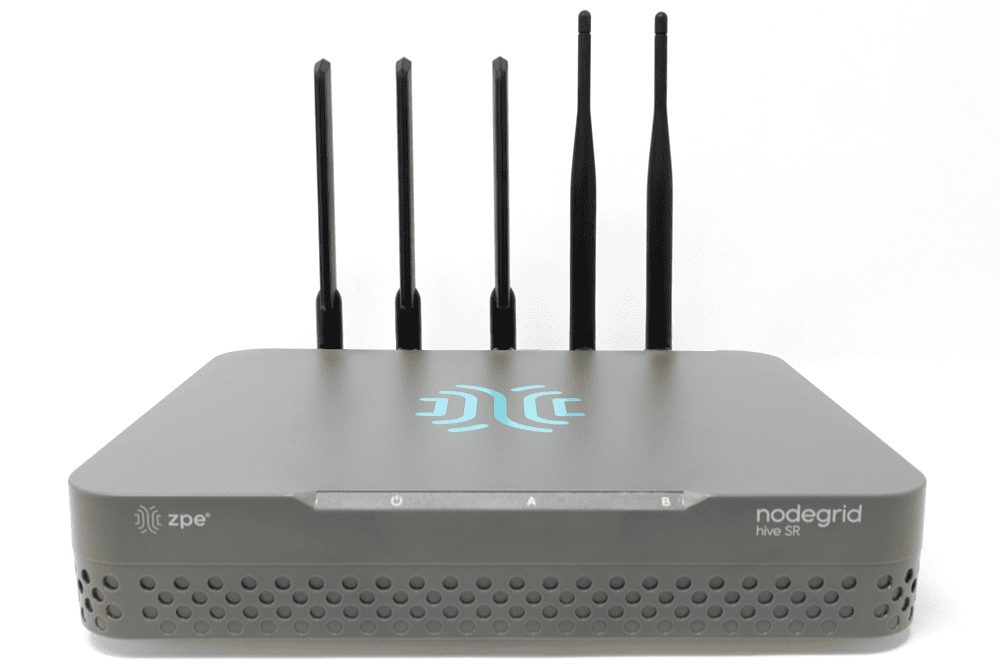
The Hive SR PDU remote management solution from ZPE Systems.

PDUs (power distribution units) and busways are critical network infrastructure devices that control and optimize how power flows to equipment like servers, routers, firewalls, and switches. They’re difficult to manage remotely, so configuring and updating new devices or fixing problems typically requires tedious, on-site work. This difficulty is magnified in complex, distributed networks with hundreds of individual power devices that must be managed one at a time. What’s needed is a PDU remote management solution that unifies control over distributed devices. It should also streamline infrastructure management with an open architecture that supports third-party power software and automation.

The problem: PDU management is cumbersome for large, distributed networks

PDUs and busways are deployed across remote and distributed locations beyond the central data center, including edge computing sites, automated manufacturing plants, and colocations. They typically aren’t network-connected and do not come with up-to-date firmware at deployment time, requiring on-site technicians for maintenance. Upgrading and managing thousands of PDUs and busways requires hundreds of work hours from on-site IT teams who must manually connect to each unit.

The current solution: PDU remote management with jump boxes or serial consoles

Since most PDUs and busways can’t connect to the network, the only way to remotely manage them is to physically connect them via serial (a.k.a., RS-232) cable to a device that can be remotely accessed, such as an Intel NUC jump box or a serial console.

Unfortunately, jump boxes usually aren’t set up to manage more than one serial connection at a time, so they only solve the remote access problem without providing any centralized management of multiple PDUs or multiple sites. Jump boxes are often deployed without antivirus or other security software installed and with insecure, unpatched operating systems containing potential vulnerabilities, leaving branch networks exposed.

On the other hand, serial consoles can manage multiple serial devices at once and provide remote access, but they often don’t integrate with PDU/busway software and only support a few chosen vendors, which limits their control capabilities and may prevent remote firmware updates. They’re also usually single-purpose devices that take up valuable rack space in remote sites with limited real estate and don’t interoperate with third-party software for automation, monitoring, and security.

The Hive SR + ZPE Cloud: A next-gen PDU remote management solution

The ZPE Cloud and Nodegrid Hive SR solutions for PDU remote management.
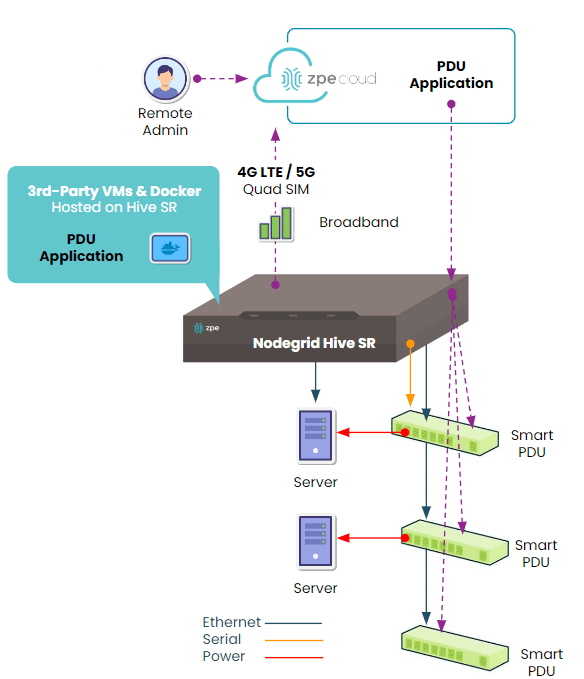
The Hive SR is an integrated branch services router from the Nodegrid family of vendor-neutral infrastructure management solutions offered by ZPE Systems. The Hive automatically discovers power devices and provides secure remote access, eliminating the need to manage PDUs and busways on-site. The ZPE Cloud management platform gives IT teams centralized control over power devices and other infrastructure at all distributed locations so they can update or roll-back firmware, configure and power-cycle equipment, and see monitoring alerts.

The ZPE Cloud PDU remote management solution from ZPE Systems.

In addition to integrated branch networking capabilities like gateway routing, switching, firewall, Wi-Fi access point, 5G/4G cellular WAN failover, and centralized infrastructure control, the Hive SR and ZPE Cloud also deliver vendor-neutral out-of-band (OOB) management. ZPE’s Gen 3 OOB solution creates an isolated management network that doesn’t rely on production resources and, as such, remains remotely accessible during major outages, ransomware infections, and other adverse events. This gives IT teams a lifeline to perform remote recovery actions, including rolling-back PDU firmware updates, power-cycling hung devices, and rebuilding infected systems, without the time and expense of an on-site visit.

A diagram showing how the Nodegrid Hive SR can be deployed for PDU remote management.

The Hive and ZPE Cloud have open architectures that can host or integrate other vendors’ software for PDU/busway management, NetOps automation, zero-trust and SASE security, and more. Administrators get a single, unified, cloud-based platform to orchestrate both automated and manual workflows for PDUs, busways, and any other Nodegrid-connected infrastructure at all distributed business sites. Plus, all ZPE solutions are frequently patched and protected by industry-leading security features to defend your critical branch infrastructure.


Download our Automated PDU Provisioning and Configuration solution guide to learn more about vendor-neutral PDU remote management with Nodegrid devices like the Hive SR.
Download

Download our Centralized IT Infrastructure Management and Orchestration solution guide to learn how ZPE Cloud can improve your operational efficiency and resilience.
Download

Top 5 Data Center Mistakes and How To Avoid Them

Top 5 Data Center Mistakes and How To Avoid Them

Data center deployments require careful planning and execution. The sheer complexity makes it easy to stumble into common pitfalls that can compromise uptime, security, and scalability. After talking with hundreds of customers, we’ve compiled the top five data center mistakes organizations often make during deployments, with tips on how to avoid them.

1. Overlooking Isolated Management Infrastructure

In the data center, the focus is bringing production infrastructure online, including power, cabling, racks, servers, and network gear. But many project managers and architects say they wished they’d given more attention to setting up proper management infrastructure. This oversight usually leads to business challenges down the line, especially when management access relies on the production infrastructure. When a device fails or goes offline, there’s no choice but to go on-site to manually troubleshoot and recover. Many professionals admit to making this data center mistake and wish that they had considered this early in the planning process. Incorporating something called Isolated Management Infrastructure from the start can avoid this challenge, since it provides a dedicated management plane through which teams can access production gear without relying on the production network. 

Tip: Make management infrastructure a priority in your initial planning stages. This proactive approach can prevent complications later.

IMI

2. Neglecting Automation for Configuration and Scaling

Many data center implementors focus heavily on the “rack and stack” initial setup, but fail to automate processes for configuration and scaling operations. This data center mistake often leads to days’ or weeks’ worth of manual, repetitive work, while also exposing the organization to human error. A lot of people we talked to wish they’d invested just a few weeks into automating essential tasks such as switch setup, VLAN configurations, and IP address assignments, which would have saved them lots of time later on and likely helped to prevent errors. Additionally, if rearchitecting is needed, automated systems allow for quick reimplementation, minimizing the time and complexity involved. 

Tip: Dedicate time to automating routine processes. This investment will pay off in enhanced operational efficiency and reduced human error.

3. Inadequate Out-of-Band Management

When people think of out-of-band (OOB) management, a common misconception is that it is solely about Ethernet switches. However, it’s crucial not to overlook the importance of having management access to your entire device stack. Low-level access can be essential for system recovery and management. The recent CrowdStrike outage is a perfect example – when the failed devices needed to be reimaged, typical out-of-band management solutions were inadequate at providing this type of low-level access. Generation three out-of-band serial consoles, like the Nodegrid Net SR, give Ethernet, serial, and USB access, allowing teams to remote-in at the BIOS level to revive failed devices. Using this kind of comprehensive out-of-band – on a fully isolated management plane – helps teams remotely recover and confidently automate processes.

Tip: Ensure that your OOB strategy includes robust serial console access to enhance system reliability and recovery capabilities.

IMI with Nodegrid2

4. Ignoring Security Best Practices

Zero trust security is no longer just advisable, it’s essential. The typical approach is to establish direct connectivity to devices to configure, troubleshoot, upgrade, etc. But this comes with unnecessary risks, often exposing management ports to the Internet and leaving you at risk of attack. Without a fully isolated management plane and zero trust security controls, how would you recover if you were ransomware’d? This is why it’s essential to implement security controls like role-based access and multi-factor authentication, and ensure complete separation of management and production networks. 

Tip: Prioritize security by adopting a zero-trust approach and implementing rigorous access controls to safeguard your data center.

5. Cutting Corners on Out-of-Band Management

In the race for implementing AI, it’s crucial to invest in AI data center infrastructure. But organizations often cut corners on their ability to manage the underlying infrastructure that powers AI. Management access should not stop at ethernet switches; it should extend to encompass serial console access, PDUs, jump boxes, 5G connectivity, routing, WAN links, and a centralized cloud hub with secure tunnels to colocation sites. Using a comprehensive and centralized platform like Nodegrid consolidates many management devices into one while giving remote control to optimize AI’s underlying infrastructure. Aside from enhancing efficiency, this approach minimizes waste and energy consumption, which addresses environmental, social, and governance (ESG) concerns. 

Tip: Avoid the partial out-of-band management deployment. A complete system not only supports resilience and security but also contributes to sustainability goals.


Addressing these common data center mistakes can significantly enhance operational efficiency, security, and scalability. By prioritizing management infrastructure, automating processes, ensuring adequate out-of-band access, implementing robust security measures, and investing wisely in management systems, organizations can build resilient data centers equipped to meet the demands of today and the future.

See ZPE Cloud in action with this video demo

Senior Sales Engineer Marcel van Zwienen gives you a hands-on demo of ZPE Cloud in this video. Watch Marcel take you from signing in to gaining remote access for troubleshooting, to showing how to apply configuration changes automatically across device fleets. Watch now at the link below.

Use Our Blueprint to Avoid Data Center Mistakes

Our blueprint shows how to deploy an isolated management infrastructure, which gives you secure remote access to recover from outages and automate operations. Download now for the complete guide.

Perle Console Server Replacement Options

NCSP Back side

Perle offers two console server solutions for out-of-band (OOB) management of data center infrastructure: the IOLAN SCG and the IOLAN SCR. The SCG is available in both fixed and modular form factors, while the SCR comes in four models with different combinations of 56 managed ports, allowing companies to choose the OOB management hardware that best suits their environment. Unfortunately, IOLAN solutions suffer from hardware and software limitations that can curb scalability and limit agility. This guide discusses Perle console server replacement options that enable streamlined growth through automation capabilities and vendor freedom.


Key takeaways

  • Perle IOLAN SCG appliances offer out-of-band console server management for up to 48 devices in a fixed or modular form factor. Perle IOLAN SCR console servers come with four different managed port configurations for added flexibility.
  • Perle console servers offer some automation capabilities, like auto-discovery and zero-touch provisioning, as well as comprehensive firewall functionality. However, their underpowered hardware and closed management software prevent Guest OS hosting or third-party infrastructure automation and orchestration.
  • The Nodegrid platform from ZPE Systems overcomes these limitations with robust CPU, RAM, and storage, as well as vendor-neutral software. It enables data center scalability by providing high-density serial port configurations and supporting 3rd-party automation.
  • Nodegrid can also run networking, security, edge computing, AIOps, and more, consolidating the data center tech stack and improving operational efficiency.


Perle IOLAN console server overview

Perle IOLAN SCG console servers provide out-of-band management for up to 48 infrastructure devices. Fixed-form-factor models use copper Ethernet for networking and OOB, while the modular version has options for Wi-Fi, cellular, and dial-up. The modular series also has three expansion bays that support any combination of 16-port RS-232 or USB serial modules.

Perle IOLAN SCR console servers come in four different models with up to 56 managed serial, USB, and Ethernet ports, as well as optional cellular integration.

Click here to compare Perle console server tech specs.

Perle console servers have automatic LLDP (Link Layer Discovery Protocol) discovery and can extend zero-touch provisioning (ZTP) to end-devices. They come with an embedded firewall, OpenVPN and IPSec VPN, and AES encryption. The PerleVIEW cloud-based management software provides centralized monitoring and control of all connected data center infrastructure.


Why consider Perle console server alternatives

IOLAN console servers have an underpowered 500 MHz core 32-bit ARM processor, 4GB of flash storage, and 1GB RAM. This hardware may be sufficient for basic infrastructure management workflows and ZTP, but it prevents Guest OS hosting and more advanced automation. The Perle platform also doesn’t integrate with any third-party automation or orchestration solutions.

An inability to fully automate infrastructure management workflows – or to orchestrate those tasks that can be automated – ultimately limits operational efficiency and data center scalability. Consequently, IT teams can’t effectively support the needs of the growing business, adapt to strategy changes, or focus on revenue-driving innovations like artificial intelligence and machine learning (AI/ML).

What’s needed is an open platform that can manage any device, automate any workflow, and work with third-party software to provide a fully integrated infrastructure orchestration experience.


Perle console server replacement options from ZPE Systems

Nodegrid is a family of vendor-neutral console server solutions from ZPE Systems. It comes in four models:

  1. The Nodegrid Serial Console Plus (NSCP) is a robust platform offering up to 96 managed serial ports in a 1U rack-mounted form factor for hyperscale data centers and cloud service providers.
  2. The Nodegrid Serial Console S Series provides up to 48 auto-sensing ports to unify management of legacy, modern, and multi-vendor data center environments.
  3. The Nodegrid Net Services Router (NSR) is a modular solution that can be customized with a range of serial, networking, storage, and compute cards to adapt to any use case.
  4. The Nodegrid Serial Console Plus Core Edition (NSCP-CE) is ideal for break-fix deployments while providing more robust security capabilities than comparable solutions.

Nodegrid devices come with Intel x86-32 bit processors, robust (and upgradable) internal storage and RAM options, and a Linux-based Nodegrid OS. The NSCP, S Series, and NSR support Guest OS and Docker containers for third-party applications. That means they can directly host infrastructure automation and orchestration (like Ansible, Puppet, and Chef), security (like Palo Alto’s next-generation firewalls), and much more. Plus, it can extend this automation to legacy and mixed-vendor devices that otherwise wouldn’t support it.

All Nodegrid models can use a wide range of USB environmental monitoring sensors to help remote teams maintain optimal conditions in the data center. Nodegrid hardware protects the control plane with advanced security features like BIOS protection, UEFI Secure Boot, self-encrypted disk (SED), Trusted Platform Module (TPM) 2.0, and a multi-site VPN using IPSec, WireGuard, and OpenSSL protocols. The Nodegrid OS and the ZPE Cloud management software are also Synopsys-validated as achieving industry-leading security.


Which Nodegrid serial console is right for you?

Use Cases
Serial
Network
CPU
Guest OS
Docker Apps
Storage
RAM
Wi-Fi
Cellular
Power
Data Sheet
Nodegrid NSCP
Hyperscale data centers and cloud service providers
16 / 32 / 48 / 96
2 SFP+ & 2 ETH
Intel x86_64 quad core
1
1-2
32GB SSD
4GB DDR4
Optional
Optional
Single or Dual AC

Dual DC

Nodegrid NSC S Series
Mixed legacy, modern, and multi-vendor environments
16 / 32 / 48
2 SFP+ or 2 ETH
Intel x86_64 dual core
1
1-2
32GB SSD
4GB DDR3
Optional
Optional
Single or Dual AC

Dual DC

Nodegrid NSR
Modular and adaptable to any use case
16 / 32 / 48 / 64 / 80
2 SFP+ & 2 ETH
Intel x86_64 quad core or 8-core
1-6
1-4
32GB – 128GB
8GB DDR4
Optional
Optional
Single or Dual AC

Dual DC

Nodegrid NSCP-CE
Break-fix solution for data centers, colocations, and branches
16 / 32 / 48
2 SFP & 2 ETH
Intel x86_64 dual core
0
0
16GB SSD
4GB DDR4
Optional
Optional
Dual AC

Dual DC

Future-proof your data center with Nodegrid

Perle console servers deliver unified, out-of-band management of remote data center infrastructure with some basic automation capabilities, but their closed architecture and underpowered hardware limit extensibility and scalability. Nodegrid improves upon outdated console server solutions with a vendor-neutral platform that supports unlimited innovation and growth with less management complexity.

To learn more about Perle console server replacement options, schedule a demo of the vendor-neutral Nodegrid platform.


Perle IOLAN console server tech specs

Use Cases
Serial
Network
CPU
Guest OS
Docker Apps
Storage
RAM
Wi-Fi
Cellular
Power
IOLAN SCG (Fixed)
Data centers
16 / 32 / 48
1 ETH
ARM 32-bit 500MHz single core
0
0
4GB Flash
1GB
No
No
Single AC
IOLAN SCG (Modular)
Multiple
Up to 50
2 SFP or 2 ETH
ARM 32-bit 500MHz single core
0
0
4GB Flash
1GB
Optional
Optional
Dual AC

Dual AC

IOLAN SCG (Modular)
Large data centers
24 / 32 / 40 / 56
2 SFP (SCR256)

2 SFP & 2 ETH (SCR226, 242, 258)

ARM 32-bit 500MHz single core
0
0
4GB Flash
1GB
Optional
Optional
Dual AC

Ready to replace your outdated Perle console server?


We know that replacing outdated, EOL devices takes a lot of effort. That’s why ZPE now offers a complete package of budget-friendly products and engineering services to help streamline the process.

Click here to see how we make it easy to upgrade to next-gen out-of-band management.