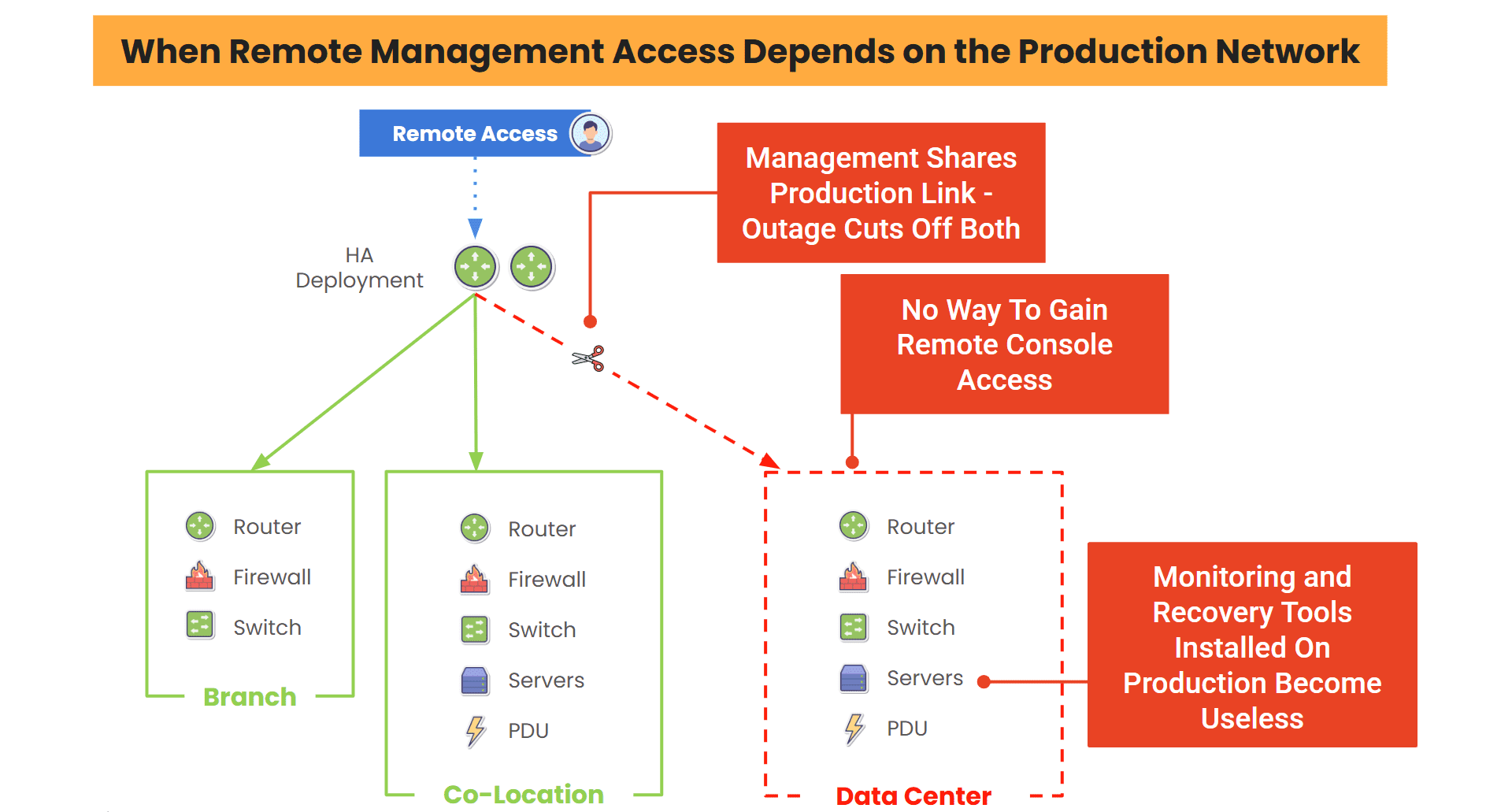
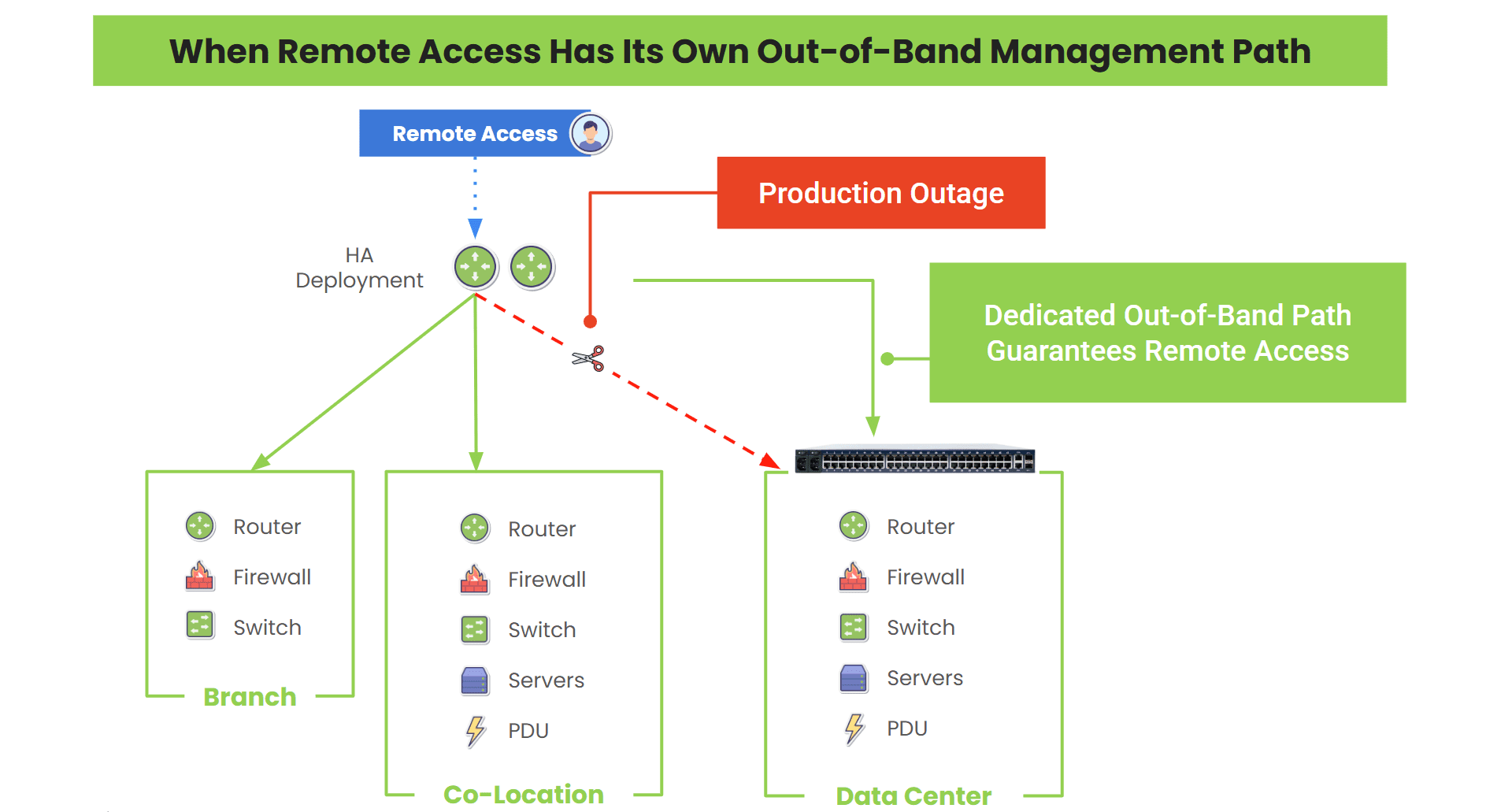
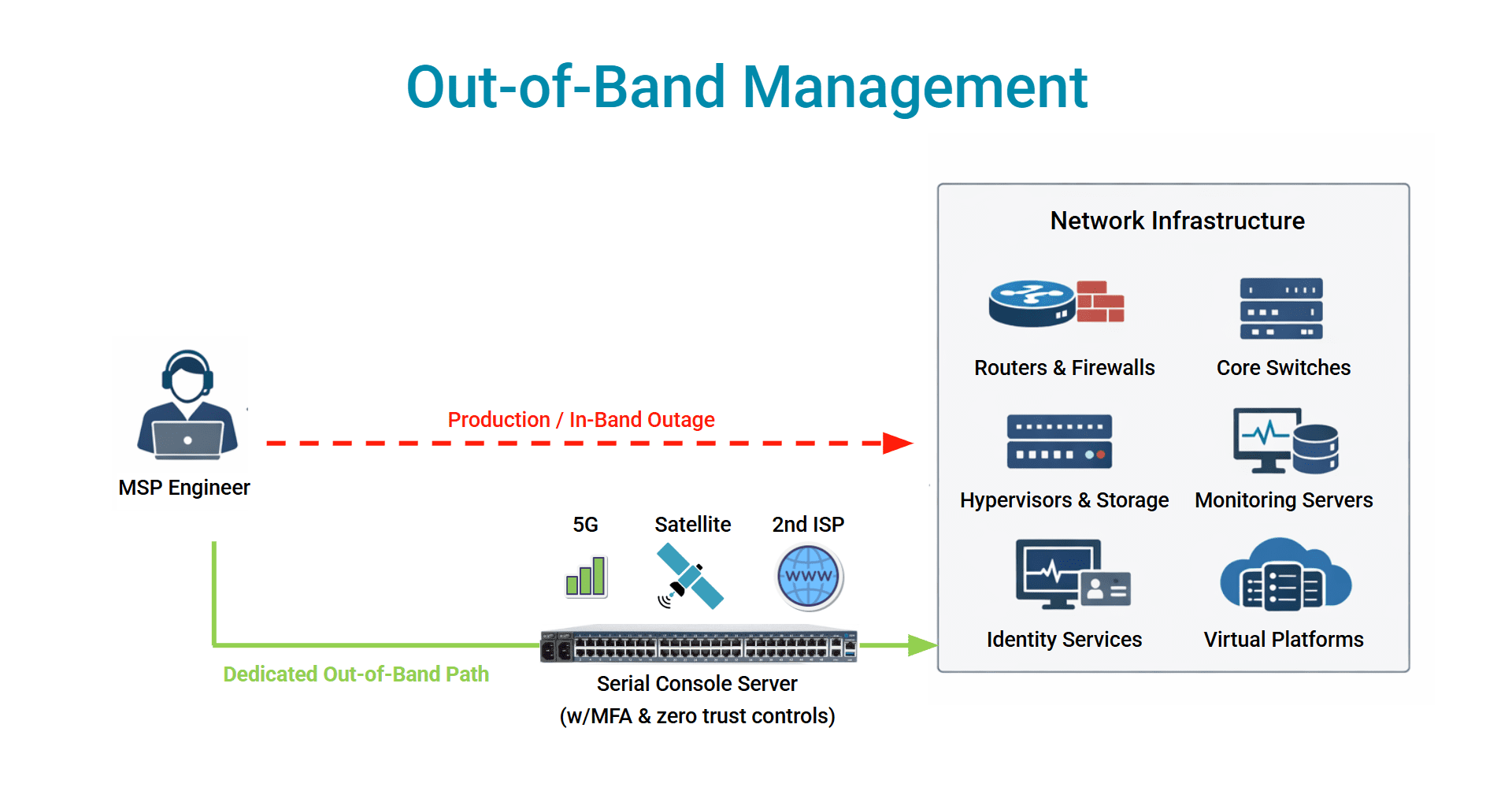
Image: With in-band management, remote admin access is cut off when there is a production network outage.
At the basic level, this is a problem with the underlying management architecture (or lack thereof). Here are common obstacles that stem from in-band management and make MSPs struggle with network downtime.
Minor Issues Easily Turn Into Long Interruptions
Monitoring and alerting platforms excel at detecting problems. They can identify packet loss, device failures, link instability, and performance degradation within seconds. Engineers are immediately in the loop when something goes wrong.
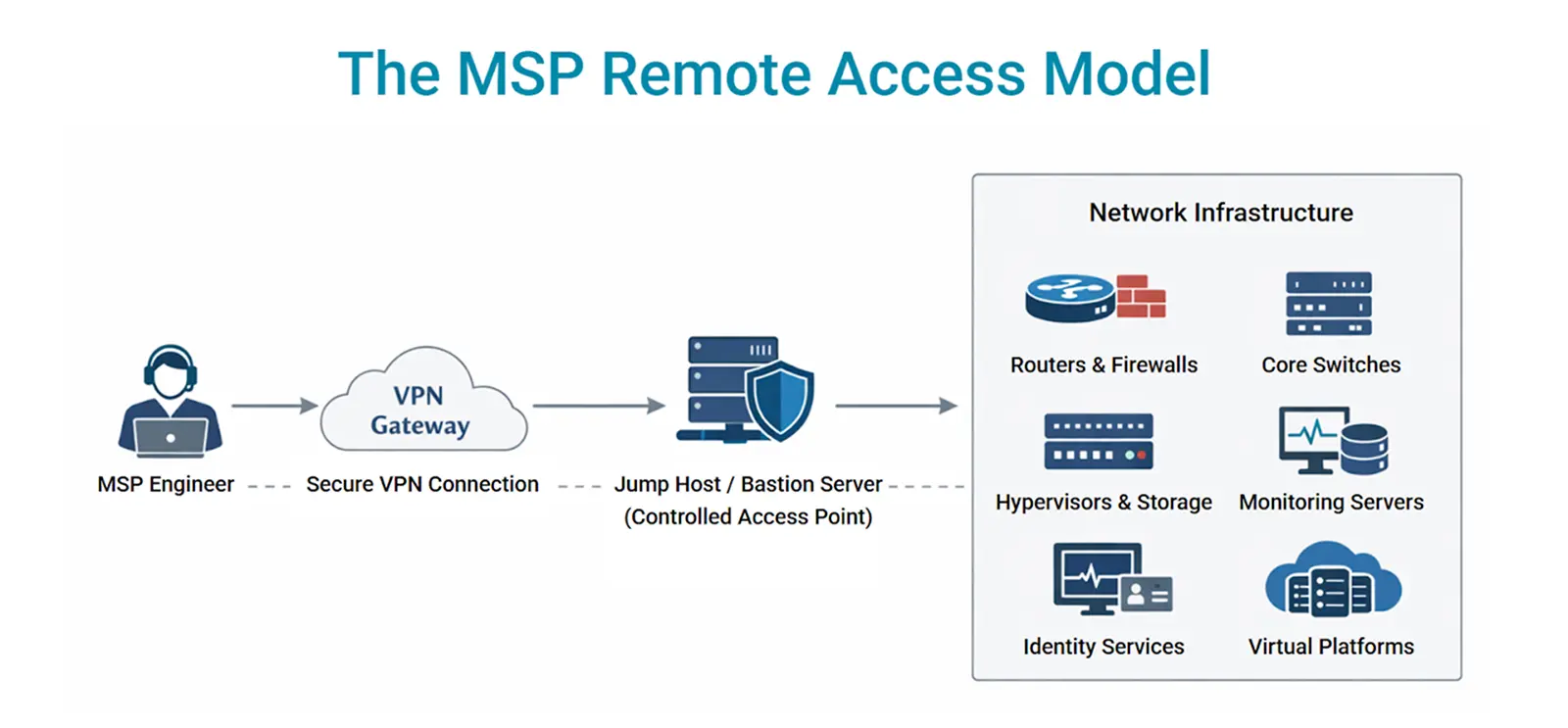
The problem is these systems don’t provide the ability to act. If routing fails or firewall rules change unexpectedly, engineers lose the remote path needed to investigate. If an ISP circuit drops, VPN access vanishes with it. If DNS or authentication services become unavailable, login attempts stall.
Alerts keep coming in, dashboards light up, and customer complaints keep the phones ringing. But without direct device-level access, there’s no way to remotely reach the underlying infrastructure. What would have been a few minutes of troubleshooting turns into a prolonged service event requiring on-site support.
Physical Access Turns Into A Waiting Game
When remote access fails, on-site intervention becomes the only option, but this can also stand in the way.
Technicians often need to:
- Drive several hours to the colocation or branch facility
- Wait for security approval or badge verification
- Schedule access windows during limited hours
- Coordinate with third-party support
- Navigate strict escort requirements
- Deal with weather delays, travel logistics, or facility staffing shortages
Once they arrive, they also might have to wait longer for cage access, compliance checks, or coordination with other on-site personnel. Meanwhile, customer services remain degraded or offline.
No amount of monitoring can compensate for losing the path to the devices themselves.
Scale Turns Occasional Friction into Business Risk
These delays might feel like a small inconvenience. An engineer goes on site, fixes the problem, and moves on. It seems manageable.
But as MSPs scale, the friction compounds as each outage consumes:
- High-value engineering hours
- Travel budgets
- SLA margin buffers
- Customer satisfaction and positive reviews
As incident volume grows, recovery delays begin to affect staffing efficiency and profitability. Travel time expands. Skilled engineers spend more hours away from high-value work. Response windows widen, and maintaining consistent service-level performance becomes more difficult. The “manageable” approach becomes a structural drag on growth.
Traditional in-band management does not scale cleanly. It scales cost, complexity, and operational risk.
Why Better Tools Alone Won’t Solve the Problem
It’s tempting to think that you can solve the problem with more monitoring, automation, remote software, or other investments. But if you can’t reach the infrastructure when it matters most, no amount of tooling will save you.
The core issue is this: How do you get dependable, guaranteed access during failures? In even simpler words, how do you recover without rolling a truck?