Providing Out-of-Band Connectivity to Mission-Critical IT Resources

Edge Computing Use Cases in Telecom

This blog describes four edge computing use cases in telecom before describing the benefits and best practices for the telecommunications industry.
Telecommunications networks are vast and extremely distributed, with critical network infrastructure deployed at core sites like Internet exchanges and data centers, business and residential customer premises, and access sites like towers, street cabinets, and cell site shelters. This distributed nature lends itself well to edge computing, which involves deploying computing resources like CPUs and storage to the edges of the network where the most valuable telecom data is generated. Edge computing allows telecom companies to leverage data from CPE, networking devices, and users themselves in real-time, creating many opportunities to improve service delivery, operational efficiency, and resilience.

This blog describes four edge computing use cases in telecom before describing the benefits and best practices for edge computing in the telecommunications industry.

4 Edge computing use cases in telecom

1. Enhancing the customer experience with real-time analytics

Each customer interaction, from sales calls to repair requests and service complaints, is a chance to collect and leverage data to improve the experience in the future. Transferring that data from customer sites, regional branches, and customer service centers to a centralized data analysis application takes time, creates network latency, and can make it more difficult to get localized and context-specific insights. Edge computing allows telecom companies to analyze valuable customer experience data, such as network speed, uptime (or downtime) count, and number of support contacts in real-time, providing better opportunities to identify and correct issues before they go on to affect future interactions.

2. Streamlining remote infrastructure management and recovery with AIOps

AIOps helps telecom companies manage complex, distributed network infrastructure more efficiently. AIOps (artificial intelligence for IT operations) uses advanced machine learning algorithms to analyze infrastructure monitoring data and provide maintenance recommendations, automated incident management, and simple issue remediation. Deploying AIOps on edge computing devices at each telecom site enables real-time analysis, detection, and response, helping to reduce the duration of service disruptions. For example, AIOps can perform automated root-cause analysis (RCA) to help identify the source of a regional outage before technicians arrive on-site, allowing them to dive right into the repair. Edge AIOps solutions can also continue functioning even if the site is cut off from the WAN or Internet, potentially self-healing downed networks without the need to deploy repair techs on-site.

3. Preventing environmental conditions from damaging remote equipment

Telecommunications equipment is often deployed in less-than-ideal operating conditions, such as unventilated closets and remote cell site shelters. Heat, humidity, and air particulates can shorten the lifespan of critical equipment or cause expensive service failures, which is why it’s recommended to use environmental monitoring sensors to detect and alert remote technicians to problems. Edge computing applications can analyze environmental monitoring data in real-time and send alerts to nearby personnel much faster than cloud- or data center-based solutions, ensuring major fluctuations are corrected before they damage critical equipment.

4. Improving operational efficiency with network virtualization and consolidation

Another way to reduce management complexity – as well as overhead and operating expenses – is through virtualization and consolidation. Network functions virtualization (NFV) virtualizes networking equipment like load balancers, firewalls, routers, and WAN gateways, turning them into software that can be deployed anywhere – including edge computing devices. This significantly reduces the physical tech stack at each site, consolidating once-complicated network infrastructure into, in some cases, a single device. For example, the Nodegrid Gate SR provides a vendor-neutral edge computing platform that supports third-party NFVs while also including critical edge networking functionality like out-of-band (OOB) serial console management and 5G/4G cellular failover.

Edge computing in telecom: Benefits and best practices

Edge computing can help telecommunications companies:

  • Get actionable insights that can be leveraged in real-time to improve network performance, service reliability, and the support experience.
  • Reduce network latency by processing more data at each site instead of transmitting it to the cloud or data center for analysis.
  • Lower CAPEX and OPEX at each site by consolidating the tech stack and automating management workflows with AIOps.
  • Prevent downtime with real-time analysis of environmental and equipment monitoring data to catch problems before they escalate.
  • Accelerate recovery with real-time, AIOps root-cause analysis and simple incident remediation that continues functioning even if the site is cut off from the WAN or Internet.

Management infrastructure isolation, which is recommended by CISA and required by regulations like DORA, is the best practice for improving edge resilience and ensuring a speedy recovery from failures and breaches. Isolated management infrastructure (IMI) prevents compromised accounts, ransomware, and other threats from moving laterally from production resources to the interfaces used to control critical network infrastructure.
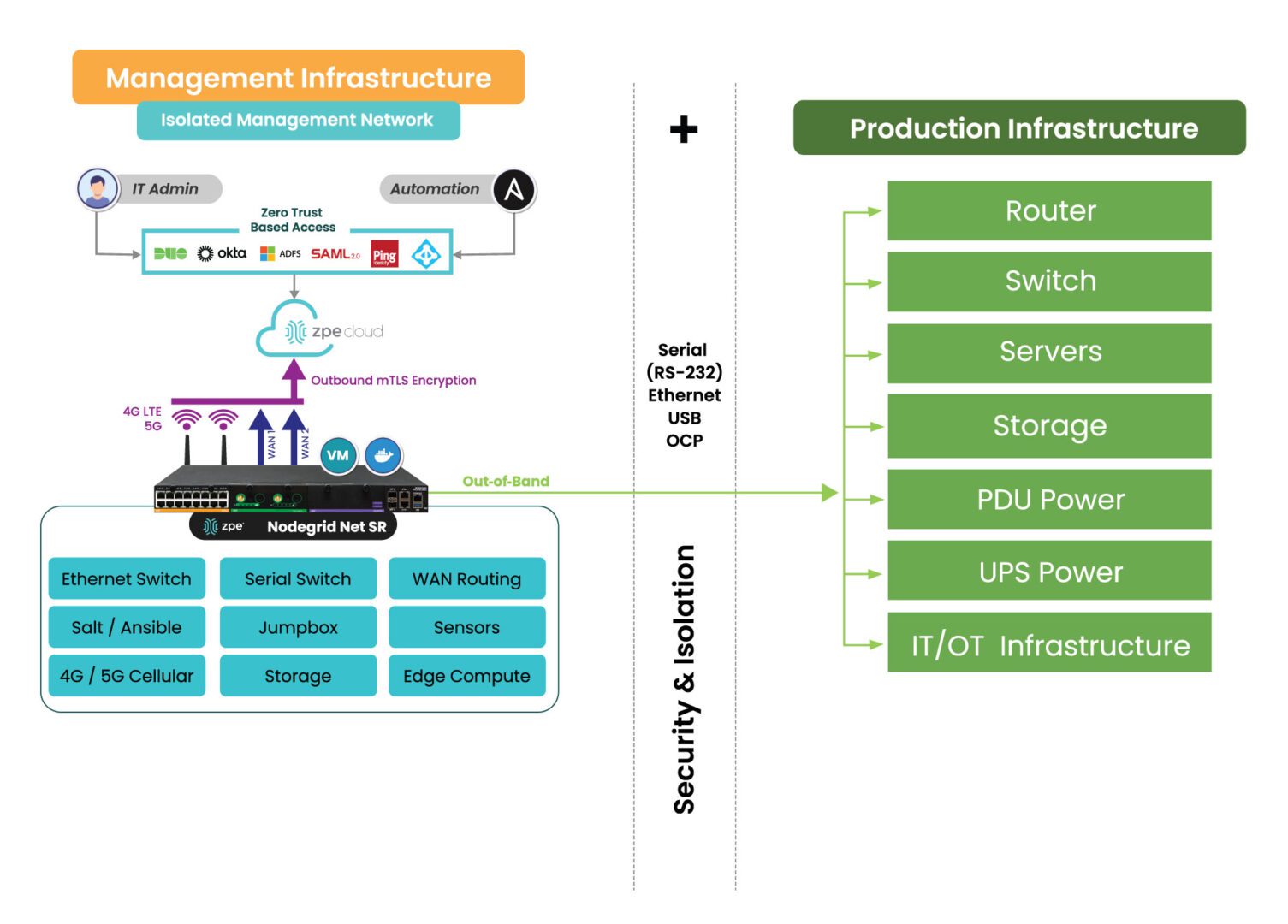
IMI with Nodegrid(2)
To ensure the scalability and flexibility of edge architectures, the best practice is to use vendor-neutral platforms to host, connect, and secure edge applications and workloads. Moving away from dedicated device stacks and taking a “platformization” approach allows organizations to easily deploy, update, and swap out functions and services on demand. For example, Nodegrid edge networking solutions have a Linux-based OS that supports third-party VMs, Docker containers, and NFVs. Telecom companies can use Nodegrid to run edge computing workloads as well as asset management software, customer experience analytics, AIOps, and edge security solutions like SASE.

Vendor-neutral platforms help reduce hardware overhead costs to deploy new edge sites, make it easy to spin-up new NFVs to meet increased demand, and allow telecom organizations to explore different edge software capabilities without costly hardware upgrades. For example, the Nodegrid Gate SR is available with an Nvidia Jetson Nano card that’s optimized for AI workloads, so companies can run innovative artificial intelligence at the edge alongside networking and infrastructure management workloads rather than purchasing expensive, dedicated GPU resources.
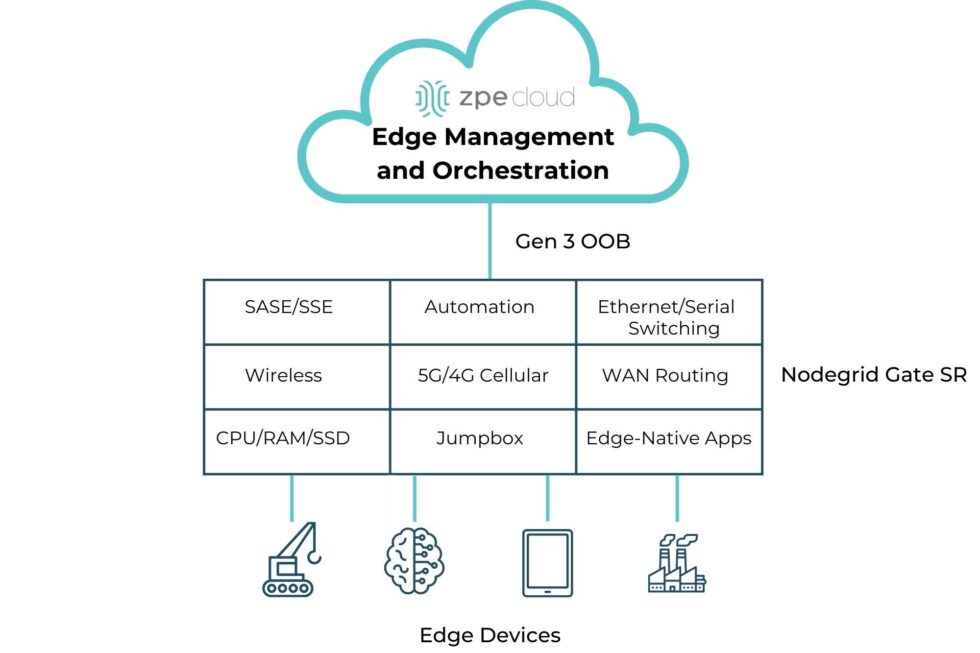
Edge-Management-980×653
Finally, to ensure teams have holistic oversight of the distributed edge computing architecture, the best practice is to use a centralized, cloud-based edge management and orchestration (EMO) platform. This platform should also be vendor-neutral to ensure complete coverage and should use out-of-band management to provide continuous management access to edge infrastructure even during a major service outage.

Streamlined, cost-effective edge computing with Nodegrid

Nodegrid’s flexible, vendor-neutral platform adapts to all edge computing use cases in telecom. Watch a demo to see Nodegrid’s telecom solutions in action.

Watch a demo

Edge Computing Use Cases in Retail

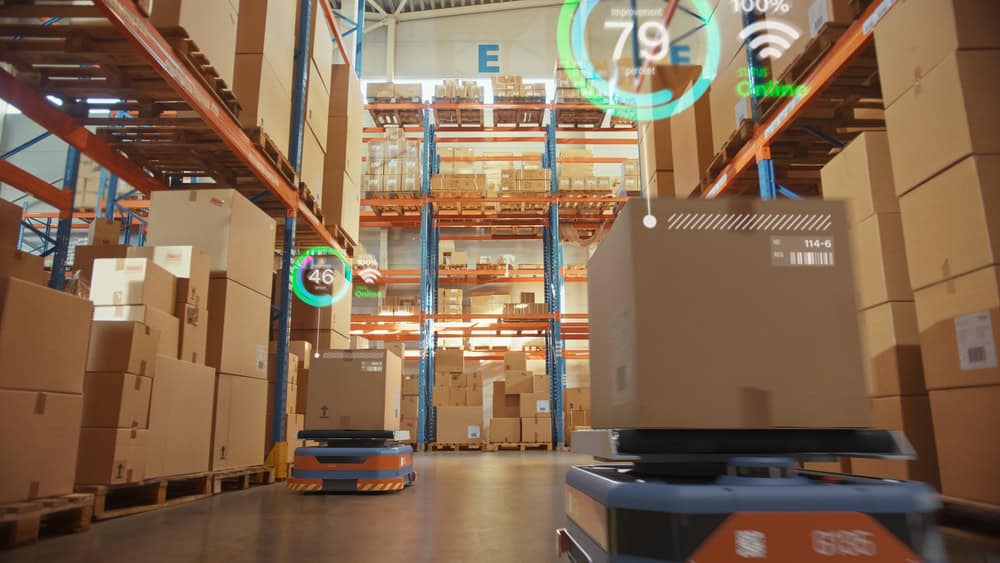
Automated transportation robots move boxes in a warehouse, one of many edge computing use cases in retail
Retail organizations must constantly adapt to meet changing customer expectations, mitigate external economic forces, and stay ahead of the competition. Technologies like the Internet of Things (IoT), artificial intelligence (AI), and other forms of automation help companies improve the customer experience and deliver products at the pace demanded in the age of one-click shopping and two-day shipping. However, connecting individual retail locations to applications in the cloud or centralized data center increases network latency, security risks, and bandwidth utilization costs.

Edge computing mitigates many of these challenges by decentralizing cloud and data center resources and distributing them at the network’s “edges,” where most retail operations take place. Running applications and processing data at the edge enables real-time analysis and insights and ensures that systems remain operational even if Internet access is disrupted by an ISP outage or natural disaster. This blog describes five potential edge computing use cases in retail and provides more information about the benefits of edge computing for the retail industry.

5 Edge computing use cases in retail

.

1. Security video analysis

Security cameras are crucial to loss prevention, but constantly monitoring video surveillance feeds is tedious and difficult for even the most experienced personnel. AI-powered video surveillance systems use machine learning to analyze video feeds and detect suspicious activity with greater vigilance and accuracy. Edge computing enhances AI surveillance by allowing solutions to analyze video feeds in real-time, potentially catching shoplifters in the act and preventing inventory shrinkage.

2. Localized, real-time insights

Retailers have a brief window to meet a customer’s needs before they get frustrated and look elsewhere, especially in a brick-and-mortar store. A retail store can use an edge computing application to learn about customer behavior and purchasing activity in real-time. For example, they can use this information to rotate the products featured on aisle endcaps to meet changing demand, or staff additional personnel in high-traffic departments at certain times of day. Stores can also place QR codes on shelves that customers scan if a product is out of stock, immediately alerting a nearby representative to provide assistance.

3. Enhanced inventory management

Effective inventory management is challenging even for the most experienced retail managers, but ordering too much or too little product can significantly affect sales. Edge computing applications can improve inventory efficiency by making ordering recommendations based on observed purchasing patterns combined with real-time stocking updates as products are purchased or returned. Retailers can use this information to reduce carrying costs for unsold merchandise while preventing out-of-stocks, improving overall profit margins.
.

4. Building management

Using IoT devices to monitor and control building functions such as HVAC, lighting, doors, power, and security can help retail organizations reduce the need for on-site facilities personnel, and make more efficient use of their time. Data analysis software helps automatically optimize these systems for efficiency while ensuring a comfortable customer experience. Running this software at the edge allows automated processes to respond to changing conditions in real-time, for example, lowering the A/C temperature or routing more power to refrigerated cases during a heatwave.

5. Warehouse automation

The retail industry uses warehouse automation systems to improve the speed and efficiency at which goods are delivered to stores or directly to users. These systems include automated storage and retrieval systems, robotic pickers and transporters, and automated sortation systems. Companies can use edge computing applications to monitor, control, and maintain warehouse automation systems with minimal latency. These applications also remain operational even if the site loses internet access, improving resilience.

The benefits of edge computing for retail

The benefits of edge computing in a retail setting include:
.

Edge computing benefits

Description

Reduced latency

Edge computing decreases the number of network hops between devices and the applications they rely on, reducing latency and improving the speed and reliability of retail technology at the edge.

Real-time insights

Edge computing can analyze data in real-time and provide actionable insights to improve the customer experience before a sale is lost or reduce waste before monthly targets are missed.

Improved resilience

Edge computing applications can continue functioning even if the site loses Internet or WAN access, enabling continuous operations and reducing the costs of network downtime.

Risk mitigation

Keeping sensitive internal data like personnel records, sales numbers, and customer loyalty information on the local network mitigates the risk of interception and distributes the attack surface.

Edge computing can also help retail companies lower their operational costs at each site by reducing bandwidth utilization on expensive MPLS links and decreasing expenses for cloud data storage and computing. Another way to lower costs is by using consolidated, vendor-neutral solutions to run, connect, and secure edge applications and workloads.

For example, the Nodegrid Gate SR integrated branch services router delivers an entire stack of edge networking, infrastructure management, and computing technologies in a single, streamlined device. The open, Linux-based Nodegrid OS supports VMs and Docker containers for third-party edge computing applications, security solutions, and more. The Gate SR is also available with an Nvidia Jetson Nano card that’s optimized for AI workloads to help retail organizations reduce the hardware overhead costs of deploying artificial intelligence at the edge.

Consolidated edge computing with Nodegrid

Nodegrid’s flexible, scalable platform adapts to all edge computing use cases in retail. Watch a demo to see Nodegrid’s retail network solutions in action.

Watch a demo

Edge Computing Use Cases in Healthcare

A closeup of an IoT pulse oximeter, one of many edge computing use cases in healthcare
The healthcare industry enthusiastically adopted Internet of Things (IoT) technology to improve diagnostics, health monitoring, and overall patient outcomes. The data generated by healthcare IoT devices is processed and used by sophisticated data analytics and artificial intelligence applications, which traditionally live in the cloud or a centralized data center. Transmitting all this sensitive data back and forth is inefficient and increases the risk of interception or compliance violations.

Edge computing deploys data analytics applications and computing resources around the edges of the network, where much of the most valuable data is created. This significantly reduces latency and mitigates many security and compliance risks. In a healthcare setting, edge computing enables real-time medical insights and interventions while keeping HIPAA-regulated data within the local security perimeter. This blog describes six potential edge computing use cases in healthcare that take advantage of the speed and security of an edge computing architecture.

6 Edge computing use cases in healthcare

Edge computing use cases for EMS

Mobile emergency medical services (EMS) teams need to make split-second decisions regarding patient health without the benefit of a doctorate and, often, with spotty Internet connections preventing access to online drug interaction guides and other tools. Installing edge computing resources on cellular edge routers gives EMS units real-time health analysis capabilities as well as a reliable connection for research and communications. Potential use cases include:
.

Use cases

Description

1. Real-time health analysis en route

Edge computing applications can analyze data from health monitors in real-time and access available medical records to help medics prevent allergic reactions and harmful medication interactions while administering treatment.

2. Prepping the ER with patient health insights

Some edge computing devices use 5G/4G cellular to livestream patient data to the receiving hospital, so ER staff can make the necessary arrangements and begin the proper treatment as soon as the patient arrives.

Edge computing use cases in hospitals & clinics

Hospitals and clinics use IoT devices to monitor vitals, dispense medications, perform diagnostic tests, and much more. Sending all this data to the cloud or data center takes time, delaying test results or preventing early intervention in a health crisis, especially in rural locations with slow or spotty Internet access. Deploying applications and computing resources on the same local network enables faster analysis and real-time alerts. Potential use cases include:
.

Use cases

Description

3. AI-powered diagnostic analysis

Edge computing allows healthcare teams to use AI-powered tools to analyze imaging scans and other test results without latency or delays, even in remote clinics with limited Internet infrastructure.

4. Real-time patient monitoring alerts

Edge computing applications can analyze data from in-room monitoring devices like pulse oximeters and body thermometers in real-time, spotting early warning signs of medical stress and alerting staff before serious complications arise.

Edge computing use cases for wearable medical devices

Wearable medical devices give patients and their caregivers greater control over health outcomes. With edge computing, health data analysis software can run directly on the wearable device, providing real-time results even without an Internet connection. Potential use cases include:
.

Use cases

Description

5. Continuous health monitoring

An edge-native application running on a system-on-chip (SoC) in a wearable insulin pump can analyze levels in real-time and provide recommendations on how to correct imbalances before they become dangerous.

6. Real-time emergency alerts

Edge computing software running on an implanted heart-rate monitor can give a patient real-time alerts when activity falls outside of an established baseline, and, in case of emergency, use cellular and ATT FirstNet connections to notify medical staff.

The benefits of edge computing for healthcare

Using edge computing in a healthcare setting as described in the use cases above can help organizations:

  • Improve patient care in remote settings, where a lack of infrastructure limits the ability to use cloud-based technology solutions.
  • Process and analyze patient health data faster and more reliably, leading to earlier interventions.
  • Increase efficiency by assisting understaffed medical teams with diagnostics, patient monitoring, and communications.
  • Mitigate security and compliance risks by keeping health data within the local security perimeter.

Edge computing can also help healthcare organizations lower their operational costs at the edge by reducing bandwidth utilization and cloud data storage expenses. Another way to reduce costs is by using consolidated, vendor-neutral solutions to host, connect, and secure edge applications and workloads.

For example, the Nodegrid Gate SR is an integrated branch services router that delivers an entire stack of edge networking, infrastructure management, and computing technologies in a single, streamlined device. Nodegrid’s open, Linux-based OS supports VMs and Docker containers for third-party edge applications, security solutions, and more. Plus, an onboard Nvidia Jetson Nano card is optimized for AI workloads at the edge, significantly reducing the hardware overhead costs of using artificial intelligence at remote healthcare sites. Nodegrid’s flexible, scalable platform adapts to all edge computing use cases in healthcare, future-proofing your edge architecture.

Streamline your edge deployment with Nodegrid

The vendor-neutral Nodegrid platform consolidates an entire edge technology stack into a unified, streamlined solution. Watch a demo to see Nodegrid’s healthcare network solutions in action.

Watch a demo

Cisco ISR 4431 EOL Replacement Guide

NSR with ZPE Logo

The Cisco ISR 4431 is an enterprise branch services router from Cisco’s Integrated Services Router product line. The ISR 4431 integrates with the Cisco DNA infrastructure management platform and the Catalyst SD-WAN (software-defined wide area networking) solution. Its modular design also makes the ISR 4431 extensible with Cisco’s Network Interface Modules (NIMs) to add storage, Ethernet switching, out-of-band (OOB) console server management, and other capabilities.

Cisco announced end-of-sale and end-of-life (EOL) dates for select ISR 4400-series models, including the ISR 4431. Its Cisco-recommended replacement option is the Catalyst C8300, which offers some improvements over the ISR but still suffers from some management, automation, and scaling limitations. However, there are other options on the market that fill these gaps with secure, vendor-neutral, all-in-one branch networking solutions. This guide compares Cisco ISR 4431 EOL replacement options and discusses the advanced features and capabilities offered by Cisco alternatives.

Click here for a list of ISR 4431 EOL products and replacement SKUs.
.

Upcoming Cisco ISR 4431 EOL dates

  • November 6, 2024 – End of routine failure analysis, end of new service attachment
  • August 31, 2025 – End of software maintenance releases and bug fixes
  • February 5, 2028 – End of service contract renewal
  • November 30, 2028 – Last date of support

Looking to replace a different Cisco EOL model? Read our guides Cisco ISR EOL Replacement Options and Cisco 4351 EOL Replacement Guide.

Cisco ISR 4431 EOL replacement options

Cisco ISR 4431 (EOL)

Cisco Catalyst C8300

Nodegrid NSR

Out-of-band (OOB) management

Gen 1 OOB

Gen 2 OOB

Gen 3 OOB

Extensibility

Integrates with Cisco partners only

Integrates with Cisco partners only

Supports virtualization, containers, and integrations

Automation

• Policy-based automation

• Cloud-based automated device provisioning (ZTP)

• Automated deployment of network services (Cisco DNA)

• Policy-based automation

• Cloud-based automated device provisioning (ZTP)

• Automated deployment of network services (Cisco DNA)

• Zero Touch Provisioning (ZTP) via LAN/DHCP, WAN/ZPE Cloud, USB

• Auto-discovery via network scan and custom probes

• Integrated orchestration and automation:

  ◦ Puppet

  ◦ Chef

  ◦ Ansible

  ◦ RESTful

  ◦ ZPE Cloud

  ◦ Nodegrid Manager

Security

• Intrusion prevention

• Cisco Umbrella Branch

• Encrypted traffic analytics

• IPSec tunnels

• DMVPN

• FlexVPN

• GETVPN

• Content filtering

• NAT

• Zone-based firewall

• Intrusion prevention

• Cisco Umbrella Branch

• Encrypted traffic analytics

• IPSec tunnels

• DMVPN

• FlexVPN

• GETVPN

• Content filtering

• NAT

• Zone-based firewall

• Edgified, hardened device with BIOS protection, TPM 2.0, UEFI Secure Boot, Signed OS, Self-Encrypted Disk (SED), Geofencing

• X.509 SSH certificate support, 4096-bit encryption keys

• Selectable cryptographic protocols for SSH and HTTPS (TLSv1.3)

• SSL VPN (Client and Server)

• IPSec, Wireguard, support for multi-sites

• Local, AD/LDAP, RADIUS, TACACS+, and Kerberos authentication

• SAML support via Duo, OKTA, Ping Identity

• Local, backup-user authentication support

• User-access lists per port

• Fine grain and role-based access control (RBAC)

• Firewall - IP packet and security filtering, IP forwarding support

• Two-factor authentication (2FA) with RSA and Duo

Hardware Services

• Serial console ports

• USB console ports

• IP management ports

• Voice functionality

• Compute module

• Serial console ports

• USB console ports

• Voice functionality

• Serial console ports

• USB console ports

• IP management ports

• PDU management

• IPMI device management

• (Optional) Compute module

• (Optional) Storage module

Network services

• Cisco SD-WAN software

• WAN optimization

• AppNAV

• Application visibility and control

• Multicast

• Overlay Transport Virtualization (OTV)

• Ethernet VPN (EVPNoMPLS)

• IPv6 support

• Cisco SD-WAN software

• WAN optimization

• AppNAV

• Application visibility and control

• Multicast

• Overlay Transport Virtualization (OTV)

• Ethernet VPN (EVPNoMPLS)

• IPv6 support

• IPv4 / IPv6 Support

• Embedded Layer 2 Switching

• VLAN

• Layer 3 Routing

• BGP

• OSFP

• RIP

• QoS

• DHCP (Client and Server)

Operating System

Cisco IOS

Cisco IOS

Nodegrid OS

CPU

Multi-Core processor

Multi-Core processor

Intel x86-64 Multi-Core

Storage

4GB-8GB Flash memory

16GB M.2 SSD storage

32GB FLASH (mSATA SSD) (Upgradeable) Self-Encrypted Drive (SED)

RAM

4GB-8GB DRAM

8GB DRAM

8GB DDR DRAM (Upgradeable)

Size

2RU

2RU

1RU

The Cisco Catalyst C8300

The Cisco ISR 4431 suffers from numerous limitations, such as its large physical size and closed ecosystem. Cisco’s recommended replacement option, the Catalyst C8300, has the same problems.

Both devices are 2RU, making them too large to easily install in cramped branches and edge computing sites that may not have a dedicated IT space. Both the ISR 4431 and the Catalyst C8300 are closed platforms, only supporting integrations with Cisco’s third-party partners like ThousandEyes. This prevents teams from utilizing all the security, automation, and monitoring solutions they’re most familiar with (or that work best for their specific use case), increasing the difficulty and complexity of branch network operations. Cisco’s OOB management modules and DNA software are also mostly limited to controlling other Cisco devices, leaving administrators with critical coverage gaps or multiple management solutions to deal with. Overall, these limitations reduce the efficiency, resilience, and scalability of branch network operations.

The Nodegrid Net SR (NSR)

The Nodegrid platform from ZPE Systems addresses many of Cisco’s limitations with vendor-neutral branch services routers (SRs). The Nodegrid Net Services Router (NSR) is a 1RU replacement for Cisco ISR 4431 EOL devices and features advanced branch networking capabilities.

Want to see how Nodegrid stacks up against Cisco’s ISR 4431 EOL replacement options? Click here to download the services routers comparative matrix.

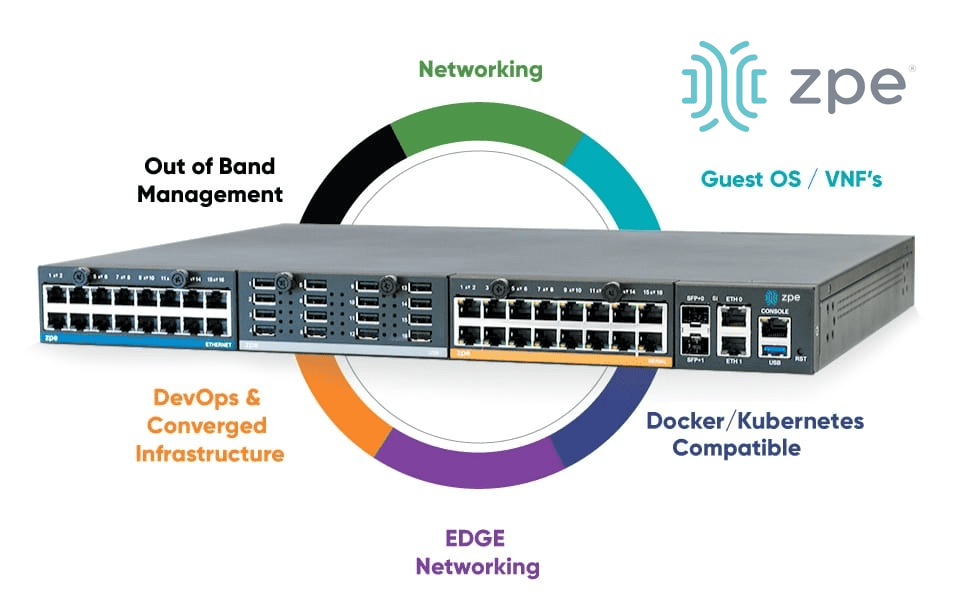
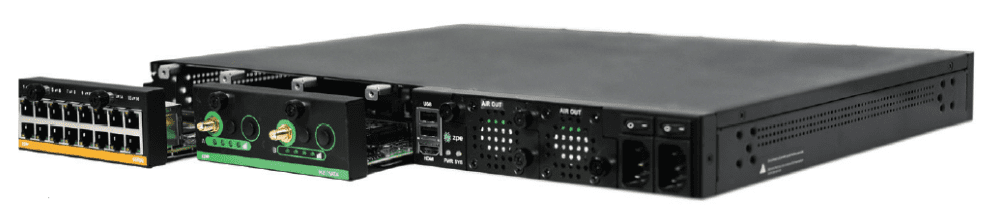
The NSR provides branch gateway routing and switching, vendor-neutral VNF (virtual network function) hosting, and out-of-band management in a single, 1RU device. The NSR’s expansion modules add capabilities like PoE+, cellular/Wi-Fi, edge compute, and additional serial console management ports.

Nodegrid solutions are vendor-neutral, supporting Guest OS and Docker containers for third-party software. Teams can use their favorite tools for monitoring, automation, and security, and even extend these capabilities to legacy and mixed-vendor infrastructure. Organizations can use Nodegrid to create a custom-tailored, all-in-one branch networking solution with all the apps and services needed to deploy, manage, troubleshoot, and recover branch operations. Plus, Nodegrid creates an isolated management plane where teams can recover from ransomware, deploy resource-intensive automated workflows, and ensure 24/7 branch operations, improving resilience and supporting efficient scaling.

Ready to replace your Cisco ISR 4431 EOL products?

The Nodegrid platform delivers vendor-neutral branch network management for improved efficiency, resilience, and scalability. See our Cisco ISR 4431 EOL replacement SKUs below or contact ZPE Systems for help choosing the right Nodegrid solution for your business.

Explore our full products and services package to replace your Cisco ISR 4431

We know that replacing EOL devices takes a lot of effort. That’s why ZPE now offers a complete package of budget-friendly products and engineering services. Visit our page to see how we make it easy to replace discontinued devices like the Cisco ISR 4431.

Cisco ISR 4431 replacement SKUs

Cisco ISR 4431 EOL Product SKUs

In-Scope Features

Nodegrid Replacement Product SKUs

ISR4431-AX/K9

ISR4431-AXV/K9

ISR4431-DNA

ISR4431-PM20

ISR4431-SEC/K0

ISR4431-V/K9

ISR4431-VSEC/K9

ISR4431/K9

Serial Console Module, Routing, 16 serial ports

ZPE-NSR-816-DAC with 1 x 16 port serial module 1 x ZPE-NSR-16SRL-EXPN


ISR4431-AX/K9

ISR4431-AXV/K9

ISR4431-DNA

ISR4431-PM20

ISR4431-SEC/K0

ISR4431-V/K9

ISR4431-VSEC/K9

ISR4431/K9

Serial Console Module, Routing, 32 serial ports

ZPE-NSR-816-DAC with 2 x 16 port serial module 2 x ZPE-NSR-16SRL-EXPN

ISR4431-AX/K9

ISR4431-AXV/K9

ISR4431-DNA

ISR4431-PM20

ISR4431-SEC/K0

ISR4431-V/K9

ISR4431-VSEC/K9

ISR4431/K9

Serial Console Module, Routing, 48 serial ports

ZPE-NSR-816-DAC with 3 x 16 port serial module 3 x ZPE-NSR-16SRL-EXPN

ISR4431-AX/K9

ISR4431-AXV/K9

ISR4431-DNA

ISR4431-PM20

ISR4431-SEC/K0

ISR4431-V/K9

ISR4431-VSEC/K9

ISR4431/K9

Serial Console Module, Routing, 60 serial ports

ZPE-NSR-816-DAC with 4 x 16 port serial module 4 x ZPE-NSR-16SRL-EXPN

80 serial port option – no Cisco equivalent

Serial Console Module, Routing, 80 serial ports

ZPE-NSR-816-DAC with 5 x 16 port serial module 5 x ZPE-NSR-16SRL-EXPN

The Future of Edge Computing

The Future of Edge Computing
Edge computing moves computing resources and data processing applications out of the centralized data center or cloud, deploying them at the edges of the network and allowing companies to use their edge data in real-time. An explosion in edge data generated by Internet of Things (IoT) sensors, automated operational technology (OT), and other remote devices has created a high demand for edge computing solutions. A recent report from Grand View Research valued the edge computing market size at $16.45 billion in 2023 and predicted it to grow at a compound annual growth rate (CAGR) of 37.9% by 2030.

The current edge computing landscape comprises solutions focused on individual use cases,  lacking interoperability and central orchestration. The future of edge computing, as described by leading analysts at Gartner, depends on unifying the edge computing ecosystem with comprehensive strategies and centralized, vendor-neutral management and orchestration. This future relies on edge-native applications that integrate seamlessly with upstream resources, remote management, and orchestration while still being able to operate independently.

Where is edge computing now?

Many organizations already use edge computing technology to solve individual problems or handle specific workloads. For example, a manufacturing department may deploy an edge computing application to analyze log data and provide predictive maintenance recommendations for a single type of machine or assembly line. A single company may have a dozen or more disjointed edge computing solutions in use throughout the network, creating visibility and management headaches for IT teams. This piecemeal approach to edge computing results in what Gartner calls “edge sprawl”: many disparate solutions deployed without centralized control, security, or visibility. Edge sprawl increases management complexity and risk while decreasing operational efficiency, creating significant roadblocks for digital transformation initiatives.

Additionally, many organizations misunderstand edge computing by thinking it’s just about moving computing resources as close to the edge as possible to collect data. In reality, the true potential of the edge involves using edge data in real-time, gaining “cloud-in-a-box” capability that works in concert with the network’s upstream resources.

Anticipating the future of edge computing

At Gartner’s 2023 IT Infrastructure Operations & Cloud Strategies Conference, edge technology experts predicted that, by 2025, enterprises will create and process more than 50% of their data outside the centralized data center or cloud. Surging edge data volume will accelerate the challenges caused by a lack of strategy or orchestration.

Gartner’s 6 Edge Computing Challenges

Lack of extensibility

Many purpose-built edge computing solutions can’t adapt as use cases change or expand as the business scales, limiting agility and preventing efficient growth.

Inability to extract value from edge data

Much of the valuable data generated by edge sensors and devices gets left on the table, so to speak, because companies lack the resources needed to run all their data analytics and AI apps at the edge and are stuck simply collecting data rather than being able to do much with it.

Data storage constraints

Edge computing deployments are often smaller and have more data storage constraints than large data centers and cloud deployments, but quickly distinguishing between valuable data and destroyable junk is difficult with edge resources.

Knowledge debt from edge-native apps

Edge-native applications are designed for edge computing architectures from the ground up. Edge containers are similar to cloud-native apps, but clustering and cluster management work much differently, creating what’s known as “knowledge debt” and straining IT teams.

Lack of security controls, policies, & visibility

Edge deployments often lack many of the security features used in data centers, and sometimes other departments install edge computing solutions without onboarding them with IT for the application of security policies and monitoring agents, adding risk and increasing the attack surface.

Inability to remotely orchestrate, monitor, & troubleshoot

When equipment failures, configuration errors, or breaches take down edge networks, remote teams are often cut-off and unable to troubleshoot or recover without traveling on-site or paying for managed services, increasing the duration and cost of the outage. Current edge solutions are novel and don’t connect to or integrate with the full networking stack.

At the Gartner conference, analyst Thomas Bittman gave multiple presentations echoing his advice from the Building an Edge Computing Strategy report published earlier in the year. In preparing for the future of edge computing, Bittman urges companies to proactively develop a comprehensive edge computing strategy encompassing all potential use cases and addressing the challenges described above. His recommendations include:

  • Enabling extensibility by utilizing vendor-neutral platforms that allow for expansion and integration, which supports growth and agility at the edge.
  • Looking for opportunities to deploy artificial intelligence, data analytics, and machine learning alongside edge computing units, for example, with system-on-chip technology or all-in-one edge networking and computing devices.
  • Anticipating data storage and governance challenges at the edge by defining clear policies and deploying AI/ML data management solutions that dynamically determine data value.
  • Reducing knowledge debt by utilizing vendor-neutral platforms that support familiar container and cluster management technologies (like Docker and Kubernetes).
  • Securing the edge with a multi-layered defense, including hardware security, frequent patches, zero-trust policies, strong authentication, network micro-segmentation, and comprehensive security monitoring.
  • Centralizing edge management and orchestration (EMO) with a vendor-neutral platform that unifies control, supports environmental monitoring, and uses out-of-band (OOB) management while interoperating with automated edge management workflows (such as zero-touch provisioning and infrastructure configuration management).

Bittman’s recommended edge computing strategy uses the central EMO as a hub for all the technologies, processes, and workflows involved in operating and supporting the edge. This strategy will prepare companies for the future of edge computing and support efficient, agile growth and innovation.

Enter the future of edge computing with Nodegrid

Nodegrid is a vendor-neutral edge management and orchestration platform from ZPE Systems. Nodegrid easily interoperates with your choice of edge solutions and can directly run third-party AI, ML, data analytics, and data governance applications to help you extract more value from your edge data. The open, Linux-based Nodegrid OS can also host Docker containers and edge-native applications to reduce hardware overhead and knowledge debt.

Nodegrid devices protect your edge management interfaces with hardware security features like TPM and geofencing, support for strong authentication like 2FA, and integrations with leading zero-trust providers like Okta and PING. The Nodegrid OS and ZPE Cloud are Synopsys-validated to address security at every stage of the SDLC. Plus, you can run third-party security solutions for SASE, next-generation firewalls, and more.

Nodegrid edge networking solutions use out-of-band technology to give teams 24/7 remote visibility, management, and troubleshooting access to edge deployments. It freely interoperates with third-party solutions for infrastructure automation, monitoring, and recovery to support network resilience and operational efficiency. Nodegrid is like a cloud-in-a-box solution, incorporating edge computing and the full networking stack. Nodegrid’s edge management and orchestration platform provides single-pane-of-glass visibility, control, and resilience while supporting future edge growth.

Use Nodegrid for your Gartner-approved edge computing strategy

The Nodegrid EMO platform helps you anticipate the future of edge computing with vendor-neutral, single-pane-of-glass visibility and control. Watch a free Nodegrid demo to learn more.

Request a Demo

99.999% Uptime for a Top-10 Engineering School

Providing low-level remote access and automation saves hundreds of hours per month for the university’s small IT team

One of the largest universities in the United States fosters academics and research for nearly 40,000 students, staff, and researchers. The university sits among the top 10 schools for engineering, and heavily integrates technology into all disciplines, including engineering, computer sciences, and agricultural studies.

The university received a grant to expand, update, and connect their network of campuses, while enhancing infrastructure and mobility, resiliency, and campus amenities.  But having more than 200 on-campus buildings presents a challenge. The campus is home to academic facilities as well as a hospital, airport, 60,000-seat sports stadium, and dozens of leased spaces for local businesses. This makes the university equivalent to a small city, and its network infrastructure is what keeps it all connected.

Their small IT team was responsible for maintaining more than 10,000 management devices, most of which were long past EOL and frequently failing. They needed a refresh, but with a solution that could also reduce the hundreds of hours they spent every month on travel and on-site work. To maximize their day-to-day efficiency, they required a solution that could overcome these operational gaps:

  • Reducing the 100-150 hours of monthly travel times, by giving engineers the ability to fully access their stack remotely
  • Reducing the 80-120 hours of monthly on-site work required to maintain the 99.999% SLA, by automating manual jobs such as patching and firmware upgrades
  • Expanding their management headroom and use-case adaptability, by migrating to IPv6 and reducing the existing 6RU device stack

Download the full case study to see how ZPE’s Nodegrid hardware and software solved these problems.

EngineeringSchoolCover

Download the full case study

Problems and Gaps

The university is one of the largest in the United States. It sits among the nation’s top 50 schools for research expenditures, and heavily integrates technology into all disciplines, including engineering. Its main campus is home to more than 200 buildings that sit on over 2,500 acres of land. The campus is essentially a small city, and the university’s network infrastructure keeps it all connected.

This network infrastructure, however, was well beyond EOL and in disrepair. But rather than simply upgrade to newer devices, the university’s small IT team wanted to improve the overall quality of life well into the future. This meant addressing three gaps:

  • Inefficient management at scale — Each engineer spent an average of ten hours per month on travel alone, just to traverse the campus’ wide footprint and get to each MDF/IDF closet.
  • Too much focus on ops — The aging infrastructure was on the brink of collapse and required each engineer to spend eight hours per month in on-site work, just to keep devices running.
  • Too many devices — The infrastructure includes roughly 10,000 devices to manage, which was exhausting IP on their limited IPv4 network and too rigid to fit in tight spaces, like their remote farm closets and research labs.

Solution

The university deployed the full lineup of Nodegrid devices, including the Nodegrid Serial Console, Nodegrid Services Routers, and Nodegrid Manager. These allowed them to overcome all three gaps using remote management, automation, and consolidated functionality, to save engineers hundreds of hours every month. Download the full case study to see the complete solution and benefits.

Need Help Replacing End-of-Life Gear?

Check out our complete products and services package to make your EOL transition seamless. Choose from a variety of Synopsys-validated devices, get a generous trade-in discount, and let our engineers install and configure into your environment. Click below to explore this offer and more customer case studies.