Providing Out-of-Band Connectivity to Mission-Critical IT Resources

Automated Infrastructure Management for Network Resilience
Automated-Infastructure

Clients and end-users expect 24/7 access to digital services, but threats like ransomware and global political instability make it harder than ever to ensure continuous business operations. However, human error remains one of the biggest risks to business continuity, as illustrated by a misconfiguration that caused a recent McDonald’s outage. Despite the risk, many organizations must make do with lean IT teams and limited technology budgets, increasing the likelihood that an overworked engineer will make a mistake that brings down critical services.

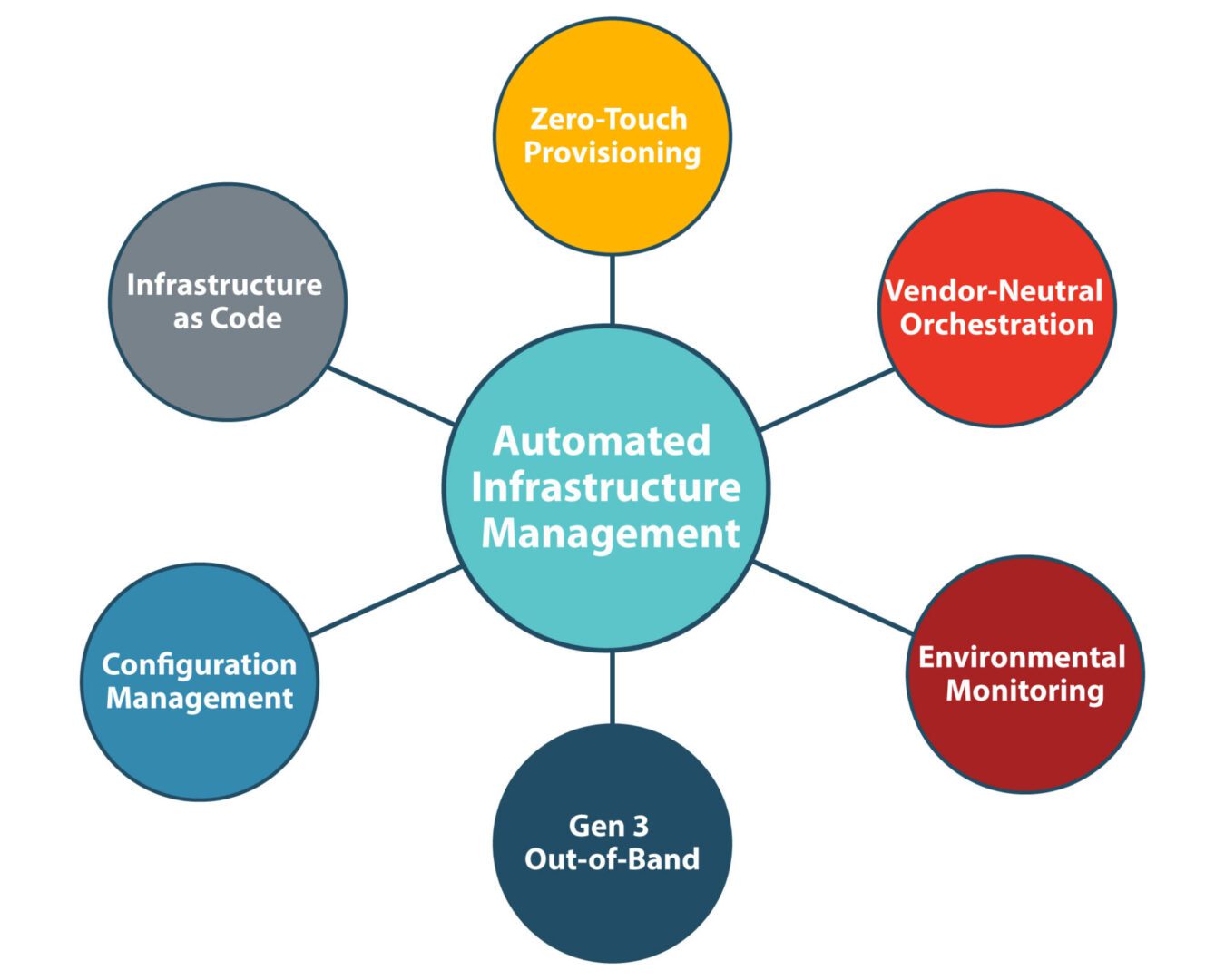
Automated infrastructure management reduces human intervention in workflows such as device configurations, software updates, and environmental monitoring. Automation improves network resilience by mitigating the risk of errors and making it easier to recover from failures. 

How does infrastructure automation improve network resilience?

Network resilience is the ability to withstand or recover from adversity, service degradation, and complete outages with minimal business disruption. Automated infrastructure management improves resilience in three key ways:

  1. It reduces the risk of human error in configurations and updates,
  2. It catches environmental issues missed by human engineers, and
  3. It accelerates recovery by streamlining infrastructure rebuilds after failures and attacks

Let’s examine some of the infrastructure automation components and best practices that boost business resilience.

Improving Network Resilience with Automated Infrastructure Management

Technology / Best Practice

Description

Zero-touch provisioning (ZTP)

Reduces human error by enabling automatic device configurations

Infrastructure as Code (IaC)

Further mitigates human error by codifying VM and container configurations

Automatic configuration management

Prevents security vulnerabilities and configuration mistakes from proliferating in production by monitoring and updating in-place configs

Gen 3 OOB serial consoles

Ensure 24/7 management access, isolate the control plane from the data plane, and provide a safe recovery environment

Environmental monitoring

Automatically detects and notifies administrators of environmental issues that might affect device health

Vendor-neutral orchestration platforms

Unify infrastructure automation and management workflows to reduce complexity and ensure complete coverage

Zero-touch provisioning (ZTP)

Zero-touch provisioning (ZTP), also known as zero-touch deployment, uses software scripts or definition files to automatically configure new devices over the internet. ZTP allows teams to create and test a single configuration file, and then use it repeatedly to deploy new infrastructure. ZTP reduces the tediousness of new deployments, which in turn decreases the chances of errors. It also provides an opportunity to validate new configurations so any errors can be corrected before they’re deployed to production.

Infrastructure as Code (IaC)

Infrastructure as code (IaC) uses software abstraction to decouple infrastructure configurations from the underlying hardware. Similar to ZTP, IaC configurations are written as scripts or definition files, but they’re used to automatically provision virtual machines (VMs) and containers. Also like ZTP, IaC improves resilience by reducing human intervention in what is otherwise a tedious manual process. IaC also facilitates automatic configuration management.

Automatic configuration management

Automatic configuration management solutions continuously monitor in-place configurations to ensure they don’t drift away from documented standards. When necessary, they automatically install updates or roll back any unauthorized changes to prevent security vulnerabilities or configuration mistakes from bringing down the network.

Gen 3 out-of-band (OOB) serial consoles

Out-of-band (OOB) serial consoles manage other infrastructure devices over a serial connection, separating the control plane from the data plane on a network dedicated to managing, troubleshooting, and orchestrating infrastructure. All OOB serial consoles improve network resilience by providing an alternative path to remote infrastructure that’s unaffected by issues on the production network. Gen 3 serial consoles go a step further by enabling vendor-neutral automation over the OOB connection. Gen 3 OOB serial consoles support third-party automation scripts and solutions and extend that automation to legacy and mixed-vendor infrastructure devices that are otherwise unsupported.

Additionally, Gen 3 OOB enables isolated management infrastructure (IMI), which prevents attackers on the production network from commandeering crown-jewel assets and vital business infrastructure. The OOB network also provides a safe environment where teams can recover from ransomware attacks without risking reinfection. Plus, a Gen 3 serial console can host all the tools teams need to automatically provision, test, and deploy new systems, accelerating recovery efforts for improved resilience.

See how Gen 3 OOB serial consoles stack up to the competition with our feature comparison chart.

Environmental monitoring

Environmental conditions like temperature, humidity, and air quality have a significant impact on the performance and lifespan of network infrastructure. That infrastructure is often housed in off-site data centers and branch offices, which means administrators may not know there’s an environmental concern until it’s already caused an error or outage. An environmental monitoring system uses sensors to collect data about conditions in remote facilities and automatically notify administrators of issues so they can respond before failures occur.  

Vendor-neutral orchestration platforms

An automated network infrastructure comprises many moving parts and can be very complex to manage, especially if they don’t interoperate. Complexity increases the workload on IT staff that’s already stretched too thin, making mistakes more likely. A vendor-neutral orchestration platform unifies all the automation and management workflows behind a single pane of glass. Teams can use the automation tools they’re most comfortable with, decreasing errors while ensuring complete coverage of mixed-vendor and legacy infrastructure. Plus, using vendor-neutral management hardware like Nodegrid Gen 3 serial consoles allows teams to consolidate network functions, automation, security, and service hosting with a single device, further reducing complexity and boosting operational efficiency.

Automated infrastructure management is easier with Nodegrid

Infrastructure automation improves an organization’s ability to withstand and recover from adverse events by reducing human error, catching environmental issues before they cause outages, and accelerating recovery from ransomware and other failures. The Nodegrid platform from ZPE Systems provides Gen 3 out-of-band management, vendor-neutral hosting for automation and other third-party software, and unified orchestration for remote, mixed-vendor, and legacy infrastructure. Nodegrid simplifies automated infrastructure management for improved network resilience. 

Ready to start your Automated Infrastructure Management for Network Resilience?

Learn more about boosting network resilience with automated infrastructure management by downloading ZPE’s Network Automation Blueprint.
Cisco ISR 4431 EOL Replacement Guide

NSR with ZPE Logo

The Cisco ISR 4431 is an enterprise branch services router from Cisco’s Integrated Services Router product line. The ISR 4431 integrates with the Cisco DNA infrastructure management platform and the Catalyst SD-WAN (software-defined wide area networking) solution. Its modular design also makes the ISR 4431 extensible with Cisco’s Network Interface Modules (NIMs) to add storage, Ethernet switching, out-of-band (OOB) console server management, and other capabilities.

Cisco announced end-of-sale and end-of-life (EOL) dates for select ISR 4400-series models, including the ISR 4431. Its Cisco-recommended replacement option is the Catalyst C8300, which offers some improvements over the ISR but still suffers from some management, automation, and scaling limitations. However, there are other options on the market that fill these gaps with secure, vendor-neutral, all-in-one branch networking solutions. This guide compares Cisco ISR 4431 EOL replacement options and discusses the advanced features and capabilities offered by Cisco alternatives.

Click here for a list of ISR 4431 EOL products and replacement SKUs.
.

Upcoming Cisco ISR 4431 EOL dates

  • November 6, 2024 – End of routine failure analysis, end of new service attachment
  • August 31, 2025 – End of software maintenance releases and bug fixes
  • February 5, 2028 – End of service contract renewal
  • November 30, 2028 – Last date of support

Looking to replace a different Cisco EOL model? Read our guides Cisco ISR EOL Replacement Options and Cisco 4351 EOL Replacement Guide.

Cisco ISR 4431 EOL replacement options

Cisco ISR 4431 (EOL)

Cisco Catalyst C8300

Nodegrid NSR

Out-of-band (OOB) management

Gen 1 OOB

Gen 2 OOB

Gen 3 OOB

Extensibility

Integrates with Cisco partners only

Integrates with Cisco partners only

Supports virtualization, containers, and integrations

Automation

• Policy-based automation

• Cloud-based automated device provisioning (ZTP)

• Automated deployment of network services (Cisco DNA)

• Policy-based automation

• Cloud-based automated device provisioning (ZTP)

• Automated deployment of network services (Cisco DNA)

• Zero Touch Provisioning (ZTP) via LAN/DHCP, WAN/ZPE Cloud, USB

• Auto-discovery via network scan and custom probes

• Integrated orchestration and automation:

  ◦ Puppet

  ◦ Chef

  ◦ Ansible

  ◦ RESTful

  ◦ ZPE Cloud

  ◦ Nodegrid Manager

Security

• Intrusion prevention

• Cisco Umbrella Branch

• Encrypted traffic analytics

• IPSec tunnels

• DMVPN

• FlexVPN

• GETVPN

• Content filtering

• NAT

• Zone-based firewall

• Intrusion prevention

• Cisco Umbrella Branch

• Encrypted traffic analytics

• IPSec tunnels

• DMVPN

• FlexVPN

• GETVPN

• Content filtering

• NAT

• Zone-based firewall

• Edgified, hardened device with BIOS protection, TPM 2.0, UEFI Secure Boot, Signed OS, Self-Encrypted Disk (SED), Geofencing

• X.509 SSH certificate support, 4096-bit encryption keys

• Selectable cryptographic protocols for SSH and HTTPS (TLSv1.3)

• SSL VPN (Client and Server)

• IPSec, Wireguard, support for multi-sites

• Local, AD/LDAP, RADIUS, TACACS+, and Kerberos authentication

• SAML support via Duo, OKTA, Ping Identity

• Local, backup-user authentication support

• User-access lists per port

• Fine grain and role-based access control (RBAC)

• Firewall - IP packet and security filtering, IP forwarding support

• Two-factor authentication (2FA) with RSA and Duo

Hardware Services

• Serial console ports

• USB console ports

• IP management ports

• Voice functionality

• Compute module

• Serial console ports

• USB console ports

• Voice functionality

• Serial console ports

• USB console ports

• IP management ports

• PDU management

• IPMI device management

• (Optional) Compute module

• (Optional) Storage module

Network services

• Cisco SD-WAN software

• WAN optimization

• AppNAV

• Application visibility and control

• Multicast

• Overlay Transport Virtualization (OTV)

• Ethernet VPN (EVPNoMPLS)

• IPv6 support

• Cisco SD-WAN software

• WAN optimization

• AppNAV

• Application visibility and control

• Multicast

• Overlay Transport Virtualization (OTV)

• Ethernet VPN (EVPNoMPLS)

• IPv6 support

• IPv4 / IPv6 Support

• Embedded Layer 2 Switching

• VLAN

• Layer 3 Routing

• BGP

• OSFP

• RIP

• QoS

• DHCP (Client and Server)

Operating System

Cisco IOS

Cisco IOS

Nodegrid OS

CPU

Multi-Core processor

Multi-Core processor

Intel x86-64 Multi-Core

Storage

4GB-8GB Flash memory

16GB M.2 SSD storage

32GB FLASH (mSATA SSD) (Upgradeable) Self-Encrypted Drive (SED)

RAM

4GB-8GB DRAM

8GB DRAM

8GB DDR DRAM (Upgradeable)

Size

2RU

2RU

1RU

The Cisco Catalyst C8300

The Cisco ISR 4431 suffers from numerous limitations, such as its large physical size and closed ecosystem. Cisco’s recommended replacement option, the Catalyst C8300, has the same problems.

Both devices are 2RU, making them too large to easily install in cramped branches and edge computing sites that may not have a dedicated IT space. Both the ISR 4431 and the Catalyst C8300 are closed platforms, only supporting integrations with Cisco’s third-party partners like ThousandEyes. This prevents teams from utilizing all the security, automation, and monitoring solutions they’re most familiar with (or that work best for their specific use case), increasing the difficulty and complexity of branch network operations. Cisco’s OOB management modules and DNA software are also mostly limited to controlling other Cisco devices, leaving administrators with critical coverage gaps or multiple management solutions to deal with. Overall, these limitations reduce the efficiency, resilience, and scalability of branch network operations.

The Nodegrid Net SR (NSR)

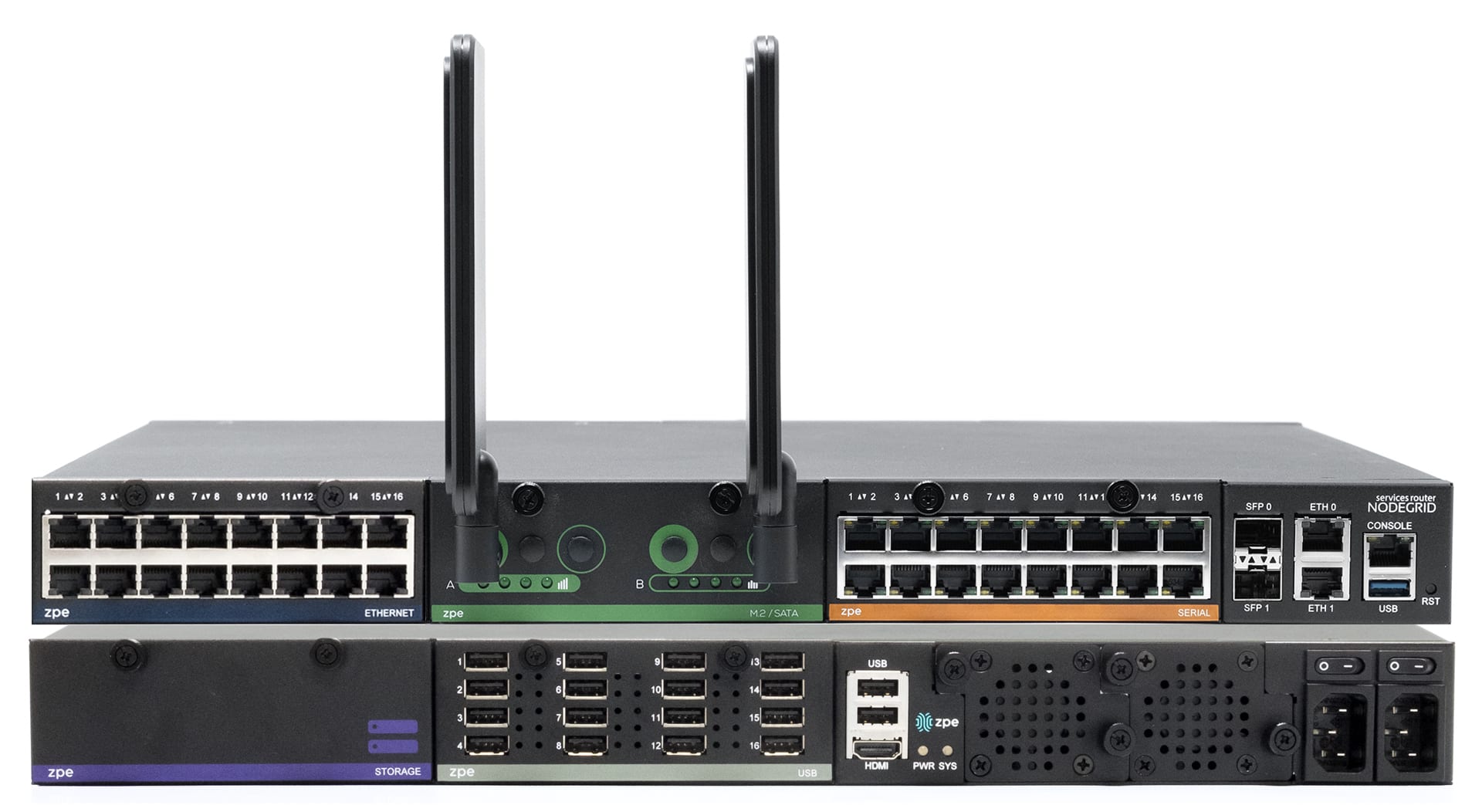
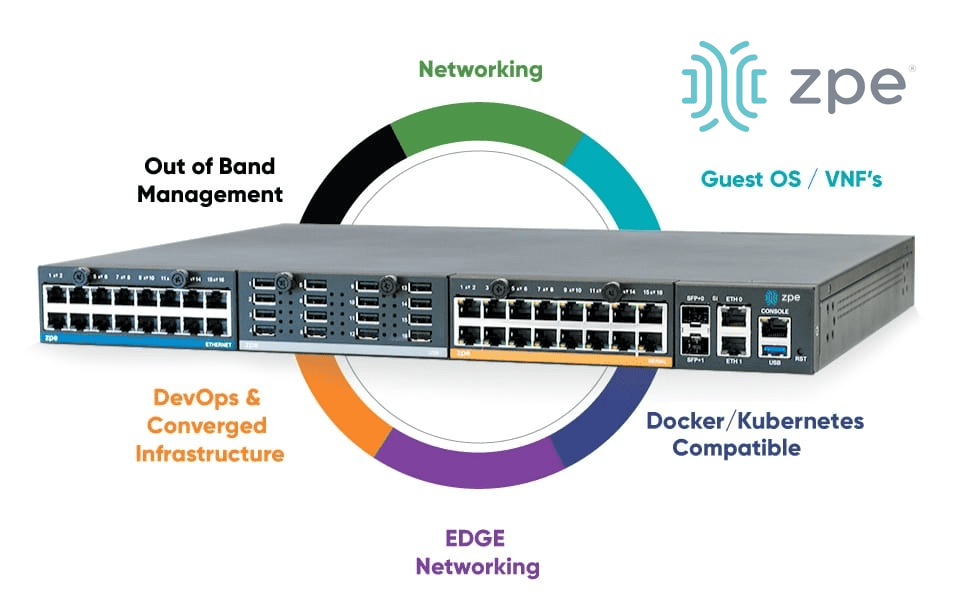
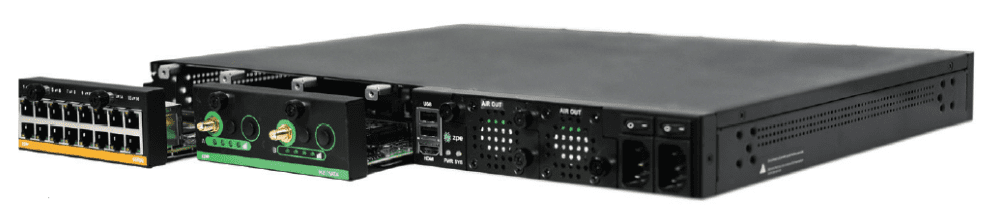
The Nodegrid platform from ZPE Systems addresses many of Cisco’s limitations with vendor-neutral branch services routers (SRs). The Nodegrid Net Services Router (NSR) is a 1RU replacement for Cisco ISR 4431 EOL devices and features advanced branch networking capabilities.

Want to see how Nodegrid stacks up against Cisco’s ISR 4431 EOL replacement options? Click here to download the services routers comparative matrix.

The NSR provides branch gateway routing and switching, vendor-neutral VNF (virtual network function) hosting, and out-of-band management in a single, 1RU device. The NSR’s expansion modules add capabilities like PoE+, cellular/Wi-Fi, edge compute, and additional serial console management ports.

Nodegrid solutions are vendor-neutral, supporting Guest OS and Docker containers for third-party software. Teams can use their favorite tools for monitoring, automation, and security, and even extend these capabilities to legacy and mixed-vendor infrastructure. Organizations can use Nodegrid to create a custom-tailored, all-in-one branch networking solution with all the apps and services needed to deploy, manage, troubleshoot, and recover branch operations. Plus, Nodegrid creates an isolated management plane where teams can recover from ransomware, deploy resource-intensive automated workflows, and ensure 24/7 branch operations, improving resilience and supporting efficient scaling.

Ready to replace your Cisco ISR 4431 EOL products?

The Nodegrid platform delivers vendor-neutral branch network management for improved efficiency, resilience, and scalability. See our Cisco ISR 4431 EOL replacement SKUs below or contact ZPE Systems for help choosing the right Nodegrid solution for your business.

Explore our full products and services package to replace your Cisco ISR 4431

We know that replacing EOL devices takes a lot of effort. That’s why ZPE now offers a complete package of budget-friendly products and engineering services. Visit our page to see how we make it easy to replace discontinued devices like the Cisco ISR 4431.

Cisco ISR 4431 replacement SKUs

Cisco ISR 4431 EOL Product SKUs

In-Scope Features

Nodegrid Replacement Product SKUs

ISR4431-AX/K9

ISR4431-AXV/K9

ISR4431-DNA

ISR4431-PM20

ISR4431-SEC/K0

ISR4431-V/K9

ISR4431-VSEC/K9

ISR4431/K9

Serial Console Module, Routing, 16 serial ports

ZPE-NSR-816-DAC with 1 x 16 port serial module 1 x ZPE-NSR-16SRL-EXPN


ISR4431-AX/K9

ISR4431-AXV/K9

ISR4431-DNA

ISR4431-PM20

ISR4431-SEC/K0

ISR4431-V/K9

ISR4431-VSEC/K9

ISR4431/K9

Serial Console Module, Routing, 32 serial ports

ZPE-NSR-816-DAC with 2 x 16 port serial module 2 x ZPE-NSR-16SRL-EXPN

ISR4431-AX/K9

ISR4431-AXV/K9

ISR4431-DNA

ISR4431-PM20

ISR4431-SEC/K0

ISR4431-V/K9

ISR4431-VSEC/K9

ISR4431/K9

Serial Console Module, Routing, 48 serial ports

ZPE-NSR-816-DAC with 3 x 16 port serial module 3 x ZPE-NSR-16SRL-EXPN

ISR4431-AX/K9

ISR4431-AXV/K9

ISR4431-DNA

ISR4431-PM20

ISR4431-SEC/K0

ISR4431-V/K9

ISR4431-VSEC/K9

ISR4431/K9

Serial Console Module, Routing, 60 serial ports

ZPE-NSR-816-DAC with 4 x 16 port serial module 4 x ZPE-NSR-16SRL-EXPN

80 serial port option – no Cisco equivalent

Serial Console Module, Routing, 80 serial ports

ZPE-NSR-816-DAC with 5 x 16 port serial module 5 x ZPE-NSR-16SRL-EXPN

Opengear Alternatives for the OM2200 and OM1200

NSRSTACK2-1
The Opengear Operations Manager is a series of NetOps console servers providing out-of-band remote access to manage remote network infrastructure in data center, edge, and branch deployments. There are a few reasons to consider alternative options, including a lack of 3rd-party integrations, 5G support, and gateway routing capabilities. This blog goes over the pros and cons of the Operations Manager solutions before discussing Opengear alternatives that provide greater automation, orchestration, and security features as well as all-in-one branch networking capabilities.

Executive summary

  • Opengear’s Operations Manager (OM) appliances are NetOps console servers providing out-of-band (OOB) management for remote network infrastructure.
  • While OM appliances provide some automation capabilities, especially with the upgraded Automation Edition, they offer limited third-party integrations and end-device automation features.
  • The OM2200 and OM1200 both lack integrated branch gateway functionality and have limited security features overall.
  • The Nodegrid platform from ZPE Systems overcomes these limitations with vendor-neutral OOB serial consoles and branch services routers.
  • Nodegrid enables end-to-end automation through end-device ZTP and unlimited third-party integrations with leading tools like Ansible and Chef.
  • Nodegrid also consolidates data center and branch networking functionality like gateway routing, 5G cellular failover, and security to provide all-in-one solutions.

Reviewing the Opengear Operations Manager platform

Operations Manager (or OM) is Opengear’s line of NetOps console servers. OM appliances come with Smart OOBTM for out-of-band management, including automated port discovery and VLAN support. Opengear’s x86 Lighthouse platform supports Python scripts and Docker container deployments for NetOps automation. Lighthouse also supports over 100 power vendors’ equipment, allowing it to monitor and control UPS batteries, PDU outlets, and power load balancing. It’s important to note that, while the standard (Enterprise) edition of Lighthouse supports Python and Docker, customers must upgrade to the Automation edition for zero-touch provisioning (ZTP) or other third-party automation integrations. Additionally, OM solutions do not support 2FA or SAML authentication.

Opengear OM2200

The Opengear OM2200 Operations Manager model is designed for data center and high-density use cases. It features 16, 32, 48 serial and 24 serial/Ethernet mixed port configuration options, with an optional global LTE-A Pro cellular module. The OM2200 provides five regional options for dual AC power as well as a dual DC power cord model.

Click here to see a complete Opengear OM2200 Operations Manager product SKUs list.

OM2200 Pros:

  • Plenty of RAM and storage space
  • Many options for power and serial port configurations
  • Uniquely broad support for 3rd-party power equipment
  • Some NetOps automation capabilities

OM2200 Cons:

  • Requires upgraded software licenses for ZTP and most 3rd-party automation
  • No 2FA or SAML 2.0 support
  • No managed USB serial ports
  • No 5G support

Opengear OM1200

The Opengear OM1200 Operations Manager model is meant for small edge deployments. The compact chassis supports 4 serial, 8 serial, and 8 serial/8 Ethernet port combinations. It provides OOB and failover access via dual Ethernet (SFP Fiber is available on the 4E and 8E models) as well as an optional global LTE-A Pro cellular module.

Click here to see a full list of Opengear OM1200 Operations Manager product SKUs.

OM1200 Pros:

  • Compact size
  • Cost-effective range of port configurations
  • Supports 3rd-party power equipment, Docker, and Python

OM1200 Cons:

  • Requires upgraded software licenses for ZTP and most 3rd-party automation
  • No 2FA or SAML 2.0 support
  • It doesn’t have gateway routing/SD-WAN capabilities
  • No 5G support

Opengear Operations Manager limitations

Both the OM2200 and OM1200 models suffer from similar limitations regarding automation, especially with the base version of the Lighthouse software. Even the upgraded Automation Edition, which unlocks ZTP and RESTful APIs, doesn’t provide much automation for end devices beyond running Python playbooks. This limits operational efficiency, slows down new deployments, and impedes the team’s ability to quickly rebuild core infrastructure after a failure or ransomware attack. Another issue with the OM1200, in particular, is that while its compact size will save space in your edge data center and branch office rack, it’s still a single-purpose device. That means you still need to purchase separate solutions for gateway routing, switching, and/or edge compute. These additional devices take up space, cost extra money, and require time to configure and manage.

Opengear alternatives from ZPE Systems

ZPE Systems provides an alternative option for NetOps-enabled OOB console servers called the Nodegrid solution. All Nodegrid devices run on the open, Linux-based, x86 Nodegrid OS which supports VMs and Docker containers to run your choice of third-party automation, software-defined networking/SD-WAN, and security applications. Nodegrid’s robust, onboard security protects lost or stolen devices with features like TPM 2.0, encrypted SSD, UEFI BIOS, secure boot, and geofencing. Nodegrid can also extend ZTP and other automation to legacy and mixed-vendor end devices for end-to-end network infrastructure automation. Try ZPE’s product selector to see which of Nodegrid’s serial consoles or integrated branch routers is right for your deployment. Below, we review the two models that serve as direct replacements for the Opengear OM1200 and OM2200 solutions.

Nodegrid Serial Console Plus (NSCP)

The Nodegrid Serial Console Plus (NSCP) is an alternative to the OM2200 for data center and high-density deployments. The NSCP connects 16, 32, 48, or 96 (Patent No. 9,905,980) serial devices, all in a standard 1U rackmount chassis. Dual SFP+, dual Gigabit Ethernet, and optional Wi-FI and 4G/5G LTE modules provide secure Gen 3 OOB management access and failover, ensuring blazing fast speeds and high performance. Plus, the NSCP comes with two managed USB 3.0 ports for additional flexibility.

Click here to see a complete list of Nodegrid NSCP product SKUs.

Nodegrid Net Services Router (NSR)

The Nodegrid Net Services Router (NSR) is an alternative to the OM1200 for edge data center and branch office use cases. The NSR is a modular, compact device that can deliver gateway routing, switching, serial console, and compute capabilities all in a single appliance. Gen 3 OOB and network failover are provided out of the box via dual SFP+ and dual Gigabit Ethernet ports, with optional modules for WiFi and dual-SIM 5G/4G LTE. Additional NSR modules include:

  • 16-port GbE Ethernet
  • Storage
  • 16-port Serial (for console server capabilities)
  • 16-port USB serial
  • Compute
  • 8-port PoE+
  • M.2 Cellular/Wi-Fi/SATA
  • 16-port GbE Ethernet SFP
  • 8-port Ethernet SFP+

Click here to see a complete list of Nodegrid NSCP product SKUs.

Key takeaways:

While the OM1200 and OM2200 provide OOB management with some automation, they have serious limitations that negatively impact operational efficiency. Nodegrid is an Opengear alternative providing a vendor-neutral OOB management platform that delivers unlimited automation, enhanced security, and all-in-one networking for ultimate operational efficiency.

Trade in to get a discount on Opengear alternatives

If you’re ready to replace end-of-life devices from Opengear or other vendors, now’s your chance to get a discount. Visit our trade-in page to get your trade-in offer.
Get Trade-In Offer

See Nodegrid’s Opengear Alternatives in action

Reach out today to view a demo of Nodegrid’s Opengear alternatives in action.
Request a Demo

Opengear OM2200 – Product SKU’s:

OM2216

16 x Serial, 8GB RAM, 64GB SSD, 8 x USB 2.0, 2 x GbE/SFP Fiber

OM2216-AU

Dual AC – Australian power cord

OM2216-EU

Dual AC – European Union power cord

OM2216-JP

Dual AC – Japanese power cord

OM2216-UK

Dual AC – United Kingdom power cord

OM2216-US

Dual AC – United States power cord

OM2216-DDC

Dual DC power

OM2216-L-AU

Global 4G LTE-A Pro cellular module, Dual AC – AU power cord

OM2216-L-EU

Global 4G LTE-A Pro cellular module, Dual AC – EU power cord

OM2216-L-JP

Global 4G LTE-A Pro cellular module, Dual AC – JP power cord

OM2216-L-UK

Global 4G LTE-A Pro cellular module, Dual AC – UK power cord

OM2216-L-US

Global 4G LTE-A Pro cellular module, Dual AC – US power cord

OM-2216-DDC-L

Global 4G LTE-A Pro cellular module, Dual DC power


OM2224-24E

24 x Serial, 24 x GbE, 8GB RAM, 64GB Flash

OM2224-24E-AU

1 x GbE/SFP, Dual AC – Australian power cord

OM2224-24E-EU

1 x GbE/SFP, Dual AC – European Union power cord

OM2224-24E-JP

1 x GbE/SFP, Dual AC – Japanese power cord

OM2224-24E-UK

1 x GbE/SFP, Dual AC – United Kingdom power cord

OM2224-24E-US

1 x GbE/SFP, Dual AC – United States power cord

OM2224-24E-DDC

1 x GbE/SFP, Dual DC power

OM2224-24E-L-AU

1 x GbE/SFP, Global 4G LTE-A Pro cellular module, Dual AC – AU power cord

OM2224-24E-L-EU

1 x GbE/SFP, Global 4G LTE-A Pro cellular module, Dual AC – EU power cord

OM2224-24E-L-JP

1 x GbE/SFP, Global 4G LTE-A Pro cellular module, Dual AC – JP power cord

OM2224-24E-L-UK

1 x GbE/SFP, Global 4G LTE-A Pro cellular module, Dual AC – UK power cord

OM2224-24E-L-US

1 x GbE/SFP, Global 4G LTE-A Pro cellular module, Dual AC – US power cord

OM2224-24E-DDC-L

1 x GbE/SFP, Global 4G LTE-A Pro cellular module, Dual DC power

OM2224-24E-10G-AU

10 x GbE/SFP, Dual AC – AU power cord

OM2224-24E-10G-EU

10 x GbE/SFP, Dual AC – EU power cord

OM2224-24E-10G-JP

10 x GbE/SFP, Dual AC – JP power cord

OM2224-24E-10G-UK

10 x GbE/SFP, Dual AC – UK power cord

OM2224-24E-10G-US

10 x GbE/SFP, Dual AC – US power cord

OM2224-24E-10G-DDC

10 x GbE/SFP, Dual DC power

OM2224-24E-10G-L-AU

10 x GbE/SFP, Global 4G LTE-A Pro cellular module, Dual AC – AU power cord

OM2224-24E-10G-L-EU

10 x GbE/SFP, Global 4G LTE-A Pro cellular module, Dual AC – EU power cord

OM2224-24E-10G-L-JP

10 x GbE/SFP, Global 4G LTE-A Pro cellular module, Dual AC – JP power cord

OM2224-24E-10G-L-UK

10 x GbE/SFP, Global 4G LTE-A Pro cellular module, Dual AC – UK power cord

OM2224-24E-10G-L-US

10 x GbE/SFP, Global 4G LTE-A Pro cellular module, Dual AC – US power cord

OM2224-24E-10G-DDC-L

10 x GbE/SFP, Global 4G LTE-A Pro cellular module, Dual DC power


OM2232

32 x Serial, 8GB RAM, 64GB SSD, 2 x GbE/SFP Fiber

OM2232-AU

Dual AC – Australian power cord

OM2232-EU

Dual AC – European Union power cord

OM2232-JP

Dual AC – Japanese power cord

OM2232-UK

Dual AC – United Kingdom power cord

OM2232-US

Dual AC – United States power cord

OM2232-DDC

Dual DC power

OM2232-L-AU

Global 4G LTE-A Pro cellular module, Dual AC – AU power cord

OM2232-L-EU

Global 4G LTE-A Pro cellular module, Dual AC – EU power cord

OM2232-L-JP

Global 4G LTE-A Pro cellular module, Dual AC – JP power cord

OM2232-L-UK

Global 4G LTE-A Pro cellular module, Dual AC – UK power cord

OM2232-L-US

Global 4G LTE-A Pro cellular module, Dual AC – US power cord

OM2232-DDC-L

Global 4G LTE-A Pro cellular module, Dual DC power


OM2248

48 x Serial, 8GB RAM, 64GB SSD

OM2248-AU

2 x GbE/SFP, Dual AC – Australian power cord

OM2248-EU

2 x GbE/SFP, Dual AC – European Union power cord

OM2248-JP

2 x GbE/SFP, Dual AC – Japanese power cord

OM2248-UK

2 x GbE/SFP, Dual AC – United Kingdom power cord

OM2248-US

2 x GbE/SFP, Dual AC – United States power cord

OM2248-DDC

2 x GbE/SFP, Dual DC power

OM2248-L-AU

2 x GbE/SFP, Global 4G LTE-A Pro cellular module, Dual AC – AU power cord

OM2248-L-EU

2 x GbE/SFP, Global 4G LTE-A Pro cellular module, Dual AC – EU power cord

OM2248-L-JP

2 x GbE/SFP, Global 4G LTE-A Pro cellular module, Dual AC – JP power cord

OM2248-L-UK

2 x GbE/SFP, Global 4G LTE-A Pro cellular module, Dual AC – UK power cord

OM2248-L-US

2 x GbE/SFP, Global 4G LTE-A Pro cellular module, Dual AC – US power cord

OM2248-DDC-L

2 x GbE/SFP, Global 4G LTE-A Pro cellular module, Dual DC power

OM2248-10G-AU

10 x GbE/SFP, Dual AC – AU power cord

OM2248-10G-EU

10 x GbE/SFP, Dual AC – EU power cord

OM2248-10G-JP

10 x GbE/SFP, Dual AC – JP power cord

OM2248-10G-UK

10 x GbE/SFP, Dual AC – UK power cord

OM2248-10G-US

10 x GbE/SFP, Dual AC – US power cord

OM2248-10G-DDC

10 x GbE/SFP, Dual DC power

OM2248-10G-L-AU

10 x GbE/SFP, Global 4G LTE-A Pro cellular module, Dual AC – AU power cord

OM2248-10G-L-EU

10 x GbE/SFP, Global 4G LTE-A Pro cellular module, Dual AC – EU power cord

OM2248-10G-L-JP

10 x GbE/SFP, Global 4G LTE-A Pro cellular module, Dual AC – JP power cord

OM2248-10G-L-UK

10 x GbE/SFP, Global 4G LTE-A Pro cellular module, Dual AC – UK power cord

OM2248-10G-L-US

10 x GbE/SFP, Global 4G LTE-A Pro cellular module, Dual AC – US power cord

OM2248-10G-DDC-L

10 x GbE/SFP, Global 4G LTE-A Pro cellular module, Dual DC power

Opengear OM1200 – Product SKU’s

OM1204

4 x Serial, 2GB RAM, 16GB Flash, 1 x GbE

OM1204-L

4 x Serial, 2GB RAM, 16GB Flash, 1 x GbE, Global 4G LTE

OM1204-4E

4 x Serial, 4 x GbE, 4GB RAM, 16GB Flash, 1 x GbE SFP 

OM1204-4E-L

4 x Serial, 4 x GbE, 4GB RAM, 16GB Flash, 1 x GbE SFP, Global 4G LTE 

OM1208

8 x Serial, 2GB RAM, 16GB Flash, 1 x GbE

OM1208-L

8 x Serial, 2GB RAM, 16GB Flash, 1 x GbE, Global 4G LTE

OM1208-8E

8 x Serial straight X2 pinout, 8 x GbE switch, 4GB RAM, 16GB SSD, 2 x USB 2.0, 2 x GbE/SFP Fiber

OM1208-8E-L

8 x Serial straight X2 pinout, 8 x GbE switch, 4GB RAM, 16GB SSD, 2 x USB 2.0, 2 x GbE/SFP Fiber, Global 4G LTE

Nodegrid Serial Console Plus – Product SKU’s

Nodegrid Serial Console Plus (NSCP)

4-Core Intel CPU, 4GB DDR4 RAM, 32GB SSD, 2 x SFP+, 2 x GbE, 2 x USB 3.0, 1 x HDMI, 1 x Console

NSCP-T16R-STND-SAC

16 x Cisco Rolled Serial, Single AC power

NSCP-T16R-STND-DAC

16 x Cisco Rolled Serial, Dual AC power

NSCP-T16R-STND-DDC

16 x Cisco Rolled Serial, Dual AC power

NSCP-T32R-STND-SAC

32 x Cisco Rolled Serial, Single AC power

NSCP-T32R-STND-DAC

32 x Cisco Rolled Serial, Dual AC power

NSCP-T32R-STND-DDC

32 x Cisco Rolled Serial, Dual DC power

NSCP-T48R-STND-SAC

48 x Cisco Rolled Serial, Single AC power

NSCP-T48R-STND-DAC

48 x Cisco Rolled Serial, Dual AC power

NSCP-T48R-STND-DDC

48 x Cisco Rolled Serial, Dual DC power

NSCP-T96R-STND-SAC

96 x Cisco Rolled Serial, Single AC power

NSCP-T96R-STND-DAC

96 x Cisco Rolled Serial, Dual AC power

NSCP-T96R-STND-DDC

96 x Cisco Rolled Serial, Dual DC power

Nodegrid Net SR – Product SKU’s

Nodegrid Net Services Router (NSR)

Multi-Core Intel CPU, On-board Switch, 8GB DDR4 RAM, 32GB MSATA, Hot-Swappable Fans, 2 x SFP+, 2 x GbE

NSR-TOP1-DAC

Dual AC power, 5 Slots support

NSR-BASE-DAC

Dual AC power, 3 Slots support

NSR-TOP1-SAC

Single AC power, 5 Slots support

NSR-BASE-SAC

Single AC power, 3 Slots support

NSR-TOP1-SAC-POE

Single AC and PoE, 5 Slots support

NSR-BASE-SAC-POE

Single AC and PoE, 3 Slots support

Expansion Cards

NSR-16ETH-EXPN

16 x GbE Ethernet expansion card

NSR-8ETH-POE-EXPN

8 x GbE Ethernet with PoE+ expansion card

NSR-16SRL-EXPN

16 x RJ45 Serial Rolled expansion card

NSR-16USB-EXPN

16 x USB Type A expansion card

NSR-8SFP-EXPN

8 x 10GbE SFP expansion card

NSR-DISK-EXPN

Storage expansion card

NSR-COMP-EXPN

Compute 4-core, 8GB DDR4, 32GB SATA expansion card

NSR-M2-EXPN

M.2/SATA Expansion Card

Opengear ACM7000 Resilience Gateway Alternative Options

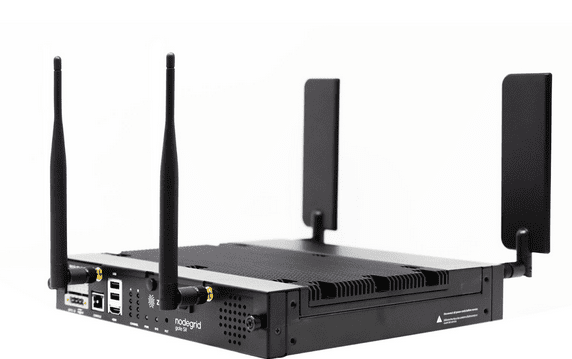
An angled view of the Nodegrid Gate SR, which is an alternative to the Opengear Resilience Gateway.
The Opengear ACM7000 Resilience Gateway provides gateway routing and out-of-band (OOB) management for small IT deployments in branch and edge locations. As the name implies, the ACM7000 improves network resilience by helping organizations maintain network uptime and deliver core business services without interruption. However, as a second-generation, or Gen 2, device, the ACM7000 lacks certain features that prevent it from being a complete resilience solution. This blog provides more information about the Opengear ACM7000 Resilience Gateway and its limitations before discussing alternative options from ZPE Systems that cover these gaps for greater resilience and control.

Executive summary:

  • The Opengear ACM7000 Resilience Gateway offers branch gateway routing and out-of-band management access, along with some automation capabilities for individual tasks and workflows.
  • As a Gen 2 solution, the ACM7000 has limited third-party integrations, so your automation capabilities are restricted to built-in playbooks and add-on NetOps modules, with Zero Touch Provisioning locked behind a Lighthouse account upgrade. 
  • The ACM7000 also can’t run third-party software for additional edge networking and resilience solutions like AI/machine learning, next-generation firewalls (NGFWs), and Secure Access Service Edge (SASE). 
  • The Nodegrid Services Router (SR) product line from ZPE Systems addresses many of these limitations with Gen 3 OOB on a vendor-neutral platform.
  • Nodegrid’s modern, open-architecture Linux kernel supports virtualization and containers to directly host third-party software for automation, monitoring, security, recovery, and more. 
  • Nodegrid’s centralized management software is available as an on-premises or cloud-based, as-a-service solution, and it’s easily extensible with third-party solutions to provide consolidated, 360-degree control, visibility, and resilience.

Opengear ACM7000 Key Features

Nodegrid Services Routers Key Features

  • Gen 2 out-of-band management

  • Centralized management through on-premises Lighthouse software

  • Integrations with Nagios NSCA & NRPE

  • Failover to embedded 4G LTE cellular modem

  • Built-in automation for monitoring, detection, and recovery from equipment faults

  • Additional automation capabilities require Lighthouse account upgrades or NetOps modules

  • Gen 3 out-of-band supporting 3rd party automation and orchestration over OOB

  • Centralized, vendor-neutral management through ZPE Cloud and Nodegrid Manager solutions

  • Extensible applications with virtualization and containers

  • Modular devices that are adaptable to any use case

  • Integrations with your choice of 3rd party monitoring, security, automation, and more

  • Failover to 5G/4G/LTE and Wi-Fi

  • Zero Touch Provisioning (ZTP) for fast and easy remote setup

  • Power control and monitoring to get alerts on device health and solve problems automatically

  • Automation support via Puppet, Ansible, RESTful, and more

Why replace the Opengear ACM7000 Resilience Gateway?

The Opengear ACM7000 Resilience Gateway combines branch gateway routing features with serial console out-of-band (OOB) management, consolidating networking and remote management functionality in a single device.Opengear’s Smart OOBTM allows the creation of a dedicated control plane with isolated management infrastructure (IMI). This OOB solution supports automation via scripts and add-on NetOps modules, but Zero Touch Provisioning (ZTP) and automation over IP-based management interfaces require an upgraded “Automation” edition of Opengear’s Lighthouse management software.

Opengear ACM7000 Resilience Gateway alternative options

ZPE Systems offers a full suite of vendor-neutral branch and edge networking solutions that serve as direct replacements for – or alternatives to – the ACM7000. Nodegrid Services Routers, or SRs, are all-in-one devices delivering Gen 3 OOB management, 5G/4G cellular failover, branch gateway routing and networking, virtualization and container hosting, and edge computing capabilities. Nodegrid’s open, x86-64bit Linux-based Nodegrid OS allows easy integrations with third-party automation and orchestration software like Ansible, Puppet, and RESTful APIs. Nodegrid can even extend ZTP and other automation capabilities to legacy and mixed-vendor end devices over the out-of-band connection. Nodegrid also supports Guest OS and containers, so you can host everything needed to manage, troubleshoot, and recover remote deployments on the OOB network. Nodegrid provides the perfect foundation for a resilience system that enables companies to continue delivering core services during ransomware attacks, network outages, and other adverse events. Nodegrid’s extensible, open platform streamlines branch management, scaling, and resilience.

Comparing Nodegrid replacement options for the ACM7000 Resilience Gateway

Nodegrid Link SR

Nodegrid Bold SR

Nodegrid Hive SR

Nodegrid Gate SR

Nodegrid Net SR

Nodegrid Mini SR

Potential Use Cases

Branch, IoT, and M2M (Machine-to-Machine) deployments

Branch and edge deployments like telecom, retail, and oil & gas

Distributed branch and edge sites like manufacturing plants 

uCPE (universal customer premises equipment) and branch service delivery

Edge data centers, large branch deployments

Edge IoT, OT, and IoMD (Internet of Medical Devices) deployments

CPU

x86-64bit Intel Processor

x86-64bit Intel Processor

x86-64bit Intel Processor

x86-64bit Intel Processor

x86-64bit Intel Processor

x86-64bit Intel Processor

Guest OS

1

1

1-2

1-3

1-6

1

Docker Apps

1-2

1-2

1-3

1-4

1-4

1-2

Storage

16GB - 128GB

32GB - 128GB

16GB - 128GB

32GB - 128GB

32GB - 128GB

16GB SED

Secondary Additional Storage

Up to 4TB

Up to 4TB

Up to 4TB

Up to 4TB

Up to 4TB

-

PoE+ Output

-

-

-

Yes

Yes

-

Wi-Fi

Yes

Yes

Yes

Yes

Yes

Yes

ZPE Cloud Support

Yes

Yes

Yes

Yes

Yes

Yes

Cellular (Dual-SIM)

1

1-2

1-2

1-2

1-4

1

Serial

1

8

8

8

16-80

Via USB

Network

1 x Gb ETH 1 x SFP

5 x Gb ETH

2x GbE ETH, 2x 10 Gbps, 4x 10/100/1000/2.5 Gbps RJ-45

2 x SFP+, 5 x Gb ETH, 4 x 1Gb ETH PoE+

2 1Gb ETH, 2 SFP+, Multiple Cards

2 x 1Gb ETH

GPIO

2 DIO, 2 OUT

-

-

2 DIO, 1 OUT, 1 Relay

-

-

Power

Single

Single

Single

Single or Redundant

Single or Redundant

Single

Data Sheet

Download

Download

Download

Download

Download

Download

Improve branch resilience and efficiency with Nodegrid

Nodegrid Services Routers address the limitations of the Opengear ACM7000 Resilience Gateways with a vendor-neutral platform that enables unlimited automation over a Gen 3 out-of-band management connection for ultimate network resilience. Get a free demo to see a Nodegrid SR in action. Get a Demo

Opengear ACM7000 Resilience Gateway replacement SKUs

The following table provides a list of ZPE’s Nodegrid SR product SKUs that serve as the best direct replacements for the corresponding Opengear ACM7000 products. Depending on your specific requirements, you may find that other Nodegrid products work better for your use case. Contact ZPE Systems for more assistance finding alternative solutions.

ACM7000 Product SKUs

Nodegrid Replacement Product SKUs

ACM7004-2-L


4 serial Cisco Straight pinout, ext power, dual 1 GbE ETH, Global 4G LTE-A Pro cellular

ZPE-BSR-24-4G


ZPE Nodegrid Bold SR. 8 RJ45 serial rolled, ext power, 5 GbE ETH including 4 GbE switch, dual sim 4G LTE (CAT12), 2 USB 3.0, 2 USB 2.0

ACM7004-2-LMP


4 serial Cisco Straight pinout, ext power, dual 1 GbE ETH, 4G LTE-A Pro cellular

ZPE-BSR-24-4G


ZPE Nodegrid Bold SR. 8 RJ45 serial rolled, ext power, 5 GbE ETH including 4 GbE switch, dual sim 4G LTE (CAT12), 2 USB 3.0, 2 USB 2.0

ACM7004-5-L


4 serial Cisco Straight pinout, ext power, dual 1 GbE ETH or fiber SFP, 4 GbE switch, dual SIM Global 4G LTE-A Pro cellular

ZPE-GSR-48-4G


ZPE Nodegrid Gate SR. 8 RJ45 serial rolled, dual ext power, 5 GbE ETH including 4 GbE switch, 2 fiber SFP, 4 PoE+ GbE ETH including switch, dual sim 4G LTE (CAT12), 2 USB 3.0, 2 USB 2.0


ZPE-GSR-48-5G


ZPE Nodegrid Gate SR. 8 RJ45 serial rolled, dual ext power, 5 GbE ETH including 4 GbE switch, 2 fiber SFP, 4 PoE+ GbE ETH including switch, 5G LTE (Sub 6 with 4G/LTE CAT20), 2 USB 3.0, 2 USB 2.0

ACM7004-5-LMP


4 serial Cisco Straight pinout, ext power, dual 1 GbE ETH or fiber SFP, 4 GbE switch, dual SIM 4G LTE-A Pro cellular

ZPE-GSR-48-4G


ZPE Nodegrid Gate SR. 8 RJ45 serial rolled, dual ext power, 5 GbE ETH including 4 GbE switch, 2 fiber SFP, 4 PoE+ GbE ETH including switch, dual sim 4G LTE (CAT12), 2 USB 3.0, 2 USB 2.0


ZPE-GSR-48-5G


ZPE Nodegrid Gate SR. 8 RJ45 serial rolled, dual ext power, 5 GbE ETH including 4 GbE switch, 2 fiber SFP, 4 PoE+ GbE ETH including switch, 5G LTE (Sub 6 with 4G/LTE CAT20), 2 USB 3.0, 2 USB 2.0

ACM7004-2


4 serial Cisco Straight pinout, ext power, dual 1 GbE ETH, 4 USB console

ZPE-BSR-24-Base


ZPE Nodegrid Bold SR. 8 RJ45 serial rolled, ext power, 5 GbE ETH including 4 GbE switch, dual sim 4G LTE (CAT12), 2 USB 3.0, 2 USB 2.0

ACM7004-5


4 serial Cisco Straight pinout, ext power, dual 1 GbE ETH or fiber SFP, 4 GbE switch

ZPE-BSR-24-Base


ZPE Nodegrid Bold SR. 8 RJ45 serial rolled, ext power, 5 GbE ETH including 4 GbE switch, dual sim 4G LTE (CAT12), 2 USB 3.0, 2 USB 2.0


ZPE-GSR-48-Base


ZPE Nodegrid Gate SR. 8 RJ45 serial rolled, dual ext power, 5 GbE ETH including 4 GbE switch, 2 fiber SFP, 4 PoE+ GbE ETH including switch, 2 USB 3.0, 2 USB 2.0

ACM7008-2-L


8 serial Cisco Straight pinout, ext power, dual 1 GbE ETH, Global 4G LTE-A Pro cellular

ZPE-BSR-24-4G


ZPE Nodegrid Bold SR. 8 RJ45 serial rolled, ext power, 5 GbE ETH including 4 GbE switch, dual sim 4G LTE (CAT12), 2 USB 3.0, 2 USB 2.0

ACM7008-2-LMP


8 serial Cisco Straight pinout, ext power, dual 1 GbE ETH, dual sim 4G LTE-A Pro cellular

ZPE-BSR-24-4G


ZPE Nodegrid Bold SR. 8 RJ45 serial rolled, ext power, 5 GbE ETH including 4 GbE switch, dual sim 4G LTE (CAT12), 2 USB 3.0, 2 USB 2.0

ACM7008-2


8 serial Cisco Straight pinout, ext power, dual 1 GbE ETH, 4 USB console

ZPE-BSR-24-Base


ZPE Nodegrid Bold SR. 8 RJ45 serial rolled, ext power, 5 GbE ETH including 4 GbE switch, dual sim 4G LTE (CAT12), 2 USB 3.0, 2 USB 2.0

The Future of Edge Computing

The Future of Edge Computing
Edge computing moves computing resources and data processing applications out of the centralized data center or cloud, deploying them at the edges of the network and allowing companies to use their edge data in real-time. An explosion in edge data generated by Internet of Things (IoT) sensors, automated operational technology (OT), and other remote devices has created a high demand for edge computing solutions. A recent report from Grand View Research valued the edge computing market size at $16.45 billion in 2023 and predicted it to grow at a compound annual growth rate (CAGR) of 37.9% by 2030.

The current edge computing landscape comprises solutions focused on individual use cases,  lacking interoperability and central orchestration. The future of edge computing, as described by leading analysts at Gartner, depends on unifying the edge computing ecosystem with comprehensive strategies and centralized, vendor-neutral management and orchestration. This future relies on edge-native applications that integrate seamlessly with upstream resources, remote management, and orchestration while still being able to operate independently.

Where is edge computing now?

Many organizations already use edge computing technology to solve individual problems or handle specific workloads. For example, a manufacturing department may deploy an edge computing application to analyze log data and provide predictive maintenance recommendations for a single type of machine or assembly line. A single company may have a dozen or more disjointed edge computing solutions in use throughout the network, creating visibility and management headaches for IT teams. This piecemeal approach to edge computing results in what Gartner calls “edge sprawl”: many disparate solutions deployed without centralized control, security, or visibility. Edge sprawl increases management complexity and risk while decreasing operational efficiency, creating significant roadblocks for digital transformation initiatives.

Additionally, many organizations misunderstand edge computing by thinking it’s just about moving computing resources as close to the edge as possible to collect data. In reality, the true potential of the edge involves using edge data in real-time, gaining “cloud-in-a-box” capability that works in concert with the network’s upstream resources.

Anticipating the future of edge computing

At Gartner’s 2023 IT Infrastructure Operations & Cloud Strategies Conference, edge technology experts predicted that, by 2025, enterprises will create and process more than 50% of their data outside the centralized data center or cloud. Surging edge data volume will accelerate the challenges caused by a lack of strategy or orchestration.

Gartner’s 6 Edge Computing Challenges

Lack of extensibility

Many purpose-built edge computing solutions can’t adapt as use cases change or expand as the business scales, limiting agility and preventing efficient growth.

Inability to extract value from edge data

Much of the valuable data generated by edge sensors and devices gets left on the table, so to speak, because companies lack the resources needed to run all their data analytics and AI apps at the edge and are stuck simply collecting data rather than being able to do much with it.

Data storage constraints

Edge computing deployments are often smaller and have more data storage constraints than large data centers and cloud deployments, but quickly distinguishing between valuable data and destroyable junk is difficult with edge resources.

Knowledge debt from edge-native apps

Edge-native applications are designed for edge computing architectures from the ground up. Edge containers are similar to cloud-native apps, but clustering and cluster management work much differently, creating what’s known as “knowledge debt” and straining IT teams.

Lack of security controls, policies, & visibility

Edge deployments often lack many of the security features used in data centers, and sometimes other departments install edge computing solutions without onboarding them with IT for the application of security policies and monitoring agents, adding risk and increasing the attack surface.

Inability to remotely orchestrate, monitor, & troubleshoot

When equipment failures, configuration errors, or breaches take down edge networks, remote teams are often cut-off and unable to troubleshoot or recover without traveling on-site or paying for managed services, increasing the duration and cost of the outage. Current edge solutions are novel and don’t connect to or integrate with the full networking stack.

At the Gartner conference, analyst Thomas Bittman gave multiple presentations echoing his advice from the Building an Edge Computing Strategy report published earlier in the year. In preparing for the future of edge computing, Bittman urges companies to proactively develop a comprehensive edge computing strategy encompassing all potential use cases and addressing the challenges described above. His recommendations include:

  • Enabling extensibility by utilizing vendor-neutral platforms that allow for expansion and integration, which supports growth and agility at the edge.
  • Looking for opportunities to deploy artificial intelligence, data analytics, and machine learning alongside edge computing units, for example, with system-on-chip technology or all-in-one edge networking and computing devices.
  • Anticipating data storage and governance challenges at the edge by defining clear policies and deploying AI/ML data management solutions that dynamically determine data value.
  • Reducing knowledge debt by utilizing vendor-neutral platforms that support familiar container and cluster management technologies (like Docker and Kubernetes).
  • Securing the edge with a multi-layered defense, including hardware security, frequent patches, zero-trust policies, strong authentication, network micro-segmentation, and comprehensive security monitoring.
  • Centralizing edge management and orchestration (EMO) with a vendor-neutral platform that unifies control, supports environmental monitoring, and uses out-of-band (OOB) management while interoperating with automated edge management workflows (such as zero-touch provisioning and infrastructure configuration management).

Bittman’s recommended edge computing strategy uses the central EMO as a hub for all the technologies, processes, and workflows involved in operating and supporting the edge. This strategy will prepare companies for the future of edge computing and support efficient, agile growth and innovation.

Enter the future of edge computing with Nodegrid

Nodegrid is a vendor-neutral edge management and orchestration platform from ZPE Systems. Nodegrid easily interoperates with your choice of edge solutions and can directly run third-party AI, ML, data analytics, and data governance applications to help you extract more value from your edge data. The open, Linux-based Nodegrid OS can also host Docker containers and edge-native applications to reduce hardware overhead and knowledge debt.

Nodegrid devices protect your edge management interfaces with hardware security features like TPM and geofencing, support for strong authentication like 2FA, and integrations with leading zero-trust providers like Okta and PING. The Nodegrid OS and ZPE Cloud are Synopsys-validated to address security at every stage of the SDLC. Plus, you can run third-party security solutions for SASE, next-generation firewalls, and more.

Nodegrid edge networking solutions use out-of-band technology to give teams 24/7 remote visibility, management, and troubleshooting access to edge deployments. It freely interoperates with third-party solutions for infrastructure automation, monitoring, and recovery to support network resilience and operational efficiency. Nodegrid is like a cloud-in-a-box solution, incorporating edge computing and the full networking stack. Nodegrid’s edge management and orchestration platform provides single-pane-of-glass visibility, control, and resilience while supporting future edge growth.

Use Nodegrid for your Gartner-approved edge computing strategy

The Nodegrid EMO platform helps you anticipate the future of edge computing with vendor-neutral, single-pane-of-glass visibility and control. Watch a free Nodegrid demo to learn more.

Request a Demo

Zero Trust Edge Solutions: Continuing the Zero Trust Journey

A glowing shield with a 0 on it overlays a glowing map of the world to represent zero trust at the edge.

The zero trust security methodology follows the principle of “never trust, always verify,” which assumes that any account or device could be compromised and should be forced to continuously establish trustworthiness. This sounds like an extreme approach, but with the frequency of high-profile data breaches and ransomware attacks steadily increasing, security teams must pivot their approach away from prevention and toward damage mitigation and recovery. Zero trust security limits the lateral movement of compromised accounts on the network by establishing micro-perimeters around network resources that continually assess an account’s behavior for suspicious activity.

Organizations also must extend zero trust security policies and controls to remote business sites at their network’s edges, such as branches, Internet of Things (IoT) deployments, and home offices. Zero trust edge solutions are software platforms that provide networking, access, and security capabilities designed specifically for the edge. This guide explains what zero trust edge solutions do and the challenges involved in using them before discussing how to build a unified ZTE platform.

What are zero trust edge solutions?

A zero trust edge solution combines edge-centric security functionality with remote access and networking capabilities. ZTE’s core feature is zero trust network access (ZTNA), which securely connects remote users to enterprise applications and resources, similar to a VPN. ZTNA is more secure than VPNs because it only allows users to authenticate to one resource at a time and prevents them from seeing or accessing anything else until they re-establish their identity and credentials. ZTE’s other features and capabilities vary depending on the vendor and deployment type. ZTE solutions come in three different forms:

  • As a service: Companies can purchase ZTE functionality as a cloud-based, vendor-managed service. Remote users connect to regional points of presence (POPs) to reach the ZTE stack in the cloud before being routed to enterprise resources. This deployment style is easier to deploy for organizations with lots of users in the field but few (if any) physical edge locations to host security or networking solutions.
    .
  • With SD-WAN: Some ZTE providers combine zero-trust features with software-defined wide area networking (SD-WAN) capabilities. SD-WAN creates a virtual network overlay that’s decoupled from the underlying WAN infrastructure, enabling centralized control and automation. Packaging ZTE and SD-WAN together helps organizations consolidate their tech stack at physical edge sites like branches, warehouses, and manufacturing plants while still offering ZTNA to work-from-home and field employees.
    .
  • Build your own: Since there are very few mature ZTE providers on the market, and it can be difficult to find pre-made solutions with all the features needed for complex, distributed edge networks, many teams opt to build their own platform by combining tools from multiple vendors. Typically, these organizations have physical branches with existing WAN infrastructure that they use as regional POPs to host ZTNA and other security solutions.

Why build your own ZTE solution?

If pre-made solutions exist, why would companies go through the hassle of creating their own zero trust edge platform? Presently, there aren’t any “complete” ZTE solutions that offer full, zero-trust protection for branches and other physical edge sites.

For example, many ZTE platforms don’t protect management ports on the control plane, leaving critical edge infrastructure like servers, switches, and power distribution units (PDUs) exposed to cybercriminals. Additionally, branch ZTE solutions rely upon production network infrastructure, so if there’s an outage or ransomware attack, remote management teams are completely cut off from troubleshooting and recovery. These solutions also lack helpful edge networking features like fleet management and automation, and their closed ecosystems limit the ability to extend their capabilities.

Building your own zero trust edge platform allows you to combine all the security, networking, and management functionality you need to get full security coverage and streamline branch operations. The key to creating a robust and efficient ZTE solution is starting with a vendor-neutral platform that can unify the entire security architecture.

How Nodegrid simplifies ZTE

Nodegrid edge networking solutions from ZPE Systems provide the perfect vendor-neutral platform for integrated zero trust edge deployments. All-in-one edge gateway routers deliver a full stack of branch networking capabilities, including out-of-band (OOB) management. OOB creates a dedicated control plane on an isolated network so remote teams have continuous access to manage, troubleshoot, and repair edge infrastructure.

Nodegrid protects the management interfaces on the OOB network with robust, zero trust security processes and controls. For example, the encryption keys for each Nodegrid device are destroyed after provisioning so that only the public key is accessible when needed for authentication to our cloud. Nodegrid devices also use the Trusted Platform Module (TPM) as a hardware security module to prevent cybercriminals from tampering with the configuration or storage.

Our platform runs on the Linux-based, x86 Nodegrid OS, which supports VMs and Docker containers for third-party applications. That means you can deploy ZTNA, SD-WAN, and other zero trust edge solutions without purchasing or managing additional hardware at each branch. Nodegrid’s OOB and failover functionality ensure those security and access solutions remain operational during ISP outages, ransomware attacks, and other disruptions. Teams can also run their favorite tools for automation, troubleshooting, and recovery on the Nodegrid platform, streamlining edge operations and ensuring their toolbox is available on the OOB network. Nodegrid also simplifies fleet management with true zero-touch provisioning to securely and automatically deploy configurations at edge business sites.

Want to unify your zero trust edge solutions with Nodegrid?

Nodegrid provides a robust, vendor-neutral platform to unify and extend your zero trust edge capabilities. Request a free demo to see Nodegrid in action. Watch Demo