Providing Out-of-Band Connectivity to Mission-Critical IT Resources

Home » Archives for January 2023

Why You Need an Out-of-Band Cybersecurity Platform

out of band cyber security
As enterprise networks continue to grow in size and complexity, many organizations struggle to defend their expanding attack surface. The cost of failure also continues to grow – according to IBM’s 2022 Cost of a Data Breach report, the average cost of a successful ransomware attack reached $4.54 million. Koroush Saraf, VP of Product Management at ZPE Systems, identified the top five cybersecurity gaps that must be closed to achieve holistic cybersecurity, which include:

  • Unnecessary exposure of management ports
  • Credential theft
  • Unpatched infrastructure
  • Inability to deploy the right security tools
  • Human error

Closing these gaps requires a three-pronged approach – out-of-band infrastructure, an open platform from which to deploy and manage security tools, and end-to-end automation (aka, hyperautomation). In this blog, we’ll explain how an out-of-band cybersecurity platform combines these three key features into a single, holistic network security solution. Want to see an out-of-band cybersecurity platform in action? Request a free demo of the Nodegrid solution.

Why you need an out-of-band cybersecurity platform

An out-of-band (OOB) cybersecurity platform provides a single, unified interface from which to:

  • View and manage network infrastructure
  • Deploy and control all of the various security policies and applications needed to protect that infrastructure, and
  • Orchestrate network, infrastructure, and security automation.

This platform resides and operates on an out-of-band network running parallel to the production network, which ensures 24/7 availability even if there’s a LAN failure or ISP outage. All network, infrastructure, and security management occur OOB, which prevents resource-intensive orchestration workflows from negatively impacting performance. This vendor-neutral, automation-friendly, out-of-band approach to cybersecurity helps you in several areas.

Reduce your attack surface

The management ports on devices like servers and switches are frequently targeted by cybercriminals because they can be used to gain access to valuable data and resources on the production network. With an out-of-band cybersecurity platform, all infrastructure and network management occurs on the OOB network, which means you no longer need to expose management ports on the production network. Isolating management and orchestration workflows to the OOB network helps reduce the attack surface by making it much more difficult for attackers to find and access those open management ports. Vendor-neutral OOB cybersecurity platforms can also help companies reduce the number of individual devices and solutions on their network, which decreases the attack surface even more. An open OOB serial console like the Nodegrid Serial Console Plus (NSCP) can host other vendors’ applications and solutions and seamlessly integrate them into the cybersecurity platform, so there are fewer devices to patch and defend, and fewer vectors through which cybercriminals can attack.

Understand your attack surface

A centralized, vendor-neutral cybersecurity platform is able to dig its hooks into every component of an enterprise network, providing a complete overview of the entire architecture. With this holistic view, security analysts gain a better understanding of the attack surface and what’s needed to protect each vulnerability. For example, a cybersecurity platform can provide information about software versioning to help with security patch management or help identify which ports are open in various applications and why. Armed with this knowledge, an organization can then deploy granular policies, tools, and controls that are custom-tailored to provide the best defense.

Mitigate human error

Even the best network engineer, working in the ideal environment, will occasionally make mistakes. For example, a recent FAA outage that delayed thousands of flights was caused by a contractor mistakenly deleting some files. And unfortunately, the combination of a tech industry recession and a tech talent gap has meant that many IT teams are overworked and understaffed – far from an ideal situation. Human error is a leading cause of successful breaches, so network automation can reduce human error by letting scripts and playbooks handle many of the tedious and repetitive workflows involved in network management. An out-of-band cybersecurity platform can host or integrate with all the leading automation solutions and scripting languages, giving overworked admins the freedom to use the tools they’re most comfortable with. The centralized platform consolidates automated workflows in a single place for streamlined deployments and efficient management. Organizations can even achieve hyperautomation – automating every task and workflow across the network and security architecture – using the cybersecurity platform as an orchestration hub. This empowers understaffed teams to optimize network performance and security while reducing manual interventions, mitigating the risk of human error.

Ensure 24/7 coverage and availability

An out-of-band cybersecurity platform uses a dedicated network interface – such as a 5G cellular modem – to ensure continuous management access even when there’s an outage on the production network. That means admins have 24/7 access to the cybersecurity platform itself, as well as the devices and systems being protected by that platform. And, crucially, all of the security policies and tools will continue to protect production network infrastructure during that downtime. This continuous availability makes it possible for IT teams to remotely recover from device and network failures without the need for costly and time-consuming truck rolls. Or, in the event of a successful attack such as ransomware, admins can conduct recovery operations on the OOB network, creating an isolated recovery environment (IRE) that’s inaccessible to attackers.

Why choose Nodegrid as your OOB cybersecurity platform

An out-of-band cybersecurity platform uses OOB infrastructure, vendor-neutral management software, and end-to-end automation to provide holistic network security. The Nodegrid platform from ZPE Systems delivers all of this functionality in a single package. Using Gen 3 out-of-band serial consoles and integrated services routers, Nodegrid can dig its orchestration hooks into every system, device, and solution in your infrastructure for complete control. Nodegrid can host or integrate with your choice of automation tools (such as Chef, Ansible, and Puppet) and security applications (such as NGFWs and SSE) for seamless and unified network security management. Plus, with fast and reliable OOB network interface options – including 5G cellular and Wi-Fi – you can maintain 24/7 security coverage and management availability.

Ready to learn more?

To learn more about the Nodegrid out-of-band cybersecurity platform, contact ZPE Systems today. Contact Us

ZPE Systems apresenta a Gen 3 Out-of-Band (OOB) e Zero Pain Ecosystem

Home » Archives for January 2023

Explainers & How-to’s

ZPE Systems apresenta a Gen 3 Out-of-Band (OOB) e Zero Pain Ecosystem

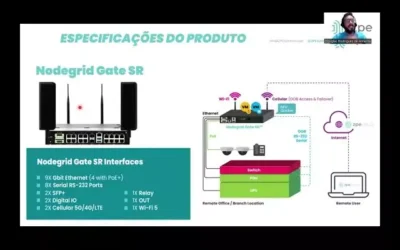
Nesta demonstração, o Engenheiro de Sistemas da ZPE, Douglas Almeida, mostra como o Nodegrid Gate SR (GSR) protege uma empresa de serviços #financeiros, fornecendo um link #LTE protegido, das câmeras de vídeo de borda para o #datacenter da empresa. O GSR usa conectividade serial com o roteador de borda e é gerenciado remotamente via ZPE Cloud.  

Quer mais exemplos do mundo real? Visite nosso blog e leia este estudo de caso para ver como outra empresa financeira se mantém segura usando o Nodegrid – Banking on Network Modernization to Protect a Large Financial Firm – ZPE Systems

#IT #cybersecurity #banking #dataprivacy #networking

ZPE Systems delivers innovative solutions to simplify infrastructure managment at the datacenter, branch, and edge.

Learn how our Zero Pain Ecosystem can solve your biggest network orchestration pain points.

Watch a Demo Contact Us

Video Wall

Building an IoT Device Management System

shutterstock_1350962531(1)(1)

Internet of Things (IoT) devices are integral components of many modern businesses. In 2020, there were almost 9 billion active IoT devices—that number is predicted to exceed 25 billion by 2030. Effectively deploying, monitoring, and managing all of these devices in an enterprise environment requires powerful, centralized orchestration using an IoT device management system. This post discusses the best practices and key considerations to keep in mind when planning, designing, and building your IoT device management system.

What is an IoT device management system?

An IoT device management system provides a unified platform from which to manage all of the IoT devices in use by an organization. Many of these devices operate with little-to-no human interaction, in remote sites that may be difficult or even dangerous to access for routine maintenance. For example, IoT sensors are used inside oil pipelines to monitor crucial metrics like flow, pressure, and temperature. In addition, one organization may need to employ dozens or hundreds of different IoT devices to handle specific functions. These devices often come from different vendors, with separate management platforms, patch schedules, and configuration schemes. This results in a lot of management complexity for the IT teams responsible for provisioning, maintaining, and troubleshooting all of these devices, creating the need for an IoT device management system. The goal of such a solution is to bring all of the tasks involved in IoT device management under one roof, including:


  • → Onboarding:
    Bringing new IoT devices onto the network with the proper credentials and security policies
  • → Configuration: Provisioning new IoT devices with the necessary settings
  • → Maintenance: Updating firmware and applying security patches in a timely manner
  • → Security: Applying enterprise security policies to all IoT devices on the network
  • → Diagnostics: Collecting and analyzing logs to help identify and fix IoT device issues
  • → End-of-life management: Decommissioning EOL devices so they don’t create a security risk by remaining online and unpatched
Nodegrid is a vendor-agnostic IoT device management system that enables end-to-end automation and reliable OOB management access. To see Nodegrid in action, schedule a free demo.

Best practices for building an IoT device management system

Here are some best practices and key considerations to keep in mind when planning, designing, and building your IoT device management system.

Avoid closed ecosystems

There are off-the-shelf software solutions for IoT device management that are designed to work within a single vendor’s ecosystem. While they may offer some support for third-party devices, they generally work best if you’re already operating within that vendor’s environment. For example, AWS IoT Device Management works with third-party IoT devices but requires an existing AWS infrastructure to use it effectively. These types of solutions will usually include a library of features and supported integrations, but you may not be able to integrate your preferred scripting languages, open-source tools, or other third-party components. A vendor-neutral, or vendor-agnostic, IoT device management system does not suffer from these limitations. In addition to the ability to hook into multi-vendor IoT devices, these platforms also allow you to use your choice of third-party software and scripts. A vendor-neutral solution gives you the freedom to build a truly bespoke IoT device management system that makes use of your team’s existing skills, preferred tools, and custom innovations.

Ensure 24/7 remote management access

One of the benefits of IoT devices is they can be deployed anywhere. However, maintaining continuous access to devices in remote and hard-to-reach environments can prove challenging. Natural disasters, LAN failures, ISP outages, political instability, and global pandemics can all occur with little-to-no warning, leaving organizations cut off from their critical remote IoT devices and infrastructure. Out-of-band (OOB) management solves this problem by providing an alternative path to remote network infrastructure. For example, an IoT device management system can use OOB serial consoles to create a management network that’s dedicated to the orchestration, maintenance, and troubleshooting of production network equipment. These serial consoles have multiple redundant network interfaces (e.g., 5G cellular, Fiber, and Wi-Fi) so admins can remotely access the IoT device management system even when the remote site loses its main internet connection. This ensures that organizations can recover from remote network failures faster, continue internal operations during ISP outages, and maintain continuous access to their IoT devices.

Protect IoT infrastructure with Zero Trust Security

IoT device management systems help ensure the security of remote IoT devices by simplifying tasks like firmware updates and vulnerability patch deployment. However, the IoT device management platform itself is a potential target for malicious actors hoping to gain complete control over an organization’s IoT infrastructure. That’s why organizations must protect their IoT device management system using Zero Trust Security. Zero Trust Security follows the principle of “never trust, always verify” by requiring all users, systems, and devices to continuously prove their trustworthiness as they access the network and enterprise resources. It also requires the consistent application of enterprise security policies and controls to every system and application that connects to the network, including the IoT device management system. That means, for example, that you should use technology such as two-factor authentication (2FA) and identity and access management (IAM) to control access and prevent compromised accounts from gaining control.

  • ☆ Bonus tip: Zero Trust Security is easier to apply if you use a vendor-neutral IoT device management system that supports integrations with third-party security solutions like next-generation firewalls (NGFWs) and Secure Access Service Edge (SASE). This will also ensure that Zero Trust controls are in place to protect the OOB management network from unauthorized access.

However, it’s important to acknowledge that there’s currently no way to completely prevent a breach from occurring. According to the Sophos State of Ransomware 2022 survey, 66% of organizations were hit by ransomware in 2021 alone, and that number is only expected to trend upwards over time. That’s why another critical aspect of Zero Trust Security for IoT device management is building a resilient network architecture with automation tools that reduce the MTTR (mean time to recovery) when—and not if—a breach occurs. Learn more about how to implement such an architecture with ZPE’s network automation blueprint.

Building an IoT device management system with Nodegrid

An IoT device management system is meant to simplify and streamline the management of remote, hard-to-reach, and complex IoT devices and infrastructure. Vendor-neutral systems allow you to customize your platform with the third-party tools and solutions that work best for your team and your organization’s use case. Out-of-band (OOB) management ensures that IT teams have reliable, 24/7 access to remote IoT systems. Finally, Zero Trust Security protects the IoT device management system and all connected devices from malicious attacks. The Nodegrid platform from ZPE Systems is a completely vendor-agnostic IoT device management system supported by Gen 3 OOB serial consoles like the Nodegrid Serial Console Plus (NSCP) and all-in-one edge gateway routers like the Mini Services Router (MSR). Nodegrid supports integrations with your choice of custom scripts, automation tools, and security solutions so you can build a bespoke IoT device management system that addresses your organization’s unique challenges and use cases.

Ready to learn more about the Nodegrid IoT device management system?

Contact ZPE Systems today to learn more about the Nodegrid IoT device management system, contact ZPE Systems today. Contact Us

Nodegrid OS Version 5.8 – Product Updates

Home » Archives for January 2023

Product Updates

Nodegrid OS Version 5.8 – Product Updates

Watch as Director of Solution Engineering Rene Neumann walks you through Nodegrid OS v5.8 and how it supports the Network Automation Blueprint. Rene shows you how v5.8 enables essential building blocks of the blueprint, including out-of-band management, visibility, out-of-band automation, and security.

For a copy of the Network Automation Blueprint, visit this link:
Network Automation Blueprint – ZPE Systems

#networking  #cybersecurity  #FIPS140  #PCIDCC  #FirstNet  #5G

ZPE Systems delivers innovative solutions to simplify infrastructure managment at the datacenter, branch, and edge.

Learn how our Zero Pain Ecosystem can solve your biggest network orchestration pain points.

Watch a Demo Contact Us

Video Wall

Nodegrid OS version 5.6 – Product Update

Home » Archives for January 2023

Product Updates

Nodegrid OS version 5.6 – Product Update

Director of Solution Engineering Rene Neumann walks you through the updates of Nodegrid OS v5.6, including how they help you with site deployment and edge computing.

ZPE Systems delivers innovative solutions to simplify infrastructure managment at the datacenter, branch, and edge.

Learn how our Zero Pain Ecosystem can solve your biggest network orchestration pain points.

Watch a Demo Contact Us

Video Wall