Providing Out-of-Band Connectivity to Mission-Critical IT Resources

Home » Archives for December 2021

Watch agile networking in action with these Nodegrid demos

title_demoreel

Watch agile networking in action with these Nodegrid demos


ZPE® Systems Network Solutions Architect Rene Neumann shows you how easy it is to enable agile networking. See Nodegrid and ZPE Cloud first hand with our collection of demo videos. You’ll learn how to:


  • Use true zero touch for automatic deployments
  • Fully set up environments using rich orchestration
  • Remotely configure and manage edge workloads

Demo: Deploy Networks Fast with ZPE Cloud’s Zero Touch Provisioning

Demo: Fully Provision Edge Network Workloads with Nodegrid

Demo: Orchestrate Branch Network Devices Using Nodegrid

What Is a Colocation Data Center? Benefits and Best Practices

Cloud,Computing,Concept,Represented,By,A,Server,Room,,With,A

The colocation data center market saw huge growth during and after the COVID-19 pandemic, reaching a value of $76.8 billion in 2023 and showing no signs of slowing down. Companies continue to move away from on-premises deployment strategies due to the expense and hassle of maintaining a data center, or to improve their resilience in the face of increasing cyberattacks and natural disasters. This blog discusses the benefits of adopting a colocation strategy and describes the best practices for optimizing colocation data center resilience.

What is a colocation data center?

Colocation is the process of deploying and hosting your servers and other equipment in a third-party data center, known as a colocation data center. This allows you to use someone else’s high-tech facilities and infrastructure instead of building out everything in your own (on-premises) space. It’s called colocation because you co-locate your equipment there – you’re renting cabinet space in a shared facility with other customers instead of using your own dedicated space. That means you still get to use your own servers, storage devices, and other hardware, but you can rely on the colocation facility to provide redundant power, climate control, physical security, and network infrastructure.

What are the benefits of colocation?

Colocation offers several advantages over on-premises deployments, including:

Cost

In terms of up-front costs, spinning up a new colocation deployment is less expensive than deploying a new on-premises data center. While you still have to purchase and install your own in-rack tech stack, as well as pay for monthly rental fees, power, and internet, the colocation provider handles the setup and maintenance of the facility itself. That means you won’t have to worry about things like HVAC and physical security yourself, helping to reduce both upfront and recurring costs.

Compliance

With on-premises infrastructure, your organization is 100% responsible for data protection and compliance. Colocation providers have a shared responsibility approach, meaning they are partially liable for certain services while you’re only responsible for the remainder. While this helps reduce complexity on your end, it can also increase compliance risk. You might adhere to all necessary rules and regulations on your end, but the third-party colocation facility might not. If that happens, you’re ultimately responsible for any issues discovered during an audit, regardless of the offense’s source. That said, there are compliant colocation data centers that are certified as meeting strict, specific regulatory requirements, which is recommended for organizations in highly regulated industries like defense and healthcare.

Geographic distribution

Colocation data centers make it easier to extend your geographic reach by reducing the cost and work involved in spinning up new locations. Rather than building out an entirely new facility every time you want to expand, you simply rent space in an existing data center in your chosen region. This allows you to, for example, improve the performance of your services in a particular area to meet increasing customer demand, or deploy artificial intelligence solutions closer to branch offices and remote manufacturing sites.

Scalability

Scaling an on-premises data center is time-consuming and expensive because you may need to build out additional racks, install more HVAC, and increase your power draw, among other concerns. By comparison, colocation facilities typically handle much of the work involved in scaling their infrastructure, so all you need to do is install your hardware in the rack. Scaling a colocation deployment is faster and more cost-effective than on-premises, enabling you to meet surging demand without busting your budget.

Resilience

The scalability and geographic distribution of colocation data center deployments can ultimately improve network resilience, or the ability to keep delivering digital services during adverse events like natural disasters or ransomware attacks. It’s easier to deploy redundant services and backup solutions in multiple regions as well as build-out a resilience system with alternative infrastructure that can take over when primary systems fail. A colocation strategy can help you minimize downtime and meet stringent SLA requirements with less expense and hassle than on-premises deployments.

Best practices for colocation data center resilience

Colocation deployments lend themselves to greater resilience by virtue of their potential geographic distribution and scalability, but there are steps you can take to shore up your resilience even more. These include:

Automation

Infrastructure automation solutions like zero-touch provisioning (ZTP) make it easier to spin-up new servers and hardware to replace those that fail or are compromised in a ransomware attack. Automated configuration management solutions like Red Hat Ansible help prevent unauthorized changes or botched updates from compromising critical systems.

AIOps

Artificial intelligence for IT operations, or AIOps, uses advanced machine learning algorithms to monitor and protect data center infrastructure. AIOps solutions help detect potential maintenance issues before they cause failures, automatically generate and triage incidents, and identify threats with far greater accuracy than traditional firewalls.

Environmental monitoring

Colocation providers are responsible for maintaining optimal conditions in the data center, but sometimes HVAC systems malfunction or a natural disaster occurs to throw things out of balance. Environmental monitoring systems use sensors deployed around the rack to collect data on temperature, humidity, airflow, and more, giving remote IT teams a virtual presence in the colocation facility. This allows them to respond to changing conditions much faster, potentially avoiding equipment failures or long-term maintenance issues.

Out-of-band management (OOBM)

Out-of-band management (OOBM) involves separating the control plane for data center infrastructure and making it accessible on an alternative network. The OOBM network doesn’t rely on any production infrastructure, meaning it’ll stay accessible even if there’s a critical failure or ransomware attack. OOBM console servers (a.k.a., serial consoles) provide a convenient, centralized management platform for the control plane while keeping infrastructure management interfaces completely isolated from the production network, further enhancing colocation resilience.

Optimize your colocation data center with Nodegrid

Nodegrid OOBM serial consoles provide a vendor-neutral control plane for colocation data center infrastructure. Nodegrid can extend ZTP to other vendors’ devices as well as host third-party automation, security, and AIOps solutions. It supports a wide range of USB environmental sensors as well as legacy and mixed-vendor infrastructure devices.

Schedule a free demo to see Nodegrid colocation data center solutions in action.

ZPE Systems introduces fully-integrated, open SD-Branch platform

ZPE Systems introduces Next-Generation SD-Branch for distributed enterprises and managed service providers

Fremont, CA, December 8, 2021 – Despite using SD-Branch and next-gen firewalls for branch transformation, modern enterprises still struggle with critical gaps in reliability and uptime.

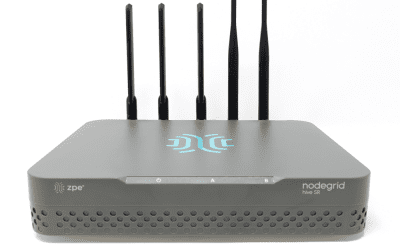
Today, ZPE Systems has addressed these gaps with the release of a fully-integrated, open SD-Branch platform. This platform consists of a new edge gateway called the Hive Services Router (Hive SR) with integrated 5G/4G LTE; cloud-orchestrated SD-WAN application; and wireless access points.

By collaborating with industry tech giants, ZPE Systems is enabling large enterprises, managed service providers, and other organizations to achieve comprehensive automation, robust out-of-band management, Day Zero installation, and continuous operation, bringing NetDevOps to the edge. This eliminates weak links in the automation chain, allowing for automatic deployments and remediation that are critical to reliability and uptime.

ZPE Systems’ Co-founder and CEO Arnaldo Zimmermann explains: “People automate what they can, but not what is most critical to their infrastructure. This leaves dangerous gaps in processes that cannot be automated. For example, you can’t recover a stuck switch without being able to talk to a third party PDU. Using our vendor-neutral platform, you can bridge those gaps and remotely connect to all your third party infrastructure.”

The announcement comes after the company’s recent release of its ZPE Cloud Apps, Nodegrid Data Lake, and environmental sensors. These — paired with the latest Hive SR, SD-WAN application, and ZAP-5220 wireless access point — solidify the company’s vision of providing a cost-effective, next-generation SD-Branch platform.

The Hive SR delivers more than connectivity and security, with integrated out-of-band and cloud automation that allow companies to orchestrate their NetDevOps pipeline in its entirety. Its open architecture, powerful x86 CPU, and robust memory and storage enable companies to directly host 3rd party software, containers, and VMs such as those for NGFWs or user experience monitoring applications.

The Hive SR also features the latest generation Wi-Fi 6 access point built-in, which covers 3,000 sqft (300 sqm) of space. Additional coverage can be achieved using the new ceiling-mounted ZAP-5220 access point, which complements the SD-Branch solution by providing enterprise-grade Wi-Fi 5 throughout indoor locations at speeds up to 1.2 Gbps.

Additionally, the Hive SR accommodates Nodegrid’s environmental sensors and connects to ZPE Cloud. These integrations allow companies to increase uptime by having visibility into device tampering, physical conditions, user experiences, and hidden machine data. The ZPE Cloud platform finally enables organizations to automate across diverse, multi-vendor equipment at the branch, thanks to its vertical integration of hardware and orchestration stacks. Organizations can now prevent downtime, predictably configure and scale environments, and optimize user experiences at the edge.

Increasingly hybrid infrastructures force organizations to shift connectivity and security to the edge, which can lead to a ‘tromboning’ or ‘hairpinning’ effect as traffic is looped through the data center. The Hive SR with the new SD-WAN application eliminates this, serving as the on-ramp to what Gartner calls Secure Access Service Edge (SASE) — or cloud-delivered connectivity and security. This combination allows organizations to send traffic directly to public and private clouds, without congesting the data center or risking security. Features like Auto-VPN and QoS automatically create secure tunnels and give IT visibility into application performance, bandwidth, link status, and other critical metrics.

Bringing everything together is the company’s signature next-gen out-of-band with Zero Trust Security at large scale. Next-gen out-of-band enables management of the entire SD-Branch solution and adjacent equipment, without putting engineers on site. Servers, PDUs, IoT, and other devices present at the remote edge can be controlled via serial console, management port or USB connection. This robust out-of-band is reliably accessible via the latest generation 5G modem onboard the Hive SR, which enables the branch to be completely rebuilt from scratch via the cloud — a process ZPE calls ‘seed-of-life automation™.’ These capabilities reduce mean-time-to-repair (MTTR) and prevent downtime via instant remote access to edge locations.

Nodegrid OS v5.4 also releases, including notable features such as support for SD-WAN, gateway profiles, 5G cellular, and IPv6. These enable organizations to take full advantage of ZPE Systems’ next-generation SD-Branch solution.

VP of Marketing Koroush Saraf adds, “One customer reported that the all-in-one Nodegrid solution exceeded all requirements, slashed 50% of their workload, and helped achieve near 100% network uptime.”

Hive SR is shipping now in limited quantities. Visit the links below for details.

Discover the open Nodegrid Hive SR

Explore the 5-in-1 SD-Branch gateway that enables full pipeline automation.

Unlock flexible cloud SD-WAN

Whether on-prem or in the cloud, optimize your WAN with a free 90-day trial.

Get Wi-Fi 5 for enterprise

See how the compact ZAP-5520 enables your LAN with speed and security.

About ZPE Systems, Inc.

ZPE Systems is rethinking the way networks are built and managed by providing software-defined, vendor-neutral infrastructure management and networking solutions.

ZPE Systems’ Nodegrid® platform consolidates, organizes, and simplifies the need for a complete remote access and control solution; Nodegrid solutions address the OOB management needs of the data center and branch, unifies edge networking environments, manages converged infrastructure and provides intelligent automation. ZPE’s smart, consolidated IT management solutions reduce downtime, deliver OPEX savings, and extends the reach of IT workforces.

ZPE’s global headquarters is located in Fremont, California with offices throughout the US and globally in Ireland, India, Brazil and Japan.

ZPE Systems, the ZPE logo and Nodegrid are registered trademarks of ZPE Systems, Inc.

To learn more, visit www.zpesystems.com.