Providing Out-of-Band Connectivity to Mission-Critical IT Resources

How SASE Technology Defends Your Network Edge

SASE technology can offer you defense for your network edge

Secure Access Service Edge, or SASE, is a cloud-based service that combines software-defined wide area networking (SD-WAN) with critical network security technologies like CASB, ZTNA, SWG, and FWaaS. SASE technology connects remote, branch office, and edge computing resources directly to web and cloud services, reducing the load on the main firewall while extending enterprise security policies and controls to protect this traffic. In this article, we’ll dive into the specific technology that SASE uses to defend your network edge.

How SASE technology defends your network edge

SASE protects network edge traffic by rolling up an entire network security technology stack into a single, cloud-delivered service. The key security components of a SASE solution include CASB, ZTNA, SWG, and FWaaS.

CASB

A cloud access security broker, or CASB, is a software service that sits between your main enterprise network and your cloud-based infrastructure. A CASB allows you to extend your enterprise security policies to the traffic flowing between your WAN and the cloud so you can ensure consistent protection. A CASB is actually a collection of multiple security technologies, such as:

  • User and Entity Behavior Analytics (UEBA) – Monitors the behavior of users and devices on the network to detect suspicious activity and enforce security policies.
  • Cloud application discovery – Identifies all cloud applications and services in use by the organization and analyzes relative risk levels.
  • Data Loss Prevention (DLP) – Applies data governance policies to prevent the exfiltration of sensitive and proprietary information.
  • Adaptive access control – Uses session context (e.g., originating location, time, behavior) to determine whether to grant access.
  • Malware detection – Scans traffic between the enterprise and the cloud to detect and block viruses and other malware.

ZTNA

Zero trust network access, or ZTNA, connects remote users and devices to enterprise network resources, similar to a VPN. Unlike a VPN, however, ZTNA creates a direct connection to the specific resources requested by the user, rather than granting full access to the network. This prevents remote users from seeing or interacting with any network resources outside of the specific service they’ve explicitly authenticated to.

ZTNA follows the zero trust motto of “never trust, always verify.” It uses technologies like context and role-based identity verification and two-factor authentication (2FA) to prevent unauthorized access. And, since users need to re-authenticate to every enterprise resource, ZTNA is able to prevent malicious actors from discovering valuable systems and data or moving laterally on the enterprise network.

SWG

A secure web gateway, or SWG, is a service that sits between your enterprise network and the public internet. All web-destined traffic passes through the SWG, where enterprise web filtering and application control policies are applied. Traditionally, an SWG is a hardware device that sits in the data center, which means all remote, branch, and edge traffic needs to be backhauled through a single appliance. As part of a SASE solution, an SWG sits in the cloud instead, so remote traffic doesn’t need to pass through the data center. This improves overall network performance, reduces or eliminates bottlenecks, and ensures consistent application of acceptable use policies and application security controls.

FWaaS

Firewall-as-a-Service, or FWaaS, delivers next-generation firewall technology as a cloud-based service. That means remote and cloud-destined traffic can bypass the firewall in your data center, reducing bottlenecks and performance issues. At the same time, FWaaS provides the same level of security and protection as an NGFW, including features like URL filtering, intrusion detection and prevention, and deep packet inspection (DPI). FWaaS gives SASE solutions the ability to protect remote, edge, and cloud-destined traffic with the same policies and controls as the main enterprise network to ensure consistent security and optimal performance.

SASE technology uses CASB, ZTNA, SWG, and FWaaS to defend your network edge. However, you still need a way to direct remote, branch office, and edge traffic to your SASE security stack. That’s where SD-WAN technology comes in.

Accessing SASE technology with SD-WAN

While it’s possible to use standard WAN architectures to connect to SASE technology, the most reliable and efficient way to access SASE is with SD-WAN. SD-WAN uses software abstraction to create a virtual overlay management network on top of your WAN hardware. This virtual management network enables the use of automation and orchestration to manage the remote network traffic.

In a SASE deployment, SD-WAN uses intelligent routing to separate all remote traffic that’s destined for the cloud. Instead of backhauling this traffic through the enterprise firewall, SD-WAN routes it through the SASE technology stack, significantly reducing the load on your data center infrastructure. This improves network and application performance for your entire enterprise without sacrificing security.

SD-WAN solutions may sit on top of traditional WAN infrastructure, or they may replace that hardware entirely, using SD-WAN routers provided by the vendor. However, rather than investing in specialized vendor hardware, an even better approach is to use vendor-neutral network management devices that can host or integrate with every piece of your SASE and SD-WAN technology stack.

For example, the Nodegrid line of vendor-neutral serial consoles and network edge routers are the perfect on-ramp for your SASE solution. Nodegrid can directly host or integrate with third-party SD-WAN solutions like Palo Alto Networks’ Prisma SD-WAN, or you can use ZPE Cloud’s SD-WAN app. Nodegrid also supports seamless integrations with your choice of SASE provider, giving you a unified, centralized SD-WAN and SASE orchestration platform.

SASE learning center:

★   Understanding Key SASE Components & Benefits
★   SASE Implementation: A Step-by-Step Guide for Businesses
★   The SASE Model: Key Use Cases & Benefits
Want to find out more about accessing SASE technology with Nodegrid SD-WAN?

Contact ZPE Systems today!

Zero Trust Network Access vs. VPN for Branch and Edge Networking

When comparing zero trust network access vs. VPN, they both have benefits for security, speed, and scalability

Organizations are starting to recognize the benefits of edge computing, which moves data processing resources closer to the sources of data generation and away from the central data center. In addition, businesses are becoming more geographically dispersed, with branch offices, manufacturing facilities, and other remote sites around the world.

While larger remote sites are typically connected to the enterprise network via WAN or SD-WAN, this may not be feasible for smaller branches with fewer staff. Traditionally, VPNs (virtual private networks) are used to create a private connection for remote systems and users. However, a new technology called Zero Trust Network Access improves upon VPNs by providing faster and more secure remote connections.

What is a VPN?

A VPN, or virtual private network, is a service that creates an encrypted connection between a device and a network. In this particular use case, VPNs are used to extend the enterprise network to branch and edge locations. Often, organizations use VPNs as an alternative to installing expensive WAN solutions in very small remote sites. They’re also used to connect sites that are unreachable by traditional network infrastructure, such as offshore oil rigs.

Though VPN traffic is encrypted, there are still security risks. Many VPNs still use single-factor authentication, meaning all you need is a username and password to connect. If a remote user’s account information is stolen, a hacker could easily gain access because they don’t need to provide a second form of identity verification.

In addition, VPNs grant complete access to the enterprise network, trusting remote users and devices just like they were in the main office. That means a malicious actor could use a compromised account or stolen laptop to move laterally around your enterprise network, stealing whatever data they can find.

What is Zero Trust Network Access (ZTNA)?

Zero trust network access, or ZTNA, is another product or service that connects remote users and devices to enterprise network resources. However, instead of creating a tunnel to the enterprise network itself, ZTNA directly connects users to the applications and services they need. Users then need to re-verify their identity and re-establish trust before they access another application.

ZTNA follows the “dark cloud” concept, which prevents remote users from seeing or interacting with any of the data, systems, or applications they aren’t explicitly authenticated to. Microsegmentation is used to create perimeters around each resource with granular, context-based access control policies.

For example, if a branch office employee uses ZTNA to access the shipping system, they can’t see or touch the payroll application unless they authenticate to that specific resource. If the account is behaving suspiciously (logging in at unusual times, accessing resources it doesn’t typically need, etc.) then the account is locked until trust can be re-established. The dark cloud principle prevents malicious actors from discovering valuable resources and moving laterally on the enterprise network.

Comparing zero trust network access vs. VPN for branch and edge networking

Trust

Zero trust network access is more secure than VPNs because it follows the zero trust security model of “never trust, always verify.” Branch and edge accounts are assumed to be untrustworthy until they prove otherwise through repeated identity verification and trustworthy behavior. Remote accounts never have full access to the enterprise network and can only see and interact with the specific resources they’re presently authenticated to.

Authentication

While newer VPNs may allow integrations with third-party MFA (multi-factor authentication) providers like Okta, many organizations are still using single-factor authentication for VPN clients. That makes it much easier for a hacker to use a single set of stolen credentials to gain unrestricted access to the enterprise network. In addition, if a branch employee leaves their VPN session active and their laptop is stolen (for example, because it was in an unsecured building that’s open to the public), the thief can use that session to jump around the network without ever needing to re-verify or re-authenticate.

Performance

VPN connections are notoriously slow. All VPN traffic needs to be backhauled through a centralized concentrator, which creates massive bottlenecks and network latency. ZTNA, on the other hand, connects branch and edge devices directly to the resources they need. If that resource lives on the web or in the cloud, the traffic bypasses the enterprise network entirely, reducing the load and improving performance for everyone.

Scalability

Finally, VPNs are meant to be deployed to individual users on a case-by-case basis. Scaling up is difficult and expensive because you need to purchase licenses and install software for each machine that connects. Also, the more VPN connections, the greater the impact on network performance, and the more VPN concentrator solutions you’ll need to deploy to distribute the load. Gartner predicts that by 2025, 75% of enterprise-generated data will be processed at the edge, so individual VPN solutions won’t be able to keep up.

ZTNA is often delivered on the “as-a-service” model, which means it’s hosted in the cloud and doesn’t require any customer premises equipment (CPE). Licenses are scaled up or down at the click of a button, and there’s no software to install on remote machines. This makes ZTNA the ideal choice for enterprises hoping to expand their global reach or scale up their edge computing capabilities.

Deploying ZTNA for branch and edge networks

Zero trust network access is available as a standalone service, but you can also find it among the cloud-oriented security stack in a Security Service Edge (SSE) solution. SSE combines ZTNA with security technology such as Cloud Access Security Broker (CASB), Secure Web Gateway (SWG), and Firewall-as-a-Service (FWaaS). This suite of cloud security features delivers comprehensive protection for branch and edge networks while reducing the need for remote traffic to pass through the central data center.

Learn more about branch and edge networking:

Need more help on branch and edge networking?

Need more help comparing zero trust network access vs. VPN for branch and edge use cases?

Contact ZPE Systems

Solving Remote IT Infrastructure Management Challenges With Gen 3 Out-of-Band

Remote it infrastructure management

Enterprise IT management used to be much simpler. The entire network infrastructure would reside in the same location as the administrators who managed it, typically in closets and basement rooms in the HQ office building. Those days are long gone, however, and now most infrastructure is housed in off-site data centers, colocations, the cloud, or a combination of these. For most organizations, it isn’t feasible to maintain tech teams in each of these locations, which means administrators need to remotely manage their IT infrastructure.

Remote IT infrastructure management presents some interesting challenges. First, you need a way to remotely troubleshoot and recover from outages when the main WAN connection is unavailable. Second, you need to maintain optimal environmental conditions and monitor for issues that could damage data center equipment.

Solving remote IT infrastructure management challenges with Gen 3 out-of-band

Out-of-band (OOB) management uses a dedicated network to handle the orchestration and troubleshooting of remote infrastructure. This provides an alternative network path to this infrastructure in case the primary WAN link is down, and allows administrators to perform complex orchestration workflows without slowing down the production network.

Gen 3 OOB uses serial consoles to give administrators management access to many devices in the rack from one centralized portal. What makes an OOB serial console “Gen 3” is a combination of high-speed out-of-band access, complete vendor neutrality, and end-to-end automation and orchestration support. Let’s discuss how Gen 3 out-of-band can solve the three major remote IT infrastructure management challenges.

Remote troubleshooting and outage recovery

Downtime is expensive, which is why it’s important to recover from network outages as quickly as possible. However, many of the tools used to remotely manage IT infrastructure require a network connection. If a piece of networking hardware fails and takes down the LAN, or the ISP suffers a regional outage, administrators are left without access to troubleshoot and fix the problem. That leaves only two options: dispatching a truck roll or hiring on-site managed services. Option one is time-consuming and expensive, and option two is a security risk (and also expensive).

A Gen 3 OOB solution provides one or more alternative network paths to remote infrastructure. Often, it uses a cellular modem or secondary broadband network interface, which may also provide network failover capabilities. All network and infrastructure management occurs on this dedicated network, which provides two benefits:

  1. Deployment, maintenance, and orchestration activities won’t take up bandwidth on the production network; and
  2. Administrators can still access critical remote infrastructure during a production network outage.

Gen 3 OOB improves upon earlier technology which used slow dial-up interfaces, insecure hardware, and closed OS architectures. Gen 3 out-of-band includes security features like UEFI secure boot, geofencing, and an onboard firewall. The operating system is Linux-based to allow for easy integrations with any vendor solution, and vulnerabilities are patched quickly. This ensures that administrators have constant, high-speed, secure access to remote multi-vendor IT infrastructure.

Remote monitoring of environmental conditions

The environmental conditions in the data center have a major impact on the performance and functionality of critical infrastructure. Environmental threats like heat, moisture, power surges, smoke, and even physical tampering are major causes of data center downtime. When you don’t have actual eyes on the conditions in your rack, it can be difficult to detect environmental issues early on, when there’s still a chance to correct the issue and prevent downtime.

A Gen 3 OOB serial console includes GPIO interfaces for environmental monitoring sensors. These sensors are used to measure the temperature, relative humidity, air quality, and airflow in a rack, and in some cases can also detect smoke, proximity, and tampering. The monitoring sensors feed data back into a centralized environmental monitoring system which provides visualizations of present and historical conditions. It also sends automatic alerts to administrators when conditions require immediate attention. Plus, since this monitoring system is integrated with an OOB serial console, administrators can stay abreast of environmental conditions even when the production network goes down.

Remote IT infrastructure automation and orchestration

Automation allows IT teams to manage network infrastructures faster and more efficiently while reducing the risk of human error. However, one of the major hurdles to automation is vendor lock-in. Many infrastructure solutions don’t integrate with third-party automation tools and instead require you to use their own proprietary scripting languages and playbooks. Since many IT infrastructures are made up of a variety of vendor hardware and software solutions, administrators are forced to learn and manage multiple different automation platforms.

This difficulty only increases when those solutions are managed remotely. Administrators need to remotely jump from box to box and interface to interface just to execute basic automation workflows. It gets even more complicated when there are multiple remote sites to manage, as is the case in many large and globalized enterprises.

By definition, a Gen 3 out-of-band platform is vendor-neutral. That means it can dig its orchestration hooks into every hardware and software solution in your data center. It also supports integrations and direct hosting of third-party automation tools, so you can use the scripting languages and automation solutions of your choice. Finally, a Gen 3 solution centralizes the orchestration of all remote IT infrastructure automation workflows, so administrators can monitor and manage everything from behind one pane of glass.

Solving remote IT infrastructure management challenges with the Nodegrid Gen 3 out-of-band platform

The Nodegrid remote IT infrastructure management solution from ZPE Systems is the first Gen 3 out-of-band platform. Nodegrid delivers secure OOB, a robust environmental monitoring system, and end-to-end automation and orchestration in a single Gen 3 OOB serial console.

The Nodegrid Serial Console Plus (NSCP) provides OOB access and network failover via built-in 5G/4G LTE cellular and Wi-Fi modules, ensuring administrators have a dedicated high-speed connection to critical network infrastructure. Nodegrid hardware is protected by onboard security features like TPM 2.0, encrypted SSD, UEFI BIOS protection, secure boot, and geofencing, so you don’t have to worry about malicious actors compromising your management network. The open architecture, Linux-based Nodegrid OS is secured by frequent patches and supports third-party integrations or the direct hosting of third-party applications.

The Nodegrid environmental monitoring system includes sensors for dry contact, temperature, humidity, smoke, airflow, dust, and particulates so you have 24/7 visibility into the conditions in your rack. These sensors integrate seamlessly with the Nodegrid OS as well as the ZPE Cloud remote IT infrastructure management platform.

ZPE Cloud provides a centralized control panel from which to monitor and orchestrate your Gen 3 OOB network. ZPE Cloud’s vendor-neutral platform can “say yes” to any hardware, software, or automation solution you choose, so you can achieve end-to-end infrastructure automation without compromises.

Ready to learn more?

To learn more about how Nodegrid solves remote IT infrastructure management challenges through Gen 3 OOB, contact ZPE Systems

Contact Us

How Enterprise Network Security Software has Evolved for the Edge

Enterprise Network Security Software.

Modern enterprise networks are no longer contained to a single building or LAN. They’re highly distributed, with branch offices, remote employees, and global data centers that communicate and work together. That’s why traditional enterprise network security software—designed for on-premises infrastructure and castle-and-moat protection strategies—often struggles to secure the edge.

The challenge of traditional enterprise network security software at the edge

For years, enterprise network security followed the castle-and-moat approach. All the enterprise’s valuable systems and data are kept on the internal network (a.k.a. the castle), and a firewall creates a security perimeter (a.k.a. the moat) around those resources. This is easier to do when everything is housed in the same location. This becomes challenging (if not impossible) when those resources are spread across large geographical and logical distances.

For example, organizations may have a hard time extending their enterprise security policies to users, devices, and applications that aren’t on the main network. That goes beyond remote workers to also include cloud platforms and remote edge data centers. Some teams overcome this challenge by creating separate policies, but then they’re left with the logistical nightmare of updating and maintaining these policies across many different systems and locations. Due to errors or negligence, inconsistent security policies can leave gaps in your network security coverage.

In addition, traditional network security requires all remote traffic to be backhauled through the main firewall for inspection, creating a network bottleneck. That means all network requests worldwide must travel to the central data center, even if the traffic is ultimately destined for remote or cloud resources. This added network load can cause latency, timeouts, and other performance issues for the entire enterprise.

Challenges like these led to the evolution of enterprise network security software for edge deployments.

How enterprise network security software has evolved for the edge

Edge computing is all about moving resources closer to the users, systems, and applications that need them. Enterprise network security software for the edge does the same thing—it places security policies and controls in the cloud or small regional data centers, so remote systems and users don’t need to be routed back to the central network. The leading solution for edge security is Security Service Edge, or SSE.

SSE rolls up multiple security technologies into one integrated, cloud-based platform. Traffic from the edge is routed through the SSE security stack using SD-WAN (software-defined wide area networking). If that traffic is bound for cloud- or web-based resources, it’s allowed to bypass the central network entirely. Zero Trust Network Access (ZTNA) ensures safe and secure access if the traffic is destined for resources on the enterprise network.

Let’s discuss the specific technology that makes SSE the best solution for edge network security.

Zero Trust Network Access (ZTNA)

Zero Trust Network Access allows remote users and systems to access resources on the enterprise network, similar to a VPN. ZTNA is more secure than VPNs because it only gives users access to one specific resource at a time. They cannot jump around the network without re-authenticating and re-verifying trust. That means the lateral movement of a compromised account is limited, with malicious actors needing to re-verify their identity repeatedly, increasing their chances of getting caught.

ZTNA gives edge users and devices seamless access to the enterprise resources they need while reducing the risk of remote connections. It allows you to apply zero trust security principles to your network’s edge to ensure consistent security across your enterprise.

Firewall as a Service (FWaaS)

Firewall as a Service delivers network firewall capabilities as a cloud-based service. Incoming and outgoing edge traffic is routed through the FWaaS instead of the physical firewall in the data center, reducing the load on the enterprise network. FWaaS solutions for SSE typically include features like:

  • ❖URL/IP filtering
  • ❖Intrusion detection and prevention
  • ❖Network monitoring
  • ❖Deep packet inspection (DPI)

A Firewall as a Service is entirely cloud-based, which means you don’t need to deploy any additional hardware to edge locations. This also makes FWaaS easily scalable, allowing you to protect new branch offices or add additional features with the click of a button. FWaaS delivers powerful firewall functionality to the edge without expensive hardware or network bottlenecks.

Cloud Access Security Broker (CASB)

A Cloud Access Security Broker allows you to extend your enterprise security policies to cloud resources and traffic. The CASB acts as a gatekeeper between your enterprise network and the cloud, enforcing zero trust policies on any traffic flowing between the two. In an SSE solution, the CASB performs many functions, such as:

  • Analyzing the behavior of users and entities to determine if they’re trustworthy before allowing access to cloud resources. This is also known as User and Entity Behavior Analytics, or UEBA.
  • Using firewall and antivirus technology to detect malicious software (malware) and block it from entering the enterprise network
  • Using enterprise data governance policies to prevent data exfiltration, which is known as Data Loss Prevention (DLP).
  • Discovering, identifying, and analyzing all the enterprise’s cloud resources to determine relative risk. This is known as Cloud Discovery.

The CASB is what an SSE solution uses to extend your enterprise security policies to remote and cloud-based systems. This allows you to maintain precise and consistent zero trust policies across your distributed infrastructure, so your edge doesn’t become a weakness in your defense strategy.

SSE is powerful because it combines a complete security stack into one cloud-based service. That means you don’t have to force your edge resources into the perimeter created by traditional enterprise network security software.

Connecting your edge to SSE solutions

There’s still one critical component that’s missing: the technology that connects your edge resources and traffic to the SSE stack in the cloud. The most reliable and efficient on-ramp to an SSE solution is SD-WAN technology. SD-WAN creates a virtual overlay network on top of your WAN hardware, which enables automation and orchestration of remote, edge traffic management. SD-WAN uses intelligent routing to automatically separate edge traffic destined for the cloud, allowing it to bypass your firewall and flow through your SSE stack instead.

For example, the Nodegrid SD-WAN solution from ZPE Systems allows seamless integrations with SSE solutions. Placing Nodegrid Services Routers in your edge locations creates an access on-ramp to SSE and provides powerful branch networking functionality.

Learn more about securing your edge with SSE:

Top Security Service Edge Use Cases & Benefits for Enterprises
Security Service Edge (SSE) Implementation Guide for Enterprises
SSE Magic Quadrant: Key Takeaways of the 2022 Report

Want to learn more about network security software?

Watch a free demo of Nodegrid in action to see for yourself how enterprise network security software has evolved for the edge. Or get in contact with us!

Contact us!

What Is Hybrid Cloud Infrastructure: Expectations vs. Reality

what is hybrid cloud infrastructure

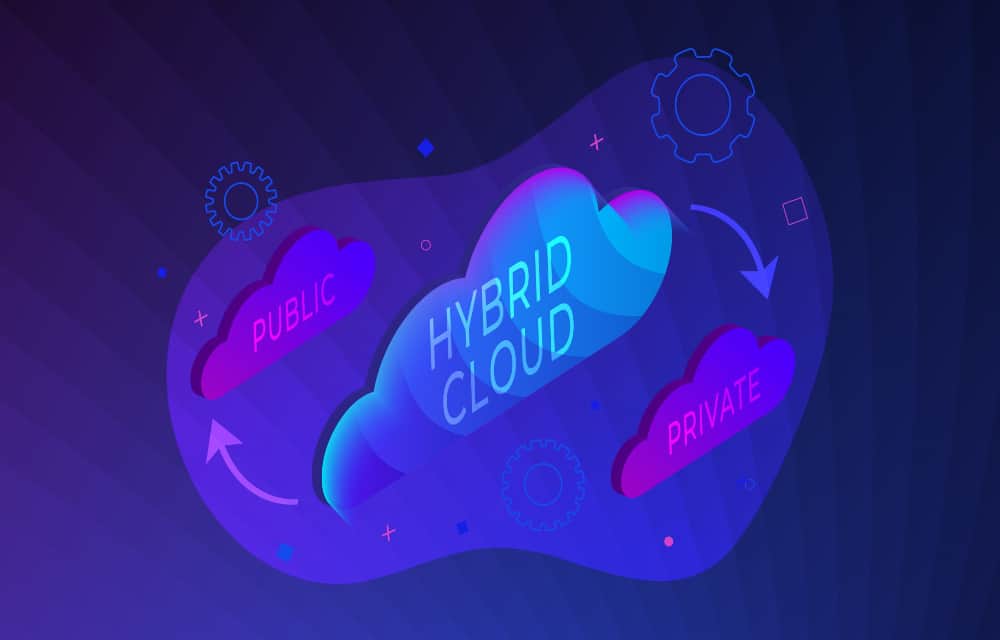
Hybrid cloud deployments allow you to combine the best features of public cloud, private cloud, and on-premises infrastructure. But what exactly goes into hybrid cloud infrastructure, and how is it achieved? In this blog, we’ll compare the expectations of a hybrid cloud to the realities of implementation and provide advice on overcoming these challenges.

What is hybrid cloud infrastructure?

Hybrid cloud infrastructure involves using a combination of public cloud, private cloud, and on-premises data center environments. True hybrid cloud architecture allows you to move workloads back and forth among these environments safely and securely.

  • A public cloud is what most people think of when they hear cloud computing. Public cloud services are decoupled from the underlying infrastructure and delivered as a web-based application or platform. The actual compute resources are shared amongst many other customers. Examples of a public cloud include Microsoft 365 and Google Apps.
  • Private cloud infrastructure is owned and managed by a third-party provider, but other customers do not share the hardware you use. You rent dedicated storage and compute resources, but have no physical access to or control over the infrastructure. Examples of a private cloud include Microsoft Azure and Amazon Virtual Private Cloud (VPC).
  • An on-premises data center is a data center that your organization has complete control over. It may or may not be on the same premises as your headquarters office. Not all hybrid cloud infrastructures include on-premises environments—only public and private clouds are required.

The public cloud offers many benefits for enterprises, such as scalability and cost savings. However, organizations frequently need greater control over certain data and resources. For example, any company working with healthcare information, or providing services to the federal government, must follow strict privacy and security regulations. That’s why many organizations opt to keep some of their resources in on-premises data centers or private clouds.

That said, keeping these resources isolated from your public cloud services, applications, and data is not always feasible. There’s a need for interoperability and orchestration of workloads among mixed architectures. In a hybrid cloud infrastructure, there is a virtual service that acts as a managed “bridge” between different environments. This allows you to move workloads, applications, data, and other resources around as needed to ensure peak performance without compromising security.

Hybrid cloud infrastructure: expectations vs. reality

The expectation for hybrid cloud infrastructure is that all of your systems, services, and applications will work together seamlessly. Your data and other resources will be portable, so you can move them from one cloud to another without compatibility issues or other headaches. Most importantly, you’ll have a centralized, web-based platform to orchestrate workloads across your heterogenous environment. The reality of hybrid cloud, however, is often much more complicated.

Vendor lock-in

One major hurdle to implementing a hybrid network environment is closed ecosystems. Vendor lock-in can prevent your legacy on-premises solutions from interoperating with cloud hardware and software, and vice-versa. Data and applications designed for traditional infrastructure may be incompatible with cloud platforms. And not only do these systems all need to communicate and work together, but you also need an orchestration platform that can dig its hooks into disparate vendor solutions and control them equally.

Issues with vendor interoperability could force you to rebuild your entire stack just to enable hybrid orchestration. To get around this expensive and time-consuming challenge, you need a hybrid cloud infrastructure orchestration platform that’s based on an open architecture for true vendor neutrality. This will allow you to manage workloads across cloud and legacy environments without replacing the systems and software already in place.

Infrastructure complexity

Hybrid cloud infrastructure reduces the number of physical servers and storage devices you’re responsible for, so you might assume this will reduce the complexity of your network operations. This isn’t necessarily the case. The virtual and physical hardware responsibility is shifted to the cloud vendor, but your team will still need to know how to configure, monitor, and maintain all your cloud services.

In a hybrid cloud infrastructure, there are often many different platforms from different vendors. That means you need people who are experts in all these systems. Plus, you’ll also need a more complex network architecture to support a seamless hybrid cloud environment. That often means purchasing more boxes from more vendors, which your team must also learn to configure and maintain.

One way to reduce the complexity of your hybrid cloud infrastructure is by consolidating your networking stack. For example, you can use high-density serial console switches that provide out-of-band (OOB) management interfaces, network failover, environmental monitoring, and network switching. Similarly, you can look for modular, multi-function devices that allow you to create a custom box that includes all the specific hardware and functionality you need.This will reduce the number of devices in your rack and provide administrators with a single platform to manage all this functionality.

Spiraling costs

Cloud services are often less expensive to deploy and scale than on-premises infrastructure. Instead of a large up-front cost to purchase and install new hardware solutions, you typically pay a smaller recurring fee. When you need more resources, you simply upgrade your services for additional cost without needing to buy and configure more hardware.

The issue is that these recurring fees can begin to snowball over time, especially if you keep increasing your contract. Many cloud services often come in bundles or packages, meaning you can’t just pick and choose the functionality you need a la carte. So, you could end up paying for features you don’t even need.

Plus, you’ll incur additional costs if you need to rebuild part or all of your on-premises stack to enable hybrid cloud orchestration. The same goes for the networking technology that’s required for hybrid integrations. These expenses can be reduced by following the advice above—using a completely vendor-neutral hybrid cloud orchestration platform. Plus, consolidating and streamlining your infrastructure in as many ways as possible, such as with the hardware itself, but also with the software and management layers. For example, an OS allows you to easily/seamlessly integrate many different solutions, and a management platform allows you to manage everything from a normalized UI—rather than having to spend money on many different specialists.

Implementing a hybrid cloud infrastructure is often more challenging than organizations expect. However, by using vendor-neutral solutions and consolidating your tech stack, you can avoid vendor lock-in, reduce the complexity of your infrastructure, and keep costs in check.

Ready to simplify hybrid cloud infrastructure?

The Nodegrid infrastructure management solution from ZPE Systems enables true hybrid cloud orchestration. Nodegrid’s open architecture and vendor-neutral hardware can get its hooks into all your legacy, on-premises, and cloud solutions, so you have total control over your hybrid environment. With the ZPE Cloud management platform, you can monitor and orchestrate your entire infrastructure from behind one pane of glass.

Plus, Nodegrid’s consolidated networking hardware can help you reduce the complexity of your tech stack while still delivering all the features and functionality you need. Some of the world’s biggest tech companies are benefiting from this, by using Nodegrid to deploy and manage their hybrid infrastructures.

What is hybrid cloud infrastructure, and how can Nodegrid help you achieve it? 

Contact ZPE Systems to learn more.
Contact Us

Why cybersecurity can make you feel lost in space

Space Odyssey – Frank Poole

Cybersecurity has been a hot topic for years. With many high-profile breaches, malware attacks, and pricey payouts, it’s no wonder why companies continue to add more and more protection for their IT systems.

Despite this, hackers continue to succeed at exploiting vulnerabilities. Why are there still vulnerabilities in the first place? All it takes is one weak spot and one bad actor (looking at you, HAL 9000) to lock you out and leave you scrambling to regain control.

In this post, we’ll cover how network infrastructure has evolved in the past decade, why cybersecurity can make you feel lost in space, and why recovery is crucial to modern cybersecurity.


How network infrastructure evolved

The movie 2001: A Space Odyssey predicted that by the year 2001, technological advancements would enable things like space travel and virtual conferencing. In reality, we were still rolling around in gas-powered cars or waiting for 56kbps dial-up connections to load our email inboxes.

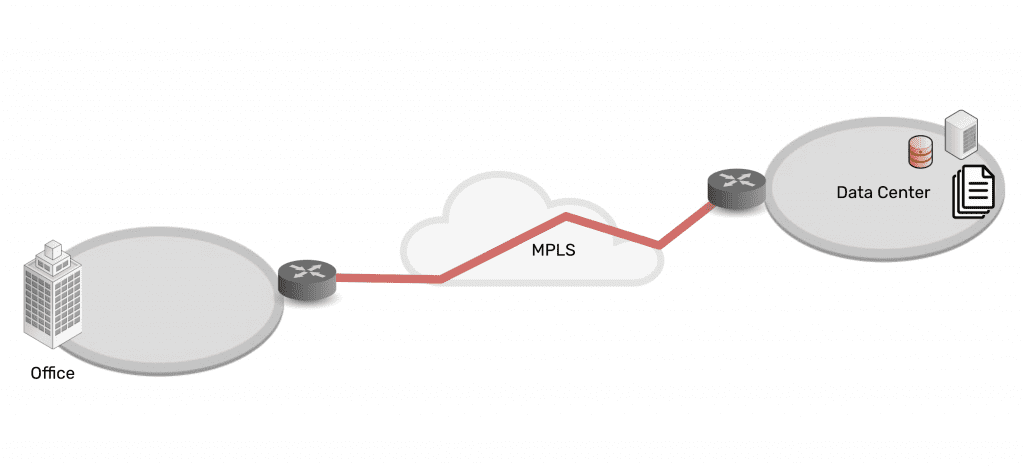
Times were simpler, but that also meant that network infrastructure and cybersecurity were simpler. Most people would go to work at a physical location like an HQ or branch office, and distributed or remote work technologies were very much in their infancy. This meant that network infrastructures were more simple and localized, usually requiring a simple MPLS connection from their off-site data center (if they had one) to their branch offices. Cybersecurity was simple: it was either inherent to the connection type (like MPLS), or required something like a basic firewall or encryption method.

Network architecture showing simplicity of data center connected via MPLS to branch office

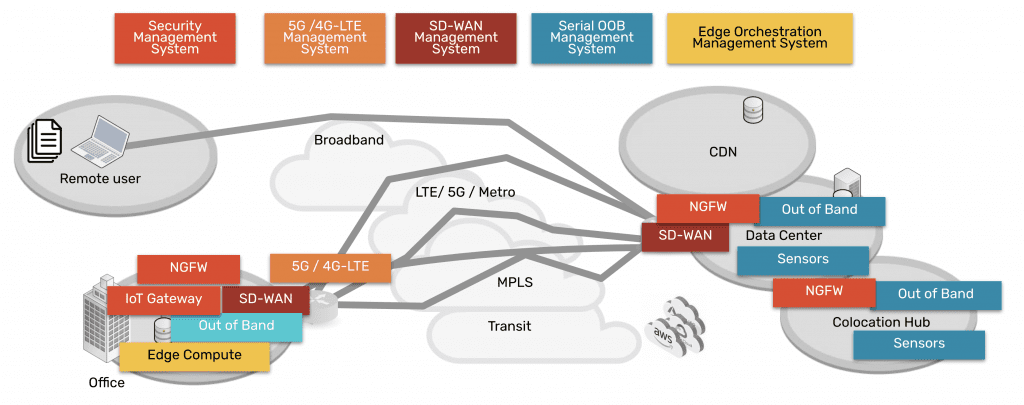
Fast forward more than 20 years, and the network infrastructure common to 2001 is barely recognizable. With customers and employees demanding companies adapt to their on-the-go and remote-work lifestyles, the network infrastructure exploded, causing a sort of Big Bang of cybersecurity as we know it today.

Network architecture showing complexity of data center, CDN, remote user, branch office, all connected via many paths

Modern networks need to serve many branch offices and remote locations, and the only way to succeed is by incorporating a myriad of on-prem, cloud, and SaaS solutions. This creates a hybrid infrastructure of data, security, networking, and computing distributed everywhere. In other words, the attack surface continues to expand much like the universe itself, and security professionals have been struggling to contain all the vulnerabilities left in its wake.


Why cybersecurity makes you feel lost in space

You might relate to Frank Poole. In the movie, the HAL 9000 supercomputer leads Frank to perform a spacewalk in order to repair a portion of their ship. While Frank floats toward the ship, the corrupted HAL takes control of an EVA pod and slams it into Frank, causing him to tumble helplessly through the black void of space and eventually meet his demise.

Frank Poole death

Trying to secure your IT infrastructure can make you feel just as helpless and out of control. That’s because cybersecurity presents several challenges that make it difficult to gain your footing. And with 2021’s executive order regarding zero trust security, cybersecurity seems even more daunting as previous protection methodologies are becoming wholly obsolete.

Here’s a brief look at some of the challenges of modern cybersecurity.


Too many products

Regardless of your industry, there are so many security products to choose from that it can easily feel like you’re floating amongst an endless sky of stars. It’s difficult enough choosing properly secured servers, routers, storage devices, and other physical equipment. Add on the other crucial pieces of the modern network architecture, and it’s easy to make a full time job of researching, comparing, and selecting the right cloud and SaaS security products. Here’s a list that barely scratches the surface of different types of security products to choose from:

  • Firewalls & next-gen firewalls (NGFWs)
  • Security information and event management (SIEM) systems
  • Identify and access management (IAM) products
  • Pen testers
  • Data analytics
  • Intrusion prevention and detection systems (IDPS)
  • Endpoint protection apps
  • Database security solutions
  • Ransomware/malware detection and removal
  • Authentication and single sign-on


Too many vendors

All of these products have to originate from somewhere, which brings us to the next challenge: there are too many cybersecurity vendors to choose from. This isn’t necessarily a bad thing, since competition creates better products, but it does complicate the cybersecurity professional’s journey to achieving holistic protection.

At RSA Conference 2022, for example, there were 450 security exhibitors present, 70 of which were funded well enough to afford the cost of a booth. During the show, many discussed that in the previous 18 months there were 1,800 new cybersecurity vendors that received funding to be installed in networks. The TL;DR — this multi-vendor ecosystem will persist (and probably grow even more), and so will the challenge of achieving holistic security.

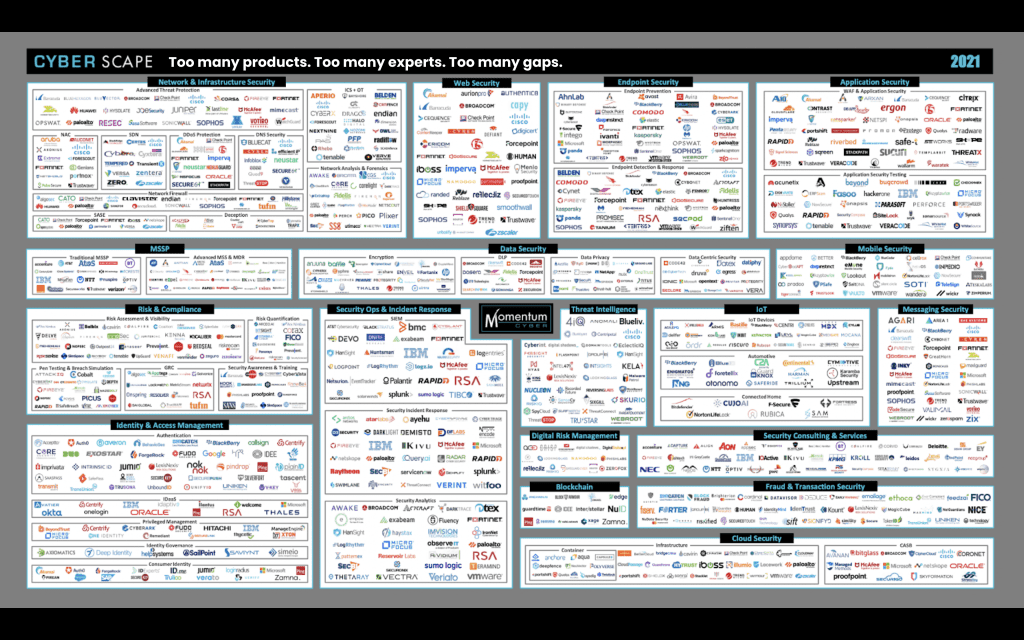
Of course everyone wants the best of the best, which might draw your attention to staples like Cisco, Fortinet, and Palo Alto Networks. But because the modern hybrid infrastructure is so diverse, there now exist so many niche products available from thousands of vendors. In fact, CyberDB compiled a database that includes more than 3,500 security companies from the United States alone.

Here’s a graphic that puts into perspective just a fraction of the available vendors:

so many security vendors


Too many gaps

The third and most important challenge stems from the first two above: there are just too many security gaps to address. Part of this problem is due to the diversity of hybrid infrastructure. But once you’re able to identify the gaps, you’ll find that addressing these will more often than not create even more gaps.

That’s because there’s no single vendor or suite of products that provides holistic cybersecurity. You deploy a variety of products but inevitably run into interoperability issues, which only perpetuates more vulnerabilities as you add more solutions to address these gaps.

What you end up with is a plethora of solutions that are secure themselves, but that don’t provide protection for your infrastructure as a whole.


Why recovery is key to modern cybersecurity

According to a Sophos survey, 66% of surveyed organizations suffered ransomware attacks in 2022. And when attacks happened, 70% of organizations needed more than two weeks to recover. Ransomware is the modern disaster, which makes minimizing recovery times an essential part of modern cybersecurity.

Recall the Fortinet 7.0 CVE from 2022. Customers upgrading to the then latest release of FortiOS suddenly found themselves vulnerable to an authentication bypass, where attackers could gain admin access using certain HTTP/S requests. This typical scenario leaves IT teams waiting for a solution while their business remains vulnerable. What’s needed is the ability to recover quickly and automatically, whether from an active attack or an at-risk configuration.


Get the blueprint for fast recovery times

Big Tech companies have spent years building this capability into their infrastructure. At ZPE Systems, we’ve directly collaborated with these companies and have created best practices based on these proven architectures. This Network Automation Blueprint details the components and practical steps to take, from automating IT/OT production infrastructure, to implementing an effective design for orchestration and automation environments.

The blueprint is your template to achieving fast recovery times and reducing your risk of attack. Download the blueprint now.


Watch the blueprint recover a failed upgrade

Watch this tech demo from Tech Field Day 26, where Rene Neumann shows how the blueprint helps you recover a failed device upgrade in minutes.