Data center connectivity is more crucial than ever. Data, applications, and digital services power every aspect of business, which means your infrastructure needs to be available 24/7. However, according to the Uptime Institute’s 2022 Outage Analysis report, outages are still a frequent problem for enterprises and data centers, and the financial consequences of the resulting business interruptions are staggering.
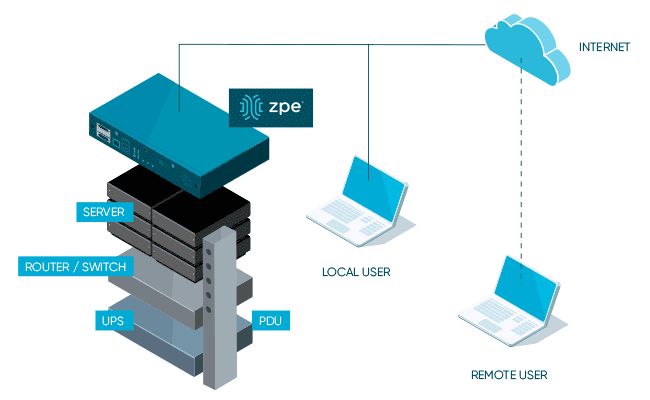
One of the best tools for maintaining data center connectivity is remote out-of-band (OOB) management. OOB management creates an alternative path to remote infrastructure on a dedicated management network. An OOB management solution uses serial consoles and data center infrastructure management (DCIM) software to give administrators the ability to monitor and control remote data center infrastructure. With OOB, you can recover from outages faster and regain control over remote data center infrastructure even when the main network is down.
The importance of out-of-band data center connectivity
The first major takeaway from the Uptime Institute report is that outage rates have remained high over recent years. Twenty percent of responding organizations experienced a serious outage in the last three years, which is slightly higher than in the 2021 report. It was noted that 80% of data centers reported an outage of some kind (with varying severity), which hasn’t changed much since previous reports. The implication here is that businesses and data centers are both still struggling to maintain the 24/7 availability expected by their customers. Let’s dig deeper into the causes and effects of data center outages and discuss how out-of-band management can help.
Network issues are the biggest cause of downtime According to the 2022 report, networking problems were the single largest cause of outages over the last three years. These issues are frequently due to the complexity of distributed and software-defined network architectures, especially in cloud or hybrid cloud deployments.Out-of-band data center connectivity solutions use serial consoles which directly connect to other data center devices using the serial port. That means administrators can access and manage those devices without needing to use their IP addresses. So, if a configuration mistake causes the production LAN to go down, administrators can still remotely fix the problem, shortening the duration of the outage. And, since OOB serial consoles provide a secondary network interface—often an LTE cellular modem—you’ll still have remote access even if human error brings down the WAN or SD-WAN architecture. .
Power failures are another leading cause of outages Respondents reported that 43% of significant outages—ones that resulted in business interruption and financial loss—were caused by power issues. Many of those incidents were due to uninterruptible power supply (UPS) failures.As part of a data center infrastructure management (DCIM) solution, an OOB serial console gives administrators the ability to remotely monitor and manage UPS devices in the rack. Admins get alerts when devices aren’t performing efficiently or begin to show signs of imminent failure. That means organizations can proactively schedule repairs or deploy replacements before a power outage occurs. .
Out-of-band data center connectivity shortens recovery time One of the most alarming statistics from the report is the percentage of public outages lasting more than 24 hours. In 2017, just 8% of outages lasted longer than a day, but that increased to nearly 30% in 2021.Out-of-band data center connectivity can significantly reduce the time to recovery by ensuring administrators always have remote access to data center infrastructure. That means your organization will waste less time waiting for on-site managed services to arrive or for in-house technicians to travel to the data center. As soon as DCIM monitoring alerts them to an issue, admins can begin diagnosing and fixing the problem from their remote desktop. .
Outages are more expensive than ever Over 60% of reported outages resulted in at least $100,000 in losses, an increase of 21% since 2019. The number of outages costing more than $1 million also increased by 4%.OOB management gives teams the ability to remotely troubleshoot and recover from many issues, so you don’t need to pay for truck rolls or on-site managed services. If remote troubleshooting reveals that the problem requires an on-site fix, technicians can go in already knowing the source of the issue and with all the necessary tools to repair it. Either way, your organization saves time and money.
Out-of-band data center connectivity gives organizations reliable access to remote infrastructure even during a network outage. OOB serial consoles also provide visibility into the health and performance of critical data center devices like UPSs, so you can proactively address issues and prevent downtime from occurring. Through 24/7 remote access, monitoring, and management, you can reduce the incidence, duration, cost, and impact of data center downtime.
Gen 3 OOB data center connectivity with Nodegrid
The Nodegrid Serial Console Plus (NSCP) is a Gen 3 out-of-band data center connectivity solution that delivers reliable and blazing-fast remote access to up to 96 data center devices from a single 1U rack-mounted box. Nodegrid’s vendor-neutral OOB DCIM platform supports integrations with your choice of infrastructure solutions and automation tools, giving you total and efficient control over your data center infrastructure.
Ready to learn more about out-of-band data center connectivity?
To learn more about out-of-band data center connectivity with Nodegrid, contact ZPE Systems today.
uCPE stands for universal Customer Premises Equipment. A uCPE box is a general purpose networking device used to run virtual network functions, or VNFs. VNFs are essentially software versions of network devices such as routers, switches, and firewalls. That means you can consolidate an entire networking tech stack into a single uCPE box, saving money and reducing management complexity.
Despite the promise of uCPE, the technology has been slow to catch on. In this article, we’ll explore the reasons for the lack of popularity of early uCPE before discussing how newer generations overcome these issues to deliver cost savings, simplified management, and other benefits to enterprise customers.
The shortcomings of gen 1 uCPE
Early uCPE devices were generally provided by telecoms and ISPs to host their specific networking software. Customers didn’t get to choose the software or virtualization solutions—they had to use whatever the vendor gave them. That meant enterprises didn’t have the flexibility to swap out VNFs and software to get the specific features or pricing they wanted, and they couldn’t continue using existing solutions that they really liked.
However, the larger issue was that the virtualization technology itself was ahead of its time. Many organizations still didn’t have use cases that justified the business disruption and expense of swapping out networking infrastructure with virtualized solutions. Plus, software-based networking was so new that many network administrators and engineers didn’t have the skills and experience needed to configure, deploy, and manage fully virtualized tech stacks.
Due to these limitations, enterprises showed minimal interest in uCPE for a long time, leading many to believe that the technology would die out entirely. Instead, forward-thinking hardware and software vendors continued to improve uCPE technology to overcome these shortcomings. In addition, enterprises have been pushing their computing and business operations out to remote locations at the network edge, resulting in the rapid adoption of SD-WAN (software-based wide-area networking) solutions for distributed network management. A greater interest in software-based networking technology, and a need for hardware capable of running that software, has led to a renewed enthusiasm for uCPE.
The next evolution of uCPE
The current generation of uCPE focuses on delivering a truly universal, vendor-neutral platform from which to host, manage, and troubleshoot an entire consolidated tech stack. This is provided in two parts:
The device itself, which runs on an open, Linux-based operating system and supports multiple pinout standards.
An orchestration platform which consolidates the monitoring and management of all uCPE solutions behind a single pane of glass.
Through its a vendor-agnostic hardware, software, and orchestration platform, uCPE benefits enterprise customers in numerous ways, including:
Vendor freedom
Next-gen uCPE devices are capable of hosting any software or virtualization solution from any vendor. This gives enterprise customers the ability to shop around for the best features and pricing for their particular use case. If customers already have a software-based networking solution that works well for them, they can simply migrate it to the uCPE with minimal hassle.
Tech consolidation
A single uCPE box can take the place of an entire rack of networking equipment, reducing the number of devices to install, license, and maintain. This is especially vital for organizations that want to expand their operations to branch offices, edge data centers, and even hard-to-reach locations like oil rigs and research stations. Tech consolidation reduces the time and expense required to deploy remote infrastructure.
Centralized management
The current generation of uCPE includes an orchestration platform capable of observing and controlling the entire distributed network of uCPE boxes and connected infrastructure. Enterprises can deploy hundreds or even thousands of uCPE boxes to locations all over the globe, but they only need to log in to one platform to manage them all. uCPE gives organizations the ability to orchestrate network functions, monitor remote infrastructure, and troubleshoot and respond to issues from behind a single pane of glass, which results in simplified and optimized network management.
SD-WAN capabilities
As organizations have sped up their SD-WAN adoption plans in response to the rise of remote work, edge computing, and distributed network management, the need for universal networking hardware has also quickly increased. Next-gen uCPE devices are the perfect hosts for SD-WAN software solutions because they allow for easy integration with the underlying WAN infrastructure, which run as VNFs on the same box. That means enterprises don’t need to invest in new SD-WAN-capable routers and gateways for each remote site. Plus, with a uCPE orchestration platform, it is easier to view and control the entire SD-WAN architecture.
To take advantage of the benefits promised by uCPE technology, you need to ensure that you choose a platform that’s truly vendor-neutral to support your choice of SD-WAN and VNF solutions. The hardware also needs to be powerful enough to run your entire edge networking stack from a single box.
Universal network management with Nodegrid
Nodegrid is a next-gen uCPE platform that delivers universal infrastructure orchestration for enterprise customers. Nodegrid’s flexible hardware and open OS give you the freedom to bring your choice of networking devices, SD-WAN solutions, and VNFs. Nodegrid devices are built with CPU and memory headroom and expansive storage options so you can run your entire branch from a single box. Plus, the ZPE Cloud infrastructure orchestration platform gives you complete control over your distributed network, including third-party automation playbooks and workflows.
Ready to learn more?
To learn more about Nodegrid next-gen uCPE, contact ZPE Systems today.
Outdated network infrastructure poses a significant risk to the security and continuity of business operations. According to NTT’s “2020 Global Network Insights Report,” obsolete devices contain nearly twice as many security vulnerabilities as currently supported solutions. Outdated network hardware is also more likely to fail, and the ability to recover from a failure is severely hampered by a lack of vendor support. However, network upgrades can be highly disruptive, so many organizations delay network upgrades to avoid business interruption. They don’t realize that their outdated devices are like ticking time bombs that could bring down their network at any moment. In this post, we’ll provide advice that helps answer the question: How do I upgrade network infrastructure without disrupting business operations?
Why and when to upgrade network infrastructure
Obsolete network infrastructure no longer receives updates and security patches from the vendor. That means any vulnerabilities that exist on the device will remain open, giving cybercriminals time to find and exploit them. In addition, older network solutions often lack the advanced security features like SSO and MFA, which are required for Zero Trust.
Even supported legacy devices suffer from limitations that can prevent a business from achieving its technological goals. For instance, legacy devices may not support automation, making it difficult to achieve NetDevOps transformation. Plus, as enterprise networks grow more distributed, there’s a need for solutions that support SD-WAN and SD-Branch technology.
Sometimes the solutions themselves aren’t terribly outdated, it’s just that business requirements have changed in such a way that the existing infrastructure can’t support. For example, an organization may migrate some applications and systems to the cloud, so they need networking solutions that support hybrid environments. In addition, the mix of old and new devices and cloud and on-premises resources increases management complexity and prevents teams from effectively leveraging network orchestration.
Obsolete devices, outdated security, limited automation support, and changing business requirements are all important reasons to upgrade network infrastructure. However, these upgrades must be approached with a thoughtful strategy to reduce the impact on the performance and availability of business resources.
How to upgrade network infrastructure with minimal business interruption
Vendor agnostic platforms are the key to smooth network infrastructure upgrades. Vendor agnostic (a.k.a. vendor neutral) network management platforms support integrations with all or most viable and established network solutions, including legacy devices.
Vendor-neutral management devices, such as the Nodegrid Serial Console, support both legacy and modern Cisco pinouts. That means Nodegrid provides a single, unified platform from which to manage all the outdated devices you already have as well as any new solutions you add to your infrastructure. This reduces management complexity for network administrators, giving them more time to focus on optimizing performance and planning future network upgrades.
Additionally, a vendor-neutral network orchestration platform can use that management device to extend modern automation and orchestration to legacy hardware. A truly vendor-agnostic platform, such as Nodegrid Manager (for on-premises and private cloud deployments) or ZPE Cloud (for public cloud and hybrid deployments) can run third-party automation playbooks and custom Python scripts. This gives network administrators the unprecedented ability to implement a fully-automated NetOps environment even while still rolling out infrastructure upgrades.
The final piece of the puzzle is vendor-neutral Zero Touch Provisioning (ZTP). ZTP gives you the ability to deploy new devices efficiently and securely in remote data centers, branch offices, and edge compute sites. ZTP devices are provisioned automatically over the network, reducing the need for onsite deployments or pre-staging. A vendor-neutral ZTP solution like Nodegrid can extend ZTP to other vendors’ devices so you can quickly deploy upgraded infrastructure.
Nodegrid delivers vendor-neutral management, orchestration, and ZTP so you can upgrade network infrastructure with minimal business interruption.
Need Help Upgrading Your Network Infrastructure?
Contact ZPE Systems to learn how to upgrade your network infrastructure with Nodegrid.
Software-defined wide area networking, or SD-WAN, has made it possible to efficiently control highly distributed WAN architectures using software abstraction and automation. SD-WAN adoption is increasing, partially due to the rise in remote work during the pandemic, with experts predicting a compound annual growth rate (CAGR) of 26.2% between 2022 and 2028. However, while SD-WAN solves a lot of remote, edge, and branch networking problems, it also introduces security concerns that must be addressed. This definitive SD-WAN security checklist highlights the most important challenges and provides solutions for overcoming them.
The definitive SD-WAN security checklist
Keeping an SD-WAN architecture secure requires several features to be successful. It’s vital to consider this comprehensive list.
1. Frequent security patching
Outdated operating systems create a significant security risk. According to a 2016 Voke Media survey, about 80% of breaches or failed audits could have been prevented by patching outdated software or updating device configurations. An SD-WAN router with an outdated OS is more likely to have vulnerabilities, and the longer it goes unpatched, the more likely a hacker is to find and exploit those vulnerabilities.
However, SD-WAN architectures are often multi-vendor and highly distributed, making it challenging for administrators to monitor for vulnerabilities and stay on top of patch schedules. There are two primary ways to overcome this difficulty:
Centralized SD-WAN management platforms provide a single pane of glass from which to monitor and update device software. The right platform is vendor-agnostic, so administrators can easily patch any and all vendor devices from one common interface.
Automated patch management software helps keep OSes up to date by automatically applying new updates based on a predetermined schedule. Some solutions even perform automatic vulnerability scans or can monitor environments for missing patches and apply new updates that fall outside of the usual patch schedule.
Your ability to keep SD-WAN device software secure ultimately depends on the vendor’s patch schedule. Some providers are sluggish to patch known vulnerabilities in their software, either because they think they can keep said vulnerabilities a secret or because they don’t want to dedicate the time and resources needed to keep the OS up to date. That’s why you should look for SD-WAN hardware and software vendors who are transparent about vulnerabilities and who work diligently to release frequent patches and updates.
2. Zero Trust Provisioning
SD-WAN platforms are software-based, but they still require underlying networking hardware at each remote site for connecting to the enterprise network. Deploying this hardware can be difficult, especially when SD-WAN sites are in hard-to-reach locations such as offshore oil rigs, remote weather stations, or nations experiencing disasters or active conflicts. Often, organizations opt to pre-stage devices in their home office and then ship them to remote sites so they can avoid costly or dangerous travel.
Pre-staging creates a security risk because a pre-configured device could be intercepted by hackers and used to access the enterprise network. Zero Touch Provisioning (ZTP) reduces the need for pre-staging by deploying new device configurations over the network. ZTP-enabled devices provision themselves by using DHCP or TFTP to find and download configuration files, which means administrators can ship factory-default hardware that doesn’t contain any exploitable information about the enterprise network.
However, ZTP also introduces some additional security challenges. Once they’ve created the configuration file, administrators generally don’t monitor the entire automatic provisioning process, so there’s a chance that a mistake in the configuration file could create a security vulnerability that goes unnoticed. And, since one ZTP configuration file is usually applied to multiple devices, a potential security vulnerability could affect several systems or locations without anyone knowing. In addition, hackers could intercept the transmission of the configuration file over the network if the connection isn’t strongly encrypted.
These challenges are overcome with a secure ZTP solution that follows zero trust security principles. This type of solution is often referred to as “Zero Trust Provisioning,” and it includes hardware-based security like TPM, BIOS protection, encryption modules, and an onboard firewall which protects the software layer (secure boot) and management layer (two-factor authentication). In addition, the ideal Zero Trust Provisioning solution supports integrations with automated configuration management tools like Chef and Ansible which can be set up to test and monitor ZTP configurations for mistakes and security vulnerabilities.
Zero Trust Provisioning is a key part of the SD-WAN security checklist because it prevents branch networking hardware from being intercepted and used in a cyberattack. It also ensures that automatic provisioning occurs over a secure, encrypted network connection, and allows integration with configuration management tools to prevent errors from introducing additional vulnerabilities.
3. Secure out-of-band access
Many organizations use out-of-band (OOB) management to configure, control, and troubleshoot remote network infrastructure. OOB management uses a separate management plane, so resource-intensive network management and orchestration workflows don’t affect the performance or reliability of the production network. This may involve using a jump box to access an OOB network, which is an entirely separate management network architecture that runs parallel to the production network. However, a simpler solution is to use an OOB console server to achieve the same goal without the hassle of deploying a separate architecture.
OOB management improves the performance and reliability of production networks, and provides an alternative path to remote infrastructure (typically via cellular modem) in the event of an ISP outage or a network device failure. The issue with OOB management is that jump boxes and console servers are attractive targets to hackers. If a malicious actor manages to compromise the OOB network, they’ll gain complete control over the remote infrastructure.
To keep SD-WAN devices and other remote infrastructure secure, it’s best to use an OOB console server with advanced encryption for both the hardware and the management connections. In addition, the OOB solution should include Zero Trust features like MFA (multi-factor authentication) and RBAC (role-based access control). Just like the SD-WAN hardware, the OOB device(s) should run a fully patched OS and support Zero Trust Provisioning. For even greater protection, choose an OOB solution that supports integrations with third-party security solutions like next-generation firewalls (NGFW).
A secure out-of-band management solution gives network administrators 24/7 access to remote infrastructure on a dedicated, encrypted network connection using hardened OOB console server devices. This ensures that hackers can’t use the OOB network to hijack production infrastructure while also giving administrators the ability to quickly recover from outages, hardware failures, and cyberattacks.
4. Cloud-based security technology
As we’ve discussed above, it’s possible to run SD-WAN solutions on hardware with onboard firewall features. However, these basic firewalls often lack the advanced functionality needed to protect enterprise networks from sophisticated cyberattacks, which is why most organizations also use some form of stateful firewall or NGFW that resides in a central data center. This works well for a single, centralized enterprise network, but the addition of remote sites can create performance issues.
For the centralized firewall to inspect and protect SD-WAN traffic, that traffic must be backhauled through the central data center, even if the request is ultimately destined for the web. This inefficient routing causes bottlenecks, performance issues, and even dropped connections for on-premises and remote users alike. The obvious solution to this problem would be installing physical or virtual firewalls in each remote location, but this is expensive and disruptive and creates more management complexity for network administrators.
A better way to protect remote traffic while improving performance is through the use of cloud-based security solutions, such as Security Service Edge (SSE). SSE relies on SD-WAN’s intelligent routing capabilities to separate remote traffic that’s destined for web, cloud, and SaaS resources. This traffic bypasses the firewall and is instead routed through a cloud-based security stack, reducing the load on the enterprise network.
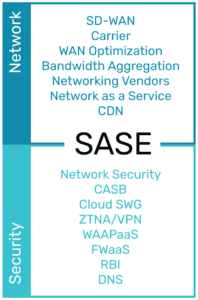
Ideally, the SD-WAN solution will tightly integrate with the SSE platform. This combination of SSE security with an SD-WAN on-ramp creates what’s known as SASE, or Secure Access Service Edge. This is most easily achieved using vendor-neutral branch networking platforms which can host or integrate with a wide variety of SD-WAN and SSE solutions. An integrated SASE architecture ensures comprehensive security while providing remote users and systems with fast, reliable access to cloud resources.
Nodegrid checks every box on your SD-WAN security checklist
Only one remote network management solution provides everything you need to keep your SD-WAN architecture secure: the Nodegrid platform from ZPE Systems. Nodegrid’s vendor-neutral routers, such as the 5-in-1 Hive SR branch gateway, can directly host or integrate with your chosen SD-WAN solution. Whether you enable SD-WAN with a Nodegrid device or by using ZPE Cloud’s SD-WAN application, you’ll get seamless access, centralized management, and state-of-the-art security.
1. Secure, up-to-date SD-WAN device OS
Nodegrid’s branch gateway routers run on the vendor-neutral, x86 Linux-based Nodegrid OS, which is constantly monitored for vulnerabilities and frequently patched to ensure security. Plus, with the ZPE Cloud orchestration platform, you can monitor and update all your SD-WAN devices from one convenient management portal—even if that hardware comes from another vendor.
2. Zero Trust Provisioning for branch networks
All Nodegrid devices support Zero Trust Provisioning, and they can extend this capability to any third-party devices managed by Nodegrid. That means administrators can securely configure all the multi-vendor devices in a remote branch network without the need for travel or pre-staging. Nodegrid ZTP is considered Zero Trust because it protects the hardware, software, and management layers with advanced security features like:
Password-protected BIOS
Current cryptographic modules
SSO with SAML (Duo, Okta, Ping, and ADFS), MFA, and remote authentication
Geofence perimeter crossing detection
Onboard firewall, IPSec, and Fail2Ban intrusion protection
Fine grain RBAC with strong password enforcement
Nodegrid also supports integrations with automated configuration management solutions like Ansible, Chef, and Puppet, so you can ensure every device is provisioned correctly.
3. Gen 3 secure out-of-band management
Nodegrid services routers provide reliable, Gen 3 OOB management access to any connected devices, including those from other vendors. This access is protected by a patched OS, onboard hardware security features, and current encryption modules. Plus, Nodegrid’s hardware and software can host or integrate with third-party security solutions like NGFWs for comprehensive OOB security.
4. An SD-WAN onramp to SSE
The Nodegrid branch networking solution provides the ideal SD-WAN on-ramp to leading Security Service Edge providers. That’s because Nodegrid is a completely open platform that can host or integrate with any SSE and SD-WAN offering to provide a single, unified SASE solution. This gives administrators complete control over every aspect of branch network management and SD-WAN security from one convenient portal, reducing complexity and improving your security posture at the same time.
Wondering how ZPE’s Nodegrid solution checks all the boxes on your SD-WAN security checklist?
With inflation and supply chain issues causing hardware prices to surge, and a winter recession looming on the horizon, every organization is looking for ways to cut technology costs. Though colocation hosting is often much less expensive than building and maintaining an on-premises data center, factors like physical space usage, power and bandwidth consumption, and remote support can cause your monthly colo bill to spiral out of control. This blog examines some of the most common reasons for colocation data center pricing increases and offers advice on how to keep these costs in check.
Colocation data center pricing considerations
First, here are four common factors that could cause your colocation data center pricing to increase.
1. Physical space
One of the major elements determining colocation pricing is the amount of physical space being rented. Some facilities charge by the rack unit and others by square footage (i.e., how much floor space is taken up by your racks). Costs for colocation space are typically calculated based on your portion of the facility’s operating expenses, which include things like physical security, building maintenance, and energy for cooling.
2. Power consumption
Power usage also heavily affects colocation data center pricing. While some facilities offer flat-rate power pricing, it’s more common to see pricing based on kilowatt usage. The price of data center power usage depends on many factors, such as electricity costs in the region, how energy-efficient the facility is, and how much energy it takes to cool your equipment.
3. Bandwidth consumption
Bandwidth is another usage-based expense that affects data center pricing. Organizations usually purchase bandwidth from the ISP, not directly from the facility, although some data centers do offer colo packages that also include internet access and bandwidth. That means that bandwidth pricing varies significantly from organization to organization.
4. Remote hands
Though colocation data centers handle many aspects of building and facility maintenance, customers are typically responsible for deploying and maintaining their own equipment. Most organizations do so via remote DCIM (data center infrastructure management) solutions, so they do not need to maintain a physical presence in the colocation facility. However, sometimes hardware failures or other issues make remote troubleshooting impossible, so they need to use on-site managed services, sometimes referred to as “remote hands.” Some colocation facilities include an allotted time for remote hands services in their pricing, but more often this is an added fee that’s paid for as needed.
There are many other factors contributing to the cost of colocation data center hosting—such as the location of the facility, the cost of your hardware, and the uptime promised by the provider. However, these four factors are relatively easy for you to change and control without needing to completely overhaul your infrastructure or move to a different facility.
Four ways to keep colocation data center pricing in check
Now, let’s discuss how to decrease your physical footprint, lower your power and bandwidth consumption, and minimize your reliance on managed support services.
Consolidated devices
Replacing bulky, outdated, single-purpose hardware with consolidated, high-density devices is a great way to reduce your colocation data center footprint without sacrificing functionality or performance. For example, the Nodegrid Serial Console Plus (NSCP) provides out-of-band management, routing, and switching for up to 96 devices in a single, 1U rackmount appliance. The NSCP helps reduce the number of serial consoles, KVM switches, or jump boxes in your colocation data center, allowing you to save money or use the extra space for new equipment.
Another option is the Nodegrid Net Services Router (NSR), a modular appliance that can replace up to six other devices in your rack. The NSR provides routing and switching with network failover and out-of-band management, with expansion modules for Docker & Kubernetes container hosting, Guest OS & VNF hosting, and more. The NSR is an ideal solution for small colocation deployments because it can reduce the number of computing and storage devices in your rack. For example, the NSR can reduce your footprint from 4U to 1U, allowing you to cut costs and reduce the complexity of your remote infrastructure.
Remote DCIM power management
As mentioned above, most organizations use remote DCIM solutions to manage colocation infrastructure. Power management is an important aspect of remote DCIM for keeping colocation data center costs in check. Remote DCIM power management allows you to visualize power consumption, both at the individual device level and at a big-picture level. If you can see where you’re using power inefficiently, you can correct the problem (for instance, by replacing a faulty UPS or simply redistributing the load) before costs spiral out of control.
For power cost savings, you should use remote management DCIM that supports automation, such as Nodegrid Manager. This vendor-neutral platform allows seamless integrations with third-party or self-developed automation tools and scripts. That means you can use Nodegrid to automatically monitor for and correct inefficient power load distribution to ensure consistent usage and prevent overage fees. Plus, Nodegrid supports end-to-end automation for all your network and infrastructure management workflows, helping to reduce the overall manual workload for your administrators.
Software-defined networking
Traditionally, administrators set and monitor bandwidth usage by accessing the CLI (command line interface) or GUI (graphical user interface) on individual, hardware-based network devices like switches and routers. For complex and distributed network architectures using many switches in many locations (including remote colocation facilities), manual bandwidth control is so time-consuming and inefficient that organizations end up with a “set it and forget it” approach. That means bandwidth usage is free to fluctuate as much as it wants within certain thresholds, and organizations just eat the overage costs.
Software-defined networking, or SDN, decouples network routing and management workflows from the underlying hardware. This allows organizations to centrally control and automate their entire network architecture, which includes bandwidth management for remote colocation infrastructure. Centralized SDN management gives administrators a single interface from which to control all the networking devices and workflows, so they don’t need to jump from device to device to monitor and manage bandwidth usage.
The application of SDN technology to WAN management is known as SD-WAN, and when that extends into the remote LAN it’s known as SD-Branch. SDN, SD-WAN, and SD-Branch technology use intelligent routing to ensure efficient bandwidth usage and network load balancing. That means you can keep your colocation data center bandwidth costs in check while significantly reducing the amount of work involved for your network administrators.
Out-of-band management
Out-of-band management, or OOBM, separates your management network from your production network, allowing you to remotely manage, troubleshoot, and orchestrate your colocation data center infrastructure on a dedicated connection. This has numerous benefits, including:
Resource-intensive network orchestration workflows won’t affect the bandwidth or performance of the production network.
Administrators can still access remote infrastructure even if the primary ISP link goes down.
Administrators gain the ability to remotely troubleshoot even when a hardware failure or configuration mistake causes a production network outage.
OOBM can help reduce your reliance on colocation data center managed services because your administrators have an alternative path to critical infrastructure even during an outage. A Gen 3 OOB solution like Nodegrid can further reduce your colocation data center pricing in several ways:
OOB management is built into all Nodegrid devices, so you don’t need to purchase any additional hardware (or rent additional rack space) to enable out-of-band management.
Nodegrid OOB integrates with the vendor-agnostic Nodegrid Manager platform, which means you’ll have reliable 24/7 remote access to monitor and orchestrate power load distribution to ensure cost-efficiency.
Nodegrid OOB devices can directly host your software-defined networking, SD-WAN, and SD-Branch solutions so you don’t need to purchase additional hardware. You can also integrate SDN, SD-WAN, and SD-Branch software with the Nodegrid Manager platform for unified control.
The Nodegrid solution from ZPE Systems can help you keep colocation data center pricing in check through consolidated devices, remote DCIM orchestration, software-defined networking support, and Gen 3 out-of-band management.
Want to find out more about reducing colocation data center pricing with Nodegrid?
A cybersecurity platform provides a unified interface from which to manage multiple security tools and controls. Traditionally, these platforms only work within a single vendor’s ecosystem of products. However, a new type of solution, called Cybersecurity-as-a-Platform (or CaaP), allows you to integrate your choice of third-party, multi-vendor solutions. In this blog, we’ll discuss the challenge of managing a complex cybersecurity environment and explain how CaaP can help.
Why Cybersecurity-a-a-Platform (CaaP) is the future of holistic security
Modern network security is rapidly evolving and expanding to deal with the increasing sophistication and frequency of cyberattacks. According to the Oracle and KPMG Cloud Threat Report from 2020, the average organization uses over 100 discrete cybersecurity controls. Often these tools come from many different vendors and perform many different functions, requiring specialized training to use each one effectively. This creates a highly complex cybersecurity environment that’s prone to human error.
In addition, there’s a lack of interoperability between products, meaning tools are often disjointed and working independently of each other rather than as a cohesive system. There’s also no centralized control or visibility over these independent solutions, which means administrators need to log in to each one to configure, monitor, and manage their functionality.
This leaves teams without a big-picture overview of their cybersecurity environment, making it impossible to achieve a complete security posture. This need for centralized management and monitoring of discrete security products led to the development of unified cybersecurity platforms.
What is a cybersecurity platform?
A cybersecurity platform is a software solution—typically, but not always, cloud-based—which unifies an ecosystem of security tools and controls behind one management interface. In the past, this has usually been vendor-specific (e.g., Trend Micro providing a single platform from which to manage their own security products). However, this type of platform leaves you locked in to whatever features and functionality are included by the cybersecurity vendor, or their chosen integration partners.
That leaves organizations with one of two choices:
1. Stay within that ecosystem and accept that they may have gaps in their coverage due to a lack of needed functionality. In this case, this means sacrificing the security of their network and systems for the convenience of using a single management system.
2. Add on additional products that must be managed outside of that platform, creating more management complexity for security administrators. In this case, this means sacrificing efficiency and interoperability in the hopes of improving overall security.
In either scenario, the organization is hurting its security posture by making compromises. A better solution is to choose a platform that gives you the freedom to combine the best security products and tools for your unique environment under one convenient management umbrella.
What is Cybersecurity-as-a-Platform (CaaP)?
Cybersecurity-as-a-Platform (CaaP) provides a vendor-agnostic interface from which to control a vast and complicated cybersecurity ecosystem. CaaP doesn’t care who you bought your security tools from or how you plan to use them—it provides the platform from which to integrate, manage, and monitor every component of your cybersecurity toolkit. This includes creating unified dashboards and visualizations that combine data from all your different security monitoring and analytics solutions, so you can get a complete picture of your cybersecurity environment.
How CaaP enables holistic cybersecurity
A unified Cybersecurity-as-a-Platform solution benefits businesses by:
→ Reducing data overload – Security analysts must monitor and act on data from a wide variety of sources, including intrusion detection systems (IDS), firewalls, and security information and event management (SIEM) solutions. With so much data to sort through to filter out the false positives from the real threats, analysts can easily become overwhelmed and allow issues to fall through the cracks.
CaaP unifies the data from these individual sources and gives teams a single dashboard from which to view and analyze events. Plus, CaaP supports integrations with tools that can automatically analyze, filter, and remediate security incidents, reducing the risk of human error and freeing up security teams to work on high-priority issues.
→ Simplifying security management – It’s very difficult (if not impossible) for a single security analyst to become an expert in 100+ different products, each of which has its own interface, nomenclature, compatibility issues, etc. Plus, simply logging into every one of these tools on a regular basis takes a significant amount of time, making it far too easy for analysts to neglect or forget critical security systems.
With the right Cybersecurity-as-a-Platform, analysts can integrate all their security tools into one common platform, reducing the number of discrete solutions they need to learn, maintain, and support. This both reduces the risk of human error and reduces the workload on overwhelmed security teams.
→ Improving security posture – The more complex a system is, the more prone it is to failure. A cybersecurity strategy that relies on the continued operation and effectiveness of over 100 individual moving parts is more likely to fail because an issue with even one of those tools could lead to a breach. Plus, without a centralized view of how these parts work together, there’s no way to get a complete picture of an organization’s security posture.
CaaP gives analysts the ability to monitor and maintain all their security tools in one place, so they can see alerts about new vulnerabilities, apply patches, and more. They can also ensure all these tools are working together as expected so there are no gaps in coverage, and see data and visualizations about the security of the organization as a whole.
Adopt the CaaP approach to security with ZPE Systems
Cybersecurity-as-a-Platform is a unified, tightly integrated solution that rolls up a vast ecosystem of security tools behind one pane of glass. CaaP is the future of holistic security because it empowers efficient security monitoring and management while providing a complete overview of an organization’s security posture. True CaaP, like the Nodegrid solution from ZPE Systems, is completely vendor-neutral. This gives you the freedom to bring in your choice of cybersecurity solutions and automation tools, so you get the best features, functionality, and performance for your unique environment.
Want to learn more about cybersecurity platforms with Nodegrid?
ZPE Systems delivers innovative solutions to simplify infrastructure managment at the datacenter, branch, and edge.
Learn how our Zero Pain Ecosystem can solve your biggest network orchestration pain points.