Providing Out-of-Band Connectivity to Mission-Critical IT Resources

Critical Entities Resilience Directive

Critical Entities Resilience Directive
The Critical Entities Resilience (CER) Directive is an EU regulation designed to prevent disruption to the services considered essential to society or the economy. The CER Directive outlines the obligations of critical entities to prepare for any potential hazard, including natural disasters, human errors, terrorist attacks, and cybersecurity breaches. EU Member States have until 17 October 2024 to adopt and publish resilience measures required for their critical entities, and those measures officially take effect from 18 October 2024. Member States must identify and notify critical entities by July 2026; these entities then only have ten months to comply with CER requirements. With such a tight timeframe to demonstrate compliance with the Critical Entities Resilience Directive, organizations that might be deemed critical should begin preparing their resilience strategies now.

Citation: Directive (EU) 2022/2557 of the European Parliament and of the Council of 14 December 2022 on the resilience of critical entities and repealing Council Directive 2008/114/EC

Who does the Critical Entities Resilience Directive apply to, and why does it matter?

The CER Directive covers eleven sectors and subsectors that provide services essential to society, the economy, public health & safety, or preserving the environment. These include:

In-Scope Sectors Covered by the CER Directive

Sector Subsectors
Energy
  • Electricity
  • Heating and cooling
  • Oil & gas
  • Hydrogen
Transport
  • Air
  • Rail
  • Water
  • Road
  • Public transportation
Banking
  • Deposit, lending, and credit institutions
Financial Market Infrastructure
  • Trading venues
  • Clearing systems
Health
Drinking Water
  • Drinking water suppliers
  • Drinking water distributors
Waste Water
  • Collection
  • Treatment
  • Disposal
Digital Infrastructure
Public Administration
Space
  • Operators of ground-based infrastructure for space-based services
Food Production, Processing, and Distribution
  • Large-scale industrial food production and processing
  • Food supply chain services
  • Food wholesale distributors

The Critical Entities Resilience Directive is one of several new EU regulations (such as DORA and NIS2) created to establish consistent guidelines for resilience in sectors where any service disruption has a significant negative impact on society or the economy. Whereas DORA applies primarily to financial institutions and supporting services, and NIS2 focuses on cybersecurity threats, the CER Directive is broader in scope and addresses other, non-digital threats to resilience such as natural disasters and global health crises (e.g., COVID-19).

The penalties for noncompliance will vary by Member State but are likely to include fines, public notification, remediation, and withdrawal of authorization.

CER Directive requirements for critical entities

Most of the CER Directive requirements apply to Member States, outlining how the designated authorities will adopt and enforce resilience measures and support critical entities in achieving compliance. However, there are five key provisions that relevant organizations should be aware of as they prepare for their identification as critical entities.

1. Article 4: Strategy on the resilience of critical entities

EU Member States have until 17 January 2026 to adopt a strategy outlining the guidelines and procedures for critical entities to achieve and maintain a high level of resilience. Essentially, this strategy will describe the requirements for CER Directive compliance in each Member State and provide guidance on how to meet those requirements. Potentially critical entities can prepare by examining existing resilience frameworks and regulations to anticipate the policies, tools, and procedures that will likely be required.

2. Article 5: Risk assessment by Member States

Member States have until 17 January 2026 to perform a risk assessment of all essential services. These assessments must account for natural and human-made risks, including accidents, natural disasters, public health emergencies, terrorist attacks, and antagonistic threats. Member States will then use the risk assessments to identify critical entities within each sector.

3. Article 12: Risk assessment by critical entities

Critical entities must perform risk assessments using similar criteria to Article 5 within nine months of being notified of their designation as critical and at least every four years afterward. If an organization already conducts risk assessments according to other similar resilience guidelines or frameworks, Member States have the authority to decide whether or not those assessments meet CER Directive compliance requirements.

4. Article 13: Resilience measures of critical entities

Critical entities must take the appropriate technical, security, and policy measures to ensure resilience, including a comprehensive strategy for service continuity and disaster recovery. Examples of resilience measures outlined by the CER Directive include:

CER Directive Resilience Measures

Requirements Examples
Adopt disaster risk reduction and climate adaptation measures Using an environmental monitoring system to detect and respond to rising temperatures, humidity, and other relevant conditions
Ensure adequate physical protection of the premises and critical infrastructure, including fencing, barriers, perimeter monitoring tools, detection equipment, and access controls Installing proximity sensors in data center racks to automatically notify security teams if an unauthorized user physically tampers with remote infrastructure
Respond to, resist, and mitigate service disruptions Deploying out-of-band (OOB) serial consoles with cellular capabilities to ensure continuous remote management access to critical infrastructure
Recover from incidents using business continuity measures to resume provisioning essential services Building a resilience system containing all the infrastructure and tools needed to rebuild and recover while still delivering core services
Manage employee security by classifying personnel who exercise critical functions, establishing access rights and controls, and performing background checks as needed Adopting zero-trust security policies and controls that assign access privileges according to role (role-based access control, or RBAC)

5. Article 15: Incident notification

Critical entities must notify the competent authority of any incidents that have or could significantly disrupt essential services within 24 hours of detection. The significance of a disruption is determined according to the following parameters:

  • How many users the disruption affects;
  • How long the disruption lasts;
  • The geographical area the disruption affects.

The incident notification must explain the nature, cause, and potential consequences of the disruption, including any cross-border implications.

How Nodegrid simplifies CER Directive compliance

Nodegrid is a Gen 3 out-of-band management platform that makes the perfect foundation for a resilience system. Nodegrid OOB separates the control plane from the data plane to ensure continuous remote management access to critical infrastructure even during production network outages. Vendor-neutral serial consoles and integrated branch service routers directly host third-party software for security, automation, recovery, and more, reducing hardware overhead at each site while ensuring teams have access to all the tools they need to restore essential services.

Looking to Upgrade to a Nodegrid serial console?

Prepare for the Critical Entities Resilience Directive by replacing your discontinued, EOL serial console with a Gen 3 out-of-band solution from Nodegrid.
Click here to learn more!

PCI DSS 4.0 Requirements

Businessman,Using,Virtual,Touch,Screen,Clicks,Abbreviation:,Pci,Dss.,Concept
The Security Standards Council (SSC) of the Payment Card Industry (PCI) released the version 4.0 update of the Data Security Standard (DSS) in March 2022. PCI DSS 4.0 applies to any organization in any country that accepts, handles, stores, or transmits cardholder data. This standard defines cardholder data as any personally identifiable information (PII) associated with someone’s credit or debit card. The risks for PCI DSS 4.0 noncompliance include fines, reputational damage, and potentially lost business, so organizations must stay up to date with all recent changes.

The new requirements cover everything from protecting cardholder data to implementing user access controls, zero trust security measures, and frequent penetration (pen) testing. Each major requirement defined in the updated PCI DSS 4.0 is summarized below, with tables breaking down the specific compliance stipulations and providing tips or best practices for meeting them.

Citation: The PCI DSS v4.0

PCI DSS 4.0 requirements and best practices

Every PCI DSS 4.0 requirement starts with a stipulation that the processes and mechanisms for implementation are clearly defined and understood. The best practice involves updating policy and process documents as soon as possible after changes occur, such as when business goals or technologies evolve, and communicating changes across all relevant business units.

Jump to the other requirements below:

Build and maintain a secure network and systems

Requirement 1: Install and maintain network security controls

Network security controls include firewalls and other security solutions that inspect and control network traffic. PCI DSS 4.0 requires organizations to install and properly configure network security controls to protect payment card data.

Stipulations for Compliance

Best Practices

Network security controls (NSCs) are configured and maintained.

Validate network security configurations before deployment and use configuration management to track changes and prevent configuration drift.

Network access to and from the cardholder data environment (CDE) is restricted.

Monitor all inbound traffic to the CDE, even from trusted networks, and, when possible, use explicit “deny all” firewall rules to prevent accidental gaps.

Network connections between trusted and untrusted networks are controlled.

Implement a DMZ that manages connections between untrusted networks and public-facing resources on the trusted network.

Risks to the CDE from computing devices that can connect to both untrusted networks and the CDE are mitigated.

Use security controls like endpoint protection and firewalls to protect devices from Internet-based attacks and zero-trust and network segmentation to prevent lateral movement to CDEs.

Requirement 2: Apply secure configurations to all system components

Attackers often compromise systems using known default passwords or old, forgotten services. PCI DSS 4.0 requires organizations to properly configure system security settings and reduce the attack surface by turning off unnecessary software, services, and accounts.

Stipulations for Compliance

Best Practices

System components are configured and managed securely.

Continuously check for vendor-default user accounts and security configurations and ensure all administrative access is encrypted using strong cryptographic protocols.

Wireless environments are configured and managed securely.

Apply the same security standards consistently across wired and wireless environments, and change wireless encryption keys whenever someone leaves the organization.

Protect account data

Requirement 3: Protect stored account data

Any payment account data an organization stores must be protected by methods such as encryption and hashing. Organizations should also limit account data storage unless it’s necessary and, when possible, truncate cardholder data.

Stipulations for Compliance

Best Practices

Storage of account data is kept to a minimum.

Use data retention and disposal policies to configure an automated, programmatic procedure to locate and remove unnecessary account data.

Sensitive authentication data (SAD) is not stored after authorization.

Review data sources to ensure that the full contents of any track, card verification code, and PIN/PIN blocks are not retained after the authorization process is completed.

Access to displays of full primary account number (PAN) and ability to copy cardholder data are restricted.

Use role-based access control (RBAC) to limit PAN access to individuals with a defined need and use the masking approach to display only the number of digits needed for a specific function.

PAN is secured wherever it is stored.

Render PAN unreadable using one-way hashing with a randomly generated secret key, truncation, index tokens, and strong cryptography with secure key management.

Cryptographic keys used to protect stored account data are secured.

Manage cryptographic keys with a centralized key management system that’s PCI DSS 4.0 compliant to restrict access to key-encrypting keys and store them separately from data-encrypting keys.

Where cryptography is used to protect stored account data, key management processes and procedures covering all aspects of the key lifecycle are defined and implemented.

Use a key management solution that simplifies or automates key replacement for old or compromised keys.

Requirement 4: Protect cardholder data with strong cryptography during transmission over open, public networks

While requirement 3 applies to stored card data, requirement 4 outlines stipulations for protecting cardholder data in transit.

Stipulations for Compliance

Best Practices

PAN is protected with strong cryptography during transmission.

Encrypt PAN over both public and internal networks and apply strong cryptography at both the data level and the session level.

Maintain a vulnerability management program

Requirement 5: Protect all systems and networks from malicious software

Organizations must take steps to prevent malicious software (a.k.a., malware) from infecting the network and potentially exposing cardholder data.

Stipulations for Compliance

Best Practices

Malware is prevented, or detected and addressed.

Use a combination of network-based controls, host-based controls, and endpoint security solutions; supplement signature-based tools with AI/ML-powered detection.

Anti-malware mechanisms and processes are active, maintained, and monitored.

Update tools and signature databases as soon as possible and prevent end-users from disabling or altering anti-malware controls.

Anti-phishing mechanisms protect users against phishing attacks.

Use a combination of anti-phishing approaches, including anti-spoofing controls, link scrubbers, and server-side anti-malware.

Requirement 6: Develop and maintain secure systems and software

Development teams should follow PCI-compliant processes when writing and validating code. Additionally, install all appropriate security patches immediately to prevent malicious actors from exploiting known vulnerabilities in systems and software.

Stipulations for Compliance

Best Practices

Bespoke and custom software are developed securely.

Use manual or automatic code reviews to search for undocumented features, validate that third-party libraries are used securely, analyze insecure code structures, and check for logical vulnerabilities.

Security vulnerabilities are identified and addressed.

Use a centralized patch management solution to automatically notify teams of known vulnerabilities and pending updates.

Public-facing web applications are protected against attacks.

Use automatic vulnerability security assessment tools that include specialized web scanners that analyze web application protection.

Changes to all system components are managed securely.

Use a centralized source code version management solution to track, approve, and roll back changes.

Implement strong access control measures

Requirement 7: Restrict access to system components and cardholder data by business need-to-know

This PCI DSS 4.0 requirement aims to limit who and what has access to sensitive cardholder data and CDEs to prevent malicious actors from gaining access through a compromised, over-provisioned account. “Need to know” means that only accounts with a specific need should have access to sensitive resources; it’s often applied using the “least-privilege” approach, which means only granting accounts the specific privileges needed to perform a job role.

Stipulations for Compliance

Best Practices

Access to system components and data is appropriately defined and assigned.

Use RBAC to provide accounts with access privileges based on their job functions (e.g., ‘customer service agent’ or ‘warehouse manager’) rather than on an individual basis.

Access to system components and data is managed via an access control system.

Use a centralized identity and access management (IAM) system to manage access across the enterprise, including branches, edge computing sites, and the cloud.

Requirement 8: Identify users and authenticate access to system components

Organizations must establish and prove the identity of any users attempting to access CDEs or sensitive data. This requirement is core to the zero trust security methodology which is designed to limit the scope of data access and theft once an attacker has already compromised an account or system.

Stipulations for Compliance

Best Practices

User identification and related accounts for users and administrators are strictly managed throughout an account’s lifecycle.

Use an account lifecycle management solution to streamline account discovery, provisioning, monitoring, and deactivation.

Strong authentication for users and administrators is established and managed.

Replace relatively weak passwords/passphrases with stronger authentication factors like hardware tokens or biometrics.

Multi-factor authentication (MFA) is implemented to secure access into the CDE.

MFA should also protect access to management interfaces on isolated management infrastructure (IMI) to prevent attackers from controlling the CDE.

MFA systems are configured to prevent misuse.

Secure the MFA system itself with strong authentication and validate MFA configurations before deployment to ensure it requires two different forms of authentication and does not allow any access without a second factor.

Use of application and system accounts and associated authentication factors is strictly managed.

Whenever possible, disable interactive login on system and application accounts to prevent malicious actors from logging in with them.

Requirement 9: Restrict physical access to cardholder data

Malicious actors could gain access to cardholder data by physically interacting with payment devices or tampering with the hardware infrastructure that stores and processes that data. These PCI DSS 4.0 requirements outline how to prevent physical data access.

Stipulations for Compliance

Best Practices

Physical access controls manage entry into facilities and systems containing cardholder data.

Use logical or physical controls to prevent unauthorized users from connecting to network jacks and wireless access points within the CDE facility.

Physical access for personnel and visitors is authorized and managed.

Require visitor badges and an authorized escort for any third parties accessing the CDE facility, and keep an accurate log of when they enter and exit the building.

Media with cardholder data is securely stored, accessed, distributed, and destroyed.

Do not allow portable media containing cardholder data to leave the secure facility unless absolutely necessary.

Point of interaction (POI) devices are protected from tampering and unauthorized substitution.

Use a centralized, vendor-neutral asset management system to automatically discover and track all POI devices in use across the organization.

Use of application and system accounts and associated authentication factors is strictly managed.

Whenever possible, disable interactive login on system and application accounts to prevent malicious actors from logging in with them.

Regularly monitor and test networks

Requirement 10: Log and monitor all access to system components and cardholder data

User activity logging and monitoring will help prevent, detect, and mitigate CDE breaches. PCI DSS 4.0 requires organizations to collect, protect, and review audit logs of all user activities in the CDE.

Stipulations for Compliance

Best Practices

Audit logs are implemented to support the detection of anomalies and suspicious activity, and the forensic analysis of events.

Use a user and entity behavior analytics (UEBA) solution to monitor user activity and detect suspicious behavior with machine learning algorithms.

Audit logs are protected from destruction and unauthorized modifications.

Never store audit logs in public-accessible locations; use strong RBAC and least-privilege policies to limit access.

Audit logs are reviewed to identify anomalies or suspicious activity.

Use an AIOps tool to analyze audit logs, detect anomalous activity, and automatically triage and notify teams of issues.

Audit log history is retained and available for analysis.

Retain audit logs for at least 12 months in a secure storage location; keep the last three months of logs immediately accessible to aid in breach resolution.

Time-synchronization mechanisms support consistent time settings across all systems.

Use NTP to synchronize clocks across all systems to help with breach mitigation and post-incident forensics.

Failures of critical security control systems are detected, reported, and responded to promptly.

Use AIOps to automatically detect, triage, and respond to security incidents. AIOps also provides automatic root-cause analysis (RCA) for faster incident resolution.

Requirement 11: Test security of systems and network regularly

Researchers and attackers continuously discover new vulnerabilities in systems and software, so organizations must frequently test network components, applications, and processes to ensure that in-place security controls are still adequate. ge changes; ensure alerts are monitored.

Stipulations for Compliance

Best Practices

Wireless access points are identified and monitored, and unauthorized wireless access points are addressed.

Use a wireless analyzer to detect rogue access points.

External and internal vulnerabilities are regularly identified, prioritized, and addressed.

PCI DSS 4.0 requires internal and external vulnerability scans at least once every three months, but performing them more often is encouraged if your network is complex or changes frequently.

External and internal penetration testing is regularly performed, and exploitable vulnerabilities and security weaknesses are corrected.

Work with a PCI DSS-approved vendor to perform external and internal penetration testing; conduct pen testing on network segmentation controls.

Network intrusions and unexpected file changes are detected and responded to.

Use AI-powered, next-generation firewalls (NGFWs) with enhanced detection algorithms and automatic incident response capabilities.

Unauthorized changes on payment pages are detected and responded to.

Use anti-skimming technology like file integrity monitoring (FIM) to detect unauthorized payment page changes; ensure alerts are monitored.

Maintain an information security policy

Requirement 12: Support information security with organizational policies and programs

The final requirement is to implement information security policies and programs to support the processes described above and get everyone on the same page about their responsibilities regarding cardholder data privacy.

Stipulations for Compliance

Best Practices

Acceptable use policies for end-user technologies are defined and implemented.

Enforce usage policies with technical controls capable of locking users out of systems, applications, or devices if they violate these policies.

Risks to the cardholder data and environment are formally identified, evaluated, and managed.

Use a centralized patch management system to monitor firmware and software versions, detect changes that may increase risk, and deploy updates to fix vulnerabilities.

PCI DSS compliance is managed.

Service providers must assign executive responsibility for managing PCI DSS 4.0 compliance.

PCI DSS scope is documented and validated.

Frequently validate PCI DSS scope by evaluating the CDE and all connected systems to determine if coverage should be expanded.

Security awareness education is an ongoing activity.

Require all users to take security awareness training upon hire and every year afterwards; it’s also recommended to provide refresher training when someone transfers into a role with more access to sensitive data.

Personnel are screened to reduce risks from insider threats.

In addition to screening new hires, conduct additional screening when someone moves into a role with greater access to the CDE.

Risk to information assets associated with third-party service provider (TPSP) relationships is managed.

Thoroughly analyze the risk of working with third-parties based on their reporting practices, breach history, incident response procedures, and PCI DSS validation.

Third-party service providers (TPSPs) support their customers’ PCI DSS compliance.

Require TPSPs to provide their PCI DSS Attestation of Compliance (AOC) to demonstrate their compliance status.

Suspected and confirmed security incidents that could impact the CDE are responded to immediately.

Create a comprehensive incident response plan that designates roles to key stakeholders.

Isolate your CDE and management infrastructure with Nodegrid

The Nodegrid out-of-band (OOB) management platform from ZPE Systems isolates your control plane and provides a safe environment for cardholder data, management infrastructure, and ransomware recovery. Our vendor-neutral, Gen 3 OOB solution allows you to host third-party tools for automation, security, troubleshooting, and more for ultimate efficiency.

Ready to know more about PCI DSS 4.0 Requirements?

Learn how to meet PCI DSS 4.0 requirements for network segmentation and security by downloading our isolated management infrastructure (IMI) solution guide.
Download the Guide

Automated Infrastructure Management for Network Resilience

Automated-Infastructure

Clients and end-users expect 24/7 access to digital services, but threats like ransomware and global political instability make it harder than ever to ensure continuous business operations. However, human error remains one of the biggest risks to business continuity, as illustrated by a misconfiguration that caused a recent McDonald’s outage. Despite the risk, many organizations must make do with lean IT teams and limited technology budgets, increasing the likelihood that an overworked engineer will make a mistake that brings down critical services.

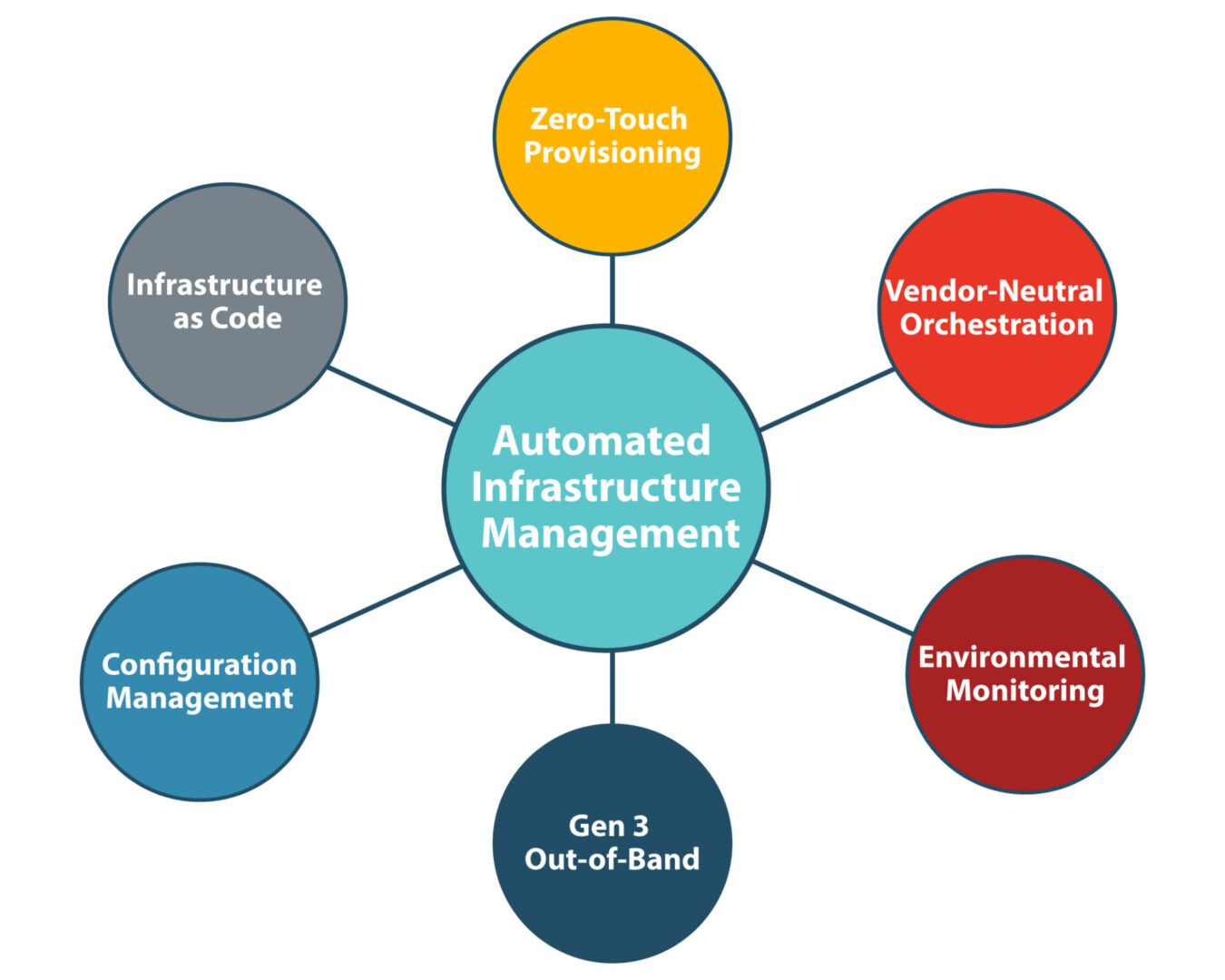
Automated infrastructure management reduces human intervention in workflows such as device configurations, software updates, and environmental monitoring. Automation improves network resilience by mitigating the risk of errors and making it easier to recover from failures. 

How does infrastructure automation improve network resilience?

Network resilience is the ability to withstand or recover from adversity, service degradation, and complete outages with minimal business disruption. Automated infrastructure management improves resilience in three key ways:

  1. It reduces the risk of human error in configurations and updates,
  2. It catches environmental issues missed by human engineers, and
  3. It accelerates recovery by streamlining infrastructure rebuilds after failures and attacks

Let’s examine some of the infrastructure automation components and best practices that boost business resilience.

Improving Network Resilience with Automated Infrastructure Management

Technology / Best Practice

Description

Zero-touch provisioning (ZTP)

Reduces human error by enabling automatic device configurations

Infrastructure as Code (IaC)

Further mitigates human error by codifying VM and container configurations

Automatic configuration management

Prevents security vulnerabilities and configuration mistakes from proliferating in production by monitoring and updating in-place configs

Gen 3 OOB serial consoles

Ensure 24/7 management access, isolate the control plane from the data plane, and provide a safe recovery environment

Environmental monitoring

Automatically detects and notifies administrators of environmental issues that might affect device health

Vendor-neutral orchestration platforms

Unify infrastructure automation and management workflows to reduce complexity and ensure complete coverage

Zero-touch provisioning (ZTP)

Zero-touch provisioning (ZTP), also known as zero-touch deployment, uses software scripts or definition files to automatically configure new devices over the internet. ZTP allows teams to create and test a single configuration file, and then use it repeatedly to deploy new infrastructure. ZTP reduces the tediousness of new deployments, which in turn decreases the chances of errors. It also provides an opportunity to validate new configurations so any errors can be corrected before they’re deployed to production.

Infrastructure as Code (IaC)

Infrastructure as code (IaC) uses software abstraction to decouple infrastructure configurations from the underlying hardware. Similar to ZTP, IaC configurations are written as scripts or definition files, but they’re used to automatically provision virtual machines (VMs) and containers. Also like ZTP, IaC improves resilience by reducing human intervention in what is otherwise a tedious manual process. IaC also facilitates automatic configuration management.

Automatic configuration management

Automatic configuration management solutions continuously monitor in-place configurations to ensure they don’t drift away from documented standards. When necessary, they automatically install updates or roll back any unauthorized changes to prevent security vulnerabilities or configuration mistakes from bringing down the network.

Gen 3 out-of-band (OOB) serial consoles

Out-of-band (OOB) serial consoles manage other infrastructure devices over a serial connection, separating the control plane from the data plane on a network dedicated to managing, troubleshooting, and orchestrating infrastructure. All OOB serial consoles improve network resilience by providing an alternative path to remote infrastructure that’s unaffected by issues on the production network. Gen 3 serial consoles go a step further by enabling vendor-neutral automation over the OOB connection. Gen 3 OOB serial consoles support third-party automation scripts and solutions and extend that automation to legacy and mixed-vendor infrastructure devices that are otherwise unsupported.

Additionally, Gen 3 OOB enables isolated management infrastructure (IMI), which prevents attackers on the production network from commandeering crown-jewel assets and vital business infrastructure. The OOB network also provides a safe environment where teams can recover from ransomware attacks without risking reinfection. Plus, a Gen 3 serial console can host all the tools teams need to automatically provision, test, and deploy new systems, accelerating recovery efforts for improved resilience.

See how Gen 3 OOB serial consoles stack up to the competition with our feature comparison chart.

Environmental monitoring

Environmental conditions like temperature, humidity, and air quality have a significant impact on the performance and lifespan of network infrastructure. That infrastructure is often housed in off-site data centers and branch offices, which means administrators may not know there’s an environmental concern until it’s already caused an error or outage. An environmental monitoring system uses sensors to collect data about conditions in remote facilities and automatically notify administrators of issues so they can respond before failures occur.  

Vendor-neutral orchestration platforms

An automated network infrastructure comprises many moving parts and can be very complex to manage, especially if they don’t interoperate. Complexity increases the workload on IT staff that’s already stretched too thin, making mistakes more likely. A vendor-neutral orchestration platform unifies all the automation and management workflows behind a single pane of glass. Teams can use the automation tools they’re most comfortable with, decreasing errors while ensuring complete coverage of mixed-vendor and legacy infrastructure. Plus, using vendor-neutral management hardware like Nodegrid Gen 3 serial consoles allows teams to consolidate network functions, automation, security, and service hosting with a single device, further reducing complexity and boosting operational efficiency.

Automated infrastructure management is easier with Nodegrid

Infrastructure automation improves an organization’s ability to withstand and recover from adverse events by reducing human error, catching environmental issues before they cause outages, and accelerating recovery from ransomware and other failures. The Nodegrid platform from ZPE Systems provides Gen 3 out-of-band management, vendor-neutral hosting for automation and other third-party software, and unified orchestration for remote, mixed-vendor, and legacy infrastructure. Nodegrid simplifies automated infrastructure management for improved network resilience. 

Ready to start your Automated Infrastructure Management for Network Resilience?

Learn more about boosting network resilience with automated infrastructure management by downloading ZPE’s Network Automation Blueprint.

Cyberthreats are Soaring: ZPE Systems Urges Immediate Action with Gen 3 Console Servers to Thwart Breaches

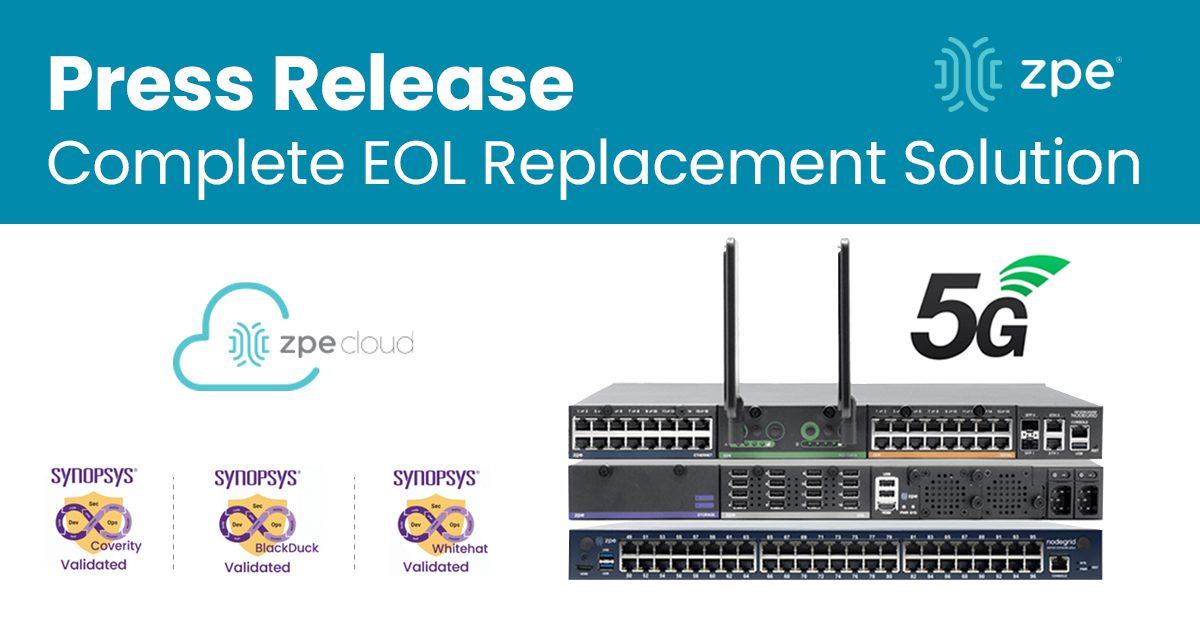
Press Release Complete EOL replacement solution

Organizations using end-of-life console servers must reduce their vulnerability exposure and secure their infrastructure comprehensively by using ZPE’s console servers, installation services and configuration engineering. 

Fremont, CA, May 2, 2024 — As cyberattacks continue to rise, ZPE Systems, a leader in network management infrastructure, recently acquired by Legrand, is urging organizations to  transition to Generation 3 console servers as part of their security strategies. With other well-known infrastructure providers discontinuing support for serial consoles already in use within data centers, communication networks and other commercial and industrial environments, the need to upgrade is paramount.    

Console servers are the backbone of remote IT management, providing essential access to network devices and servers. However, using discontinued console servers poses significant security risks. Outdated firmware may contain known vulnerabilities that enable cyber attackers to infiltrate critical systems, causing costly data breaches and operational disruptions. 

Despite these substantial risks, many organizations hesitate to replace their outdated infrastructure, citing budget constraints, labor costs and concerns about infrastructure disruption. Arnaldo Zimmermann, cofounder of ZPE Systems, highlights this dilemma, saying, “Organizations face financial constraints when considering hardware upgrades, especially when existing infrastructure seems to be working fine. When you consider the capex, labor costs and time it takes to physically install and configure new equipment, it’s easy to see why organizations say, ‘if it’s not broken, don’t fix it.’”  

To address these challenges, ZPE Systems now offers a comprehensive solution designed to alleviate budgetary concerns and streamline the replacement process:

1. New Cost-Effective Replacement Options

ZPE’s Nodegrid devices enable organizations to secure their management infrastructure with new budget-friendly, Gen 3 console servers. These range in cost from premium options to small yet powerful, budget-friendly units.

2. New Professional Installation & Recycling Services

As needed, ZPE Systems offers solutions for physical installation process and recycling of old equipment, minimizing downtime and ensuring environmental responsibility. ZPE connects organizations to a network of trusted partners including ByteBridge, Mirapath, Trace3, and others.

3. New Tailored Configuration Services

ZPE’s engineers provide customized configuration services to transfer the old configuration to new systems and optimize the performance and security of the new console servers. 

“There’s a lot of friction in upgrading,” adds Koroush Saraf, VP of Products and Marketing at ZPE Systems. “We’ve heard of customers using outdated devices for years, who won’t replace because they just don’t have the time, money or manpower. Our goal is to remove that friction, streamlining the transition process and empowering organizations to enhance their security posture without the added burden.”  

By utilizing Gen 3 console servers from ZPE, customers benefit from 3rd party security validated firmware that addresses Common Vulnerabilities and Exposures (CVEs) as well as hardware security features designed to mitigate cybersecurity threats. Organizations can safeguard their assets, protect sensitive data, and maintain operational continuity in an increasingly volatile digital landscape. 


Explore this comprehensive solution using the link below

Explore the hardware options, trusted partner network, and configuration services by clicking the link. You can also get hands-on with this solution at RSA Conference next week. Click the link for details and to get ZPE’s special code that unlocks your free pass.

DORA Act: 5 Takeaways For The Financial Sector

Thumbnail – DORA Act 5 Takeaways for the Financial Sector

The Digital Operational Resilience Act (DORA) is a regulatory initiative within the European Union that aims to enhance the operational resilience of the financial sector. Its main goal is to prevent and mitigate cyber threats and operational disruptions. The DORA Act outlines regulatory requirements for the security of network and information systems “whereby all firms need to make sure they can withstand, respond to and recover from all types of ICT-related disruptions and threats” (DORA Act website).

Who and What Are Covered Under the DORA Act?

The DORA Act is a regulation that covers all financial entities within the European Union (EU). It recognizes the critical role of information and communication technology (ICT) systems in financial services. DORA applies to financial services including payments, securities, credit rating, algorithmic trading, lending, insurance, and back-office operations. It establishes a framework for ICT risk management through technical standards, which are being released in two phases, the first of which was published on January 17, 2024. The DORA Act will go into effect in its entirety on January 17, 2025.

With cyberattacks constantly in the news cycle, it’s no surprise that governing bodies are putting forth standards for operational resilience. But without combing through this lengthy piece of legislation, what should IT teams start thinking about from a practical standpoint? Here are 5 takeaways on what the DORA Act means for the financial sector.

DORA Act: 5 Takeaways for the Financial Sector

1. Shore-up your cybersecurity measures

The DORA Act emphasizes strengthening cybersecurity measures within the financial sector. It requires financial institutions, such as banks, stock exchanges, and financial infrastructure providers, to implement robust cybersecurity controls and protocols. These include adopting advanced authentication mechanisms, encryption standards, and network segmentation to protect sensitive financial data and critical infrastructure from cyber threats. Part of this will also require organizations to apply system patches and updates in a timely manner, which means automated patching will become necessary to every organization’s security posture.

2. Implement resilience systems

Operational resilience is a key focus area of the DORA Act, aiming to ensure the continuity of essential financial services in the face of cyber threats, natural disasters, and other operational disruptions. Financial institutions are required to develop comprehensive business continuity plans, establish redundant systems and backup facilities, and conduct regular stress tests to assess their ability to withstand and recover from various scenarios. Implementing a resilience system helps with this, as it provides all the infrastructure, tools, and services necessary to continue operating during major incidents.

3. Conduct regular scans for vulnerabilities

The DORA Act mandates financial institutions to implement robust risk management practices to identify, assess, and mitigate cyber risks and operational vulnerabilities. This includes conducting regular assessments, vulnerability scans, and penetration tests, and developing incident response procedures to quickly address threats. This is all part of taking a proactive approach to identify and mitigate cyber incidents, and reduce the impact that adverse events have on financial stability and consumer confidence.

4. Collaborate and share information with industry peers

The DORA Act encourages financial institutions to share cybersecurity threat intelligence, incident data, and best practices with industry peers, regulators, and law enforcement agencies. The ability to monitor systems and collect data will be crucial to this approach, and will require systems that can rapidly (and securely) deploy apps/services during ongoing incidents. This will help financial institutions to better understand emerging threats, coordinate responses to cyber incidents, and strengthen collective defenses against threats and operational disruptions.

5. Segment physical and logical systems to pass regular audits

Through the DORA Act, regulators are empowered to conduct regular assessments, audits, and inspections of systems. This will ensure that financial institutions are implementing adequate controls and safeguards to protect against cyber threats and operational disruptions. A crucial part to this will involve physical and logical separation of systems, such as through Isolated Management Infrastructure, as well as implementing zero trust architecture across the organization. These will help bolster resilience by eliminating control dependencies between management and production networks, which will also help to streamline audits.

Get the blueprint to help you comply with the DORA Act

DORA’s requirements are meant to help IT teams better protect sensitive data and the integrity of financial systems as a whole. But without a proper network management infrastructure, their production networks are too sensitive to errors and vulnerable to attacks. ZPE has created the blueprint that covers these 5 crucial takeaways outlined in the DORA Act. The architecture outlined in this blueprint has been trusted by Big Tech for more than a decade, as it allows them to deploy modern cybersecurity measures, physically and logically separated systems, and rapid recovery processes. Download the blueprint now.

Out-of-Band Management: What It Is and Why You Need It

Thumbnail – What is out-of-band management

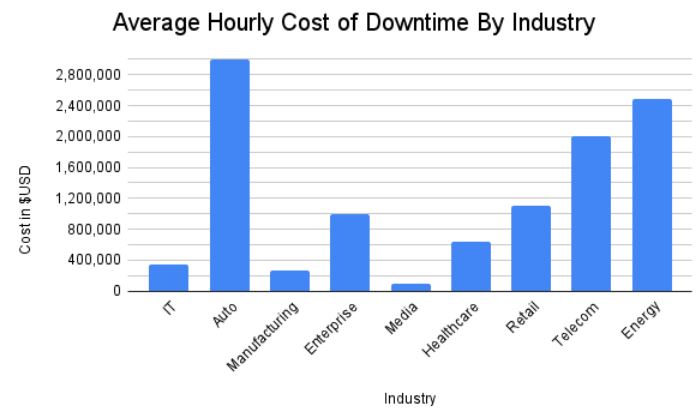
This scenario is every IT professional’s worst nightmare: it’s the middle of the night, a remote site on the other side of the country has gone offline, and nobody knows why. A single minute of downtime can cost anywhere from several hundred dollars to tens of thousands of dollars, and the nearest tech is a six-hour plane ride away. Consider 2024’s CrowdStrike outage and the devastation caused for banks, airports, and many other organizations.

A bar chart showing the average hourly cost of downtime by industry.
Data Source: SolarWinds

Out-of-band management offers the solution: a way for teams to access critical remote infrastructure during outages and breaches without “out-of-chair” expenses. Out-of-band management allows organizations to recover remote infrastructure faster, reducing the duration and expense of downtime.

This guide to out-of-band management answers critical questions about what this technology is, why you need it, and how to choose the right solution.

What is out-of-band management?

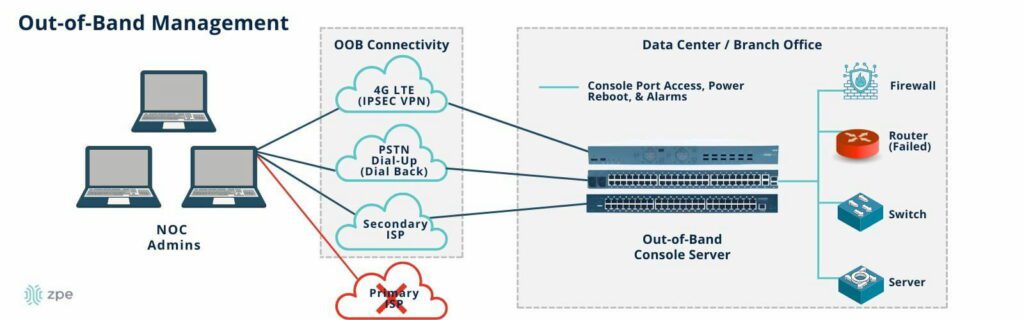
Out-of-band management (OOBM) involves controlling network infrastructure and workflows on an out-of-band network. An out-of-band network is an entirely separate network that runs parallel with your production (or in-band) network but doesn’t rely on any of the same infrastructure or services. OOBM allows teams to administer network infrastructure remotely on a dedicated connection, such as secondary Fiber or cellular LTE, that will remain available even if the in-band network goes down from an equipment failure, ISP outage, or ransomware attack.

A diagram showing how out-of-band management works.

The biggest reason to use out-of-band management is to ensure continuous, uninterrupted access to critical remote infrastructure even when the primary network is down. OOBM allows teams to recover from outages and cyberattacks faster and more cost-efficiently because they can access, troubleshoot, and restore systems without rolling trucks or hiring on-site services.

Out-of-band management provides a lifeline for teams to access critical remote infrastructure when the production network is offline. It allows them to immediately begin troubleshooting and repairing the issue to restore services ASAP. With OOBM, companies save money on recovery expenses, and minimize the duration and business impact of downtime.

What is an OOBM serial console?

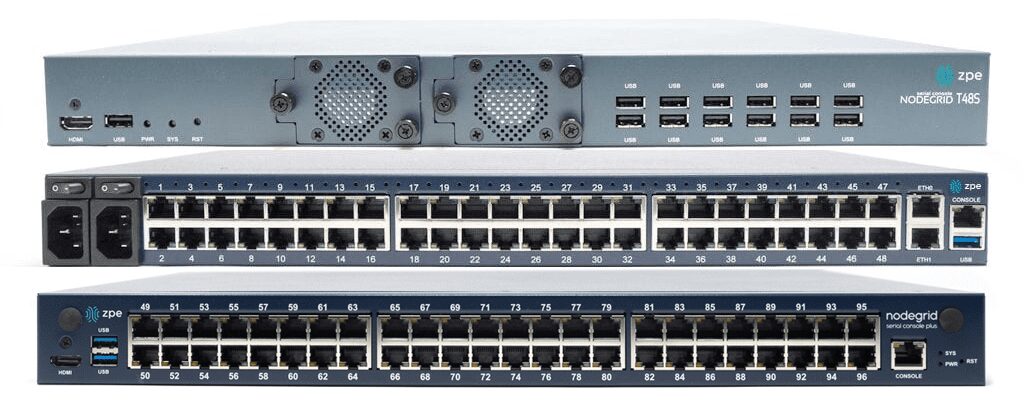
Front and back views of the Nodegrid out-of-band management serial console.

Some organizations use OOBM jump boxes (or jump servers) that are connected to both the in-band and out-of-band networks, allowing administrators to “jump” from one network to the other for management. Examples of low-cost jump boxes include the Intel NUC and the Raspberry Pi. However, OOBM jump boxes are security risks because they do not effectively isolate the management infrastructure, plus they require an entire duplicate infrastructure of devices and services to create the out-of-band network. The best practice for security, resilience, and efficiency is to deploy an all-in-one, out-of-band management solution.

An out-of-band management solution uses hardware devices known as serial consoles, which connect to infrastructure devices via their management port (usually RS232 Serial, Ethernet, or USB). Serial consoles are known by lots of other names, including terminal servers, console servers, console server switches, serial routers, and serial switches.

The serial console has dedicated network interfaces to provide an Internet connection for remote management access, often fiber or 4G/5G cellular LTE, so they don’t connect to or rely upon the primary production network at all. This gives teams the ability to continuously monitor and administer critical remote infrastructure even during an ISP or WAN outage that would make a jump box inaccessible.

 Administrators remotely access an OOBM serial console via this dedicated link and, from there, can view and manage all connected infrastructure from a single, convenient software platform. This software is typically deployed on-premises and runs as a VM (virtual machine)  either on the serial console itself or on a separate machine, but there are some cloud-based OOBM network management software tools.

Out-of-band management software varies from provider to provider, with most offering second-generation (or Gen 2) solutions that provide some built-in automation capabilities but do not support vendor-neutral integrations with third-party tools. Newer, third-generation (or Gen 3) solutions use an open, x86 Linux-based operating system to allow easy integrations with other vendors’ software for automation, orchestration, security, monitoring, and more.

The benefits of out-of-band management

Out-of-band management can help you:

  • Improve network performance: Performing resource-intensive management, automation, and orchestration workflows on the out-of-band network reduces the strain on the production network for better speed and reliability.
  • Accelerate ransomware recovery: The OOBM network can be used to create an isolated recovery environment (IRE) where teams can safely rebuild and recover from ransomware attacks without the risk of reinfection, reducing the duration and expense of ransomware-related outages.
  • Streamline repairs and rebuilds: OOBM provides the ability to deploy the tools and applications needed to isolate, cleanse, rebuild, and restore services that have been affected by failures and ransomware.

The security and resilience benefits of out-of-band management are discussed further below.

How does out-of-band management improve security and resilience?

Network breaches and ransomware attacks occur so frequently that most businesses know it’s no longer a question of “if,” but “when” they’ll be hit. Once cybercriminals compromise a device or account and can move around the network, it’s only a matter of time before they find the management interfaces and take complete control over critical infrastructure.

OOBM and management infrastructure isolation

Serial consoles create an out-of-band network by directly connecting to the management port of infrastructure devices and moving all control functions off of the production LAN. This isolates the management plane from the data plane, which is part of a cybersecurity best practice known as isolated management infrastructure (IMI). An IMI further segments the management network and routes management ports to terminate on top-of-rack, OOBM serial switches, creating multiple layers of isolated management. The isolated management plane is always remotely accessible to engineers via the OOBM connection, but it remains hidden from any cybercriminals who may breach the production network.

Multi Layered OOB IMI – ZPE Systems


OOBM and ransomware recovery

Out-of-band management also improves security and resilience by aiding in ransomware recovery. According to a Sophos survey, 70% of companies hit by ransomware take longer than two weeks to recover, due in no small part to the pervasive nature of the malware used and how frequently rebuilt systems and recovered data get reinfected. Today’s ransomware attacks are now pre-packaged and move at machine speed – meaning instantly – across infrastructure, bringing entire businesses down before they’ve even realized they’re under attack. The longer the business is offline, the more revenue (and customer trust) is lost, causing recovery costs to skyrocket.

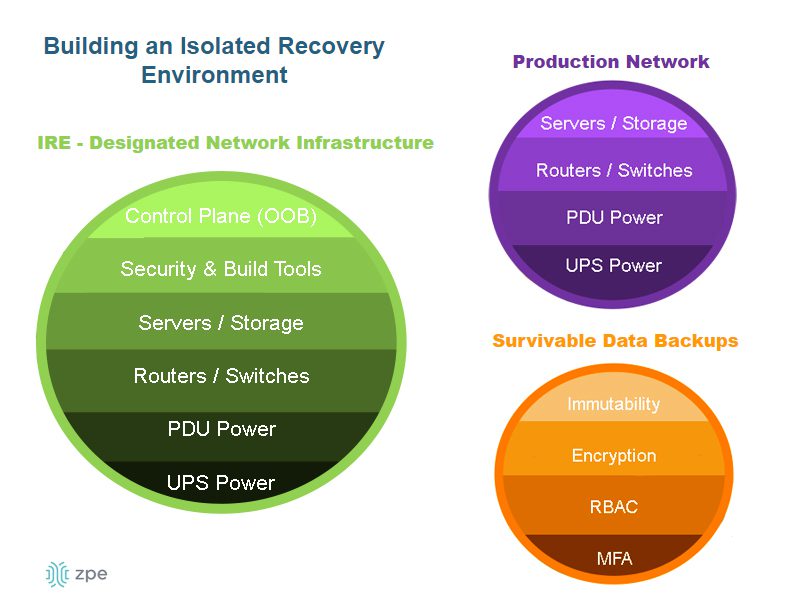
An IMI using out-of-band management gives teams an isolated recovery environment (IRE) where they can recover data and rebuild systems without the risk of reinfection. The IRE allows organizations to get services back online faster to reduce the financial and reputational consequences of ransomware attacks.

A diagram showing the components of an isolated recovery environment.

Resilience is defined as the ability to continuously operate and deliver services, if in a degraded fashion, even while undergoing major failures and breaches. Out-of-band management improves resilience by ensuring that teams have continuous access to critical remote infrastructure no matter what’s going wrong with the production environment. OOBM serial consoles also isolate the management infrastructure to protect it from attackers on the primary network and provide a safe environment for teams to recover from ransomware.

Why choose Nodegrid for out-of-band management?

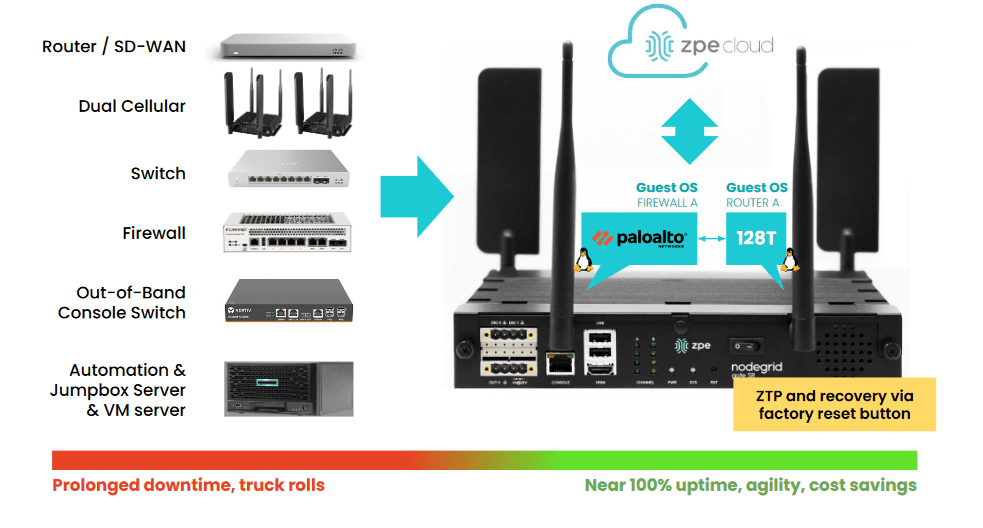
Many network teams think of out-of-band as being a huge expense and time sink. Setting up  proper infrastructure for OOBM and IMI typically requires 6 or more boxes at each business site for routing, switching, firewall, storage, cellular access, and a jump box. The Nodegrid platform from ZPE Systems reduces the cost and headache of out-of-band management by combining all these functions and more into a single box. Teams can easily drop a Nodegrid box in each site at a fraction of the cost of deploying a traditional OOBM network.

A diagram showing ZPE’s multi-function capabilities for IMI in branch and edge sites.

The first Gen 3 OOBM solution

Nodegrid is the first and only Gen 3 out-of-band management solution. Nodegrid OOBM devices use the x86 Linux-based NodegridOS, which is capable of running VMs and Docker containers to host your choice of third-party applications for automation, orchestration, security, SD-WAN, and more. Nodegrid’s ability to host other vendors’ software ensures that teams have access to all the tools they need to troubleshoot and recover infrastructure from within the IMI environment, making it the perfect network resilience multi-tool.

Nodegrid OOBM software is available as an on-premises solution or a highly scalable cloud-based app, and both support easy integrations with tools for monitoring, automated configuration management, and more. This enables teams to consolidate and streamline their workflows, maximizing efficiency while reducing the risk of human error.

Nodegrid’s other key features include:

  • Built-in 5G/4G LTE and Wi-Fi options for OOB and network failover
  • OOB support over IPMI, ILO, DRAC, CIMC, vSerial, and KVM
  • Robust hardware security like BIOS protection, UEFI Secure Boot, and an encrypted solid-state disk
  • SAML 2.0 and two-factor authentication (2FA)
  • Support for legacy and mixed-vendor infrastructure without expensive adapters

ZPE Systems offers a wide range of out-of-band management devices to fit any deployment size and use case, including the 96-port Nodegrid Serial Console Plus (NSCP) for large and hyperscale data centers, and the Nodegrid Gate SR, which combines branch gateway routing and OOB serial console functionality for remote business sites like retail stores and manufacturing plants.

Nodegrid OOB serial console comparison


Guest OS
Docker Apps
Wi-Fi
Cellular (Dual-SIM)
Serial Ports
Data Sheet
Nodegrid Serial Console S Series
1
1-2
No
1
16, 32 or 48
Nodegrid Serial Console Plus (NSCP)
1
1-2
Yes
1
16, 32, 48 or 96

Nodegrid OOB network edge router comparison


Guest OS
Docker Apps
Wi-Fi
Cellular (Dual-SIM)
Serial Ports
Data Sheet
Nodegrid Link SR
1
1-2
Yes
1
1
Nodegrid Bold SR
1
1-2
Yes
1-2
8
Nodegrid Hive SR
1-2
1-3
Yes
1-2
8
Nodegrid Gate SR
1-3
1-4
Yes
1-2
8
Nodegrid Net SR
1-6
1-4
Yes
1-4
16-80
Nodegrid Mini SR
1
1-2
Yes
1
Via USB

Get scalable network resilience with the only Gen 3 out-of-band management solution

Only Nodegrid OOBM delivers network control, security, automation, and resilience with a completely vendor-neutral platform. To see Nodegrid out-of-band management in action, request a free demo.

Request a Demo