
What is a Hyperscale Data Center?
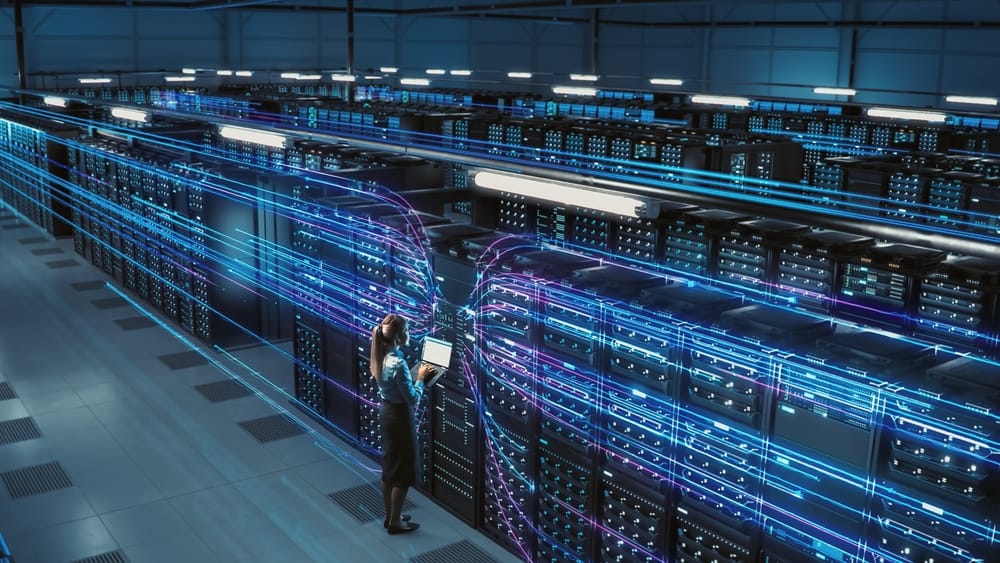
As today’s enterprises race toward digital transformation with cloud-based applications, software-as-a-service (SaaS), and artificial intelligence (AI), data center architectures are evolving. Organizations rely less on traditional server-based infrastructures, preferring the scalability, speed, and cost-efficiency of cloud and hybrid-cloud architectures using major platforms such as AWS and Google. These digital services are supported by an underlying infrastructure comprising thousands of servers, GPUs, and networking devices in what’s known as a hyperscale data center.
The size and complexity of hyperscale data centers present unique management, scaling, and resilience challenges that providers must overcome to ensure an optimal customer experience. This blog explains what a hyperscale data center is and compares it to a normal data center deployment before discussing the unique challenges involved in managing and supporting a hyperscale deployment.
What is a hyperscale data center?
As the name suggests, a hyperscale data center operates at a much larger scale than traditional enterprise data centers. A typical data center houses infrastructure for dozens of customers, each containing tens of servers and devices. A hyperscale data center deployment supports at least 5,000 servers dedicated to a single platform, such as AWS. These thousands of individual machines and services must seamlessly interoperate and rapidly scale on demand to provide a unified and streamlined user experience.
The biggest hyperscale data center challenges
Operating data center deployments on such a massive scale is challenging for several key reasons.
Overcoming hyperscale data center challenges requires unified, scalable, and resilient infrastructure management solutions, like the Nodegrid platform from ZPE Systems.
How Nodegrid simplifies hyperscale data center management
The Nodegrid family of vendor-neutral serial console servers and network edge routers streamlines hyperscale data center deployments. Nodegrid helps hyperscale providers overcome their biggest challenges with:
- A unified, integrated management platform that centralizes control over multi-vendor, distributed hyperscale infrastructures.
- Innovative, vendor-neutral serial console servers and network edge routers that extend the unified, automated control plane to legacy, mixed-vendor infrastructure.
- The open, Linux-based Nodegrid OS which hosts or integrates your choice of third-party software to consolidate functions in a single box.
- Fast, reliable out-of-band (OOB) management and 5G/4G cellular failover to facilitate easy remote recovery for improved resilience.
The Nodegrid platform gives hyperscale providers single-pane-of-glass control over multi-vendor, legacy, and distributed data center infrastructure for greater efficiency. With a device like the Nodegrid Serial Console Plus (NSCP), you can manage up to 96 devices with a single piece of 1RU rack-mounted hardware, significantly reducing scaling costs. Plus, the vendor-neutral Nodegrid OS can directly host other vendors’ software for monitoring, security, automation, and more, reducing the number of hardware solutions deployed in the data center.
Nodegrid’s out-of-band (OOB) management creates an isolated control plane that doesn’t rely on production network resources, giving teams a lifeline to recover remote infrastructure during outages, equipment failures, and ransomware attacks. The addition of 5G/4G LTE cellular failover allows hyperscale providers to keep vital services running during recovery operations so they can maintain customer SLAs.
Want to learn more about Nodegrid hyperscale data center solutions from ZPE Systems?
Nodegrid’s vendor-neutral hardware and software help hyperscale cloud providers streamline their operations with unified management, enhanced scalability, and resilient out-of-band management. Request a free Nodegrid demo to see our hyperscale data center solutions in action.
Healthcare Network Design

This guide to healthcare network design describes the core technologies comprising a resilient network architecture before discussing how to take resilience engineering to the next level with automation, edge computing, and isolated recovery environments.
Core healthcare network resilience technologies
A resilient healthcare network design includes resilience systems that perform critical functions while the primary systems are down. The core technologies and capabilities required for resilience systems include:
- Full-stack networking – Routing, switching, Wi-Fi, voice over IP (VoIP), virtualization, and the network overlay used in software-defined networking (SDN) and software-defined wide area networking (SD-WAN)
- Full compute capabilities – The virtual machines (VMs), containers, and/or bare metal servers needed to run applications and deliver services
- Storage – Enough to recover systems and applications as well as deliver content while primary systems are down
- Automation – Tools like zero-touch provisioning (ZTP) that facilitate speedy recovery while minimizing human error
These are the main technologies that allow healthcare IT teams to reduce disruptions and streamline recovery. Once organizations achieve this base level of resilience, they can evolve by adding more automation, edge computing, and isolated recovery infrastructure.
Extending automated control over healthcare networks
Automation is one of the best tools healthcare teams have to reduce human error, improve efficiency, and ensure network resilience. However, automation can be hard to learn, and scripts take a long time to write, so having systems are easily deployable with low technical debt is critical. Tools like ZTP (zero-touch provisioning), and the integration of technology like Infrastructure as Code (IaC), accelerate recovery by automating device provisioning. Healthcare organizations can use automation technologies such as AIOps with resilience systems technologies like out-of-band (OOB) management to monitor, maintain, and troubleshoot critical infrastructure.
Using automation to observe and control healthcare networks helps prevent failures from occuring, but when trouble does actually happen, resilience systems ensure infrastructure and services are quickly returned to health or rerouted when needed.
Improving performance and security with edge computing
The healthcare industry is one of the biggest adopters of IoT (Internet of Things) technology. Remote, networked medical devices like pacemakers, insulin pumps, and heart rate monitors collect a large volume of valuable data that healthcare teams use to improve patient care. Transmitting that data to a software application in a data center or cloud adds latency and increases the chances of interception by malicious actors. Edge computing for healthcare eliminates these problems by relocating applications closer to the source of medical data, at the edges of the healthcare network. Edge computing significantly reduces latency and security risks, creating a more resilient healthcare network design.
Note that teams also need a way to remotely manage and service edge computing technologies. Find out more in our blog Edge Management & Orchestration.
Increasing resilience with isolated recovery environments
Ransomware is one of the biggest threats to network resilience, with attacks occurring so frequently that it’s no longer a question of ‘if’ but ‘when’ a healthcare organization will be hit.
- Read about the high-profile ransomware attacks affecting MOVEit customers and MGM
Recovering from ransomware is especially difficult because of how easily malicious code can spread from the production network into backup data and systems. The best way to protect your resilience systems and speed up ransomware recovery is with an isolated recovery environment (IRE) that’s fully separated from the production infrastructure.
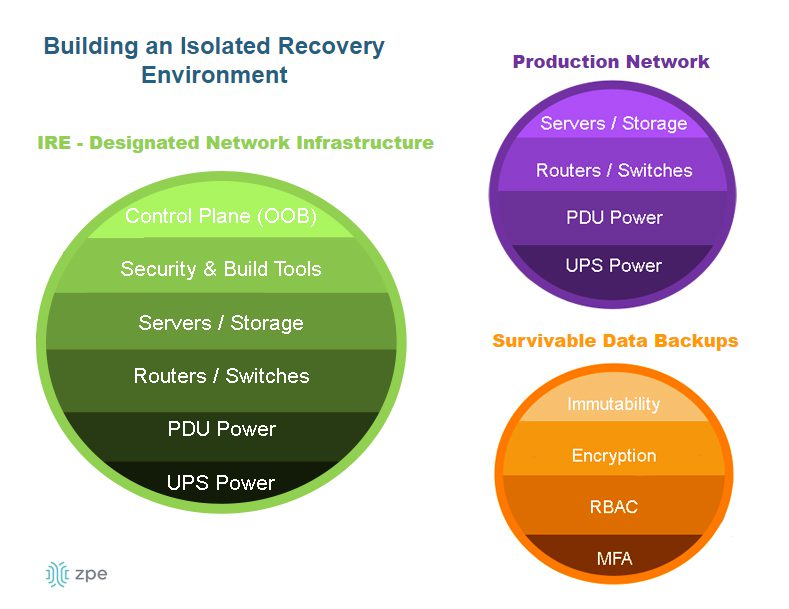
An IRE ensures that IT teams have a dedicated environment in which to rebuild and restore critical services during a ransomware attack, as well as during other disruptions or disasters. An IRE does not replace a traditional backup solution, but it does provide a safe environment that’s inaccessible to attackers, allowing response teams to conduct remediation efforts without being detected or interrupted by adversaries. Isolating your recovery architecture improves healthcare network resilience by reducing the time it takes to restore critical systems and preventing reinfection.
To learn more about how to recover from ransomware using an isolated recovery environment, download our whitepaper, 3 Steps to Ransomware Recovery.
Resilient healthcare network design with Nodegrid
A resilient healthcare network design is resistant to failures thanks to resilience systems that perform critical functions while the primary systems are down. Healthcare organizations can further improve resilience by implementing additional automation, edge computing, and isolated recovery environments (IREs).
Nodegrid healthcare network solutions from ZPE Systems simplify healthcare resilience engineering by consolidating the technologies and services needed to deploy and evolve your resilience systems. Nodegrid’s serial console servers and integrated branch/edge routers deliver full-stack networking, combining cellular, Wi-Fi, fiber, and copper into software-driven networking that also includes compute capabilities, storage, vendor-neutral application & automation hosting, and cellular failover required for basic resilience. Nodegrid also uses out-of-band (OOB) management to create an isolated management and recovery environment without the cost and hassle of deploying an entire redundant infrastructure.
Ready to see how Nodegrid can improve your network’s resilience?
Nodegrid streamlines resilient healthcare network design with consolidated, vendor-neutral solutions. Request a free demo to see Nodegrid in action.
Best DevOps Tools
The best DevOps tools
DevOps version control
In a DevOps environment, a whole team of developers may work on the same code base simultaneously for maximum efficiency. DevOps version control tools like GitHub allow you to track and manage all the changes made to a code base, providing visibility into who’s making what changes at what time. Version control prevents devs from overwriting each other’s work or making unauthorized changes. For example, a developer may come up with a way to improve the performance of a feature by changing the existing code, but doing so inadvertently creates a vulnerability in the software or interferes with other application functions. DevOps version control prevents unauthorized code changes from integrating with the rest of source code and tracks who’s responsible for making the request, improving the stability and security of the software.
- Best DevOps version control tool: Github
Infrastructure as Code (IaC)
Infrastructure as Code (IaC) streamlines the Operations side of a DevOps environment by abstracting server, VM, and container configurations as software code. IaC build tools like HashiCorp Terraform allow Ops teams to write infrastructure configurations as declarative or imperative code, which is used to provision resources automatically. With IaC, teams can deploy infrastructure at the velocity required by DevOps development cycles. 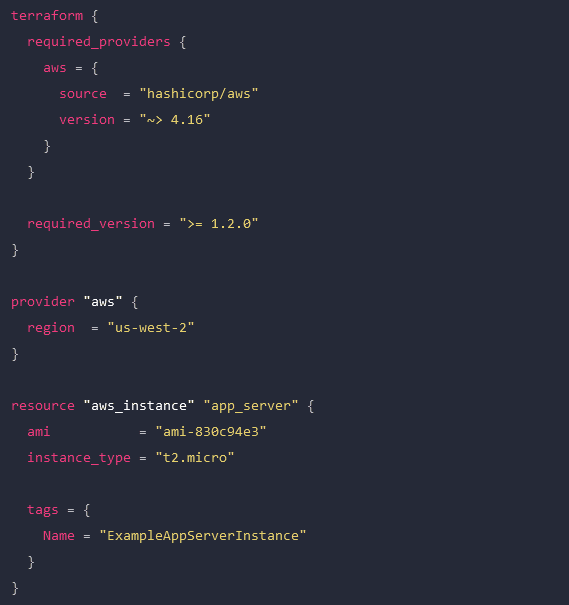
An example Terraform configuration for IaC.
- Best Infrastructure as Code (IaC) tool: HashiCorp Terraform
Configuration management
Configuration management involves monitoring infrastructure and network devices to make sure no unauthorized changes are made while systems are in production. Unmonitored changes could introduce security vulnerabilities that the organization is unaware of, especially in a fast-paced DevOps environment. In addition, as systems are patched and updated over time, configuration drift becomes a concern, leading to additional quality and security issues. DevOps configuration management tools like RedHat Ansible automatically monitor configurations and roll back unauthorized modifications. Some IaC build tools, like Terraform, also include configuration management.
- Best configuration management tool: RedHat Ansible
Continuous Integration/Continuous Delivery (CI/CD)
Continuous Integration/Continuous Delivery (CI/CD) is a software development methodology that goes hand-in-hand with DevOps. In CI/CD, software code is continuously updated and integrated with the main code base, allowing a continuous delivery of new features and improvements. CI/CD tools like Jenkins automate every step of the CI/CD process, including software building, testing, integrating, and deployment. This allows DevOps organizations to continuously innovate and optimize their products to stay competitive in the market.
- Best CI/CD tool: Jenkins
Software testing
Not all DevOps teams utilize CI/CD, and even those that do may have additional software testing needs that aren’t addressed by their CI/CD platform. In DevOps, app development is broken up into short sprints so manageable chunks of code can be tested and integrated as quickly as possible. Manual testing is slow and tedious, introducing delays that prevent teams from achieving the rapid delivery schedules required by DevOps organizations. DevOps software testing tools like Selenium automatically validate software to streamline the process and allow testing to occur early and often in the development cycle. That means high-quality apps and features get out to customers sooner, improving the ROI of software projects.
- Best software testing tool: Selenium
Container management
In DevOps, containers are lightweight, virtualized resources used in the development of microservice applications. Microservice applications are extremely agile, breaking up software into individual services that can be developed, deployed, managed, and destroyed without affecting other parts of the app. Docker is the de facto standard for basic container creation and management. Kubernetes takes things a step further by automating the orchestration of large-scale container deployments to enable an extremely efficient and streamlined infrastructure.
- Best container management tools: Docker and Kubernetes
Monitoring & incident management
Continuous improvement is a core tenet of the DevOps methodology. Software and infrastructure must be monitored so potential issues can be resolved before they affect software performance or availability. Additionally, monitoring data should be analyzed for opportunities to improve the quality, speed, and usability of applications and systems. DevOps monitoring and incident response tools like Cisco’s AppDynamics provide full-stack visibility, automatic alerts, automated incident response and remediation, and in-depth analysis so DevOps teams can make data-driven decisions to improve their products.
- Best monitoring & incident management tool: Cisco AppDynamics
Deploy the best DevOps tools with Nodegrid
DevOps is all about agility, speed, and efficiency. The best DevOps tools use automation to streamline key workflows so teams can deliver high-quality software faster. With so many individual tools to manage, there’s a real risk of DevOps tech sprawl driving costs up and inhibiting efficiency. One of the best ways to reduce tech sprawl (without giving up all the tools you love) is by using vendor-neutral platforms to consolidate your solutions. For example, the Nodegrid Services Delivery Platform from ZPE Systems can host and integrate 3rd-party DevOps tools, reducing the need to deploy additional virtual or hardware resources for each solution. Nodegrid utilizes integrated services routers, such as the Gate SR or Net SR, to provide branch/edge gateway routing, in-band networking, out-of-band (OOB) management, cellular failover, and more. With a Nodegrid SR, you can combine all your network functions and DevOps tools into a single integrated solution, consolidating your tech stack and streamlining operations.
A major benefit of using Nodegrid is that the Linux-based Nodegrid OS is Synopsys secure, meaning every line of source code is checked during our SDLC. This significantly reduces CVEs and other vulnerabilities that are likely present in other vendors’ software.
Learn more about efficient DevOps management with vendor-neutral solutions
With the vendor-neutral Nodegrid Services Delivery Platform, you can deploy the best DevOps tools while reducing tech sprawl. Watch a free Nodegrid demo to learn more.
Living Spaces Furniture: Scaling to 50 sites with only 3 network staff
Collapsing the stack and centralizing management helps Living Spaces accelerate scaling across the U.S.

“We’ve quadrupled business, but Nodegrid is actually shrinking our workload, especially as we implement new automation. It’s a gamechanger for network folks. Period.” — Blake Johnson, Network Architect, Living Spaces Furniture
Living Spaces is a prominent furniture retailer in the United States. Their store locations include large showrooms, where customers can view furnishings for indoor and outdoor spaces, and plenty of warehouse space for storing on-hand inventory. These locations must serve customers with responsive shopping experiences, which depend on the network infrastructure.
Increasing demand helped Living Spaces grow out of its home state of California, into states including Arizona, Colorado, Oklahoma, Texas, and others. Their out-of-band infrastructure was crucial to spinning up new locations and maintaining operations. But they faced a significant problem: this infrastructure was incredibly complex and costly, requiring many dedicated cellular and out-of-band devices at each location. See why their three-person network team needed a solution that could:
- Reduce costs and eliminate the need for $300,000 per year in SIM contracts
- Reduce workloads and risks, by centralizing management and minimizing entry points
- Accelerate deployments by allowing automation
ISP Network Architecture
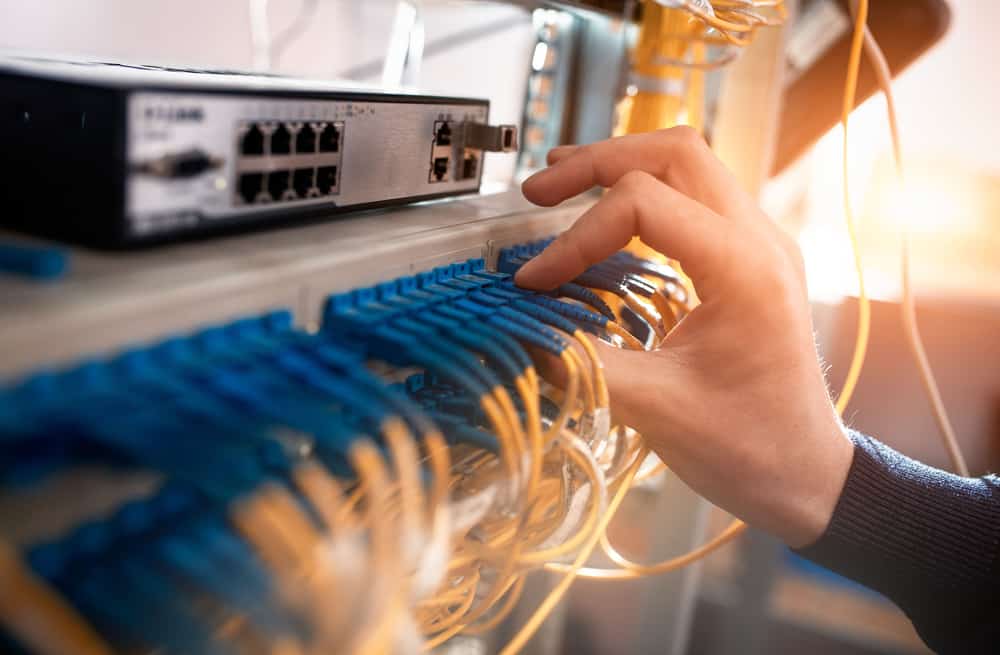
An ISP network architecture must be designed for resilience to prevent major incidents from occurring that affect consumers, communities, and the provider’s reputation. But significant challenges stand in the way, including a reliance on legacy infrastructure, and an inability to troubleshoot and recover failed gear remotely. This post discusses why these challenges exist and what ISPs can do to overcome them.
ISP network architecture challenges
Many ISP networks lack resilience because providers are failing to adapt to a rapidly changing landscape. With networks growing larger and more complex every day, new technologies like AI (artificial intelligence) and software-defined networking are needed to manage infrastructure efficiently and deliver innovative services. Additionally, providers get stuck in a break-fix cycle that leaves teams struggling to maintain service level agreements or focus on innovation. Let’s look at the causes of these challenges and discuss how to build more resilient ISP network architectures.
Legacy infrastructure creates technical debt and hampers growth
Internet service providers often have a network architecture that’s a mix of new and legacy infrastructure. However, engineers with the experience to support older solutions are no longer working in the field, either because they’ve been promoted to leadership positions or retired. When legacy hardware fails, inexperienced engineers need time to overcome this skills gap, and ISPs may even need to bring in consultants. This increases the cost of failures, creating what’s known as “technical debt” – when a solution is more expensive to support than the value it brings to the organization.
In addition, ISPs can improve network resilience and provide better service to customers, by adopting new technologies like AI, 5G, software-defined networking (SDN), and Network as a Service (NaaS). But legacy hardware hampers the ability to adopt these technologies. For example, NaaS abstracts the need for MPLS circuits and customer-premises gear, making architectures more cost-effective and improving the customer experience. NaaS brings SDN concepts like programmable networking and API-based operations to WAN & LAN services, hybrid cloud, Private Network Interconnect, and internet exchange points. It optimizes resource allocation by considering network and computing resources as a unified whole and attempts to automate as much as possible. The trouble is, ISPs struggle to implement NaaS and other beneficial new technologies because their legacy hardware simply can’t support it.
Solution: Legacy modernization with a vendor-neutral platform
The ideal solution is to replace legacy infrastructure with modern hardware and software that supports the latest technologies. But for many ISPs, an overhaul like this is too costly and intensive. The next-best option is to bridge the gap with a vendor-neutral network modernization platform that extends automation, AI, and 5G connectivity to otherwise unsupported systems.
For example, serial consoles (also known as terminal servers, console servers, and serial console switches) provide remote management access to network infrastructure. The newest generation of these devices, known as Gen 3, are vendor-neutral by design so that they can control third-party and legacy hardware. Through a combination of built-in features and integrations, Gen 3 serial consoles can use technology like zero-touch provisioning (ZTP), AIOps, and automated configuration management to control connected hardware that otherwise wouldn’t support it. Some solutions, such as the Nodegrid platform from ZPE Systems, can even directly host SDN and NaaS software from other vendors, so ISPs can start implementing network improvements right away while they gradually replace their outdated infrastructure.
Physical infrastructure is difficult to manage and troubleshoot remotely
ISP network architectures involve a great deal of physical infrastructure, which is often deployed in remote edge sites and customer premises. Even with software- or service-based network solutions, hardware is needed to host that software, and the physical environment for that hardware is often less than ideal. Drastic weather changes, power outages, and other unexpected scenarios can happen without notice and rapidly bring down an ISP network. These events often cut off remote management access as well, making troubleshooting and recovery difficult, time-consuming, and expensive. In fact, supporting this physical infrastructure often consumes so much time and effort that it prevents ISPs from focusing on delivering better services and software to their customers.
Solution: Out-of-band management with environmental monitoring
The first part of the solution involves monitoring the environment that houses remote, physical infrastructure. An environmental monitoring system uses sensors to detect changes in airflow, temperature, humidity, and other conditions that affect the operation of network hardware. These sensors give ISPs a virtual presence in edge deployments and customer sites so they can quickly respond to changing conditions before systems overheat or circuitry corrodes.
The second part involves providing management teams with reliable remote access to physical infrastructure that won’t go down if there’s a production network outage. Out-of-band (OOB) management solutions use serial consoles with dedicated network interfaces used just for management access. This creates a parallel, out-of-band network that’s completely isolated from production network services and infrastructure. Additionally, many serial consoles use cellular connectivity via 4G or 5G to OOB access, providing a wireless lifeline to connect, troubleshoot, and restore remote infrastructure. OOB management allows ISPs to troubleshoot and recover failed hardware remotely, even during total network outages, so they can get services back up and running faster and less expensively.
The environmental monitoring system should run on the OOB network so remote admins can continue to monitor conditions while they recover failed hardware. The out-of-band management solution also needs to be vendor-neutral so ISPs can deploy third-party automation, AI, and NaaS on the OOB network. For example, Nodegrid Gen 3 serial consoles provide OOB, environmental monitoring, and a vendor-neutral platform to host third-party software at the edge. Nodegrid even enables fully automated responses to changing environmental conditions in those edge environments before admins are aware of a problem.
To learn more about building a resilient, automated network infrastructure with Nodegrid, download the Network Automation Blueprint.
ISP network architecture resilience with Nodegrid
ISP network architectures must be resilient, meaning service providers must find a way to bridge the gap between legacy and modern systems while ensuring continuous remote access to manage, troubleshoot, and recover hardware at the edge. The Nodegrid ISP network infrastructure solution from ZPE Systems is a vendor-neutral, Gen 3 platform that delivers legacy modernization, environmental monitoring, out-of-band management, and much more.
Nodegrid delivers ISP network architecture resilience in a single platform
Request a free demo to see Nodegrid ISP network architecture solutions in action.
Edge Management and Orchestration

Organizations prioritizing digital transformation by adopting IoT (Internet of Things) technologies generate and process an unprecedented amount of data. Traditionally, the systems used to process that data live in a centralized data center or the cloud. However, IoT devices are often deployed around the edges of the enterprise in remote sites like retail stores, manufacturing plants, and oil rigs. Transferring so much data back and forth creates a lot of latency and uses valuable bandwidth. Edge computing solves this problem by moving processing units closer to the sources that generate the data.
IBM estimates there are over 15 billion edge devices already in use. While edge computing has rapidly become a vital component of digital transformation, many organizations focus on individual use cases and lack a cohesive edge computing strategy. According to a recent Gartner report, the result is what’s known as “edge sprawl”: many individual edge computing solutions deployed all over the enterprise without any centralized control or visibility. Organizations with disjointed edge computing deployments are less efficient and more likely to hit roadblocks that stifle digital transformation.
The report provides guidance on building an edge computing strategy to combat sprawl, and the foundation of that strategy is edge management and orchestration (EMO). Below, this post summarizes the key findings from the Gartner report and discusses some of the biggest edge computing challenges before explaining how to solve them with a centralized EMO platform.
Table of Contents |
Key findings from the Gartner report
Many organizations already use edge computing technology for specific projects and use cases – they have an individual problem to solve, so they deploy an individual solution. Since the stakeholders in these projects usually aren’t architects, they aren’t building their own edge computing machines or writing software for them. Typically, these customers buy pre-assembled solutions or as-a-service offerings that meet their specific needs.
However, a piecemeal approach to edge computing projects leaves organizations with disjointed technologies and processes, contributing to edge sprawl and shadow IT. Teams can’t efficiently manage or secure all the edge computing projects occurring in the enterprise without centralized control and visibility. Gartner urges I&O (infrastructure & operations) leaders to take a more proactive approach by developing a comprehensive edge computing strategy encompassing all use cases and addressing the most common challenges.
Edge computing challenges
Gartner identifies six major edge computing challenges to focus on when developing an edge computing strategy:
Let’s discuss these challenges and their solutions in greater depth.
- Enabling extensibility – Many organizations deploy purpose-built edge computing solutions for their specific use case and can’t adapt when workloads change or grow. The goal is to attempt to predict future workloads based on planned initiatives and create an edge computing strategy that leaves room for that growth. However, no one can really predict the future, so the strategy should account for unknowns by utilizing common, vendor-neutral technologies that allow for expansion and integration.
- Extracting value from edge data – The generation of so much IoT and sensor data gives organizations the opportunity to extract additional value in the form of business insights, predictive analysis, and machine learning training. Quickly extracting that value is challenging when most data analysis and AI applications still live in the cloud. To effectively harness edge data, organizations should look for ways to deploy artificial intelligence training and data analytics solutions alongside edge computing units.
- Governing edge data – Edge computing deployments often have more significant data storage constraints than central data centers, so quickly distinguishing between valuable data and destroyable junk is critical to edge ROIs. With so much data being generated, it’s often challenging to make this determination on the fly, so it’s important to address data governance during the planning process. There are automated data governance solutions that can help, but these must be carefully configured and managed to avoid data loss.
- Supporting edge-native applications – Edge applications aren’t just data center apps lifted and shifted to the edge; they’re designed for edge computing from the bottom up. Like cloud-native software, edge apps often use containers, but clustering and cluster management are different beasts outside the cloud data center. The goal is to deploy platforms that support edge-native applications without increasing the technical debt, which means they should use familiar container management technologies (like Docker) and interoperate with existing systems (like OT applications and VMs).
- Securing the edge – Edge deployments are highly distributed in locations that may lack many physical security features in a traditional data center, such as guarded entries and biometric locks, which adds risk and increases the attack surface. Organizations must protect edge computing nodes with a multi-layered defense that includes hardware security (such as TPM), frequent patches, zero-trust policies, strong authentication (e.g., RADIUS and 2FA), and network micro-segmentation.
- Edge management and orchestration – Moving computing out of the climate-controlled data center creates environmental and power challenges that are difficult to mitigate without an on-site technical staff to monitor and respond. When equipment failure, configuration errors, or breaches take down the network, remote teams struggle to meet resilience requirements to keep business operations running 24/7. The sheer number and distribution area of edge computing units make them challenging to manage efficiently, increasing the likelihood of mistakes, issues, or threat indicators slipping between the cracks. Addressing this challenge requires centralized edge management and orchestration (EMO) with environmental monitoring and out-of-band (OOB) connectivity.
A centralized EMO platform gives administrators a single-pane-of-glass view of all edge deployments and the supporting infrastructure, streamlining management workflows and serving as the control panel for automation, security, data governance, cluster management, and more. The EMO must integrate with the technologies used to automate edge management workflows, such as zero-touch provisioning (ZTP) and configuration management (e.g., Ansible or Chef), to help improve efficiency while reducing the risk of human error. Integrating environmental sensors will help remote technicians monitor heat, humidity, airflow, and other conditions affecting critical edge equipment’s performance and lifespan. Finally, remote teams need OOB access to edge infrastructure and computing nodes, so the EMO should use out-of-band serial console technology that provides a dedicated network path that doesn’t rely on production resources.
Gartner recommends focusing your edge computing strategy on overcoming the most significant risks, challenges, and roadblocks. An edge management and orchestration (EMO) platform is the backbone of a comprehensive edge computing strategy because it serves as the hub for all the processes, workflows, and solutions used to solve those problems.
| Learn more about zero trust on the control plane |
Edge management and orchestration (EMO) with Nodegrid
Nodegrid is a vendor-neutral edge management and orchestration (EMO) platform from ZPE Systems. Nodegrid uses Gen 3 out-of-band technology that provides 24/7 remote management access to edge deployments while freely interoperating with third-party applications for automation, security, container management, and more. Nodegrid environmental sensors give teams a complete view of temperature, humidity, airflow, and other factors from anywhere in the world and provide robust logging to support data-driven analytics.
The open, Linux-based Nodegrid OS supports direct hosting of containers and edge-native applications, reducing the hardware overhead at each edge deployment. You can also run your ML training, AIOps, data governance, or data analytics applications from the same box to extract more value from your edge data without contributing to sprawl.
In addition to hardware security features like TPM and geofencing, Nodegrid supports strong authentication like 2FA, integrates with leading zero-trust providers like Okta and PING, and can run third-party next-generation firewall (NGFW) software to streamline deployments further.
The Nodegrid platform brings all the components of your edge computing strategy under one management umbrella and rolls it up with additional core networking and infrastructure management features. Nodegrid consolidates edge deployments and streamlines edge management and orchestration, providing a foundation for a Gartner-approved edge computing strategy.
Want to learn more about how Nodegrid can help you overcome your biggest edge computing challenges?
Contact ZPE Systems for a free demo of the Nodegrid edge management and orchestration platform.