Providing Out-of-Band Connectivity to Mission-Critical IT Resources

Atsign: Why Choose ZPE Systems to Host IoT Security?

Colin

A Conversation with Atsign CTO & Co-Founder, Colin Constable

This is a guest post composed by Atsign, creators of zero-attack-surface solutions including atProtocol.

We recently sat down with our CTO and Mariposa Rotary Club extraordinaire, Colin Constable, to discuss our partnership with our friends over at ZPE Systems. Let’s explore the driving force behind this powerful partnership, and how together we’re securing IoT devices and the data shared between them.

Why is this partnership strategically important?

We are a software company that helps people connect beyond the edge of the Internet. And as a software company, we need to have hardware to run our software on. After looking at a number of hardware platforms, ZPE stood out as an organization that provides a strong array of network connectivity options. Our software running on ZPE’s hardware serves as an edge platform that gives customers reliable access to edge-generated data.

What are some of the synergies between Atsign and ZPE?

First and foremost, ZPE’s hardware was designed from scratch to provide the openness and flexibility that we were looking for in a hardware platform. If I were going to design something like this myself, it would look very much like a ZPE box! It is incredibly easy to drop our Docker containers straight onto the platform, and they just simply work, which is quite a joy. To have a Docker container environment on an edge box is really the thing that makes ZPE stand out as a platform. Combine that with the fact that ZPE boxes are running x86, which makes things easy–plus actually having dual SIM cards–we can work with our MVNO partners to provide constant connectivity; even if hardlines go down, there’s cellular backup. The thing we can offer ZPE and their customers is if the box can see the Internet, then you’ll be able to address it, get data to and from it, and actually even log into it, and get hold of the built-in UI on the box.

Tell us about ZPE’s Docker Container support

Our docker containers literally just ran perfectly on the ZPE hardware. I went into the UI, selected my docker container, and it just ran. It doesn’t get much easier than that. Plus, there’s the promise of being able to have the docker container talk to connected devices like V.24 cables to provide connectivity to IoT devices.

Once IoT devices become directly addressable, then it opens up all kinds of opportunities for more efficient delivery or sharing of information that can save customers tons of money by eliminating a lot of the current infrastructure they currently use to do that job.

What are some real-world use cases for Atsign and ZPE Systems?

Because ZPE boxes have lots of connectivity options (e.g. serial ports, 4/5G backhaul, and ethernet–with more coming!) for connecting IoT devices, then you can have always-on devices at the edge, and be able to address and get data to and from them. For example, a radio station that has DSL connectivity, and cellular backup would be able to just automatically move over to cellular backup, notify the radio station that it’s on cellular backup, but use that connectivity until the ADSL line comes back online and at all times be able to get information from the equipment at the radio station. This is critical for radio stations, as it eliminates “dead air,” that moment when the transmitter is not transmitting. Sponsors rely on radio stations to put out notifications for what their businesses are doing, so having constant, uninterrupted connectivity is essential.

Do Atsign & ZPE Systems improve sustainability?

Traditional solutions would have you installing many different boxes. What we really like about the ZPE platform is that although the hardware provides lots of connectivity options–that reduces the footprint for starters–there’s no need to have different modems and firewalls, and any other services can be added via docker containers, so you actually have an environment where you have a single box, and it can do multiple functions at the edge.

What are your final thoughts on the partnership between Atsign and ZPE Systems?

As a software company, we need hardware to deploy on. We especially need hardware that can sit on the edge with all the right connectivity points. Atsign and ZPE Systems is really a perfect combination of great software and great hardware at the edge.

Bonus: What is Colin’s favorite firewall configuration for a ZPE box?

My favorite firewall rule is the one that costs the least money, and is ultimately the most secure firewall ruleset: Deny All. If you’ve got Deny All, that means that you don’t have to deal with the pain and complexities of firewall rules in order to address devices, which is what the real cost of networking is these days; it’s not necessarily the hardware, it’s actually having people to administer firewall rulesets. Having zero network attack surfaces, having a Deny All ruleset, just means you don’t have to have people changing rulesets all the time, which is a good thing.


99.999% Uptime for a Top-10 Engineering School

Providing low-level remote access and automation saves hundreds of hours per month for the university’s small IT team

One of the largest universities in the United States fosters academics and research for nearly 40,000 students, staff, and researchers. The university sits among the top 10 schools for engineering, and heavily integrates technology into all disciplines, including engineering, computer sciences, and agricultural studies.

The university received a grant to expand, update, and connect their network of campuses, while enhancing infrastructure and mobility, resiliency, and campus amenities.  But having more than 200 on-campus buildings presents a challenge. The campus is home to academic facilities as well as a hospital, airport, 60,000-seat sports stadium, and dozens of leased spaces for local businesses. This makes the university equivalent to a small city, and its network infrastructure is what keeps it all connected.

Their small IT team was responsible for maintaining more than 10,000 management devices, most of which were long past EOL and frequently failing. They needed a refresh, but with a solution that could also reduce the hundreds of hours they spent every month on travel and on-site work. To maximize their day-to-day efficiency, they required a solution that could overcome these operational gaps:

  • Reducing the 100-150 hours of monthly travel times, by giving engineers the ability to fully access their stack remotely
  • Reducing the 80-120 hours of monthly on-site work required to maintain the 99.999% SLA, by automating manual jobs such as patching and firmware upgrades
  • Expanding their management headroom and use-case adaptability, by migrating to IPv6 and reducing the existing 6RU device stack

Download the full case study to see how ZPE’s Nodegrid hardware and software solved these problems.

EngineeringSchoolCover

Download the full case study

Problems and Gaps

The university is one of the largest in the United States. It sits among the nation’s top 50 schools for research expenditures, and heavily integrates technology into all disciplines, including engineering. Its main campus is home to more than 200 buildings that sit on over 2,500 acres of land. The campus is essentially a small city, and the university’s network infrastructure keeps it all connected.

This network infrastructure, however, was well beyond EOL and in disrepair. But rather than simply upgrade to newer devices, the university’s small IT team wanted to improve the overall quality of life well into the future. This meant addressing three gaps:

  • Inefficient management at scale — Each engineer spent an average of ten hours per month on travel alone, just to traverse the campus’ wide footprint and get to each MDF/IDF closet.
  • Too much focus on ops — The aging infrastructure was on the brink of collapse and required each engineer to spend eight hours per month in on-site work, just to keep devices running.
  • Too many devices — The infrastructure includes roughly 10,000 devices to manage, which was exhausting IP on their limited IPv4 network and too rigid to fit in tight spaces, like their remote farm closets and research labs.

Solution

The university deployed the full lineup of Nodegrid devices, including the Nodegrid Serial Console, Nodegrid Services Routers, and Nodegrid Manager. These allowed them to overcome all three gaps using remote management, automation, and consolidated functionality, to save engineers hundreds of hours every month. Download the full case study to see the complete solution and benefits.

Need Help Replacing End-of-Life Gear?

Check out our complete products and services package to make your EOL transition seamless. Choose from a variety of Synopsys-validated devices, get a generous trade-in discount, and let our engineers install and configure into your environment. Click below to explore this offer and more customer case studies.

Network Automation Cost Savings Calculator

automation cost savings calculator
Many organizations feel continuous financial pressure to cut costs and streamline operations due to economic factors like the ongoing threat of a recession and global supply chain interruptions. Network automation can help companies across all industries save money during lean financial times. A recent Cisco and ACG Research study found that network automation can reduce OPEX by 55% by streamlining workflows such as device provisioning and service ticket management. Though they aren’t mentioned in the study, additional savings are generated by using automation to avoid outages and accelerate recovery efforts.

This post discusses how to save money through automation and provides a network automation cost savings calculator for a more customized estimate of your potential ROI.


Table of contents

How network automation provides cost savings

Network automation reduces costs by streamlining operations, preventing outages, and aiding in backup and recovery workflows.

Network automation saves money by solving problems

Problem: High OPEX

Solution: Automation tackles repetitive tasks like new installs and ticketing operations, which helps you generate revenue sooner and reduce the time and resources spent on maintaining operations.

Problem: Too many outages

Solution: Automation allows teams to be proactive by leveraging critical data to identify potential problems before they cause outages, freeing them from the typical break/fix approach.

Problem: Slow recovery

Solution: Automation speeds up processes like backups, snapshotting, and device re-imaging, which makes networks more resilient by accelerating recovery from outages and ransomware.

Reduces OPEX

The focus of the Cisco/ACG study was the economic benefits of streamlining network operations through automation. For example, the OPEX (operational expenditure) involved in spinning up a new branch is too high because deployments require so much work, time, and staff. Using automation to provision and deploy new resources can significantly reduce the time it takes to spin up a new branch, which means the site could start generating revenue much sooner. Using automation to monitor device health and environmental conditions could extend the life expectancy of critical (and expensive) equipment while reducing the number of on-site staff needed to maintain that equipment.

Network automation reduces OPEX by increasing the efficiency of repetitive or tedious tasks like new installs, incident management, and device monitoring. Crucially, automation does so without reducing the quality of service for end users and often only improves the speed, reliability, and overall experience.

Prevents outages

Network downtime is an expense that cash-strapped businesses can’t afford to bear. According to a recent ITIC survey, a single hour of downtime costs most organizations (91%) over $300,000 in lost business, with 44% of enterprises reporting outage costs exceeding $1 million. However, preventing downtime is difficult when most network teams are caught in a reactive break/fix cycle because they lack the staffing, resources, and technology required to maintain visibility and identify issues before they occur.

Network automation solves this problem using advanced machine learning algorithms to analyze monitoring data and identify potential issues before they cause outages. For example, AIOps (artificial intelligence for IT operations) solutions provide real-time analysis of infrastructure, network, and security logs. AIOps is adept at recognizing patterns and detecting anomalies in data so that it can identify issues before they affect the performance or reliability of the network.

Accelerates recovery

While network automation helps to reduce downtime, it can’t eliminate outages altogether. When outages do occur, recovery is often a long, drawn-out process involving a lot of manual work, during which time revenue and customer faith may be lost. Network resilience is the ability to quickly recover from ransomware, equipment failures, and other causes of downtime with as little impact as possible on end users and business revenue. Automation speeds up recovery efforts in a few critical ways:

  • Streamlined backups – Automation makes performing regular backups and snapshots easier, reducing the risk of gaps or inaccuracies.
  • Reduced imaging delays – Automatic provisioning ensures that clean systems are spun up quickly so that business can resume as soon as possible.
  • Faster failover – Automatic network failover and routing technologies can reroute traffic around downed nodes before a human admin has time to respond, providing a more seamless end-user experience.

Network automation is a direct source of cost savings because it reduces OPEX without negatively impacting the business or customer experience. Automation also indirectly saves money by helping organizations avoid outages through proactive monitoring and maintenance. In addition, network automation technologies make businesses more resilient by speeding up recovery efforts when breaches and failures do occur.

Network automation cost savings calculator

ZPE Systems provides network and infrastructure automation solutions for any use case, pain point, or technological need. ZPE’s vendor-neutral platform allows you to extend automation to every device on your network, including legacy and mixed-vendor solutions, so that you can achieve true end-to-end automation (a.k.a. hyperautomation). For a customized estimation of how much money you can save by automating your network operations with ZPE Systems, check out our network automation cost savings calculator.

Ready to Learn More?

For help with the network automation cost savings calculator or to learn more about automating your network operations, contact ZPE Systems today.

Contact Us

Cisco 2900 EOL: Replacement Options

cisco 2900 eol

The Cisco ISR 2900 series of branch routers went EOS (end-of-sale) on the 9th of December 2017, and Cisco concluded support on the 31st of December 2022. In this guide, we’ll compare migration options for the Cisco ISR 2900 EOL models to help you select a solution that supports your business use case, deployment size, and future growth.

Disclaimer: This comparison was written by a third party in collaboration with ZPE Systems using data gathered from publicly available data sheets and admin guides, as of 5/12/2023. Please email us if you have corrections or edits, or want to review additional attributes: Matrix@zpesystems.com


Table of Contents

Cisco ISR 2900 overview

The Cisco ISR 2900 is a line of enterprise gateway routers designed for branch and edge networking. It’s a modular solution that can be expanded with optional Network Interface Modules (NIMs) and Service Modules (SMs) for more functionality. There are two primary use cases for the 2900:

Converged branch networking – The ISR 2900 easily integrates with Cisco’s SD-WAN, SD-Branch, cloud security, and DNA network management software, can be extended with optional modules for added hardware capabilities, and supports NFV (network functions virtualization) for all-in-one branch networking.

Out-of-band (OOB) management – Using serial port modules, the ISR 2900 turns into an out-of-band (OOB) serial console solution that provides remote management access to the control plane of branch infrastructure.

The ISR 2900 is officially EOL as of the 31st of December 2022. The EOL models include all 2901, 2911, 2921, and 2951 ISR product SKUs.

Looking for replacement options for your other Cisco ISR EOL products? Read our guide to Cisco ISR EOL Replacement Options.


Cisco 2900 EOL replacement options

The discontinuation of the Cisco 2900 has left many organizations looking for migration options. Let’s compare two direct replacements from Cisco before discussing alternative options that deliver better branch management capabilities and greater opportunities for automation.

Cisco ISR 1100

Cisco ISR 1100 is a series of enterprise branch routers, though in this comparison we’re only looking at the models that support SD-WAN and thus serve as direct replacements for the discontinued 2900 models. The capabilities of the 1100 series vary, mostly because only some of the models are modular. For example, the fixed form-factor 1100-4G/4G LTE models have cellular functionality but offer fewer networking and security features. Conversely, the 1161X-8P and 112x-8P models are modular and can be extended with optional modules (like cellular for the 1161X or terminal server ports for the 112x-8P).

Even with these expansions, the compact ISR 1100s are best suited for smaller deployments in branch offices or small, provider-managed edge data centers. If your organization uses the ISR 2900 for converged branch networking, the 1100s are the closest Cisco replacement, though it supports OOB serial modules as well.

Cisco Catalyst C8300

The Cisco Catalyst C8300 series is a modular branch and edge networking solution, though due to its large size, it’s sometimes used as a primary on-premises gateway router. There are four models to choose from – two 2RU units with 2 SM and 2 NIM slots, and two 1RU units with 1 SM and 1 NIM slot. Each chassis comes with 6 embedded Layer3 Ethernet ports (1 Gbps and/or 10 Gbps) as well as a console port and USB port. All other port configurations and capabilities come via Cisco expansion modules, including options for 5G/4G cellular.

The Catalyst C8300 is a big, robust solution that’s designed for medium to large deployments such as campuses, colocation sites, and AI/machine learning data centers. The C8300 is primarily a converged branch networking solution like the ISR 1100 series, but it provides OOB management with optional serial cards.

Cisco 2900 replacement option comparison table


Cisco ISR 2900 (EOL)

Cisco ISR 1100

Cisco Catalyst 8300

Nodegrid Net SR

Nodegrid Serial Console Plus

Form Factor

1-2 RU

Desktop-1RU

1-2 RU

1 RU

1 RU

Max IPsec Throughput

Not defined

Up to 18.8 Gbps

Up to 18.8 Gbps

600 Mbps – 1.2 Gbps

600Mbps

Total Onboard WAN or LAN 10/100/1000 Ports

2-3

4-6

4-6

2

2

Total Onboard WAN or LAN 10Gbps Ports

0

0

0-2

2

2

WAN Ports

2-3

0-6

2-6

1+, configurable

0-4

LAN Ports

2-3

0-6

2-6

4-84

0-4

Slots

2-3

0-1

2-4

5

0

Default Memory

512 MB

4 GB

8 GB

8 GB

4 GB

Max Memory

2 GB

8 GB

32 GB

64 GB

16 GB

Compute

–

–

UCS-E Card

On-board, Compute card

On-board

OOB Capabilities

Requires Serial Card

Requires Serial Card

Requires Serial Card

Included

Included

Environmental Monitoring

N/A

N/A

N/A

Included

Included

For users looking for a Cisco solution to replace their EOL ISR 2900, the ISR 1100 series and Catalyst C8300 are the closest direct replacements. However, both product lines suffer from a major limitation – they aren’t vendor-neutral.

While Cisco routers integrate with some third-party partners, they do not support custom or third-party applications for automation and orchestration, which limits you to the automation offered by Cisco’s software. This lack of open integrations increases the chances that a Cisco solution won’t be able to hook into all the hardware and software components of a distributed and multi-vendor network architecture.

For example, if you utilize different SD-WAN and next-generation firewall (NGFW) vendors at some of your remote sites, Cisco’s automation may not extend to these devices. That means you’ll need to send out technicians to all remote sites (which could number in the dozens or hundreds) just to set up these services when you otherwise could have deployed them automatically.

Want to learn more about breaking free of locked ecosystems? Read The Benefits of Vendor Agnostic Platforms in Network Management

When network solutions like the Cisco 2900 go EOL, it’s the perfect opportunity to look for alternative options that provide the functionality you need without locking you into an ecosystem or limiting your automation capabilities.

Cisco 2900 direct replacement options from ZPE Systems

ZPE Systems provides a line of vendor-neutral solutions for branch and edge networking called Nodegrid. The Nodegrid Net Services Router (NSR) and Nodegrid Serial Console Plus (NSCP) serve as direct replacements for Cisco 2900 EOL products.

Nodegrid Net Services Router (NSR)

The Nodegrid NSR is a modular branch networking solution that you can customize to increase your terminal server ports, storage space, processing power, or switch ports. The NSR delivers converged branch networking capabilities like SD-WAN, SD-Branch, and NFVs, plus it can host your choice of custom and third-party applications for automation, security, and more.

While the NSR is the perfect converged branch solution to replace the Cisco ISR 2900, it also provides 3rd generation (or Gen 3) OOB management. That means Nodegrid’s OOB network is completely vendor-neutral and can extend automation capabilities to all your legacy and mixed-vendor infrastructure for efficient deployments, management, and orchestration.

Want to see the Nodegrid converged branch networking solution in action? Watch a Demo

Nodegrid Serial Console Plus (NSCP)

The NSCP is a robust, scalable branch networking and out-of-band serial console solution. The NSCP comes in 16-, 32-, 48-, and 96-port models, so you can choose the solution that’s right-sized to your deployment and use case. Plus, you can get built-in 5G/4G LTE and Wi-Fi options for failover and out-of-band.

Like the NSR, the NSCP is also an open platform that can run your choice of software to expand your capabilities and reduce your tech stack. Like the NSR, the NSCP delivers Gen 3 OOB management of all connected infrastructure, enabling true end-to-end automation in data centers, branches, and other remote sites. The NSCP is the perfect replacement for enterprises utilizing the Cisco 2900 for out-of-band management, though it also provides converged branch networking capabilities at any scale.

All Nodegrid devices run the open, Linux-based Nodegrid OS which can host your choice of third-party or custom applications, freeing you from vendor lock-in. You can even integrate infrastructure orchestration tools like Puppet, Chef, and Ansible to extend automation to end devices, regardless of vendor. This is what makes Nodegrid the world’s first Gen 3 branch networking solution.

Want to see how Nodegrid stacks up against Cisco’s replacement options? Click here to download the services routers comparative matrix.

Global support and supply chain

Leaving a trusted ecosystem behind to adopt alternative options can be risky, so it’s important to find a vendor that offers the support you need to make the transition and keep your operations running smoothly. ZPE Systems offers global product support using the “follow the sun” model, which means you get support when you need it, regardless of your timezone. You also won’t have to worry about supply chain issues causing stock shortages – ZPE supplies hyperscalers in 10K+ units per quarter and has great, consistent supply chain control.

Need to replace your Cisco 2900 EOL?

To learn more about replacing your Cisco 2900 EOL solution with the vendor-neutral Nodegrid platform and our shipping in as little as two weeks, contact ZPE Systems today. Contact Us

Cisco 2900 EOL product tables with migration SKUs

Cisco 2900 EOL Model

In Scope Features

Replacement Product (modular form factor)

Cisco ISR 2901

Cisco ISR 2911

Cisco ISR 2921

Cisco ISR 2951

Serial Console Module, Routing, 16 serial ports

ZPE-NSR-816-DAC with 1 x 16 port serial module 1 x ZPE-NSR-16SRL-EXPN

Cisco ISR 2901

Cisco ISR 2911

Cisco ISR 2921

Cisco ISR 2951

Serial Console Module, Routing, 32 serial ports

ZPE-NSR-816-DAC with 2×16 port serial module 2x ZPE-NSR-16SRL-EXPN

Cisco ISR 2901

Cisco ISR 2911

Cisco ISR 2921

Cisco ISR 2951

Serial Console Module, Routing, 48 serial ports

ZPE-NSR-816-DAC with 3×16 port serial module 3x ZPE-NSR-16SRL-EXPN

Cisco ISR 2901

Cisco ISR 2911

Cisco ISR 2921

Cisco ISR 2951

Serial Console Module, Routing, 60 serial ports

ZPE-NSR-816-DAC with 4×16 port serial module 4x ZPE-NSR-16SRL-EXPN

80 serial port option – no Cisco equivalent

Serial Console Module, Routing, 80 serial ports

ZPE-NSR-816-DAC with 5×16 port serial module 5x ZPE-NSR-16SRL-EXPN


Cisco 2900 EOL Model

In Scope Features

Replacement Product (fixed form factor)

Cisco ISR 2901

Cisco ISR 2911

Cisco ISR 2921

Cisco ISR 2951

Serial Console Module, Routing, 16 serial ports

ZPE-NSCP-T16R-STND-DAC

Cisco ISR 2901

Cisco ISR 2911

Cisco ISR 2921

Cisco ISR 2951

Serial Console Module, Routing, 32 serial ports

ZPE-NSCP-T32R-STND-DAC

Cisco ISR 2901

Cisco ISR 2911

Cisco ISR 2921

Cisco ISR 2951

Serial Console Module, Routing, 48 serial ports

ZPE-NSCP-T48R-STND-DAC

96 serial port option – no Cisco equivalent

Serial Console Module, Routing, 96 serial ports

ZPE-NSCP-T96R-STND-DAC

Want to see how Nodegrid compares to other serial console solutions?

Raspberry Pi Alternatives for Business

Raspberry Pi alternatives
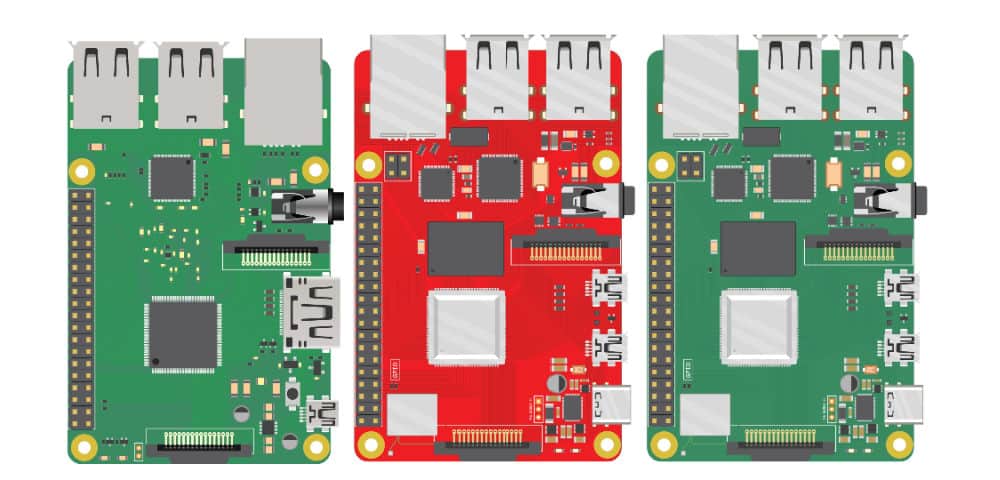
Many businesses use Raspberry Pi devices as jump boxes to remotely access the control plane of critical infrastructure. By their very nature, these devices usually aren’t correctly managed or vetted by the security team. This creates a security challenge known as Shadow IT. Shadow IT is a situation that arises when an organization has devices in use that are not known to, or securely managed by, the IT or Information Security department. These unmanaged devices are vulnerable to attack, and Raspberry Pi jump boxes are particularly tempting targets to cybercriminals because they provide access to important remote infrastructure. This blog discusses the security risks of using Raspberry Pi jump boxes and provides solutions in the form of secure, enterprise-grade Raspberry Pi alternatives.

Why consider Raspberry Pi alternatives?

Unmanaged Raspberry Pi devices don’t receive patches, aren’t visible to change management systems, and are excluded from security audits. These unsecured devices are used to access critical remote infrastructure, which creates a number of security risks.

Raspberry Pi security risks

  • Malware vulnerability – Deploying Raspberry Pi devices without onboarding them with IT means they’re not protected by enterprise antimalware solutions, leaving them exposed to viruses and ransomware attacks.
  • Undetected misconfigurations – Since unmanaged Raspberry Pi devices aren’t monitored by security or change management systems, it’s more likely that misconfigurations and vulnerabilities will remain undetected, leaving a potential backdoor open for cybercriminals.
  • Lack of IAM – A Raspberry Pi jump box that isn’t covered by enterprise IAM (Identity and Access Management) is susceptible to attack because security teams can’t extend Zero Trust security policies or controls to protect it (e.g., multi-factor authentication, role-based access control, and single sign-on).
  • Non-compliance – For organizations in regulated industries, a Raspberry Pi jump box could expose them to potential liability, because the org can’t monitor who’s using that device to access what data, resulting in non-compliance with privacy laws like HIPAA.
  • Lack of centralized Fleet Management – Organizations who have hundreds or thousands of these jump boxes have no way to centrally manage them, which makes upgrades, app deployments, licensing, patch management, and other tasks more time-consuming.
  • Lack of secure OS – Operating systems and software contain thousands of common  vulnerabilities, and there’s no way to automatically apply security patches or OS upgrades to unmanaged Raspberry Pi devices.
  • Lack of secure HW – Raspberry Pi storage disks often aren’t encrypted and lack any sort of secure boot sequence or other onboard security features, which means a stolen device could be used to breach the network or introduce malware.

Ultimately, Raspberry Pi devices expand a company’s attack surface because they fall outside of enterprise security policies, controls, solutions, and monitoring. However, many organizations use a Raspberry Pi to avoid the expense of deploying another fully managed device as a jump box in every site that houses critical infrastructure. Overcoming this challenge requires an enterprise-grade networking solution that includes remote out-of-band access to the control plane to eliminate the need for a jump box altogether.

Looking for alternative options for your Intel NUC jump boxes? Read Best Intel NUC Alternatives

Raspberry Pi alternatives from ZPE Systems

The Nodegrid product line from ZPE Systems helps organizations avoid Shadow IT by simplifying the tech stack with all-in-one network management solutions. In addition to data center and branch networking functionality like gateway routing, switching, and Wi-Fi, all Nodegrid devices provide out-of-band (OOB) management access over 5G/4G LTE.

Nodegrid is more secure than a Raspberry Pi jump box because it’s an enterprise solution that’s onboarded with IT and covered by all your security policies, controls, and solutions. In addition, Nodegrid boxes themselves are protected by enterprise security features such as BIOS protection, Signed OS, UEFI Secure Boot, and self-encrypted disk (SED).

Plus, all Nodegrid devices are completely vendor-neutral, which means they easily integrate with third-party Zero Trust security solutions and can even directly host other vendors’ security software to further reduce your tech stack.

Key Nodegrid features

All Nodegrid Devices Include:

Key features

Strong Out-of-band management integration

Extensible applications with virtualization and containers

Zero Touch Provisioning (ZTP) over the WAN

Vendor-neutral, unified management via ZPE Cloud/Nodegrid Manager

Modern x86-64bit Linux Kernel

Extended automation based on actionable data

Failover to 4G/5G/LTE & Wi-Fi

Power control and monitoring

Orchestration support via Puppet, Chef, Ansible, RESTful

Security

BIOS protection

TPM 2.0

UEFI Secure Boot

Signed OS

Self-Encrypted Disk (SED)

Geofencing

X.509 SSH certificate support, 4096-bit encryption keys

Selectable cryptographic protocols for SSH and HTTPS (TLSv1.3)

Selectable cypher suite levels: high, medium, low, custom

SSL VPN (Client and Server)

IPSec, Wireguard, and Strongswan with support for multi-sites

Local, AD/LDAP, RADIUS, TACACS+, Kerberos, authentication

SAML support via DUO, OKTA, Ping Identity

Local, backup-user authentication support

User-access lists per port

Group/role-based authorization: AD/LDAP, RADIUS, TACACS+

Fine grain and role-based access control

Firewall – IP packet and security filtering, IP forwarding support

MD5 / SHA System Configuration Checksum™

System event syslog

Custom security settings

Strong password enforcement

Two-Factor Authentication with RSA and DUO

Networking

IPv4 / IPv6 Support

Embedded Layer 2 switching

VLAN

Layer 3 Routing

BGP

OSFP

RIP

QoS

DHCP (Client and Server)

RIPv1, RIPv2

VXLAN

DDNS

NTP

To learn more about the security benefits of Nodegrid’s Raspberry Pi alternatives, contact ZPE Systems.

Nodegrid product comparison

The Nodegrid product line includes serial console servers (also known as RS232 serial switches) for data center deployments, as well as network edge routers for distributed branch and campus sites. Each solution delivers Gen 3 OOB management and all-in-one networking in a variety of sizes and configurations to suit any use case.

Nodegrid Serial Consoles

Nodegrid Serial Console Plus

Nodegrid Serial Console S Series

CPU

X86-64bit Intel 

X86-64bit Intel

Guest Docker

1-2

1-2

Storage

32GB

32GB

Wi-Fi

Yes

Yes

Cellular (Dual-SIM)

2

None

Serial

16 – 96

Auto-sensing

Network

2x Gb ETH 2x SFP+

2x SFP

Data Sheet

Download

Download


Nodegrid Network Edge Routers

Link SR

Bold SR

Hive SR

Gate SR

Net SR

Mini SR

CPU

X86-64bit Intel 

X86-64bit Intel

X86-64bit Intel 

X86-64bit Intel 

X86-64bit Intel 

X86-64bit Intel 

Cores

2

4 or 8

4 or 8

2, 4 or 8

2, 4, 8 or 16

4

Guest VM

1

1

1-2

1-3

1-6

1

Guest Docker

2+

2+

2+

2+

2+

2+

Storage

16GB – 128GB

32GB – 128GB

16GB – 128GB

32GB – 128GB

32GB – 128GB

14GB SED

Additional Storage

Up to 4TB

Up to 4TB

Up to 4TB

Up to 4TB

Up to 4TB

–

Wi-Fi

Yes

Yes

Yes

Yes

Yes

Yes

Cellular modem

1

1-2

1-2

1-2

1-6

1

5G

–

Yes

Dual 5G

Dual 5G

6x 5G

–

Sim slots

2

4

4

4

12

1

Serial Console Switch

1

8

Via USB

8

16-80

Via USB

Network

1x Gb ETH 1x SFP

5x Gb ETH

2x GbE ETH 2x 10 Gbps

4x 10/100/1000/2.5 Gbps RJ-45

2x SFP 5x Gb ETH

4x 1Gb ETH PoE+

2x 1Gb ETH 2x SFP+ Multiple expansion cards

2x 1Gb ETH

Data Sheet

Download

Download

Download

Download

Download

Download

The Nodegrid line of Raspberry Pi alternatives from ZPE Systems can help your organization prevent Shadow IT to reduce your attack surface and improve your security posture without increasing costs.

Ready for a Raspberry Pi alternative?

Want to see one of ZPE’s Raspberry Pi alternatives in action? Request a free Nodegrid demo! Request a Demo

What Is a Zero Trust Gateway?

What Is a Zero Trust Gateway(2)
The constant threat of cyberattacks has made network security a top priority for companies in every sector, with Gartner predicting that global cybersecurity spending will reach $188 billion in 2023. However, security continues to get more challenging due to factors like a rise in remote work, an increasing reliance on touchless internet of things (IoT) devices, and the overall decentralization of enterprise networks. It’s hard to create a secure perimeter around the enterprise when its users, devices, applications, and data could be anywhere in the world.

The zero trust security methodology addresses this challenge by shrinking the focus from one large security perimeter and instead creating smaller “micro-perimeters” around each individual resource that needs defending. It’s called zero trust because it follows the principle of “never trust, always verify.” That means each user and device needs to verify its identity and prove its trustworthiness before it can penetrate the micro-perimeter. So, for example, if a cybercriminal uses stolen credentials to log into the enterprise network, they have to pass through many different security checkpoints to see or access any sensitive resources, which increases the likelihood they’ll get caught before excessive damage is done.

One way to implement micro-perimeters and apply zero trust security policies is with a device called a zero trust gateway. This post discusses the technologies that make up a zero trust gateway and explains how they work together to defend enterprise networks.

What is a zero trust gateway?

A zero trust gateway is a device that sits at the edge of the network – or at the top of the rack – and applies zero trust security policies and controls to traffic flowing in either direction. The gateway can be a dedicated security appliance, but it’s often more cost- and space-effective to use a multi-functional device that combines security, networking, and infrastructure management in a single box.

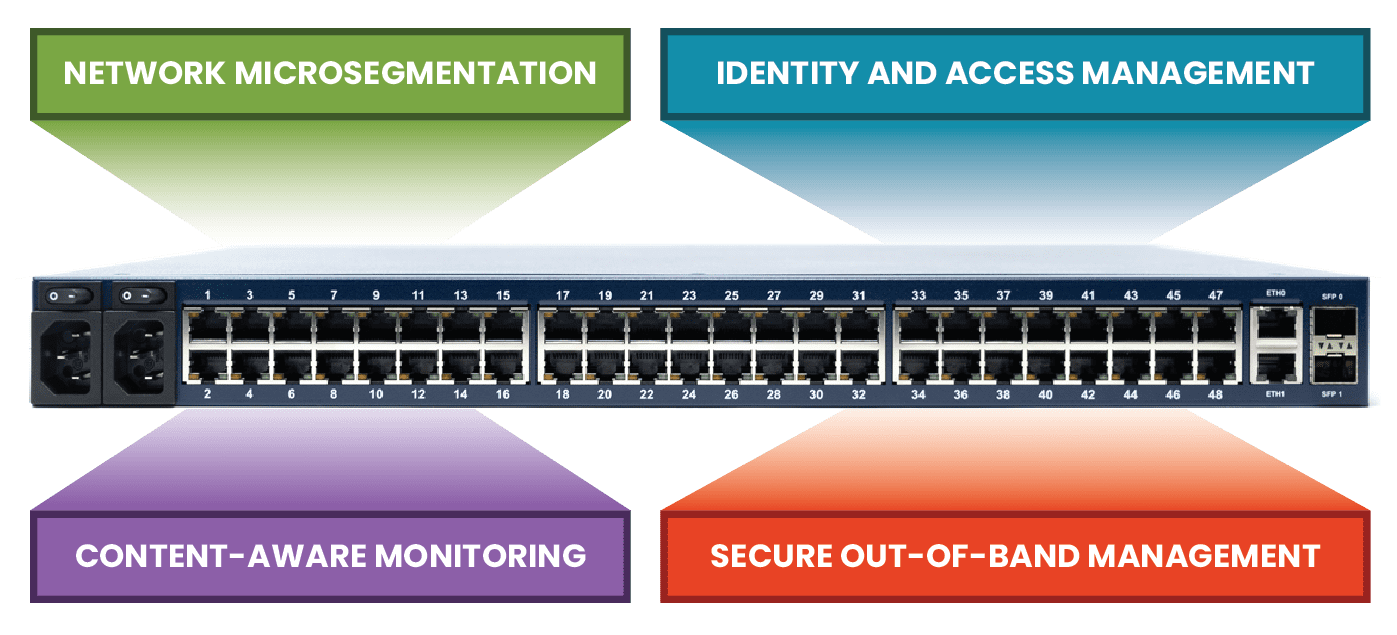
Some of the key features used in an all-in-one zero trust gateway include network micro-segmentation, identity and access management, context-aware monitoring, and secure out-of-band management. There are a small number of mature solutions that deliver all of these features off-the-shelf, but they lock you into their small solution ecosystem and limited feature roadmap. A better approach is to start with a vendor-neutral platform that lets you host and integrate your choice of security applications to create a fully customized zero trust gateway. Let’s walk through how each of these security technologies works and how to combine them into a bespoke zero trust gateway solution.

To see an example of a vendor-neutral zero trust gateway at work, request a demo of the Nodegrid solution from ZPE Systems.

Request a Demo

Network micro-segmentation

A zero trust micro-perimeter is made up of granular access control policies and security controls that are custom-tailored to the specific vulnerabilities and requirements of resources they’re defending. For example, an on-premises database containing sensitive financial records needs different policies than a cloud-based application that doesn’t process any personal information. To implement micro-perimeters, resources first need to be logically organized based on their sensitivity level, who needs access to them, and what their interdependencies are.

Network micro-segmentation is used to separate resources based on these criteria so that micro-perimeters can then be applied. For a device to be considered a zero trust gateway, it must support VLAN micro-segmentation and be able to apply access control rules consistently across all micro-segments.

Identity and access management

In a zero trust architecture, user and device permissions should be limited to only what’s necessary to perform their job role. For example, an HR account used to manage employee records shouldn’t have access to customer financial data, and vice versa. Access policies should be specific to individual micro-segments and resources and need to be applied to all users and devices consistently, no matter where they’re logging in from. That means a remote user should follow the same authentication steps and have the same permissions as they would if they logged in at the office.

For a large enterprise network, this is only achievable with a centralized identity and access management (IAM) solution. An IAM provides a single platform from which to create, manage, and apply security policies. A zero trust IAM also enables best practices like single sign-on (SSO) and two-factor authentication (2FA).

A zero trust gateway needs to integrate with your chosen IAM provider to ensure that policies are applied to both production traffic and management traffic. Some vendor-neutral gateway solutions can even directly host and run third-party IAM solutions, providing a more integrated experience and saving rack space.

Context-aware monitoring

Many successful cyberattacks use stolen credentials gained through phishing schemes and other social engineering tactics. For example, Mailchimp was recently attacked by malicious actors using credentials stolen from employees through social engineering. It’s difficult to detect and contain such an attack because the criminal looks like an authorized user. However, careful monitoring often reveals suspicious behavior, such as logging in from an unusual IP address or time zone, making multiple access requests to areas of the network they don’t usually visit, or transferring abnormally large quantities of data.

User and entity behavior analytics, or UEBA, uses machine learning technology to monitor and analyze account activity on the enterprise network. UEBA creates a baseline of “normal” behavior for individual accounts so it can detect any anomalous activity. UEBA integrates with other security and monitoring solutions, such as IAM and firewalls, so it can compare data from various sources to make more informed decisions. This is one of the ways that zero trust security verifies the trustworthiness of accounts trying to access sensitive resources, making UEBA a critical component of zero trust gateways.

Secure out-of-band (OOB) management

Admins need a fast and reliable way to access remote infrastructure for management, troubleshooting, and recovery. For example, it’s common for a single data center management team to be responsible for customer equipment in multiple DCs distributed around the world for redundancy. These admins can’t physically go on-site every time a firmware update fails or a device loses its IP address. That’s why they rely on remote out-of-band (OOB) management; remote OOB management creates a separate network just for management traffic that doesn’t rely on the production LAN. Admins access the OOB network using a dedicated management device, like a jump box or a serial console server.

This management device is a tempting target for cybercriminals, as gaining control of that device will give them complete control over the connected infrastructure. One way to protect the OOB network is by using a zero trust gateway with integrated management ports. For example, the Nodegrid Net Services Router (NSR) is a modular zero trust gateway that can be customized to connect to any type of device that needs to be managed or secured. The NSR comes with gateway routing and switching capabilities, an embedded firewall, and hardware security features like secure boot and a self-encrypted disk. Nodegrid is also completely vendor-neutral, which means it can directly host or integrate with your choice of third-party security solutions, including next-generation firewalls (NGFWs) and zero trust technologies like identity and access management and UEBA.

The NSR is a modular, open platform upon which to build a fully customized zero trust gateway for large data center deployments. The Nodegrid product line from ZPE Systems also includes a variety of serial console solutions and integrated all-in-one gateway routers to support other use cases, such as edge computing sites, branches, and automated IoT deployments.

A zero trust gateway helps organizations implement micro-perimeters of specific policies and controls to defend sensitive data and other valuable resources. A vendor-neutral, integrated solution like the Nodegrid Serial Console Plus from ZPE Systems makes it possible to combine zero trust security with networking and management functionality to create a streamlined, cost-effective zero trust gateway deployment.

Ready to learn more about Zero Trust Gateway?

To learn more about deploying Nodegrid as a zero trust gateway in your enterprise, contact ZPE Systems today.

Contact Us