Providing Out-of-Band Connectivity to Mission-Critical IT Resources

Home » Edge Computing » Page 6

Gartner Market Guide for Edge Computing

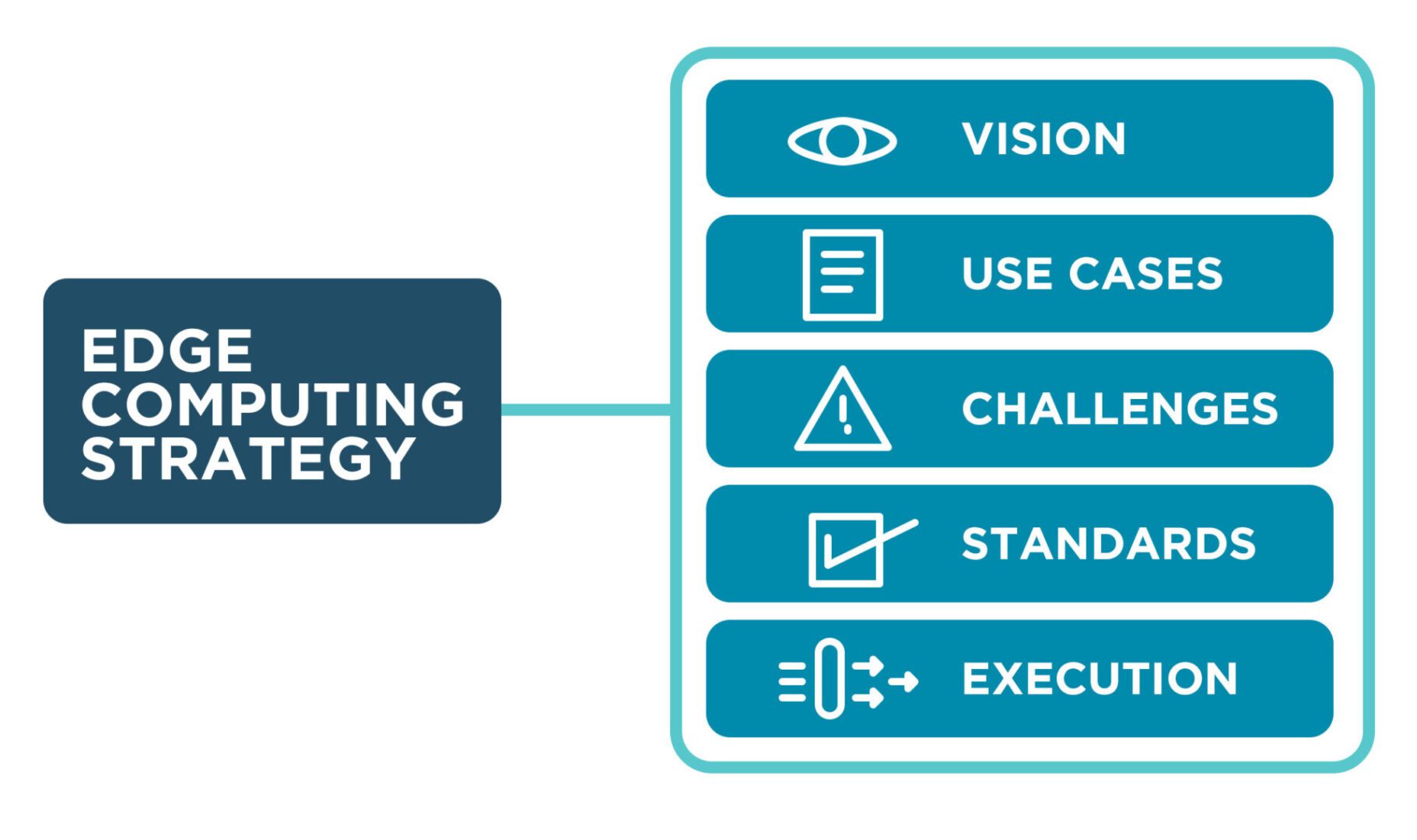
Edge-computing-strategy
In today’s highly distributed enterprise environment, a large portion of business data is generated by devices at the edges of the network. For example, many industries, from healthcare to finance, use IoT (Internet of Things) devices to collect essential and sensitive data. Transmitting this data back to a centralized data center for processing creates network latency and introduces security risks. 

Edge computing moves processing power and applications closer to the sources of data at the edges of the network, which improves performance and reduces risk. This approach is gaining popularity, with recent Gartner research finding that 69% of CIOs have already deployed edge technologies or would deploy by mid-2025. However, most edge deployments focus on individual use cases and lack a cohesive strategy, resulting in “edge sprawl”: many disparate solutions deployed all over the enterprise without centralized control or visibility.

“Edge computing without a strategy will eventually cause digital gridlock.” Thomas Bittman, Gartner Distinguished VP Analyst, in Building an Edge Computing Strategy

Edge sprawl increases complexity, reduces resilience, and ultimately hampers digital transformation. In a report published earlier this year titled “Building an Edge Computing Strategy,” Gartner provides recommendations for reducing edge sprawl with a comprehensive strategy. As we await the next Gartner Market Guide for Edge Computing, let’s discuss their recommendations for building a strategy to manage and orchestrate your edge solutions.

Building a Gartner-approved edge computing strategy

Gartner recommends building an edge computing strategy around five elements: vision, use cases, challenges, standards, and execution.

Edge computing vision

An edge computing vision describes the overall organizational goals and provides direction for teams and stakeholders. It should explain how edge computing supports and relates to other technology initiatives, such as cloud computing, IoT/OT devices, and artificial intelligence/machine learning, as well as how it fits into the overall digital transformation strategy.

Key components of an edge computing vision:

  • The business impact of edge computing in objective terms, such as the amount of money saved
  • How edge computing will accelerate digital transformation
  • A discussion of the digital experience improvements enabled by edge computing
  • The anticipated number of automation projects supported by edge computing
  • What edge computing use cases will be deployed
  • The targeted deployment agility in measurable terms, such as the time to deploy a new site

The edge computing vision provides the target your organization wants to reach in the next five years, and should be continuously updated as goals are met and strategies evolve. It’s crucial to clearly communicate the edge computing vision to get buy-in from executives and staff.

Edge computing use cases

There are often many edge computing use cases within an organization, and an effective edge computing strategy must identify and account for them all in order to avoid sprawl. There are three aspects to consider – the edge computing drivers, the existing edge computing use-case landscape, and potential edge computing use cases.

Edge computing drivers

Edge computing evolved to solve problems other computing architectures can’t handle. Understanding what those problems are will help you identify existing use cases and determine when edge computing should be pursued for a particular use case in the future. Gartner identifies four main edge computing drivers.

Gartner’s four edge computing drivers
Latency/Determinism
 A rapid response is required, or the response time needs to be predictable, and current latency is unacceptable 
Data/Bandwidth
 The cost of transmitting noisy, short-lived data is higher than the cost of moving compute to the edge 
Limited Autonomy
 Operations at the edge must continue even if the connection to the central data center or cloud is interrupted 
Privacy/Security
 The privacy and security risks of transmitting edge data are too high, or regulatory requirements prevent it 
An edge computing strategy should describe the organization’s specific needs and drivers that edge computing will address.

Existing edge computing use-case landscape

Many organizations already use edge computing in some form, even if they don’t call it by that name. Examples include operational technology (OT) deployments in the manufacturing industry and smart check-out systems in retail stores. An edge computing strategy must identify all existing solutions and discuss how they’ll be integrated with the chosen management technologies and best practices (more on those later).

Potential edge computing use cases

An effective edge computing strategy should also describe how the business will identify new use cases in the future. This proactive process should use the previously established edge computing drivers and involve collaboration between IT and the various business units within the organization. Gartner recommends creating a “clearinghouse” for new use case ideas, a structured process for identifying, reviewing, and prioritizing potential edge use cases.

Edge computing challenges

Even as edge computing solves business problems, it creates additional challenges that the strategy must address with new technologies and processes. Gartner identifies six major edge computing challenges to focus on while you develop an edge computing strategy.

  1. Enabling extensibility – Purpose-built edge computing solutions can’t adapt when workloads change or grow, so an edge computing strategy should leave room for growth by using extensible, vendor-neutral platforms that allow for expansion and integration.
  2. Extracting value from edge data – As edge devices generate more and more data, the difficulty of quickly extracting value from that data rises, so organizations should look for ways to deploy AI training and data analytics solutions alongside edge computing units.
  3. Governing edge data – Edge computing sites often have more significant data storage constraints than traditional data centers, so quickly distinguishing between valuable data and destroyable junk is critical to edge ROIs and requires careful governance.
  4. Securing the edge – Edge deployments are highly distributed in locations that lack many security features in a traditional data center, adding risk and increasing the attack surface, so organizations should protect edge computing nodes with a multi-layered defense including zero-trust policies, strong authentication, and network micro-segmentation. Orgs also need a way to take back control of edge infrastructure during ransomware attacks, such as an isolated recovery environment (IRE).
  5. Supporting edge-native applications – Edge-native applications are designed for the edge from the bottom up, so organizations should deploy platforms that support these applications without increasing the technical debt, meaning they should use familiar technologies and interoperate with existing systems.
  6. Managing and orchestrating the edge – Environmental issues, power failures, and network outages can cut technical teams off from critical edge infrastructure, so organizations need edge management and orchestration (EMO) with environmental monitoring and out-of-band (OOB) connectivity.

Gartner recommends focusing your edge computing strategy on mitigating the specific risks, challenges, and inhibitors.

Edge computing standards

Edge computing use cases are often highly diverse, even within a single organization, so it’s critical to establish a set of unifying standards and guidelines to reduce edge sprawl. Many organizations use a cloud center of excellence (CCOE) to govern their cloud computing architecture, so Gartner recommends establishing a similar edge center of excellence (ECOE) based on three pillars.

Gartner’s Edge Center of Excellence (ECOE)
Governance:
  • Maintain the edge computing strategy
  • Develop security, data, and adoption policies
  • Establish metrics to measure value and ROI
Technologies:
  • Reference architectures
  • Technology and architecture standards
  • Trusted vendor list
  • Vendor selection process
Best Practices/Skills:
  • Solutions consulting
  • Training and role definition
  • Expertise evangelization

For an effective edge computing strategy, Gartner recommends creating a unifying set of standards, guidelines, and best practices to be used across all edge computing deployments.

Edge computing execution

An edge computing strategy should include process documentation for the initial deployment of new edge rollouts. Gartner identifies six steps that help ensure successful edge computing launches.

  • Proof of Concept – Test edge deployments in non-production and get feedback from stakeholders
  • Proof of Production – Conduct a pilot to evaluate how you’ll operate, manage, and monitor an edge project at full scale
  • Phased Rollout – Have a phased deployment plan including scale, regions, and functionality
  • Surprises – Expect the unexpected by including guidelines in your edge computing strategy for monitoring and managing changes
  • Evolution – Edge projects frequently change direction based on evolving requirements or unexpected changes, so extensibility is crucial
  • Next-Best Action – Plans for the future frequently change direction, so have alternatives in your strategy to help guide these evolutions

An edge computing strategy that covers all six steps will streamline deployments and improve the agility of edge execution.

What to Expect from the Gartner Market Guide for Edge Computing

Last year, the Gartner Market Guide for Edge Computing discussed the issue of companies deploying individual edge solutions to handle individual use cases without any unified management and oversight. Part of the problem is that the edge computing market is still immature, and another hurdle is vendor lock-in. When edge computing solutions can’t interoperate with other vendors’ hardware and software, teams cannot deploy the universal hardware and unifying orchestration platforms to manage edge architectures efficiently.

Based on the market analysis provided in “Building an Edge Computing Strategy,” Gartner still heavily emphasizes the need to reduce edge sprawl with centralized, vendor-neutral edge management and orchestration (EMO). You can expect Gartner’s next market guide for edge computing to continue pushing for unified management and to highlight vendors with scalable, extensible, open edge computing solutions.

Building an edge computing strategy with Nodegrid

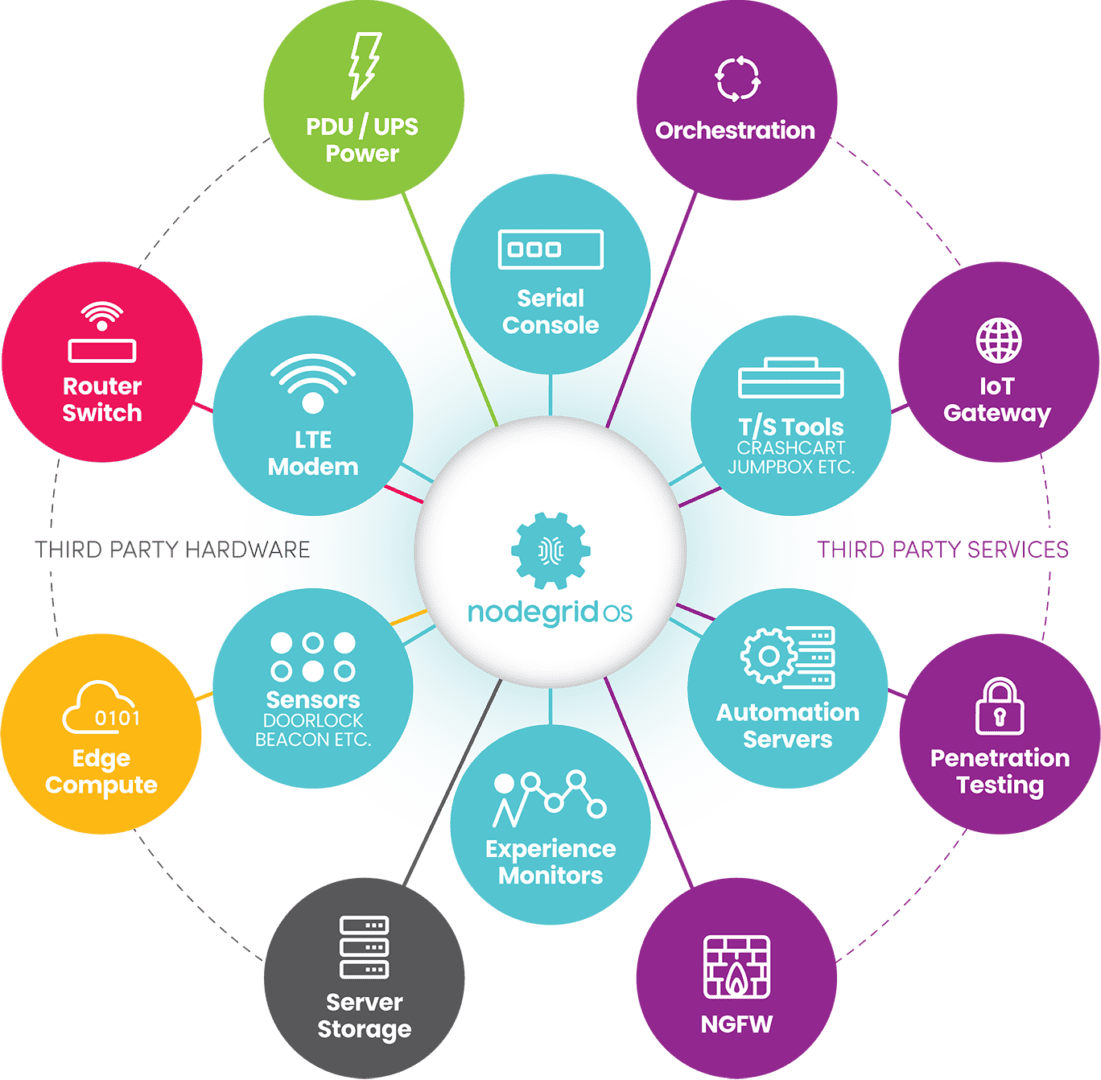
Nodegrid is a vendor-neutral edge infrastructure orchestration platform from ZPE Systems that can help you solve all six of Gartner’s edge computing challenges.

  • Enabling extensibility – Nodegrid’s modular, extensible devices are easy to scale and adapt to handle changing workloads. Nodegrid management hardware runs the open, Linux-based Nodegrid OS, which can host your choice of third-party edge computing applications, so you can deploy and change edge software without buying additional hardware.
  • Extracting value from edge data – Nodegrid’s powerful, extensible computing hardware can run data analysis, machine learning, and artificial intelligence applications to help extract additional value from the massive quantities of data at the edge.
  • Governing edge data – Nodegrid’s ZPE Cloud platform offers a data lake application that helps process and organize edge data.
  • Securing the edge – Nodegrid uses innovative hardware security and advanced, zero-trust authentication methods to defend edge networks, devices, and applications.
  • Supporting edge-native applications – Nodegrid supports Docker containers and other edge-native technologies, allowing teams to use their choice of software platforms to reduce technical debt.
  • Managing and orchestrating the edge – Nodegrid’s environmental monitoring sensors give remote teams real-time insights into conditions in edge deployment sites so they can respond to climate issues and power fluctuations as they occur. Nodegrid’s out-of-band (OOB) management creates an isolated management infrastructure that doesn’t rely on production network resources, giving teams a lifeline to troubleshoot and recover from outages, failures, and cyberattacks faster and more cost-effectively.

Nodegrid is a vendor-neutral Services Delivery Platform that brings all the components of your edge computing strategy under one management umbrella so you can overcome your biggest edge computing challenges.

Get streamlined edge computing with Nodegrid

To learn more about vendor-neutral edge management and orchestration (EMO) as described in the Gartner market guide for edge computing, contact ZPE Systems.

Request a Demo

What is a Hyperscale Data Center?

shutterstock_2204212039(1)

As today’s enterprises race toward digital transformation with cloud-based applications, software-as-a-service (SaaS), and artificial intelligence (AI), data center architectures are evolving. Organizations rely less on traditional server-based infrastructures, preferring the scalability, speed, and cost-efficiency of cloud and hybrid-cloud architectures using major platforms such as AWS and Google. These digital services are supported by an underlying infrastructure comprising thousands of servers, GPUs, and networking devices in what’s known as a hyperscale data center.

The size and complexity of hyperscale data centers present unique management, scaling, and resilience challenges that providers must overcome to ensure an optimal customer experience. This blog explains what a hyperscale data center is and compares it to a normal data center deployment before discussing the unique challenges involved in managing and supporting a hyperscale deployment.

What is a hyperscale data center?

As the name suggests, a hyperscale data center operates at a much larger scale than traditional enterprise data centers. A typical data center houses infrastructure for dozens of customers, each containing tens of servers and devices. A hyperscale data center deployment supports at least 5,000 servers dedicated to a single platform, such as AWS. These thousands of individual machines and services must seamlessly interoperate and rapidly scale on demand to provide a unified and streamlined user experience.

The biggest hyperscale data center challenges

Operating data center deployments on such a massive scale is challenging for several key reasons.


Hyperscale Data Center Challenges

Complexity

Hyperscale data center infrastructure is extensive and complex, with thousands of individual devices, applications, and services to manage. This infrastructure is distributed across multiple facilities in different geographic locations for redundancy, load balancing, and performance reasons. Efficiently managing these resources is impossible without a unified platform, but different vendor solutions and legacy systems may not interoperate, creating a fragmented control plane.

Scaling

Cloud and SaaS customers expect instant, streamlined scaling of their services, and demand can fluctuate wildly depending on the time of year, economic conditions, and other external factors. Many hyperscale providers use serverless, immutable infrastructure that’s elastic and easy to scale, but these systems still rely on a hardware backbone with physical limitations. Adding more compute resources also requires additional management and networking hardware, which increases the cost of scaling hyperscale infrastructure.

Resilience

Customers rely on hyperscale service providers for their critical business operations, so they expect reliability and continuous uptime. Failing to maintain service level agreements (SLAs) with uptime requirements can negatively impact a provider’s reputation. When equipment failures and network outages occur - as they always do, eventually - hyperscale data center recovery is difficult and expensive.

Overcoming hyperscale data center challenges requires unified, scalable, and resilient infrastructure management solutions, like the Nodegrid platform from ZPE Systems.

How Nodegrid simplifies hyperscale data center management

The Nodegrid family of vendor-neutral serial console servers and network edge routers streamlines hyperscale data center deployments. Nodegrid helps hyperscale providers overcome their biggest challenges with:

  • A unified, integrated management platform that centralizes control over multi-vendor, distributed hyperscale infrastructures.
  • Innovative, vendor-neutral serial console servers and network edge routers that extend the unified, automated control plane to legacy, mixed-vendor infrastructure.
  • The open, Linux-based Nodegrid OS which hosts or integrates your choice of third-party software to consolidate functions in a single box.
  • Fast, reliable out-of-band (OOB) management and 5G/4G cellular failover to facilitate easy remote recovery for improved resilience.

The Nodegrid platform gives hyperscale providers single-pane-of-glass control over multi-vendor, legacy, and distributed data center infrastructure for greater efficiency. With a device like the Nodegrid Serial Console Plus (NSCP), you can manage up to 96 devices with a single piece of 1RU rack-mounted hardware, significantly reducing scaling costs. Plus, the vendor-neutral Nodegrid OS can directly host other vendors’ software for monitoring, security, automation, and more, reducing the number of hardware solutions deployed in the data center.

Nodegrid’s out-of-band (OOB) management creates an isolated control plane that doesn’t rely on production network resources, giving teams a lifeline to recover remote infrastructure during outages, equipment failures, and ransomware attacks. The addition of 5G/4G LTE cellular failover allows hyperscale providers to keep vital services running during recovery operations so they can maintain customer SLAs.

Want to learn more about Nodegrid hyperscale data center solutions from ZPE Systems?

Nodegrid’s vendor-neutral hardware and software help hyperscale cloud providers streamline their operations with unified management, enhanced scalability, and resilient out-of-band management. Request a free Nodegrid demo to see our hyperscale data center solutions in action.

Request a Demo

Healthcare Network Design

Edge Computing in Healthcare
In a healthcare organization, IT’s goal is to ensure network and system stability to improve both patient outcomes and ROI. The National Institutes of Health (NIH) provides many recommendations for how to achieve these goals, and they place a heavy focus on resilience engineering (RE). Resilience engineering enables a healthcare organization to resist and recover from unexpected events, such as surges in demand, ransomware attacks, and network failures. Resilient architectures allow the organization to continue operating and serving patients during major disruptions and to recover critical systems rapidly.

This guide to healthcare network design describes the core technologies comprising a resilient network architecture before discussing how to take resilience engineering to the next level with automation, edge computing, and isolated recovery environments.

Core healthcare network resilience technologies

A resilient healthcare network design includes resilience systems that perform critical functions while the primary systems are down. The core technologies and capabilities required for resilience systems include:

  • Full-stack networking – Routing, switching, Wi-Fi, voice over IP (VoIP), virtualization, and the network overlay used in software-defined networking (SDN) and software-defined wide area networking (SD-WAN)
  • Full compute capabilities – The virtual machines (VMs), containers, and/or bare metal servers needed to run applications and deliver services
  • Storage – Enough to recover systems and applications as well as deliver content while primary systems are down

These are the main technologies that allow healthcare IT teams to reduce disruptions and streamline recovery. Once organizations achieve this base level of resilience, they can evolve by adding more automation, edge computing, and isolated recovery infrastructure.

Extending automated control over healthcare networks

Automation is one of the best tools healthcare teams have to reduce human error, improve efficiency, and ensure network resilience. However, automation can be hard to learn, and scripts take a long time to write, so having systems are easily deployable with low technical debt is critical. Tools like ZTP (zero-touch provisioning), and the integration of technology like Infrastructure as Code (IaC), accelerate recovery by automating device provisioning. Healthcare organizations can use automation technologies such as AIOps with resilience systems technologies like out-of-band (OOB) management to monitor, maintain, and troubleshoot critical infrastructure.

Using automation to observe and control healthcare networks helps prevent failures from occuring, but when trouble does actually happen, resilience systems ensure infrastructure and services are quickly returned to health or rerouted when needed.

Improving performance and security with edge computing

The healthcare industry is one of the biggest adopters of IoT (Internet of Things) technology. Remote, networked medical devices like pacemakers, insulin pumps, and heart rate monitors collect a large volume of valuable data that healthcare teams use to improve patient care. Transmitting that data to a software application in a data center or cloud adds latency and increases the chances of interception by malicious actors. Edge computing for healthcare eliminates these problems by relocating applications closer to the source of medical data, at the edges of the healthcare network. Edge computing significantly reduces latency and security risks, creating a more resilient healthcare network design.

Note that teams also need a way to remotely manage and service edge computing technologies. Find out more in our blog Edge Management & Orchestration.

Increasing resilience with isolated recovery environments

Ransomware is one of the biggest threats to network resilience, with attacks occurring so frequently that it’s no longer a question of ‘if’ but ‘when’ a healthcare organization will be hit.

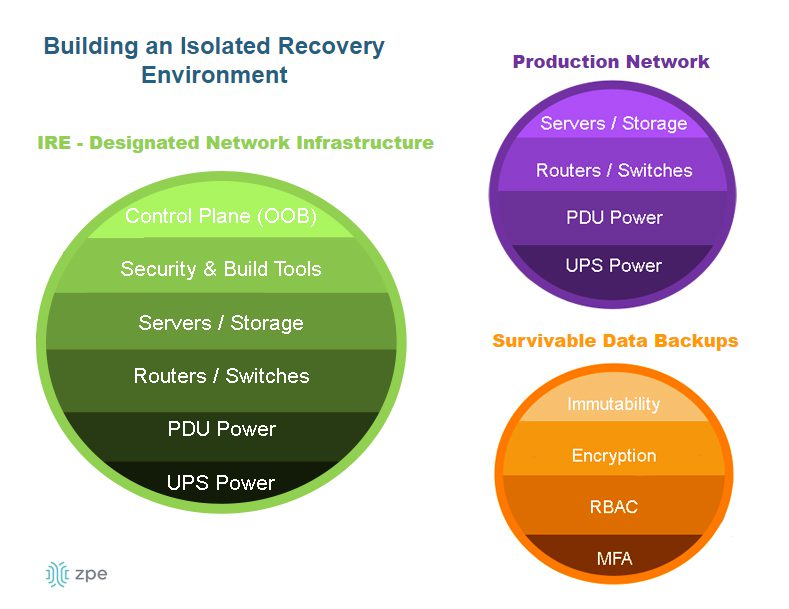
Recovering from ransomware is especially difficult because of how easily malicious code can spread from the production network into backup data and systems. The best way to protect your resilience systems and speed up ransomware recovery is with an isolated recovery environment (IRE) that’s fully separated from the production infrastructure.


A diagram showing the components of an isolated recovery environment.

An IRE ensures that IT teams have a dedicated environment in which to rebuild and restore critical services during a ransomware attack, as well as during other disruptions or disasters. An IRE does not replace a traditional backup solution, but it does provide a safe environment that’s inaccessible to attackers, allowing response teams to conduct remediation efforts without being detected or interrupted by adversaries. Isolating your recovery architecture improves healthcare network resilience by reducing the time it takes to restore critical systems and preventing reinfection.

To learn more about how to recover from ransomware using an isolated recovery environment, download our whitepaper, 3 Steps to Ransomware Recovery.

Resilient healthcare network design with Nodegrid

A resilient healthcare network design is resistant to failures thanks to resilience systems that perform critical functions while the primary systems are down. Healthcare organizations can further improve resilience by implementing additional automation, edge computing, and isolated recovery environments (IREs).

Nodegrid healthcare network solutions from ZPE Systems simplify healthcare resilience engineering by consolidating the technologies and services needed to deploy and evolve your resilience systems. Nodegrid’s serial console servers and integrated branch/edge routers deliver full-stack networking, combining cellular, Wi-Fi, fiber, and copper into software-driven networking that also includes compute capabilities, storage, vendor-neutral application & automation hosting, and cellular failover required for basic resilience. Nodegrid also uses out-of-band (OOB) management to create an isolated management and recovery environment without the cost and hassle of deploying an entire redundant infrastructure.

Ready to see how Nodegrid can improve your network’s resilience?

Nodegrid streamlines resilient healthcare network design with consolidated, vendor-neutral solutions. Request a free demo to see Nodegrid in action.

Request a Demo

Edge Management and Orchestration

shutterstock_2264235201(1)

Organizations prioritizing digital transformation by adopting IoT (Internet of Things) technologies generate and process an unprecedented amount of data. Traditionally, the systems used to process that data live in a centralized data center or the cloud. However, IoT devices are often deployed around the edges of the enterprise in remote sites like retail stores, manufacturing plants, and oil rigs. Transferring so much data back and forth creates a lot of latency and uses valuable bandwidth. Edge computing solves this problem by moving processing units closer to the sources that generate the data.

IBM estimates there are over 15 billion edge devices already in use. While edge computing has rapidly become a vital component of digital transformation, many organizations focus on individual use cases and lack a cohesive edge computing strategy. According to a recent Gartner report, the result is what’s known as “edge sprawl”: many individual edge computing solutions deployed all over the enterprise without any centralized control or visibility. Organizations with disjointed edge computing deployments are less efficient and more likely to hit roadblocks that stifle digital transformation.

The report provides guidance on building an edge computing strategy to combat sprawl, and the foundation of that strategy is edge management and orchestration (EMO). Below, this post summarizes the key findings from the Gartner report and discusses some of the biggest edge computing challenges before explaining how to solve them with a centralized EMO platform.

Key findings from the Gartner report

Many organizations already use edge computing technology for specific projects and use cases – they have an individual problem to solve, so they deploy an individual solution. Since the stakeholders in these projects usually aren’t architects, they aren’t building their own edge computing machines or writing software for them. Typically, these customers buy pre-assembled solutions or as-a-service offerings that meet their specific needs.

However, a piecemeal approach to edge computing projects leaves organizations with disjointed technologies and processes, contributing to edge sprawl and shadow IT. Teams can’t efficiently manage or secure all the edge computing projects occurring in the enterprise without centralized control and visibility. Gartner urges I&O (infrastructure & operations) leaders to take a more proactive approach by developing a comprehensive edge computing strategy encompassing all use cases and addressing the most common challenges.

Edge computing challenges

Gartner identifies six major edge computing challenges to focus on when developing an edge computing strategy:

Gartner’s 6 edge computing challenges to overcome

Enabling extensibility so edge computing solutions are adaptable to the changing needs of the business.

Extracting value from edge data with business analytics, AIOps, and machine learning training.

Governing edge data to meet storage constraints without losing valuable data in the process.

Supporting edge-native applications using specialized containers and clustering without increasing the technical debt.

Securing the edge when computing nodes are highly distributed in environments without data center security mechanisms.

Edge management and orchestration that supports business resilience requirements and improves operational efficiency.

Let’s discuss these challenges and their solutions in greater depth.

  • Enabling extensibility – Many organizations deploy purpose-built edge computing solutions for their specific use case and can’t adapt when workloads change or grow.  The goal is to attempt to predict future workloads based on planned initiatives and create an edge computing strategy that leaves room for that growth. However, no one can really predict the future, so the strategy should account for unknowns by utilizing common, vendor-neutral technologies that allow for expansion and integration.
  • Extracting value from edge data – The generation of so much IoT and sensor data gives organizations the opportunity to extract additional value in the form of business insights, predictive analysis, and machine learning training. Quickly extracting that value is challenging when most data analysis and AI applications still live in the cloud. To effectively harness edge data, organizations should look for ways to deploy artificial intelligence training and data analytics solutions alongside edge computing units.
  • Governing edge data – Edge computing deployments often have more significant data storage constraints than central data centers, so quickly distinguishing between valuable data and destroyable junk is critical to edge ROIs. With so much data being generated, it’s often challenging to make this determination on the fly, so it’s important to address data governance during the planning process. There are automated data governance solutions that can help, but these must be carefully configured and managed to avoid data loss.
  • Supporting edge-native applications – Edge applications aren’t just data center apps lifted and shifted to the edge; they’re designed for edge computing from the bottom up. Like cloud-native software, edge apps often use containers, but clustering and cluster management are different beasts outside the cloud data center. The goal is to deploy platforms that support edge-native applications without increasing the technical debt, which means they should use familiar container management technologies (like Docker) and interoperate with existing systems (like OT applications and VMs).
  • Securing the edge – Edge deployments are highly distributed in locations that may lack many physical security features in a traditional data center, such as guarded entries and biometric locks, which adds risk and increases the attack surface. Organizations must protect edge computing nodes with a multi-layered defense that includes hardware security (such as TPM), frequent patches, zero-trust policies, strong authentication (e.g., RADIUS and 2FA), and network micro-segmentation.
  • Edge management and orchestration – Moving computing out of the climate-controlled data center creates environmental and power challenges that are difficult to mitigate without an on-site technical staff to monitor and respond. When equipment failure, configuration errors, or breaches take down the network, remote teams struggle to meet resilience requirements to keep business operations running 24/7. The sheer number and distribution area of edge computing units make them challenging to manage efficiently, increasing the likelihood of mistakes, issues, or threat indicators slipping between the cracks. Addressing this challenge requires centralized edge management and orchestration (EMO) with environmental monitoring and out-of-band (OOB) connectivity.

    A centralized EMO platform gives administrators a single-pane-of-glass view of all edge deployments and the supporting infrastructure, streamlining management workflows and serving as the control panel for automation, security, data governance, cluster management, and more. The EMO must integrate with the technologies used to automate edge management workflows, such as zero-touch provisioning (ZTP) and configuration management (e.g., Ansible or Chef), to help improve efficiency while reducing the risk of human error. Integrating environmental sensors will help remote technicians monitor heat, humidity, airflow, and other conditions affecting critical edge equipment’s performance and lifespan. Finally, remote teams need OOB access to edge infrastructure and computing nodes, so the EMO should use out-of-band serial console technology that provides a dedicated network path that doesn’t rely on production resources.

Gartner recommends focusing your edge computing strategy on overcoming the most significant risks, challenges, and roadblocks. An edge management and orchestration (EMO) platform is the backbone of a comprehensive edge computing strategy because it serves as the hub for all the processes, workflows, and solutions used to solve those problems.

Edge management and orchestration (EMO) with Nodegrid

Nodegrid is a vendor-neutral edge management and orchestration (EMO) platform from ZPE Systems. Nodegrid uses Gen 3 out-of-band technology that provides 24/7 remote management access to edge deployments while freely interoperating with third-party applications for automation, security, container management, and more. Nodegrid environmental sensors give teams a complete view of temperature, humidity, airflow, and other factors from anywhere in the world and provide robust logging to support data-driven analytics.

The open, Linux-based Nodegrid OS supports direct hosting of containers and edge-native applications, reducing the hardware overhead at each edge deployment. You can also run your ML training, AIOps, data governance, or data analytics applications from the same box to extract more value from your edge data without contributing to sprawl.

In addition to hardware security features like TPM and geofencing, Nodegrid supports strong authentication like 2FA, integrates with leading zero-trust providers like Okta and PING, and can run third-party next-generation firewall (NGFW) software to streamline deployments further.

The Nodegrid platform brings all the components of your edge computing strategy under one management umbrella and rolls it up with additional core networking and infrastructure management features. Nodegrid consolidates edge deployments and streamlines edge management and orchestration, providing a foundation for a Gartner-approved edge computing strategy.

Want to learn more about how Nodegrid can help you overcome your biggest edge computing challenges?

Contact ZPE Systems for a free demo of the Nodegrid edge management and orchestration platform.

Contact Us

What is an Application Delivery Platform?

An illustration showing a breakout of various software application components to highlight the need for an application delivery platform

Modern software architectures are highly complex and often very difficult to maintain and operate. A single enterprise application comprises hundreds (or even thousands) of individual services, technologies, and toolchains while requiring a lot of underlying infrastructure, such as servers, routing and load balancing rules, and security controls. All of this complexity increases overhead costs and adds to the ever-growing workloads of software, network, and infrastructure teams, especially when you multiply this effort across dozens or hundreds of software deployments.

Platform engineering is a new discipline introduced by Gartner to address these challenges by reducing the complexity of software engineering, network operations, and application delivery. The platforms built by these engineers are known by several names, including internal developer platforms, internal developer portals, and application delivery platforms. This guide defines an application delivery platform, discusses the underlying technology, and highlights a leading platform engineering solution.
.

Table of Contents:
  1. What is an application delivery platform?
  2. What is the importance of an application delivery platform?
  3. What technology makes up an application delivery platform?
  4. Introducing ZPE Systems’ Services Delivery Platform

What is an application delivery platform?

An application delivery platform is a suite of technologies that handles all the services that support an application, including security, traffic management, load balancing, and data management. Platform engineers combine all these services into a common toolset used to deploy applications at customer sites, so there’s no need to build a new architecture every time. This streamlined experience makes application delivery cost-effective by significantly reducing workloads and deployment timelines.

What is the importance of an application delivery platform?

The goal of an application delivery platform is to reduce deployment and management complexity. Deployment complexity leads to a greater risk of human error when configuring things like security controls and access policies, and any mistakes are likely to be found and exploited by cybercriminals. Management complexity makes it harder to stay on top of patch schedules. Unpatched software often contains vulnerabilities that are exploited by cybercriminals; for example, known ransomware groups targeted unpatched IBM software earlier this year.

By reducing complexity, an application delivery platform also reduces the attack surface, improving an organization’s overall security posture.

What technology makes up an application delivery platform?

By its very nature, an application delivery platform is highly customized to fit the needs of the applications being supported. Here are some examples of the services and technologies that are often included.

  • Server storage & compute: The platform needs storage (usually solid-state) and processing units (CPUs or GPUs) to run the applications and store necessary data. Ideally, the OS and computing architecture will support containers (e.g., Docker) for microservices applications.
  •  
  • Automation tools: A key feature of application delivery platforms is the ability to automatically provision and deploy new environments, apps, and network services as well activate services licenses and service chaining. That means the platform should host automation tools for configuration management, code delivery, and software-defined networking (SDN).
  •  
  • Security: The ideal platform makes it possible to deliver applications without configuring security every time. That means it provides unified management and repeatable deployments for security services like firewall traffic inspection, access control lists, and advanced authentication.
  •  
  • Routing & load balancing: A lot of backend networking goes into the typical application deployment to ensure traffic is routed correctly and optimized for performance. An application delivery platform should support network functions virtualization (NFVs) and SDN so standard network configurations can be easily deployed alongside the applications being delivered.
  • Management tools: Engineers need a way to remotely access, manage, and troubleshoot application deployments, even (and especially) during major service disruptions. The ideal platform includes out-of-band serial console management and supports third-party troubleshooting tools so remote teams can quickly recover systems and applications without an expensive on-site visit.

While this list is far from exhaustive, it covers the foundational technology that supports an application delivery platform. Platform engineering is still in its infancy, and many organizations struggle to efficiently execute it because of how many moving pieces need to be considered. The goal is to find a solution that provides the best framework of hardware and software capabilities that platform engineers can build upon, so they can create a fully customized application delivery platform without reinventing the wheel.

Introducing ZPE Systems’ Services Delivery Platform

Zero Pain Ecosysteme

The Services Delivery Platform from ZPE Systems is the perfect foundation for any platform engineering initiative. Nodegrid edge routers serve as the hardware backbone, providing networking and failover capabilities, OOB serial console management, and plenty of memory, storage, and CPU headroom for additional apps and services. You can build a fully customized hardware platform with the modular Net Services Router (NSR), extending your storage or compute capabilities or adding more ports to support your application deployment.

The vendor-neutral, Linux-based Nodegrid OS can run your custom applications as well as third-party automation, security, DevOps, and management tools. Plus, Nodegrid unifies all connected services and applications under a single management umbrella, allowing teams to oversee and orchestrate all of their deployments from one convenient portal.


Ready to Learn More?

The Services Delivery Platform from ZPE Systems simplifies platform engineering with powerful, multipurpose hardware and an open, vendor-neutral OS. Contact us today to learn more about using Nodegrid for your application delivery platform!

Contact Us

Atsign: Why Choose ZPE Systems to Host IoT Security?

Colin

A Conversation with Atsign CTO & Co-Founder, Colin Constable

This is a guest post composed by Atsign, creators of zero-attack-surface solutions including atProtocol.

We recently sat down with our CTO and Mariposa Rotary Club extraordinaire, Colin Constable, to discuss our partnership with our friends over at ZPE Systems. Let’s explore the driving force behind this powerful partnership, and how together we’re securing IoT devices and the data shared between them.

Why is this partnership strategically important?

We are a software company that helps people connect beyond the edge of the Internet. And as a software company, we need to have hardware to run our software on. After looking at a number of hardware platforms, ZPE stood out as an organization that provides a strong array of network connectivity options. Our software running on ZPE’s hardware serves as an edge platform that gives customers reliable access to edge-generated data.

What are some of the synergies between Atsign and ZPE?

First and foremost, ZPE’s hardware was designed from scratch to provide the openness and flexibility that we were looking for in a hardware platform. If I were going to design something like this myself, it would look very much like a ZPE box! It is incredibly easy to drop our Docker containers straight onto the platform, and they just simply work, which is quite a joy. To have a Docker container environment on an edge box is really the thing that makes ZPE stand out as a platform. Combine that with the fact that ZPE boxes are running x86, which makes things easy–plus actually having dual SIM cards–we can work with our MVNO partners to provide constant connectivity; even if hardlines go down, there’s cellular backup. The thing we can offer ZPE and their customers is if the box can see the Internet, then you’ll be able to address it, get data to and from it, and actually even log into it, and get hold of the built-in UI on the box.

Tell us about ZPE’s Docker Container support

Our docker containers literally just ran perfectly on the ZPE hardware. I went into the UI, selected my docker container, and it just ran. It doesn’t get much easier than that. Plus, there’s the promise of being able to have the docker container talk to connected devices like V.24 cables to provide connectivity to IoT devices.

Once IoT devices become directly addressable, then it opens up all kinds of opportunities for more efficient delivery or sharing of information that can save customers tons of money by eliminating a lot of the current infrastructure they currently use to do that job.

What are some real-world use cases for Atsign and ZPE Systems?

Because ZPE boxes have lots of connectivity options (e.g. serial ports, 4/5G backhaul, and ethernet–with more coming!) for connecting IoT devices, then you can have always-on devices at the edge, and be able to address and get data to and from them. For example, a radio station that has DSL connectivity, and cellular backup would be able to just automatically move over to cellular backup, notify the radio station that it’s on cellular backup, but use that connectivity until the ADSL line comes back online and at all times be able to get information from the equipment at the radio station. This is critical for radio stations, as it eliminates “dead air,” that moment when the transmitter is not transmitting. Sponsors rely on radio stations to put out notifications for what their businesses are doing, so having constant, uninterrupted connectivity is essential.

Do Atsign & ZPE Systems improve sustainability?

Traditional solutions would have you installing many different boxes. What we really like about the ZPE platform is that although the hardware provides lots of connectivity options–that reduces the footprint for starters–there’s no need to have different modems and firewalls, and any other services can be added via docker containers, so you actually have an environment where you have a single box, and it can do multiple functions at the edge.

What are your final thoughts on the partnership between Atsign and ZPE Systems?

As a software company, we need hardware to deploy on. We especially need hardware that can sit on the edge with all the right connectivity points. Atsign and ZPE Systems is really a perfect combination of great software and great hardware at the edge.

Bonus: What is Colin’s favorite firewall configuration for a ZPE box?

My favorite firewall rule is the one that costs the least money, and is ultimately the most secure firewall ruleset: Deny All. If you’ve got Deny All, that means that you don’t have to deal with the pain and complexities of firewall rules in order to address devices, which is what the real cost of networking is these days; it’s not necessarily the hardware, it’s actually having people to administer firewall rulesets. Having zero network attack surfaces, having a Deny All ruleset, just means you don’t have to have people changing rulesets all the time, which is a good thing.