Providing Out-of-Band Connectivity to Mission-Critical IT Resources

Edge Computing vs Cloud Computing
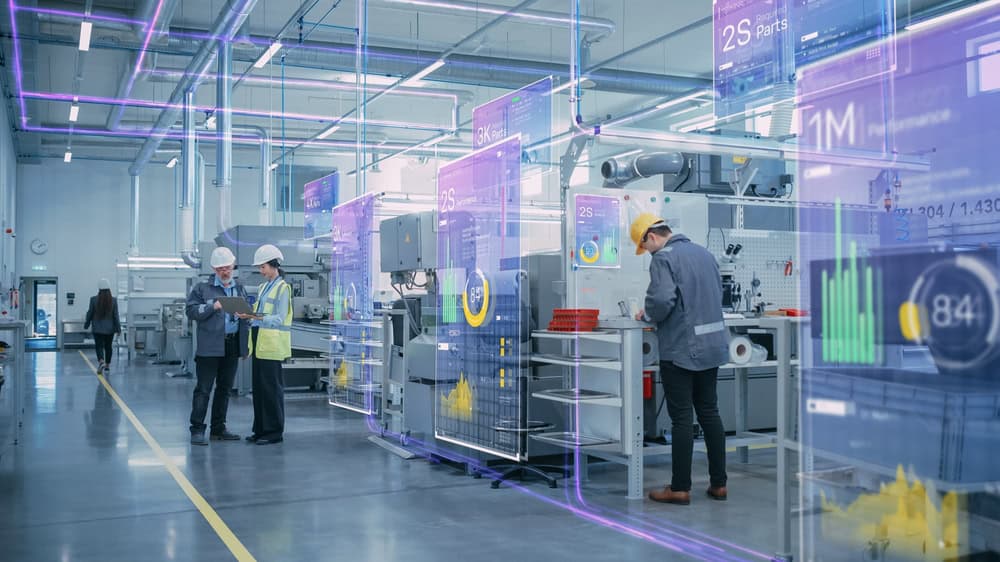
A factory floor with digital overlays showing edge computing data analysis dashboards

Both edge computing and cloud computing involve moving computational resources – such as CPUs (central processing units), GPUs (graphics processing units), RAM (random access memory), and data storage – out of the centralized, on-premises data center. As such, both represent massive shifts in enterprise network designs and how companies deploy, manage, secure, and use computing resources. Edge and cloud computing also create new opportunities for data processing, which is sorely needed as companies generate more data than ever before, thanks in no small part to an explosion in Internet of Things (IoT) and artificial intelligence (AI) adoption. This year, IoT devices alone are predicted to generate 80 zettabytes of data, much of it decentralized around the edges of the network. AI, machine learning, and other data analytics applications, meanwhile, require vast quantities of data (and highly scalable infrastructure) to provide accurate insights. This guide compares edge computing vs cloud computing to help organizations choose the right deployment model for their use case.

 Table of Contents

Defining edge computing vs cloud computing

Edge computing involves deploying computing capabilities to the network’s edges to enable on-site data processing for Internet of Things (IoT) sensors, operational technology (OT), automated infrastructure, and other edge devices and services. Edge computing deployments are highly distributed across remote sites far from the network core, such as oil & gas rigs, automated manufacturing plants, and shipping warehouses. Ideally, organizations use a centralized (usually cloud-based) orchestrator to oversee and conduct operations across the distributed edge computing architecture.
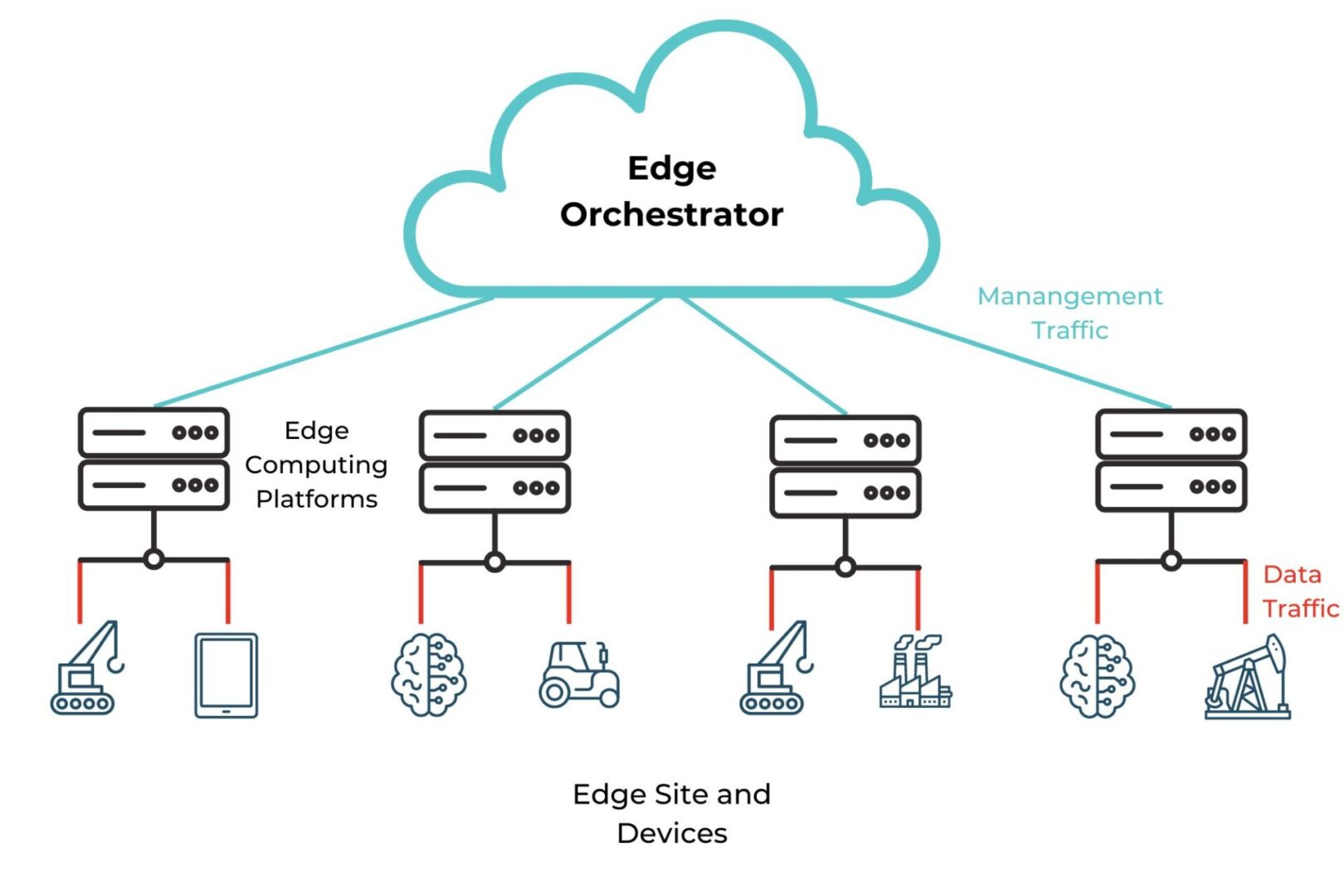
Diagram showing an example edge computing architecture controlled by a cloud-based edge orchestrator.

Reducing the number of network hops between edge devices and the applications that process and use edge data enables real-time data processing, reduces MPLS bandwidth costs, improves performance, and keeps private data within the security micro-perimeter. Cloud computing involves using remote computing resources over the Internet to run applications, process and store data, and more. Cloud service providers manage the physical infrastructure and allow companies to easily scale their virtual computing resources with the click of a button, significantly reducing operational costs and complexity over on-premises and edge computing deployments.

Examples of edge computing vs cloud computing

Edge computing works best for workloads requiring real-time data processing using fairly lightweight applications, especially in locations with inconsistent or unreliable Internet access or where privacy/compliance is a major concern. Example edge computing use cases include:

Cloud computing is well-suited to workloads requiring extensive computational resources that can scale on-demand, but that aren’t time-sensitive. Example use cases include:

The advantages of edge computing over cloud computing

Using cloud-based applications to process edge device data involves transmitting that data from the network’s edges to the cloud provider’s data center, and vice versa. Transmitting data over the open Internet is too risky, so most organizations route the traffic through a security appliance such as a firewall to encrypt and protect the data. Often these security solutions are off-site, in the company’s central data center, or, best-case scenario, a SASE point-of-presence (PoP), adding more network hops between edge devices and the cloud applications that service them.  This process increases bandwidth usage and introduces latency, preventing real-time data processing and negatively affecting performance, which is one of the main reasons why organizations are repatriating workloads from the cloud to on-prem.

Edge computing moves data processing resources closer to the source, eliminating the need to transmit this data over the Internet. This improves performance by reducing (or even removing) network hops and preventing network bottlenecks at the centralized firewall. Edge computing also lets companies use their valuable edge data in real time, enabling faster insights and greater operational efficiencies.

Edge computing mitigates the risk involved in storing and processing sensitive or highly regulated data in a third-party computing environment, giving companies complete control over their data infrastructure. It can also help reduce bandwidth costs by eliminating the need to route edge data through VPNs or MPLS links to apply security controls.

Edge computing advantages:

  • Improves network and application performance
  • Enables real-time data processing and insights
  • Simplifies security and compliance
  • Reduces MPLS bandwidth costs

The disadvantages of edge computing compared to cloud computing

Cloud computing resources are highly scalable, allowing organizations to meet rapidly changing requirements without the hassle of purchasing, installing, and maintaining additional hardware and software licenses. Edge computing still involves physical, on-premises infrastructure, making it far less scalable than the cloud. However, it’s possible to improve edge agility and flexibility by using vendor-neutral platforms to run and manage edge resources. An open platform like Nodegrid allows teams to run multiple edge computing applications from different vendors on the same box, swap out services as business needs evolve, and deploy automation to streamline multi-vendor edge device provisioning from a single orchestrator. A diagram showing how the Nodegrid Mini SR combines edge computing and networking capabilities on a small, affordable, flexible platform.
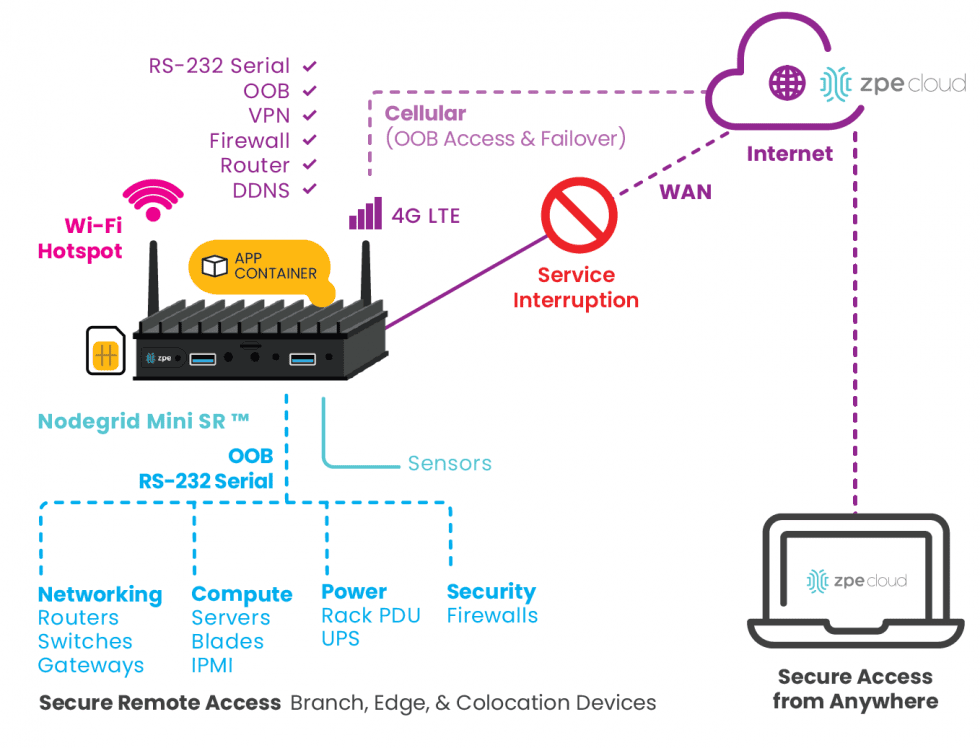
Diagram showing how the Nodegrid Mini SR combines edge computing and networking capabilities on a small, affordable, flexible platform.

Organizations often deploy edge computing in less-than-ideal operating environments, such as closets and other cramped spaces that lack the strict HVAC controls that maintain temperature and humidity in cloud data centers. These environments also typically lack the physical security controls that prevent unauthorized individuals from tampering with equipment, such as guarded entryways, security cameras, and biometric locks. The best way to mitigate this disadvantage is with an environmental monitoring system that uses sensors to detect temperature and humidity changes that could cause equipment failures as well as proximity alarms to notify administrators when someone gets too close. It’s also advisable to use hermetically sealed edge computing devices capable of operating in extreme temperatures and with built-in security features making them tamper-proof.

Cloud computing is often more resilient than edge computing because cloud service providers must maintain a certain level of continuous uptime to meet service level agreements (SLAs). Edge computing operations could be disrupted by network equipment failures, ISP outages, ransomware attacks, and other adverse events, so it’s essential to implement resilience measures that keep services running (if in a degraded state) and allow remote teams to fix problems without having to be on site. Edge resilience measures include Gen 3 out-of-band management, control plane/data plane separation (also known as isolated management infrastructure or IMI), and isolated recovery environments (IRE).

Edge computing disadvantages:

  • Less scalable than cloud infrastructure
  • Lack of environmental and security controls
  • Requires additional resilience measures

Edge-native applications vs cloud-native applications

Edge-native applications and cloud-native applications are similar in that they use containers and microservices architectures, as well as CI/CD (continuous integration/continuous delivery) and other DevOps principles.

Cloud-native applications leverage centralized, scalable resources to perform deep analysis of long-lived data in long-term hot storage environments. Edge-native applications are built to leverage limited resources distributed around the network’s edges to perform real-time analysis of ephemeral data that’s constantly moving. Typically, edge-native applications are highly contextualized for a specific use case, whereas cloud-native applications offer broader, standardized capabilities. Another defining characteristic of edge-native applications is the ability to operate independently when needed while still integrating seamlessly with the cloud, upstream resources, remote management, and centralized orchestration.

Choosing edge computing vs cloud computing

Both edge computing and cloud computing have unique advantages and disadvantages that make them well-suited for different workloads and use cases. Factors like increasing data privacy regulations, newsworthy cloud provider outages, greater reliance on human-free IoT and OT deployments, and an overall trend toward decentralizing business operations are pushing organizations to adopt edge computing. However, most companies still rely heavily on cloud resources and will continue to do so, making it crucial to ensure seamless interoperability between the edge and the cloud.

The best way to ensure integration is by using vendor-neutral platforms. For example, Nodegrid integrated services routers like the Gate SR provide multi-vendor out-of-band serial console management for edge infrastructure and devices, using an embedded Jetson Nano card to support edge computing and AI workloads. The ZPE Cloud management platform unifies orchestration for the entire Nodegrid-connected architecture, delivering 360-degree control over complex and highly distributed networks. Plus, Nodegrid easily integrates – or even directly hosts – other vendors’ solutions for edge data processing, IT automation, SASE, and more, making edge operations more cost-effective. Nodegrid also provides the complete control plane/data plane separation needed to ensure edge resilience.

Get edge efficiency and resilience with Nodegrid

The Nodegrid platform from ZPE Systems helps companies across all industries streamline their edge operations with resilient, vendor-neutral, Gen 3 out-of-band management. Request a free Nodegrid demo to learn more. REQUEST A DEMO
Edge Computing Architecture Guide

Edge-computing-architecture-concept-icons-arranged-around-the-word-edge-computing
Edge computing is rapidly gaining popularity as more  organizations see the benefits of decentralizing data processing for Internet of Things (IoT) deployments, machine learning applications, operational technology (OT), AI and machine learning, and other edge use cases. This guide defines edge computing and edge-native applications, highlights a few key use cases, describes the typical components of an edge deployment, and provides additional resources for building your own edge computing architecture.

Table of Contents

What is edge computing?

The Open Glossary of Edge Computing defines it as deploying computing capabilities to the edges of a network to improve performance, reduce operating costs, and increase resilience. Edge computing reduces the number of network hops between data-generating devices and the applications that process and use that data, mitigating latency, bandwidth, and security concerns compared to cloud or on-premises computing.

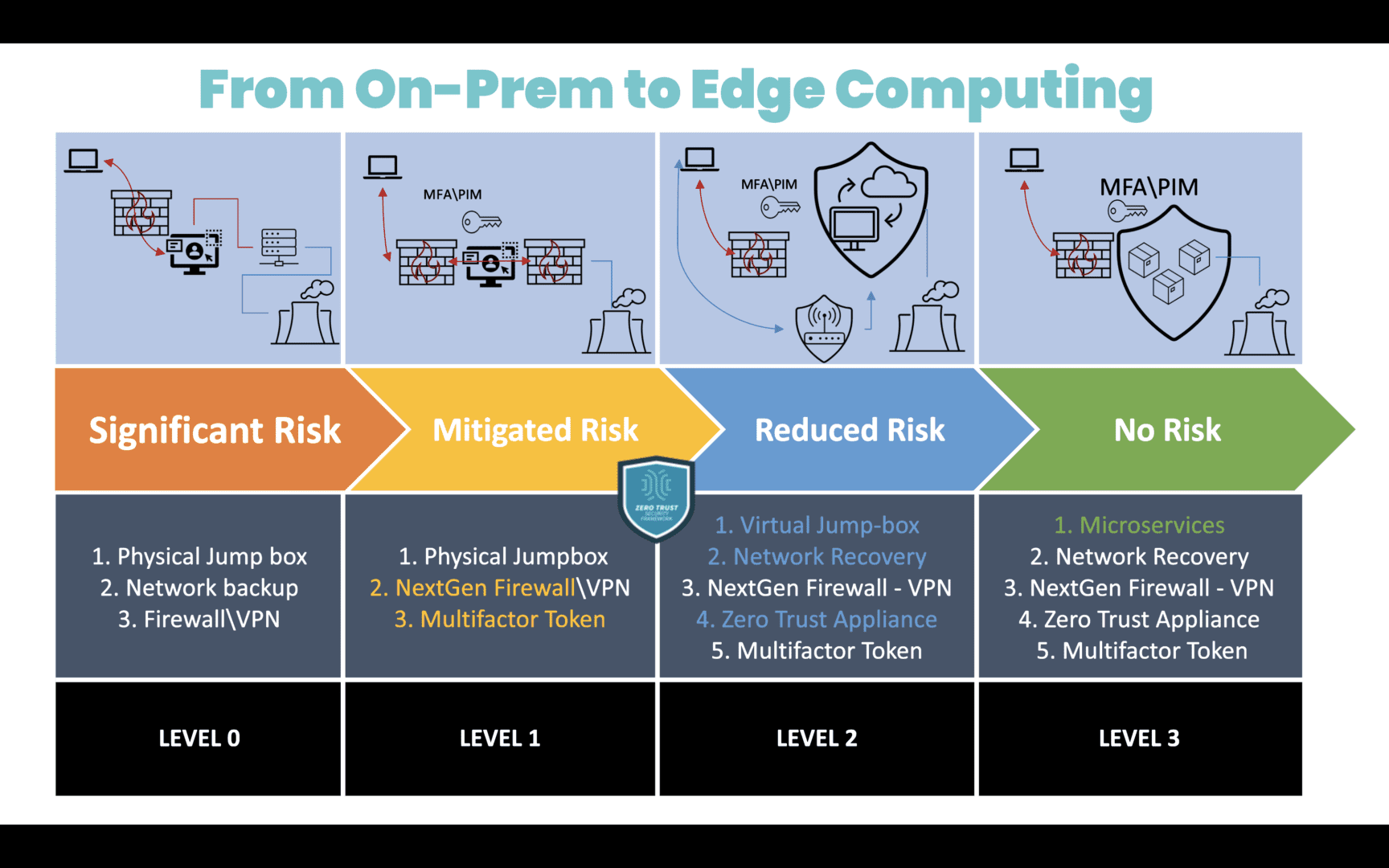
A diagram showing the migration path from on-premises computing to edge computing, along with the associated level of security risk.

Image: A diagram showing the migration path from on-premises computing to edge computing, along with the associated level of security risk.

Edge-native applications

Edge-native applications are built from the ground up to harness edge computing’s unique capabilities while mitigating the limitations. They leverage some cloud-native principles, such as containers, microservices, and CI/CD (continuous integration/continuous delivery), with several key differences.

Edge-Native vs. Cloud-Native Applications

Edge-Native Cloud-Native
Topology Distributed Centralized
Compute Real-time processing with limited resources Deep processing with scalable resources
Data Constantly changing and moving Long-lived and at rest in a centralized location
Capabilities Contextualized Standardized
Location Anywhere Cloud data center

Source: Gartner

Edge-native applications integrate seamlessly with the cloud, upstream resources, remote management, and centralized orchestration, but can also operate independently as needed. Crucially, they allow organizations to actually leverage their edge data in real-time, rather than just collecting it for later processing.

Edge computing use cases

Nearly every industry has potential use cases for edge computing, including:

Industry Edge Computing Use Cases
Healthcare
  • Mitigating security, privacy, and HIPAA compliance concerns with local data processing
  • Improving patient health outcomes with real-time alerts that don’t require Internet access
  • Enabling emergency mobile medical intervention while reducing mistakes
Finance
  • Reducing security and regulatory risks through local computing and edge infrastructure isolation
  • Getting fast, localized business insights to improve revenue and customer service
  • Deploying AI-powered surveillance and security solutions without network bottlenecks
Energy
  • Enabling network access and real-time data processing for airgapped and isolated environments
  • Improving efficiency with predictive maintenance recommendations and other insights
  • Proactively identifying and remediating safety, quality, and compliance issues
Manufacturing
  • Getting real-time, data-driven insights to improve manufacturing efficiency and product quality
  • Reducing the risk of confidential production data falling into the wrong hands in transit
  • Ensuring continuous operations during network outages and other adverse events
  • Using AI with computer vision to ensure worker safety and quality control of fabricated components/products
Utilities/Public Services
  • Using IoT technology to deliver better services, improve public safety, and keep communities connected
  • Reducing the fleet management challenges involved in difficult deployment environments
  • Aiding in disaster recovery and resilience with distributed redundant edge resources

To learn more about the specific benefits and uses of edge computing for each industry, read Distributed Edge Computing Use Cases.

Edge computing architecture design

An edge computing architecture consists of six major components:

Edge Computing Components Description Best Practices
Devices generating edge data IoT devices, sensors, controllers, smartphones, and other devices that generate data at the edge Use automated patch management to keep devices up-to-date and protect against known vulnerabilities
Edge software applications Analytics, machine learning, and other software deployed at the edge to use edge data Look for edge-native applications that easily integrate with other tools to prevent edge sprawl
Edge computing infrastructure CPUs, GPUs, memory, and storage used to process data and run edge applications Use vendor-neutral, multi-purpose hardware to reduce overhead and management complexity
Edge network infrastructure and logic Wired and wireless connectivity, routing, switching, and other network functions Deploy virtualized network functions and edge computing on common, vendor-neutral hardware
Edge security perimeter Firewalls, endpoint security, web filtering, and other enterprise security functionality Implement edge-centric security solutions like SASE and SSE to prevent network bottlenecks while protecting edge data
Centralized management and orchestration An EMO (edge management and orchestration) platform used to oversee and conduct all edge operations Use a cloud-based, Gen 3 out-of-band (OOB) management platform to ensure edge resilience and enable end-to-end automation

Click here to learn more about the infrastructure, networking, management, and security components of an edge computing architecture.

How to build an edge computing architecture with Nodegrid

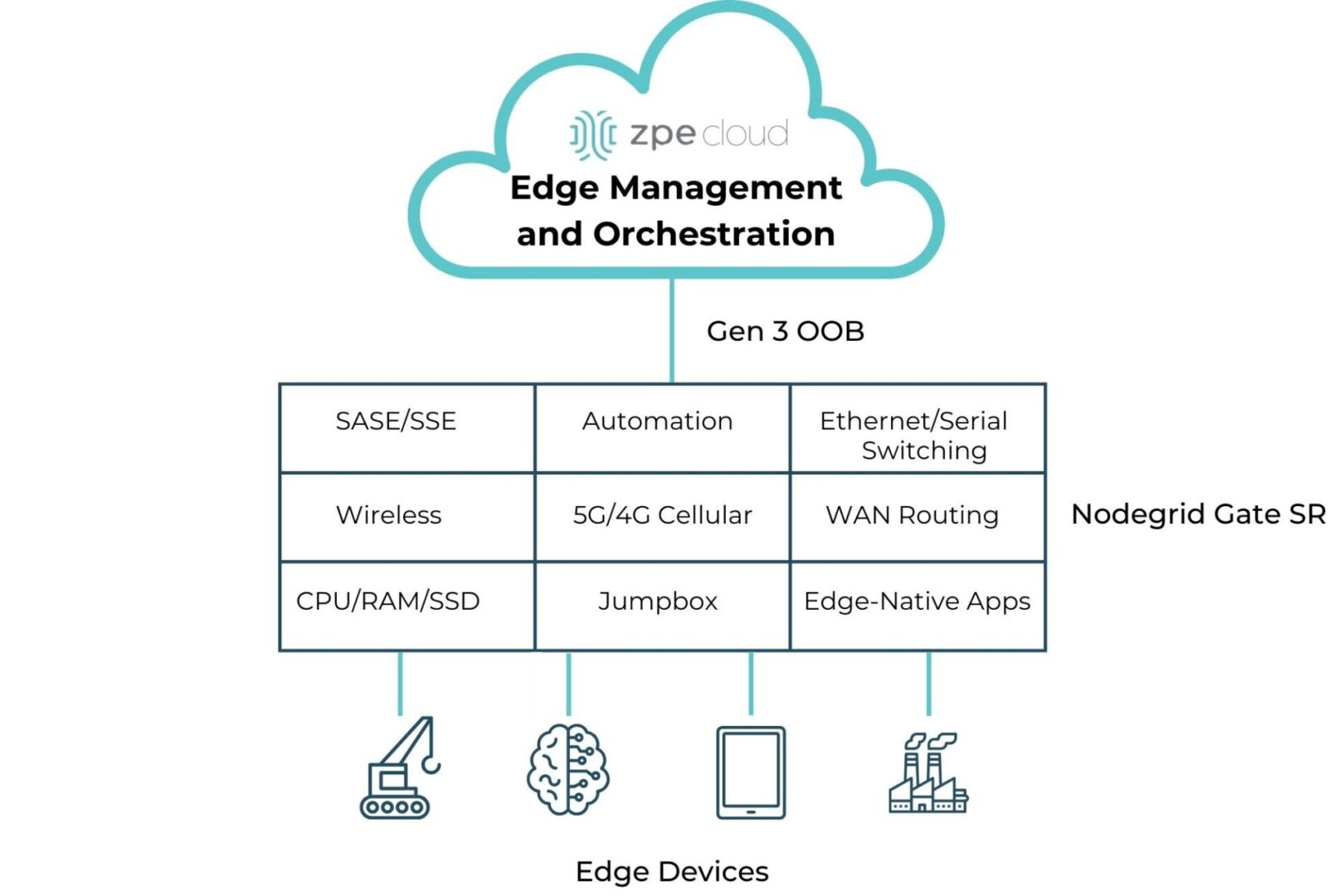
Nodegrid is a Gen 3 out-of-band management platform that streamlines edge computing with vendor-neutral solutions and a centralized, cloud-based orchestrator.

A diagram showing all the edge computing and networking capabilities provided by the Nodegrid Gate SR

Image: A diagram showing all the edge computing and networking capabilities provided by the Nodegrid Gate SR.

Nodegrid integrated services routers deliver all-in-one edge computing and networking functionality while taking up 1RU or less. A Nodegrid box like the Gate SR provides Ethernet and Serial switching, serial console/jumpbox management, WAN routing, wireless networking, and 5G/4G cellular for network failover or out-of-band management. It includes enough CPU, memory, and encrypted SSD storage to run edge computing workflows, and the x86-64bit Linux-based Nodegrid OS supports virtualized network functions, VMs, and containers for edge-native applications, even those from other vendors. The new Gate SR also comes with an embedded NVIDIA Jetson Orin NanoTM module featuring dual CPUs for EMO of AI workloads and infrastructure isolation.

Nodegrid SRs can also host SASE, SSE, and other security solutions, as well as third-party automation from top vendors like Redhat and Salt. Remote teams use the centralized, vendor-neutral ZPE Cloud platform (an on-premises version is available) to deploy, monitor, and orchestrate the entire edge architecture. Management, automation, and orchestration workflows occur over the Gen 3 OOB control plane, which is separated and isolated from the production network. Nodegrid OOB uses fast, reliable network interfaces like 5G cellular to enable end-to-end automation and ensure 24/7 remote access even during major outages, significantly improving edge resilience.

Streamline your edge deployment

The Nodegrid platform from ZPE Systems reduces the cost and complexity of building an edge computing architecture with vendor-neutral, all-in-one devices and centralized EMO. Request a free Nodegrid demo to learn more.

Click here to learn more!

ISP Network Architecture

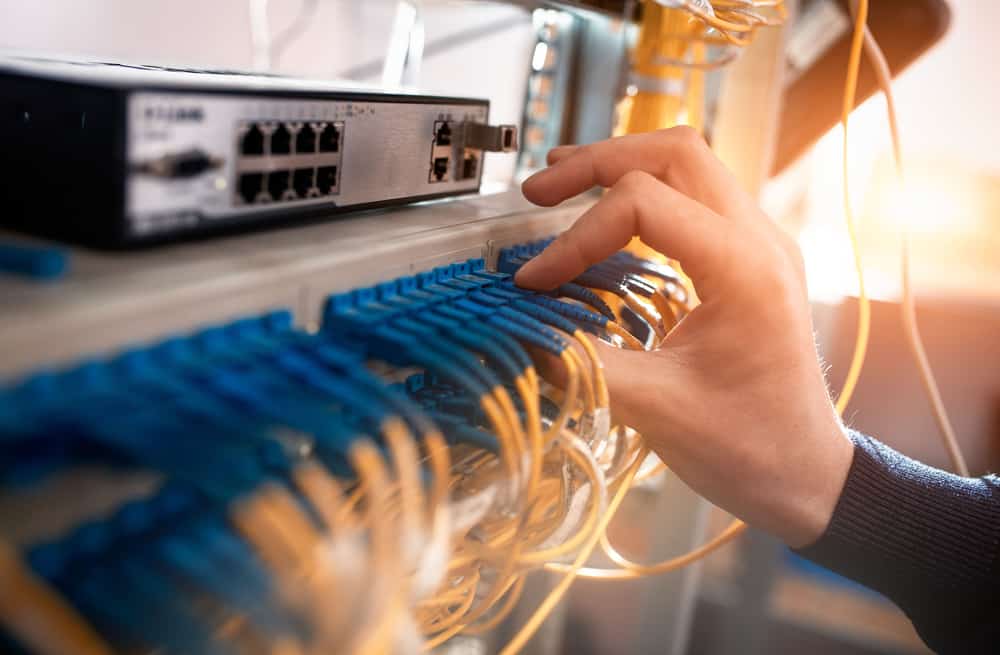
An engineer installs fiber optic patch cables at a customer site that’s part of an ISP network architecture.
Internet service providers (ISPs) are the backbone of modern society, responsible for connecting businesses, services, and people to the Internet and to each other. ISP networks are vast, distributed, and complex, making them challenging to manage effectively. However, failing to do so has major consequences. For example, in July of 2022, Rogers Communications in Canada suffered a network system failure after a maintenance update, causing an outage that lasted more than 15 hours and took down emergency services and other critical infrastructure.

An ISP network architecture must be designed for resilience to prevent major incidents from occurring that affect consumers, communities, and the provider’s reputation. But significant challenges stand in the way, including a reliance on legacy infrastructure, and an inability to troubleshoot and recover failed gear remotely. This post discusses why these challenges exist and what ISPs can do to overcome them.

ISP network architecture challenges

Many ISP networks lack resilience because providers are failing to adapt to a rapidly changing landscape. With networks growing larger and more complex every day, new technologies like AI (artificial intelligence) and software-defined networking are needed to manage infrastructure efficiently and deliver innovative services. Additionally, providers get stuck in a break-fix cycle that leaves teams struggling to maintain service level agreements or focus on innovation. Let’s look at the causes of these challenges and discuss how to build more resilient ISP network architectures.

Legacy infrastructure creates technical debt and hampers growth

The challenge:

The solution:

Reliance on legacy systems creates technical debt and prevents ISPs from implementing new technologies

Vendor-neutral platforms like Gen 3 serial consoles extend automation, software-defined networking, and other advanced technologies to legacy infrastructure until it can be replaced.

Internet service providers often have a network architecture that’s a mix of new and legacy infrastructure. However, engineers with the experience to support older solutions are no longer working in the field, either because they’ve been promoted to leadership positions or retired. When legacy hardware fails, inexperienced engineers need time to overcome this skills gap, and ISPs may even need to bring in consultants. This increases the cost of failures, creating what’s known as “technical debt” – when a solution is more expensive to support than the value it brings to the organization.

In addition, ISPs can improve network resilience and provide better service to customers, by adopting new technologies like AI, 5G, software-defined networking (SDN), and Network as a Service (NaaS). But legacy hardware hampers the ability to adopt these technologies. For example, NaaS abstracts the need for MPLS circuits and customer-premises gear, making architectures more cost-effective and improving the customer experience. NaaS brings SDN concepts like programmable networking and API-based operations to WAN & LAN services, hybrid cloud, Private Network Interconnect, and internet exchange points. It optimizes resource allocation by considering network and computing resources as a unified whole and attempts to automate as much as possible. The trouble is, ISPs struggle to implement NaaS and other beneficial new technologies because their legacy hardware simply can’t support it.

Solution: Legacy modernization with a vendor-neutral platform

The ideal solution is to replace legacy infrastructure with modern hardware and software that supports the latest technologies. But for many ISPs, an overhaul like this is too costly and intensive. The next-best option is to bridge the gap with a vendor-neutral network modernization platform that extends automation, AI, and 5G connectivity to otherwise unsupported systems.

For example, serial consoles (also known as terminal servers, console servers, and serial console switches) provide remote management access to network infrastructure. The newest generation of these devices, known as Gen 3, are vendor-neutral by design so that they can control third-party and legacy hardware. Through a combination of built-in features and integrations, Gen 3 serial consoles can use technology like zero-touch provisioning (ZTP), AIOps, and automated configuration management to control connected hardware that otherwise wouldn’t support it. Some solutions, such as the Nodegrid platform from ZPE Systems, can even directly host SDN and NaaS software from other vendors, so ISPs can start implementing network improvements right away while they gradually replace their outdated infrastructure.

Physical infrastructure is difficult to manage and troubleshoot remotely

The challenge:

The solution:

ISP network admins can’t respond to changing environmental conditions or recover failed hardware remotely

Environmental monitoring connected to an out-of-band (OOB) management solution ensures continuous remote access on a dedicated, isolated network that enables fast and cost-effective recovery.

ISP network architectures involve a great deal of physical infrastructure, which is often deployed in remote edge sites and customer premises. Even with software- or service-based network solutions, hardware is needed to host that software, and the physical environment for that hardware is often less than ideal. Drastic weather changes, power outages, and other unexpected scenarios can happen without notice and rapidly bring down an ISP network. These events often cut off remote management access as well, making troubleshooting and recovery difficult, time-consuming, and expensive. In fact, supporting this physical infrastructure often consumes so much time and effort that it prevents ISPs from focusing on delivering better services and software to their customers.

Solution: Out-of-band management with environmental monitoring

The first part of the solution involves monitoring the environment that houses remote, physical infrastructure. An environmental monitoring system uses sensors to detect changes in airflow, temperature, humidity, and other conditions that affect the operation of network hardware. These sensors give ISPs a virtual presence in edge deployments and customer sites so they can quickly respond to changing conditions before systems overheat or circuitry corrodes.

The second part involves providing management teams with reliable remote access to physical infrastructure that won’t go down if there’s a production network outage. Out-of-band (OOB) management solutions use serial consoles with dedicated network interfaces used just for management access. This creates a parallel, out-of-band network that’s completely isolated from production network services and infrastructure. Additionally, many serial consoles use cellular connectivity via 4G or 5G to OOB access, providing a wireless lifeline to connect, troubleshoot, and restore remote infrastructure. OOB management allows ISPs to troubleshoot and recover failed hardware remotely, even during total network outages, so they can get services back up and running faster and less expensively.

The environmental monitoring system should run on the OOB network so remote admins can continue to monitor conditions while they recover failed hardware. The out-of-band management solution also needs to be vendor-neutral so ISPs can deploy third-party automation, AI, and NaaS on the OOB network. For example, Nodegrid Gen 3 serial consoles provide OOB, environmental monitoring, and a vendor-neutral platform to host third-party software at the edge. Nodegrid even enables fully automated responses to changing environmental conditions in those edge environments before admins are aware of a problem.

To learn more about building a resilient, automated network infrastructure with Nodegrid, download the Network Automation Blueprint.

Download Now

ISP network architecture resilience with Nodegrid

ISP network architectures must be resilient, meaning service providers must find a way to bridge the gap between legacy and modern systems while ensuring continuous remote access to manage, troubleshoot, and recover hardware at the edge. The Nodegrid ISP network infrastructure solution  from ZPE Systems is a vendor-neutral, Gen 3 platform that delivers legacy modernization, environmental monitoring, out-of-band management, and much more.

Nodegrid delivers ISP network architecture resilience in a single platform

Request a free demo to see Nodegrid ISP network architecture solutions in action.

Watch a Demo

Edge Management and Orchestration

shutterstock_2264235201(1)

Organizations prioritizing digital transformation by adopting IoT (Internet of Things) technologies generate and process an unprecedented amount of data. Traditionally, the systems used to process that data live in a centralized data center or the cloud. However, IoT devices are often deployed around the edges of the enterprise in remote sites like retail stores, manufacturing plants, and oil rigs. Transferring so much data back and forth creates a lot of latency and uses valuable bandwidth. Edge computing solves this problem by moving processing units closer to the sources that generate the data.

IBM estimates there are over 15 billion edge devices already in use. While edge computing has rapidly become a vital component of digital transformation, many organizations focus on individual use cases and lack a cohesive edge computing strategy. According to a recent Gartner report, the result is what’s known as “edge sprawl”: many individual edge computing solutions deployed all over the enterprise without any centralized control or visibility. Organizations with disjointed edge computing deployments are less efficient and more likely to hit roadblocks that stifle digital transformation.

The report provides guidance on building an edge computing strategy to combat sprawl, and the foundation of that strategy is edge management and orchestration (EMO). Below, this post summarizes the key findings from the Gartner report and discusses some of the biggest edge computing challenges before explaining how to solve them with a centralized EMO platform.

Key findings from the Gartner report

Many organizations already use edge computing technology for specific projects and use cases – they have an individual problem to solve, so they deploy an individual solution. Since the stakeholders in these projects usually aren’t architects, they aren’t building their own edge computing machines or writing software for them. Typically, these customers buy pre-assembled solutions or as-a-service offerings that meet their specific needs.

However, a piecemeal approach to edge computing projects leaves organizations with disjointed technologies and processes, contributing to edge sprawl and shadow IT. Teams can’t efficiently manage or secure all the edge computing projects occurring in the enterprise without centralized control and visibility. Gartner urges I&O (infrastructure & operations) leaders to take a more proactive approach by developing a comprehensive edge computing strategy encompassing all use cases and addressing the most common challenges.

Edge computing challenges

Gartner identifies six major edge computing challenges to focus on when developing an edge computing strategy:

Gartner’s 6 edge computing challenges to overcome

Enabling extensibility so edge computing solutions are adaptable to the changing needs of the business.

Extracting value from edge data with business analytics, AIOps, and machine learning training.

Governing edge data to meet storage constraints without losing valuable data in the process.

Supporting edge-native applications using specialized containers and clustering without increasing the technical debt.

Securing the edge when computing nodes are highly distributed in environments without data center security mechanisms.

Edge management and orchestration that supports business resilience requirements and improves operational efficiency.

Let’s discuss these challenges and their solutions in greater depth.

  • Enabling extensibility – Many organizations deploy purpose-built edge computing solutions for their specific use case and can’t adapt when workloads change or grow.  The goal is to attempt to predict future workloads based on planned initiatives and create an edge computing strategy that leaves room for that growth. However, no one can really predict the future, so the strategy should account for unknowns by utilizing common, vendor-neutral technologies that allow for expansion and integration.
  • Extracting value from edge data – The generation of so much IoT and sensor data gives organizations the opportunity to extract additional value in the form of business insights, predictive analysis, and machine learning training. Quickly extracting that value is challenging when most data analysis and AI applications still live in the cloud. To effectively harness edge data, organizations should look for ways to deploy artificial intelligence training and data analytics solutions alongside edge computing units.
  • Governing edge data – Edge computing deployments often have more significant data storage constraints than central data centers, so quickly distinguishing between valuable data and destroyable junk is critical to edge ROIs. With so much data being generated, it’s often challenging to make this determination on the fly, so it’s important to address data governance during the planning process. There are automated data governance solutions that can help, but these must be carefully configured and managed to avoid data loss.
  • Supporting edge-native applications – Edge applications aren’t just data center apps lifted and shifted to the edge; they’re designed for edge computing from the bottom up. Like cloud-native software, edge apps often use containers, but clustering and cluster management are different beasts outside the cloud data center. The goal is to deploy platforms that support edge-native applications without increasing the technical debt, which means they should use familiar container management technologies (like Docker) and interoperate with existing systems (like OT applications and VMs).
  • Securing the edge – Edge deployments are highly distributed in locations that may lack many physical security features in a traditional data center, such as guarded entries and biometric locks, which adds risk and increases the attack surface. Organizations must protect edge computing nodes with a multi-layered defense that includes hardware security (such as TPM), frequent patches, zero-trust policies, strong authentication (e.g., RADIUS and 2FA), and network micro-segmentation.
  • Edge management and orchestration – Moving computing out of the climate-controlled data center creates environmental and power challenges that are difficult to mitigate without an on-site technical staff to monitor and respond. When equipment failure, configuration errors, or breaches take down the network, remote teams struggle to meet resilience requirements to keep business operations running 24/7. The sheer number and distribution area of edge computing units make them challenging to manage efficiently, increasing the likelihood of mistakes, issues, or threat indicators slipping between the cracks. Addressing this challenge requires centralized edge management and orchestration (EMO) with environmental monitoring and out-of-band (OOB) connectivity.

    A centralized EMO platform gives administrators a single-pane-of-glass view of all edge deployments and the supporting infrastructure, streamlining management workflows and serving as the control panel for automation, security, data governance, cluster management, and more. The EMO must integrate with the technologies used to automate edge management workflows, such as zero-touch provisioning (ZTP) and configuration management (e.g., Ansible or Chef), to help improve efficiency while reducing the risk of human error. Integrating environmental sensors will help remote technicians monitor heat, humidity, airflow, and other conditions affecting critical edge equipment’s performance and lifespan. Finally, remote teams need OOB access to edge infrastructure and computing nodes, so the EMO should use out-of-band serial console technology that provides a dedicated network path that doesn’t rely on production resources.

Gartner recommends focusing your edge computing strategy on overcoming the most significant risks, challenges, and roadblocks. An edge management and orchestration (EMO) platform is the backbone of a comprehensive edge computing strategy because it serves as the hub for all the processes, workflows, and solutions used to solve those problems.

Edge management and orchestration (EMO) with Nodegrid

Nodegrid is a vendor-neutral edge management and orchestration (EMO) platform from ZPE Systems. Nodegrid uses Gen 3 out-of-band technology that provides 24/7 remote management access to edge deployments while freely interoperating with third-party applications for automation, security, container management, and more. Nodegrid environmental sensors give teams a complete view of temperature, humidity, airflow, and other factors from anywhere in the world and provide robust logging to support data-driven analytics.

The open, Linux-based Nodegrid OS supports direct hosting of containers and edge-native applications, reducing the hardware overhead at each edge deployment. You can also run your ML training, AIOps, data governance, or data analytics applications from the same box to extract more value from your edge data without contributing to sprawl.

In addition to hardware security features like TPM and geofencing, Nodegrid supports strong authentication like 2FA, integrates with leading zero-trust providers like Okta and PING, and can run third-party next-generation firewall (NGFW) software to streamline deployments further.

The Nodegrid platform brings all the components of your edge computing strategy under one management umbrella and rolls it up with additional core networking and infrastructure management features. Nodegrid consolidates edge deployments and streamlines edge management and orchestration, providing a foundation for a Gartner-approved edge computing strategy.

Want to learn more about how Nodegrid can help you overcome your biggest edge computing challenges?

Contact ZPE Systems for a free demo of the Nodegrid edge management and orchestration platform.

Contact Us

What is a radio access network (RAN)?

This post provides an introduction to radio access networks (RAN) before discussing 5G RAN challenges, solutions, and use cases.
5G cellular technology is used for internet of things (IoT) deployments and operational technology (OT) automation across many different kinds of organizations, including city governments, global logistics companies, and healthcare providers. 5G access is provided by a radio access network (RAN) using mobile towers and small cells, but deploying these networks is challenging due to numerous factors, including poor public opinion. This post provides an introduction to radio access networks before discussing 5G RAN challenges, solutions, and use cases.

Table of Contents:

What is a Radio Access Network (RAN)?

A radio access network (RAN) is the portion of a cellular network that connects smartphones and other end-user devices to the internet. Information is communicated back and forth between smartphones and the RAN’s transceivers via radio waves. Those wireless signals are translated into digital form, passed to the core network, and then to the global internet.

What is 5G RAN?

Every cellular generation has its own associated RAN technology. 4G RAN was the first generation based entirely on the internet protocol (IP) rather than older circuit-based technology. The newest generation, 5G, supports faster speeds, great capacity, and lower latency than previous generations. However, there are significant challenges in the way of 5G implementation.

5G Radio Access Network (RAN) challenges

There are three major hurdles to 5G implementation:

  1. Public opinion – Thanks in part to misinformation and conspiracy theories, there has been a lot of resistance to 5G implementations. While many people already use smartphones with 5G technology, they tend to balk at the idea of giant cell towers and masts going up in their town or city.
  2. mmWave limitations – Wireless frequencies in the mmWave (millimeter wave) spectrum provide the speed and capacity required for 5G, but they have a shorter range and difficulty penetrating walls. That makes 5G tricky in industrial settings and office buildings.
  3. Remote recovery – A 5G RAN typically operates in cramped spaces without a continuous human presence, and administrators monitor and manage the equipment remotely over the cellular network. However, if that cell link goes down due to equipment failure or natural disaster, teams are cut off, and a truck must be rolled to fix the issue, adding significant costs and downtime.

Addressing these hurdles is complicated, as the solutions often create additional challenges. For example, the first two points can be addressed with 5G small cell technology. Small cells are typically compact enough to deploy on top of buildings or street furniture to extend 5G coverage into densely populated areas without a full-size mobile mast. This makes 5G small cell networks more palatable to city officials and the general public alike. However, small cells are still subject to planning restrictions, and the absence of a common 5G small cell framework makes the application process difficult and time-consuming.

In addition, some small cells are tiny enough to deploy indoors, improving 5G propagation and coverage in buildings. However, operators would need to deploy dozens or hundreds of small cells to achieve the speed and reliability needed for industrial IoT and high-tech use cases. Each one requires significant power resources as well as a fiber or wireless backhaul, and due to a lack of standardization, operators may even have to submit many individual planning applications. Plus, a small cell network of that size is complex to monitor and manage, requiring additional hardware and software solutions that add even more costs and complexity.

Addressing the third point requires an out-of-band network connection to 5G RAN deployments. For example, a 4G/LTE serial console provides an alternative internet connection so teams can remotely access RAN equipment during 5G outages. A serial console directly connects to radio access network infrastructure so remote administrators can do things like reboot a hung device or refresh DHCP even if the local network is down.

However, many serial consoles suffer from vendor lock-in, meaning they don’t connect to all devices or support third-party management, troubleshooting, and recovery tools. This either limits an administrator’s ability to remotely recover from outages or forces them to deploy additional hardware and software solutions to gain all the remote functionality required, adding to the expense and complexity of 5G RAN deployments.

A new approach to 5G deployments

The upgrade from 4G to 5G is proving to be more fraught than previous transitions between generations, so it’s clear that a new approach is needed. Small cell technology is a good start, but a lack of standardization severely hampers its adoption. Help is on the way, though – a group called the Small Cell Forum (SCF), which is made up of wireless leaders like AT&T, Cisco, Qualcomm, and Samsung, is working to establish a set of common definitions and recommendations to help the industry standardize 5G small cell networks.

In their definitional report, the SCF highlights the need for vendor-neutral hardware that’s customizable and swappable for various 5G use cases. Architectural design and planning applications are simpler when all of a small cell network’s equipment supports the same common 5G interface. Multi-functional devices combining networking, out-of-band access, and third-party application hosting significantly reduce expenses and management complexity.

Let’s examine some potential 5G use cases that could benefit from this new approach.

Smart cities

A smart city is the ideal use case for a 5G small cell network. Since wireless clients are packed into densely populated areas, an array of 5G small cells should provide sufficient coverage without the need for a full-sized mast. Deploying a small, vendor-neutral, multi-functional device like the Nodegrid Mini Services Router alongside small cells provides flexible backhaul options, out-of-band remote management, and application hosting. Installing small cells and Mini SRs on streetlamps, parking structures, and other public infrastructure gives teams everything they need to remotely monitor, operate, and recover 5G smart city infrastructure without adding more complexity to the network.

Global asset tracking and logistics

The internet of things (IoT) makes it possible for large, global enterprises to streamline asset tracking and supply chain logistics. Organizations use IoT-enabled devices to handle inventory management, fulfillment, shipment tracking, quality control, and more. 5G small cell technology provides the necessary speed, coverage, and bandwidth, but the sheer number of devices – and their global distribution – creates a lot of management complexity.

All-in-one solutions like Nodegrid reduce the tech stack by combining networking, management, and application hosting in a single box. Plus, Nodegrid provides a centralized management platform that can unify all connected devices, apps, and services in a single place. Administrators get a single pane of glass to monitor, control, troubleshoot, and automate the entire global architecture, reducing costs and streamlining operations.

Building automation

Many large property management companies rely on building automation systems that use operational technology (OT) to control door locks, lighting, HVAC, and more with very little human intervention. 5G’s improved speed and lower latency open up even greater automation capabilities, especially in warehouses and manufacturing plants.

Nodegrid’s compact, vendor-neutral solutions give remote operators a reliable, out-of-band connection to automated building systems to keep businesses running 24/7, even during 5G outages or LAN failures. You can deploy the Mini SR in cramped or semi-outdoor spaces to extend monitoring, security, and management coverage to every part of the 5G deployment. Nodegrid enables end-to-end building automation and makes 5G networks more resilient to failure.

Simplifying 5G with Nodegrid

A 5G radio access network (RAN) provides internet access to 5G-enabled systems, such as smartphones and IoT devices. While 5G deployments are proving complicated and fraught with issues, these challenges are overcome using small cell technology and vendor-neutral, multi-function devices like Nodegrid. Nodegrid’s integrated services routers deliver all-in-one networking, out-of-band management, backhauling, and application hosting capabilities to simplify 5G deployments without compromise.

Learn how Nodegrid can help deliver simplified 5G with out-of-band management!

Request a free Nodegrid demo to see how vendor-neutral solutions simplify 5G radio access network (RAN) deployments.

Contact Us

SSE Magic Quadrant: Key Takeaways of the 2023 Report

The SSE Magic Quadrant describes top cloud security service vendors, conceptualized as a cloud with glowing network nodes and a padlock.

Gartner’s SSE Magic Quadrant for 2023 identifies 10 key vendors currently providing secure service edge capabilities for the enterprise market. In this guide, we’ll summarize the common factors shared among leading SSE vendors, discuss what separates them from niche players, and share advice for connecting your edge network to SSE solutions via an SD-WAN on-ramp.

Table of Contents:
  1. What is Security Service Edge (SSE)?
  2. What is the need for SSE?
  3. What is the SSE Magic Quadrant?
  4. What has changed since the 2022 SSE Magic Quadrant?
  5. Key takeaways from the 2023 SSE Magic Quadrant
  6. SD-WAN: An on-ramp for SSE
  7. What to look for in an ideal SSE on-ramp
  8. Why Nodegrid is the ideal SSE on-ramp

What is Security Service Edge (SSE)?

Security service edge (SSE) is a cloud-centric security methodology for protecting edge network traffic. It rolls up technologies like Firewall-as-a-Service (FWaaS), Zero Trust Network Access (ZTNA), and Cloud Access Security Brokers (CASB) into a single service. These technologies offer threat protection, security monitoring, access control, and data governance.

What is the need for SSE?

With the frequency and severity of ransomware attacks and other cybercrimes increasing daily, security is a major priority for any organization. To protect your enterprise from cyber threats, you need to be able to extend your security policies and controls to all the remote and geographically distributed systems at your network edge. Historically, that meant backhauling all remote traffic through your primary firewall, which would inevitably cause performance issues for everyone on the network. This is frustrating and can greatly impact the business when much of your remote traffic is destined for cloud and web resources that aren’t even on your enterprise network.

SSE solves this problem by taking advanced enterprise security technologies and making them available as a cloud-based service. You can use SD-WAN with intelligent routing (more on that later) to send remote and branch office traffic through your SSE stack. This allows you to apply consistent policies and controls to your enterprise and edge traffic while reducing bottlenecks and increasing overall network performance.
.

Learn more about SSE:

Gartner’s 2023 SSE Magic Quadrant Summarized

Challengers

Leaders

Cisco (SIG)

Netskope
Zscaler
Palo Alto Networks (Prisma Access)

Niche Players

Visionaries

Broadcom
iboss
Cloudflare

Skyhigh Security
Forcepoint (Bitglass)
Lookout

There are many reasons why an SSE vendor would be considered a niche player, including that the market hasn’t caught on to them yet due to poor marketing or sales strategies. However, one common caution among niche players is a failure to fully integrate SSE components, which means customers must use multiple dashboards to manage a single SSE solution. Another common issue is poor support during sales, implementation, and operation, leading to frustration among enterprises with less experience in edge networking and security.

On the other hand, the leaders of the SSE Magic Quadrant share a few common characteristics as well. For one, they have strong marketing and sales outreach, a clear vision, and a roadmap for the future. This vision is essential because it allows enterprises to ensure their goals and strategies align with where their SSE vendor is headed.

In addition, these solutions’ components are tightly integrated with a single, unified management platform for more accessible and efficient operation. Magic Quadrant leaders invest in and implement new security features frequently, bug-free, and with adequate documentation and support. That means customers can stay ahead of emerging security threats without worrying about breaking their existing setups.

What has changed since the 2022 SSE Magic Quadrant?

There are three major changes to Magic Quadrant this year.

  • Palo Alto Networks moves from Challenger to Leader: In 2022, Palo Alto extended its Prisma Access SSE solution to better integrate with Prisma SD-WAN, enhance its proxy and ZTNA components, and add SaaS Security Posture Management (SSPM).
  • McAfee splits its cloud business into Skyhigh Security: Early in 2022, McAfee enterprise split into two, with its cloud business now known as Skyhigh Security. This split disrupted Skyhigh’s growth and market share and moved this SSE offering from the Leaders quadrant to the Visionaries quadrant.
  • Versa leaves the SSE Magic Quadrant: Versa no longer ranks in the top 20 organizations in Gartner’s market momentum index (MMI), so it isn’t included in the 2023 Magic Quadrant.

Key takeaways from the 2023 SSE Magic Quadrant

  • Most vendors prioritized improving their core capabilities and better integrating their product, rather than focusing on new features and other innovations.
  • Vendors who fail to fully integrate their SSE offering into a unified platform are quickly losing market share.
  • WFH traffic is less of a concern for enterprises than branch/edge sites, so SD-WAN access and integrations are critical.

Overall, the biggest takeaway from the SSE Magic Quadrant is the importance of a seamlessly-integrated platform. A consolidated platform ensures complete visibility and control over your security service edge solution without needing to learn and operate multiple consoles.

On top of this, to use SSE’s cloud-delivered solution, you need a reliable way to send traffic from your branch and edge locations to the SSE stack. That means part of the architecture needs to include an access solution that can tunnel traffic from these locations to the cloud, such as SD-WAN. The access solution serves as an on-ramp to SSE, and requires a physical appliance for on-premises installations. This framework combining SD-WAN access with SSE is how SASE (secure access service edge) is built.

SD-WAN: An on-ramp to SSE

Security service edge provides the technology to protect your edge-based cloud-destined traffic, but you still need a way to get that traffic to your SSE platform. This is known as an SSE on-ramp, and it’s not included in any of the SSE Magic Quadrant solutions. However, one of Gartner’s selection criteria was the ability to integrate with SD-WAN technology.

An SSE on-ramp uses SD-WAN (software-defined wide area network) technology to route remote and branch office traffic to your SSE stack in the cloud. SD-WAN separates the control and management processes from your underlying WAN hardware and virtualizes them as software, making it possible to centrally control and orchestrate even very complex and distributed WANs. With SD-WAN, you can use intelligent and application-aware routing to connect your edge users directly to the SSE platform, cloud, and web resources.

What to look for in an ideal SSE on-ramp

The ideal on-ramp to SSE will support seamless integration with your SSE platform, and vice-versa. In addition, the right solution will provide additional capabilities like the ones listed below.

Features of an ideal SSE on-ramp include:

Versatile tunneling

Physical hardware that’s easy to provision with a versatile tunnel mechanism to SSE, including IPsec and WireGuard, with simple cloud management. Ideally this tunneling mechanism uses application-aware traffic steering to make it an effective part of an SD-WAN on-ramp.

Integrated L3/L4 firewall

Integrated Layer 3/Layer 4 firewall technology to secure incoming traffic to your remote and branch locations, including VPN support. The ideal on-ramp has local segmentation capabilities and zero-trust, since SSE can’t do local segmentation on its own without help from on-premises equipment, agents, or VMs.

Out-of-band (OOB) management

OOB management for a direct, dedicated network connection to the SD-WAN on-ramp that doesn’t rely on cloud-based in-band connectivity. OOB access and provisioning are ideal to gain greater control over remote networking infrastructure on a dedicated connection.

Multiple WAN interfaces

Flexible and redundant WAN interfaces to ensure 24/7 availability. At least one of these should include a 5G/4G LTE modem with 2 SIM slots for high-speed cellular failover and out-of-band access when the primary WAN link is down.

Terminal server

Terminal server/serial console/”jump box” port management for easy remote management of edge infrastructure. This should include the ability to host third-party troubleshooting tools so admins can easily recover from outages without going on-site.

Computing power

Compute capabilities to run third-party apps and Docker containers right at the network edge. With built-in compute it’s easier to extend the functionality of SSE with additional applications that may not be part of the SSE stack or need an edge Docker footprint, like vulnerability scanning or user experience monitoring agents.

Centralized automation

Unified management of automation like Zero Touch Provisioning (ZTP) to automatically spin-up edge devices and connect them to SSE. Automation can significantly speed up branch deployments while reducing the risk of human error.

Why Nodegrid is the ideal SSE on-ramp

The Nodegrid branch and edge networking solution from ZPE Systems combines all the capabilities of the ideal SSE on-ramp in a single platform. For example, the Nodegrid Net Services Router (NSR) is a customizable, all-in-one device with available modules for storage, compute, serial console management, and more. The vendor-neutral NSR can host your preferred SD-WAN solution and supports easy integrations with SSE Magic Quadrant Leaders like Palo Alto Prisma Access, or you can use ZPE Cloud’s integrated SD-WAN app.

Thanks to the open-architecture, Linux-based Nodegrid OS, you can also extend Nodegrid’s capabilities with your choice of custom and third-party applications for security, monitoring, automation, and more. Plus, every device, application, and integration connected to the Nodegrid platform is brought under a single management umbrella for a unified and efficient orchestration experience. 

The Nodegrid platform from ZPE Systems rolls up everything you need in an SSE on-ramp and delivers it in one powerful, unified edge networking solution.

Learn how Nodegrid easily hosts and integrates Gartner’s picks for the 2023 SSE Magic Quadrant!

Contact ZPE Systems today!

Contact Us